Federal authorities announced that the son of the leader of the Jalisco New Generation Cartel (CJNG) has been extradited to the United States.
Arrested in June 2015, Rubén “El Menchito” Oseguera González, 28, is to be brought before a federal court judge in Washington D.C. on charges of drug trafficking.
Formerly second in command of the CJNG, the son of Nemesio “El Mencho” Oseguera Cervantes has been held in the maximum security wing of the Cefereso federal prison in Hermosillo, Sonora, since last September.
His legal defense team filed a complaint with the Inter-American Commission on Human Rights claiming that the extradition process was “plagued with irregularities.”
Oseguera González’s lawyer, Víctor Beltrán García, said that he had presented strong proof of violations of due process in December of last year, along with evidence of anomalies incurred by several members of the Mexican judicial system to the detriment of his client.
Beltrán said that his complaint included the names of those responsible for the alleged violations of his client’s human rights, claiming that the process violated Article 8 of the American Convention on Human Rights, which guarantees an accused person the right to be heard before a court.
El Menchito’s case was riddled with inconsistencies, which led to his release in July 2015, but he was immediately detained after being freed, which sparked a confrontation between the federal judiciary branch and the Attorney General’s Office.
Beltrán said that his client was extradited despite these inconsistencies and claims that he should not be tried for arms and drug charges in the United States since he has already been judged for those crimes.
He said that the extradition breached the terms of the treaty between the two countries, citing claims of forged signatures and false testimonies.
The attorney regretted that authorities from the Ministry of Foreign Affairs refused to free his client despite the proof of these and other irregularities in trials in Mexican courts that caused judges to rule in Oseguera González’s favor.
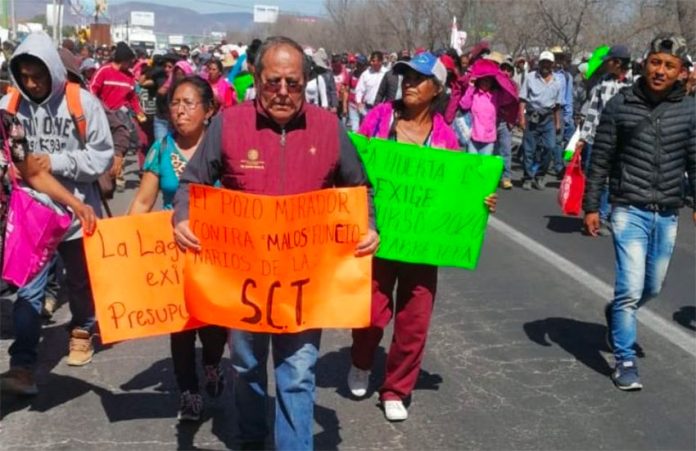
Transportation official Meza at Thursday's protest march.
Hidalgo residents fed up with unfinished infrastructure projects in their communities forcibly removed two transportation officials from their offices in Pachuca and forced the two to march with them in a protest on Thursday.
Hidalgo delegate of the federal Ministry of Communications and Transportation (SCT), Ignacio Meza Echeverría, and SCT highways official Deyanira Rosales were forced to carry protest signs for over three hours while they walked the highway toward Mexico City.
Residents of the Valle del Mezquital region had been protesting outside the SCT offices in Pachuca for a week to demand that the government finish several public works projects.
Meza met with them on Thursday morning and told them that there were no funds in the budget allocated to completing the projects. The citizens then expressed their anger and coerced him and Rosales into marching with them toward the national capital.
Their rage was also directed at reporters who arrived to cover the protest. They attacked the journalists in efforts to expel them from the march, which blocked traffic on the Mexico City-Pachuca highway.
After more than three hours, state police and National Guard troops intervened to stop the advance of the march.
The two public officials were rescued near the Hidalgo C5i security headquarters in the vicinity of Acayuca and taken to a nearby hospital for medical examinations.
The SCT released a statement condemning the violent actions taken against its employees and members of the press.
“The Ministry of Communication and Transportation is in solidarity with the public servants … who were attacked. It also regrets the attacks committed against representatives of the media,” it said.
“The SCT is and always will be respectful of legal channels for resolving differences and energetically condemns the violent events that occurred in Hidalgo today.”
Federal Communication and Transportation Minister Javier Jiménez Espriú personally denounced the citizens’ actions on Twitter.
“In the SCT we neither extort nor accept extortions. Respectful dialogue and the law are the only acceptable courses of action,” he said.
One of many recent protests against gender violence.
Support is growing for a national women’s strike on March 9 to protest against high levels of gender-based violence.
Using the hashtags #ParoNacionaldeMujeres (National Women’s Strike), #UnDíaSinNosotras (A Day Without Us) and #UnDíaSinMujeres (A Day Without Women), women and feminist groups have taken to social media in recent days to encourage females across Mexico to skip work and school on the second Monday of March in order to send a clear message of condemnation of gender-based violence.
Flyers posted online also urge women to refrain from spending any money on March 9 to maximize the economic impact of the strike. Calculations completed by the newspaper El Economista found that the strike could cost the economy as much as 37 billion pesos (US $1.9 billion).
The nationwide mobilization of women comes after two particularly shocking femicides in Mexico City this month.
Ingrid Escamilla, a 25-year-old woman originally from Puebla, was stabbed to death, skinned and disemboweled by her domestic partner at their apartment in the north of Mexico City on February 8, while the body of 7-year-old Fátima Cecilia Aldrighett Antón was found a week later inside a plastic bag in the capital’s south.
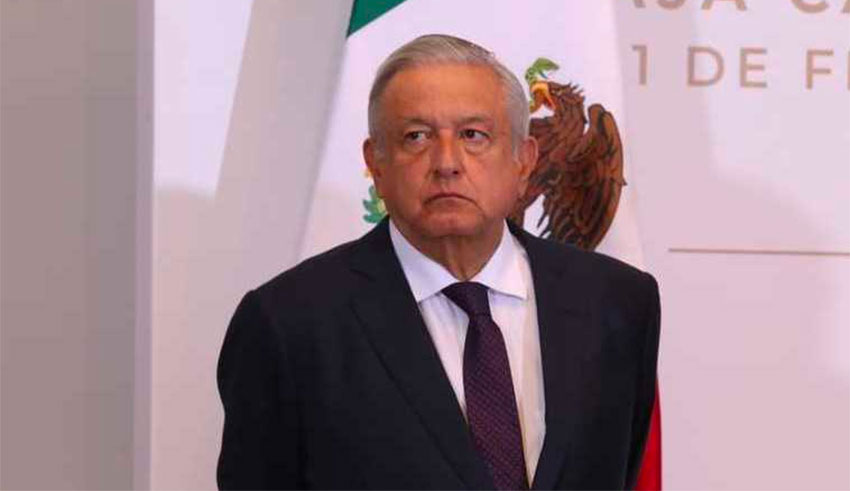
President López Obrador: beware conservative feminists.
President López Obrador, who this week blamed violence against women on the “neoliberal policies” of past governments and continued to argue that “moral regeneration” is the solution, is facing increasing criticism for his response to the crisis.
His wife, Beatriz Gutiérrez Müller, declared her support for the women’s strike on Thursday, posting a flyer promoting “A Day Without Women” to her social media accounts. However, she withdrew her support hours later, posting a different flyer emblazoned with the hashtags #NoAlParoNacional (No to the National Strike) and #UnDíaMásConNosotras (One More Day With Us).
Instead of striking, the flyer encourages both women and men to wear a white handkerchief on March 9 to demonstrate their repudiation of gender violence. “We support AMLO [López Obrador’s widely-use nickname] and we also want to eradicate violence,” it says.
The strike plan did, however, find support from members of the federal government as well as opposition political parties, the chief justice of the Supreme Court, state governors and universities, among others.
Interior Minister Olga Sánchez Cordero declared on Twitter that she would join the strike, while the head of the government’s Financial Intelligence Unit, Santiago Nieto, said that women who work at the department are free to participate. The president of the Senate, ruling party Senator Mónica Fernández, said that the upper house would support the initiative and that the women who work there are free to join.
The president of the lower house of Congress and National Action Party (PAN) Deputy Laura Rojas announced that the pay of women who work at the Chamber of Deputies will not be docked if they take part in the March 9 strike, while the national leaders of the main opposition parties – the PAN, the Institutional Revolutionary Party and the Democratic Revolution Party – all expressed their support for the national stoppage.
Chief Justice Arturo Zaldívar wrote on Twitter that all female employees of the federal judiciary are free to join the movement, while Jalisco Governor Enrique Alfaro said women who work for the state government will not face any negative consequence for participating.
Michoacán Governor Silvano Aureoles also said that his administration is in favor of the strike and that the absence from work of female government employees will be “justified and supported.”
Several universities across the country voiced their solidarity as did many celebrities such as actress Adriana Paz and singer Paty Cantú, who said that she hoped the strike will pressure the government to respond to the crisis of gender violence in Mexico, where an average of 10 women are murdered every day.
Speaking at his morning press conference on Friday, López Obrador said that the government respects and guarantees the right to protest, declaring that women are free to voice their opinions and that his administration is not “authoritarian” or “repressive” like those of the past.
However, he warned women that “conservatives” – a word he uses frequently to disparage opposition parties, past governments and critics of his administration in general – could attempt to appropriate the strike and the feminist protest movement more broadly for their own benefit.
“Just be very careful because the conservatives have become feminists,” he said, criticizing them for their newfound support of the right to protest after opposing demonstrations in recent years such as those carried out by teachers to reject the former government’s education reform.
“How many teachers were dismissed because they opposed the reform? What did the conservatives say? They said that it was very good because the teachers were troublemakers, because they didn’t go to work.”
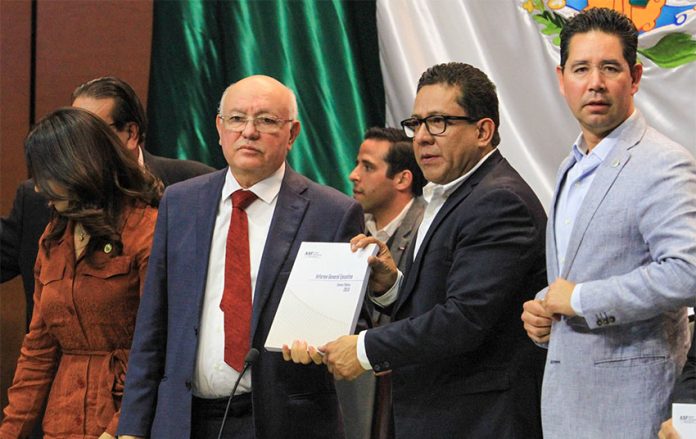
Auditor Colmenares, left, and officials from his office present their report to Congress.
More details have emerged about the questionable spending of the government led by former president Enrique Peña Nieto.
Chief Auditor David Colmenares Páramo told members of the lower house of Congress on Thursday that there is a question mark over the use of 50.94 billion pesos (US $2.7 billion at today’s exchange rate) during 2018, the final year of the previous government’s six-year term.
His appearance before lawmakers came a week after the Public Administration Ministry reported that audits had detected irregularities of more than 544 billion pesos in the spending of the Peña Nieto administration between 2012 and 2018.
Presenting 2018 audit reports in the Chamber of Deputies, Colmenares said that the Federal Auditor’s Office (ASF) had detected irregularities totaling 52.32 billion pesos but 1.38 billion pesos has been either recovered or clarified. Just under 29 billion pesos – about 55% of the total amount of questionable spending – is likely to be recovered or explained, the auditor said.
Headed by Gerardo Ruiz Esparza during the entirety of the Peña Nieto administration, the Ministry of Communications and Transportation was the worst offender in terms of the suspicious use of public resources. The ASF flagged its use of more than 8 billion pesos as questionable.
The ASF detected irregularities of just under 6.3 billion pesos in spending by the Ministry of Agriculture, making it the second-worst offender among federal agencies. Public money that was supposedly spent on subsidies and other financial support for farmers was called into question by the auditor.
The ASF also cast doubt over the use of 5.34 billion pesos by the state oil company, Pemex, and the Federal Electricity Commission (CFE).
Some of the irregularities detected at Pemex were related to its 2015 purchase of a fertilizer plant at an allegedly vastly inflated price. Former CEO Emilio Lozoya, who was at the helm of the state-run company between 2012 and 2016, was arrested in Spain last week on corruption charges related to the US $475-million purchase of the plant in Coatzacoalcos, Veracruz.
Questionable spending by the CFE was mainly related to the construction and operation of gas pipelines.
The ASF also found that the Peña Nieto government couldn’t account for 5.3 billion pesos it said it paid to the media for government publicity campaigns.
Reporting on the irregularities outlined by Colmenares on Thursday, the newspaper Reforma said that the final year of the Peña Nieto administration was one of waste, pillaging of public coffers, phantom employees, inflated prices, multi-million-peso settlements, nonexistent infrastructure projects, unjustified transfers and contracts with shell companies.
In addition to the federal irregularities, the chief auditor also outlined questionable spending by state and municipal governments to the tune of 144.43 billion pesos (US $7.6 billion). Only 1.64 billion pesos has so far been recovered, Colmenares said, because the “clarification process” is only just beginning.
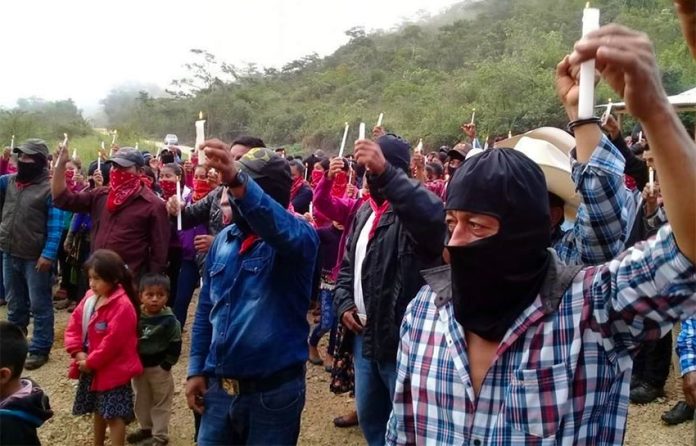
Zapatistas raise candles in protest against megaprojects.
The Zapatista Army of National Liberation (EZLN) carried out protests in Chiapas on Thursday to denounce the megaprojects planned by President López Obrador, such as the Maya and trans-isthmus trains.
Calling the protests “Defense of territory and mother Earth, we are all Samir,” the Zapatistas gathered in their autonomous zones — called caracoles (literally snails) — hanging banners outside each of their government’s buildings and burning candles in protest.
The phrase “We are all Samir” was created in honor of activist Samir Flores Soberanes, a member of the Permanent Assembly of the People of Morelos who was murdered last year after opposing a thermoelectric plant in the state.
“No to the megaprojects of López Obrador … No to the Maya Train. No to the trans-isthmus train. No to mining. No to wind farms. No to highways. No to oil pipelines. No to hydroelectric dams. No to gas pipelines,” read a banner hung in the Oventic caracol.
Protesters in the caracol called Honorable Spiral Weaving the Colors of Humanity in Memory of the Fallen said a prayer in the early morning and lit candles.
In the caracol called Blooming Rebel Seed, Zapatistas formed a human chain along the highway, while in another called Snail Mother of Our Dreams, they shouted slogans to express their discontent.
An altar in memory of Samir Flores was erected in the Resistance Toward a New Dawn caracol.
Activists aligned with the EZLN and the National Indigenous Congress held similar protests in Mexico City and Morelos on Thursday.
More actions were planned for Mexico City and Morelos on Friday and an assembly will be held in the municipality of Temoac, Morelos, on Saturday.
The unquenchable thirst for rivalry between separate communities of humans is universal. We see it everywhere; it’s tribal, it’s global, it doesn’t discriminate. If two groups can find a way, they’ll tangle together and find something, anything, about which to feel superior.
Some may claim it’s a damning indictment of humanity, others that it can act as a beautiful exposé of humanity at its most petty. In controlled conditions, it can be magnificent to watch.
There is an exception, however, in the strange relationship between Campeche and Mérida. The battle to be the cultural capital of the Yucatán is fought under most residents’ respective radars. It can’t be seen in bitter sports rivalries, nor in the pendulum swing of politics, but instead in a quiet tension that eludes outsiders looking in, a struggle for the esteem of authenticity.
Something like this can only be seen in the unlikely, the semi-hidden. Perhaps the truth can be found in the recent history of its itinerant markets.
On any day in Mérida, you’ll wander through the old town and encounter vendors working the market selling meat, fish, vegetables for the locals, and on another pass you’ll encounter stalls selling fine art, hand-crafted furniture and clothing woven by the age-old methods — all perfect souvenirs for tourists passing through. The culture is encouraged and enabled by local governments, seen not only as economically beneficial but culturally enriching for the city, giving a name to an often forgotten stretch of Mexican soil.
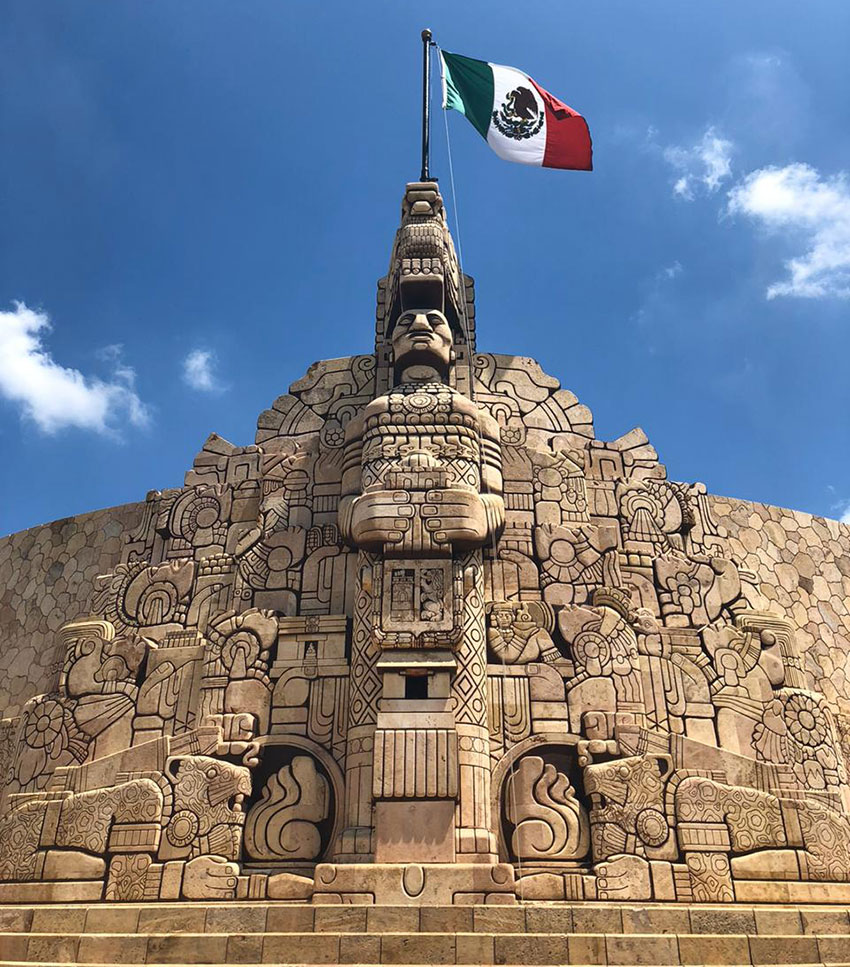
Mérida plants it’s flag in Mayan history.
In Campeche, the opposite is true. Local initiatives are hard fought, a constant tug-of-war between local lawmakers and emerging institutions and free of corruption. Nevertheless, such wrangling only serves to disenfranchise would-be entrepreneurs from the community, let alone those from further afield. Quite understandably it is upsetting to the majority of campechanos to watch a generally comparable city make strides it could imagine making if only the shackles of bureaucracy were broken.
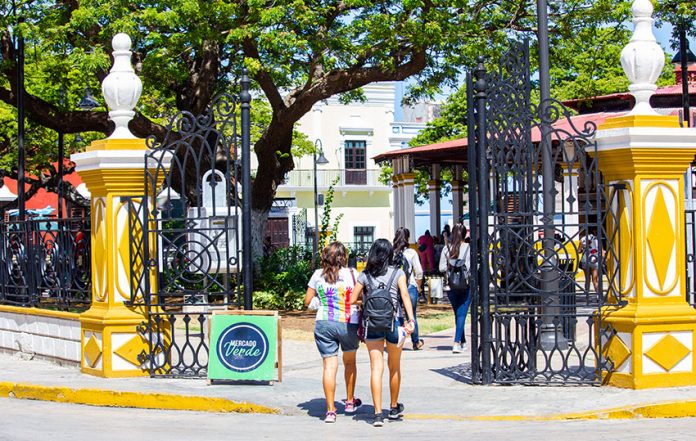
One such example is the Mercado Verde, the latest victim of Campeche’s rejection of ambition. Up until this month, every Saturday and Sunday amazing artists, unique cooks and groundbreaking designers had descended on the famous Parque Principal to partake in the city’s first and only environmental and sustainable market. Over the years it had become an institution loved by the residents, fawned over by tourists and crucial to those that sell their homegrown produce.
But in line with a campaign that has seen numerous other initiatives quashed, the local council has been weaponizing its own bureaucracy to suffocate the market’s chances of continuing. As though aiming the gun at their own feet with abandon, Campeche authorities remain locked in an insular and protectionist ethos, a mindset that makes the much desired cultural spring a daily struggle, and a distant dream.
Carlos, just one of the creative characters from the market, sums the problem up succinctly: “We have the will, we have the means, but we do not have the trust.”
He continues, “with political protectionism around our necks, we simply can’t step ahead. This is all about who we want to be, but the authorities seem unwilling to allow us to step forward from who we were.”
This feeling of being left behind is one that others agree with. Mérida is growing, fast, but not only in an economic context. As its sphere of influence spreads, its claim to be the cultural capital of the Yucatán Peninsula gains clout amongst those who only have the time to cast an eye over the southeast.
The frustration of being restrained by officials and inhibited from achieving growth akin to Mérida often leads to resentment. Seen from Campeche, Mérida is viewed as being obsessed with economic development, leveraging its economy away from the traditional, localized mindset of Campeche, toward a more outward-looking, imported culture.
It is an ideal born of vanity, so says Campeche, not really being empowered by its Mayan heritage, historical sites or diverse markets, but instead being proud of the titles themselves. A cursory look at the development statistics for the two states echoes this narrative — Campeche nearly always at the bottom of the charts for economic growth nationally and Mérida one of the most consistent drivers of growth, year on year, for the last 20 years.
Campeche may have a point. It should be a worry to the yucatecos that their relentless emergence and expansion is perhaps unsustainable, not necessarily in economic terms, but in relation to the preservation of cultural integrity. In completely opening up the doors to commercialization, Mérida may end up losing something it can’t buy back: its identity.
Notwithstanding, culture and creativity are allowed to thrive in Mérida, enabled through a shared laissez-faire philosophy between locals and authorities that energizes the city but at the same time fetishizes perpetual growth. Campeche is a little way off from Mérida’s level of influence but should be wary of wanting to replicate its system entirely.
José Cauich, a civil servant from Campeche, summarizes this perspective when stating that the yucatecos are so commercially minded that they have even appropriated the extinction of the dinosaurs to leverage more tourist dollars. He was referring to the meteorite strike that led to this outcome and which now has Mérida touting itself as the city center closest to the “event,” although quite how you visit an offshore, underwater, unconfirmed event is open to interpretation. The perverse fixation on the implication of a commodity and not the subject itself may pose problems for Mérida down the line.
So it seems there needs to be a happy medium, and both cities could actually learn something from the other. Somewhere between walled Campeche and porous Mérida lies a self-evident truth: that a middle way is possible. As things stand, the tension between these extremes leaves us with a rivalry that polarizes ambition, ignoring the possibility of ideological compromise.
If Campeche can negotiate its unique political landscape and look beyond itself, then it must remain mindful of the over-commercialization that beckons from afar. As for the rivalry, perceptions remain in the driver’s seat in this tale of two cities.
Authorities have found 24 bodies in a secret grave in the municipality of Coeneo, Michoacán.
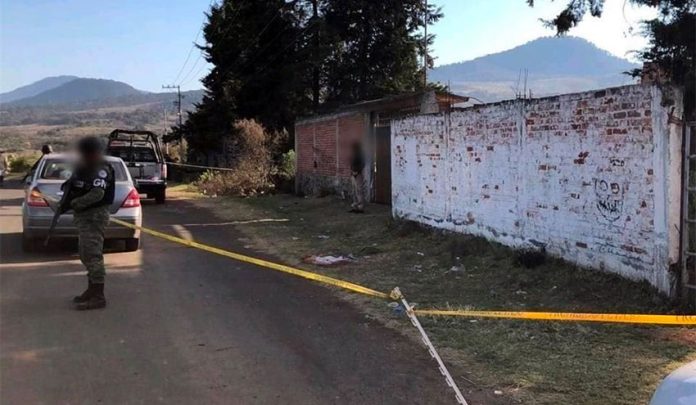
State Attorney General Adrián López Solís told a press conference on Thursday that several of the victims had been dismembered and decapitated prior to burial on an abandoned construction site in the community of Comanja. The bodies of five women are among the 24 found, he said.
López said that the victims were aged between 20 and 40 and that the majority appear to have been deceased for between four and six months. Stab wounds to the neck have been identified as the possible cause of death for some of the victims, he added.
The remains were taken to a Michoacán morgue, where autopsies and tests aimed at determining the identity of the victims will be carried out.
The attorney general said that authorities discovered the existence of the secret grave and its location after the arrest last week of nine members of a criminal cell in the municipality of Pátzcuaro. Excavations began on Tuesday afternoon and concluded just before 10:00 p.m. Wednesday.
Authorities also seized a car and four pick-up trucks from the site, located northwest of the Michoacán capital Morelia. Carjacking reports for three of the pick-ups had been previously filed.
The discovery of hidden graves is a common occurrence in Mexico, especially in states with a strong organized crime presence. National Search Commissioner Karla Quintana said last August that more than 3,000 secret graves containing almost 5,000 bodies had been found since 2006.
In early 2019, Deputy Interior Minister for Human Rights Alejandro Encinas described Mexico as an “enormous hidden grave.”
President López Obrador has denied any knowledge of a corruption investigation into his predecessor Enrique Peña Nieto as The Wall Street Journal reported.
Citing an unnamed senior Mexican judicial official, The Journal reported on Wednesday that the Attorney General’s Office (FGR) is investigating Peña Nieto as part of a case against former Pemex CEO Emilio Lozoya, who was arrested on corruption charges in Spain last week.
The official said that the FGR has evidence that the corruption of Lozoya – who is accused of benefiting financially from Pemex’s purchase of a fertilizer plant at an allegedly inflated price and receiving US $10 million in bribes from Brazilian construction firm Odebrecht in exchange for a lucrative refinery contract – “reaches to the highest level.”
“The extradition and [any possible] confession of Lozoya are elements that together with ongoing investigations will decide if the former president is charged in the future,” the official told The Journal.
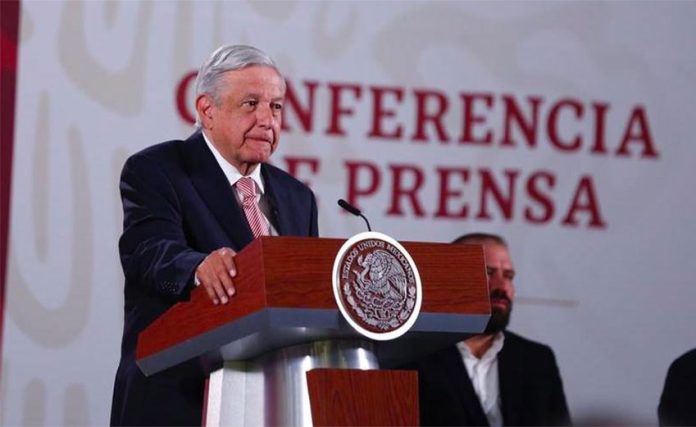
Speaking at his regular news conference on Thursday, López Obrador said that just because The Wall Street Journal reported that an investigation is taking place, doesn’t make it a fact. The newspaper’s reports “are not always accurate,” he said.
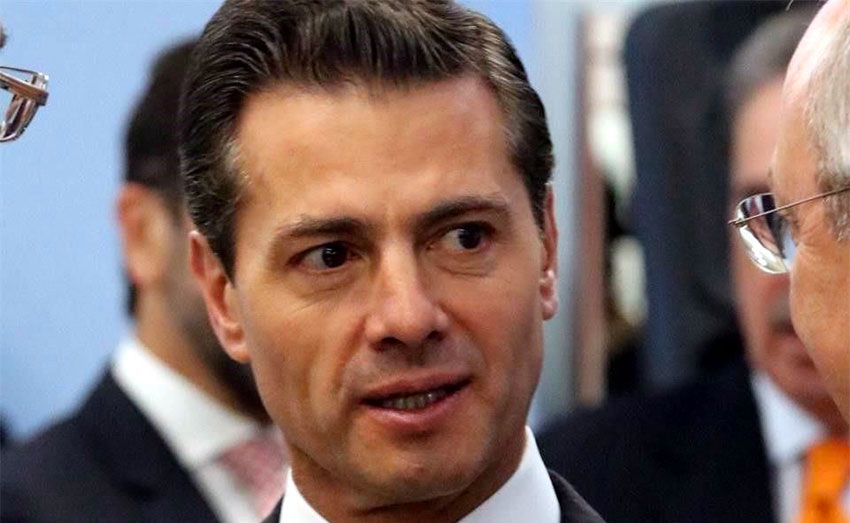
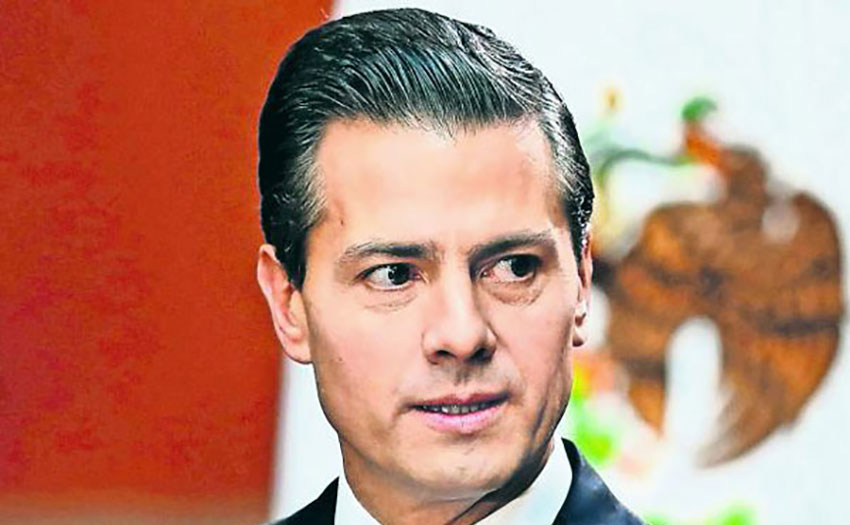
Peña Nieto: prosecuting the former president could be good for the ruling Morena party at the next presidential election.
The president added that the FGR is now autonomous of the government and therefore has no obligation to inform him of the investigations it is conducting.
López Obrador nevertheless charged that Peña Nieto approved of the state oil company’s purchase of “junk” fertilizer plants at inflated prices and other “juicy business” that members of his government allegedly engaged in.
However, he said that the government would not file a criminal complaint against the former president unless the people of Mexico indicated that was what they wanted.
López Obrador has floated the idea of holding a public consultation to ask citizens if recent past presidents – whom he accuses of all manner of corruption – should stand trial.
“We’ve said that we would only present a complaint against former presidents if the citizens ask us to because we think that we should look forward,” he told reporters on Thursday.
However, the senior judicial official told The Journal that “any case against former presidents” would be brought by the FGR “as an exercise of autonomy, not as a result of President López Obrador’s consultations – they are two worlds: the political and the judicial.”
The Journal, which said that it was unable to reach Peña Nieto for comment while acknowledging that he has denied corruption allegations in the past, noted that if the ex-president is prosecuted, it would be the first time that a modern Mexican president faced corruption charges in court.
Jorge Chabat, a political analyst at the University of Guadalajara, told The Journal that if Peña Nieto were to stand trial, it would happen near the end of López Obrador’s six-year term and likely benefit the ruling Morena party at the next presidential election.
“Bringing Peña Nieto to court would be a political life preserver for this government,” he said.
The former president’s six-year term between 2012 and 2018 was plagued by corruption scandals including the so-called “master fraud” scheme in which government agencies allegedly diverted billions of pesos in public money via shell companies, and the “white house” affair, in which Peña Nieto’s now ex-wife purchased a mansion built by a favored government contractor.
The stench of corruption lingering over Peña Nieto and the Institutional Revolutionary Party government he led was seen as a major factor in López Obrador’s landslide victory at the 2018 presidential election.
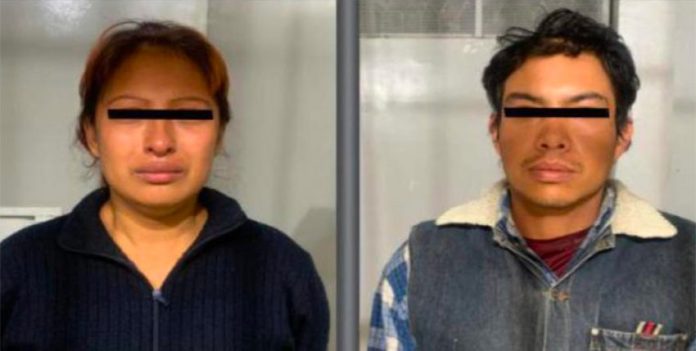
The couple were arrested in México state Wednesday night.
One of two suspects arrested in the abduction and murder of 7-year-old Fátima Cecilia Aldrighett Antón has confessed that she abducted the child because her husband wanted “a young girlfriend.”
The Mexico City Attorney General’s Office (FGJ) said that police supported by the National Guard detained a man and a woman on Wednesday night at an address in the México state municipality of Isidro Fabela, located about 50 kilometers northwest of the capital.
Mario Alberto R. and Gladis Giovana C., a married couple and parents of three young children, were subsequently transferred to FGJ offices in Mexico City. The latter is believed to be the woman who was captured by security cameras with Fátima outside her school before she disappeared on February 11.
She told investigators that she kidnapped the child fearing that her husband would follow through on a threat to sexual abuse their own children. When she delivered the child to her husband, she said, he dressed her in clothes he had recently purchased and painted her fingernails.
Gladis Giovana confessed that she strangled the victim with a belt.
If found guilty of kidnapping and killing the minor, the couple will likely spend the rest of their lives in jail.
FGJ spokesman Ulises Lara explained that they were identified by a search of their southern Mexico City home, where police seized identification cards, photographs, clothes and other personal items.
The FGJ said in a statement that Isidro Fabela municipal police and México state police were alerted to the whereabouts of the suspects by a local resident who had apparently seen images of the couple that were released earlier on Wednesday.
The police interviewed the couple and determined that they could be the people sought by Mexico City authorities in connection with Fátima’s abduction and murder, the statement said. The couple offered a bribe to the police in an attempt to avoid arrest, the FGJ added.
Fátima, who was laid to rest on Wednesday, is believed to have known the man and woman although she had no blood relation to them. Authorities are investigating whether the female suspect once lived in the same house as Fatíma’s family, as the deceased girl’s mother said, and whether there were any problems between them.
Two of the couple’s children attended the same school as Fátima, according to parents of students at the Enrique Rébsamen primary school in the southern Mexico City borough of Xochimilco.
According to a report by the newspaper El Financiero, neighbors of the couple said that Mario Alberto R. worked as a bicycle taxi driver in an area near the limits of the boroughs of Xochimilco and Tláhuac, where Fátima’s beaten body was found.
Neighbors described the family as “strange and quiet,” indicating that they wouldn’t engage with or even say hello to their neighbors. They also said that Mario Alberto had drug problems.
Prior to their arrest, Mayor Claudia Sheinbaum told a press conference that the couple had fled Mexico City on Saturday, possibly after dumping Fátima’s body.
The girl’s mother told the newspaper Milenio that she couldn’t believe that the woman accused of the abduction and murder of her daughter is the same person that lived in her home for several weeks, explaining that she didn’t appear to be a “psychopath” or to have “cold blood” and an “inhumane heart.”
Magdalena Antón said that she met Gladis Giovana C. at the home of a man who sells tamales in her neighborhood.
“She was apparently escaping from her husband because he had wanted to beat her and set her on fire. I said to her: ‘OK, don’t worry, come to my house,’” Antón stated, adding that she asked the woman to pay 300 pesos (US $16) per month rent.
Asked whether she ever had any disagreement or problem with the female suspect, Antón responded that she hadn’t although she said that her brother and the woman had clashed.
“Probably her husband is the murderer because I don’t think she’s capable,” she said. “But she was his accomplice, she took my daughter, didn’t she? In the end, both of them have to pay.”
The Oaxaca Attorney General’s Office (FGE) has offered a 1-million-peso (US $53,000) reward to anyone offering information leading to the arrest of a former public official believed to be responsible for an acid attack on a saxophone player from Huajuapan de León.
The ex-state deputy of the Institutional Revolutionary Party (PRI), Juan Antonio Vera Carrizal, is suspected of having orchestrated an attack with corrosive acid against María Elena Ríos on September 29 of last year.
In addition to the reward, the FGE solicited help from federal authorities in the search for Vera and requested that Interpol issue a Red Notice in order to extend the search beyond Mexico’s borders.
Oaxaca Attorney General Rubén Vasconcelos Méndez said that arrest warrants were issued in December for Vera and two other unidentified men for the charge of attempted femicide.
He told a press conference that his office has sufficient evidence to determine that Vera ordered the attack that was carried out in Huajuapan de León. Another two men arrested in connection with the case in December told authorities last week that Vera gave them 30,000 pesos to attack the victim.
“We have sufficient data to believe that [Vera] was the author of the incident, and it’s not just us. The issuance of an arrest warrant implies that a judge considers there to be sufficient data for probable responsibility,” he said.
He added that his office believes the arrest of Vera will quickly lead to the apprehension of the other two unnamed suspects.
Vasconcelos released a wanted poster bearing a photo of the ex-legislator and businessman with his personal information and the reward offer. The poster lists his age as 56 and states that he has black hair, almond-colored eyes and weighs 80 kilograms.
The saxophonist’s family members said that they knew the culprit was Vera since the moment of the attack. Ríos has been convalescing in her family home since January 21 after being treated by burn specialists in Mexico City.
The PRI has begun the process of officially expelling Vera from the party.
Oaxaca Governor Alejandro Murat spoke about the case after meeting with President López Obrador in the National Palace in Mexico City on Tuesday. He announced the reward and requested the assistance of the media and the public in Vera’s capture.
He said that the FGE’s telephone lines are ready and waiting for tips from the public, adding that he hopes collaboration with citizens will lead to Vera’s arrest and “send a clear message that there is no impunity when the rights of any Mexican woman are violated.”
“The best way is to arrest these people,” he added.