Home Blog Page 1634

Reported cases of femicide up almost 60% in Mexico City last year

0
police line

Femicides increased almost 60% in Mexico City last year, making the capital the 11th worst entity in the country for the crime, according to data from a national crime watch group.

Presenting a 2019 Mexico City crime report on Wednesday, the director of the National Citizens’ Observatory (ONC), Francisco Rivas, said that the number of femicides – crimes in which a woman or girl is killed on account of her gender – rose to 68 in 2019 from 43 the year before, an increase of 58%.

As a result, Mexico City recorded the 11th highest number of femicides among Mexico’s 32 states in 2019, seven places higher than it ranked in 2018.

ONC statistics show that femicides increased by more than 50% in 10 of the capital’s 16 boroughs. Xochimilco, a borough in the south of the city best known for its canals and the colorful boats that ferry visitors along them, recorded the highest number of femicides last year whereas it ranked seventh in 2018.

Rivas also said that the number of rape cases increased by 4.33% in Mexico City last year, highlighting that the per capita rate in the capital was above the national average for the second consecutive year. There were 16.58 rape investigations per 100,000 residents in 2020, ONC data shows.

Rivas asserted that violence against women has “deep roots” in Mexico and that statistics don’t paint a full picture of the problem.

“What we are seeing is only the tip of the iceberg; there are … entire communities where we never find out about the crimes committed against women,” he said.

“They are not … only victims of physical violence but also psychological and economic violence,” Rivas said, adding that many women live in situations that make it difficult for them to report the abuse they have suffered.

He also said that legal protocols that stipulate that all murders of women must be investigated as femicides are not observed in many parts of the country. Therefore, femicides – of which there were 1,006 victims last year, according to official data – are almost certainly underreported.

The publication of the ONC Mexico City crime data comes just after two femicide cases in the capital that have shocked Mexicans across the country.

Ingrid Escamilla, 25, was stabbed to death by her 46-year-old domestic partner on February 8 after which he skinned and disemboweled her body in an attempt to dispose of the evidence. A week later, the body of 7-year-old girl Fátima Aldrighett was found inside a plastic bag in southern Mexico City four days after she was abducted outside her Xochimilco primary school.

Both cases triggered an outpouring of anger and condemnation in a country where an average of 10 women are killed every day.

Days after Escamilla’s death, women’s groups took to the streets of Mexico City to protest at the National Palace and outside the offices of a newspaper that published leaked photos of the woman’s mutilated body.

Speaking at his morning press conference on Monday – the day authorities announced Fátima’s murder – President López Obrador said that “neoliberal policies” of past governments were to blame for the high number of femicides, charging that they caused a “social breakdown” and “a profound crisis in loss of values.”

Responding to the president’s claim, Rivas said that “there is no evidence that neoliberalism generates violence,” adding “one of the characteristics of the majority of neoliberal countries is that they are the safest in the world.”

Source: Milenio (sp) 

Microsoft to invest US $1bn toward expanding Mexico’s digital potential

0
Microsoft CEO Nadella.

Microsoft CEO Satya Nadella announced that the company will invest US $1.1 billion in Mexico over the next five years.

“Today I am very excited that we are announcing a new $1.1-billion investment over the next five years, focused on expanding access to digital technology for people and organizations across the country,” he said in a video presented at President López Obrador’s Thursday morning news conference.

The investment will include the creation of a new data-center region in Mexico to “deliver comprehensive, intelligent, secure and trusted cloud services to help every organization really get an advantage and drive the digital transformation.”

The president of Microsoft’s Latin America division, César Cernuda, said that the investment plan, called Innovate for Mexico, will include the construction of three state-of-the-art laboratories to lead to new breakthroughs in digital services and technologies.

The labs will drive a “solid educational program” directed at university students, said Cernuda.

“With this, higher education teachers and students in every field of study will strengthen their knowledge and reinforce the skills required by society and the current and future labor market,” he said.

He added that a consulting council will be created in conjunction with the Mexican Business Council (CMN) with the goal of “sharing experiences of digital transformation in order to attend to the needs of the people and the market.”

Also part of Innovate for Mexico will be an initiative to support conservation efforts for the endangered shortfin mako shark in collaboration with the organization México Azul.

The company will provide technical support in the form of open-source software that will help monitor the species and analyze its habitat and migration routes.

President López Obrador said that the announcement was good news for the country because it will drive technological development in several fields.

Source: El Financiero (sp)

Parents of cancer patients sever talks over medications shortages

0
Parents claim a lot of lives are at risk.

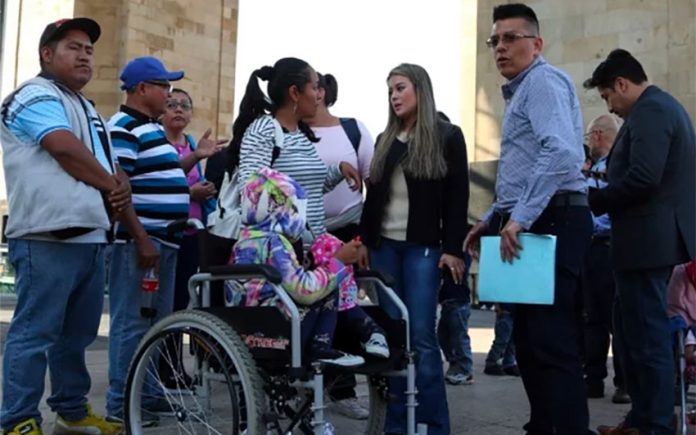
A group of parents of children with cancer has broken off talks with the federal government, claiming that their concerns about a shortage of medications are not being taken seriously and that officials have lied to them.

Members of a group of 31 parents that has been meeting with officials at the Interior Ministry (Segob) announced after a meeting on Tuesday that they saw no point in continuing discussions about the lack of pediatric cancer medications that has plagued Mexico’s public health system for months.

“The president needs to come out and acknowledge that there are no medications,” said Omar Hernández.

“He can’t speak with us in private, accept that there is a shortage and then appear at his morning news conferences and say the opposite. We can’t continue with these round table discussions at which they appear to be pulling our leg; they promise that there will be medications but they don’t arrive at the hospitals,” he said.

Israel Rivas Bastidas, another father of a child with cancer, said that the federal government has “let us down” and asserted that continuing to meet with Segob and health officials is pointless “if they don’t carry out what they tell us” they will.

“We think that they don’t understand that it is a complex situation. … The lives of a lot of children are at risk,” he said.

Rivas also said that the parents asked officials to show them the supply of medications they claimed the government has purchased but their request was ignored.

“We demanded that they take us to where the medications are, whether that’s Cofepris [the Federal Commission for Protection Against Sanitary Risk] or the airport. We wanted to see that the medications exist but they turned a deaf ear,” he said.

Parents of cancer sufferers also said that they were disappointed that Interior Minister Olga Sánchez had not attended all the meetings to listen to their concerns about the lack of a range of life-saving drugs including chemotherapy agents and immunosuppressive medications.

“The Interior Minister Olga Sánchez agreed to be at all the meetings – lying to us is a lack of respect,” said Rivas.

“She was at the first meeting but a deputy minister arrived at the second one and there were no medications [to announce]. At the third meeting, we were promised the medications for yesterday [Monday] – they’re taking us for a ride,” he said.

The parents said that that they will continue to file lawsuits aimed at compelling the government to provide an adequate supply of medications for children with cancer and other serious medical conditions.

In response to the complaints, a high-ranking Segob official who met with the parents on Tuesday turned to a well-worn political tactic: he passed the buck.

“The solution is not [the responsibility] of the Interior Ministry, it’s of the Health Ministry,” Fausto Razo said.

For his part, President López Obrador – who has blamed the shortage of medications on resistance from pharmaceutical distributors to the government’s new centralized purchasing system as well as corruption in hospitals and supply problems with drug companies in China and India – responded to the latest complaints as the disgruntled and anxious parents might have expected.

Speaking at his regular news conference on Wednesday, he said that the government is doing “everything that we have to do” to ensure that patients – especially children with cancer – have the medicines they need.

“We have supply now and there won’t be a shortage. Of course, we’re going to solve this problem completely,” López Obrador said.

He also charged that political interests are behind the protests. “There is political opposition to the changes, there is resistance … leaders of political parties are encouraging these movements …”

Source: El Universal (sp), La Jornada (sp), Infobae (sp) 

A pair of brutal femicides elicit fear and rage at systematic gender abuse

0
Fátima's mother, María Magdalena Othón.

This has got to stop.

News of two brutal femicides this past week has floored many people, especially women. This is saying a lot, as news of extreme violence is par for the course at this point. But the constant stream of dead girls and women is chilling. The combination of female fear and rage in the air is palpable.

This isn’t about just a few bad apples; this is a systematic problem. When femicides are reaching 10 a day, it’s a wide societal complication, not a conglomeration of a lot of coincidentally similar psychological profiles.

AMLO’s assertion that the culture of neoliberalism is to blame sounds absurd on its surface and is certainly tone-deaf: not to mention a chauvinistic culture (which also exists in many societies in which neoliberalism isn’t the name of the game) as a factor is a huge oversight. Nevertheless, he certainly wouldn’t be the first person to draw a link between a cut-throat capitalist economy and gender abuse.

The first shocking example (this week, anyway) was of a young woman stabbed to death and then flayed by her much older boyfriend following an argument. The second, heartbreakingly, was a 7-year-old girl who was picked up outside her school. Though we don’t yet know all the details, a woman is the one who picked her up; she was found dead in a trash bag four days later.

Why are so many women winding up dead? One might argue that men are winding up dead too, but it’s different, and this is why: men are typically killed when they are involved in crimes; women are often killed simply because of who they are, with their romantic partners accounting for the majority of the perpetrators.

Back to the child, whose name was Fátima: we can’t prevent all violence. We can’t prevent all bad things from happening. But we can take reasonable precautions.

We don’t know the details of why, but the girl was waiting outside the school to be picked up unsupervised.

For goodness sake, can’t we agree to not have children wait outside for their parents alone? I’m not sure what the circumstances were here. Was it common for that school to allow children that young off the premises without a parent? It seems wildly irresponsible, but we don’t yet know everything that happened.

Teach your children a code word (do not write it down) that someone who is assigned to pick them up must know and say to them, and practice it. We don’t know if this was the case, but I suspect that if this girl willingly got into a vehicle, it’s no doubt because the woman told her she’d been sent by her mother to get her.

And finally: can we please stop gasping and acting all scandalized by graffiti that angry protesters leave? After all, there’s never outrage when men in gangs do it. And it could be that I just don’t notice, but the people who are outraged by the spray paint curiously don’t seem to be outraged by the femicides and abuse of women.

Spray paint can be cleaned off, statues and buildings can be erected again, glitter can be washed out of one’s hair. But no one can be brought back from the dead.

Rest in peace, sweet Fátima. We will bring justice to the system that let this happen.

Sarah DeVries writes from her home in Xalapa, Veracruz.

Plan underway to recover bodies of 63 miners lost in Coahuila disaster

0
A memorial to the miners who lost their lives in the explosion.

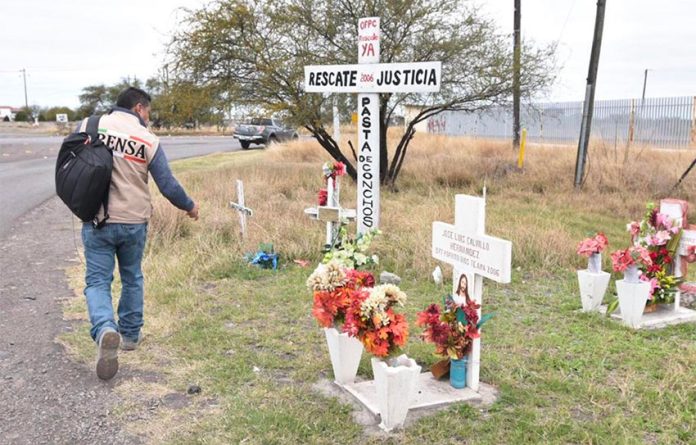
On the 14th anniversary of an explosion at a Coahuila coal mine that killed 65 miners, Labor Minister Luisa María Alcalde outlined on Wednesday the progress made in preparations to recover the bodies of 63 of the miners and the steps that still need to be taken.

A methane explosion at the Pasta de Conchos mine in the municipality of San Juan de Sabinas killed all of the miners working the night shift in the early hours of February 19, 2006. The explosion trapped the miners underground and only two bodies were ever recovered.

For years, relatives of the victims pleaded for efforts to be made to retrieve the other bodies but the mine owner, Grupo México, insisted that conditions were too dangerous to do so. However, President López Obrador wouldn’t be deterred, announcing on May 1 – International Workers’ Day – last year that he had ordered a recovery operation.

“This is a humanist government. So we are going to carry out this action,” he said.

Speaking at the president’s press conference this morning, Alcalde said that the ministry she leads formed a group in May 2019 called the Committee for Reparation and Justice at Pasta de Conchos.

The committee, she said, summoned mine rescue experts and the family members of the deceased miners and put together a file of more than 1,000 pages that outlined all the details of the mine disaster.

The next step, Alcalde explained, was to translate all the information into English before submitting it to mining experts in the United States, Germany, China and Australia.

Fourteen mining experts from those countries and seven from Mexico subsequently came together to discuss the contents of the file before concluding that the recovery of the 63 bodies was technically possible, the minister said.

Alcalde explained that the expert group concluded the bodies could be recovered by building a new tunnel into the mine. In order to do that, she added, the experts said the government would have to carry out preliminary testing to determine the current state of the mine.

The Mexican Geological Service (SGM), a government agency, began the necessary tests in October and will present its conclusions in March, the minister continued. Alcalde said that the SGM has already identified a location from which the construction of the recovery tunnel can possibly commence.

She said that the government will open a tendering process to find a company to carry out basic engineering work for the construction of the tunnel and predicted that work on it will start in October this year. She didn’t indicate how long the tunnel would take to build nor estimate when family members might be able to receive the remains of their loved ones.

Alcalde’s update on the recovery mission comes a day after Grupo México, the country’s largest mining company, announced that it would cede the concession for the Pasta de Conchos mine to the government in order to facilitate the recovery efforts.

In a statement sent to the Mexican Stock Exchange, the company said that it was relinquishing control of the mine in response to a request from López Obrador.

Source: El Financiero (sp) 

Cancún planning to throw 50th birthday bash in April

0

Cancún turns 50 this April and the local government, tourism service providers and other businesses in the popular tourist destination are getting ready to celebrate the anniversary with a bang.

The Cancún delegation of the Mexican Association of Travel Agencies (AMAV) announced that special products, like limited-edition commemorative bottles of tequila and activities such as yacht processions will commemorate the city’s birthday.

AMAV president Sergio González Rubiera said in a press conference that the festivities will have the dual objective of celebrating Cancún’s success and taking advantage of the anniversary to better position the destination at the international level.

Companies like beverage retailer La Europea have announced that they will release commemorative products to be sold the week of April 20, Cancún’s de facto birthday.

The city was officially founded by way of federal decree on August 10, 1971, but popular culture marks its birthday on April 20, 1970, as that was the day that construction on the first tourist-oriented services began.

La Europea will release 3,500 limited-edition bottles of Las Garrafas mezcal to be sold in its Cancún stores. It is also planning a commemorative bottle of Cardenal Rojo tequila, but has yet to determine the number of units it will distribute.

French beverage company Moet will release around 1,000 commemorative bottles of its Moet Ice champagne, which will also be sold in La Europea outlets in Cancún.

Other businesses are also looking to join in on the celebration. Car rental company Avis and convenience store brand Go Mart have expressed their intentions of offering promotions.

González said that he is also working with various airlines to arrange the painting of airplanes with the logo for the city’s 50th anniversary celebrations.

In addition to the yacht procession, a concert and fireworks show are being organized by the planning committee, which will release details of the events soon.

Source: El Economista (sp)

Armed assailants force release of hospitalized suspect in Morelos

0
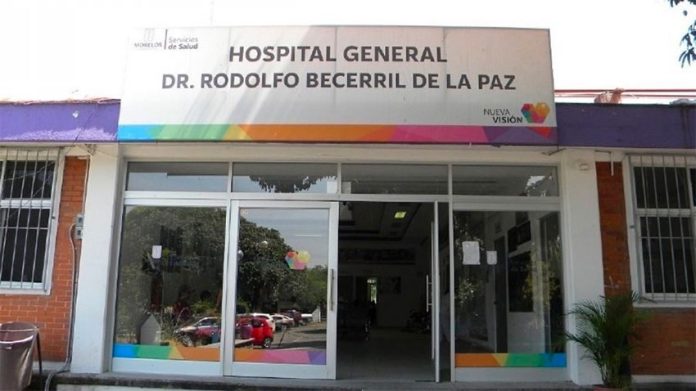
The Morelos hospital where a kidnapping suspect was freed.

Armed civilians attacked police in a hospital in Tetecala, Morelos, early Tuesday in order to free a suspected gang leader who was being treated and guarded in the facility.

The attackers arrived at the Rodolfo Becerril de la Paz Hospital around 1:40 a.m. aboard two vehicles. Armed with long guns and wearing ski masks, they began to open fire on the building.

They then entered the hospital and searched out a patient identified as Diego Arturo Olivares Jiménez, who had been arrested on charges of kidnapping.

The men subdued the police officer in charge of guarding Olivares and forced him to give them the handcuff keys. They then took the suspected gang leader out of the hospital and loaded him into one of the vehicles.

A state police officer opened fire in an attempt to stop the men, but they fired back and he retreated. The officer’s ear was grazed by a bullet in the confrontation.

The initial gunshots had alerted other officers in the area to the trouble and they attempted to stop the rescue operation, but were repelled by high-caliber rifle fire. The fighting lasted about five minutes and left two police vehicles damaged by bullets.

Olivares was wounded and arrested during a confrontation with the military on January 17. Two of his accomplices were able to escape capture during the operation.

Sources: Milenio (sp), Central de Noticias (sp)

Governor accuses environmental agency of giving Hyundai a free pass

0
The Hyundai plant in Tijuana.

Baja California Governor Jaime Bonilla Valdez has publicly accused the environmental protection agency Profepa of being corrupt after a Tijuana car manufacturing plant that was closed due to reports of pollution reopened only a day later.

He said that the agency cares more for the interests of the South Korean auto maker Hyundai, which citizens have denounced for emitting toxic gases, than it does for the health of people and the environment.

“Profepa is totally corrupted. It’s a shame that it has sold out. It does not care about the interests of the people, but rather the interests of its own pockets,” he said.

The Hyundai plant in the community of Maclovio Rojas was closed on Monday after neighbors complained that gases containing lead emitted by it were negatively affecting the health of students at a nearby school.

The plant was promptly reopened and functioning normally on Tuesday.

“The Hyundai company reestablished its operations without any justifications, and we are not going to let up on this issue,” Bonilla said.

He said that the Hyundai plant had promised to present a “contingency plan” to prevent the emission of pollutants into the environment before reopening.

Speaking on other allegedly corrupt behavior by Profepa in the region, federal delegate Jesús Ruiz Uribe said that construction companies continue to illegally extract sand and aquifer water in Tecate.

He said that the agency “has not done the corresponding inspections of those construction companies for the environmental impact” of their actions.

Source: Milenio (sp)

Playa del Carmen mayor apologizes to couple evicted from beach

0
Playa Mayor Beristain and the couple who were removed from beach.

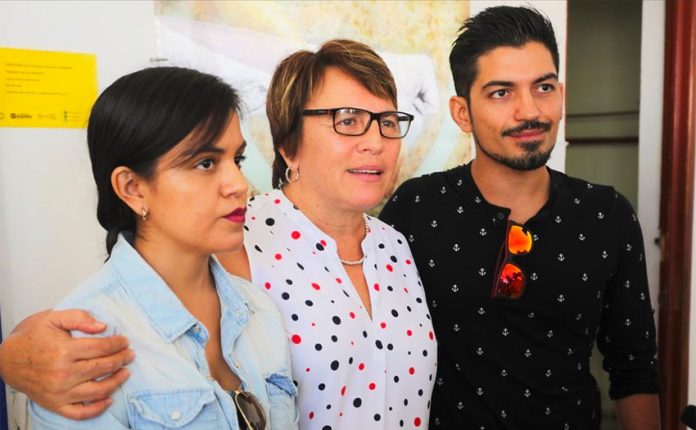
A couple who were arrested outside of a beach club in Playa del Carmen on Sunday got a public apology from the local head of government for what was widely viewed as an unlawful arrest and use of excessive force.

“In Playa del Carmen we will no longer tolerate these types of abuses, which in recent years had simply been forgotten. I will defend the rights of the citizens, of everyone, to enjoy their own land. Mexico is free and the beaches are public,” said Laura Beristain Navarrete, the mayor of Solidaridad, Quintana Roo, in which Playa del Carmen is located, on Twitter.

Tourist police arrested the couple after the management at Mamita’s Beach Club called to complain that they were not purchasing food or drinks from the establishment.

Videos posted to social media by onlookers show the woman identified as Azeneth Marín crying and saying police were hurting her and officers threatening those filming the incident.

“The meeting I had today with Azeneth Marín and Daniel Sánchez … is a request to respect everyone who wants to make use of the beaches. We are no longer in the past,” Beristain said.

Federal Tourism Secretary Miguel Torruco Marqués also commented on the incident on Twitter, saying that he was in communication with the Quintana Roo Ministry of Tourism, but that there are currently no charges filed by the affected citizens.

“I reiterate that in Mexico the beaches are public,” he said.

Solidaridad general secretary Alfredo Paz Cetina said that the municipal government has a zero tolerance policy for police and administrative high-handedness.

“We are not going to tolerate any bad conduct [by authorities]. We’re investigating in accordance with the law and whoever is responsible will be charged,” he said.

The incident went viral on social media, with many users denouncing the police and restaurant for taking such drastic action against the couple.

One user called for a beach picnic on the spot where it occurred next Sunday in order to protest the incident and raise awareness about Mexican citizens’ constitutional right to access the country’s beaches.

Source: Milenio (sp)

Wyndham aims to have 100 hotels in Mexico by 2022

0
La Quinta is one of the Wyndham brands that will see new properties open in the next two years.

Wyndham Hotels & Resorts is aiming to grow its presence in Mexico to 100 properties by the end of 2022.

The United States-based chain currently has 56 properties in 34 destinations across the country but has plans to open 19 this year and next, and another 25 in 2020.

The company’s vice president for operations in Latin America and the Caribbean, Eduardo Cruz del Río, said that reaching the goal of 100 properties will require investment of US $150-$200 million. The funds will come from private investors and other interested third parties, he said.

Separately, the company’s Latin America general director told a press conference that six new Wyndham properties are on the verge of opening.

Alejandro Moreno said that the Ramada in Acapulco, the Wyndham Puebla, the Ramada Encore Monterrey, the Wyndham Garden Saltillo, La Quinta Los Cabos and a Travelodge in Ciudad Obregón, Sonora, are slated to open in coming weeks.

“With the openings we have scheduled, we’ll have 62 hotels,” he said. “We have some [ongoing] negotiations to reach 65 this year. For 2021, we have the TRYP Guadalajara, the Ramada Encore at the Guadalajara airport and the Wyndham Garden Mazatlán.”

In an interview with the newspaper El Economista, Cruz del Río said that the Wyndham Grand Hotel and a Wyndham Esplendor Hotel are expected to open in separate towers of the same building in Mexico City on August 31.

“In the beginning, it was said that it would only be one brand [Wyndham Grand]. But you’ll be able to find the Esplendor, a lifestyle brand, and the Wyndham Grand, which is aimed at the business segment,” he said.

Cruz del Río also said that Wyndham is forecasting 6% growth in its Mexico-sourced revenue in 2020.

“We grew 3% in 2019 and this year we expect that the figure will double to 6% with greater [economic] certainty,” he said.

Cruz del Río said that the company saw “favorable numbers” in the second half of 2019 after a slow start to the year due to the change of federal government in late 2018.

Source: Milenio (sp), El Economista (sp)