The Italian vessel targeted this week by pirates in the Gulf of Mexico.
Pirates attacked and robbed an Italian ship in the Gulf of Mexico in the early morning hours on Tuesday.
The Italian Foreign Ministry confirmed that two Italian sailors were injured during the attack, the Efe news agency reported.
The vessel Remas, which was carrying a crew of 35, was boarded by eight people traveling on two small boats.
The 75-meter ship provides services to oil drilling platforms in the region and belongs to the Italian company Micoperi.
The pirates robbed everything they could during the attack, shooting one crew member in the leg and striking another on the head with a blunt object, but none of the injuries was reported as serious.
A patrol vessel on the lookout for pirates.
The two were taken to hospital after the boat was escorted by the Italian navy to Ciudad del Carmen, Campeche.
Piracy has increased off the coasts of Campeche, Tabasco and Yucatán in recent years. There have been around 100 cases since 2017.
Armed thieves board vessels and drilling platforms late at night and move quickly to take anything they find of value.
In January 2019, pirates armed with machetes and shotguns attacked two boats off the coast of Yucatán. After tying up the crew, they took the boats’ motors, GPS devices, loads of fish and other goods.
The boats remained adrift for several hours before they were discovered by another boat that towed them to port.
In November 2018, four masked men attacked a fishing boat in the same area, taking with them the boat’s motor, GPS, 120 kilograms of octopus and the crew members’ cell phones.
Due to the high levels of insecurity in the Gulf of Mexico, fishermen in Yucatán earlier this year called for authorities to reinforce surveillance efforts on the water.
The Yucatán Secretary of Public Security affirmed that it has launched operations to arrest pirates.
A rusty, old Volkswagen Beetle was the star of the government’s latest auction of assets seized from criminal organizations, selling for more than seven times its starting price.
The 1995 vocho, which had punctured tires and no side mirrors among other defects, sold for 20,000 pesos (US $1,035) at Sunday’s auction in Mexico City after going on the block at 2,799 pesos.
The 615% increase on the starting price was higher than that recorded for any other asset sold. Despite that result, the auction wasn’t anywhere near as successful as the government had hoped.
Sales of assets brought in a total of 16.2 million pesos (US $838,500), less than half the target amount of 32.5 million.
Six homes formerly owned by convicted drug trafficker Joaquín “El Chapo” Guzmán went under the hammer but only three of them sold, bringing in revenue of 4.35 million pesos.
This house in Culiacán was owned by ‘El Chapo’ Guzmán.
Ricardo Rodríguez, director of the Institute to Return Stolen Goods to the People, rejected any suggestion that the other homes failed to sell due to fear on the part of potential purchasers.
All three of El Chapo’s properties that did sell are in Culiacán, Sinaloa. In addition to the homes, the purchasers will take possession of their contents.
A home once occupied by Guzmán’s second wife, Griselda López, failed to sell, after going on the block at just over 11.2 million pesos.
The most lucrative sale at the auction held at the former presidential residence, Los Pinos, was that of a home in Los Cabos, Baja California Sur. Formerly owned by Tijuana Cartel leader Francisco Javier Arellano Félix, the luxury beachfront property sold for 6.25 million pesos (US $323,000).
All 24 vehicles on offer sold, including a 2012 Mercedes Benz coupé that went for 810,000 pesos, more than four times its starting price, and a 2002 Chevrolet Corvette that attracted a winning bid of 165,000 pesos, 515% above the reserve price.
An 18-carat gold watch encrusted with 60 sapphires sold for 343,950 pesos, 50% less than its actual value. All told, 37 of the 45 lots on offer were cleared but neither of two cargo ships was sold.
The funds raised at the auction, the fifth of its kind held by the government, will be used to buy musical instruments for children in Oaxaca who play in bands.
Foreign Secretary Ebrard, left, greets Bolivia's Evo Morales in Mexico City.
Mexico has granted political asylum to former Bolivian president Evo Morales, who resigned this week under pressure from protests and the military after claiming victory in a disputed election held last month.
President López Obrador said on Tuesday that he personally took the decision to offer safe haven to Morales.
“Let it be clear . . . I gave the instruction to offer asylum,” he said. “I feel very proud to lead a government that guarantees the right to asylum, it’s a point of pride.”
But the decision has divided opinion in Mexico.
The hashtags #EvoBienvenidoAMéxico (Evo Welcome To Mexico) and #EvoNoEresBienvenidoEnMéxico (Evo You’re Not Welcome In Mexico) were the top trending topics on Twitter in Mexico City after the government announced that it would grant asylum to Morales.
The first indigenous leader of the South American nation arrived Tuesday on a Mexican Air Force plane at the Mexico City airport, where he was met by Foreign Secretary Marcelo Ebrard.
His arrival comes three weeks after a presidential election that was plagued by irregularities. Millions of Bolivians claim that the results were rigged in Morales’ favor.
After an audit by the Organization of American States found “clear manipulation,” the president on Sunday offered to hold fresh elections but it wasn’t enough to put an end to protests that had spread across the country.
After the head of Bolivia’s armed forces asked Morales to step down in order to restore peace, he announced his resignation in a televised address to the nation, stating that “our great desire is for societal peace to return.”
Mexico’s government immediately offered asylum to the leftist leader, who held power in Bolivia for almost 14 years. Along with leftist governments in several other Latin American countries, Mexico characterized the ousting of Morales as a coup.
President López Obrador and Morales have a history of friendship and mutual admiration.
Morales in Mexico City today.
The former, who before entering politics was an activist who fought for indigenous rights, wrote to the Bolivian president in 2010 to convey his “deep respect for the way in which you have been able to represent the noble, conscious and progressive people of Bolivia.”
After López Obrador was sworn in last December, Morales called his fellow leftist “the shining hope for the people of Mexico.”
The two men have also bonded over their shared disdain for neoliberalism.
The decision to grant asylum to Morales allows López Obrador “to reaffirm his leftist bona fides,” The Washington Post said, in a year in which he has ramped up enforcement against migrants at the behest of the United States and urged approval of the new North American trade deal.
“I am sure giving Morales asylum is the good thing to do,” Carlos Bravo Regidor, a political analyst, told The Post.
“But is it right for Mexican foreign policy interests? I don’t know. Where does this leave Mexico? Are we now part of the Bolivarian axis?”
Emilio Álvarez Icaza, an independent senator and former human rights activist, said he approved of the decision to grant asylum as long as it didn’t indicate tacit approval of the modification to the Bolivian constitution that allowed the former president to extend his rule beyond two terms.
Critics of López Obrador have claimed that the president’s intention to hold a revocation of mandate vote three years into his six-year term is part of a ploy to extend his rule beyond 2024.
“I hope that, with this, the Mexican government is not sending the message that there is ideological support for remaining in power beyond term limits,” Álvarez said.
“If this is only a humanitarian response, if it remains only that, I support it. But if the Mexican government wants to build from here in an effort to legitimize extending the mandate of López Obrador, I would raise my voice,” he added.
Juan Carlos Romero Hicks, leader of the National Action Party in the lower house of Congress, was scathing in his criticism of the government’s decision.
“Mexico has traditionally given asylum in our territory to those fleeing dictatorships. Now, they [the government] are not seeking to give asylum to those fleeing tyranny but . . . to the dictator himself!” he wrote on Twitter.
In contrast, the national secretary of the Democratic Revolution Party supported the asylum decision.
“Our international tradition of granting political asylum to . . . persecuted people materializes today in the case of former president Evo Morales. It’s the correct decision . . .” Ángel Ávila wrote on Twitter.
Foreign Secretary Ebrard told a press conference on Monday that the decision was taken for “humanitarian reasons” in light of the “emergency situation” in Bolivia, where he claimed Morales faced a risk to his life.
After touching down in Mexico City, Morales lent credence to that view, telling reporters that “the president of Mexico saved my life.”
He said that the day before his resignation, a member of the army showed him messages that indicated that there was a US $50,000 price on his head.
The former president didn’t reveal what he planned to do in Mexico or how long he intended to stay. In a Twitter post on Monday, Morales said that he would soon “return [to Bolivia] with greater strength and energy.”
Before meeting the ex-president at the airport, Ebrard told reporters at the presidential press conference that it will be up to Morales to decide where he will live and if he requires special protection from the National Guard.
“What Mexico is obliged to do is offer guarantees that he will be safe in our country, I don’t know the details because I haven’t spoken to him . . .” he said early on Tuesday.
Greeting Morales at the airport, Ebrard said: “Welcome, Evo . . . Regards from President López Obrador and all the people of Mexico. You will enjoy freedom, security . . . and protection of your life . . .”
The retired senior citizens are engaged through an agreement with the National Institute for the Elderly (Inapam) which states that they are volunteers.
“The elderly citizens who work in our stores are part of a program of senior citizen volunteers. We signed an agreement with Inapam, which is in charge,” said company spokeswoman Gabriela Buenrostro.
At a press conference for Walmart’s “Irresistible Weekend” campaign, the store’s own version of the national shopping event called “Buen Fin” (Good Weekend), she said the workers receive government pensions.
“They are not Walmart employees. They are part of an Inapam program . . . retired people between the ages of 60 and 65 can have additional remuneration [through tips] in our stores and elsewhere in the industry.”
Seemingly unaware of the program, the president said the Labor Secretariat would intervene, calling it “a great injustice against the elderly on the part of Walmart.”
“The Labor Secretariat must intervene, it will intervene because all human beings have the right to a fair salary, it’s an enshrined right in the constitution,” he added.
The president said he had faith that Walmart executives would decide to pay the baggers now that the issue was being discussed in the media.
Most big-box grocery stores participate in the program.
The number of letter carriers is on the wane as is the quantity of mail they deliver but one constant remains: November 12 is the “Día del Cartero,” or Postman’s Day.
According to Correos de México, the national postal service, there were 10,200 letter carriers working across the country in 2013. Now, the figure has fallen to 7,819, a decline of 23% in just six years.
The growing popularity of private courier services for the delivery of packages and the decline in traditional letter writing are both to blame for the lower demand for postal services and as a result, fewer letter carriers.
Among those that remain is Inés Monsalvo Nosedal, one of a small number of women working in an industry dominated by men.
In an interview with the newspaper El Universal in the lead-up to this year’s Postman’s, and Postwoman’s, Day – which has been celebrated in Mexico since 1931 – Monsalvo said she was saddened by the decline in the number of letter carriers and concerned that they have fewer letters and packages to deliver.
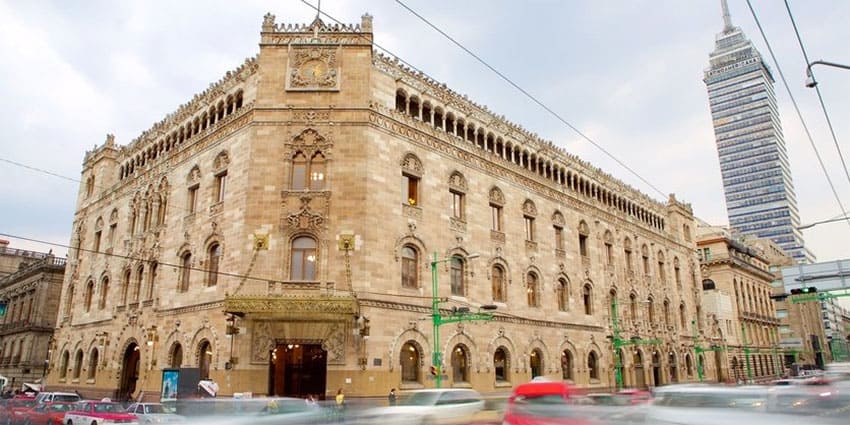
The postal service’s palatial headquarters in Mexico City.
But she remains optimistic about the future of her occupation and continues to carry out her work each day with the same enthusiasm and dedication as when she first started as a letter carrier 13 years ago.
Monsalvo said she faced a steep learning curve when she first entered Mexico’s postal service.
“My former mother-in-law was in the postal service in Naucalpan [México state] for many years. I previously worked as a bilingual secretary but I lost my job and she contacted me and said: ‘There’s work here but as a letter carrier, not in the administrative area,’ she explained.
“It was a challenge at the beginning because I didn’t have any idea about the work I had to do, it was something completely new for me but I liked it a lot,” Monsalvo added.
In addition to learning her mail routes, the cartera, as female letter carriers are called in Spanish, also had to learn to ride a bicycle to fulfill her duties.
Monsalvo now uses a sturdier tricycle to deliver mail in Mexico City but the dangers of the job remain.
“You have to be very careful in the street and here doubly so,” she said. “. . . I’ve fallen off, been knocked down – one day I arrived home with my knees scraped because I fell off my tricycle.”
Punctured tires and stolen mail are among other tribulations Monsalvo has faced while on the job.
When the volume of mail was greater, some workers dislocated their shoulders due to the weight they were burdened with on a daily basis, she said.
“. . . A lot of mail used to arrive [but] the advantage was that the routes were shorter [and] there were a lot of letter carriers,” Monsalvo said.
Despite the difficulties of the job, which also include making deliveries in dangerous parts of the capital, the postie has no desire to look for work elsewhere.
“Being a letter carrier is a very noble job, hopefully it will always exist and people won’t forget about the Día de Cartero,” she said, perhaps referring to the custom of giving a tip to letter carriers on November 12.
“Keep believing in the post office, keep sending letters and keep trusting us,” she said, although given the postal service’s record for painfully slow delivery, there might not be a lot of trust left.
Mass vaccination campaigns part of strategy to counter rabies.
Mexico has become the first country in the world to be certified by the World Health Organization (WHO) as free from human rabies transmitted by dogs.
The WHO and the Pan American Health Organization (PAHO) said in a joint statement that the last cases of rabies in the country were those of two people in México state who were attacked by dogs in 2005 and presented symptoms in 2006.
Mexico began the process to obtain rabies-free certification in December 2016.
“The validation process was extensive and included the creation of a group of independent international experts established by PAHO/WHO,” the statement said. It also included the preparation, by Mexico, of an almost 300-page file containing all the historical information about rabies in the country.
The experts traveled to Mexico in September 2018 to review the file and verify that it complied with all the requirements and a year later recommended the certification.
The heads of both organizations applauded Mexico’s achievement.
“Eliminating rabies doesn’t happen by accident,” said Dr. Tedros Adhanom Ghebreyesus of the WHO.
“It takes political resolve, careful planning and meticulous execution. I congratulate the government of Mexico on this wonderful achievement and hope many other countries will follow its example.”
Dr. Carissa F. Etienne of the PAHO said that by eliminating human rabies transmitted by dogs, “Mexico is showing the world that ending infectious diseases for the next generation is possible and is the right way forward.”
The organizations noted that to achieve the elimination of rabies, Mexico implemented a national strategy for the control of the viral disease.
It included mass vaccination campaigns for dogs that started in the early 90s, public awareness campaigns, timely diagnosis of the disease and the availability of post-exposure prevention measures in public healthcare facilities.
There were 60 cases of human rabies transmitted by dogs in 1990 but just three cases in 1999. Seven years later, there were none.
In order to keep it that way, the WHO and PAHO recommended continuing all rabies prevention, surveillance and control actions, noting that the virus continues to circulate in native animals such as bats.
The organizations said that rabies causes 60,000 deaths per year, mainly in Africa and Asia. Cases in Latin America and the Caribbean have been reduced by more than 95% in humans and 98% in dogs since 1983.
There have been no cases of dog-transmitted rabies in the Americas this year, they said.
The WHO and PAHO also noted that Mexico eliminated onchocerciasis – a parasitic tropical disease spread by black flies that can cause blindness – in 2015 and trachoma, an infectious disease that can also cause blindness, in 2017.
Jalisco’s capital will host the country’s first Christmas-themed amusement park in December.
A product of the creators of the Day of the Dead theme park Calaverandia, Navidalia will celebrate Christmas traditions in a similar way with immersive technological experiences, food and vibrant shows and displays.
The park will be divided into four Yuletide-inspired worlds, the flagship of which will be that of Mexican Christmas traditions. Another will be dedicated to the holiday’s Nordic origins.
A third world based on the Middle East will recreate the atmosphere of Jesus’s birth in Bethlehem, and the fourth will celebrate European Christmas traditions.
Each world will have its own distinct gastronomy, aesthetics and music.
One spectacle that is sure to stand out is Canticorum, inspired by the nocturnal Christmas customs at the Notre Dame cathedral in Paris. There will be a choir singing medieval pieces in their original languages, as well as an orchestra.
Other stand-out displays will include a gigantic nativity scene, in which the spectators will also be part of the decorations, and a large Christmas tree.
There will also be an ice road (not rink) for ice skating around the park, and the organizers hope that artificial snow will help kindle the Christmas spirit in the hearts of visitors.
A large lake in the park will be used for boat rides and dance presentations.
In addition to Calaverandia, Alteacorp has also organized the Festival GDLuz, which lights up Guadalajara in an array of bright colors in February. The company hopes to repeat the success of those festivals with Navidalia in December.
Alteacorp CEO Marcos Jiménez said that they wanted to offer something different from the stereotypical Christmas of the United States. Instead, they chose to concentrate on creating multisensorial journeys dominated by images of a very Mexican Christmas.
Such imagery and customs will include traditional lanterns, piñatas, warm fruit punch, the sweet fried snacks called buñuelos and the Latin American Christmas observance of Las Posadas.
Visitors must buy a ticket to take part in the park’s attractions at night, but the grounds will be open to the public free of charge in the mornings and afternoons for people to appreciate the displays and decorations.
Tickets cost 255 pesos (US $13) for children and 495 pesos (US $26) for adults. VIP tickets cost 685 and 1,999 pesos respectively. Discounted presale tickets will be on sale until November 18.
Navidalia runs from December 13-25 at Parque Ávila Camacho in Zapopan.
Dredging has begun on the canal in southern Quintana Roo.
The Quintana Roo government has begun dredging to extend the Zaragoza canal in order to spur marine tourism in the region.
The project will also boost trade by connecting the state capital Chetumal to the community of Xcalak.
Governor Carlos Joaquín González and military authorities inaugurated the project at the naval base located at the entrance to the canal. He said that opening a navigable route between the Caribbean and the bay of Chetumal is a strategic economic action.
“This project will allow new navigation routes that reinforce our commercial and tourism ties with Belize and all of Central America,” he said.
The canal will be extended 4.8 kilometers to connect the Caribbean Sea with the bay of Chetumal, bringing its total length to 6.3 kilometers. It will also be deepened to three meters.
On February 17, 2017, the state obtained the titles to the land on which the canal will be built, an area of approximately 339 hectares.
So far, 29 million pesos (US $1.5 million) have been provided for the canal project.
The state has requested another 400 million pesos (US $20.7 million) for the project for 2020.
Explosives were used to grab the cash from this Banorte ATM.
Thieves in Guanajuato have found a new income stream in bank machines although no one is saying how much cash they’re pulling in.
Since May, 14 ATM machines have been robbed in the wee hours of the morning in the municipalities of Celaya, Salvatierra, Irapuato and Guanajuato. In 11 of those cases, the thieves carried off the machines whole in pickup trucks.
At 3:37am on Monday, explosives were used to open a Banorte ATM outside a government workers’ (ISSSTE) hospital in Guanajuato.
The explosion caught the attention of private security guards at the hospital. But when they went to investigate, the thieves tied them up and stole their wallets and phones.
The incident was just the latest in a string of bank machine robberies.
On November 6, a group of armed thieves stole two ATMs — one from Santander and the other from BBVA — from inside a Bodega Aurrera supermarket in Celaya. Using vehicles to ram the metal security doors open, they also got away with televisions and cell phones.
On September 27, a Banorte ATM inside an ISSSTE clinic in Celaya was damaged when armed men attempted to open it and take it away using chains, but were unsuccessful. However, a robbery of two ATMs from a shopping center in Celaya was successful on September 6.
On August 26, thieves took four minutes to rob an HSBC bank machine in Celaya using chains and pickup trucks, without being confronted by police.
Thieves in Salvatierra used similar tactics to steal two machines from a Banorte bank in the city center on August 15, and two bank machines were stolen in Irapuato in May and June.
Karime López has become Mexico’s first woman chef to be awarded a Michelin star.
Head chef at the restaurant Gucci Osteria in Florence, Italy, owned by famous Italian restaurateur Massimo Bottura, López was the only woman in the Italian entries to be awarded a star this year.
A post on the restaurant’s Instagram account to celebrate the achievement said López’s menu “challenges the traditional perception of Italian cuisine, creating playful takes on classic dishes.”
“I am so happy for the entire team at Gucci Osteria . . . this award is a tribute to them and we are thrilled that our passion and commitment have been recognized in this prestigious guide,” López was quoted in the post. “I will continue to challenge myself and to create new experiences for our guests and I am excited for what the next year will bring.”
With this prestigious recognition, the young chef joins the ranks of other illustrious Mexican chefs who have also been awarded a Michelin star, including Carlos Gaytán, Indra Carrillo, Paco Méndez, Cosme Aguilar and Roberto Ruíz.
A native of Querétaro, López has worked in the kitchens of world-famous chefs such as Enrique Olvera of Pujol in Mexico City; Virgilio Martínez of Central in Lima, Peru; René Redzepi of Noma in Copenhagen, Denmark; and Seiji Yamamoto of RyuGin in Tokyo.
She is married to the Japanese chef Takahiko Kondo, head chef at Bottura’s three-Michelin-star restaurant Osteria Francescana in Modena, Italy. The two met while working together at Central, in Lima.