Home Blog Page 1775

Zapatistas to extend their control with 11 more autonomous zones in Chiapas

0
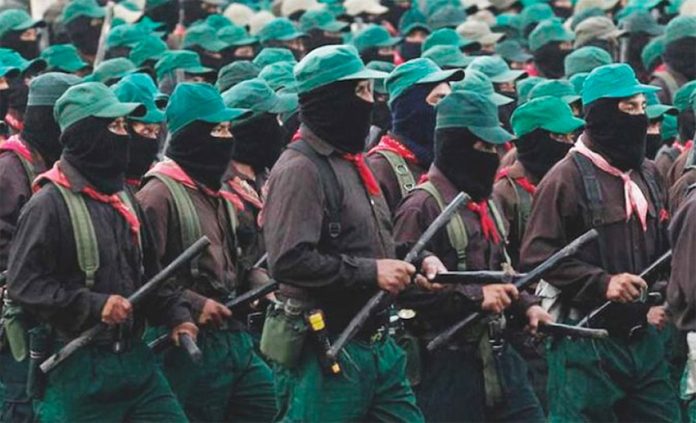
Zapatista soldiers on the march.

The Zapatistas are on the move in Chiapas, extending their control into another 11 areas of the state.

The Zapatista Army of National Liberation (EZLN) announced in a statement on the weekend it will create 11 new caracoles, or autonomous zones, in the southern state.

Zapatista leader Subcomandante Moisés described the extension as “exponential growth that allows us to break the blockade again,” referring to the Zapatistas’ claim that they have been fenced in by the federal government.

The EZLN already has five caracoles in Chiapas as well as 27 rebel Zapatista autonomous municipalities. The Zapatista army generally doesn’t allow state security forces or government inspectors to enter their communities and children attend schools with their own educational system.

The expansion will give the army 43 rebel areas.

President López Obrador, who has a strained history with the rebel group best known for staging an uprising on January 1, 1994 – the day NAFTA took effect, said on Monday the expansion was “welcome.”

“Go ahead, because that means working to benefit the villages and the people,” he said. “The only thing we don’t want is violence.”

The 11 new autonomous zones, with names including “Esperanza de la Humanidad” (Hope of Humanity), “Floreciendo la semilla rebelde” (The rebellious seed blooms) and “Ernesto Che Guevara,” are located in the municipalities of Ocosingo, Chicomuselo, Motozintla, Amatenango del Valle, Tila, Chilón and San Cristóbal de las Casas.

Despite López Obrador’s reaction to the EZLN announcement, some of the new autonomous zones are likely to be controversial, the Associated Press reported.

One of the new caracoles is to be located in Nuevo Jerusalén, a town amid the ecologically sensitive Lacandon jungle.

Zapatistas have said in the past that nature and farming can co-exist in and around their communities.

However, experts say that slash-and-burn agriculture, the rearing of cattle and thin jungle soil make human settlement and environmental conservation incompatible.
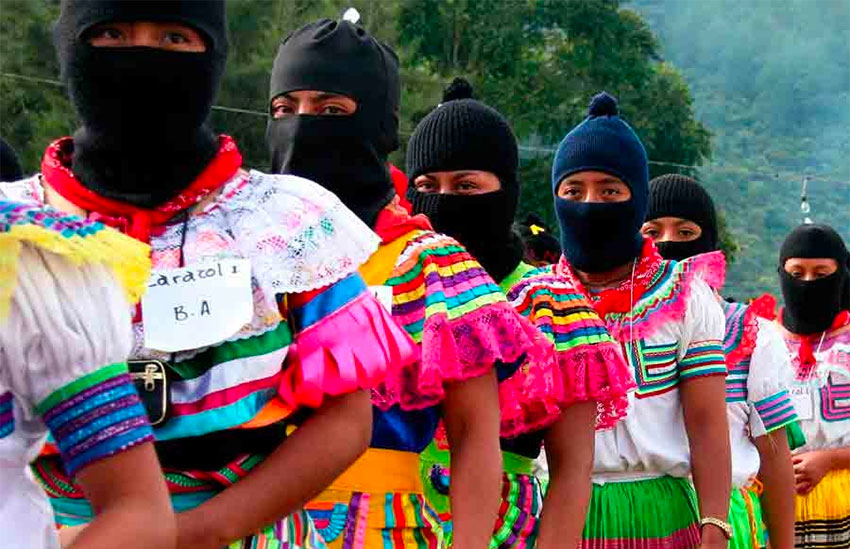
The Zapatistas’ expansion will bring to 43 the number of rebel areas they hold.

The Zapatistas’ announcement came just days after former EZLN leader Subcomandante Galeano (formerly Subcomandante Marcos) said in another statement that a music festival is being planned to protest against the government’s infrastructure projects for the south of the country, which include the Maya Train, the Dos Bocas oil refinery and the Isthmus of Tehuantepec trade corridor.

The rebel army threw down the gauntlet last New Year’s Eve at a ceremony marking the 25th anniversary of the its 1994 uprising, when Subcomandante Moisés outlined the Zapatistas’ commitment to opposing the government.

“We are going to fight. We are going to confront [them]; we are not going to allow [López Obrador] to come through here with his destructive projects,” he said.

In the statement issued on the weekend, Moisés said the “neoliberal mega-projects” will wipe out entire towns, destroy nature and turn the heritage of indigenous peoples into fat profits for investors.

Although the president expressed his respect for the Zapatistas during a visit to Chiapas last month that respect wasn’t reciprocated.

Moisés called the president “the new overseer” and charged that persecution and bloodshed are continuing under his rule.

Since the new government took office on December 1, a dozen members of the National Indigenous Congress and Indigenous Government Council have been murdered, the EZLN leader said.

Source: Chiapas Paralelo (sp), Associated Press (en) 

Foreign direct investment rose 1.5% in first half of year

0
Car factory
Manufacturing

Foreign direct investment (FDI) in Mexico rose 1.5% in the first half of the year to US $18.1 billion, preliminary figures show.

The Secretariat of the Economy (SE) said in a statement that investment of US $24.06 billion flowed into the country between January and June, while FDI worth US $5.96 billion was lost.

The net FDI result is $258 million higher than the preliminary investment figure reported for the first six months of 2018, which was $17.84 billion.

The SE said that both reinvestments and new investments contributed to the increase. It stressed that the figures are preliminary and could be subject to adjustments.

The ministry said that the FDI recorded in the first half of the year came from 3,104 companies, 1,558 trust agreements and 18 private foreign investors. Just over three-quarters of the total came from reinvestment and just under one-quarter was new investment.

The United States was the largest FDI source country, contributing 37.9%.

Canada, Spain, Germany and Belgium were the next biggest investors, providing 15.4%, 11.1%, 6.5% and 4.1% respectively. The remaining 25% came from other countries, the SE said.

The manufacturing sector was the largest recipient of foreign investment, attracting 42.8% of the total, or around US $7.75 billion.

The commercial sector attracted 12.9%; the financial and insurance industry got 9.9%; mining drew in 5.9%; the electrical energy, water and gas sector received 5.5%; and the media industry took in 5.4%.

A government official said in March that Mexico needs to attract $35 billion to $40 billion annually to stimulate growth.

The release of the FDI data came four days after the Bank of México cut interest rates for the first time in five years, citing slowing economic growth and lower inflation.

The bank said in a statement that it is important to “promote the adoption of measures that foster an environment of confidence and certainty for investment.”

The Mexican economy narrowly avoided entering into a technical recession after recording growth of just 0.1% in the second quarter of 2019. The economy contracted 0.2% in the first quarter.

Source: El Economista (sp) 

Repairing monument’s graffiti damage will be costly, time-consuming

0
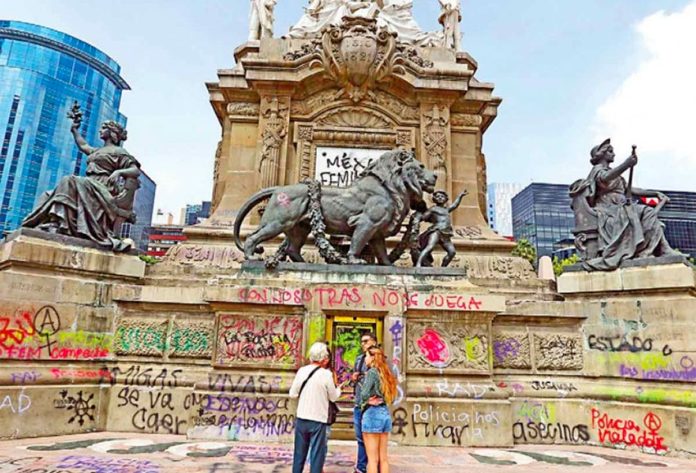
Graffiti damage at the Angel of Independence in Mexico City.

Repairs to Mexico City’s Angel of Independence monument, damaged during a protest on Friday, will cost between 15,000 and 30,000 pesos (US $760-$1,500) per square meter, according to an estimate by restorer Luis Campos Velazco.

The monument was damaged by graffiti during a protest against gender violence on Friday.

Campos, who participated in the restoration of the Chinese Clock on Bucareli street in 2010 and 2011, said the cost will depend on how badly the monument’s cantera and marble were affected.

The extent of the damage will be known when restorers from the National Center for Conservation and Registry of Artistic Property Heritage (Cencropam) release their report.

“The restoration will be very delicate, take a lot of time, and be very costly. That’s the opinion I have from what we’ve seen in the past, for example, from when I restored the Chinese Clock,” said Campos.

The Chinese Clock was restored by Luis Campos Velazco.

“The damage that the Angel of Independence sustained is permanent,” said Campos, “because the paint penetrated some millimeters into the centuries-old stone.”

From his experience, it is not advisable to use abrasives to remove the paint.

“The first thing to do is carry out a study to know what types of materials are in the paints used and what the restorers think is best to clean the affected areas. Generally, when they begin to restore a monument, the first step is to wash it with Canasol, a non-ionic soap . . .” said Campos.

Meanwhile, the deputy director of the artistic heritage department of the Institute of Fine Arts (INBAL) told the newspaper Milenio that in order to restore the Angel of Independence, the institute will work in coordination with federal and Mexico City authorities.

Dolores Martínez said the exact cost, extent of the damage and the number of specialists required to clean and restore the monument are still unknown.

She also implied there will be finger-pointing for the damage: “The Secretariat of Culture and the administration of INBAL endorse freedom of expression, and of course support actions to eradicate all types of violence against women.”

Source: Milenio (sp)

Observers see revenge as motivation for arrest of Robles and 2 others

0
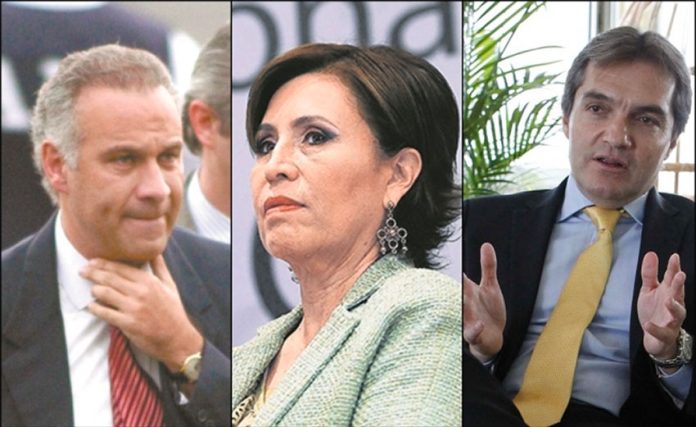
Collado, Robles and Ahumado: the three go back.

The arrests of three high-profile figures who played a part in a 15-year-old scandal designed to damage then-Mexico City mayor and presidential aspirant Andrés Manuel López Obrador have triggered speculation that the president is taking revenge.

The first to fall was Juan Collado. The lawyer for former president Enrique Peña Nieto was arrested on July 9 while dining at a high-end restaurant in an affluent Mexico City neighborhood with another of his famous clients, Pemex workers’ union boss Carlos Romero Deschamps.

Collado faces charges of involvement in organized crime and money laundering and a judge ordered preventative custody as he awaits trial.

Rosario Robles was next. A judge ruled last Tuesday that the former cabinet secretary must stand trial on corruption charges related to the so-called “Master Fraud” scandal in which billions of pesos in public funds were diverted via allegedly phony contracts with universities and shell companies.

Robles too is in prison as prosecutors prepare the case against her.

Then came the arrest of Carlos Ahumada. The Argentine-Mexican businessman was detained in Buenos Aires on Friday by Argentine authorities acting at Mexico’s request.

The federal Attorney General’s Office alleges that Ahumada failed to pay income taxes of just under 1.5 million pesos (US $75,000 at today’s exchange rate).

Under the terms of an extradition treaty between Mexico and Argentina, the government has a period of two months to complete the documentation required to request the businessman’s extradition.

However, an Argentine judge ordered the release of Ahumada on Sunday, ruling that he is not required to remain in custody as he awaits the outcome of any request.

Although the high-profile arrests were for unrelated crimes, the detainees are no strangers to each other: Robles and Collado were once in a romantic relationship, while all three were involved in the so-called videoescándolos, or video-scandals, plot that was designed to damage the electoral chances of López Obrador in the 2006 presidential election.

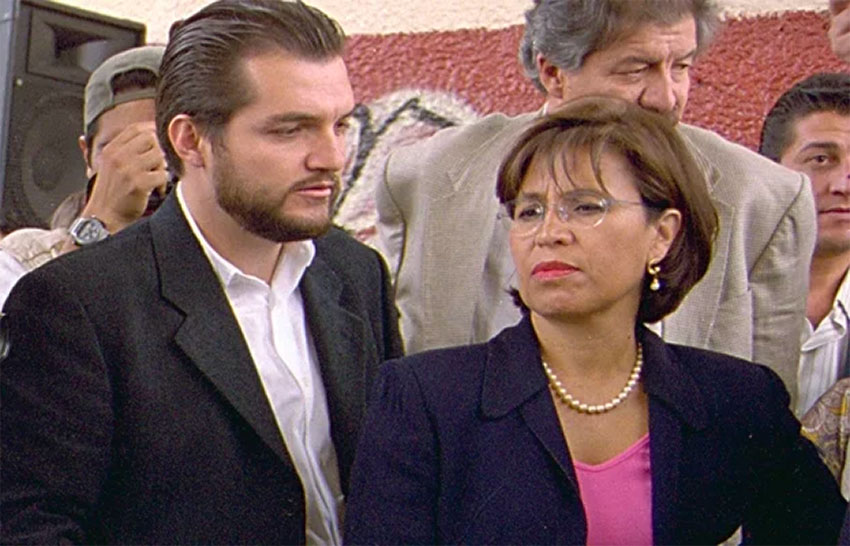
Ahumada and Robles in happier times.
Ahumada and Robles during better days.

In March 2004, the broadcaster Televisa aired footage secretly filmed by Ahumada which showed him handing over a wad of cash – US $45,000 – to René Bejarano, a Democratic Revolutionary Party (PRD) politician and close confidante of López Obrador. Bejarano served as the now-president’s personal secretary during the first two years of his tenure at the helm of the Mexico City government.

Other videos showing PRD politicians receiving or asking for cash from Ahumada were also broadcast by Televisa, while López Obrador’s finance secretary in his Mexico City administration, Gustavo Ponce, was filmed gambling in a Las Vegas casino.

The implication was that if people close to mayor López Obrador were corrupt, he was too.

According to Ahumada, Collado played an important role in having the videos aired on Televisa.

Bejarano said that Robles – who preceded López Obrador as mayor of Mexico City and served as national president of the PRD from 2002 to 2003 – ordered him to receive the money from her then lover Ahumada to finance PRD campaigns in the 2003 mid-term federal elections.

López Obrador, who represented the PRD in the 2006 election but narrowly lost to Felipe Calderón, accused former president Carlos Salinas de Gortari and National Action Party (PAN) senator Diego Fernández de Cevallos of being the architects of the video-scandals plot.

According to Ahumada, the two men paid 68 million pesos for the videos. The businessman fled to Cuba after they were screened but was extradited to Mexico in April 2004 and spent the next three years in jail.

In 2014, Ahumada initiated legal action against the PRD, claiming that the party owed him more than 500 million pesos because it never paid back the “loans” he provided. After his arrest, Ahumada said in an interview that Robles threatened to do “everything judicially and extrajudicially possible to destroy” him and his family if he continued to insist on cashing a promissory note issued by the PRD.

After yet more damaging footage surfaced in late 2005, López Obrador – who by that time was a presidential candidate – said the videos had nothing to do with him.

“You are never going to see me in a video where I am receiving money or someone is receiving money in my name,” López Obrador said in November 2005. “It has been demonstrated that I am totally clean.”

Fast forward to August 2019, and some political experts say that the three recent arrests look like an act of revenge on the part of the president.

José Antonio Crespo, a professor at the Center for Research and Teaching in Economics, said it appears that López Obrador has adopted an old Institutional Revolutionary Party (PRI) tactic of going after past or present political enemies using the long arm of the law.

Robles and López Obrador in 2000.

“If [the arrests] – which it just so happens are of people with whom López Obrador has a score to settle – remain as isolated cases, it will be the same scheme that we saw in the PRI years,” he said.

The PRI ruled Mexico uninterruptedly for more than 70 years until it was defeated in the 2000 presidential election by the PAN, which held power for the net 12 years.

Peña Nieto led the PRI back to power in 2012 and Robles reemerged as a force on the political scene, serving as secretary of social development, and later secretary of agrarian development and urban planning.

José Santillán, a professor at Tec. de Monterrey, also charged that the arrests appear to be an act of revenge given that Collado, Robles and Ahumada were all involved in the video-scandals.

He said that Robles’ case is especially suspicious because the judge who remanded Robles in custody, Felipe de Jesús Delgadillo Padierna, is the nephew of PRD lawmaker Dolores Padierna, who is married to René Bejarano.

PAN national president Marko Cortés described the arrest of Robles and Ahumada as revenge and political persecution by the López Obrador administration.

The president, as expected, rejects the accusations.

López Obrador said last week that he gave no order to arrest Robles, while yesterday he rejected any suggestion that the detention of Ahumada was an act of revenge.

“He himself confessed . . . that he met with [Carlos] Salinas and Diego Fernández de Cevallos to damage me, that’s not an invention. However, I don’t have any intention to take revenge on anyone . . .”

Source: El Universal (sp), Político (sp), Milenio (sp) 

New contract means 1.3-billion-peso party is over for Pemex union

0
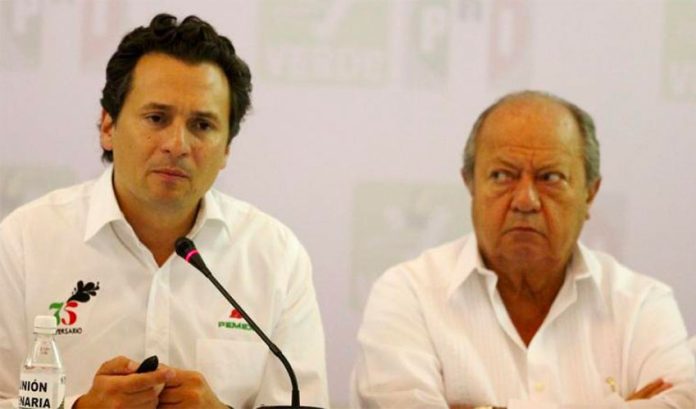
Former Pemex chief Emilio Lozoya, left and union leader Romero.

Government largesse towards the Pemex workers’ union perpetuated by three past presidents appears to have come to an end.

Vicente Fox, Felipe Calderón and Enrique Peña Nieto handed over more than 1.3 billion pesos (US $65.5 million at today’s exchange rate) to union leaders between 2005 and 2018 to pay for travel, commemorative festivities and consultancy fees, the newspaper Milenio reported today.

The funds were provided under Clause 251 of the collective agreement between the state oil company and the Pemex union. The latter had no obligation to reveal how the money was used.

The magazine Americas Quarterly today described Clause 251 funding as “a type of slush fund for the union’s leadership committee used for everything from alcohol to anti-wrinkle cream.”

However, in the union’s 2019-2021 contract with Pemex, which took effect on August 1, Clause 251A – which funded consultancy and celebrations for International Workers’ Day and the anniversary of the expropriation of the Mexican oil industry – was eliminated.

Other Clause 251 funding was slashed by almost 80%, although 343 national executive committee commissioners and 36 union secretaries retain reduced travel allowances.

The cuts are part of wider austerity measures implemented by the federal government.

According to Alfonso Bouzas Ortiz, a researcher at the National Autonomous University who specializes in labor issues, union leaders such as Carlos Romero Deschamps have used Clause 251 funding for their own personal enrichment for years.

Clauses 251 and 251A “have a history,” Bouzas said, explaining that it is one of political patronage and corruption.

“. . . They’re profoundly corrupt clauses,” he charged, pointing out that they provided for excessive travel allowances, bonuses and other unjustifiable perks.

Bouzas told Milenio that government resources have also been diverted by the Pemex union to the Institutional Revolutionary Party (PRI) to help fund election campaigns.

Former president Peña Nieto and Romero.

The most infamous example is the so-called Pemexgate scandal in which the Pemex union was found to have diverted 500 million pesos to the 2000 presidential campaign of PRI candidate Francisco Labastida.

Romero Deschamps, who became Pemex union leader in 1993 and has sat in both the lower and upper houses as a PRI lawmaker, always denied the charge and the case against him was dropped in 2006 due to a lack of evidence.

However, the Finance Secretariat’s Financial Intelligence Unit (UIF) last month filed criminal complaints against the union leader and members of his family for money laundering and illegal enrichment.

Claims of Romero’s corruption have been fueled over the years by opulent displays of wealth including a lavish wedding for his daughter in 2017.

Earlier this year, a group of dissident members of the Pemex union accused Romero of illegally selling off union property for personal gain.

“Groups within the union have wrestled for years to get Deschamps removed,” Lilia Pérez, author of Pemex RIP, told Americas Quarterly.

“But the circumstances are different this time, first because of the UIF and second because he doesn’t have legislative immunity.”

However, Americas Quarterly said that Romero – who is still officially the head of the union –  continues to enjoy strong support among the 100,000 Pemex union members, adding that Mexican law may be on Romero’s side because a constitutional reform in 2011 and 2016 justice reforms have given defendants “wider recourse against state investigations.”

“The law now better protects defendants’ rights, which is as it should be,” said Martín Vivanco, a Mexican lawyer and academic.

“. . . In Mexico, if you say the word corruption, [Romero] Deschamps would be one of the first names that comes to mind. But big fish know exactly how the legal system works, and as reported the charges against him would be very hard if not impossible to prove.”

Source: Milenio (sp), Americas Quarterly (en) 

Bicycle manufacturer inaugurates 500-million-peso industrial park

0
Bicycle manufacturer Mercurio officially opened its new industrial park in San Luis Potosí.

Mexican bicycle manufacturer Grupo Mercurio inaugurated its new 500-million-peso (US $25-million) industrial park in San Luis Potosí on Friday.

The 130,000-square-meter site will centralize the company’s operations and promote the creation of a collaborative business cluster for the cycling industry in Mexico.

The park consists of industrial premises for Mercurio Bicycles and Tylsa Pipes and Sheetmetal, as well as a distribution center for bicycle parts and accessories manufacturer Windsor Cycling.

The cluster also includes an assembly plant, repair shop and accessories warehouse for motorcycle manufacturer Trimer del Sureste, or TDS.

The firm plans to grow its operations by 60% with the new facility, as production capacity will increase to 800,000 units per year.

In 2018, Mercurio made 400,000 bicycles for the domestic market and 100,000 for export.

CEO César Ramos said the goal is to propel the creation of a business cluster that serves as a point of reference for the cycling industry in Mexico, as well as to take advantage of the geographical location of San Luis Potosí in order to best serve both the domestic and international markets.

He said that 75% of the plant’s production will be destined for the Mexican market, and the remaining 25% will be for international sales, including the United States, Canada, Europe, and elsewhere in Latin America.

The company already has an established presence in Colombia, Chile and Holland. Founded in 1964 with just 16 employees, Mercurio is considered the most diversified cycling company in Latin America.

Aiming to streamline the manufacturing process, the plant is equipped with the latest technologies for tube manufacturing, laser cutting, die-cast molding, welding and plastic injection.

Grupo Mercurio anticipates that it will increase its sales by 5-10% by the end of 2019 and hopes to raise to 80% the domestic manufacture of parts used by the cycling industry.

Source: Milenio (sp)

The people are happy, happy, happy, López Obrador assures reporters

0
Happy president of a happy country.

Women who have been protesting gender violence and the families of record numbers of homicide victims might not agree but according to President López Obrador, the country is wrapped in a blanket of bliss.

The president announced Monday that his September 1 report to the nation address will speak of the happiness of the Mexican people.

“The people are happy, happy, happy, there’s an atmosphere of happiness,” he declared at his morning press conference. “The people are very content, really very content and happy. So, there is no social ill humor.”

His remarks came just days after massive protests against violence against women in Mexico City ended with acts of vandalism and at a time when homicide rates are at record high levels and economic prospects are gloomy.

López Obrador’s comments elicited criticism on social media, where people questioned the president’s declaration using the hashtag #pejelandia, which alludes to the president’s nickname “El Peje.”

“In Pejelandia of course,” said one such criticism. “It’s a lovely place inside the head of [President López Obrador].”

“Which country do you live in, Mexico or #Pejelandia?” asked another.

Referring to the women’s protests, López Obrador said that “there are those cases, but in general, I’ll tell you now, and I’ll tell you in my report, the people are happy.”

The president will deliver the report at 11:00am on September 1 in the central patio of the National Palace in Mexico City.

According to a 2017 study, Mexico was the fourth happiest country in the world.

Sources: El Financiero (sp), Diario de Yucatán (sp)

Municipal official jails donkey for owners’ unpaid taxes

0
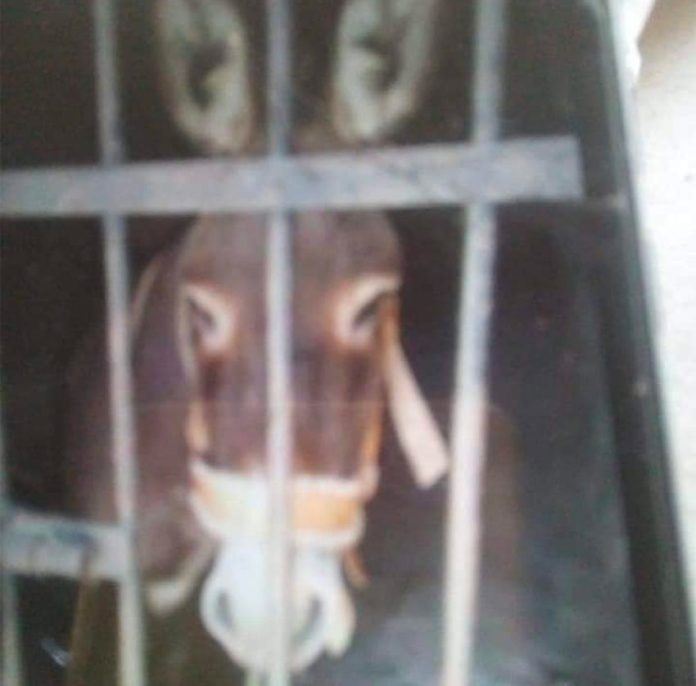
The unwitting donkey jailed over unpaid taxes.

A donkey has been booked into the town jail in San Sebastián Río Dulce, Oaxaca, apparently for unpaid property taxes.

According to its owners, municipal agent Dionisio Cruz Ramírez ordered the animal’s arrest so that the couple could not transport the firewood they use to cook.

But Pascual Cruz and Alejandra Mejía, 88 and 86 years old respectively, appear to be caught up in a power struggle between two groups in the community vying for control of local resources.

The couple maintain that they only use firewood transported by the donkey for domestic purposes, and not for economic gain.

They also claim to have been refused the right to take the animal food and water during several days of imprisonment.

The incarceration was denounced by the Network of United Animal Rights Activists of Oaxaca.

“It may not be of much interest or importance to others, but it is for the animal’s owners,” said the organization in a Facebook post, “given that it is one of their most valuable possessions, since they use it to transport firewood from the hills to their home.”

Aside from gathering firewood, the social conflict in San Sebastián Río Dulce has impeded residents from using the community basketball court or church, even burying their dead, if they are unable to pay the taxes imposed by the authorities.

Residents have also reported crops being destroyed as punishment for unpaid taxes.

It is not the first time a donkey has been locked up in Oaxaca.

A similar situation occurred 25 years ago in Etla when a donkey damaged a neighbor’s home. A public official ordered the animal’s arrest when its owners refused to pay for the damages.

Source: Milenio (sp)

In just 5 months, 61,000 cases of vandalism triggered power outages

0
CFE infrastructure has become a popular target for vandalism.

More than 61,000 acts of vandalism triggered power outages in the first five months of the year, Federal Electricity Commission (CFE) data shows.

The figure equates to one vandalism-related blackout every 3 1/2 minutes between January and May.

The newspaper Milenio, which obtained the CFE data through a freedom of information request, reported that 73% of 61,017 acts of vandalism that caused damage to the national electrical grid occurred in just nine states: Sinaloa, Tamaulipas, Michoacán, Sonora, Hidalgo, Chihuahua, México state, Tabasco and Baja California.

The CFE recorded the highest number of such outages in Sinaloa, where there were 10,178 cases.

The figure for the five-month period is higher than the combined number recorded for the same period in 2017 and 2018, when there were 9,841 cases of vandalism that caused blackouts.

Vandalism was responsible for 10% of the 101,920 power outages in Sinaloa in the first five months of the year. Other blackouts were caused by failures at CFE power plants and storms that damaged lines, among other reasons.

High numbers of complaints about power outages were recorded in the Sinaloa municipalities of Culiacán, Mazatlán, Elota, San Ignacio, El Rosario and Escuinapa.

In response, CFE personnel completed extensive repairs and maintenance of electrical lines that transmit power to the south of the state.

The second highest number of vandalism-related outages occurred in Tamaulipas, where there were 7,273 cases between January and May.

There were more than 5,000 cases in both Sonora and Michoacán, while Hidalgo, Chihuahua, México state and Tabasco all recorded more than 3,000 blackouts caused by vandalism. There were just under 3,000 cases in Baja California.

In contrast, there was not a single case of a vandalism-related power outage in Campeche, Yucatán and Zacatecas. In Colima, Guanajuato and Quintana Roo, there were just 126, 128 and 181 acts of vandalism, respectively, on the states’ electrical lines.

The high incidence of vandalism occurred despite CFE efforts to crack down on criminal activity affecting its infrastructure.

The state-owned utility last year increased by more than 60% the area in which air and land patrols of CFE infrastructure are carried out. It also pays 46 million pesos (US $2.3 million) a month to the army and navy to provide security for the national electrical grid.

Source: Milenio (sp) 

Under Robles, government sold off 1,600 hectares of protected areas in Baja

0
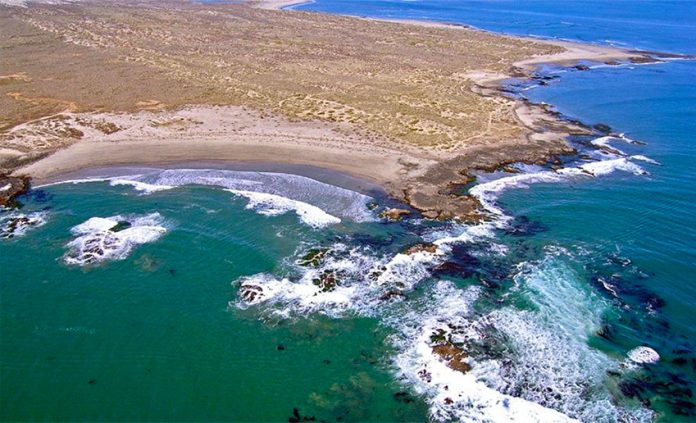
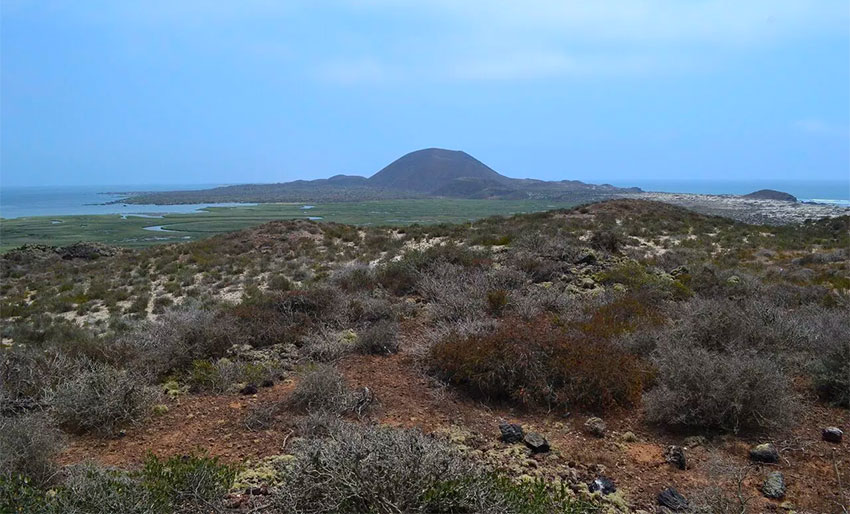
The Monte Ceniza reserve in Baja California.

Details have emerged of another case of alleged corruption involving former cabinet secretary Rosario Robles.

The previous federal government sold off two coastal nature reserves in Baja California at bargain prices without the knowledge of a conservation group that owned them.

The sale of more than 1,600 hectares of land in the Punta Mazo and Monte Ceniza national reserves, both of which are located near San Quintín in Ensenada, occurred while Robles was secretary of agrarian development and urban planning in the Institutional Revolutionary Party (PRI) government led by Enrique Peña Nieto.

Robles is currently in preventative custody as she awaits trial on charges that, through omission, she allowed over 5 billion pesos to be misappropriated from the federal budget while she was leading the Secretariat of Social Development and later, the Secretariat of Agrarian Development and Urban Planning.

The two reserves were subdivided into 10 lots and sold to nine individuals, one of whom was Héctor Bojórquez, a former leader of the National Farmers Confederation, which has close ties to the PRI.

[wpgmza id=”229″]

The land was sold for 127,523 pesos (US $6,400 at today’s exchange rate). The purchasers of the lots paid between 55 and 75 pesos (US $2.75 to $3.75) per hectare of land.

For a 300-hectare lot in the Monte Ceniza reserve, Bojórquez paid just 16,700 pesos (US $843), the newspaper Milenio reported.

The total price for the two reserves is a tiny fraction – 0.06% – of the US $10 million that the non-profit conservation organization Terra Peninsular paid for the land.

The group’s director, César Guerrero, told Milenio that neither he nor anyone else at Terra Peninsular was aware of the government’s sale until they went to pay property tax at the land registry office in Ensenada at the start of 2017.

“. . . They told us, ‘you don’t owe anything because there are titles that have just been assigned that supersede your property titles,’” he said.

Monte Ceniza was one of two reserves where land was sold off at bargain prices.

“It turned out that nine individuals, without any legal process and with a corrupt procedure, approached the then secretary of agrarian development [Robles] and obtained 10 property titles . . . [for] these hectares which were our property,” Guerrero added.

The purchasers claimed that the reserves were part of federally-owned lands within the so-called Tecate-Ensenada-Tijuana triangle. However, Milenio pointed out that they are located some 120 kilometers outside that area.

Terra Peninsular launched legal action that resulted in the organization once again being recognized as the legal owner of the two nature reserves. The group also filed criminal complaints against Robles and the nine purchasers.

The buyers initiated their own legal action, claiming that they were illegally dispossessed of their land. That claim has not yet been resolved.

“We’re afraid that the ruling will go against us,” Guerrero said, adding that if that occurs, “the land will be lost . . . because we know that it will later be sold to developers.”

The Terra Peninsular director said the two reserves are of significant environmental value.

In May 2018, a team of researchers from the conservation group discovered that the San Quintín kangaroo rat was still living in the Monte Ceniza reserve. The rodent was previously thought to be extinct.

Wetlands in the reserves – which are both located on San Quintín bay – are considered internationally important under the Ramsar Convention, an intergovernmental treaty that provides the framework for the conservation and use of wetlands and their resources.

Source: Milenio (sp)