Home Blog Page 1774

4 sargassum-gathering vessels under construction in Veracruz

0
One of the boats being built by the navy.

Four navy vessels that will gather sargassum from the waters off Quintana Roo are under construction in the port of Coatzacoalcos, Veracruz.

The first is expected to be ready in October.

The navy is building the 15-meter boats, which were designed by navy engineers, for 7.5 million pesos each.

A ramp at the front of each vessel will scoop up the sargassum, which will then be carried up by a conveyor belt and deposited for draining and bagging in 600-kilogram sacks.

Each boat will have a five-tonne crane for off-loading the sacks.

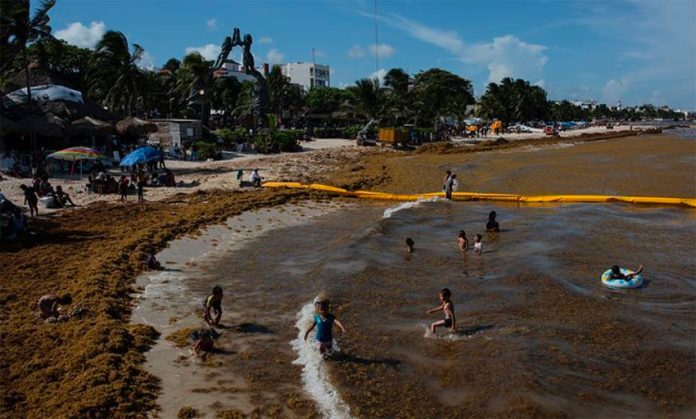
The navy has been leading the effort to combat sargassum on the beaches of the Mexican Caribbean since May.

The new sargassum-collecting vessels will be more efficient because they are specially designed to remove the macroalgae, Admiral Jorge Daniel Zamora Vuelvas said.

Most beaches in Quintana Roo are currently rated as moderate or low in terms of sargassum levels, a considerable decrease from just a few weeks ago.

Source: El Universal (sp), NotiCaribe (sp)

Guadalajara’s new metropolitan police force moves ahead as chief sworn in

0
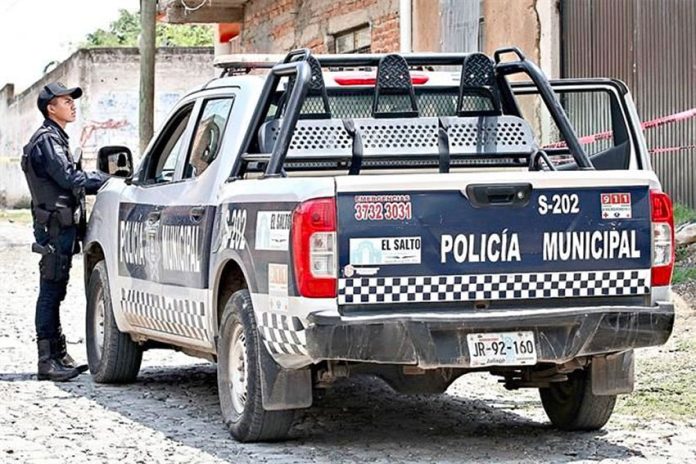
In Guadalajara, the Fuerza Única is out.

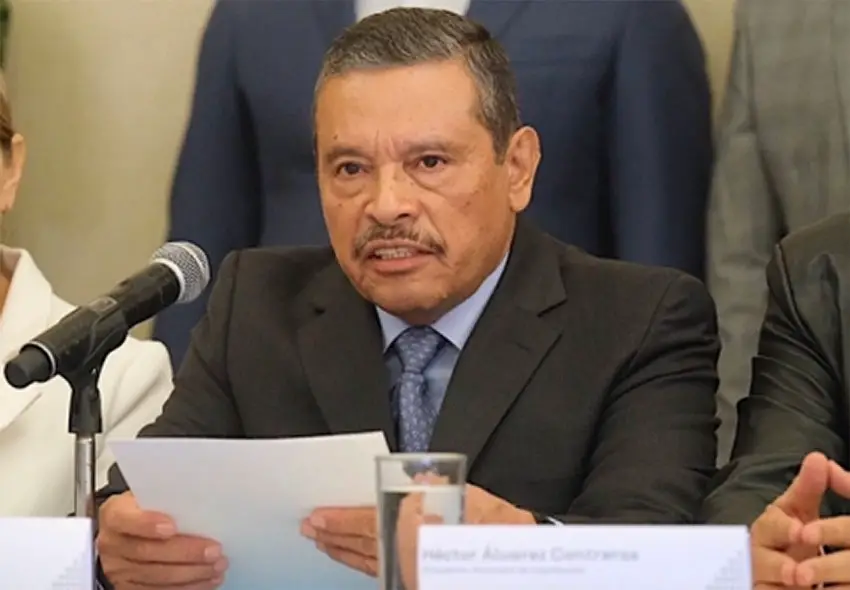
A retired army general and former secretary of security in Nuevo León was sworn in yesterday as the chief of the new metropolitan police force in Guadalajara, Jalisco.

Arturo González García will be responsible for a 7,500-strong force that will operate across the metropolitan area of the Jalisco capital.

Eight of nine mayors in the greater Guadalajara area as well as the Jalisco government voted in favor of giving the Metropolitan Security Agency direct responsibility for combating crime rather than only generating public security policy.

González was given a period of 30 days to prepare an operational plan for the force.

“It will be designed through the identification of the strengths, weaknesses, opportunities and internal and external threats in security matters in the metropolitan area,” the new police commissioner said.

The 64-year-old explained that his plan will be based on the National Police Model that was designed by the National Public Security System and approved by the National Security Council last month.

Federal Security Secretary Alfonso Durazo expressed confidence that the new metropolitan police force will help to guarantee peace in a city where there has “historically” been a strong organized crime presence.

“We’re going to close this cycle of violence that the state [of Jalisco] has lived” throughout the administrations of successive federal governments, he said.

“We won’t allow any criminal group to claim for itself the name of a federal entity such as Jalisco,” Durazo added, referring to the Jalisco New Generation Cartel, Mexico’s most power and dangerous criminal organization.

“Without apportioning blame or shirking responsibilities, federal, state and municipal authorities must join forces . . . We have the obligation to yield results.”

The security secretary predicted that the results in Guadalajara could be similar to those achieved by the single-command police force in the Comarca Lagunera region, which takes in parts of both Coahuila and Durango.

Guadalajara’s new metropolitan police chief.

“That area doesn’t even appear in [crime] statistics now,” Durazo said. “If there’s no coordination or single operational command, the possibility of effectively pursuing criminals is practically zero.”

Jalisco Governor Enrique Alfaro also expressed confidence that the new metropolitan police will help to reduce crime, adding that the capacity of municipal forces to combat organized crime has been exceeded.

Guadalajara Mayor Ismael del Toro pointed out that before the new policing model can be implemented, it must be ratified by municipal councils.

One municipality where local lawmakers have expressed doubt about the new police force is Tlaquepaque.

Morena party councilors yesterday called for more discussion, analysis and debate before a ratification vote is held.

Alberto Mercado Chavarín, Morena coordinator in Tlaquepaque, said the party will support any attempt to improve security in Guadalajara but asserted that it is not yet clear how the coordinated policing model will work.

“How is this Frankenstein going to work? Who came up with [the idea]? Where are the qualified voices that suggested this model? Yes to metropolitan coordination but let’s first see how [it will work], it has to be an applicable model,” he said.

Ranks of the new force, which replaces the Fuerza Única, will be drawn from the municipal police forces in greater Guadalajara.

Source: Milenio (sp), Informador (sp) 

Preventative prison ‘an atrocity,’ says inmate after waiting 17 years for trial

0
The two inmates who have waited a long time in jail.

Two México state men who have been held in prison for 17 years while awaiting trial will soon be released, a judge ruled on Monday.

Judge Felipe Landero Herrero ruled that Daniel García Rodríguez and Reyes Alpízar Ortiz, who were arrested for a murder in 2001 but never went to trial, will be released while the legal process continues. They will be required to wear electronic geolocation bracelets and check in with authorities every 15 days.

The organization Pena Sin Culpa celebrated the ruling and the new legal interpretation made by Judge Landero, calling it “transcendental and historic.”

“The release of Daniel and Reyes is a step forward for the achievement of justice and the fulfillment of human rights recommendations from international bodies,” the organization said in a press release.

García and Rodríguez have been held in preventative custody longer than anyone else in Mexico and the western hemisphere. If they are convicted, they face a maximum sentence of 15 years and eight months, shorter than the time they have already spent behind bars.

In a phone interview with the newspaper Reforma, García called it an “atrocity.”

“The use of preventative prison is an atrocity, it’s prehistoric, it shouldn’t happen in the modern world,” he said. “The ministers of the court have contributed to the continued use of the practice. No one should be punished without having been convicted of a crime.”

However, the criminal case against the two men is not over. García promised that he will cooperate with the process and the conditions of his release.

“If they demonstrate that we are guilty, and we need to go back to prison, that’s how it will be,” he said. “But if not, at the moment we are found innocent we will demand the reparation of the harm done to us, and an apology from the Mexican state.”

Source: Reforma (sp), El Imparcial (sp)

Legal, public pressure frees donkey jailed for 72 hours

0
Carrying firewood is a donkey's role in Río Dulce and other Oaxaca communities.

A donkey has been freed from jail in San Sebastián Río Dulce, Oaxaca, after 72 hours behind bars through the efforts of an animal rights organizations.

The animal was arrested over the weekend for its owners’ inability to pay local taxes.

Pascual Cruz and Alejandra Mejía, both in their 80s, did not have the means to pay the taxes, which other residents have denounced as abusively high.

After hearing that the couple had been refused the right to tkae the donkey food and water during its detention, animal rights activists in the state united to file an animal cruelty case with the state Attorney General’s Office.

Public pressure and the legal approach prompted the municipality of Zimatlán de Álvarez, in which Río Dulce is located, to demand the animal’s return to its owners without their having to pay the taxes.

Oaxaca animal rights group president Hilda Toledo said that activists had planned on going to Río Dulce to protest but the town is considered dangerous and outsiders must solicit authorization to enter, so they chose the legal route.

In Oaxaca, the mistreatment of animals can carry a punishment of three months to two years in prison, as well as fines up to 100,000 pesos (US $5,000).

Authorities in Río Dulce have been criticized for imposing inordinately high taxes for many community services, such as fees as high as 30,000 pesos for burials in the local cemetery.

In May 2017, municipal agent Carmelo López denied a family the right to bury an elderly relative for five days until they paid a fee of 20,000 pesos.

Toledo said she and other activists will keep an eye on the situation in the coming days.

Source: El Universal (sp)

He’s only 18 but this Chihuahua thief has been arrested 43 times

0
'The Nuisance,' a busy thief.

His nickname means “The Nuisance,” and for good reason. At just 18 years old, Juan Isaac “El Calilla” V. E.,  has been arrested 43 times, mostly for assault and robbery.

He was arrested again on Monday in Cuauhtémoc, Chihuahua.

Police were searching for him in connection with a violent robbery as well as a number of other offenses.

In 2017, members of La Línea, an armed wing of the Juárez Cartel, cut off Juan Isaac’s right hand to teach him a gruesome lesson and warn other house burglars in the area.

This did not deter “El Calilla,” who continued to steal and rack up a lengthy criminal record.

He was located in the Emiliano Zapata neighborhood of Cuauhtémoc where he tried unsuccessfully to flee.

Violence has been on the rise in Cuauhtémoc. In June, it was one of 150 hot spots that received deployments of National Guardsmen to address crime.

It is the 17th most violent municipality based on homicide figures from February through July.

Sources: Milenio (sp), Televisa News (sp)

Homicide cases dip slightly in July; victims numbered 2,993

0
police line

Homicide cases fell slightly in July compared to June but Mexico remains on track to record its most violent year in recent history, statistics show.

There were 2,547 homicide cases last month, according to data published by the National Public Security System (SNSP), nine fewer than in June, which has been the most violent month of the year so far.

A total of 2,993 people were murdered in July. The figure is higher than the number of cases because there were two or more victims in some investigations.

The July homicide statistics show that the National Guard had scant impact in stemming the bloodshed. The new security force was formally inaugurated on June 30 and deployed to 150 regions across Mexico.

The most violent state in Mexico last month was Baja California, where there were 263 intentional homicide cases. México state was next with 215 cases, followed by Chihuahua, Guanajuato and Jalisco, where there were 202, 185 and 169 homicide investigations respectively.

In the first seven months of the year, 20,135 people were killed in 17,164 cases of intentional homicide, a 3% increase compared to the same period of 2018. Last year was the most violent since the SNSP began keeping comparable records in 1997.

The homicide rate increased in 18 of Mexico’s 32 states in the first seven months.

The biggest increase was recorded in Nuevo León, where the number of homicide investigations increased by 59% to 560 from 352 between January and July of 2018.

Homicide cases rose by 48% in Hidalgo, 41% in Sonora, 34% in Morelos, 21% in Jalisco, 19% in México state, 18% in both Tlaxcala and Chiapas and 14% in each of Tabasco and Mexico City.

The other states where homicides have increased this year are Michoacán, Guanajuato, Querétaro, Aguascalientes, Colima, Coahuila, Puebla and Zacatecas.

The biggest decline in violence was recorded in Baja California Sur, where the number of cases in the first seven months fell 59% compared to the same period last year.

Homicide investigations declined by 58% in Nayarit, 40% in Yucatán, 30% in Guerrero and 29% in Tamaulipas.

The other states where homicide numbers have declined in 2019 are Sinaloa, Durango, San Luis Potosí, Chiapas, Veracruz, Baja California, Campeche, Oaxaca and Quintana Roo.

With just 18 intentional homicide cases between January and July, Yucatán has seen the least deadly violence of any state this year.

There were fewer than 50 cases in both Campeche and Baja California Sur, while the number of homicide investigations in each of Aguascalientes, Durango, Tlaxcala and Nayarit was under 100.

Along with homicides, the number of femicides – women and girls who were killed on account of their gender – also rose.

There were 540 femicide investigations between January and July, a 9% increase compared to the 494 cases in the same period last year.

Veracruz recorded the highest number of cases, with 114, followed by México state with 53, Puebla with 36, Nuevo León with 32 and Mexico City with 26.

Source: El Financiero (sp) 

Laboratory prototype produces biogas from sargassum

0
sargassum
A new energy source.

Scientists in Yucatán have developed a laboratory prototype of a system that converts sargassum into a biogas that could be used in the home or to generate clean energy.

Raúl Tapia Tussell, head researcher in the renewable energy unit at the Yucatán Scientific Research Center (CICY) in Mérida, told the newspaper El Economista that work on the project began in 2017 after large quantities of sargassum began washing up on the Yucatán coast.

“The problem wasn’t as big then as it is now but from that time . . . we started to work with the seaweed that arrived at the port of Progreso,” he said.

Tapia explained that once the sargassum is cleaned and dried, it is mixed with a fungus that breaks down the lignin in the seaweed and generates methane.

The biogas could be used as a fuel source for stoves and heaters or to generate electricity using a process that is less contaminating than that powered by fossil fuels.

The CICY researchers are applying for a patent for their prototype system from the Mexican Institute of Industrial Property.

The next challenge, Tapia said, will be to develop the infrastructure needed to generate the sargassum biogas outside the laboratory, and to store and distribute it.

“That is one of the most complex parts of the project because it requires economic resources . . .” he said.

“It’s methane gas and it could even be used for motor vehicles but . . . its use . . . depends . . . on having the molecular transformations systems and storage [capacity] . . .” Tapia explained.

The researcher said that other benefits of using sargassum to generate biogas are that it is free and it arrives on the coastline naturally. Tapia also said that the use of a seaweed as a fuel source would get it out of the sea and off the beach, where it can cause environmental problems and discourage tourism.

The massive arrivals of sargassum on the Caribbean coast of Mexico have led to the development of a variety of uses for the macroalgae such as making shoes, paper, a Mother’s Day message and even houses.

The masses of sargassum on the beaches of Tulum also inspired an impromptu nude photoshoot last year by renowned New York photographer Spencer Tunick.

Source: El Economista (sp) 

National Security System sees new ‘super police’ role for municipal forces

0
The government has ambitious plans for municipal cops, who will do more than just ride around in patrol vehicles.

The federal government has a new plan for municipal police forces that will take them into completely new territory.

The so-called “super” police will have more to do than just carry out patrols and chasing criminals caught in the act of committing an offense.

They are to be security forces with the capacity to prevent crimes, carry out investigations, analyze evidence and receive criminal complaints. The new model calls for the creation of investigative teams within municipal police departments that will include criminologists, psychologists and legal professionals.

In addition to investigating crimes, the teams will be responsible for identifying criminal patterns and analyzing offenders’ aims and motivations.

“[It’s] urgent that [municipal] police assume a proactive and much more strategic role in order to contain, prevent and reduce security problems . . .” states a document that explains the plan, part of a new National Police Model designed by the National Public Security System (SNSP) and approved last month by the National Security Council.

The SNSP – a division of the Interior Secretariat – proposes the construction or adaptation of municipal police stations so that officers are able to offer personalized attention to victims of crime in an environment that generates trust.

“At the very least, these spaces must include areas for medical, legal and psychological attention as well as a [children’s] play center,” the document says.

In addition to having the capacity to file criminal complaints at police stations, municipal officers should also be able to do so remotely, the SNSP said.

Such a system is already in effect in Querétaro, where both municipal and state police use tablet computers to file robbery reports at the scene of a crime.

The police model document says that if municipal officers have the capacity to receive criminal reports, the quality and quantity of information they have about security problems will increase.

That, the SNSP argues, will enable municipal police to develop more effective anti-crime strategies and thus reduce the incidence of offenses in the communities in which they work.

Municipal police are generally considered the weakest link in the chain of Mexico’s security forces, and have been implicated in countless cases of corruption and collusion with organized crime.

They are also short on numbers: President López Obrador said last week that more than 100,000 additional municipal and state officers are needed across the nation in order to meet international standards for per-capita police numbers.

Source: Reforma (sp) 

Historic rulings allow 2 individuals to possess cocaine for personal use

0
A judge's rulings allow two to use cocaine.

Two historic court rulings that allow the possession of cocaine for recreational and personal use could hasten the debate over decriminalizing drugs.

Víctor Octavio Luna Escobedo, an administrative court judge in Mexico City, made the decisions in response to injunction requests filed on behalf of the applicants by Mexico United Against Crime (MUCD), an organization that opposes the prohibition of drugs.

“Our objective with this and other cases has been to foster public discussion about drugs and force the reorientation of security policy. We want to promote different strategies through innovative means and up to now we’ve been successful,” said director Lisa María Sánchez Ortega.

The judge attached a range of conditions to his “authorization” for the two people to use cocaine.

Consumption is limited to 500 milligrams per day and the users must not drive vehicles, operate machinery or engage in employment while under the influence of the drug. They are also prohibited from using cocaine in public places or in the presence of minors and must not attempt to induce others to consume the drug.

Justifying his rulings, the judge said that cocaine can be used for a variety of reasons including “tension relief, the intensification of perceptions and the desire [to have] new personal and spiritual experiences.”

The injunction requests argued that prohibition of cocaine violates the constitutional right to “free development of personality.”

Luna’s rulings are backed by a report from the National Commission Against Addictions that says that cocaine consumption doesn’t pose a “significant risk to health, except in the case that it is used chronically and excessively.”

But the judge’s decisions could be overturned.

At the request of the health regulatory agency Cofepris, Luna’s rulings are to be reviewed by three collegiate court judges.

If the judges ratify the rulings, the decisions will stand. If they don’t, there is no legal recourse for the applicants. Another possibility is that the collegiate court will refer the matters to the Supreme Court.

But regardless of which court hands down the rulings, they will be definitive and not open to appeal, said MUCD lawyer Víctor Daniel Gutiérrez Muñoz.

Sánchez said that Mexico United Against Crime is not seeking a court declaration that the prohibition of cocaine is unconstitutional, as occurred with marijuana in February.

“We’re not pursuing massive injunctive relief and there won’t be a campaign similar to #CannabisConPermiso [Cannabis with permission] . . . This is the first time that, in the first instance, [an injunction request] has been resolved in the affirmative and what that tells us is that there is a different way to deal with the issue of drugs from the judiciary,” she said.

Sánchez explained that if more judges grant authorization to use cocaine, MUCD could consider calling on lawmakers to legalize it.

“Drug policy reform doesn’t start and end with cannabis, the rest of the markets should also be regulated,” she said.

“[The cocaine rulings] are a step to generate debate. We want to foster discussion about an issue that continues to be taboo and we have to work with [different] sectors of society. . . Current drug policy is a failure in all respects,” Sánchez said, charging that there is too much emphasis on prosecuting drug users rather than traffickers.

Before she was sworn in as interior secretary, Olga Sánchez Cordero said that then president-elect Andrés Manuel López Obrador had given her a “blank check” to explore the possibility of legalizing drugs as well as any other measures that could help restore peace to the country.

However, Congress hasn’t legalized any narcotics since the new government took office in December and violence has increased.

But the MUCD director said she has met with lawmakers of all political persuasions including representatives of the ruling Morena party and expressed confidence that debate about the impact of drugs on society – and court rulings – could ultimately lead to their decriminalization.

“The first rulings related to cannabis in other countries are 20 years old. However, there are no precedents of similar judicial decisions with other drugs. Mexico and its judicial rulings are setting important precedents for other courts,” Sánchez said.

According to the 2016-17 national drug and alcohol survey, 3.5% of Mexican adults have used cocaine, while 9.9% of respondents admitted to having used an illegal substance at least once.

Source: Animal Político (sp) 

Oaxaca student accepted not only at UNAM but 4 other universities

0
Eliud Pizarro of Oaxaca.

Oaxaca student Eliud Pizarro had a backup plan when he applied for admission at his dream university, the National Autonomous University of México (UNAM), but he needn’t have worried.

Not only was Eliud accepted by UNAM but also by the National Polytechnic Institute of Mexico (IPN), the Metropolitan Autonomous University (UAM) and the Meritorious Autonomous University of Puebla (BUAP) after applying to them all to hedge his bet.

In addition, the Benito Juárez Autonomous University of Oaxaca (UABJO) in his hometown of Oaxaca offered him a spot in its medical school.

“I trusted that if I studied hard, I could accomplish it,” he told the newspaper El Universal, “but I also wanted to have a safety option and chose those five schools.”

Throughout his public education, Eliud never considered himself exceptionally diligent, but his enthusiasm for mathematical physics allowed him to get good grades.

The son of teachers and motivated by his brother’s engineering degree at IPN, Eliud is one of the 15,499 students accepted by UNAM this year. A total of 153,000 applied.

He is also one of an average 500 Oaxacan students who leave their home state each year to further their studies in Mexico City, according to the National Association of Universities and Higher Education Institutions (ANUIES).

“I decided to apply for the economics program because it is a subject that has interested me for many years. I want to develop a career in the private sector, but I’d also be interested in public office,” said Eliud.

“In the case of the medical degree, that field had always appealed to me,” he added.

Four of the five universities that accepted Eliud are the most sought-after schools in the country, according to national rankings. Only 30% of prospective students pass the entrance exams.

Now a couple of weeks into his first semester, Eliud is happy and enjoying his new life.

“I’m very excited about my future.”

Source: El Universal (sp)