Home Blog Page 1850

15 dead, 35 injured after bus, truck collide on Veracruz highway

0
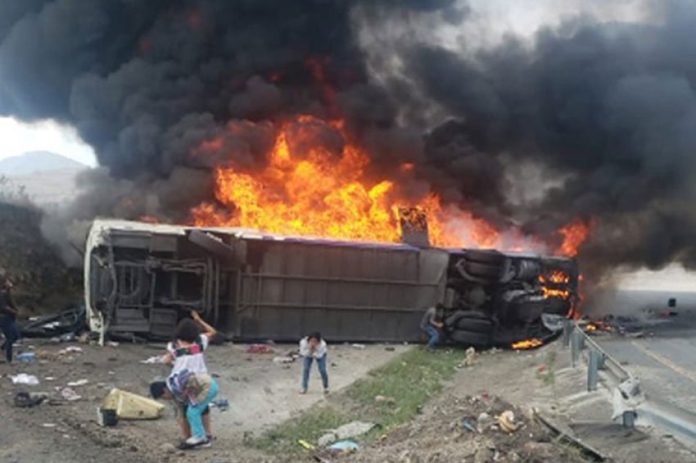
The bus in this morning's accident.

Fifteen people have been confirmed dead after a bus and truck collided on a highway in Veracruz this morning.

Authorities said the accident occurred at 10:25am on a stretch of the Puebla-Veracruz highway in Maltrata, a municipality about 20 kilometers east of Orizaba.

Both vehicles overturned and burst into flames. Most of the dead were bus passengers trapped inside the burning vehicle. The two occupants of the truck were also reportedly killed.

Authorities said the death toll could go higher because of the serious condition of some of the 35 people who were injured.

Paramedics from Ciudad Mendoza, Orizaba, Ixtaczoquitlan and Maltrata attended the crash scene and transported victims to several different hospitals in the area.

State, federal and municipal police also attended the accident as well as firefighters, who extinguished the burning vehicles. The highway was closed in both directions.

The wreckage of the semi after the accidenton a Veracruz highway.
The wreckage of the semi after this morning’s collision.

According to some media reports, the bus lost its brakes before slamming into the semi-trailer.

The newspaper Milenio reported that the passengers in the bus were parishioners from two different Catholic churches in Tuxtla Gutiérrez, Chiapas, who were returning home after visiting the Basilica of Guadalupe in Mexico City.

Source: El Sol de Cordoba (sp), E-Consulta (sp), Milenio (sp), La Jornada (sp)

Give the guy a chance: praise for AMLO despite mistakes, bad ideas

0
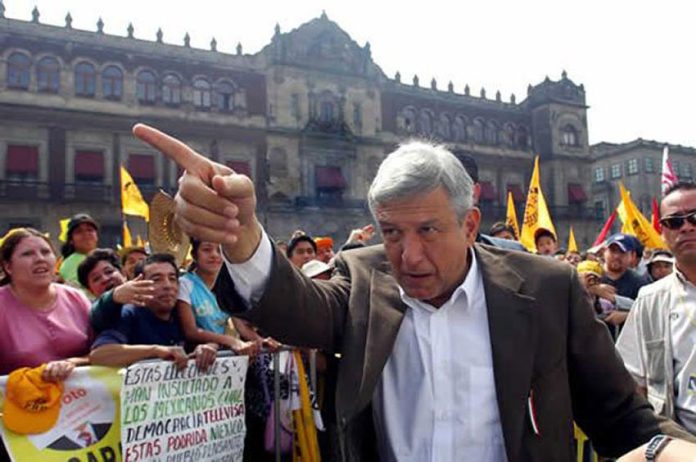
AMLO after losing the 2006 election.
AMLO after he lost the 2006 election.

It’s no secret that I’m a pretty big fan of Mexico’s new president. I was excited about him the first time he ran in 2006 and bitterly disappointed and indignant that he didn’t take the presidency then.

Not to beat a dead horse, but why not do a recount if they were so sure of the outcome of that razor-thin result?

My students at the time, high schoolers in an elite American school, thought he was crazy and irresponsible for declaring himself the “legitimate president” in Mexico City’s zócalo, but as I told them, what would anyone do if they were certain they weren’t getting a fair deal – especially with stakes so high?

When he lost a second time it was more expected, and a picture of me from that election day shows a sour, tired face. This third time turned out to be the charm, and as an American, I am proud to say that I have at least one president I’m happy about.

I still can’t help but wonder what would have happened, though, if he’d become president in 2006. We certainly would have avoided the bloodbath of the Calderón years that the “war on narcos” wrought. Mexico is still suffering the consequences, with no real end in sight. After beating the proverbial beehives, we’re still being swarmed.

Like many places in the world, and greatly as a result of social media and the blurred lines between real, factual information and plausible-ish lies, often in meme form, Mexico has become more politically polarized. People who don’t like AMLO really don’t like AMLO, and the number of those willing to believe that he’s the next Hugo Chávez is alarmingly high.

Despite their fears, he has yet to move to destroy capitalism in Mexico, and long lines in front of empty stores for basics like bread and toilet paper are something that only exist in the imagination of his most panicked opponents. I’d be willing to bet a lot of money that that’s where they’ll stay for the remainder of his term.

President López Obrador has been in office for about six months now, though to to hear some you’d think he’d been king of Mexico for the past 40 years. Every new trouble, every new statistic that doesn’t make Mexico shine, is considered a direct result of his faulty guidance. Needless to say, this is unfair. Give the guy a chance!

Before continuing to sing his praises, let me make it clear what I’m not saying: I know that he’s not perfect or untouchable; he’s made mistakes and will continue to make mistakes. I know he’s had some bad ideas. He’s a flawed human being, after all, like all of us.

But I think he’s sincerely trying to do right by his country without also trying to unfairly enrich himself and his supporters, and that kind of focused effort is much more than I can say for many of his predecessors.

From the start, AMLO has established an openness that few others have matched: he began his time in office by converting Los Pinos, traditionally the presidential residence, into a public space, choosing instead to commute from his own home in the south of the city.

He instituted the mañanera (the morning report) in which he gives a report on the goings-on in the government and country, and responds to questions from journalists for a full hour. I have watched a few of these, and found it especially notable how patiently he responded to a 20-minute interrogation by Jorge Ramos.

In my own opinion Ramos was blatantly rude and disrespectful, continuously pushing and insisting on his points, unsatisfied with any answer. I watched as the president maintained patience, composure and earnest openness way past the point at which I myself would have, quite frankly, lost it.

One could argue that his morning report is self-serving, and that would be at least somewhat right: it allows him to set the agenda for the day and to defend himself against criticism and attacks first thing in the morning. But it’s also an incredible exercise in democracy, and it’s one that no president in recent history has even attempted to do.

AMLO has also made a show of not using the presidency to enrich himself. He claims that money is unimportant to him personally, and frankly, I believe him. Though trying to reduce the salaries of government functionaries turned out to be a fiasco, he famously reduced his own salary, continues to drive his Jetta to work and sold the presidential plane, insisting on traveling coach on commercial airlines.

He does not have a private security detail (which, in my opinion, is just a terrible idea and a complaint that I do have against him).

The president came into his term swinging: one of his first orders of business was to tackle the problem of petroleum theft, which turned out to be much bigger than anyone had suspected. It had grown exponentially during the years after Pemex was privatized, and suddenly it became clear why gasoline costs were rising so much in Mexico when the cost of petroleum was decreasing for rest of the world.

Pressure to let things get “back to normal” mounted quickly, especially in areas that were affected by gas shortages. AMLO, however, stood his ground, refusing to let the well-established oil theft infrastructure win, all the time pleading for those involved to give up dishonest work for upcoming training, investment and jobs.

To be fair, a vague promise of future income is hardly helpful when one has to get food on the table now, but I was touched by his refusal to demonize the participants.

Currently, the battle is with the public health system. Like other institutions, it has not been immune to gross corruption and mismanagement (this is a criticism of the oversight and administration, not of the personnel that care for patients). An especially heinous example was the revelation in Veracruz, my home state, that children with cancer were being given saline solution instead of real medicine during their chemotherapy because the money, like money for most public endeavors in Veracruz, had mysteriously disappeared.

There is much criticism now because of a lack of funds, but trying to fix the problem, much like the issue of gas theft, requires bringing it out into the open for all to see. When AMLO says that budgets for pretty much every institution in the country were constantly being ransacked, he’s not wrong.

Not everyone agrees with his methods. Some think he’s doing more to “beat the beehive” than Calderón ever did: he’s not only trying to defeat gangs of criminals, but an entire well-established system of corruption that’s been in place for decades in every major institution and level of government in the country.

At least for the people benefiting, counting on being able to sweep things under the rug and a defeatist attitude among the powerless was certainly the preferred way of handling things, and in the absence of a network of political protection, they’re rightfully worried.

In addition, I think many people have deluded themselves into believing that their particular kind of corruption is harmless, and in the end, somehow contributes to the greater good.

All this is to say: I like him. I like that he’s willing to swim upstream. I like that he’s open about his intentions. I like that he spends every morning answering questions.

And for the first time in my nearly 18 years living in Mexico, I really and truly have hope that this country can reach its full potential.

Sarah DeVries writes from her home in Xalapa, Veracruz.

New 132-turbine Oaxaca wind farm is largest in Latin America

0
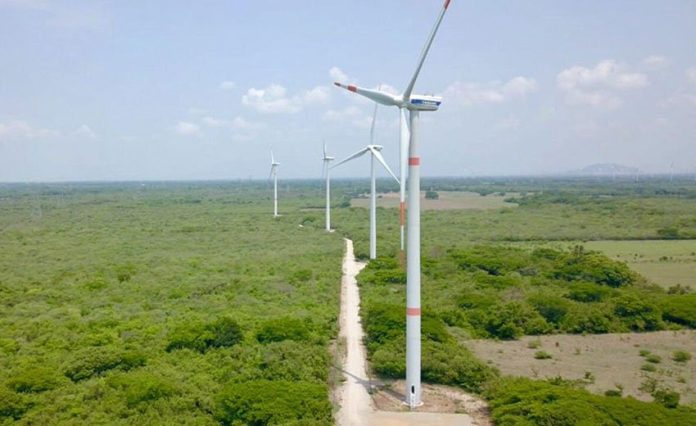
After years of controversy, another wind farm in the isthmus.

After years of negotiations and $1.2 billion in investment, the Energía Eólica del Sur wind farm has opened in the Isthmus of Tehuantepec, Oaxaca.

The new farm is the largest in Latin America, with 132 wind turbines and a total capacity of 396 megawatts. It covers 5,000 hectares in the municipalities of Juchitán and El Espinal.

Built by the Mitsubishi corporation, the wind farm could keep 567,000 tonnes of carbon dioxide out of the atmosphere every year, the equivalent of taking 300,000 cars out of circulation and planting 12 million trees.

It is the newest of 28 farms in the state, all of which are located in the windy Isthmus of Tehuantepec region, which generates 62% of Mexico’s wind energy.

In an inauguration ceremony, Oaxaca Governor Alejandro Murat said the project will help develop the state and make electricity cheaper.

“We’re sending a message that here in Oaxaca there are conditions to develop the state, conditions for companies like Mitsubishi to make investments,” he said.

The Institutional Revolutionary Party governor thanked President López Obrador for supporting the project and other development projects in Oaxaca, including a new gas pipeline and an improved rail line to connect the Gulf of Mexico to the Pacific Ocean.

The Energía Eólica del Sur farm was approved in a consultation of nearby indigenous populations between 2014 and 2015, although national and international organizations criticized the consultation, saying it did not comply with international law on indigenous consultations.

One group of indigenous Zapotecs sued Energía Eólica del Sur, arguing that their right to prior consultation under international law had been violated because the consultation took place after construction had already started.

The Supreme Court initially ruled in favor of the Zapotec community, ordering construction to be temporarily suspended. However, the court later allowed the project to go ahead.

Source: El Universal (sp), El Sol de México (sp)

Women, children arm themselves against the narcos in Guerrero

0
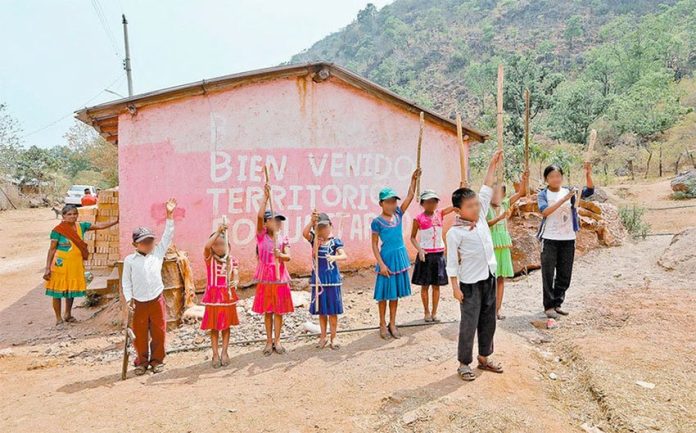
Children take up arms in the form of sticks in Guerrero mountain community.

In an indigenous mountain village in Guerrero, located in the middle of territory disputed by rival drug gangs, security is the responsibility of all – even the women and children have taken up arms.

The residents of Rincón de Chautla are determined to defend their town in the case of an attack by Los Ardillos or their rivals, Los Rojos.

“We’re organizing because we want to defend our town with sticks and stones . . . and guns,” Angélica, a girl aged about 12, told the newspaper Milenio.

Adán, an eight-year-old boy, explained that he was the “commander” of a group of children in training to join the community police force.

In a video published by Milenio, the boy barks orders at his junior comrades as they raise and lower large sticks. One boy wields a rifle although it is unclear whether it is real or fake.

[wpgmza id=”197″]

Despite calls from the state government and the Guerrero Human Rights Commission not to allow children to participate in practices that violate their rights, parents say that the military-style training will continue.

The Nahua village of just over 100 people, located 15 kilometers from Chilapa, has already experienced bloody violence firsthand.

On January 27, members of a self-defense group believed to be connected to the Ardillos crime gang arrived at the entrance of the town and began making threats against residents, according to David Sánchez Luna, a coordinator of the community police network known as CRAC-PF.

“That day there was only a group of 30 community police in the town. There were about 200 sicarios [hitmen] and their boss shouted that they were coming to massacre us. They tried to break the chain at the entrance [to the town] with gunfire but they couldn’t, and that failure allowed us to organize the defense,” he said.

A confrontation ensued during which hundreds of shots were fired but only one Rincón de Chautla community police member was wounded. Two aggressors from the group known as Communities for Peace and Justice (CPJ) were killed.

The same day, another clash in the municipality of Chilapa between Paraíso Tepila community police – who are also affiliated with CRAC-PF – and CPJ left 10 people dead.

“We’re all tired of the deaths caused by Los Rojos and Los Ardillos,” Sánchez Luna said.

“The CRAC-PF arose with the intention of making them see that we don’t want to be subjected to their interests, that we don’t want to be on either of their sides and that we only want them to let us work in the fields,” he added.

The women of Rincón de Chautla are adamant that they won’t be defenseless in the face of another attack.

“They say that they’re going to kill our husbands and come into our houses, where us [women] and our children are. That’s why we’ve decided that we’re going to defend ourselves,” one woman said.

Holding a rifle and with her infant daughter on her back, Adela Virgilio said that “a real mother does anything for her children, for her family.”

She added: “To this day, we haven’t received any support from the municipal, state or federal governments, they’ve abandoned us . . .”

Another gun-toting woman, Sara Flores, staunchly declared: “If we die, we’ll die standing, not on our knees.”

Source: Milenio (sp) 

Search commission: 481 more missing in the last 100 days

0
Search commissioner Quintana.
Search commission head Quintana.

The chief of the National Search Commission (CNB) has revealed that an additional 481 people have been reported missing since she took charge of the agency 100 days ago.

Karla Quintana Osuna said that 15 of those people were located alive and the bodies of four others were found in México state and Puebla.

Quintana said the “vast majority” of missing persons who were found alive in recent months are likely to have disappeared “voluntarily.”

She explained that “there are a lot of women and adolescents who leave home escaping from a situation of violence – in other words, they don’t want to be found by the people who are looking for them.”

The CNB chief acknowledged that 337 bodies have been discovered in 222 hidden graves at 81 locations since the new government took office in December.

“Mexico is a country of graves,” Quintana said. “We see it every day. There’s no day when we don’t get information about a new possible [clandestine] grave.”

The official took aim at the previous government’s management of the CNB, stating that there was only a “simulation” that it was operating effectively, and that the National Data Registry of Missing or Disappeared Persons (RNPED) was not updated in a timely manner.

There are more than 40,000 persons listed on the RNPED but humanitarian organizations such as Amnesty International have said in the past that official statistics probably underestimate the real number.

Quintana said that in the three months since she assumed responsibility for the CNB, efforts have been made to make the data registry more robust so that it can be of greater assistance in the search for missing persons.

Beyond listing their names, more specific and detailed information is needed in order to establish better lines of inquiry, she said, adding that the registry is now updated on a daily basis.

Quintana said search efforts have been undertaken in the states of Colima, Guerrero, Nayarit, Sonora, Sinaloa and Tamaulipas.

“We’ve also begun [developing] regional search plans and we’re going to start . . . in the northeast, in the states of Tamaulipas, Nuevo León, Coahuila and Durango,” she said.

The commission was established by the previous federal government in 2017.

However, human rights undersecretary Alejandro Encinas said in February that the agency only spent 6 million pesos last year even though it had a budget of almost 470 million pesos (US $24.5 million).

“That budget was only on paper,” he charged, adding that this year all of the 400 million pesos allocated to the CNB will be used.

Source: El Universal (sp) 

Environment secretary blames ‘neoliberal parasites’ for global warming

0
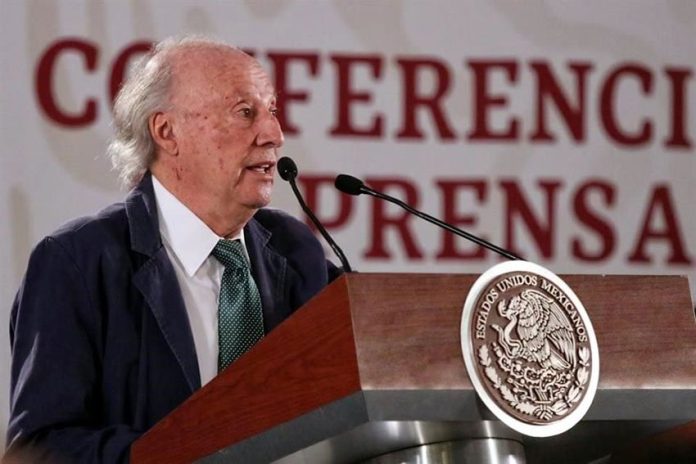
The new environment secretary: no more neoliberal environmental policies.

“Parasitic and predatory neoliberals” are responsible for global warming, the new environment secretary charged today.

In his first public statement since his appointment on Monday, Víctor Manuel Toledo Manzur promised an end to what he called the neoliberal environmental policies that have been pursued by previous administrations, blaming them for continuing environmental problems in Mexico.

“Human beings are not responsible for global warming, as a superficial environmentalism and uncritical science would like to tell us,” he said. “The responsible are a parasitic and predatory minority, and that minority has a name: neoliberalism.”

The new secretary promised to “take back” the Environment and Natural Resources Secretariat (Semarnat), which he said had been controlled by “merchants from the automotive sector,” and involve citizens in policy making.

One of Toledo’s predecessors, Juan José Guerra Abud, had previously been president of a trade association representing the interests of vehicle manufacturers.

In terms of environmental policy, Toledo presented a clear choice between policies that address ecological problems or ignore them.

“We can defend life, or we can continue destroying it in the name of the market, technology, progress, development, economic growth, etc.,” he said.

Toledo said finding new sources of energy is important because petroleum will start to run out by the year 2050, and global warming will start affecting food production.

He also highlighted the importance of legislation to ban shale fracking and genetically-modified corn and other crops.

Toledo replaced Josefa González-Blanco Ortiz-Mena, who resigned earlier this week after asking that a commercial airline flight be delayed so she could board.

Toledo holds a doctorate in biology from the National Autonomous University of México and is a researcher at UNAM’s Ecology Institute.

Source: Reforma (sp), Milenio (sp), SDP Noticias (sp)

Sabotage of Mazatlán’s water system investigated after lines burst

0
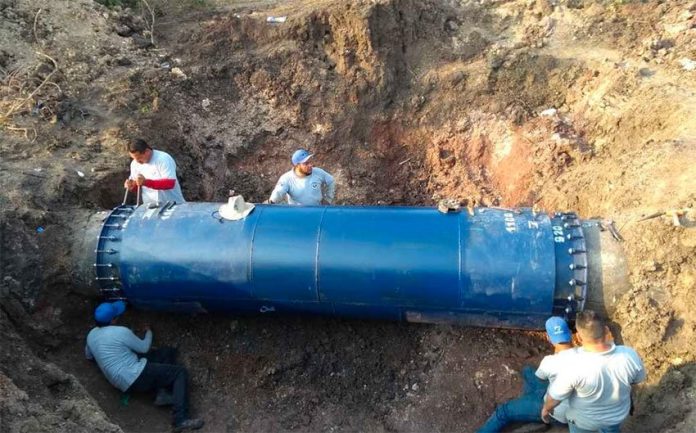
Municipal workers repair a water line in Mazatlán.

Authorities are investigating the possible sabotage of Mazatlán’s water system after several valves were tampered with, affecting distribution to various parts of the municipality.

The interruption in service was only the latest disruption in service. On the weekend, a rupture in water lines near the airport left the downtown area of Mazatlán without water.

The more recent rupture in the Flores Magón neighborhood shut off the water supply to many neighborhoods in the northern part of the city.

Mayor Luis Guillermo Benítez Torres blamed saboteurs, claiming that the incidents were likely the work of embittered municipal workers who tampered with the water pressure so that the lines would burst.

“These people are criminals. We are investigating [the ruptures] and we are on the verge of discovering who is behind these acts of sabotage. They are wrong in thinking that they are hurting the administration; it is not the mayor, but rather themselves — the people — that they are harming.”

The mayor denounced institutional corruption in the municipal government and warned that his administration was taking concrete steps to prevent resources from being stolen.

“I would rather die trying to denounce these scoundrels than give up.”

The mayor said that to solve the immediate water crisis in the north of the city his government will spend 30 million pesos (US $1.6 million) to build a new water tank with the help of the National Water Commission.

Source: Milenio (sp), El Sol de México (sp)

4,000 National Guard members will be sent to Michoacán

0
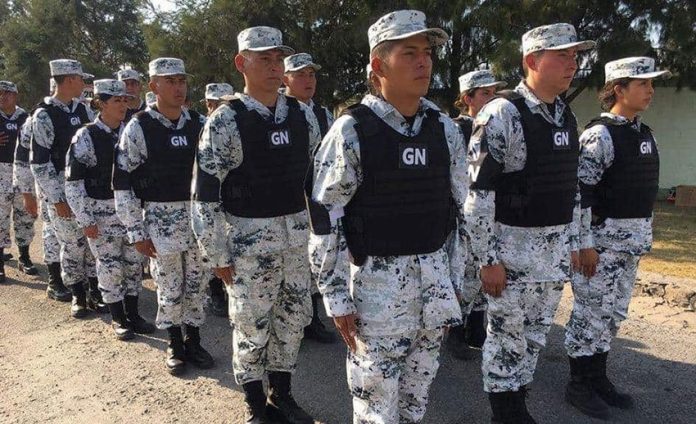
Bound for Michoacán in July.
Bound for Michoacán.

A large contingent of the National Guard will be deployed to Michoacán in response to growing insecurity.

“Starting in July, 4,050 members will be gradually deployed to the different regions of Michoacán, supporting the governor’s initiative and guaranteeing reasonable standards of security and stability as soon as possible,” Security Secretary Alfonso Durazo said.

But he warned that the presence of the Guard will not be enough to reach that goal if state and municipal police are not properly trained and their numbers increased.

“Collaboration is fundamental,” continued Durazo, “and even if the political background of the municipal, state and federal governments is different, no [argument] can be made as an obstacle to respond to the people’s demand for security.”

On Twitter, Governor Silvano Aureoles Conejo thanked Durazo for the “response to the enormous challenge of security.”

“. . . no one should doubt that our state will be a land of peace and security in all of its regions. We are committed to that goal, whatever the cost . . . ”

Source: Milenio (sp)

Hawks on patrol in the Metro to keep the pigeons in check

0
Mexico City's anti-pigeon patrol.

A longstanding problem in Mexico City’s above-ground Metro stations is being addressed with birds of prey.

City transit authorities are using Harris’s hawks in “biological control measures” to chase away pigeons that have for years proliferated in the above-ground stations of the Metro system.

Authorities said the high acid content of the pigeons’ excrement frequently blocks drainage systems and can rapidly corrode train tracks.

Officials said the use of hawks began last month in some stations where the potential threat of service interruption due to large flocks of pigeons is greatest. The hawks will initially be used throughout regular service hours and into the night to prevent the pigeons from returning after hours.

Transit authorities said Mexico City is not the only major urban hub to implement the technique.

In a second phase of the measure, once the hawks have successfully cleared the stations of loitering pigeons, transit employees will hang a dummy hawk as a scarecrow to further deter any especially stubborn birds that remain.

“We carry out these actions Monday to Friday at different times of the day. It is environmentally friendly since it does not make use of gases or violent means of removing the pigeons. As such, it also avoids any possible risks to public health due to the accumulation of the pigeons’ excrement on the stations’ roofs,” the city said.

Source: Milenio (sp), Excelsior (sp)

Mexican growers predict US tomato shortage in 15 days

0
Mexico is a big supplier of tomatoes to the US.

The United States will face a shortage of tomatoes starting in 15 days if it does not lift a 17.5% tariff on Mexican tomato imports, according to a growers’ association.

Alfredo Díaz, director of the Mexican Protected Horticulture Association, told Milenio yesterday that Mexican producers are struggling to absorb the cost of the tariffs. He said the tariff has forced some small producers to lower their export volumes, while for the moment most medium and large producers are still exporting at full volume.

“Pretty soon, there will be a shortage in the United States if this goes on,” he said. “In about 15 days, we’ll start to notice supply going down, and that will be reflected in higher prices.”

Two weeks ago, Mexican tomato producers sued the U.S. Department of Commerce in the U.S. Court of International Trade in New York. The lawsuit requests an injunction suspending the tariff and the investigation of Mexican producers for dumping, or selling products below their production costs.

Díaz said the two sides finished making their arguments last Friday and that a ruling could come at any time.

He added that whatever the court rules, Mexican tomato growers are ready to negotiate with U.S. trade officials and growers’ associations.

“We made another offer last week and we are waiting for them to look at it so we can negotiate,” he said. “What they told us is that the U.S. is negotiating with China about other issues right now, so we’re still waiting for them to call us.”

The Department of Commerce imposed tariffs on Mexican tomatoes on May 7 after allowing a six-year-old agreement that suspended anti-dumping investigations to expire. The U.S. withdrawal from the agreement was largely in response to complaints from Florida tomato growers, who say they struggle to compete with Mexican imports.

Mexico’s share of the U.S. tomato market grew from 32% in 1996 to 56% in 2017, while U.S. farmers produced 40% of tomatoes consumed in the country in 2017.

Source: Milenio (sp), The Produce News (en)