Home Blog Page 1968

Court hears FBI recordings of El Chapo Guzmán’s incriminating phone calls

0
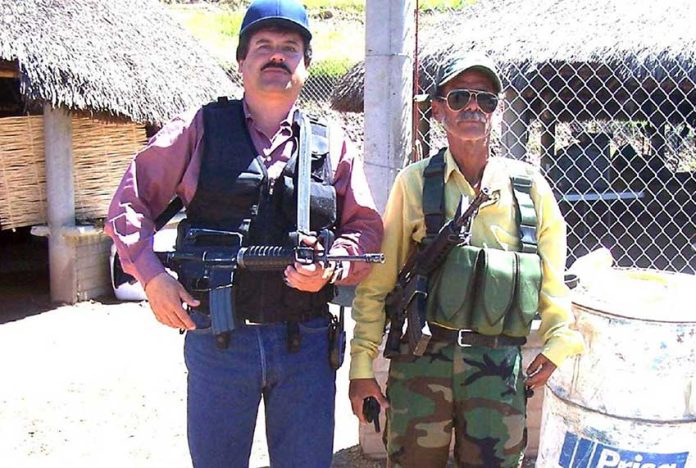
El Chapo, left, back in the day.

Jurors at the New York trial of Joaquín “El Chapo” Guzmán heard excerpts of phone calls yesterday that were made by the former drug lord and intercepted by the FBI.

The calls, in which Guzmán speaks openly about the illicit activities of the Sinaloa Cartel he allegedly headed, represent the most damaging evidence presented thus far at the trial, which began in mid-November.

The 61-year-old ex-kingpin faces a probable sentence of life imprisonment if convicted of drug trafficking, conspiracy, money laundering and weapons charges.

Stephen Marston, a Federal Bureau of Investigation special agent, told the court that the FBI infiltrated Guzmán’s encrypted communications system with the help of a Colombian info-tech expert who developed it.

Marston testified that in February 2010, FBI agents posed as Russian mobsters at a meeting with I.T. specialist Cristian Rodríguez at a Manhattan hotel.

He said that an undercover agent told Rodríguez that he was interested in acquiring an encrypted communications system so that he could speak to criminal associates without law enforcement listening in.

Around a year later, Marston said, the FBI agents convinced Rodríguez to give them his system’s special encryption keys after he had moved the servers for Guzmán’s network from Canada to the Netherlands to avoid arousing the suspicion of the Sinaloa Cartel.

With the permission of Dutch authorities, the FBI intercepted 1,500 telephone calls between April 2011 and January 2012, including around 200 made by Guzmán from his hideouts in the mountains of Sinaloa.

Among El Chapo’s interlocutors were business partners, criminal associates, hired guns and corrupt Mexican officials, Marston said.

The witness explained that Guzmán was easily identifiable in the calls the FBI intercepted by his high-pitched voice, which had “kind of a sing-songy nature to it” and a “nasally undertone.”

The calls were compared with other recordings of the former drug lord, including a video interview he gave to Rolling Stone magazine in 2015, Marston said.

In one excerpt presented to the jury yesterday, El Chapo orders a criminal associate identified as El Gato (The Cat) to continue making monthly payments to members of the now-dissolved Federal Investigation Agency as well as the “azules” (blues) and “yanquis.”

According to the court testimony of Vicente Zambada Niebla, a former Sinaloa Cartel operative and eldest son of the cartel’s current leader Ismael “El Mayo” Zambada, azules referred to members of the Federal Police while yanquis was a nickname for commanders of the federal Attorney General’s office (PGR) who were stationed in Sinaloa.

In another excerpt played in the Federal District Court in Brooklyn, Guzmán warned one of his enforcers, Orso Iván Gastélum Cruz, not to provoke police.

“Don’t be chasing cops,” Guzmán said. “They’re the ones who help.”

“Well,” Cruz responded, “you taught us to be like a wolf, to act like a wolf, remember?”

Prosecutors played dozens of other snippets of calls in which Guzmán incriminated himself. In one call, he advised an associate to pay off “a big fish” for protection.

In another, a woman told Guzmán that soldiers had discovered one of his warehouses but not a tunnel that led to it. “You have to cover the hole,” replied the notorious drug lord, who infamously escaped from prison in 2015 via a tunnel.

A report by The New York Times said that the FBI recordings represent “one of the most extensive wiretaps of a criminal defendant since the Mafia boss John Gotti was secretly recorded in the Ravenite Social Club.”

Guzmán listened nervously to his self-incriminating calls as they played, the newspaper Milenio reported.

Several cartel witnesses have testified against Guzmán since the trial began on November 13.

Jurors have heard testimony about bribes the kingpin paid to corrupt officials, the life of luxury he led, his first prison break inside a laundry cart, multi-tonne drug shipments and bitter cartel wars, among other tales.

Guzmán’s defense team has attempted to portray him as a mere underling to El Mayo Zambada.

Witnesses testifying against Guzmán are “liars,” “degenerates” and “scum” who are speaking in the hope that their own prison sentences will be reduced, one lawyer said in late November.

The trial is expected to continue for at least a few more weeks.

Source: Milenio (sp), Reuters (en), The New York Times (en) 
Mexico’s first aerospace laboratory will offer courses to students of all ages

0
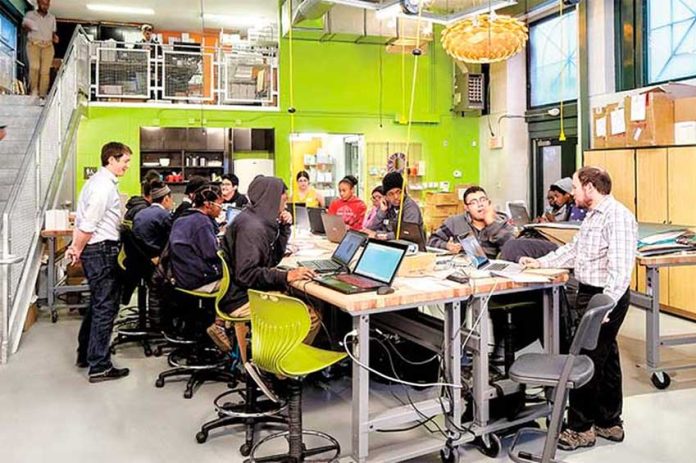
The new laboratory in Sinaloa.

Mexico’s first aerospace laboratory has opened in Culiacán, Sinaloa.

The lab is the brainchild of Eduardo Guizar Sainz, an industrial engineer and former NASA collaborator, and will offer aerospace courses to students from kindergarten age right up to the university level.

Guizar said that one of the skills students will learn is how to make rockets that can be launched to reach an altitude of more than three kilometers.

He said aerospace experts will be invited to the laboratory to share their expertise with students.

“We have a relationship with the Autonomous University of Baja California . . . We’ll also bring people from NASA, the National Polytechnic Institute, UNAM [the National Autonomous University] and universities in the United States,” Guizar said.

The engineer said the support of the Sinaloa government had enabled the lab to open in a scientific facility that was previously abandoned.

Guizar explained that he hoped to equip the lab with laser cutters, CNC routers, 3D printers and soldering irons among other equipment.

He added that the lab will be named after United States astronaut José Moreno Hernández, whose parents hail from Mexico.

Guizar also said the federal government and the private sector have to increase investment in Mexico in order to provide greater opportunities for the country’s young scientific talent.

“We can’t allow ourselves the luxury of exporting our brains, they have to stay here in Mexico . . . .”

Source: Milenio (sp) 

Seven nominations for Roma at British film awards

0
A scene from Roma, up for seven BAFTA nominations.

The nominations for the 72nd British Academy of Film and Television Arts (BAFTA) are out, and Alfonso Cuarón’s Roma is in the running for seven.

The black-and-white drama written and directed by Cuarón, who also produced, co-edited and filmed it, earned nominations for best film, film not in the English language, director, original screenplay, cinematography and editing.

The filmmaker earned six of those nominations; the film was also nominated for production design.

The BAFTA awards will be announced on February 10 at the Royal Albert Hall in London, marking the start of the home stretch before the most important date in the awards season.

The Oscar nominations will be announced on January 22.

Roma has picked up a slew of awards since its release last year. The most recent were two Golden Globe awards for best director and best foreign film.

Mexico News Daily

Low inventories in fuel storage facilities have contributed to shortages

0
fuel tanker trucks
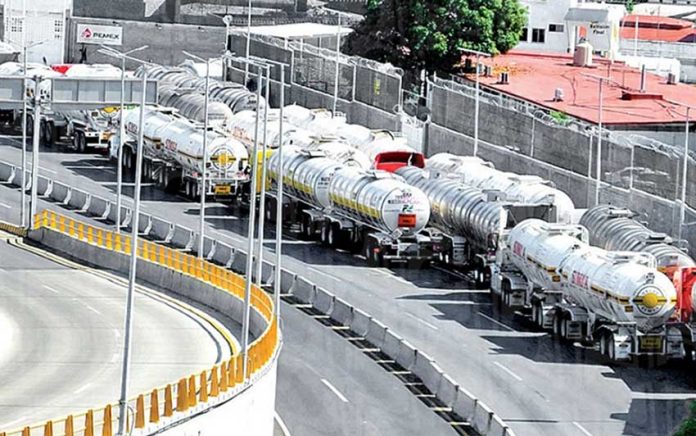
With limited quantities of fuel in storage, tankers are hard-pressed to keep up with the demand.

Low fuel inventories and declining oil production have contributed to the gasoline shortage currently affecting several states, according to the Energy Secretariat (Sener).

In central Mexico – Mexico City, México state, Querétaro, Hidalgo, Tlaxcala, Puebla and Morelos – the quantity of gasoline in storage facilities is only enough for one day.

In other words, if no new gasoline deliveries arrive via pipelines, tanker trucks or other means in a 24-hour period, reserves in the region will be completely depleted. Diesel autonomy in central Mexico is only slightly better at 1.3 days.

Some gas stations in Mexico City were forced to close yesterday because they had completely run out of fuel. Stations in some other central Mexican states have been affected by fuel shortages for a week or longer.

As part of its strategy to combat fuel theft, the federal government has altered the way in which gasoline is distributed, making greater use of tanker trucks rather than pipelines, some of which have been closed completely.

President López Obrador has said repeatedly that the fuel shortage in some parts of the country is due to logistics rather than a lack of supply.

Sener’s data on gasoline and diesel autonomy highlights the vulnerability of different regions of Mexico to fuel shortages if product doesn’t reach them in a timely fashion, as has occurred recently.

At a national level, gasoline inventories in storage facilities is sufficient to meet demand for 3.1 days but in parts of the country where shortages have occurred, the figure is lower.

In western Mexico, the quantity of gasoline in storage is enough for two days while for diesel, it’s 2.6 days.

Three of the six states in the region – Michoacán, Jalisco and Guanajuato – have been hit hard by the fuel shortages, which were first reported in the last week of December.

In Mexico’s southeast – comprising Campeche, Yucatán and Quintana Roo – gasoline autonomy is 1.9 days while for diesel it’s just 0.6 days.

In the northwestern and northern regions of the country, gasoline autonomy is considerably better at 8.5 and 7.6 days respectively but in the northeast, where fuel shortages have affected Tamaulipas and Nuevo León, gas autonomy is just 2.2 days.

In the Gulf of Mexico region, made up of Veracruz and Tabasco, there is sufficient gasoline for 4.5 days while in the south – Chiapas, Oaxaca and Guerrero – there is enough for 3.1 days.

The fuel autonomy data relates to levels recorded in the second half of December.

In the same period, the state oil company reported gasoline production of 203,000 barrels per day, which is only enough to meet 25.5% of national demand.

Mexico’s six oil refineries were collectively operating at only 30% of their capacity in October, according to Pemex, a situation that López Obrador has pledged to remedy.

Declining oil production has forced Mexico to increasingly rely on imports.

According to Sener, Pemex purchased just over 18.8 million barrels of foreign gasoline in November, of which 94% came from six countries: the United States, the Netherlands, France, Spain, South Korea and China. Private importers purchased 1.1 million barrels of foreign fuel during the same month.

López Obrador said yesterday that the government’s anti-fuel theft strategy has already generated savings of 2.5 billion pesos (US $129.1 million) because the incidence of the crime, which has cost Mexico billions of pesos annually in recent years, has declined by 78%.

However, for motorists and business owners in states affected by the fuel shortages, the savings touted by the president are probably of little consolation.

Source: El Universal (sp) 

Driver and family sleep in minibus as they wait for gasoline

0
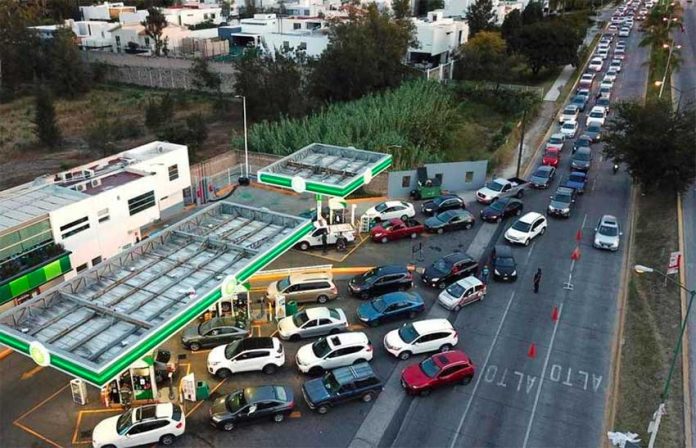
Drivers line up for gas in Zapopan, Jalisco.

For transit driver Juan Martín Acosta and his family, the fuel shortage in Michoacán has meant living in his minibus.

The family has been sleeping in the vehicle since Monday to keep their place in a long lineup at a gas station in the northern part of Morelia, the state capital.

Acosta, who depends on driving as his only source of income, is one of hundreds of public transportation workers that have been affected by gas shortages in the city.

José Trinidad Martínez Pasalagua, president of the Transportation Regulation Commission, said yesterday that 40% of the 6,000 public transportation vehicles in Morelia have had to stop running and warned that if the shortage continues the transportation system would collapse by the end of the week.

Acosta told El Universal that his troubles began on Sunday when he was forced to abandon his route because he was running out of gas. He drove around looking for a place to fill up only to find shuttered gas stations or long lineups.

Now he hasn’t enough gas to drive even a couple of blocks.

“I ran out of gas from driving around in circles and now my only option is to park here [at the gas station] and wait for the tanker trucks to arrive,” said the minibus driver.

He plans to wait in line as long as it takes — along with his wife and daughter — to get a tank of gas so he can go back to work.

Source: El Universal (sp)

As 4,000 soldiers watch over Pemex facilities, severe fuel shortages continue

0
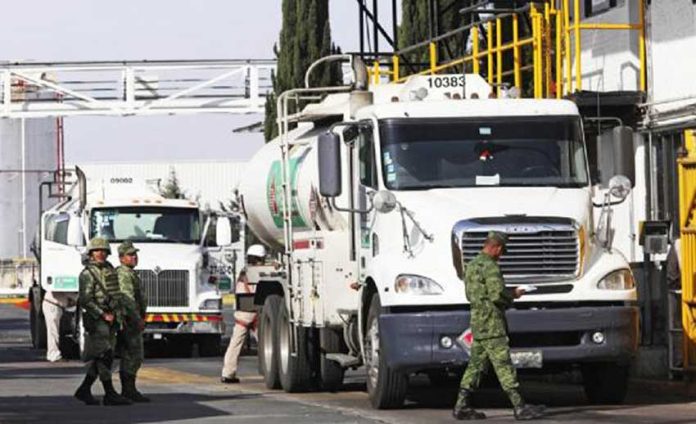
Soldiers check fuel shipments leaving a Pemex storage depot in México state.

Around 4,000 soldiers and marines are now guarding Mexico’s oil refineries and other facilities operated by the state oil company as part of the federal government’s anti-fuel theft strategy.

President López Obrador said today that the government’s plan, which has also included transporting fuel by tanker trucks rather than pipelines, has already generated savings of 2.5 billion pesos (US $129.1 million).

“Before the plan [a quantity equal to] 787 tankers [of fuel] was stolen daily, now with the plan it’s gone down to 177 tankers a day,” he told reporters at his early morning press conference.

Members of the military have assumed responsibility for security at the refineries in Salamanca, Guanajuato; Ciudad Madero, Tamaulipas; Salina Cruz, Oaxaca; Minatitlán, Veracruz; and Cadereyta, Nuevo León.

They are also watching over terminals and storage facilities in other parts of the country including México state and Querétaro.

López Obrador said last month that Pemex employees also steal fuel and distribute it and charged that the company’s managers were aware of it.

“There is a hypothesis that of all the [fuel] thefts, only about 20% is done by illegal pipeline taps,” Lopez Obrador said on December 27.

“It’s a kind of smoke-screen, and the majority is done through a scheme that involves the complicity of authorities and a distribution network.”

Today he said that the military had discovered a three-kilometer-long “hose” that was funneling fuel out of storage tanks at the Salamanca refinery into a secret storage area.

“If the citizens continue to support us, we’re going to put an end to corruption, zero corruption, zero impunity,” López Obrador said.

While the president claims that fuel theft has been dramatically reduced as a result of the government’s new strategy – the figures he cited today represent a 78% decline in the crime just two weeks after the plan was implemented – he also concedes that it has caused gasoline shortages in some parts of the country.

López Obrador reiterated today that the shortages, which have affected at least nine states, are due to logistics rather than a lack of supply.

“There is enough gasoline in the country, it’s not a problem of supply,” he said, explaining that using tanker trucks rather than pipelines for distribution had created a “special situation.”

Energy Secretary Rocio Nahle yesterday apologized for the inconvenience caused to motorists as a result of the gasoline shortage which has hit the states of Michoacán, Querétaro, Guanajuato, Hidalgo, México state and Jalisco the hardest.

“. . . It was not our intention to cause unease to anyone . . . We knew in advance that these types of operation and these kinds of actions [to combat fuel theft] would not be easy but it would be irresponsible on our part if, knowing the size of the problem, we didn’t do anything . . .” she said.

Shortages were reported this afternoon in México state, Hidalgo, Mexico City, Querétaro, Guanajuato, Jalisco, Tamaulipas, Michoacán and Nuevo León.

The governor of Guanajuato announced today that Pemex has promised to send 41,000 barrels of gasoline over the next two or three days. Another 14,000 barrels are en route to Querétaro and shipments are also on the way to Michoacán.

Roberto Díaz de León, president of the gas station trade organization Onexpo, said today that if Pemex maintains the same “pace” in its efforts to return gasoline supply to normal, shortages could come to an end by Friday in some affected cities, such as Querétaro, Morelia, León, Silao and Saltillo.

Díaz told Radio Fórmula that there is sufficient fuel in coastal terminals but explained that “the great challenge is sending the product inland.”

However, he expressed confidence that if Pemex uses all of its tanker trucks and fuel pipelines are secured, the supply of fuel could begin to normalize by Friday.

Source: Milenio (sp), Reforma (sp), AM (sp)

As government spending soared to combat fuel theft so did the crime

0
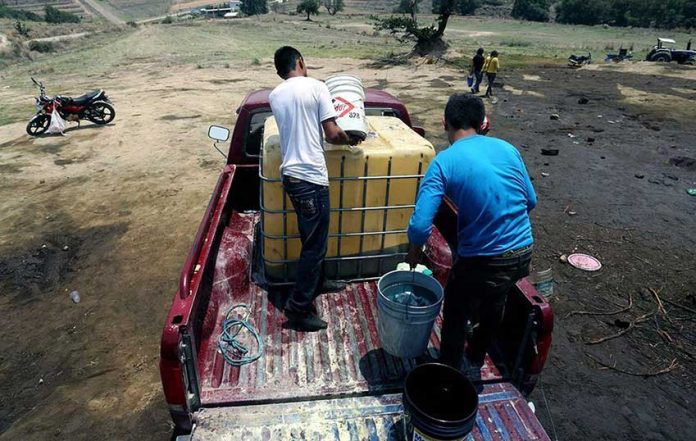
Fuel thieves load up.

The federal government under former president Enrique Peña Nieto spent almost 5 billion pesos to combat fuel theft during its six-year term only to see the incidence of the crime soar, statistics show.

Between December 1, 2012, the date Peña Nieto took office, and July 2018, the state oil company spent 4.91 billion pesos (US $253.6 million at today’s exchange rate) on security for its facilities and infrastructure – which includes thousands of kilometers of pipelines that are frequently tapped by fuel thieves – and on training and weapons for its employees.

According to information publicly disclosed by Pemex, security spending during the period was divided into four areas: the strengthening of Pemex’s operational capacities; operational expenses related to investment projects and other initiatives; construction of security training facilities at the old 18 de Marzo refinery; and the acquisition of weapons for members of the company’s strategic protection unit.

Spending in the first area was highest – just over 2.5 billion pesos in the almost six-year period.

Resources were allocated to the creation of a fuel theft reporting center, to the updating of geolocation, surveillance and communication technology, to the development of an app to makes it quicker and easier for security agents to report illegal pipeline taps and to the hiring of 365 pickup trucks and three motorcycles to carry out patrols.

Expenditure in the second area was not far behind the first at just under 2.2 billion pesos.

Just over 175 million pesos went to the creation of security training spaces at the old 18 de Marzo refinery in Mexico City while 17.7 million pesos was spent on weapons.

As part of the government’s anti-fuel theft strategy, Pemex also entered into agreements with the Secretariats of National Defense and the Navy, which allowed members of the military to guard the nation’s fuel pipelines.

Among the results obtained was the closure in 2017 of 70 gas stations which were found to be selling stolen fuel. The same year, almost 15 million liters of stolen fuel, known colloquially as huachicol, was recovered.

Between 2013 and July 2018, 40 Pemex employees found to be linked to fuel theft were dismissed and almost 1,600 fuel thieves were arrested.

Yet new records for the number of illegal taps detected in monthly, quarterly and annual periods were frequently set during the government’s time in office, costing Pemex tens of billions of pesos per year.

In 2014, Peña Nieto’s second full year in office, a total of 3,635 illegal taps were detected. But in the first 10 months of last year, the figure was 12,581, a 45% increase on the same period of 2017.

If the number of new perforations detected in November and December (which have not yet been released) remain steady, there will have been 15,097 illegal taps in 2018, a whopping 315% increase on 2014.

Source: El Economista (sp) 

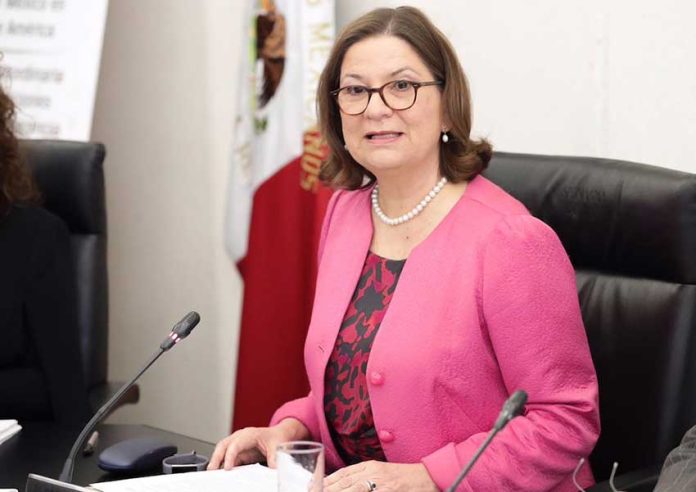
New ambassador says thick skin necessary for dealing with US

0
Ambassador Bárcena will travel to Washington this week.
Martha Bárcena will travel to Washington this week.

Mexico needs to have a “thick skin” to deal with United States President Donald Trump, according to the newly-appointed ambassador to the U.S., who said that if he crosses the line it will be up to President López Obrador to decide on an appropriate response.

As Trump prepares to address the United States tonight on what he called yesterday “the humanitarian and national security crisis on our southern border,” Martha Bárcena is preparing to assume the role of Mexico’s top diplomat in Washington D.C.

The 61-year-old Veracruz native, who has previously been the Mexican ambassador to Denmark and Turkey, will present her credentials to Trump on Friday.

Bárcena called the United States president a “confrontational man” in an interview with the newspaper El Universal and described her job as an “enormous challenge” but vowed to “establish a new era” in bilateral relations between Mexico and the United States.

Ties between the two countries deteriorated after Trump took office in January 2017, with the U.S. president’s border wall proposal – and the source of its funding – a primary source of tension.

After a testy phone call between Trump and former president Enrique Peña Nieto last February, Mexican journalist Carlos Loret de Mola described the climate of relations between the two countries as “frozen.”

But Bárcena, who has 40 years’ experience in Mexico’s foreign service, believes that President López Obrador’s landslide victory in last year’s election provides a strong mandate for change at home and that acting on that mandate will, in turn, work to Mexico’s benefit abroad: in her case, within the context of Mexico’s relations with the United States.

“[When I] arrive in the United States . . . it won’t be business as usual, we’re going to do things differently and confront problems that for some time we know have worried not only . . . the United States but also our [other] principal partners, things like high-level corruption, insecurity and violence, which are already being confronted. All that provides strength to negotiate with the United States,” she said.

“One of the priorities this year is the ratification of the [trade] treaty between Mexico, the United States and Canada . . . Another priority will be to review . . . the situation of Mexicans in the United States, what immigration legislation is being presented in the Senate, the House of Representatives. You have to remember that it is the legislative power that has authority over immigration legislation,” Bárcena said.

The arrival of thousands of Central American migrants in northern border cities in the final two months of 2018, especially Tijuana, has further complicated relations between Mexico and the United States.

While the personal relationship between López Obrador and Trump has thus far been largely respectful, Bárcena acknowledged that the bilateral relationship is at a critical point.

“. . . When President López Obrador spoke to me just after the elections to express his interest in me being his ambassador in Washington, I knew it was an enormous challenge but I didn’t imagine that I was going to arrive in the United States in such a tense and polarized situation as there is now. It’s an enormous challenge,” Bárcena said.

Asked what her approach would be for dealing with Trump, especially considering his predilection for using Twitter to fire off broadsides whose targets have included the Mexican government, Bárcena responded that it would largely be through the institutions of the United States government.

“The ambassador and the embassy have to be aware of what President Trump says because he’s the leader of the United States but dialogue between ambassadors and the president of another country is not daily,” she said.

The new ambassador opined: “I believe that in some matters, you have to have a thick skin. In other matters, you have to know where the line is . . . I would hope, I believe that President Trump is conscious of the importance of Mexico, I think that he has to be careful . . .”

Bárcena claimed that Trump “is a confrontational man in everything, not just with Mexico,” adding that if he does cross the line “the final decision about what should be done is for the president [López Obrador] himself.”

However, she warned that “intervening constantly” in the debate about the border wall and border security in the United States “probably won’t take us or lead us to anything positive.”

Asked whether López Obrador would take up Trump’s invitation to travel to the White House, Bárcena said that it would depend on how relations between Mexico and the United States evolve as well as the respective schedules of the two presidents.

Reminded of López Obrador’s assertion that he would only go to Washington if there was “a motive” or something important to announce, Bárcena responded: “In that case, I’ll have to get down to work so that there are important things to announce.”

Another diplomatic position waiting to be filled is that of the U.S. ambassador to Mexico. The position has been vacant since Roberta Jacobson resigned and left the post last May.

Source: El Universal (sp), La Razón (sp)

Federal Police owe suppliers, officers 10 billion pesos

0
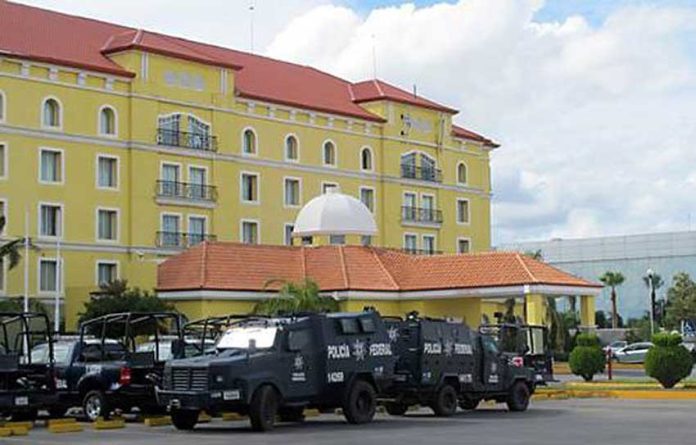
This hotel in Tamaulipas was home to Federal Police in 2015.

The Secretariat of Security and Citizen Protection owes nearly 10 billion pesos (US $516.3 million) to hotels, restaurants, transportation companies and its own officers.

Half the money — close to 5 billion pesos — represents unpaid lodging expenses for police who were deployed around the country last year, said Secretary Alfonso Durazo.

“However, by the end of 2018 we only had 608 million pesos available to pay debts.”

Durazo said the secretariat is committed to pay off the debts and will try to find a solution through the Secretariat of Finance.

The money owed to officers is for bonuses amounting to 260 million pesos and they too will be paid, he said.

The Federal Police have frequently run up debts to hotels in recent years.

Source: La Jornada (sp)

2-year-old believed kidnapped in Tulum rescued at Cancún airport

0
A police officer with the girl who had been taken from her mother.

A two-year-old Spanish girl was rescued in Cancún International Airport after her nanny attempted to run off with her to Istanbul, Turkey.

The Federal Police said the girl, identified only as M. K., was taken by her caregiver from a water park in Tulum where she was spending time with her mother.

After a missing person report was issued, police at the Cancún airport, 130 kilometers away, identified the girl and apprehended the nanny.

The woman, identified only as E.R. and being Phillipino, had two plane tickets that revealed her destination.

Early reports said the child had been kidnapped but in fact she was in the middle of a family conflict.

The Quintana Roo Public Security Secretariat said the girl’s mother had filed a formal complaint for bodily injury against her partner and the father of the girl, a man of Turkish origin.

The minor had not been the victim of a kidnapping but instead the alleged “illegal removal of a minor,” because the nanny attempted to take the girl out of the country without the permission of a parent.

The girl was returned safe and sound to her mother in Tulum, while her nanny was held in custody.

Source: El Universal (sp), ABC (sp)