Monday, March 2, 2026
Home Blog Page 1995

Kindergarten students traumatized in sexual assault case

0
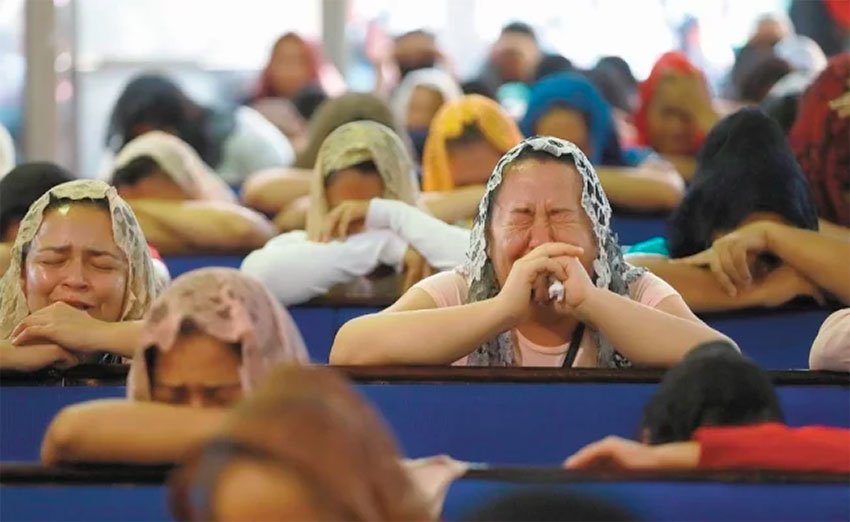
Parents outside the kindergarten where abuse allegedly occurred.

Close to 40 children are alleged to have been sexually abused in a Mexico City kindergarten where parents have accused school officials of a cover-up.

A man identified as an administrative employee was singled out by one of the parents about a month ago after noticing strange behaviour in his son.

But a school official ignored the parent’s accusation of sexual assault and asked him to “keep the incident secret” as it was only “an isolated case.”

News of the attack soon spread and before long the parents of 37 of the children discovered that all had been exhibiting similar and unusual behavior: they had all urinated in their pants while at school, suffered nightmares, stopped talking and refused to go to school.

The parents subsequently determined that their children were afraid of a figure they called The Monster or La Calaca (the skeleton).

They learned that the school employee, identified as Ramón Morales, told the children that he was a monster, that he had eyes everywhere, was very big and strong enough to lift houses and kill whomever he wanted. He said he was watching over them even during their sleep, and that if they spoke about what he did to them he was going to kill their parents.

The man waited for the children to go to the washroom before taking them to a storeroom where the sexual assaults took place.

Morales’ whereabouts are unknown but some parents are claiming that two other staff members were complicit in the attack and that the school principal was aware of them.

The case is now under investigation by the federal Attorney General’s office.

Source: Milenio (sp), ADN Político (sp)

Mexico to migrants: you will be deported if you don’t have documentation

0
Wheelchair-bound migrant lost his legs the last time he attempted to enter the US
Wheelchair-bound migrant lost his legs the last time he attempted to enter the US. Now he is trying again.

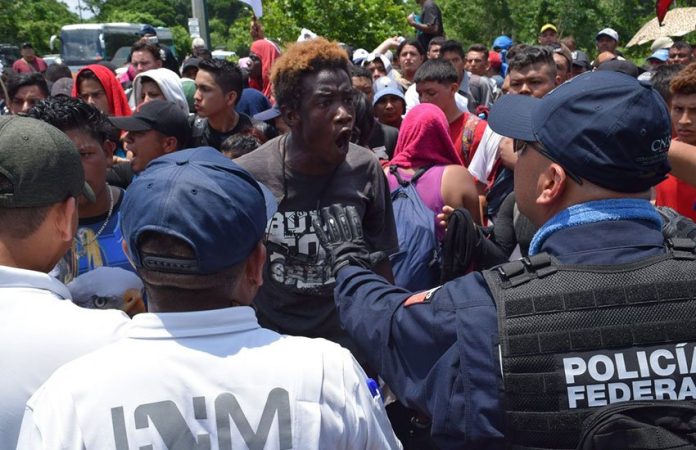
The federal government has warned a caravan of Central American migrants traveling to the United States via Mexico that if they enter the country illegally they will be detained and deported.

In a joint statement, the secretariats of Foreign Affairs (SRE) and the Interior (Segob) said that in accordance with the law, anyone who enters Mexico “irregularly” will be “rescued” and subjected to review.

If they do not have the required documentation they will be returned to their own country.

The statement said the measure “responds not just to compliance with national legislation” but also to the government’s interest in avoiding migrants becoming “victims of human trafficking networks.”

More than 200 Federal Police officers arrived in Tapachula, Chiapas, yesterday to help the National Immigration Institute (INM) secure the southern border. The organization’s chief, Manelich Castilla, traveled to the border city earlier this week.

As many as 4,000 mainly Honduran migrants fleeing poverty and crime are planning to travel through Mexico to the United States, infuriating U.S. President Trump.

Many are traveling on foot, some with babies and small children, while others are in buses.

One Honduran whose legs had to be amputated after he fell from a Mexican freight train during an attempt to get to the United States in 2015 is trying again. This time a fellow migrant is pushing his wheelchair.

The caravan entered Guatemala Monday, overwhelming attempts by security forces to stop them, and some migrants began trying to cross into Mexico today, according to local media.

This morning, Trump threatened to deploy the military and close the United States’ southern border.

“I must, in the strongest of terms, ask Mexico to stop this onslaught – and if unable to do so I will call up the U.S. Military and CLOSE OUR SOUTHERN BORDER!” the president wrote on Twitter.

“. . . The assault on our country at our Southern Border, including the Criminal elements and DRUGS pouring in, is far more important to me, as President, than Trade or the USMCA [trade agreement]. Hopefully Mexico will stop this onslaught at their Northern Border.”

Interior Secretary Alfonso Navarrete Prida today insisted that Mexico will not give in to U.S. pressure to stop the caravan on human rights grounds while senators called on the foreign affairs secretary to issue a strong response.

Senator Alfonso Durazo, who has also been nominated to head the new security secretariat, said he thought it improper for a head of state to threaten another country.

Marcelo Ebrard, the incoming government’s foreign secretary, suggested it was politically motivated.

“It was predictable, and it’s also very close to the [midterm] election. He’s making a political calculation,” he said.

Ebrard added that migrants arriving in Mexico without a visa would need to apply for refugee status.

During a visit to Tamaulipas yesterday, president-elect López Obrador said that once he takes office visas will be offered to Central Americans who want to work in Mexico.

“From December 1, we’re going to give employment to Central Americans. It’s a plan we have, he who wants to work in Mexico will have a work visa,” he said, adding that migration issues are not just solved by deporting people but also by giving them options.

The president-elect sent a letter to Trump in July in which he proposed that the migration problem be addressed “in a comprehensive manner through a development plan that includes Central American countries.”

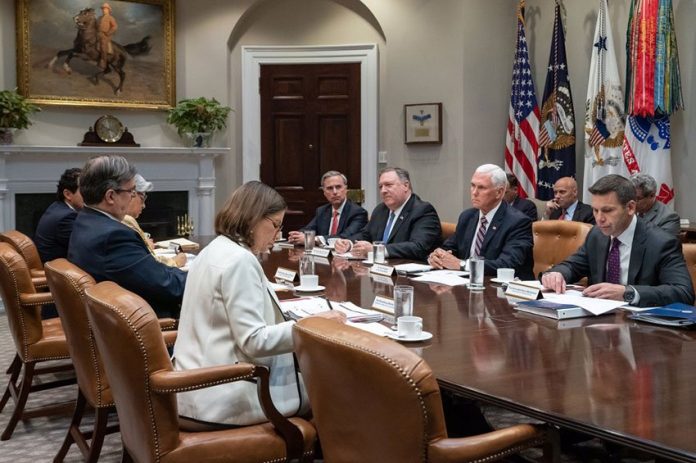
United States Secretary of State Mike Pompeo will travel to Mexico City tomorrow to meet with President Peña Nieto.

Source: El Universal (sp), Reuters (sp) 

Two investments in Chiapas economic zone worth US $324 million

0
Puerto Chiapas: new investment.

Two businesses have signed on to invest in a special economic zone in Chiapas.

A food processing company from Guatemala will be the first investor to break ground at the Puerto Chiapas special economic zone (SEZ).

Grupo Idealsa will invest US $70 million in two plants, where 180,000 tonnes of cooking oil and 44 million liters of fruit and milk drinks will be produced every year.

The firm Agroparque will also set up shop at Puerto Chiapas where together they will form the anchor businesses for the zone and invest $324 million, creating an estimated 3,000 jobs.

“The transparency in the selection process generated the credibility and trust that allowed a firm from Guatemala with more than 100 years of history to invest more than $70 million outside of its country for the first time, choosing Mexico as the destination from which Central American trade will be boosted,” said Grupo Idealsa CEO Edwin Rolando Alburez Rodena.

Gerardo Gutiérrez Candiani, head of the federal agency responsible for the SEZs, said 19 firms from the agri-business, pulp and paper, electronics, electrical generation and automotive parts industries have formally agreed to invest close to $1 billion in Puerto Chiapas and create 9,200 jobs and increase trade between Mexico and Central America.

The investments will also help promote development in neighboring municipalities such as Tapachula, Tuxtla Chico and Metapa, an agency official said.

Other zones have been established in Lázaro Cárdenas, Michoacán; Salina Cruz, Oaxaca; Coatzacoalcos, Veracruz; Campeche; Dos Bocas, Tabasco; Progreso, Yucatán. By early September several had signed up energy projects worth $2.5 billion.

Source: El Financiero (sp)

Expedition finds healthy vaquita porpoise specimens and two calves

0
Vaquita porpoises.
Vaquita porpoises.

An expedition to investigate the dwindling vaquita porpoise population sighted three different groups of the mammals — including calves, raising hopes about its future.

There were estimates last year that only 30 specimens of vaquita remained in the wild, but the monitoring conducted between September 24 and October 4 in the Upper Gulf of California gave specialists clear evidence that the species continues to reproduce.

Between seven and 10 vaquita specimens were seen at three different times, and all were in excellent health.

A female vaquita and its calf were sighted on September 25 and two days later two adult vaquitas were seen. A group of four to six animals, including a calf, was sighted the following day.

The information gathered during the 10-day expedition led specialists to hypothesize that the porpoise might reproduce every year instead of every second year as was previously thought.

So far all the vaquita deaths recorded have been caused by fishing. Eliminating the fishing nets would guarantee the vaquita’s recovery, according to Diego Ruíz Sabio, director of the La Paz Whale Museum.

He and Armando Jaramillo Legorreta of the National Institute of Ecology and Climate Change agree that the illegal fishing of totoaba, in which organized crime is involved, has withstood official efforts to stop it.

They said now is a good time to prohibit fishing vessels from the vaquita’s habitat because the totoaba fishing season is about to begin.

The Mexico chapter of the World Wide Fund for Nature (WWF) said yesterday it will continue working with local fishing communities to remove abandoned or lost gillnets in which the vaquitas get trapped and drown, and in designing alternative fishing techniques, tasks also undertaken by the La Paz Whale Museum.

Source: El FinancieroAnimal Político (sp)

Peña Nieto seeks legal protection against Chihuahua corruption probe

0
Anti-corruption crusader Corral, left, and Peña Nieto, who is seeking legal protection.

With its days in office numbered, the administration of President Peña Nieto has made a last-minute and unprecedented attempt to protect itself from a corruption investigation in which federal officials could face prosecution.

The president’s legal office this month filed a motion with the Supreme Court that seeks to prevent officials from being targeted by a corruption probe in Chihuahua relating to the alleged diversion of public funds to the Institutional Revolutionary Party (PRI).

It is the first publicly known case in which the president’s legal office has sought to protect him and other officials in a corruption investigation, the Associated Press reported.

Authorities in Chihuahua are investigating a suspected embezzlement scheme, allegedly operated by Alejandro Gutiérrez, a former federal lawmaker and high-ranking official in the PRI, the same party Peña Nieto represents.

The scheme allegedly diverted 250 million pesos (US $13 million) from the federal Secretariat of Finance to the administration of former Chihuahua governor César Duarte. The money is believed to have been used to fund PRI candidates’ campaigns in the 2016 state elections.

Gutiérrez was arrested last December and placed in preventative custody but he was released last month after a challenge against his acquittal was rejected.

Duarte fled Mexico to the United States last year and is considered a fugitive from justice but the federal government has so far failed to extradite him.

After Gutiérrez’s exoneration and release, current Chihuahua Governor Javier Corral of the National Action Party (PAN) called the entire process a “pretense.”

“Corruption was not encapsulated in the states,” he said, adding it “rose to the federal level, touched officials from the government of Peña Nieto and Peña Nieto himself, and for that reason they have resorted to these acts of cynicism.”

In that context, the president’s legal office filed the motion against Corral and judicial authorities in Chihuahua to seek to block any “existing or imminent” legal actions against “current or prior federal public officials,” either “directly or indirectly [related] to the exercise of their duties.”

The Supreme Court received the filing on October 11 but it was not made public until the newspaper Reforma published its contents yesterday.

It is common in Mexico for public officials who are fearful of an investigation to attempt to seek legal protection — and any citizen has the right to do so — but the office of the president has never before sought that recourse from the nation’s highest court.

Corral, who has made investigating corruption during Duarte’s administration a central goal of his governorship, said the move is evidence that Peña Nieto is concerned about what the state-based investigation could uncover.

“It’s revealing that Peña feels he is at risk by the investigations or that he feels that he could be at risk by the Chihuahua investigations,” he told reporters yesterday.

“The president is worried about the investigations in Chihuahua and his concern can be put into context by a very old saying but with a new application: If he fears something it is because he owes something and in that sense, the recourse filed by the president indicates a concern for his future . . .” Corral said in a separate interview with Milenio Televisión.

Corral also said he believed that the motion filed is not appropriate in the circumstances, adding that it would fail.

“We don’t believe that a constitutional complaint . . . is the legally suitable instrument . . . it’s very questionable, we think that it won’t be successful,” he said.

The governor explained that the investigation in Chihuahua is looking at officials in the Secretariat of Finance (SHCP) but didn’t rule out that it could extend to other federal departments.

“It’s a diversion that is part of a multimillion-peso operation in which [the SHCP] and various other states participated. In the case of Chihuahua, that operation was investigated . . . [our] investigations directly touch the federal government, at the moment the Secretariat of Finance . . .” Corral said.

“On several occasions, I’ve pointed out that it’s difficult to believe that the president didn’t have knowledge of these diversions [of funds] that took place during March and April 2016 . . . they could have even been ordered by him.”

Cases of corruption have plagued Peña Nieto’s administration and analysts believe that it was one of the main reasons why Mexicans rejected the PRI en masse in the July 1 elections.

Among the scandals that have tainted Mexico’s ruling party during the president’s six-year term  were the so-called Master Fraud embezzlement scheme, the government’s use of spyware to monitor its critics and the White House scandal in which Peña Nieto’s wife purchased a mansion built by a favored government contractor.

Ricardo Monreal, coordinator in the Senate of the soon-to-be ruling Morena party, said the president’s move to attempt to protect himself, his cabinet colleagues and other officials from potential prosecution isn’t a surprise.

“To me it seems normal, times have changed and all of us are now susceptible to being summoned [in relation to corruption investigations],” he said.

Source: Reforma (sp), Milenio (sp), Associated Press (en) 

Morena strongholds get a big say in vote on future of Mexico City airport

0
Spokesman for the new government, Jesús Ramírez, speaks at a press conference attended by members of the airport consultation advisory council.

Polling stations for next week’s vote on the future of the new Mexico City airport (NAICM) project will be concentrated in regions where the soon-to-be ruling Morena party has newly-won strongholds.

According to the incoming government’s plan for the public consultation called México Decide, 309 of the 538 municipalities where the vote will be held were won by president-elect López Obrador and Morena’s candidates for state governor in the July 1 elections.

Jesús Ramírez, spokesman for López Obrador, said last week that the municipalities had been chosen because they are the 538 most populous in the country and are home to 82% of people on the electoral roll.

But not all of the municipalities selected fit the population criteria.

In Chiapas, where López Obrador enjoys particularly strong support and Morena’s gubernatorial candidate, Rutilio Escandón, triumphed on July 1, polling stations will be set up in 67 municipalities, some of which have populations under 30,000, such as Sabanilla and Ángel Albino Corzo.

In Veracruz, where Morena’s candidate Cuitláhuac García Jiménez won the governorship with 44% of the vote, the airport consultation will take place in 99 municipalities, more than any other state in the country.

Among those selected are Alto Lucero de Gutiérrez Barrios, Cerro Azul and Naolinco, all of which have populations below 30,000.

In contrast, only 11 municipalities in Jalisco, Mexico’s fourth most populous state, have been included.

While López Obrador won the popular vote in the western state, Morena’s candidate for governor lost out to the Citizens’ Movement party contender.

The municipalities of San Juan de los Lagos and Tala, with populations of 70,000 and 80,000 respectively, both missed out on selection for the October 25 to 28 consultation.

At least four municipalities in Guanajuato with populations greater than 80,000 were also excluded. A stronghold of the National Action Party (PAN), Guanajuato was the only state in Mexico where López Obrador didn’t win the popular vote.

Residents of municipalities not included in the incoming government’s plan will have to travel if they wish to have their say on whether the current project should continue or whether two new runways should be built at the Santa Lucía Air Force Base in México state.

In Mexico City, where Morena’s Claudia Sheinbaum will be sworn in as mayor on December 5, residents of all 16 boroughs will have the opportunity to cast a vote where they live.

In López Obrador’s home state of Tabasco, where Morena’s Adán Augusto López won a commanding victory in the gubernatorial race with 61% of the vote, 18 municipalities will host ballot boxes.

However, there are only 17 municipalities in the Gulf coast state.

Polling stations will also be set up in 67 municipalities in México state, the country’s most populous entity, in 27 Oaxaca municipalities, in nine out of 11 municipalities in Campeche and in eight out of 11 in Quintana Roo. Morena fared well in congressional and municipal elections in all four states.

Reaction to the public consultation on the airport has been mixed. Some citizens have welcomed the chance to have their say while others believe that they are not qualified to make an informed decision.

Some have questioned the consultation’s legality.

But future transportation secretary Javier Jiménez Espriú today rejected any suggestion that the vote is illegal.

“We’re absolutely convinced that it is not illegal. It’s a consultation that is not set out in [Mexico’s] laws . . . It doesn’t have a legal foundation but in no way is it an illegal consultation,” he said, adding that the decision to hold the vote was taken personally by the president-elect.

In any case, the result of the vote is legally non-binding, meaning that the government theoretically does not have to follow the people’s lead although López Obrador has stressed that their view will be respected, a position confirmed by Jiménez today.

“. . . He has decided that the opinion of the community is going to be binding . . .” he said.

A recent poll conducted by the newspaper El Financiero showed that 62% of respondents were in favor of the project continuing while just 27% wanted it to be canceled.

An advisory council created to conduct the consultation process held a press conference earlier this week to reveal the question on the ballot. It reads, “Given the saturation at the Mexico City International Airport which option do you think is better for the country? (a) recondition the existing airport and that in Toluca and build two runways at the Santa Lucía Air Force Base; (b) continue with the construction of the new airport in Texcoco and discontinue using the existing Mexico City International Airport.”

Source: El Financiero (sp), Milenio (sp) 

AMLO’s security plan will deploy federal forces to 265 regions

0
New security strategy will require large numbers of federal forces.

Mexico will be divided into 265 regions as part of the incoming government’s security strategy, president-elect López Obrador said today.

In an interview in Ciudad Victoria, Tamaulipas, the Morena party leader said that between 300 and 600 members of the army, navy and Federal Police will be deployed to each region depending on their population and crime rate.

“We’re going to regionalize the whole country. [We’ve decided on] 265 regions so far, in each region there will be a [federal security] contingent. This [idea] arises from my experience when I was [Mexico City] mayor,” López Obrador said.

He explained that when he was in office in the capital between 2000 and 2005, 70 security contingents under a single command were deployed to different parts of Mexico City to combat insecurity and violence.

“. . . The same strategy that worked for us when I was mayor, we’re going to implement at a national level,” the president-elect said.

López Obrador said that in parts of the country with low crime rates, such as Yucatán, there would be 300 security force members for each “coordination” whereas in regions where there are high levels of homicides, kidnappings and other crime, the number would be 600.

“Here in Tamaulipas, I can tell you that in Reynosa, there will be 600,” he said, adding that he believed that more than half of the regions would require the maximum deployment.

For regions with crime rates that are neither low or alarmingly high, 450 security elements will be deployed, the president-elect said.

“We are going to seek the participation of governors and local authorities but first we’re defining the role of the federal government,” López Obrador said, adding that the new strategy would be implemented from the start of his administration.

He explained that 70% of the new government’s strategy to bring peace to the country will be “preventative,” meaning that it will involve combating the root causes of violence through stimulating economic growth, creating jobs, providing greater education opportunities and generating well-being.

The remaining 30% of the strategy will be “coercive,” the president-elect said, referring to the planned deployment of federal security forces.

López Obrador pledged that under his rule coordination between the different forces will improve and that corruption will be stamped out.

He also renewed his promise to improve salaries and conditions for police, adding that the new federal government will collaborate with state authorities to conduct a “cleansing” of corrupt officers from municipal forces.

“Let’s not forget that states are free and sovereign. There are things that can’t be done from the federal executive, they have to be agreed to,” López Obrador said.

Following the president-elect’s remarks, security analyst Alejandro Hope took to Twitter to both question and critique the new strategy.

“Why 265 regions? How will the territorial distribution be made?” he asked before going on to point out that with “an average deployment of 450 [security elements] per region, 119,250 elements will be required.”

Last year, Hope continued, “Sedena [the Secretariat of National Defense] had 52,807 elements dedicated to public security tasks.”

In a second post on the topic, the analyst said that under López Obrador’s plan each region will have approximately 480,000 residents and that with an average deployment of 450 federal security force members, there will be fewer than one element per 100,000 inhabitants.

“It’s not something that will change the [security] equation very much,” Hope declared.

López Obrador will inherit record-high levels of violent crime when he is sworn in as president on December 1.

There were more than 30,000 homicides last year, according to the National Statistics Institute, and this year is on track to be even more violent.

Cartel turf wars, pipeline petroleum theft, enforced disappearance and femicides are among the security problems the new president will be faced with.

Source: El Economista (sp) 

Tijuana priest assassinated in Rosarito was well-loved by parishioners

0
Tijuana priest Ícmar Orta.

A Tijuana-based Catholic priest who was assassinated in Playas de Rosarito was well-loved by church-goers, said a worker at the church where Ícmar Arturo Orta was parish priest.

“Since his arrival here in the parish he had won the affection of many people; he was dearly loved by parishioners,” said the man at San Luis Rey de Francia church in Tijuana’s Obrera neighborhood.

Orta, 50, disappeared last Thursday after celebrating mass. On Saturday morning a vehicle was found in Rosarito with the body of a man inside. He had been shot and showed signs of having been tortured, and his hands and feet had been tied.

He was later identified as the missing priest.

Born in Saucillo, Chihuahua, Orta was the seventh Catholic priest to be assassinated in Mexico this year.

Source: El Diario de Yucatán (sp), Diario Tijuana (sp)

US restaurant chain Shake Shack coming to Mexico next year

0
Shake Shack will open two restaurants next year in Mexico City.

New York-based Shake Shack will bring its burgers and shakes to Mexico next year through an agreement with Toks Restaurants, a division of retailer Grupo Gigante.

Toks general manager Juan Carlos Alverde told the newspaper Milenio that the first two Shake Shacks will open next year.

“We’ve been in talks for a couple of years,” he said.

The company plans to open 30 Shake Shacks within 10 years, the first of which will be in Mexico City.

Each will have a 400-square-meter footprint and work only with local suppliers.

Michael Kark of Shake Shack said Toks’ experience made it an ideal partner for their Mexican incursion.

“We are delighted that Shake Shack will finally debut in Latin America, a strategic market for our growth,” he said.

Food website Eater reported yesterday that Shake Shack is known for adopting local flavors into each new location’s menu.

There are now more than 180 Shake Shack locations worldwide.

Toks, meanwhile, has 222 outlets operating under different brands throughout the country, including Beer Factory and Panda Express restaurants.

Source: Milenio (sp), Eater (en)

Roku wins a round: sales of its streaming device to resume

0
Roku streaming devices: available once again in Mexico.

Electronics company Roku will resume selling its digital media players in Mexico after the Supreme Court yesterday overturned the ban on the popular streaming devices.

Sales and importation of the player had been banned since January due to a court order handed down by a Mexico City judge.

Pay television company Cablevisión, a subsidiary of media conglomerate Televisa, initiated legal action against Roku last year because it claimed that the devices were being hacked and that content to which it has exclusive rights was being stolen.

After losing several rounds in a long-running legal battle, Roku was finally granted the injunction it sought.

The company’s general counsel, Stephen Kay, said the court’s decision was welcome news.

“Today’s decision is an important victory for Roku, its Mexican distributor Latamel and Mexican retailers in the legal battle against an improper ban on sales of its popular streaming players in Mexico,” he said.

“We are pleased with the . . . court’s decision and look forward to continuing to build Roku’s TV streaming business in Mexico.”

The media players will reappear on shelves at a range of retailers in the coming weeks, Roku said.

“Streaming is the future of TV. It offers a great opportunity for consumers in Mexico by providing more entertainment choices, the ability to watch TV on their schedules and more value for money,” Roku chief marketing officer Matthew Anderson said.

“We are grateful to our customers in Mexico who, despite the sales ban, continued to stream more and more hours; and for our retail partners and content providers who supported us throughout this past year. We look forward to launching the latest Roku devices in Mexico soon and giving customers an even richer streaming experience.”

Cablevisión said in a statement that it was pleased that Roku had committed to combat piracy but added that it would take further legal action if that commitment is not upheld.

Source: El Financiero (sp)