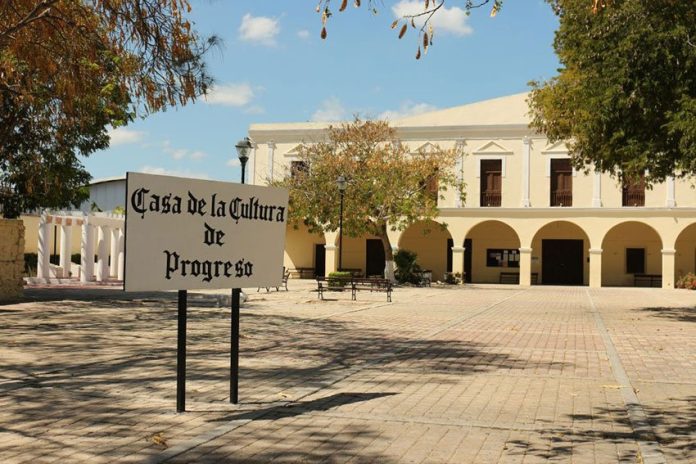
The cultural center in Progreso will be renovated to provide an exhibition space and a museum.
Yucatán Governor Mauricio Vila Dosal has announced that the state will invest 2.2 billion pesos (US $112 million) to improve infrastructure.
At a construction expo organized by the Mexican Chamber of the Construction Industry, Vila said that the largest portion of the money will go toward housing for the state’s poorest residents.
“We came to an agreement with President Andrés Manuel López Obrador to fight extreme poverty,” he said. “That’s why a billion of the 2.2 billion pesos will go toward housing.”
The money will be used to construct new housing units, as well as improve existing ones and build modern sanitation facilities in areas where they don’t exist.
Another 35 million pesos will be used to build a highway connecting Mérida to the neighboring municipality of Umán, which is home to several Mexican and foreign factories.
The Yucatán 21st Century Convention Center will be renovated with an investment of 200 million pesos, while 177 million pesos will go towards renovating public schools across the state.
Other projects will improving urban infrastructure in Mérida and Progreso, and dredge the ports of Yucalpetén, Dzilam Bravo, Chabihau and Telchac Puerto.
In addition to the investment by the state government, the federal Communications and Transportation Secretariat is spending 550 million pesos this year to improve highway infrastructure in Yucatán.
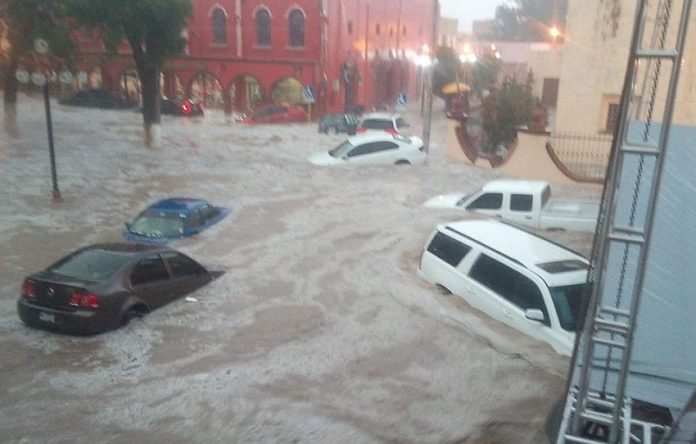
Heavy rain caused flash flooding in Matehuala, San Luis Potosí, yesterday evening, damaging some 300 vehicles and sweeping away about 50 of them.
Rain began falling at 7:00pm yesterday and subsequent floodwaters were enough to almost cover vehicles and currents were strong enough to carry them away.
About 40 stores were also affected.
Officials said there were no casualties.
There was also heavy rain yesterday in Morelia, Michoacán. Minor flooding and power outages were reported.
Causa tromba afectaciones en SLP
The rainy season is in full swing throughout the country. The National Water Commission has forecast torrential storms for areas in the states of Oaxaca and Chiapas and intense storms are expected in Guerrero, Veracruz and Tabasco, where there is a risk of mudslides.
December approval expected for new wage level for domestic workers.
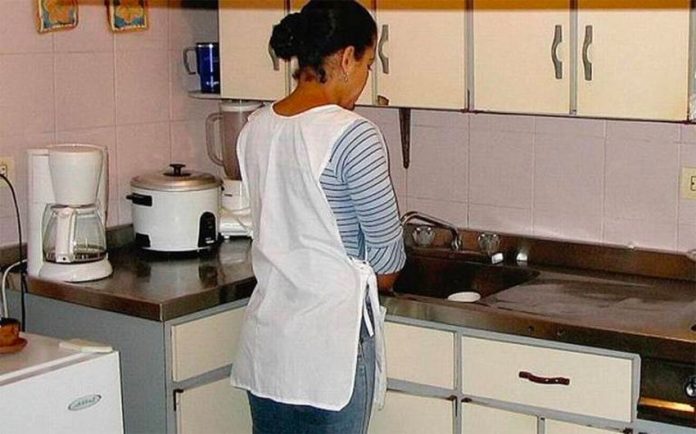
The National Minimum Wage Commission (Conasami) has proposed setting the daily minimum salary for domestic workers at 249 pesos (US $12.70).
Commission president Andrés Peñaloza Méndez said that a Conasami study estimated that 90% of employers have the financial capacity to pay the wage proposed.
Peñaloza predicted that the pay increase will be approved in December, adding that Conasami will hold talks with the relevant government agencies to ensure the new wage scheme is implemented effectively.
Just over 1.4 million domestic workers, most of whom are impoverished women, are expected to benefit.
According to Consami, almost 40% of people employed in homes in urban areas earn a monthly wage below 3,104 pesos (US $160), an amount which social development agency Coneval says is the minimum required for a person to be able to afford to pay basic expenses.
Peñaloza also said that Conasami will explore the possibility of offering a range of other incentives to domestic workers including tax breaks.
The legislation guarantees basic employment rights to domestic workers including a minimum wage, paid vacations, social security benefits, health care, annual bonuses and maternity leave.
Under the law, anyone who employs a cleaner, cook, live-in maid, babysitter or gardener in their home must formalize the relationship with a written contract.
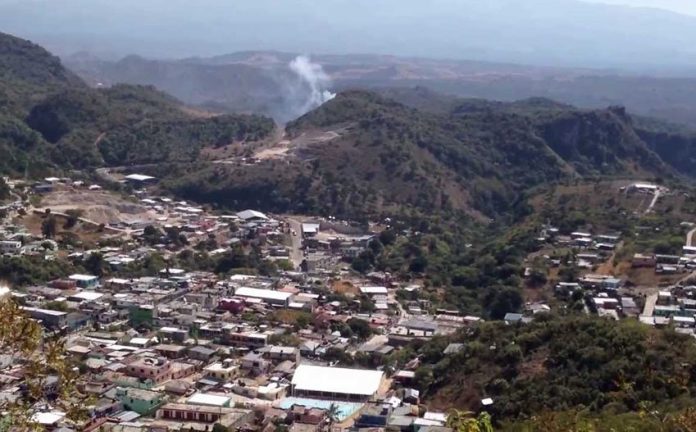
Nentón, Guatemala, where 1,000 migrants have been reported crossing the Mexican border every day.
When Washington scolds or threatens Mexico for its failure to halt illegal migrants, it chooses the wrong target. The target should be far tinier and less strategically, economically or politically important Guatemala.
Geography 101: To get to Mexico, emigrants from Honduras and El Salvador must cross Guatemala, which crosses the Central American isthmus from sea to sea. While it is legal for Hondurans and Salvadorans to enter Guatemala it is not legal to depart clandestinely for Mexico without completing emigration requirements.
Yet thousands do each day on foot by wading or rafting, often in plain sight of Guatemalan authorities. This exodus used to be mostly confined to Tapachula in the far southwestern corner of Chiapas but as Mexico turns up the heat on illegal immigrants the flow has spread eastward.
One source quoted by National Public Radio placed the number at 1,000 per day in remote and almost unreachable Nentón, hundreds of kilometers away. Last week I saw scores of vehicles with Guatemalan license plates streaming away from Nentón toward larger Comitán in Mexico from where northbound bus and truck service is readily available.
Either the Mexican or the Guatemalan government can stop this flow, but Guatemala is an acknowledged narco-state and probably a failed state by any definition and working in an openly dishonest environment is problematic.
[wpgmza id=”201″]
U.S. diplomatic initiatives toward Guatemala feature a tepidly effete effort to discourage illegal emigration, and a more complex and noisier push to reestablish the International Commission Against Impunity in Guatemala (CICIG), a UN-sponsored investigative agency whose operating authorization has been canceled in spite of its playing a key role in jailing over 200 allegedly corrupt mostly government functionaries, including two former presidents and one vice-president of Guatemala.
Indictment of both the son and brother of the sitting president led the latter unilaterally to break the treaty with the UN that established CICIG, in open defiance of a ruling by the country’s highest constitutional court that the treaty was inviolate.
To date the U.S. has discussed but not funded an initiative called the Alliance for Prosperity to channel billions of dollars into the emigrant countries (Guatemala, El Salvador, Honduras) with the aim of stimulating investment and hence jobs, although Congress may have trouble when it comes to a vote to provide money to countries whose ex-presidents are accused of or have been found guilty of embezzlement (five to date). This initiative is still on the table.
Instead of offering pie in the sky, the U.S. should turn the official and unofficial screws on Guatemala to enforce existing laws against migrant smuggling, turn back undocumented crossers at the border river with Mexico and stop promoting an official policy suggesting that Guatemalan emigrants have a moral right to live in the U.S.
Thousands marched for peace last year in Cuernavaca.
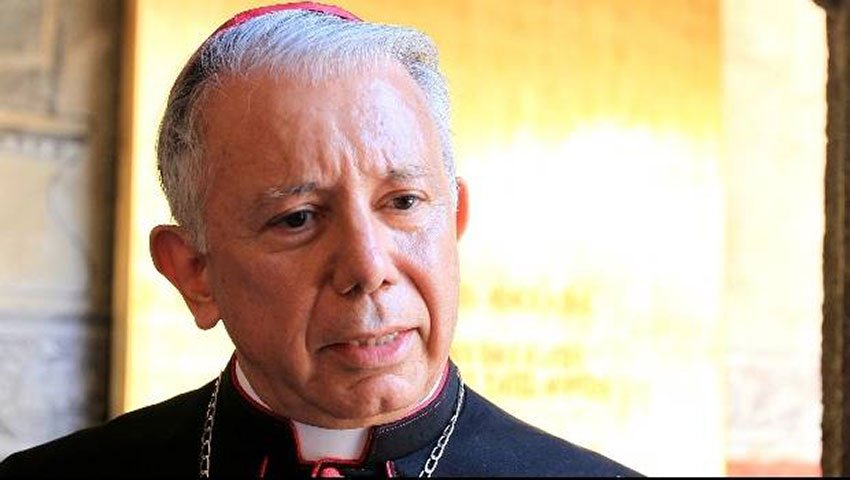
The bishop of Cuernavaca has suggested spiritual measures may be necessary to combat continuing violence and crime in Morelos.
At a press conference to discuss the Catholic Church’s fifth March for Peace, Ramón Castro Castro said excommunication from the church could be a tool in the fight against rising criminality in the state.
Castro said he is considering the possibility of excommunicating those who commit murder, rape or robbery. Kidnapping is already an offense punishable with excommunication in Morelos and has been since the 1990s when another bishop implemented the measure in an effort to fight crime.
But today, the bishop said, criminality has spread and diversified and the need for spiritual intervention is greater than ever.
He added that the church’s March for Peace on Saturday will address issues of criminality in Morelos and demand peace from those in a position to provide it. The bishop said the state and federal governments have not taken the necessary steps to ensure citizens’ safety.
Bishop Castro says spiritual measures may be called for in addressing crime.
“We are not indifferent to the suffering; we miss all of those who have been killed and the wound of their absence still hurts.”
One of the people planning to join Saturday’s march, which attracts many thousands of participants each year, is Governor Cuauhtémoc Blanco, whose presence is expected to draw some criticism from those who believe he has not done enough to confront crime and violence.
The governor said on Tuesday he would participate as a private citizen because the march’s message aligns with his agenda as governor and that he intends to work toward peace throughout his term in office.
Blanco recalled that he had previously attended the march during his term as mayor of Cuernavaca. Questioned about the possibility of conflict with other marchers who are unhappy with his administration’s policies, the governor said he welcomed challenges and the opportunity to work with others toward peace and a better society.
Blanco said the newly-created National Guard will be essential to that effort, although the new force won’t arrive until December because of the high demand from other states with similar security crises.
He added that the state will receive a smaller force of federal troops in June.
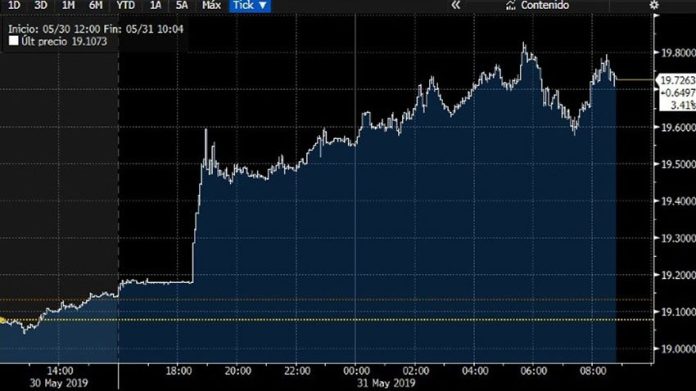
The peso plunged more than 3% today on the news that United States President Donald Trump will impose a 5% tariff on all Mexican imports in order to pressure Mexico to do more to curb migration.
Banks were selling one U.S. dollar for 20.05 pesos, the newspaper El Financiero reported this morning, a 3.1% increase compared to a high yesterday of 19.45 pesos.
The interbank dollar rate also fell, dropping 3.1% to 19.74 pesos compared to 19.14 pesos at 4:00pm Thursday. The peso’s decline is the largest in seven months.
The Financial Times reported that in early London trading the currency fell 3.3% against the dollar. If the decline exceeds 3.5%, it would be the peso’s worst daily performance since Trump was elected in November 2017, when it tumbled 7.7%.
The tariffs will only be removed “if the illegal migration crisis is alleviated through effective actions taken by Mexico,” Trump said.
“Given the specific and near-term implementation date the president cites, we believe at least the first tariff at 5% is likely to be implemented as stated,” Goldman Sachs analysts said.
“That said, we note that another of the president’s proposed immigration actions – closing the U.S.-Mexico border – was threatened but never implemented.”
President López Obrador called for “prudence and responsibility” in a letter to Trump, stating that “social problems are not solved with taxes or coercive measures.”
A delegation led by Foreign Secretary Marcelo Ebrard is traveling to Washington D.C. today to meet with United States officials and, according to the president, “arrive at an agreement that benefits both nations.”
Ebrard said on Twitter that “the treatment of Mexico is unfair and doesn’t make economic sense for anybody.”
He added that the United States receives essential goods and services from Mexico and charged that migration flows from Central America and high drug consumption levels in the U.S. “are not the responsibility of Mexico.”
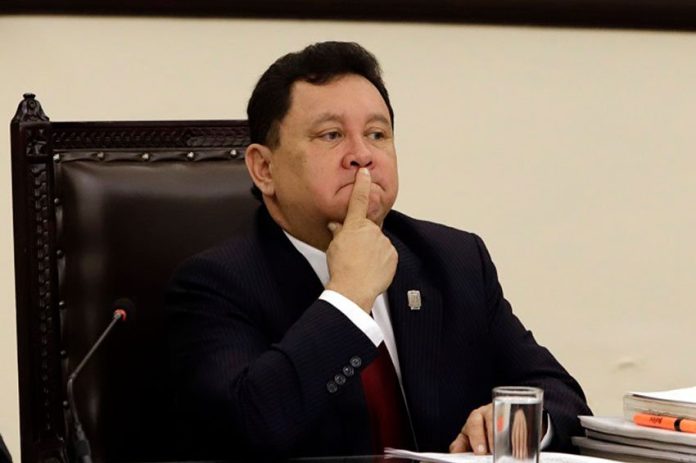
Women should think before getting pregnant, said a Puebla lawmaker this week to express his opposition to legislation that would reduce criminal penalties for women who procure abortions.
In an internet talk show interview Héctor Alonso Granados said he opposes legalizing abortion because he thinks women should have to take responsibility for their pregnancies.
“You have to think before spreading your legs and getting pregnant,” said the Morena party deputy. “Why should the government have to deal with an act of irresponsible sex?”
A bill to ease criminal penalties for women who obtain abortions was introduced on Monday by Institutional Revolutionary Party Deputy Rocío García Olmedo.
Currently, women convicted of procuring abortions or allowing others to perform abortions on them can be jailed for six to 12 months. The proposed legislation would reduce the jail time to between three and six months, and also give convicted women the option of performing 100 to 300 days of community service.
According to Periódico Central, García’s initiative has the support of seven Puebla deputies, including four from Morena and two independents. The bill would need the support of 15 more deputies to become law.
Cristina Tello Rosas, another Morena deputy in Puebla who has been outspoken in her opposition to decriminalizing abortion, is considering whether she will vote for the García bill. In an interview with Sin Embargo, Tello called moves towards the legalization of abortion a “fashion” and said she will consult specialists before making a decision.
“It shouldn’t be a personal decision,” she said. “I’m planning a campaign in my district so I can get help and find out what we really need . . . It will be a campaign with specialists, and I won’t make my decision based on following fashions, as many are doing.”
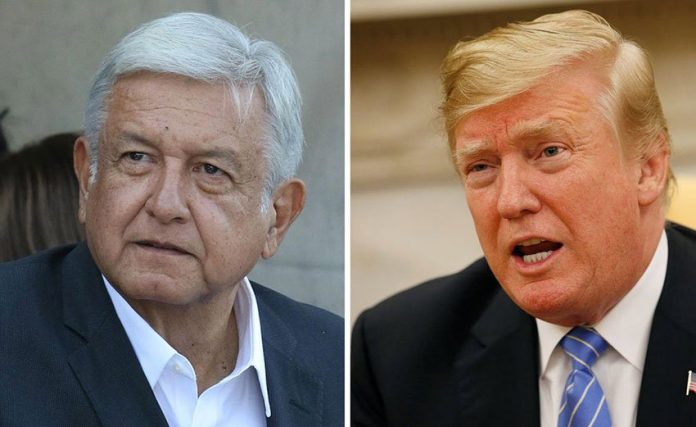
AMLO: social problems not solved with coercive measures. Trump: tariffs will force companies to leave Mexico.
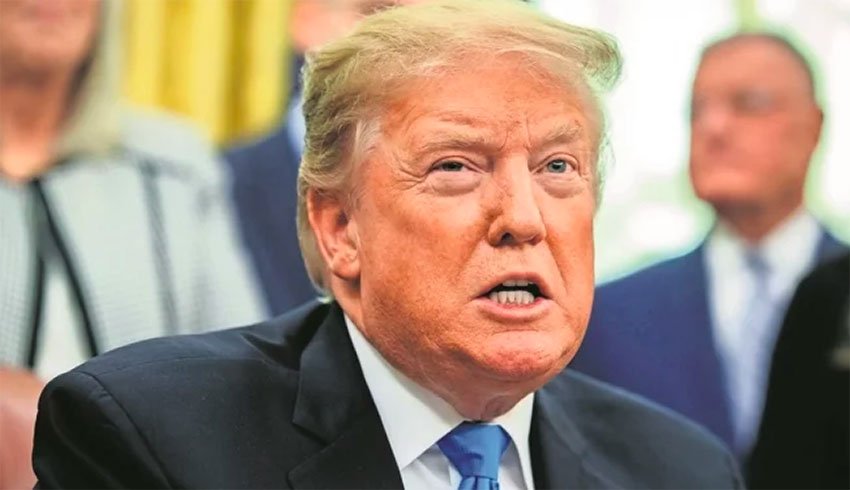
United States President Donald Trump announced yesterday that he is placing a 5% tariff on all goods from Mexico to pressure the country to do more to stop immigration into the U.S.
The move provoked a strong response from President López Obrador, who wrote in a letter to his United States counterpart that “social problems are not solved with taxes or coercive measures” and instead proposed dialogue to reach an agreement that is beneficial to both nations.
In a White House statement, Trump said the tariffs will start on June 10 and increase by an additional 5% at the start of each subsequent month to a maximum of 25% if Mexico doesn’t take “action to dramatically reduce or eliminate the number of illegal aliens crossing its territory into the United States.”
“If the illegal migration crisis is alleviated through effective actions taken by Mexico, to be determined in our sole discretion and judgment, the tariffs will be removed,” he explained.
The U.S. president warned that if Mexico should choose not to cooperate, “the sustained imposition of tariffs will produce a massive return of jobs back to American cities and towns.”
Trump: ‘Sustained imposition of tariffs will produce a massive return of jobs back to American cities and towns.’
However, Trump added that his administration was confident that Mexico “can and will act swiftly to help the United States stop this long-term, dangerous, and deeply unfair problem.”
The U.S. president said that in imposing the tariffs he was invoking authorities granted under the International Emergency Economic Powers Act. Trump declared a national emergency at the southern United States border on February 15.
Tens of thousands of migrants have traveled through the country to the United States border in recent months, raising the ire of the U.S. president who in April threatened to impose tariffs on Mexican auto imports and close the border if Mexico doesn’t stop drug and migration flows within a year.
Experts warned that Trump’s new plan will be damaging to the economy on both sides of the border and that Mexico could introduce its own retaliatory tariffs, as occurred last year when the United States implemented duties on steel and aluminum.
Tariffs are paid by importers, meaning that companies that buy Mexican products will likely pass at least some of their increased costs on to United States consumers.
Mexico sent US $346.5 billion worth of goods to its northern neighbor last year, a figure that underscores the importance of the bilateral trade relationship.
Mexico has taken advantage of the United States for decades. Because of the Dems, our Immigration Laws are BAD. Mexico makes a FORTUNE from the U.S., have for decades, they can easily fix this problem. Time for them to finally do what must be done!
If the proposed tariffs cause a downturn in the Mexican economy, more citizens would likely try to cross the border to find work in the United States, undermining Trump’s plan.
“Mexico is our friend and neighbor, a partner in trade and security,” Glenn Hamer, chief executive of the Arizona Chamber of Commerce and Industry, told the Washington Post.
“The president’s announcement is baffling and, if carried out, will be terribly damaging.”
José María Ramos García, an international relations professor at the College of the Northern Border in Tijuana, said “it’s very probable that Mexico will respond in a similar way” to Trump’s new universal tariffs, adding “that would generate [additional] tension” in the bilateral relationship.
He questioned the logic of the move given that “we’re trade partners, we share a border and we’re about to enter into a [new] free trade agreement.”
“If the president goes through with this, I’m afraid progress to get this trade agreement across the finish line will be stifled,” said Senator Joni Erst.
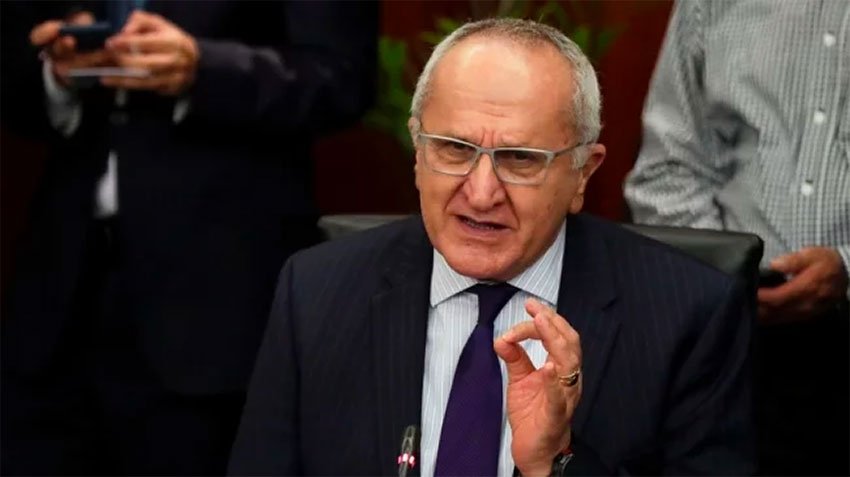
Jesús Seade, Mexico’s foreign affairs undersecretary for North America, told a press conference that the tariffs threatened by Trump would be “disastrous,” adding that Mexico would respond strongly.
“. . . If it happens, we must respond energetically. . . The right thing would be to respond eye for an eye but . . . we have to talk to the United States and we have to see . . . how to respond,” he said.
Seade acknowledged that reciprocal measures would lead to a trade war “and that is the last thing that we want.”
In his missive to Trump, López Obrador was in part conciliatory, writing that he doesn’t want confrontation and doesn’t believe in “a tooth for a tooth” and “an eye for an eye.”
He said that a government delegation headed by Foreign Affairs Secretary Marcelo Ebrard would travel to Washington today to meet with United States officials and “arrive at an agreement that benefits both nations.”
In order not to pay Tariffs, if they start rising, companies will leave Mexico, which has taken 30% of our Auto Industry, and come back home to the USA. Mexico must take back their country from the drug lords and cartels. The Tariff is about stopping drugs as well as illegals!
But even as López Obrador suggested that there is a diplomatic solution to Trump’s planned protectionism, he condemned the United States government’s immigration policy.
“How did a country of fraternity for all the migrants in the world become, from night to dawn, a ghetto, a closed space where those who seek . . . to live free from misery are stigmatized, mistreated, persecuted, expelled and [their] right to justice is canceled?” López Obrador wrote.
“The Statue of Liberty is not an empty symbol,” he added.
López Obrador also said that Mexico is doing all it can to “avoid” the flow of migrants through Mexico “without violating [their] human rights.”
Indeed, statistics show that deportations by Mexican authorities have increased threefold in recent months compared to the same period last year. Notwithstanding, large numbers of mainly Central American migrants continue to evade authorities en route to the United States border and more than 1,000 crossed into the El Paso area on Wednesday to surrender to U.S. authorities.
United States officials say that corrupt Mexican officials are allowing buses transporting migrants to the border to pass through highway checkpoints.
To stop the flow of migrants, López Obrador reminded Trump that since the beginning of his government he has proposed cooperation on a development plan “to help Central American countries with productive investments in order to create jobs and resolve this difficult matter.”
López Obrador also said that Mexicans will soon have no need to go to the United States “because we’re combating corruption, Mexico’s main problem, like never before!”
Later in the letter, the president said: “Specifically, citizen president, I propose to you to deepen dialogue, to seek real alternatives to the immigration problem, and please remember that I do not lack courage, I’m not a coward or a wimp but rather I act on principles.”
The president’s letter has not made any discernible difference to Trump’s attitude towards Mexico.
In a series of tweets this morning, the U.S. president wrote that “Mexico has taken advantage of the United States for decades,” “the tariff is about stopping drugs as well as illegals!” and “it’s time” to act.
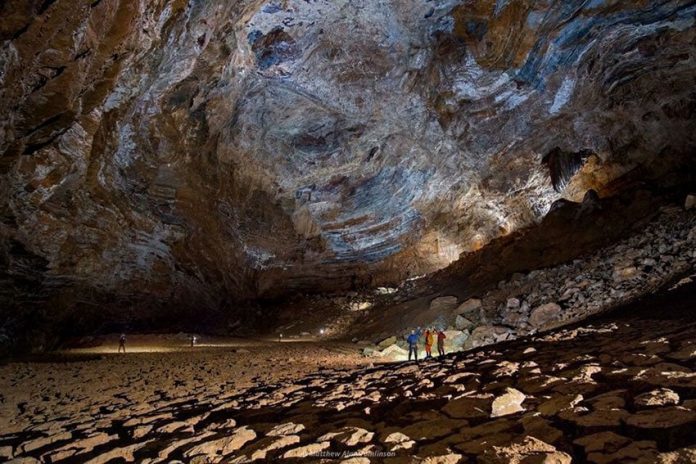
Anthodite Hall, one kilometer beneath the surface in Oaxaca's Huautla Cave System. Matt Tomlinson
For die-hard cave explorers around the world, Mexico has long been considered “the new frontier of caving.” Here cavers have a high likelihood of being among the first human beings ever to boldly set foot where “no one has gone before.”
Maybe the best example of Mexico’s magnificent caves is the Huautla Cave System located in Oaxaca’s Sierra Mazateca. Exploration began in 1965 when a group of cavers from Austin, Texas, arrived at the village of Huautla de Jiménez.
They soon discovered three beautiful and challenging caves in the area: Sótano de San Agustin, La Grieta and Nita Nanta. In time it became clear that these and other caves they kept finding were interconnected, all part of one big cave system, which became known as Sistema Huautla.
Numerous expeditions took place over the years and more than 65 kilometers of passages were mapped by cave explorers from all around the globe. In the late winter of 2013, an international team of cave divers entered the cave, rappelled through crashing waterfalls down chasms as tall as skyscrapers and carried out eight separate scuba dives past “the mother of all sumps” to reach a depth of -1,554 meters, making Huautla the western hemisphere’s deepest cave — and now the longest of the 17 deepest caves in the world.
In 2015, 47 speleologists from seven countries (Mexico, United States, United Kingdom, Australia, Poland, Switzerland and Romania) participated in a six-week expedition to venture into parts of the system which had not yet been explored.
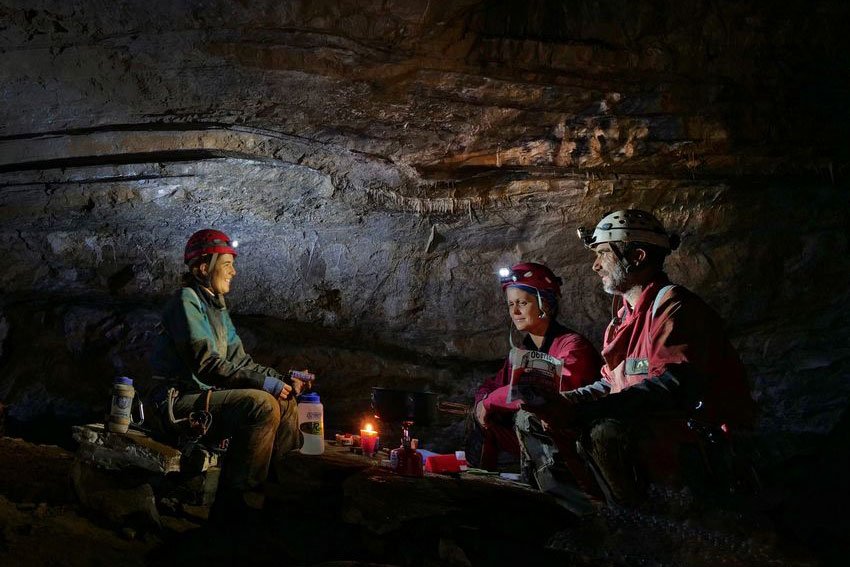
A caver in The Metro, a typical room in Sistema Huautla. Matt Tomlinson
“We mapped and connected two caves 700 meters deep,” said veteran Huautla pioneer and Explorers Club member Bill Steele. “You need a lot more than 700 meters of rope to reach that point because you have horizontal traverses to do on the way down . . . and it takes a whole week just to put the ropes in place.”
In 2014, Steele helped to form PESH (Proyecto Espleleológico Sistema Huautla), a project dedicated to conducting a comprehensive speleological study of Sistema Huautla over a 10-year period.
Recently, I caught up with Steele just after he returned from the latest exploration of Huautla, which took place throughout April.
“Sistema Huautla is now 89 kilometers long,” he told me, “and 1,560 meters deep, which makes it the deepest cave in the western hemisphere and the ninth deepest in the world, tied for that place right now with a cave in Austria. This year we added three entrances to the system, so we’ve got 29 entrances now.”
“This was the sixth PESH expedition,” Steele went on, “and this year we had 42 people. They were from three countries: Mexico, the U.S. and Costa Rica. The way we structure it is we have 30 people at any given time: that’s what our infrastructure on the surface can handle. One thing of note this year is that at one point we had five deep underground camps going at the same time, a new benchmark for exploration in Huautla. These people stayed underground for a week at a time and then came out to report.
“Some of your readers may not realize that there is no radio in existence that works through that much rock, although there are a couple of people working on that sort of thing. So, at the moment, it’s like Pony Express: the way you find out what’s going on is when somebody comes out and tells you.
Cavers in a deep Sistema Huautla underground camp.
“And years ago we decided it’s better if these people actually write out their report before heading for the surface, because after climbing up so many ropes and working so hard for so long, people arrive up here so tired that they forget what it was they were supposed to tell you or they can’t quite remember all the details, so we now have a rule that all messages must be written down.”
As for scientific results, this year’s PESH expedition had a graduate student from Western Kentucky University who is studying karst hydrology. “His name is Fernando Hernández,” Steele told me, “and he’s a very good caver. He is still there in Huautla right now. He’s been there since February. In regard to biology, we have a collecting permit issued to us by Dr. Oscar Francke of UNAM in Mexico City. He’s described 48 different life forms that live in Sistema Huautla. Eleven of these have turned out to be highly adapted troglobic creatures.
“As for paleontology, Dr. Iván Alarcón Durán out of Puebla and his people are looking at some remains of Pleistocene megafauna that we’ve seen in the caves. They discovered the only complete skull ever found in Mexico of a Pleistocene sloth over 12,000 years old. So we are really happy about what Mexican cave scientists are finding here.”
The yearly presence of cave explorers in the local villages has had unexpected consequences. This is just one of many anecdotes told by Bill Steele:
“On the very last day of last year’s expedition, a school teacher walked up and he had a USB drive in his hand. Now he was a little shy. He lives in the same village where we rent houses, and he said: ‘This is my life’s work and I’m hoping that you can find a way to print a hundred copies of this to help children learn to read their native language, Mazateco. I teach it, but we don’t have a book. If you can print 100 copies, I would be so happy.’
“So I went back to Texas wondering, ‘How am I going to do that?’ Every page in that teacher’s manuscript was in color . . . and I looked into the cost and sort of gulped, because publishing really isn’t our thing. But I went to the Whole Earth Provision Company, which has been so good to cavers. They had printed our brochure, which explains what we were doing in Huautla.
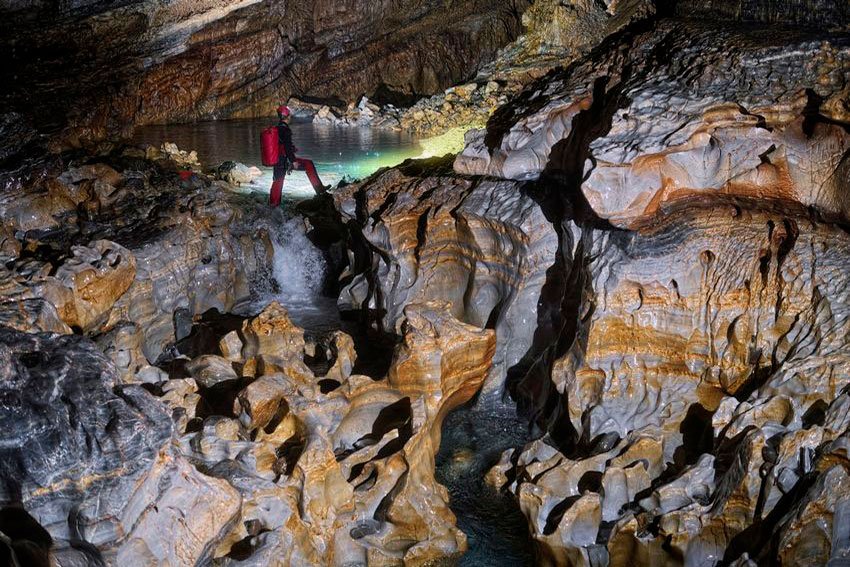
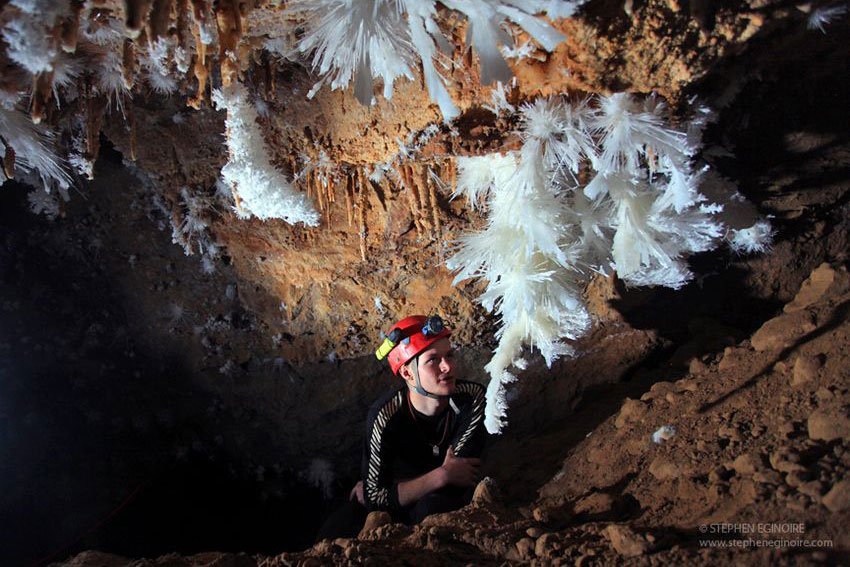
An anthodite (gypsum formation) in the San Agustín section of the cave. Stephen Eginoire
“That brochure, by the way, is written in three languages: English, Spanish and Mazateco, and we found out that it is the only document in existence in those three languages, other than the Holy Bible! So schoolteachers like it.
“Of course, that teacher knew about the brochure because he is the very one who translated it into Mazateco. So, as for the primer, we said, ‘We’ll do what we can.’
“Well, we did better than 100 copies: we were able to print 180, beautifully done and spiral bound so they lay flat on a desk.”
Back to caving, I asked Bill Steele where Huautla stands in relation to the rest of the world’s caves.
“Well,” replied Steele, “Carlsbad Caverns is known for one very big chamber called the Big Room, but here in Huautla we’ve got at least 12 rooms just as big . . . and one of them is twice the size of the Dallas Cowboys’ stadium! . . .
“You know, way back in 1987, a famous Swiss caver named Phillipe Rouillier approached me deep inside the cave and said, with his German-Swiss accent, ‘Bill, I do believe this is the most magnificent cave on earth.’ Thirty-two years later — after numerous stupendous additions to the cave, I hear more and more speleologists saying the same.
[wpgmza id=”200″]
“This was my 25th Huautla expedition over 42 years. I was a young man of 28 the first time I went. Now I am 70 years old. I feel really blessed that I am able to be a part of such a significant exploration of a major geographical feature of this planet. It’s an incredible cave!
Would you like to visit the Huautla caves from your living room, without getting your clothes muddy? Have a look at the PESH page. The pictures are spectacular.
Photos courtesy of PESH and Bill Steele, unless otherwise indicated.
[soliloquy id="80106"]
The writer has lived near Guadalajara, Jalisco, for more than 30 years and is the author of A Guide to West Mexico’s Guachimontones and Surrounding Area and co-author of Outdoors in Western Mexico. More of his writing can be found on his website.
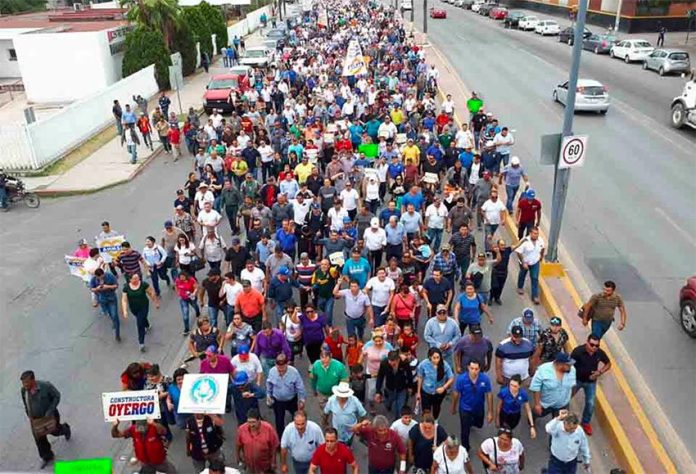
Thousands march in Monclova, Coahuila, in support of the steelmaker.
Around 9,000 people marched in Monclova, Coahuila, yesterday to support steelmaker Altos Hornos de México and its president, Alonso Ancira Elizondo, who was arrested in Spain earlier this week on corruption charges.
Altos Hornos managers and employees and state and local officials joined the march.
“Someone who isn’t familiar with Coahuila wouldn’t be able to understand the uncertainty we’re going through about the company,” Coahuila Labor Secretary Román Cepeda González told the assembled protesters after the march ended.
Cepeda said that Coahuila Governor Miguel Riquelme was worried about the operation of Altos Hornos in light of the arrest of its president, although the company continues operating.
Company general manager Luis Zamudio said the company’s operations were not at risk.
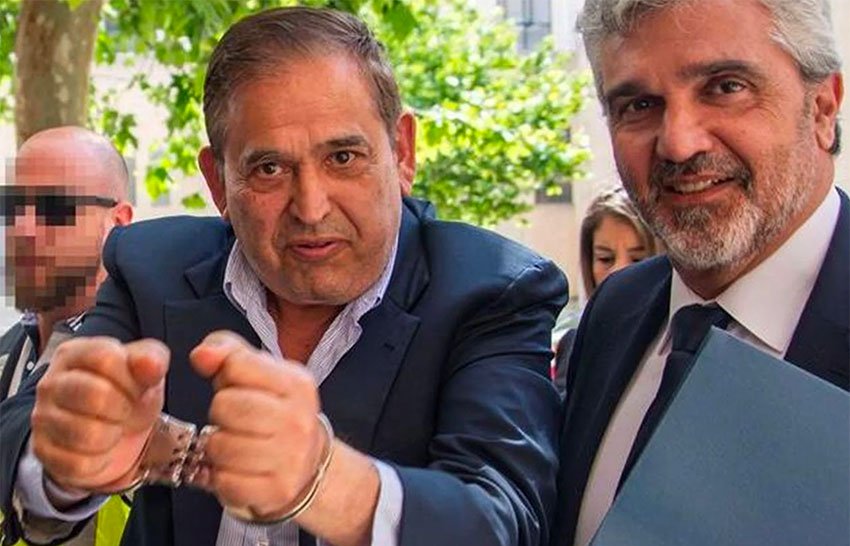
Altos Hornos CEO Ancira shows his handcuffs after his arrest this week in Spain.
Monclova Mayor Alfredo Paredes also spoke in support of the company.
“We will defend our families, our incomes, our economy,” he said. “We are coming out to defend legality. The way they’ve acted has created worry and uncertainty.”
The first move against the company came earlier this week when the Financial Intelligence Unit of the Attorney General’s Office froze its bank accounts. However, the accounts were freed after Ancira’s arrest on Tuesday in Mallorca, Spain, by Interpol agents who were acting on a Mexican arrest warrant.
Ancira faces corruption charges related to the 2014 sale by Altos Hornos of a fertilizer plant to Pemex, although federal officials have released few details of the charges.
A warrant for the arrest of former Pemex CEO Emilio Lozoya has also been issued, but he has obtained a temporary suspension against the warrant, according to his attorney.
Monclova-headquartered Altos Hornos is the largest integrated steel plant in Mexico and employs over 20,000 people.
According to an attorney for the company it generates 18% of the state’s Gross Domestic Product.