Home Blog Page 2013

Authorities turn up heat on migrants; caravan no. 1 says feds blocked bus travel plan

0
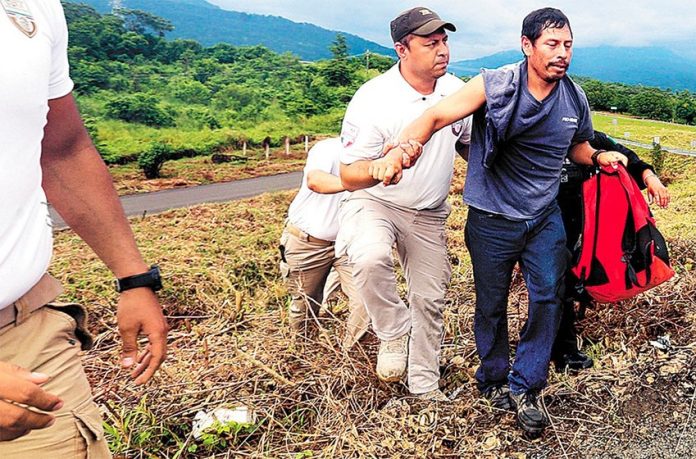
Immigration agents arrest a Central American migrant in Chiapas.

Immigration officials and Federal Police detained and deported 160 members of the second migrant caravan yesterday because they entered Mexico illegally.

The Central American migrants were arrested while walking or hitching rides from Tapachula to Huixtla in the southern state of Chiapas.

Nine kilometers before the caravan reached the latter town, immigration officials and police blocked the migrants’ path with about 30 vehicles.

Some succeeded in outrunning the authorities while those detained were taken to a National Immigration Institute (INM) facility where they were put on buses and taken to the Tapachula airport.

There, they were placed aboard a Federal Police plane and flown to San Pedro Sula, Honduras.

The INM told the newspaper Milenio that more migrants traveling as part of the first and second caravans who entered Mexico without going through official immigration channels will be detained in the coming days.

The federal government warned two weeks ago that Central American migrants traveling to the United States via Mexico would be detained and deported if they entered the country illegally, but prior to yesterday’s detention authorities have made few attempts to stop migrants from traveling through the country.

Many members of both the first and second caravans entered Mexico by crossing the Suchiate river, which separates Guatemala from Chiapas, by wading, swimming or riding on rafts.

Members of the second caravan clashed with Federal Police at the border last Sunday.

The migrants threw rocks and used sticks against the police after toppling a metal barricade blocking their entry into Mexico on the border bridge.

A 26-year-old Honduran man died during the confrontation, allegedly after being shot in the head with a rubber bullet. But Mexican authorities denied that police fired at the victim.

United States President Trump seized on the clash at a rally in Florida yesterday, telling supporters that the migrants are “not angels.”

“You saw what happened two days ago with the Mexican military and the Mexican police. You saw what happened there, how tough the opposition is,” he said.

“We’re tougher than anybody. We’re tougher than any force. And we’re probably going to have to be unfortunately.”

Trump also floated the idea yesterday that as many as 15,000 troops could be sent to the United States’ southern border just days after the U.S. Department of Defense said that it would send around 5,200 active-duty troops there.

Meanwhile, migrants in the first caravan are continuing their journey through Oaxaca after failing to secure transportation to Mexico City for its approximately 4,000 members.

Migrant advocacy group Pueblos Sin Fronteras (People Without Borders), which is supporting and helping to organize the caravan, accused the federal government of blocking the migrants’ travel to the capital by bus.

“The plan to cross Oaxaca in transportation was blocked by the federal government. Today, there was a possibility of more than 70 buses from different sources of support but under pressure from the federal government of Mexico, they withdrew their support,” the organization said in a statement.

That left the migrants with “the sole option of continuing on foot towards Veracruz, a state with an extremely high risk of violence at the hands of organized crime,” it continued.

“The Mexican federal government will be fully responsible for any aggression against the members of the exodus and accompanying persons.”

At a meeting last night, the migrants decided to change their route and head today towards the city of Matías Romero, about 60 kilometers northeast of Juchitán, where they spent the last two nights.

The highway to Oaxaca city is winding and mountainous and has few towns with the infrastructure to receive such a large group of migrants, Pueblos Sin Fronteras said.

“The delicate health condition of [caravan members], especially of children, implies risks due to the lack of access to medical services in the route towards Oaxaca city,” it explained.
Source: Milenio (sp)  Reforma (sp)

Rough week for CFE workers: 3 arrested, 3 kidnapped over lack of electricity

0
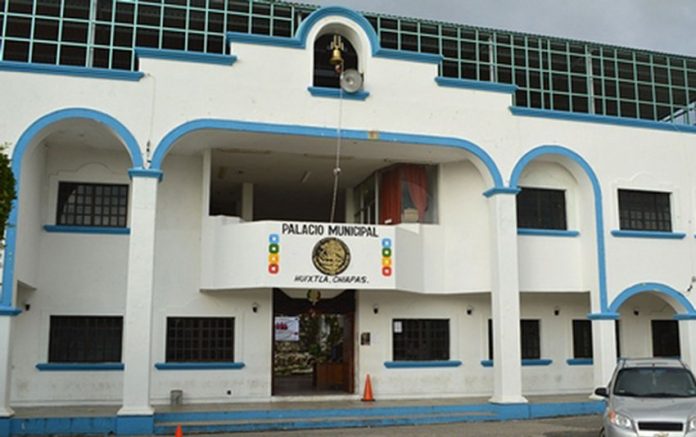
Municipal headquarters in Huixtla.

What is a mayor to do when the CFE comes by to cut off the power because the bill hasn’t been paid? Arrest the linesmen, of course.

That’s what happened in Huixtla, Chiapas, where Mayor José Luis Laparra Calderón ordered the apprehension of three personnel from the Federal Electricity Commission who turned up to switch off the power at the municipal offices.

The three climbed a utility pole, turned off the electricity and climbed back down again only to land in the arms of municipal police, who placed them under arrest. Municipal employees then climbed up the pole themselves and reconnected the power supply.

The municipality owes the CFE 1 million pesos (US $50,000).

CFE sources told the newspaper Reforma that the utility company had approached the mayor with the intention of collecting at least some of the owed amount, but he refused to cooperate.

Meanwhile, three other CFE workers met a similar fate in the Oaxaca town of El Pescadito in San Miguel Soyaltepec.

After being without electricity for more than 15 days residents kidnapped the three in protest and demanded that the company reconnect the power supply.

The utility explained that its efforts had been impeded by a rise in the level of a river running through the region.

The state government was to send a team of representatives to resolve the situation.

Damage to the electrical grid was caused by storms two weeks ago.

Source: Reforma (sp), Milenio (sp)

Authorities search for US man missing in Chihuahua since Sunday

0
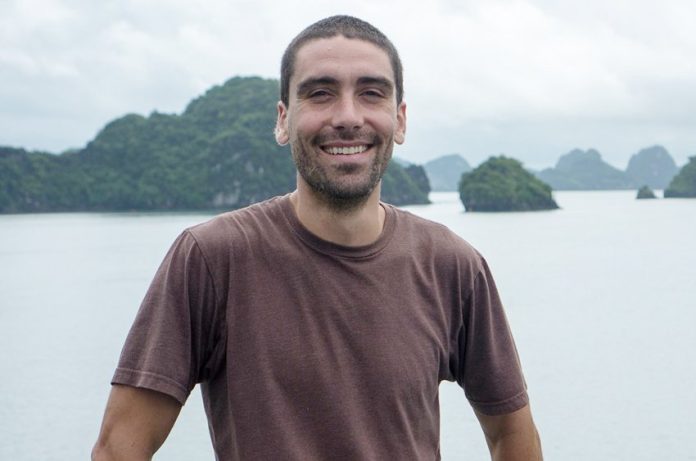
Braxton-Andrew, missing in Chihuahua.

A search is under way for a United States citizen who was last seen in the state of Chihuahua on Sunday.

Patrick Braxton-Andrew, 34, left his hotel in Urique, a town in the southwest corner of the state, and went for a walk about 4:00pm.

The hotel owner says he never returned. Someone had seen him walking near a ranch that afternoon about four kilometers from the town.

Family and friends fear that he was hurt while walking or hiking, a family friend told The Charlotte Observer.

The last communication his family had with the missing man was a text message at 3:51pm Sunday.

[wpgmza id=”104″]

Described as fluent in Spanish, Braxton-Andrew was supposed to meet his brother in Mexico City on Tuesday but didn’t appear.

He arrived in Mexico on October 25 and rode the Copper Canyon train to Posada Barrancas Divisadero before arriving in Urique last Friday or Saturday.

The newspaper El Diario reported today that police and other state authorities have been searching for Braxton-Andrew in the area surrounding Urique.

Any information about Braxton-Andrew’s whereabouts can be passed along to family friend Nancy Slagle by email or telephone 704-779-2015.

Mexico News Daily

Supreme Court rules Veracruz cockfight ban is constitutional

0
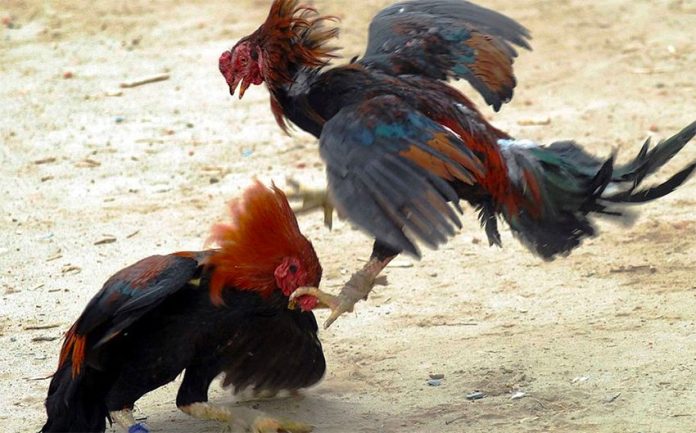
Not permitted in Veracruz.

The Supreme Court ruled yesterday that a ban on cockfights approved by the Veracruz Congress two years ago is constitutional.

The ruling said there were many benefits from the ban with regard to the animals’ well-being, protecting them from physical injury and even death.

The state’s Animal Protection Act also prohibits hunting and capturing wild animals, animal fights and the inclusion of animals in circus shows.

The law exempts bullfights, horse races and all activities related to the sport of charrería, a competitive event similar to rodeo.

Firms and organizations dedicated to promoting and supplying cockfights had filed an amparo, or injunction, request less than a month after the law was published by the state government.

This group’s main claim was that the livelihood of many people employed directly and indirectly by the activity would be seriously harmed.

As an example they cited the manufacturing of cockfight blades, saying it was worth 368.5 million pesos (US $18.3 million) a year, while the gamecock feed industry consumed an average of 110,000 tonnes every month, representing a gross annual income of 7.2 billion pesos ($357.3 million).

“This financial situation was not taken into account by the authorities responsible for reforming the Animal Protection Act,” said the president of the Mexican Commission for Cockfight Promotion, asserting that it was a form of discrimination and an attack against freedom to work.

Source: Milenio (sp)

Pemex says pipeline theft, hurricane cause of fuel shortages in Guanajuato

0
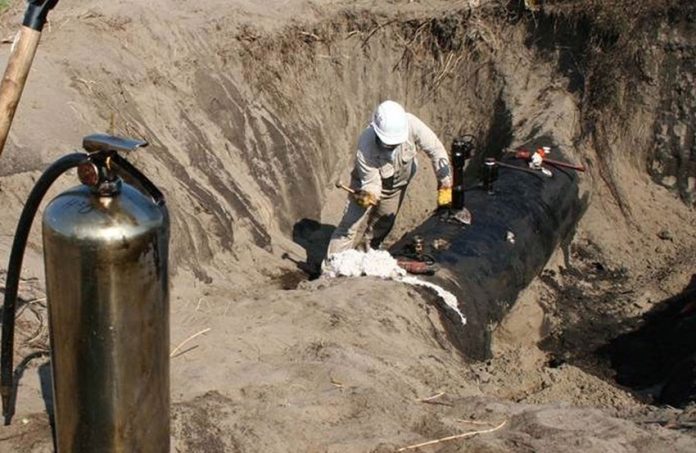
Repairing pipeline taps takes time, leading to supply shortages.

Illegal taps on petroleum pipelines coupled with supply chain disruptions caused by Hurricane Willa have resulted in fuel shortages in Guanajuato.

Officials from the state oil company Pemex told the newspaper Milenio that due to a high number of illegal perforations, pipelines between Tula, Hidalgo, and Salamanca, Guanajuato, have been shut off.

“. . . There are supply delays because we have to close the ducts in order to repair them and that to a large extent delays supply to the state,” they said.

Pemex operates refineries in both Salamanca and Tula.

Authorities detected 1,852 illegal taps on pipelines in Guanajuato last year, more than any other state in the country.

The crime, perpetrated by gangs of thieves known as huachicoleros, is considered the main reason behind rising levels of violent crime in Guanajuato, especially in the state’s industrial corridor which includes the municipalities of Celaya, Salamanca and Irapuato.

The Pemex officials also said that poor weather conditions brought by Willa last week made it impossible to unload fuel from ships at some ports, further limiting supply.

The fuel shortage is being acutely felt in León, where at least 20 gas stations out of a total of 183 have reported running out of gasoline over the past two weeks. It’s not just Pemex stations that are affected but those operated by BP and Shell as well.

Pemex is working to reestablish adequate fuel supply to affected municipalities, the company’s officials said.

The shortages apply mainly to the Magna brand of gasoline which, being the more economical, sees the greatest demand. Pemex said in September that nearly 85% of gasoline purchased in the first seven months was Magna. In 2016, Magna represented 78% of the total sold.

The increase has been attributed to fuel price increases.

Source: Milenio (sp), am (sp)

AMLO accuses private sector of big plans to develop existing airport land

0
AMLO, also known as the 'Tropical Messiah,' defends airport decision.
AMLO, sometimes known as the 'Tropical Messiah,' defends airport decision.

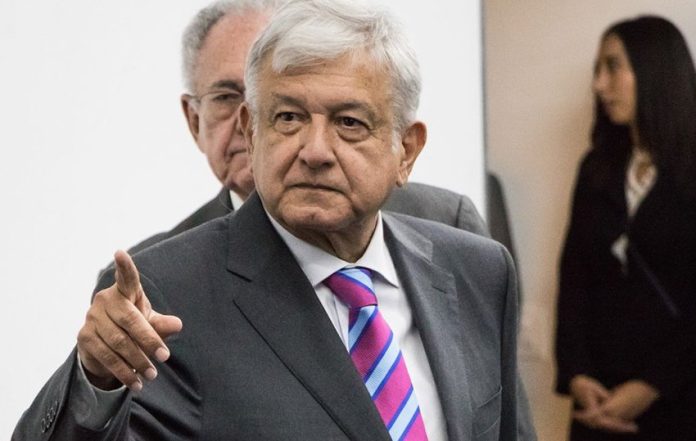
The private sector is upset with the decision to cancel the new Mexico City International Airport project because it had big plans to develop the site of the existing airport, charges president-elect López Obrador.

In a video posted to social media yesterday, López Obrador said the business sector had reached an agreement that would allow it to eventually take possession of the Benito Juárez International Airport, located just seven kilometers east of Mexico City’s downtown.

“Now I can say it. During the consultation, I couldn’t speak because I had to act with impartiality but . . . part of the construction [plan] for the airport at Texcoco was for [the private sector] to keep the land of the current airport,” he said.

“I even saw the blueprint. They had already planned to build a kind of Santa Fe on the 600 hectares of the current airport,” López Obrador continued, referring to the Mexico City business and shopping district.

“I understand that they are upset because they won’t be able to do that business.”

Influential private sector leaders slammed the decision to cancel the 285-billion-peso (US $14 billion) airport announced Monday by López Obrador, a day after the public consultation on the project’s future concluded.

Instead, the incoming government plans to build two new runways at the Santa Lucía Air Force Base in México state and upgrade the existing airport and that in Toluca, a proposal that about 70% of people supported in the consultation.

Mexican Employers Federation (Coparmex) president Gustavo de Hoyos said killing the airport project would be “the biggest waste of public resources in the history of the country.”

The vote on the future of the project was a “Mickey Mouse consultation” and a “flagrant violation of the law,” he charged.

Economist Enrique Cardenas of the Iberoamerican University expressed a similar sentiment to de Hoyos, writing on Twitter that scrapping the airport project “will be remembered as one of the worst stupidities from a president in contemporary economic history.”

In yesterday’s video, López Obrador sought to reassure investors and disgruntled business leaders about his decision to respect the will of the approximately 1.1 million people, or just over 1% of the electoral roll, who voted in the consultation.

“We’re not going to commit any injustice with the investors and contractors . . . They will be assured that their work can be carried out, only now they won’t be in Texcoco but in Santa Lucía. We’re going to reach an agreement. Settle down, calm down — a change is taking place in the country,” he said.

“There is nothing to fear. We have said 1,001 times that we will guarantee the investments, the contracts.”

After his landslide victory in the July 1 election, López Obrador also sought to calm fears surrounding the next government’s economic plans, a move which analysts believed initially reassured investors and contributed to a strengthening of the peso.

However, following confirmation of the decision to scrap the new airport, which was considered President Peña Nieto’s signature infrastructure project, the peso lost 3.6% of its value in 24 hours to slump to its lowest level since the election of United States President Trump.

According to the currency exchange website xe.com, one US dollar bought 20.3 Mexican pesos at 5:00pm today. In recent years, exceeding the 20-peso-to-the-dollar threshold has set off alarm bells in Mexico.

López Obrador addressed the decline in his video message, declaring that “there was a slide in the peso, not a devaluation, but it will recover.”

However, it’s not just a weaker peso that is causing concern.

Mexico’s benchmark stock index was down 4.2% at the close yesterday while some analysts believe that projected 2019 growth of 2% may have to be downgraded and foreign capital may flee the country.

Critics of the president-elect’s decision and the way it was made said that cancelation of the airport could diminish investor trust in Mexico during the new government’s six-year term, as Mexico’s two largest banks also warned.

“A lot of foreign investors were looking at this airport issue as a litmus test of [López Obrador’s] pragmatism, or of his radicalism,” said Daniel Kerner, managing director for Latin America with the Eurasia Group, a political risk consultancy.

“I think this showed the reality that López Obrador will go ahead and do whatever he wants.”

Banks JPMorgan Chase & Co. and Itau Unibanco Holding SA both said that due to the decline in the peso they expect the Bank of México (Banxico) to lift interest rates by a quarter point when it makes its next scheduled rates decision on November 15.

“Were the peso to remain under pressure, we’d expect Banxico to acknowledge that upside inflation risks have materialized and convergence to target is at risk, and therefore that a policy response is required,” JPMorgan economists wrote in a report Monday.

There is a significant possibility of a further quarter point or half point hike in December, the economists said.

Kathryn Rooney Vera, head of global research at Bulltick Capital Markets in Miami, made an even more ominous warning about the potential consequences that cancelation of the airport might bring.

“[The decision] could start a vicious cycle, smashing any incipient investor confidence, sending the peso plummeting, inflation rising, Banxico forced to hike and slowing an already slow economy that needs foreign portfolio flows,” she said.

Source: El Financiero (sp), The Los Angeles Times (en), Bloomberg (en) 

Mexico City restaurant Pujol one of top 3 in Latin America, best in MX

0
Corn tortilla with hoja santa, lobster, chorizo, beans and chile verde at Pujol.

Mexico City restaurant Pujol has been named the best in the country and No. 3 in Latin America on the 2018 list of Latin America’s 50 Best Restaurants.

Pujol was one of 11 Mexican restaurants to make the list this year.

Also from Mexico City were Quintonil in ninth place, Sud 777 in 14th, Máximo Bistrot 20th, Nicos 37th, La Docena 40th and Rosetta 41st.

In Monterrey, Nuevo León, Pangea placed 30th while Alcalde, in Guadalajara, Jalisco, followed in 31st place.

Cancún’s Le Chique, the only new Mexican entry on the top-50 list, ranked 34th and Corazón de Tierra in the Guadalupe Valley, Baja California, 35th.

The best restaurant in Latin America was Maido, in Lima, Peru, for the second year in a row. Another Peruvian restaurant, Central, placed second.

The competition results said Pujol’s Enrique Olvera has proved that rustic Mexican flavors deserve as much attention as any other haute cuisine in the world. “. . . refined and elegant plates built from indigenous ingredients” pay tribute to Mexico’s rich culinary history.

Mexico was also on the list of special awards. Jesús Escalera of La Postrería in Guadalajara won the best pastry chef award.

Judges in the competition are critics, connoisseurs, chefs and experts in hospitality and customer service who look for exceptional dishes and effective use of haute cuisine techniques.

Mexico News Daily

‘Michael Myers’ gives Mérida a scare and almost gets arrested

0
'Michael Myers' in Mérida yesterday.

A Hallowe’en costume in Mérida, Yucatán, yesterday was so successful it almost landed a local man in jail after he gave citizens a serious scare.

When staff at a hair salon at a shopping mall in the Yucalpetén neighborhood spotted a very white-faced man with a large kitchen knife and dressed as Michael Myers — of the Halloween series of slasher films — they were alarmed.

One went out to investigate but returned to the salon terrified when “Myers” remained motionless. So they called the cops to report “a serial assassin.”

Then a pedestrian was equally startled by the apparition and flagged down a police patrol vehicle.

Before long, there were three police patrols at the scene. When the officers approached the man from either side, hands on their weapons, he realized that his arrest was imminent and revealed himself.

He dropped the knife and took off the mask, at which point the hair salon staff recognized him as the owner of another nearby business.

Alejandro Moya explained his Halloween costume and expressed surprise that no one recognized the Halloween character, suggesting that in Yucatán it’s more common to celebrate Hanal Pixán — a Mayan name for Day of the Dead — than Halloween.

Moya handed out candy to his neighbors and the police, who filed their report and went back on patrol.

Source: Milenio (sp), Diario de Yucatán (sp)

Qué? Study finds Mexicans’ English is getting worse

0
english proficiency map
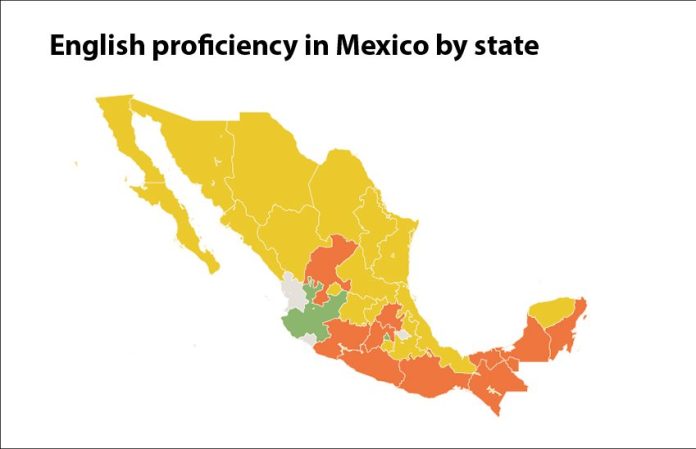
Green indicates states with the highest proficiency in English and red the worst.

Mexicans’ command of English is on the decline, a new study shows.

Mexico dropped 13 places to 57th out of 88 countries on the 2018 EF English Proficiency Index (EPI).

Education First (EF) determined that English proficiency is such that an average Mexican citizen can only hold a basic conversation or write a simple email in the world’s most widely spoken second language.

In Latin America, Mexico ranks ninth out of 17 countries behind Argentina, Costa Rica, Dominican Republic, Uruguay, Chile, Brazil, Guatemala and Panama.

The EPI is based on scores from the EF Standard English Test, the world’s first free standardized English test.

In Mexico, men were found to have slightly better English proficiency than women, achieving average scores on the test of 50.28 and 49.25 respectively.

That result bucks the overall trend but is consistent with the gender-based results in Latin America.

Mexico City residents fared best followed by those in Jalisco, Nuevo León, Chihuahua and Querétaro.

Residents of Guerrero, Zacatecas, Hidalgo and Campeche had the lowest English proficiency.

EF said that “in the past decades, Latin America has made enormous progress in ensuring that all children have access to education, but the region still suffers from high levels of economic inequality, fragile democracies, and unacceptable levels of violence, all of which undermine the development of a skilled workforce.”

It also said that “overcrowded schools, low teacher wages, and inadequate teacher training are all contributing factors” to low English proficiency in the region.

Latin America is the only region of the world to show a slight overall decline in English proficiency.

Europe remains the global leader, with Sweden and the Netherlands taking the top two spots. Singapore ranked third followed by Norway and Denmark.

Libya, Iraq and Uzbekistan were at the bottom.

Mexico News Daily 

Doctoral student wins UK award for best thesis of the year

0
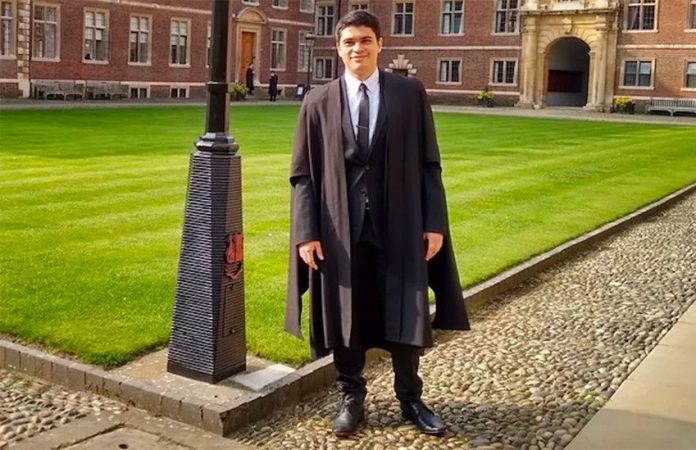
Researcher Jiménez at the cancer research institute.

A Mexican student has won a prize for the best doctoral thesis of the year, awarded by the Cancer Research UK Cambridge Institute.

Alejandro Jiménez Sánchez has researched how the human body recognizes cancer cells as a threat, revealing information for the advancement of immunotherapy, a treatment intended to activate the immune system of cancer patients and enable their bodies to halt the condition’s progress.

His research focused on a single patient suffering ovarian cancer. The condition was detected at an advanced stage, but the tumor was removed surgically.

The cancer was back after seven months of chemotherapy, at which point he began his research.

He used computational tools to analyze all biological data, studying the genetic and molecular information obtained from the original tumor and the four that followed it.

This led him to discover properties that hinted at the patient’s immune system contributing to the reduction of two of the four new tumors.

In collaboration with New York researcher Alexandra Snyder, Jiménez validated the results obtained via his computational analysis.

His research was published in the peer-reviewed scientific journal Cell, leading to the publication of a series of scientific papers based on his work.

Jiménez said he was proud to have been chosen among many other high-level research papers in the field, a honor he never dreamed he would be awarded when he started his doctorate three years ago.

The Mexican student’s research is moving forward, as he is currently collaborating on two projects in Israel, evaluating a model that will detect tumoral cells in mice and studying unique ovarian cancer cells.

He is studying in the U.K. with the help of a scholarship from Conacyt, the National Council for Science and Technology.

The Cancer Research UK Cambridge Institute brings together close to 250 scientists from around the globe, all focused on diagnosing, treating and preventing cancer.

Mexico News Daily