Home Blog Page 2056

‘Profound, radical transformation will end corruption, impunity’—President López Obrador

0
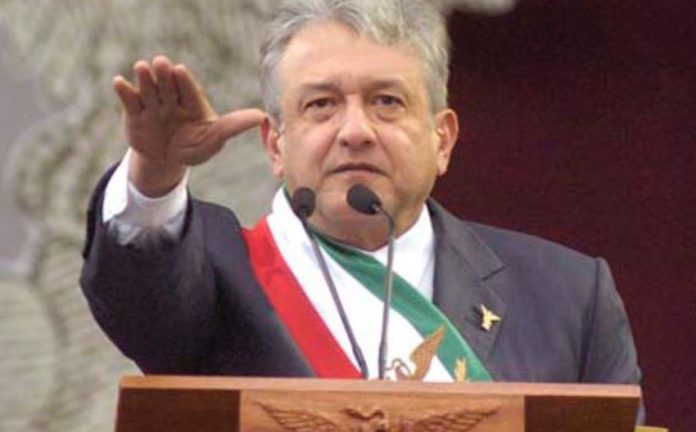
López Obrador takes the oath of office Saturday.

Andrés Manuel López Obrador pledged to put an end to corruption and impunity after he was sworn in as president Saturday, paving the way for a “profound and radical transformation” of Mexico.

“. . . By the mandate of the people, today we start Mexico’s fourth political transformation. It may seem pretentious or exaggerated, but today is not just the start of a new government, today a new political regime begins,” the new president told lawmakers and dignitaries gathered at the legislative palace of San Lázaro.

“Starting from now, a peaceful and orderly – but at the same time profound and radical – transformation will take place because the corruption and impunity that impede the rebirth of Mexico will come to an end,” López Obrador said.

Wearing the presidential sash for the first time and with his predecessor Enrique Peña Nieto sitting just meters away, the leftist political veteran launched a scathing attack on the corruption of past governments.

“. . . As we have repeated for many years, nothing has damaged Mexico more than the dishonesty of its leaders and the small minority that has profited from influence peddling. That’s the main cause of social and economic inequality as well as the insecurity and violence we suffer from,” López Obrador said.

He also attacked the neoliberal economic model followed by federal governments during the past 36 years, describing it as “a disaster, a calamity” for the country that has resulted in slow growth, rising economic inequality and the migration of millions of workers to the United States.

“. . . The distinguishing feature of neoliberalism is corruption. It sounds harsh, but in Mexico privatization has been a synonym of corruption,” he continued.

However, López Obrador said that avoiding future corruption rather than prosecuting that which has been committed in the past would be his government’s priority.

“. . . Revenge is not my strong point . . . I believe that in the field of justice, mistakes of the past can be punished but the fundamental thing is to avoid the crimes of the future. Therefore, I propose to the people of Mexico that we mark an end point to this horrible history and start again . . .” he said.

“. . . We have presented a law to make corruption a serious crime, which it wasn’t, even though it seems incredible . . . We’re going to clean corruption out of the government from top to bottom, just like stairs are cleaned,” the new president declared.

“. . . The government will no longer be a committee at the service of a greedy minority. It will represent the rich and the poor, believers and free thinkers, and all Mexican men and women regardless of their ideology, sexual orientation, culture, language, place of origin, educational level or socioeconomic position . . .” López Obrador said.

Mexico’s first leftist president since the transition to full democracy in 2000 took particular aim at the past government’s energy reform, which opened up the sector to foreign investment for the first time in 75 years.

López Obrador called the reform a failure, pointing out that investment in the oil industry and oil production remained much lower than anticipated, forcing Mexico to import fuel which in turn resulted in high prices.

The new government, he pledged, will remedy the situation.

“. . . I make the responsible commitment that soon, very soon, when we finish the refinery that we are going to build . . . and rehabilitate the six [existing] refineries, the price of gasoline and all fuels will go down,” López Obrador said.

The president also pledged that other infrastructure projects his government has committed to, including the Maya Train and development of the Isthmus of Tehuantepec, will generate employment and economic prosperity that will contribute to making migration “optional, not mandatory.”

The Santa Lucía Air Force Base will be operating as Mexico City’s new airport in three years and a northern border free zone will take effect from January 1, López Obrador said.

The education reform will be cancelled and students, the elderly, the disabled, earthquake victims, farmers, fishermen and artisans will all be financially supported by the new government, he added.

The new president also used his lengthy address to seek to calm markets and investors.

The decision to cancel construction of the partially-built new Mexico City airport and legislative proposals on banking and mining from lawmakers belonging to López Obrador’s Morena party generated concern and had an impact on the stock market and the value of the peso even before the new president took office.

“. . . Let it be heard clearly and wide and far, we’re not going to put the country into debt . . . I promise, and I am a man of my word, that the investments of national and foreign shareholders are safe . . . I also reiterate that the autonomy of the Bank of México will be respected,” López Obrador said.

He also reaffirmed that the salaries and benefits of high-ranking government officials will be significantly reduced, adding that his own wage would be 60% less than that earned by Peña Nieto.

After thanking the various heads of state in attendance, López Obrador recounted that during his journey to the Congress – in his Volkswagen Jetta – that a young man on a bicycle told him through an open window that he doesn’t have the right to fail the people of Mexico.

“That is the commitment I have with the people: I have no right to fail,” he said.

“. . . There are three things that we need to confront the crisis in Mexico and two of them are guaranteed in advance . . . a hardworking people and sufficient natural resources. Soon, very soon, we will have the third, a good government and on that commitment, I give my honor and my word,” López Obrador declared.

“I will govern with complete devotion to the public cause . . . I will work 16 hours a day in order to leave, in six years, the work of transformation in a very advanced state.”

Mexico News Daily
Budget cuts halted plans for three sustainable tourism projects

0
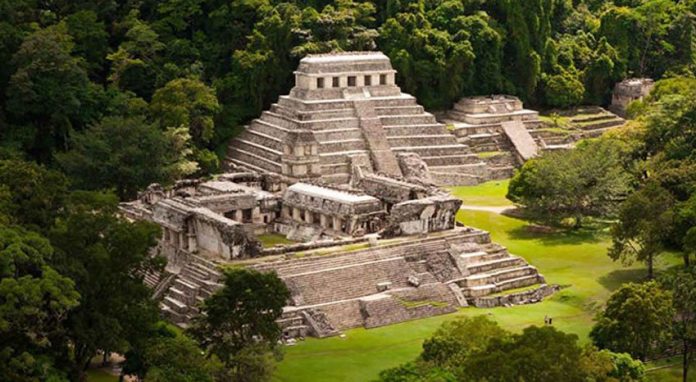
The archaeological site at Palenque, which had been slated to become one of three sustainable tourism centers.
The archaeological site at Palenque, where one of three sustainable tourism centers was to be located.

The Enrique Peña Nieto government’s ambitious plan to develop sustainable tourist centers in cultural destinations failed to materialize after the Finance Secretariat allocated only a fraction of the required funds due to budget cuts.

Designed by the national tourism fund Fonatur in 2014 to boost the diversification of the country’s tourism sector and to reposition the country on the international stage, the three centers were to be located in Teotihuacán, México state; Palenque, Chiapas; and Chichén Itzá, Yucatán.

Developing the centers had been estimated to cost 7.8 billion pesos (US $492 million in 2015) but not even the first stage of the project, identifying the land on which they would be located, was allocated the 147 million pesos required.

The first stage at Chichén Itzá was to cost 42 million pesos but only 8.4 million was allocated. Palenque required the same amount, but it was granted just 6.6 million, while 8.7 million was allocated to Teotihuacán of the 55 million needed.

The centers at Palenque and Teotihuacán required 1,000 hectares and that at Chichén Itzá, 1,046.

The initiative was intended to diversify tourism beyond the beach destinations where most is concentrated.

In the end, the federal Finance Secretariat only allocated 23.8 million of the 147 million requested by Fonatur between 2015 and 2016, which was not enough to perform the required environmental studies and assessments, said Fonatur in response to an access of information request filed by the newspaper Milenio.

The agency added that those funds remain in its coffers unspent.

The spending cuts came in 2015 and also scotched plans to build a high-speed passenger train between Mexico City and Querétaro.

Source: Milenio (sp)

Move under way to ban beauty pageants in Oaxaca

0
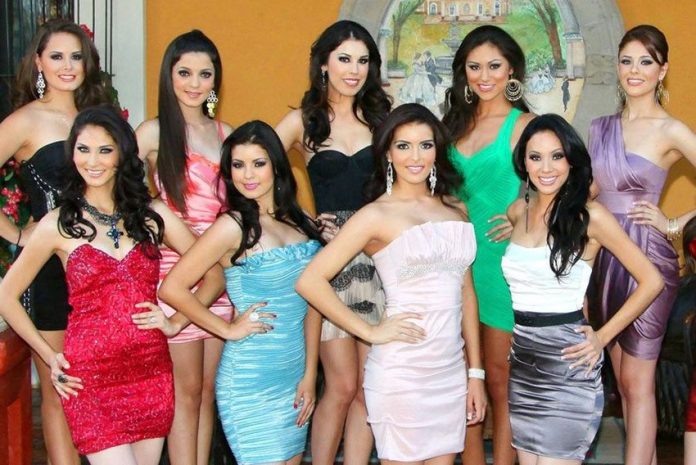
No more beauty queens in Oaxaca?

A Oaxaca politician is looking for support from state lawmakers in a bid to ban beauty pageants in the state.

“The Women’s Affairs Secretariat joins the voices that demand a ban on beauty pageants in Oaxaca,

Events

that objectify women, especially girls and teenagers,” Women’s Affairs Secretary Ana Vázquez Colmenares said.

Vázquez explained that the “objectification” to which women are subjected to in such events doesn’t allow them to assume a full role in society, limiting them to becoming an object of pleasure.

Legislation is required to prohibit granting prizes to the women with the most sexual and physical appeal, a parameter that should not be used to measure a woman’s worth, much less that of a girl, she said.

Vázquez’s proposal also calls for sanctions that range from fines and reprimands to charges of human trafficking.

The initiative is part of a broader plan designed to ensure respect for gender equality after a gender alert was issued for the state in early September.

The gender alert mechanism was created in 2007 and is described by the federal government as “a set of emergency government actions to confront and eradicate violence” against women.

The Oaxaca Women’s Affairs Secretariat also intends to install offices in the 570 municipalities of the state, with special attention to those governed by ancestral indigenous customs and traditions, a form of government known as usos y costumbres.

Source: Milenio (sp)

López Obrador endorses UK Labor Party leader for prime minister

0
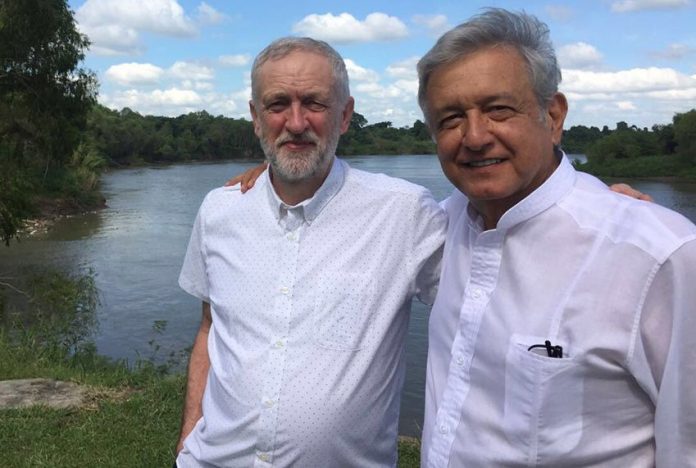
Corbyn, left, with AMLO in Tabasco two years ago.

President López Obrador has declared his support for the leader of the United Kingdom Labour Party to become the next British prime minister.

He made the endorsement of Jeremy Corbyn, whom he described as “my eternal friend,” during a gathering of high-profile friends at López Obrador’s ranch in Palenque, Chiapas, yesterday.

López Obrador, who is being sworn in today, posted a video to social media in which he appears with Corbyn, Miguel Ángel Revilla, president of the Spanish autonomous community of Cantabria, and Cuban singer Silvio Rodríguez.

“. . . We’re Hispanic but we have good relations with all the people and all the nations of the world and we especially have a very good relationship with the planet’s progressive movements,” the new president said.

“We have a very good relationship with the United Kingdom labor movement, we identify with each other because progressive governments, democratic governments respect migrants and respect the right that all human beings have to seek a [better] life, that’s the principle of human rights,” López Obrador continued.

The leftist political veteran also appeared to make a veiled attack on the hardline attitude of United States authorities towards the thousands of Central American migrants currently stranded on Mexico’s northern border.

“The United States is a country, a nation that became a power because of the work, effort and intelligence of migrants,” López Obrador said.

He then declared his unequivocal support for Corbyn to become the next leader of the United Kingdom.

“Those from Latin America, the Caribbean, the United Kingdom, are our brothers and now the English people will have the opportunity – I hope, I want it with all my heart, with all my soul – to have a prime minister like Corbyn,” López Obrador said.

“I don’t know what the laws are, I’m not yet formally the president of Mexico, I won’t be the constitutional president until tomorrow, that’s why I dare to say these things. From tomorrow I have to put a limit on myself but now I say what I think and I have always said what I think,” he added.

Corbyn, who lost the 2017 general election to Prime Minister Theresa May, is attending López Obrador’s formal swearing-in ceremony today along with 400 foreign guests including 20 heads of state.

A United Kingdom Labour Party statement issued from London said that López Obrador “faces huge challenges in his mission of transforming Mexico, but Jeremy hopes his election will offer Mexico’s poor and powerless a real voice and a break with the failures and injustices of the past.”

It added that the new president “has shown that a progressive agenda for change can win power and take on the status quo.”

Corbyn is married to Mexican lawyer and activist Laura Álvarez.

Source: Reforma (sp), Milenio (sp) 

Special recognition by indigenous people a sign of confidence in new president

0
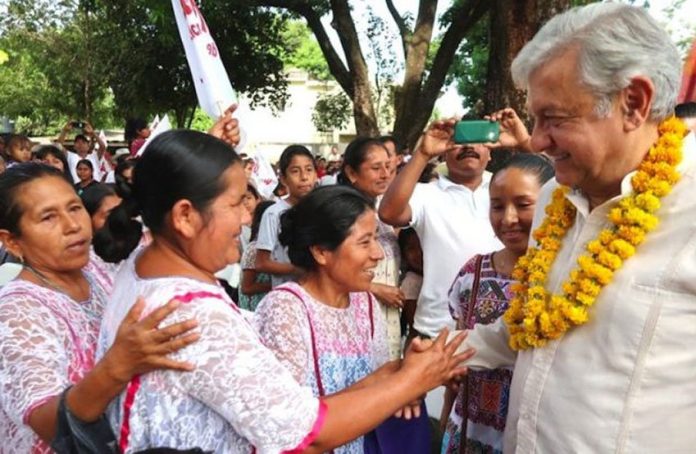
AMLO gets a warm welcome while visiting an indigenous community.

Mexico’s new president will receive special recognition today by the country’s indigenous people.

Andrés Manuel López Obrador will become the first president to take part in a traditional indigenous cleansing ceremony as part of his inauguration.

Representatives of Mexico’s 68 distinct indigenous peoples as well as members of Afro-Mexican groups will hand over a bastón de mando – a staff or baton indicative of authority – to the new president as a show of confidence that he will govern for all citizens and make wise decisions.

Adelfo Regino Montes, a Mixe man from Oaxaca tapped to head up the new National Institute of Indigenous Peoples, will be in charge of the ceremony, which takes place at 6:00pm in the zócalo, Mexico City’s central square.

He told the newspaper El Economista that there will be two fundamental parts to the observance, which will occur just hours after López Obrador has been officially sworn in as Mexico’s new president.

“On the one hand, [there will be] a ceremony of purification and consecration, what we call a cleansing . . . .” Regino said.

“After that will come the handover of the bastón de mando, then there will be traditional music, flowers, copal [a tree resin burned as incense], a range of elements that are traditionally used at these kinds of events,” he added.

Regino said that the “bastón de mando is a symbol of service, identity [and] commitment to the Mexican people,” explaining that in indigenous communities it is traditionally bestowed on a leader at the start of a new seasonal cycle or mandate.

The new president’s acceptance of the baton will reinforce his legitimacy in the eyes of the nation’s indigenous people, he added.

“He [López Obrador] has been very clear in stating that the priority for his government will be the most humble people, the excluded, the forgotten people of the homeland and that’s who we, the indigenous peoples and communities of our country, are. The important thing is to provide a message of service and hope to these people from the start of his rule . . . that’s the meaning [of this ceremony],” Regino said.

López Obrador, he explained, was more than happy to take part.

“He accepted [the proposal] with a lot of love and affection. He has traveled to the indigenous towns of our country . . . With the knowledge he has of the reality and the political and social life of our people, he welcomed the proposal with great enthusiasm and affection . . . We’ve been working with our traditional authorities, with the people who do these ceremonies, so that we are ready for December 1 . . .” Regino said.

“It’s the first time that in a public ceremony and [as part of] an inauguration that a president of the republic will receive the bastón de mando on behalf of our people and communities . . . [That fact] has been welcomed with a lot of joy, a lot of emotion and hope, because our people have great hope that the new government will attend to the serious problems – the neglect, the marginalization – that we have.”

Source: El Economista (sp) 

Gas leak confirmed as cause of death of US couple

0
Victims of the gas leak in San Miguel.

A faulty, gas-powered water heater caused the death of a couple from the United States last month, authorities have confirmed.

The prosecutor’s office in Guanajuato said on Friday that two people on vacation in San Miguel de Allende died of asphyxiation from propane gas.

The victims have been identified as Edward Winders and Barbara Moller, both 76, of New Orleans, Louisiana, who were staying in a rented apartment when a gas leak occurred.

The owner of the apartment notified emergency personnel on November 17 after noticing a strong odor of gas in the vicinity.

It was the second time this year that visitors on vacation in Mexico have died as a result of faulty gas heaters. A couple and their two children died in a condominium in Tulum, Quintana Roo, last March.

Source: Periódico AM (sp), Associated Press (en)

Hidalgo cockfighting supporters want it declared cultural heritage

0
Intangible cultural heritage?

There’s a move under way in Hidalgo to preserve cockfighting by declaring it intangible cultural heritage.

Lawmaker Enrique Garnica of president-elect López Obrador’s Morena party made a proposal in the state Congress yesterday to protect the blood sport from prohibition, after being lobbied by the state’s cockfighting association.

“Animal [rights] associations have every right [to oppose cockfighting] but they must understand that there are things that are a given [in our culture]. This is not an initiative to increase violence in this sport but just to recognize it as intangible heritage,” he said.

The lawmaker also claimed that “a lot of environmentalists go to palenques,” or cockfighting rings, to watch the sport.

“It’s like a vegetarian who eats meat when there are no vegetables,” Garnica said, seemingly insinuating that there are few other entertainment options in the state.

Javier Pelcastre Guerrero, president of the Hidalgo Cockfighting Committee, said that cockfight supporters have been lobbying lawmakers for years to try to have the sport declared cultural heritage but until now none had agreed to take up the cause in Congress.

He said that not only is cockfighting one of the most important traditions in the country, it also makes a significant contribution to the economy and creates jobs.

Across the country, there are more than 1,200 cockfighting clubs and associations, which hold on average 20 events each during a season that runs from November to June.

Thousands of people work in the sector and it contributes more than 36 billion pesos (US $1.8 billion) annually to government coffers in tax, Pelcastre said.

Cockfighting has already been declared intangible cultural heritage in the states of Querétaro, Tlaxcala, Aguascalientes and Zacatecas.

Veracruz, on the other hand, became the first state to prohibit the sport by passing legislation in November 2016. A Supreme Court ruling earlier this month upheld the legality of the ban.

Hidalgo gamecock breeder Mario Vilchis said the cockfighting ban in Veracruz has only sent the sport underground and that the cultural heritage proposal sought to prevent that from happening locally.

Source: El Universal (sp), Excelsiór (sp) 

Just another fancy winery in the Bajío? No, Tres Raíces is more than that

0
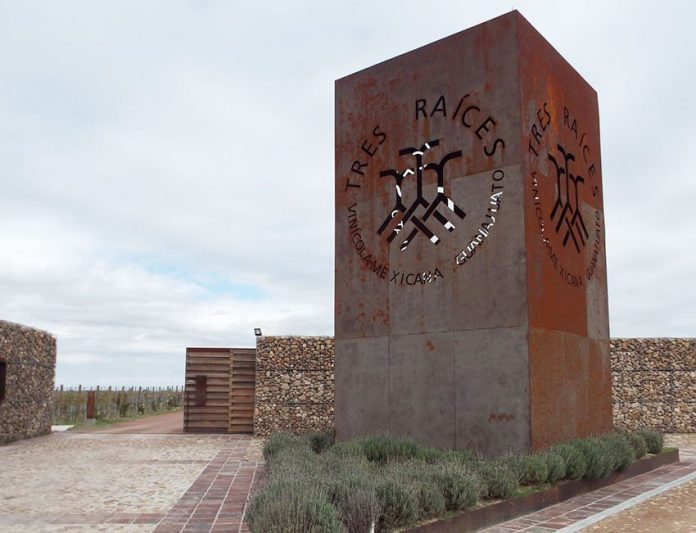
Tres Raíces winery in Guanajuato.

Central Mexico has a lot going on right now. There is business boom in Querétaro. San Miguel de Allende is experiencing a culinary awakening. And the entire region is part of a wine renaissance.

The last 13 years or so have seen vineyard after vineyard pop up in what is commonly called Mexico’s breadbasket, El Bajío.

Incorporating parts of Guanajuato, Querétaro, Jalisco, Zacatecas, San Luis Potosí and Aguascalientes, the region actually has a long history of winemaking. Guanajuato state is reported to have been the first place in the Americas were wine grapes were grown, particularly encouraged by priest, winemaker and revolutionary Miguel Hidalgo.

One of the very reasons that Mexican independence fighters were so up in arms (high taxes and various commercial prohibitions by the Spanish crown in regards to Mexico and Mexican criollos) was related to the country’s nascent wine industry at the time. Hidalgo did not like to be told what to do with his wine.

But after independence it wasn’t really until 2005 that this microclimate in the center of the country, unique in its capacity for nuanced wine making, once again saw grape vines buried in its semi-desert soils. Pioneers of that movement were Juan Manchón and Ricardo Vega of the brand Cuna de Tierra; since their success, dozens have followed.

Winemaker Alejandra Cordero.

San Miguel would seem ripe to become the next mini-Napa Valley. With lots of money flowing into what was once a quaint Mexican backwater, the town has exploded with gourmet restaurants, high-end boutique hotels and a mix of culture and art that attracts a substantial expat population and streams of national tourists.

Just outside of town several of the region’s winemakers have decided to set up shop. One of them is the Tres Raíces project, opened this past August on the road between Dolores Hidalgo and San Miguel. As you approach the turnoff in the road, there is just a simple sign, almost hidden, that says Tres Raíces.

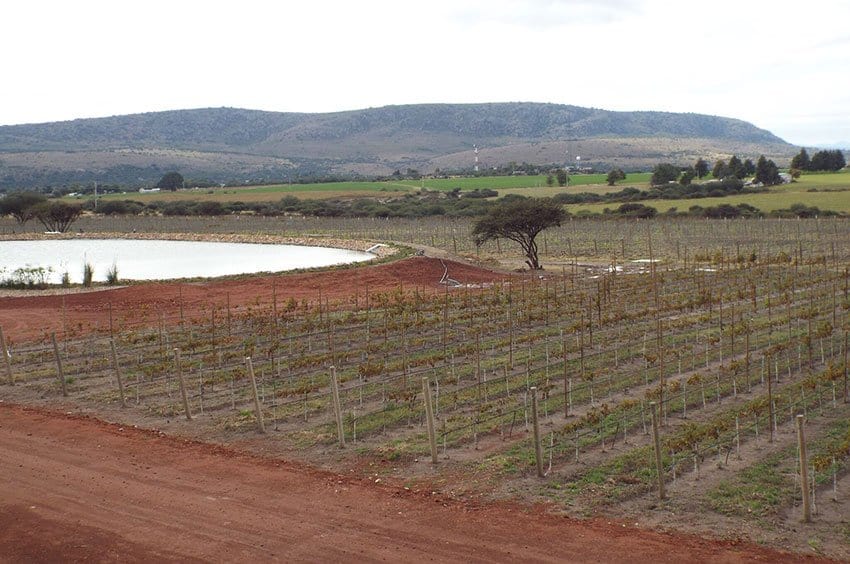
Springing from the middle of agricultural fields, a long stone fence is punctuated with massive iron doors, already starting to display a little desert rust, which makes them all the more charming. Entering the vineyard there are grape vines to every side of you and a grand stone step entrance that leads you into the main building and restaurant.

The vibe is Argentina hacienda — leather couches, massive carved wooden doors, fireplaces, and a state-of-the-art fermenting room that is part of the public tour available to visitors. There is also an outdoor terrace, a wine-tasting bar, a grand meeting room and a private drinking den built for the project’s partners (three businessmen from Tamaulipas).

Tres Raíces has been producing wine with Chihuahua grapes for the past three years while watching its own 23 hectares blossom into fully grown vines. The master of the wine cellar is 29-year-old Alejandra Cordero, a passionate winemaker who is already revealing shades of a future master.

Cordero comes from Chihuahua and has logged in a lot of years working in wineries despite her age. She studied biochemical engineering and while she has a scientist’s precision in her calculations, she’s also aware of the sensorial subtleties that go into every drop of wine she makes.

The vineyards at Tres Raíces.

“Every glass of wine is a moment that you are sharing with someone. It’s an entire year, maybe several years, of life distilled down to a single sip,” she says dreamily.

At the moment Tres Raíces is offering a merlot (with a hint of pepper and black current), a cabernet sauvignon (smooth and elegant with a touch of oak), a rosé (made with syrah grapes, fruity and light), a syrah (intensely aromatic, great for seafood), and a sauvignon blanc (buttery and dense). Their wines are only for sale at the winery and make a tempting reason to visit.

[wpgmza id=”116″]

The vineyard’s international cuisine restaurant (with great views of the vineyard) is open to the public from Thursday to Sunday, but yet to come is the boutique hotel that will be hosted on Tres Raíces’ grounds, in the middle of the vineyard and with a orientation that will catch the early-morning fog as it drapes over nearby hills and the Guanajuato sunset.

The hotel will consist of seven king-sized singles, four queen doubles and a master suite with two bedrooms and space for six. Also under construction is a small spa where you can get a wine-based beauty treatments, all the rage right now.

While you may think another fancy winery with another another boutique hotel is no big deal, we beg you to give it a second glance. Try the wines before making up your mind. With Cordero at the helm this vineyard is guaranteed to glitter beyond the crystal stemware and morning dew on the vines.

Lydia Carey is a freelance writer based in Mexico City.

Peña Nieto’s education reform: 81 billion pesos down the drain

0
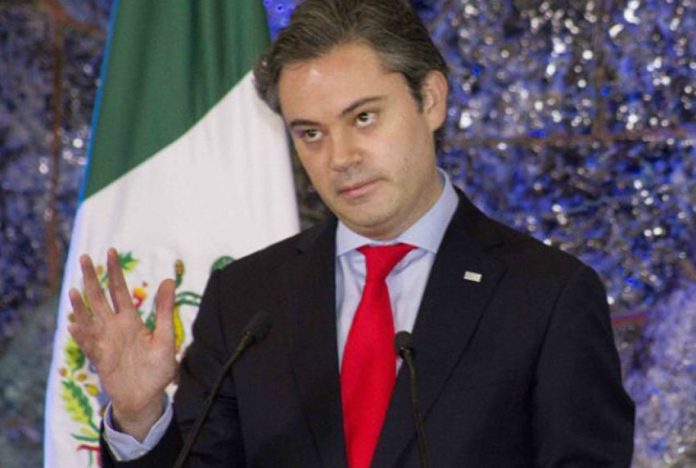
Former education secretary Nuño: critics say he was campaigning to be president.
Former education secretary Nuño: critics say he was campaigning to be a presidential candidate.

The federal government’s expenditure of at least 81.5 billion pesos (US $4 billion at today’s exchange rate) to implement its landmark education reform has been called excessive and abusive by education experts.

The government paid out large sums of money on a range of programs to operate the reform and also spent big on advertising to promote it.

In addition, it gave more than 3 billion pesos to the SNTE teachers’ union to promote the 2013 reform among its members.

One of the central elements of the reform was to subject teachers to compulsory evaluations, a move that put the government at loggerheads with the dissident CNTE teachers’ union.

The aim, ostensibly, was to improve the standard of teaching in the nation’s classrooms.

But Francisco Urrutia de la Torre, a researcher at the Jesuit University of Guadalajara (ITESO), says it was a mistake to spend more on assessing teachers than on their professional training and development.

“It’s like someone who wants to lose weight spending five times more on scales than the gym. It was absurd: if you want to improve education, the most important thing is to train teachers and to take certain evaluation actions but what was done was excessive,” he said.

Rodolfo Ramírez Raymundo, a researcher at the Senate’s Belisario Domínguez Institute, described the government’s spending on the reform as “unjustified” and a “waste” of money.”

The expenditure of almost 6 billion pesos (US $294 million) on publicity was “a real abuse” of power aimed at “positioning the then-secretary of education [Aurelio Nuño] as a possible presidential candidate,” he added.

“Money thrown directly down the drain” was how another researcher, Ángel Díaz Barriga of the National Autonomous University (UNAM), described spending on advertising to promote the supposed benefits of the reform.

“To have spent so much money on publicity when the National Commission of Human Rights said that 42% of public schools don’t have sewer systems is a scandal . . .” he said.

He added that spending on some education reform programs, such as those related to teacher training, was “a great waste” because courses offered to teachers didn’t respond to their needs. He also criticized the “willy-nilly” expenditure on tablets and computers.

With president-elect López Obrador having pledged to cancel the reform as soon as he takes office, virtually the entire government outlay on implementing and promoting what was one of its signature policy initiatives could be considered money down the drain.

The educational reform will be “canceled . . . abrogated, repealed, abolished,” the incoming president said at a rally last month although he explained that there was one caveat to his promise.

“The only thing that will continue is the handling of the payroll by the federal government” to ensure that the money gets to the teachers, López Obrador explained.

Source: El Universal (sp)