Home Blog Page 2067

Fans of abstract art can find it in a gallery in the woods of Jalisco

0
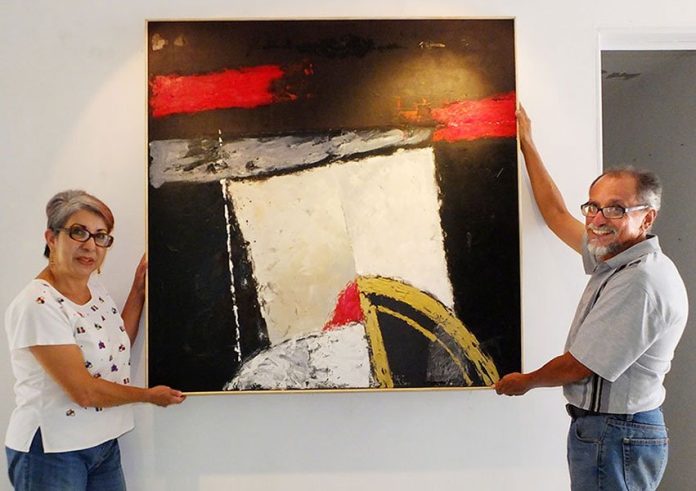
Gallery founders Rosalía Zepeda and José de Jesús Olivares.

Architect José “Pepe” Olivares and his wife Rosalía have been in love with what they call “non-figurative art” for many years.

During that time they and various like-minded friends worked hard to promote the establishment of an abstract art gallery somewhere in western Mexico, but to no avail.

“Then one day,” they told me, “we stood together inside our home and looked around us. Our children had all grown up and gone off to raise families of their own. Our house, which is very large, with many rooms, was now empty. Why look elsewhere, we thought: let’s start our own art gallery right here.”

So in early 2017, Jalisco’s Center for the Study and Diffusion of Non-Figurative Art — or CIANF — was born in a private home in the rustic community of Pinar de la Venta, located at the edge of the huge Primavera Forest, which lies immediately west of Guadalajara, Mexico’s second-largest city.

The center began to attract attention in May of 2017 when it hosted an exhibit of archive paintings loaned by Mexico’s most prestigious institute of abstract art, the Museo de Arte Abstracto Manuel Felguérez in the city of Zacatecas.
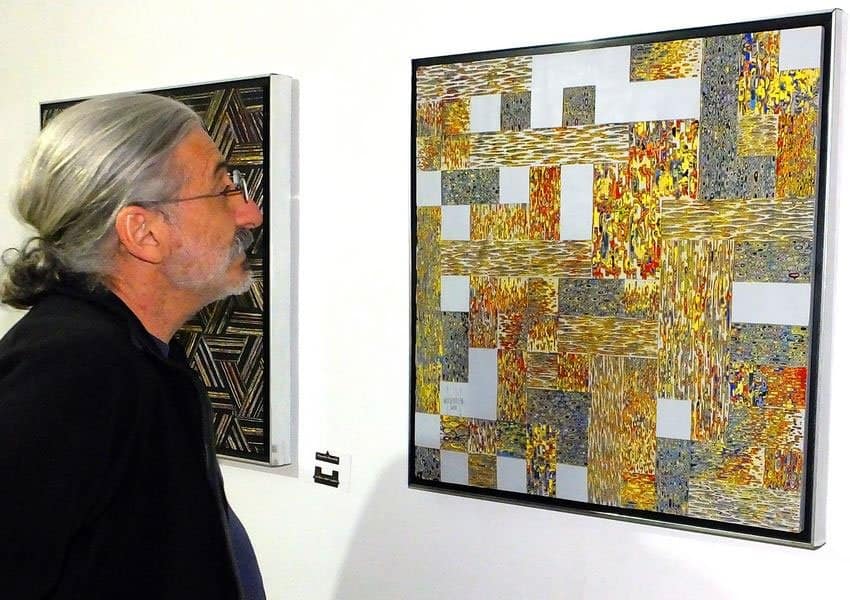
A visitor views the “hybrid” art of Alejandro Brambila.

“We had works by famous artists like Felguérez himself, the Catalans Josep Guinovart and Jordi Boldó, as well as the creator of Guadalajara’s Los Cubitos monument, sculptor Fernando González Gortázar,” I was told by the Olivares. “People flocked to Pinar de la Venta to see these masterpieces and the TV and newspapers called it a great success.”

Intrigued, I popped in twice to observe the art lessons maestro Pepe Olivares gives to children and adults every week. That’s where I discovered that, like Picasso, this teacher is just as talented in depicting realism as abstraction.

Commented Olivares, “I often start with drawing or painting recognizable subjects like flowers or a landscape and after my students have mastered these basic techniques, we move on to removing elements until only form and color remain.”

I asked one of the adult students, Ana Rosa, how she liked the class. “For me, this is therapy. I forget my children, I forget all my troubles and I relax totally. I really look forward — with great enthusiasm — to coming here every Thursday. I just wish I could do this twice a week.”

After the class, I sat down with Olivares and asked him how he became interested in art. He immediately told me that his story was “not at all unusual.”

“In my childhood,” Pepe told me, “matches were used a lot, especially for lighting the stove. Well, I was maybe four years old and my father showed me a matchbox which had a reproduction of a famous work of art on its cover. These were called ‘Clásicos de Lujo la Central’ and my father gave me a challenge: ‘I bet you can’t draw this,’ he said and I replied, ‘Oh yes, I can!’ Right there was my first artistic awakening, you could say.”
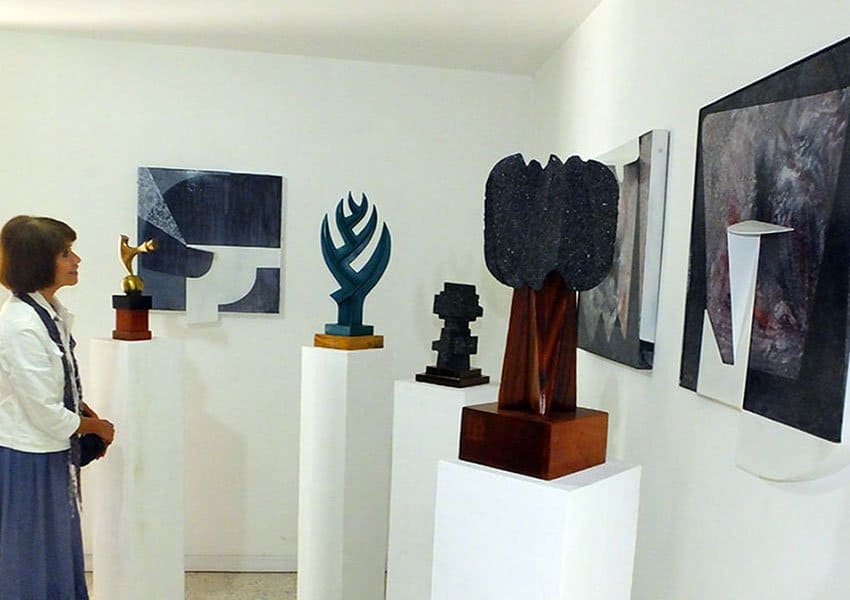
Sculptures by Colima-based Estanislao Contreras.

I told Pepe that this didn’t seem “usual” to me one bit, but he replied that he had spoken to many of Jalisco’s artists “and most of them told me they got going in exactly the same way, with those matchbook covers.”

Pepe’s gusto for drawing stayed with him and he recalls, “when I was in third grade, they asked us to draw a picture of Miguel Hidalgo. I did mine on a big sheet of pasteboard and I remember the pride I felt at succeeding to do this, even though I suspect my drawing must have been pretty ugly. But with that, I decided that art was what I wanted to do for the rest of my life. And from then on, I drew and drew. This is why I am involved in giving painting classes to children here, because this is when a vocation can be born.”

Pepe Olivares’ father was practical enough to convince him he should take up architecture as a career, which he did at the University of Guadalajara. “Among my teachers,” he says, “were people like the German architect Hors Hartung, who knew a lot about pre-Hispanic architecture and also about modern abstract painters and sculptors.

“His classes were delightful! I learned a lot from him. We had a class with him called ‘Integración Plástica’ which involved aesthetic games, playing with volume. We were not trying to represent anything or to copy anything from nature; it was all about forming pleasing shapes. It was an exercise in abstraction, working only with forms and colors, and it was here that I got my introduction to abstract art.”

Talking to Pepe Olivares brought me back to the wonderful works of geometric art I had seen during my years in Arabia. When religious leaders forbade them to draw images of any living thing, Islamic artists poured their creativity into the development of arabesque decoration and transformed writing into a new art form, Arabic calligraphy.

In these cases, restrictions imposed from without led creative minds in new directions. Abstraction, it seemed to me, was rather similar, but the restrictions are imposed by the artist.

[soliloquy id="65504"]

In Netflix’s The Ministry of Time, the 17th-century Spanish painter Diego Velázquez is transported to our era. One day someone refers to him as “The greatest Spanish painter.” Velázquez replies, “I’m not the greatest. Picasso is . . . . When I’m looking at one of his paintings and some guy comes up saying, ‘look at those squiggles, my kid does better,’ I don’t know, I feel like I want to strangle him. What an ignoramus!

“Some painters do abstract because that’s all they know, but not Picasso! At 14 years of age, his paintings looked like photos. This is what I call The Picasso Theory: only the man who paints real life better than anybody else can then go ahead and do whatever he feels like.”

[wpgmza id=”109″]

The center hosts exhibits, offers classes and workshops and is setting up a library “where people of all ages can learn about abstract art, do research and experiment with different techniques.” It also hosts visiting artists, such as Algerian abstract painter Ghislaine Thomas, who is preparing for an exhibit in Mérida, Yucatán, this coming January.

• To visit the center, call in advance at cell 333 616 6242. For more information see their Facebook page.

The writer has lived near Guadalajara, Jalisco, for more than 30 years and is the author of A Guide to West Mexico’s Guachimontones and Surrounding Area and co-author of Outdoors in Western Mexico. More of his writing can be found on his website.
AMLO names business leaders to new advisory council

0
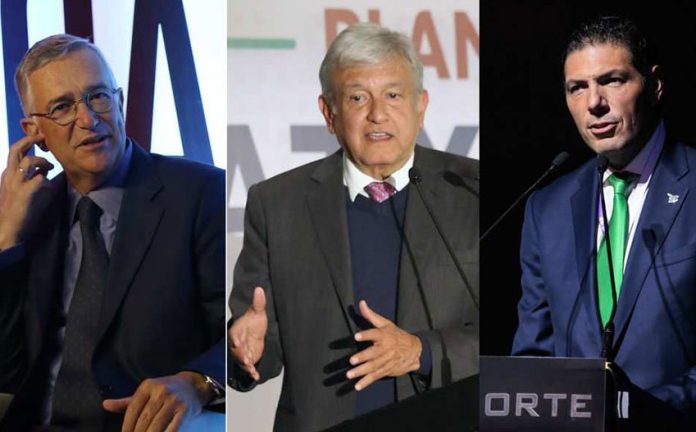
Salinas, left, and Hank, right, will be among members of the new advisory council announced by López Obrador, center.

President-elect López Obrador reached out to the business community yesterday, naming eight businessmen to a new business advisory council.

In a video message published on social media, López Obrador said the idea to create the council came from the business sector.

It will be coordinated by the future president’s chief of staff, Alfonso Romo, who is a business tycoon himself.

“I’m going to meet with them [the council members] every two or three months. They, and I as well, are going to invite other business people so that this council gets even stronger and becomes a civil society institution that helps the government,” the president-elect said.

López Obrador stressed that Mexico will need public, private and foreign investment to achieve the 4% annual economic growth he is targeting.

“We need the support of the business sector so that there is investment, so that jobs are created. I assure you that there is no reason for concern because I know very well what has to be done to help the most humble and poorest people,” he said.

The businessmen who will join the advisory council “want to help me, want to give me their points of view, their visions,” López Obrador added.

Creation of the group was welcomed by members of the private sector, including the president of the influential Business Coordinating Council (CCE).

“We think that it is very positive that the president-elect is incorporating distinguished members of our sector to his team of advisors . . . We are certain they will offer interesting opinions and perspectives from a business point of view, which will contribute to an atmosphere of trust,” Juan Pablo Castañón wrote on Twitter.

The members of the new council are:

• Ricardo Salinas Pliego, founder and chairman of Grupo Salinas, a conglomerate that includes Banco Azteca, TV Azteca and Elektra.

• Bernardo Gómez, executive co-president of broadcaster Televisa.

• Olegario Vázquez Aldir, CEO of Grupo Empresarial Ángeles, a conglomerate that includes Imagen TV, the newspaper Excélsior and Hospitales Ángeles.

• Carlos Hank González, president of banking and financial services company Grupo Financiero Banorte, vice-president of corn flour and tortilla multinational Gruma and CEO of the conglomerate Grupo Hermes.

• Daniel Chávez, CEO of Grupo Vidanta, a hotel and resort conglomerate.

• Miguel Rincón, CEO of paper company Bio-Pappel.

• Sergio Gutiérrez, CEO of metal supply company DeAcero.

• Miguel Alemán Magnani, executive president of the airline Interjet.

Source: El Financiero (sp) 

US man who disappeared in Chihuahua reported assassinated

0
Braxton-Andrew: reported killed by a criminal gang.

The United States citizen who disappeared in Chihuahua October 28 was assassinated the same day by drug traffickers, state Governor Javier Corral said Thursday evening.

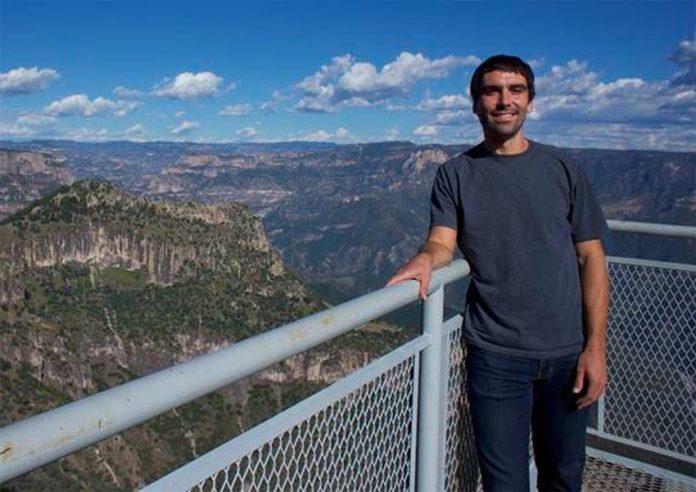
Patrick Braxton-Andrew, 34, had been staying in the Copper Canyon town of Urique when he left his hotel and went for a walk. He never returned.

A search began about two days later after he failed to arrive in Mexico City to meet his brother. It continued at least until early this week when authorities observed that the region in which Braxton-Andrew disappeared was under the control of a crime gang leader known as “El Chueco.”

Tonight, Governor Corral identified that gang leader as José Noriel Portilo Gil and claimed his gang assassinated the missing man in a location in Urique known as La Playita.

“Through the advances in the investigation I can say that it was a cowardly and brutal assassination of a person who was totally innocent . . . whose misfortune was to cross paths with this criminal.”

The governor provided no further details.

The victim was a Spanish teacher in Davidson, North Carolina.

His family said earlier today via Facebook that the search continues for his body.

“Patrick died doing what he loved — traveling and meeting people.”

Source: Milenio (sp)

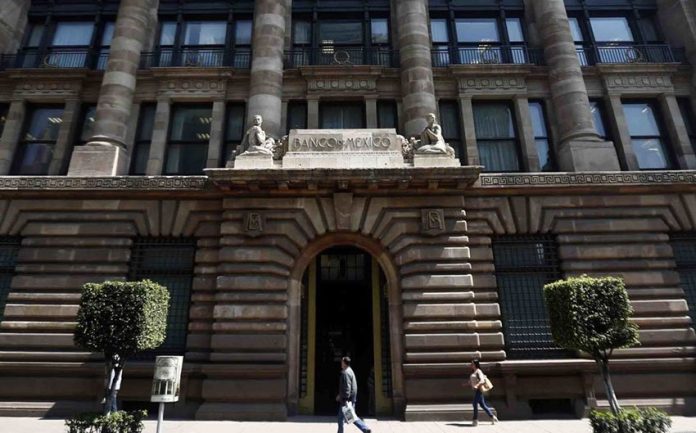
Central bank hikes interest rate to 8% over inflation concerns

0
The Bank of Mexico has concerns over direction of new government.

The Bank of México (Banxico) raised its benchmark interest rate by 25 basis points today to a nearly 10-year-high of 8%, citing concerns over inflation that the incoming government’s economic polices risk fanning.

The rate hike, expected by economists, is the third this year.

Another 25-basis-point increase would take the interest rate to its highest level since Banxico adopted a new benchmark rate policy in January 2008.

Analysts consulted by the news agency Bloomberg said there is a 100% probability that the central bank will increase rates again next month.

In a statement, Banxico said it raised rates today because the outlook for inflation had “deteriorated significantly,” explaining that there are “significant risks related to the possible adoption of policies that could structurally affect the economy’s price formation process.”

The Mexican peso and the stock exchange have taken a hit recently as concerns grow over the economic direction the incoming López Obrador government will take once in office.

The president-elect has already confirmed that the US $14-billion Mexico City International Airport will be cancelled, triggering worry over the economic impact and a slide in the peso, while bank stocks plummeted last week after senators from the soon-to-be ruling Morena party unexpectedly presented a proposal to curb bank charges.

The peso was hurt by the airport cancellation decision, Banxico said, and “in general by markets’ concerns regarding both the incoming administration’s policies and some legislative initiatives.”

The currency strengthened slightly on the back of the Banxico rates announcement but is still trading above 20 to the US dollar. A persistently high dollar could place further pressure on inflation.

Banxico targets inflation of 3% with 1% tolerance in both directions but the annual rate in October was 4.9%.

The bank said that it would take any necessary action, including holding or hiking rates, to get inflation on track to achieve the 3% goal.

Many banks are forecasting both a weaker peso and weaker growth this year and next due to uncertainty about López Obrador’s policy direction.

The Fitch credit rating agency revised its outlook for Mexico to negative two days after the airport cancellation announcement.

Charles Seville, Fitch’s primary analyst for Mexico, said the decision to scrap the airport, which followed a public consultation on the future of the project, “came as a shock to the markets.”

He also said early this month that “there is the suggestion that other projects could be put to a popular vote, which would introduce more uncertainty.”

That suggestion became reality this week when the president-elect announced that another public vote would be held on November 24 and 25 on his proposal to build the so-called Maya train and two other infrastructure projects as well as 10 social programs.

López Obrador, a leftist political veteran, takes office on December 1.

Source: El Financiero (sp), Reuters (en) 

Off the beaten track in Mexico City’s Narvarte neighborhood

0
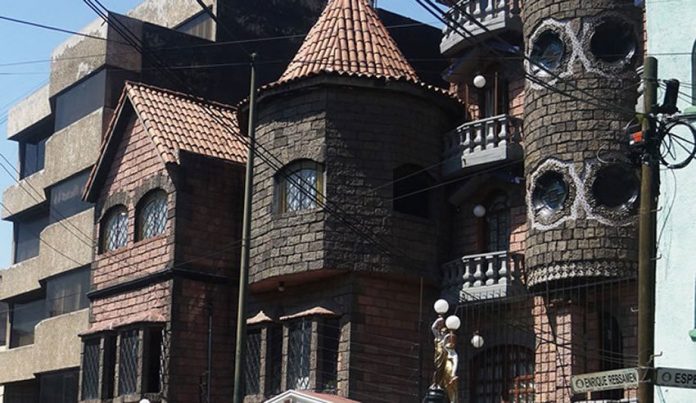
Colonia Narvarte has its own castle located on Enrique Rebsamen street.
Colonia Narvarte has its own castle, located on Enrique Rebsamen street.

Mexico City’s growing popularity in the last 10 years has meant that return tourists look farther and farther afield for new neighborhoods to explore and hidden culinary gems to discover — they have an unquenchable thirst for more, more, more of Mexico’s capital.

This is great news for some previously overlooked colonias (neighborhoods) in Mexico City. While Polanco, Roma and Condesa have all had their heyday, neighborhoods like San Rafael, St. Maria de Ribera, Colonia del Valle and Colonia Narvarte are just now starting to be looked upon with fresh eyes.

Colonia Narvarte sits just across from Colonia Roma on the other side of the bustling Viaducto highway. The major avenues that cross it, connecting these two neighborhoods, were once simple wooden bridges, just wide enough to carry a single automobile across what was then the Piedad river.

The Narvarte neighborhood was built atop the Nalvarte Hacienda, originally owned by Don Felipe José de Nalvarte towards the end of the 18th century. It was later purchased by the Escandón family — wealthy Mexican elites that gave their name to another nearby neighborhood.

Right after the Mexican Revolution, José Escandón, then owner of the hacienda, began to divide the property for residential purposes, a job that was officially finished by a United States businessman named Herbert Lewis when he bought up the remaining land.

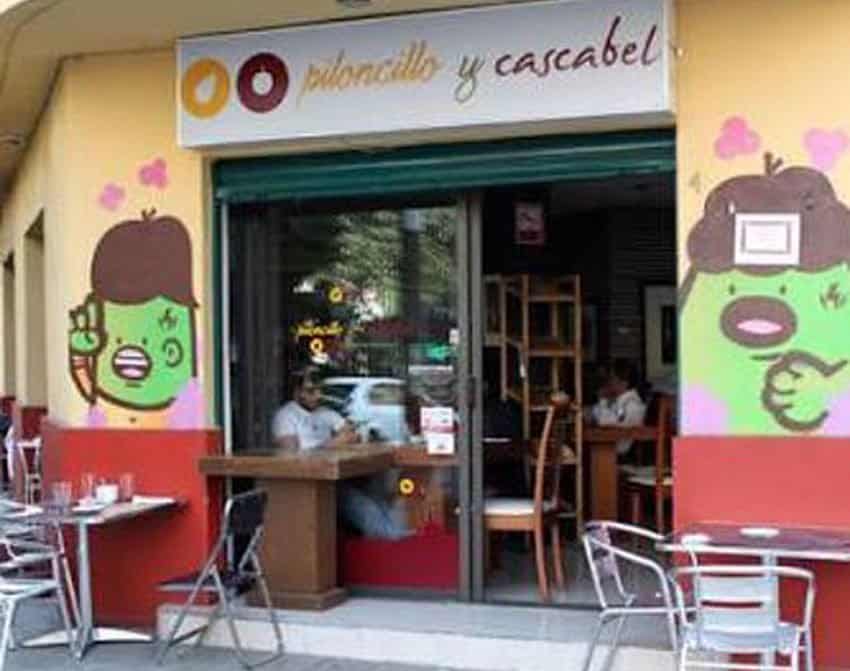
One dining option is Piloncillo y Cascabel.

The layout of the neighborhood has its orderly rectangle streets cut through with several long, diagonal avenues with large medians and wide sidewalks. Here you’ll find almost none of those early Art Deco mansions that can be seen in Roma or Condesa, but instead functionalist or Streamline Moderne apartment buildings line the major avenues (which is not to say that there aren’t some stunning pieces of architecture), part of the modern architectural movement in the 1940s when Narvarte was being developed.

Today’s Narvarte is cut into pieces by heavily-trafficked avenues, but still has pockets of residential charm, particularly the length of Pitagoras avenue from Division del Norte to Obrera Mundial and around the Las Americas park.

There is also a growing crowd of young Mexican entrepreneurs who found it too expensive to set up shop in Roma or Condesa and are converting the Narvarte into their own bohemian hangout.

Third-wave coffee gurus AlmaNegra were one of the first to set up shop on Universidad street, but by spreading the coffee fever they have been joined by Tesler, Café Maria and Black Rabbit. And what goes better with coffee than handmade pastries and baked goods from one of the new, European-style bakeries Pan Nube and Costra?

Add to the mix artisanal ice cream from Bigotes de Leche and you have yourself a day of delicious gluttony.

While a few gourmet-leaning restaurants have opened in Narvarte (think Piloncillo y Cascabel), the neighborhood’s most popular meal is still tacos. Tacos are on every corner and along every street here, partially owing to the fact that the area is still working middle class and there is massive demand for quick street food from office and construction workers during the day.

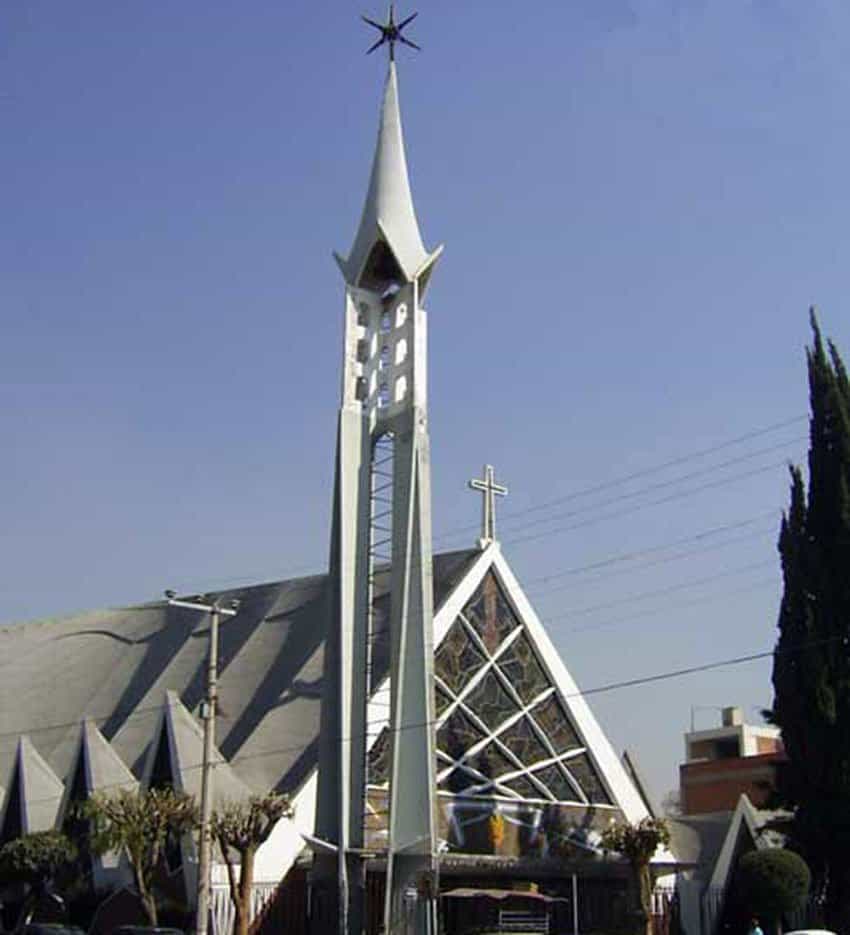
Templo de la Medalla Milagrosa.

Along Obrera Mundial or Cuauhtémoc avenues are delicious temptation after delicious temptation, but a few spots stand a head above the rest. El Vilsito, a mechanic’s shop by day, taco stand by night, or Taquería Don Frank right outside the small Narvarte market are two to try.

During the day, the entire Etiopia roundabout (Ethiopia has a Mexico roundabout as well, stemming from the two countries close ties beginning in the 1950s) is swarming with stands serving everything from Puebla-style cemita sandwiches to Michoacan-style carnitas tacos.

It’s a street food wonderland and you get your pick. Because so much of the food in the neighborhood caters to locals, there is also a large swath of international cuisine (Pinche Gringo American-style BBQ, Quiero Pizza, Ela Gyros, the Balkan Grill) and dozens upon dozens of comida corrida joints (set price lunches).

For a day that doesn’t completely revolve around eating, the neighborhood is pleasant for walking (minus the massive avenues) and there are even a few gems to stumble upon if you keep your eyes open.

The Las Americas park is Narvarte’s biggest green space and has several cute coffee and juice shops around the perimeter. In the middle of the park sits a tiny outdoor amphitheater that presents plays and shows al fresco.

A couple of must-see buildings are the tower of the Secretariat of Communication and Transportation, whose façade was decorated by Juan O’Gorman (of the UNAM campus library fame) and other young muralists when it was completed in the 50s.

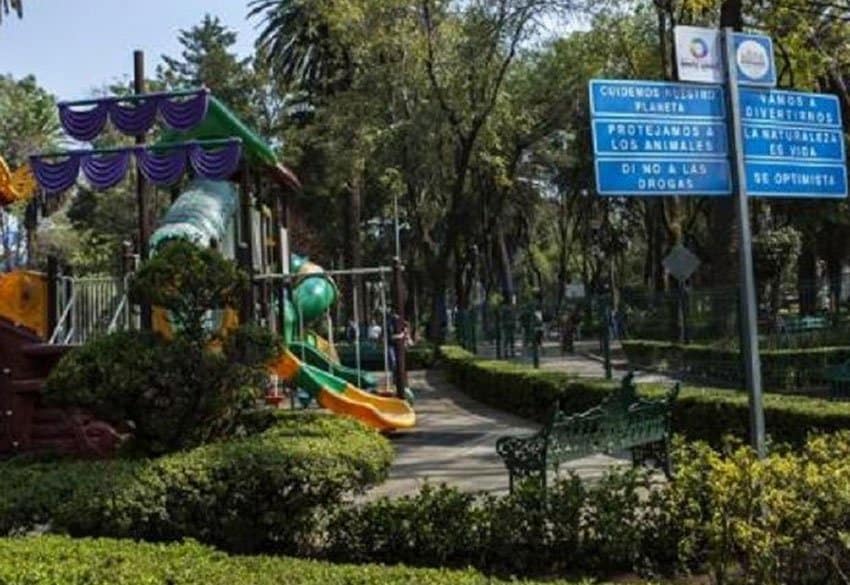
Narvarte's Las Americas park.
Narvarte’s Las Americas park.

The Templo de la Medalla Milagrosa, with its sharp steeple tower piercing the Mexico City sky, is a bracing example of the style of Mexican-Spanish architect Félix Candela from the mid-20th century.

Many of the streets of Narvarte are named after the country’s archaeological sites (Uxmal, Petén, Xochicalco, Zempoala, La Quemada, Tajín, Palenque, Mitla) and along them you will find lots of adorable examples of early California colonial architecture, something rare in other parts of the city.

Hidden among them (on Pitágoras, between Esperanza and Obrero Mundial streets to be exact) is an altar to the Santa Muerte erected by a father grateful for the salvation of his son from a motorcycle accident, and the the Mexican Sugar Art Museum (open by appointment only 555 523 7493 or 5523 8483), the life’s work of sugar artist Marithé de Alvarado.

The neighborhood’s glittering Parque Delta shopping mall was once the Parque de Seguro Social, the city’s main baseball stadium hosting the rival Diablos and Tigres for decades. It was a used as a temporary morgue in the aftermath of the 1985 earthquake and forever after was condemned to be a spectre in the minds of locals.

The 2017 earthquake also hit this neighborhood and its sister colonia Del Valle particularly hard. The scars of damaged and demolished buildings can still be seen as you walk its streets.

While the Narvarte doesn’t have as much upscale nightlife as Roma or Condesa, there are lots of taco stands and bars, and two particularly good evening drinking options – Beer Bros and Hop 2 – serving excellent local craft beer.

Beers Bros is a tiny hole in the wall with about 20 or so local beers on tap and picnic tables out front. Hop 2 has 52 beers on tap, a massive beer garden, big screen TVs and a food truck selling pub food like chicken wings and pizzas. Both draw a crowd and quench a thirst.

If touristy is what you want stick to the beaten path. If novelty and neighborhood ambiance is what you crave, come to Colonia Narvarte.

Lydia Carey is a freelance writer based in Mexico City.

US ‘medical tourist’ in coma after nose job went wrong in Juárez

0
Avila: in a coma after botched surgery in Juárez.
Ávila: in a coma after botched surgery in Juárez.

A 36-year-old woman from the United States is in a medically-induced coma in El Paso, Texas, more than two weeks after nose job surgery in Ciudad Juárez went wrong.

Laura Ávila, a real-estate agent from Dallas, Texas, went to a plastic surgery clinic in the Chihuahua border city on October 30 to have the procedure done.

The price Ávila paid for the nose job at RinoCenter was reportedly less than one-third the usual cost in the United States.

According to her fiancé Enrique Cruz, medical staff at the RinoCenter administered anesthesia to Ávila before telling him later that they couldn’t operate because her blood pressure had dropped.

Cruz responded that he wanted the clinic to move her to a hospital.

“That’s when they told us, ‘Oh, by the way, she had a cardiac arrest,’” he said.

Angie Ávila, the woman’s sister, told Dallas television station WFAA that “they injected anesthesia to her spine at the clinic and instead of it flowing down her body it went to her brain, which caused severe swelling.”

After eight hours in a room at the RinoCenter clinic, Ávila was eventually transferred to a Ciudad Juárez hospital.

She spent four days there while her family tried to arrange a transfer to a hospital across the border in El Paso.

However, Mexican hospital officials refused to sign the transfer papers until Ávila’s medical bill was paid.

“The hospital in Mexico basically held us hostage because we wouldn’t pay the full amount,” Angie Ávila said.

Laura Ávila was eventually transferred to an El Paso hospital by ambulance but without her medical records, which are critical for treatment. The family has hired lawyers in Juárez to help them obtain them.

In El Paso, doctors gave a grim diagnosis within hours of Ávila’s arrival.

“They’ve told us that she suffered severe brain damage so much so that she will never be our Laura again.”

The family was given the choice of removing Ávila from life support or to have breathing and feeding tubes connected to keep her alive.

“They told us she would never be able to walk or eat for herself again or speak,” Angie Ávila said.

However, Laura’s family and friends refuse to give up and last night held a candlelight vigil in San Jacinto Plaza in downtown El Paso.

“Now we’re waiting for a miracle,” Ávila’s aunt Ericka Montes told the newspaper El Diario de El Paso.

“I feel sad and very upset about what happened to my friend,” said María Hernández, as tears ran down her face. “She was very beautiful and didn’t need to have surgery . . .”

The vigil, at which attendees prayed for a quick recovery, was led by Ávila’s devastated fiancé.

“Laura is a marvelous woman. She loved to dance, sing, cook and travel and was very generous. She opened her heart to everyone,” Cruz said.

In recent days, friends and family have been encouraged by signs of life that they have seen.

“She opens her eyes, she’s fighting,” Angie Avila said. “She moves her legs or raises her arms.”

Cruz and Ávila’s family hope to move her to Dallas where they believe that she can get better care.

However, three major hospitals in the city have refused to admit Ávila because she doesn’t have medical insurance.

Angie Ávila has set up a GoFundMe page to raise money to cover her sister’s treatment. Supporters have so far pledged just over US $75,000 of a US $150,000 goal.

Source: Dallas News (en), El Diario de El Paso (sp), WFAA (en) 

Vehicle owners’ survey reveals Kia, Mini most trusted vehicles

0
Kia Rio: the Kia brand was the top-ranked mass market vehicle.
The Kia Rio: the Kia brand was the top-ranked mass market vehicle.

Mini and Kia are the most dependable automotive brands in Mexico, according to a new owners’ survey.

Conducted by the marketing information services firm J.D. Power, the Vehicle Dependability Study Mexico 2018 is based on the number of problems experienced per 100 vehicles. The lower the score, the higher the quality.

The firm’s fourth study in Mexico focused on the problems reported over a 12-month-period by the original owners — with ownership ranging between 12 and 36 months.

It covered 177 specific problems grouped into eight major vehicle categories: engine and transmission; vehicle exterior; driving experience; features, controls and displays; audio, communication, entertainment and navigation; seats; heating, ventilation and cooling; and vehicle interior.

The Mini ranked highest in vehicle dependability among luxury brands with a score of 64 out of 100, followed by GMC with 76 and Mercedes-Benz with 84.

Kia was ranked highest among mass market brands with a score of 108. Honda ranked second with 125, followed by Toyota with 131.

Hyundai’s Elantra was the most dependable compact car in Mexico, while Chevrolet’s Spark was the most dependable city car.

The preferred basic SUV was the Mazda CX-3, while the Honda CR-V was the best midsize SUV.

In the category of subcompact crossover SUVs, the Honda HR-V was the most dependable, while the best midsize crossover was Toyota Camry.

The models with the best results in the basic luxury and subcompact categories were the Mini Cooper and the Kia Rio respectively.

Source: El Financiero (sp)

Cold front, first winter storm affect 21 states, cause one death

0
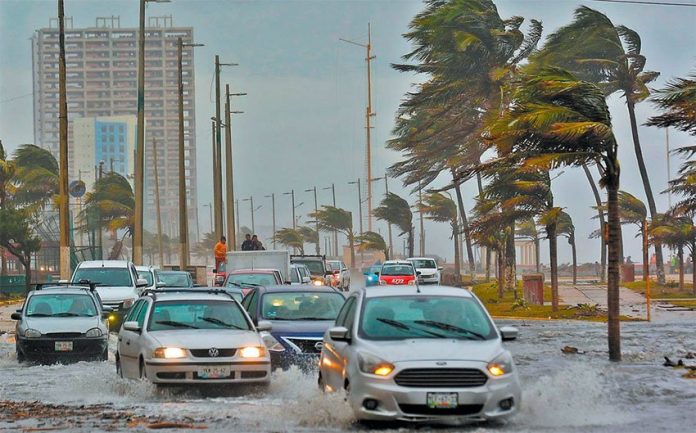
Stormy weather in Veracruz.

Cold front no. 10 and the first winter storm caused temperatures to plummet and brought snow, sleet or rain to at least 21 states yesterday.

In Chihuahua, 18 locations recorded temperatures below 0 C including El Vergel and Bocoyna, where the mercury dropped to -15.1 C and -13.1 C respectively.

The death of a 65-year-old man from hypothermia was reported in El Vergel.

Parts of Nuevo León located in the Sierra Madre have also seen snow and freezing temperatures in recent days.

Farther to the south, the National Water Commission (Conagua) reported that a temperature of -13 C was recorded in the Zacatecas municipality of Concepción del Oro while parts of Durango were even colder at -16 C.

At least 11 municipalities in Puebla saw frosts while snow and sleet fell in mountainous areas of Hidalgo and Guanajuato.

The volcanos Popocatépetl, Iztaccíhuatl, Nevado de Toluca and Pico de Orizaba have all been blanketed in snow.

Authorities cancelled classes today for students from preschool to high school in 19 municipalities in Puebla and the entire state of Hidalgo due to the cold conditions.

In Querétaro, snowfall affected power lines, leaving several rural towns without electricity.

Heavy rain in the Gulf coast state of Tabasco damaged homes of 822 people who live in the municipalities of Cárdenas, Centla and Paraíso.

Strong wind felled trees in the three municipalities, lagoons in the region broke their banks and some roads and highways were closed to traffic.

Floodwaters completely cut off the Tabasco community of El Alacrán, forcing Civil Protection services to rescue residents by boat.

Residents of Mexico City also experienced cold temperatures yesterday. Civil Protection authorities activated an orange alert for five boroughs in the capital due to cold temperatures ranging between 0 and 3 C.

Highways linking Mexico City to Toluca, Ajusco, Oaxtepec and Cuernavaca were affected by a thick cover of fog that impeded visibility.

The National Meteorological Service (SMN) said this morning that “although the first winter storm and cold front no. 10 will cease to generate effects in Mexico, the mass of cold air associated with the front will maintain cold weather in much of Mexico.”

More snow is predicted to fall in mountainous regions of several states.

Minimum temperatures below -5 C were predicted for parts of Chihuahua, Durango, Zacatecas, Coahuila and Nuevo León.

The SMN said that 11 states could expect temperatures between -5 and 0 C and is predicting minimums of between 0 and 5 C for five others.

However, there are still parts of Mexico where the sun is shining and temperatures are high.

The meteorological agency predicted maximums of 35 to 40 C today in parts of Sinaloa, Nayarit, Jalisco, Colima, Michoacán, Guerrero, Oaxaca and Chiapas.

Source: El Universal (sp), Milenio (sp) 

Business group likes AMLO’s new security plan

0
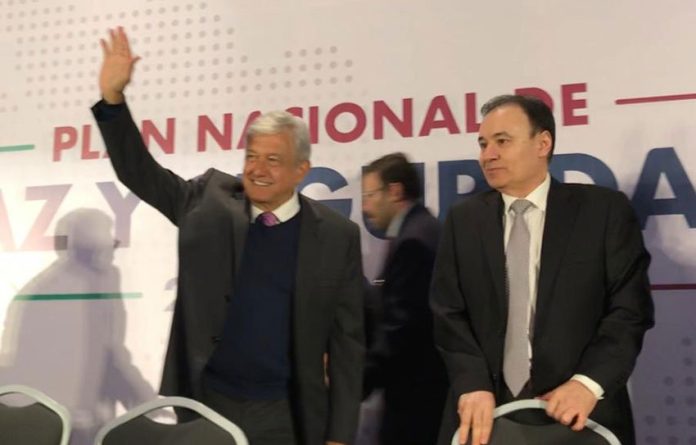
López Obrador, left, and his security chief, Alfonso Durazo.
López Obrador, left, and his security chief, Alfonso Durazo at yesterday's presentation of the security plan.

One influential business group likes president-elect López Obrador’s new six-year security plan, while the current federal administration has pledged to support its implementation.

Coparmex, the Mexican Employers Federation, applauded the proposals and welcomed its focus on recovering social peace, something that has been lost in recent years, it said.

“Coparmex is pleased with the proposals made to reorganize security institutions, starting with the Security Secretariat, and the separation of those tasks from the Interior Secretariat,” said the document.

The recovery of peace is a priority issue in Mexico, it continued, one that requires the participation of all, the current federal administration included. “Until the last day . . . it has the mandate and responsibility to heed this very serious problem.”

“We the people of Mexico need changes to start right now. It is time to speed up the progress in the battle against crime and insecurity, because the stability of the economy and the security of the families of Mexico depend on it,” it said.

Another leading business organization, the Business Coordinating Council (CCE), also wants to see immediate action. CCE president Juan Pablo Castañon hopes the federal government will provide the necessary support during the transition period. The new government takes office December 1.

Interior Secretary Alfonso Navarrete Prida said today the Enrique Peña Nieto government respected the proposals and programs in the new plan and was prepared to support the efforts to reestablish harmony.

The plan was presented yesterday and includes the creation of a 50,000-strong national guard among other measures.

Source: Milenio (sp)

Citizens’ group detains federal election officials in Oaxaca

0
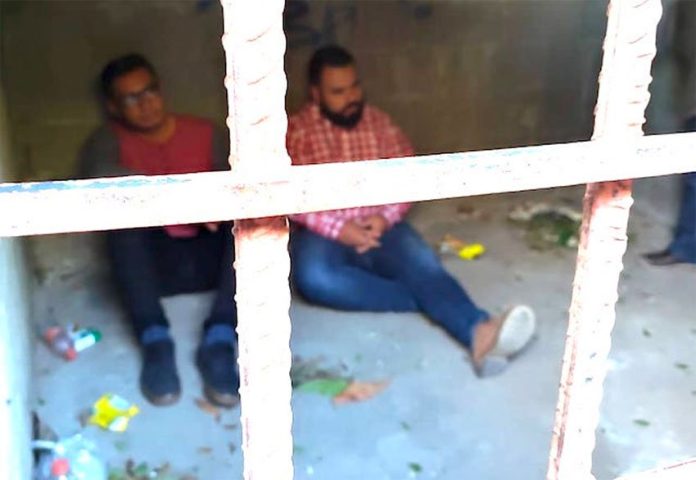
Federal election officials in San Dionisio: not a warm welcome.

A citizens’ organization in a coastal community in Oaxaca detained four officials from the National Electoral Institute (INE) for nine hours yesterday in the most recent episode of a long protest over local elections.

The officials were visiting San Dionisio del Mar to appoint several local electoral officials and train them in their tasks, which didn’t sit well with members of the Peoples’ Assembly of San Dionisio del Mar.

Elections in the indigenous Ikojts municipality were scheduled for December 9 after that organization prevented the completion of the electoral process on July 1, part of an ongoing social and political dispute it has with municipal authorities.

[wpgmza id=”108″]

On a list of demands presented to the state government is a request for compensation for damages and for justice in an incident last March in which five of its members were allegedly victims of an armed attack.

The assembly claims that Mayor Teresita de Jesús Luis Ojeda was responsible.

It has warned that as long as there is no justice it will not allow elections to take place.

The Peoples’ Assembly of San Dionisio del Mar was created in 2012 by a group of residents dedicated to protect the Ikojts land and opposed to the installation of a wind farm in their municipality.

Source: La Jornada (sp)