Home Blog Page 2071

Cancelling airport project would cost 170 billion pesos; binding vote planned

0
The new airport's control tower.
The new airport's control tower. naicm

Canceling the new Mexico City International Airport (NAICM) project and adapting an existing air force base for commercial aviation instead would cost 170 billion pesos (US $9 billion), the prospective transportation secretary said yesterday.

Javier Jiménez Espriú explained that 100 billion pesos would be lost due to the cancellation of the airport currently under construction at Texcoco, México state, and that a 70-billion-peso investment would be needed to build two additional runways and other new infrastructure at the Santa Lucía Air Force Base in the same state.

The two options — continuing with the current project or scrapping it and converting the air force base — will be put up for public consultation in the last week of October, president-elect Andrés Manuel López Obrador announced yesterday.

Speaking at a press conference following the delivery of an expert report on the multi-billion-dollar project, members of a technical team including Jiménez, incoming finance secretary Carlos Urzúa and López Obrador’s prospective chief of staff Alfonso Romo said the former option would lead to a drop in financial markets and impact the 2019 budget.

Abandoning already completed work would result in a 60-billion-peso loss and another 40 billion pesos would be lost in non-recoverable expenses relating to contracts that have already been signed.

The second option would entail spending an additional 200 million pesos to carry out a feasibility study, while if the project goes ahead, having two commercial airports would create logistical challenges, generate additional costs for airlines and possibly inconvenience air passengers, the team said.

Bernardo Lisker, an official at Mitre Corp.’s Center for Advanced Aviation System Development, said in May that having the Santa Lucía base and the current airport operating simultaneously would not be feasible because the two facilities are too close together, meaning that aircrafts would be dangerously close to each other in the same limited airspace as they descend to land.

However, a group of Chilean aviation experts cited in the expert report believe the two airports could coexist, although they stressed “the urgent need” to carry out a thorough analysis to assess the feasibility of the plan.

One advantage of the air force base option is that it could be in operation much sooner than the NAICM but downsides include having to reach new agreements with creditors and contractors for the construction work to be completed, which could also negatively affect financial markets.

The new airport’s location is closer to central Mexico City than Santa Lucía, making it more convenient for most travelers, but the suitability of the land it is being built on— an ancient lakebed — has been questioned.

Other downsides to the NAICM include the total cost of the project blowing out to 300 billion pesos (US $15.8 billion) from 169 billion pesos and high ongoing maintenance costs once it is in operation.

The expert report delivered to López Obrador’s transition team will be submitted to President Enrique Peña Nieto for consideration this week while the president-elect has declared a September 5 deadline for any new opinions from engineers, the business sector or civil society.

Later in September and in October, a series of forums will be held to discuss and debate the two options before the public consultation, which could take the form of a national survey or referendum.

A vote on the issue would be unprecedented because referendums aren’t described in Mexico’s constitution.

However, because it would be exercised in “good faith,” López Obrador’s transition team argued that the result would be binding.

“López Obrador has painted himself into a corner with this project and the consultation is the staircase that will pull him out,” said Carlos Bravo, a political scientist at the Center for Economic Research and Teaching (CIDE) in Mexico City.

“It’s his way out so he can change his mind without really saying so. It’s likely the consultation is going to be planned in a way where it would be absurd to vote against the construction,” he added.

In the lead-up to the July 1 election, López Obrador repeatedly railed against the project, charging that it was corrupt, too expensive and not needed.

However, he subsequently softened his stance while maintaining that the people will ultimately decide the project’s fate.

According to the official timeline, the NAICM is scheduled to start operations in October 2020 but in a document posted to López Obrador’s website, Parsons Consultants said that date has been shifted to the second half of 2022.

Jiménez said yesterday that construction of the project is about 31% complete.

Source: El Universal (sp), El Financiero (sp), Bloomberg (en)

Kidnappers were making a successful getaway—until they made illegal turn

0
The kidnappers' vehicle after yesterday's foiled abduction.

A kidnapping in Mexico City was foiled yesterday when the kidnappers took a wrong turn.

Four people seized a 59-year-old car salesman from his home yesterday evening in the borough of Gustavo A. Madero.

The victim’s family reported the incident, but it wasn’t the report that solved the crime.

The kidnappers’ Buick Enclave drew the attention of traffic police by making an illegal turn, so they ordered it to stop.

“[The driver] told me he was taking his father-in-law to the doctor, but it seemed suspicious so I asked him to step out of the vehicle, and at the same time asked my partner for back-up,” the officer told the newspaper Milenio.

The kidnapping victim seized the opportunity and shouted that he was being kidnapped. As second officer approached the SUV one of the occupants drew a gun on her.

But she was faster and shot him twice, in the shoulder and the hand.

Two of the kidnappers fled the scene but the other two, including the injured man, were taken into custody.

The car salesman victim made it through the ordeal unscathed and was transported to a nearby prosecutor’s office where he filed a formal complaint.

Source: Milenio (sp)

The case of the mystery meter: a 16,000-peso CFE bill for a non-existent meter

0
If there's no meter, there shouldn't be a CFE bill.

As a home inspector, I have from time to time become embroiled in situations which actually have nothing to do with a presale evaluation of a property.

Several years back, a female friend asked me to assist. She had just purchased the remains of a casa which came with a 16,000-peso+ past due electrical bill. The price of the house was good enough even with the extra cost to the Federal Electricity Commission (CFE).

However, she wished to try to get the bill reduced by some amount. Even though she speaks Spanish, she knew that in these situations a man is more likely to prevail. She and I briefly touched upon our respective experiences which indicate that, putting it most favorably, women in Mexico are not treated in the same way as men.

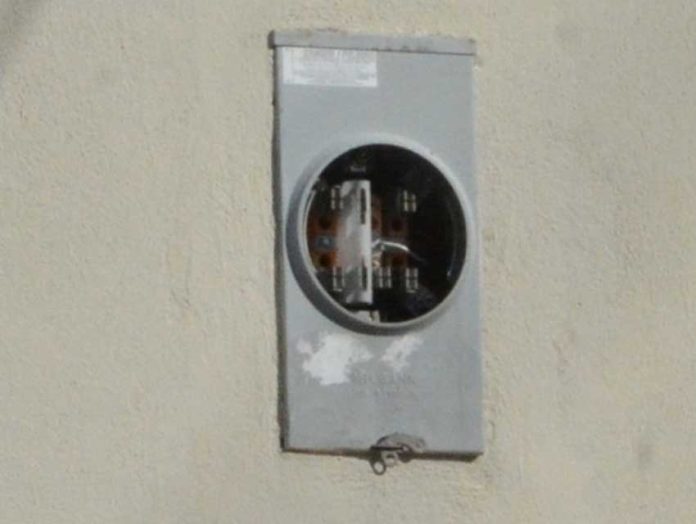
The thing that made this assignment intriguing, the hook as some would say, was the fact that the house had no electrical meter, yet somehow generated an invoice for electrical use each and every month. Besides there being no meter, the electrical wire had been stripped from the entire house, all the way to the utility pole. Even the squatters had abandoned the property several years before, when the roof began to collapse.

The government electrical utility, the CFE, is one of the truly classic examples of Mexican bureaucracy at its finest. For the average expat, acquiring a driver’s license, registering an automobile, dealing with immigration or Aduana, can all test your personal mettle, but with patience and perseverance you will normally prevail.

However, any form of billing dispute with the CFE can cause even the sanest person to abandon any hope for recourse. The CFE is the undisputed “King of the Hill” when it comes to the art of obfuscation and well-practiced sophistry.

In my past life north of the border I had spent time dealing with various regulatory agencies. In those dealings I learned that straightforward, clear and concise communication always worked the best. At the time I agreed to assist my friend that was the only way I knew how to proceed, because I hadn’t yet learned the Mexican two-step, or three-step, or whatever it takes to grease the wheels of progress.

So, with Juan, my executive assistant and lead translator, I made a frontal assault on the customer service desk. A detailed explanation of the mysterious turning meter which logic would tell anyone must be somewhere other than the address on the bills, got a response that was most certainly “the standard first response.”

We were politely told we needed to pay the bill in full before a new meter could be installed. Our initial assault repelled, we rallied, changed our tack, and Juan, in a civic-minded gesture, carefully described the offensive crime which had been committed when someone stole the CFE meter from the residence in question.

We were given a slip of paper with a man’s name, and instructions to go further into the viscera of this exquisitely stratified bureaucracy.

After a surprisingly short wait, we were called into the man’s office where we told him we wished to report a stolen meter. The man went to a filing cabinet, removed a pre-printed form and began asking questions. I handed him the previous month’s electrical bill and the man began filling in spaces in his form.

After a couple of minutes, he looked up and asked for the date the meter was stolen. With a very straight face, Juan replied in Spanish, “Oh, about five or six years ago.” The man nodded, looked down to fill in one of his boxes and then stopped just before entering the date of theft. He then looked at the date of the bill, looked at Juan and said, in so many words, I don’t understand what is going on.

At last we were able to discuss our dilemma with someone who shared our confusion. Unfortunately, even after his understanding became complete, he told us he was unable to take it to the next level. He suggested we pay the bill in full and wait for a new meter.

As we stood outside, in front of the CFE complex, I realized that the finely layered levels of responsibility are purposefully labyrinthine to prevent anyone with a billing dispute to get past the customer service desk. This habit of stonewalling customers wears down the vast majority of people with billing questions. Most times, they just pay the fraudulent amount and put it behind them. After all, that’s much easier than taking time off from work, and jousting with customer service; viva Mexico.

So, I concluded, breaching the barricades of the underlings of officialdom, all of whom are incapable of decision making and fiercely protective of the higher strata of management, would require a backdoor approach.

I explained to Juan that now that we had tried the straightforward gringo way of dealing with an impersonal government agency, we needed a Mexican solution to the problem. I quizzed him in depth, inquiring as to the possibility of him having a friend or family member who knew someone who worked above the ground floor of this shrine of impersonal autocrats.

Juan’s classic response was, “I think so, let me find out.” Already I knew that such words really meant: “I know nothing now, but I could in a couple of days.” Mexicans never express any form of doubt when called upon to assist with an action at some point in the future.

I knew he would canvass his phone’s extensive list of contacts and find someone who knew someone whose cousin’s next-door neighbor’s plumber was a brother-in-law to an upper-level CFE manager. Those on the medium and lower rungs of the cultural ladder are quite proud of relatives who work for the government and are more than eager to pass on the contact information.

Within the week, Juan had the name of a man on the second floor as well as an appointment time. We checked in at the front desk and were pleasantly surprised to be sent upstairs immediately.

Prior to our scheduled meeting, I had taken photos of the property with emphasis on the battered and empty meter base, with its bent utility mast which had been stripped of its copper wire. I also took pictures of the surrounding neighborhood to validate the location of the house.

We were ushered into a large office where a well-dressed middle manager sat behind an uncluttered desk. I placed a picture of the meter base and the bent utility mast on his desk, along with three concurrent monthly bills showing an active account (which of course required a functioning meter) and simply asked for an explanation. As no immediate positive response was forthcoming and we delved deeper into the dilemma, the thought came to me that politicians could learn a thing or two from CFE management tactics.

It took about an hour to arrive at a solution that both parties could live with. After this patient man explained all the duplicitous things people do with CFE meters, I realized what had probably happened. In all likelihood someone had stolen the meter from my friend’s derelict property, and connected it to another home. The thief need never pay the bill and he was safe from having the connection disconnected. This could have gone on for decades.

Our questions were being answered in excellent English, and the man seemed sincerely concerned about our dilemma, but eventually he seemed to form the view that there was probably no fault on the part of the former property owner. However, he was unwilling to forgive the entire 16,000 pesos in arrears. He told us that the company never forgives an entire debt. If word of such a practice got out, they would be inundated with people challenging the amount due on their CFE bills.

He then told us that our provision of information on a rogue meter was helpful to the company and as such, it had a certain worth which he was prepared to acknowledge. We finally settled on a figure of 2,000 pesos.

As I pushed the cash across the desk, the man said he would provide a paid-in-full receipt and a letter from the CFE to my friend advising of discontinuation of the current service. She could just apply for a new service thereafter. He then told us to come back the following morning to get the paperwork from his secretary. I kept my thoughts to myself, of course, but I wondered whether the cash would end up in the coffers of the CFE, or the wallet of the nice man who had helped to resolve the case of the mystery meter.

This episode occurred over 10 years ago, and was my first hands-on experience with such a situation. Since that time I have witnessed several of the duplicitous things which are done with CFE meters. One of the most common actions is the clandestine meter swap.

This is when someone swaps out their meter with your meter after yours has been read. The person then replaces your meter just before the meter reader comes back for the next monthly reading. Of course, the thief has either heated or cooled their entire house with the continuous use of an electrical device. Thus this particular scam can be truly shocking for the victim. Since tamper-proof meter seals are relatively new to many parts of Mexico, this has been an ongoing activity for years.

I suggest that expats photograph their meters and keep the picture for future reference just in case meter fraud comes to your neighborhood. And to any expat who does have to begin dealings with the CFE staff, buena suerte.

The writer describes himself as a very middle-aged man who lives full-time in Mazatlán with a captured tourist woman and the ghost of a half wild dog. He can be reached at buscardero@yahoo.com.

50 tonnes of meth seized in Sinaloa; estimated value US $5 billion

0
Marines and meth seizure in Sinaloa.
Marines and meth seizure in Sinaloa. semar

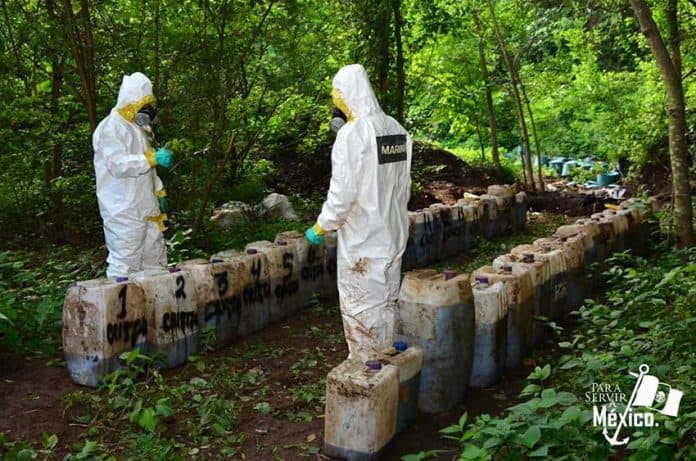
Marines seized 50 tonnes of methamphetamine Thursday from a clandestine drug lab located in the mountains near Culiacán, Sinaloa, the Secretariat of the Navy (Semar) said yesterday.

The seized drugs have an estimated value of US $5 billion, in accordance with illicit drug price data from the United States Department of Justice.

Semar said in a statement that marines raided a lab located about 30 kilometers from the state capital near the small town of Alcoyonqui.

They dismantled the lab and two underground storage facilities where the meth, in both liquid and solid form, was found inside drums and plastic containers.

Precursor chemicals and other materials and equipment for the manufacture of methamphetamine were also seized.

The drugs and chemicals were incinerated on site due to the difficult access to the location, Semar said.

The seizure is one of the biggest synthetic drug busts ever made in Mexico and the largest single confiscation of meth in Sinaloa.

Semar said the seizure would weaken criminal organizations and avoid a large quantity of methamphetamine from reaching both domestic and international markets.

The navy secretariat released video footage and photographs yesterday showing marines in hazmat suits examining the seized products.

Intelligence reports indicated that large quantities of drugs were being produced in the Alcoyonqui area, leading marines to the lab’s location. The operation was supported by both land and air units of the navy.

Local media said the land where the drugs were found is controlled by the Sinaloa Cartel, while the newspaper El Diario reported that the drugs likely belonged to Ismael “El Mayo” Zambada, the cartel’s suspected leader.

Mexico is a major supplier of methamphetamine and heroin to the United States.

[wpgmza id=”58″]

Mexican and U.S. law enforcement authorities announced new security strategies this week including the creation of a joint investigative team that will target the leaders and finances of Mexican cartels that ship drugs into the United States.

The former leader of the Sinaloa Cartel, Joaquín “El Chapo” Guzmán, is currently incarcerated in the United States and will face trial later this year.

Source: El Diario (sp)

Cause of death of more than 100 turtles remains unknown

0
Dead turtles first appeared on a Chiapas beach nearly a month ago.

Environmental authorities have been unable to determine the cause of death of 122 sea turtles on a beach in Puerto Arista, Chiapas.

Neither autopsies nor tissue analysis has been possible due to the turtles’ advanced state of decomposition.

Most of the reptiles belong to the olive ridley species and measure up to a meter in length. The average age is as old as 100 years.

The Natural Protected Areas Commission (Conanp) said fish hooks and pieces of fishing net were found in some of the remains.

[wpgmza id=”57″]

The dead turtles began appearing July 24, said Conanp director Adrián Méndez Barrera.

Federal and state authorities are now strengthening their efforts to monitor the area and prevent the capture of turtles and the removal of their eggs.

They will also work with local fishing cooperatives to encourage sustainable fishing practices.

Meanwhile, water samples will be tested to check for the presence of harmful substances.

Puerto Arista is a small community in the municipality of Tonalá on the north coast of Chiapas.

Source: El Universal (sp)

5 Mexican wines to try during the grape harvest season

0
Tierra Adentro wines from Zacatecas.

With the annual grape harvest season in full swing, this might be a good time to enjoy a glass or two of Mexican wine.

Vineyards around the country are holding events to celebrate the harvest, known in Spanish as la vendimia, and to coincide with the festivities, México Presenta — a made-in-Mexico promotional website — has published a list of five wines to try.

Noble Cru

Made by Baja California winemaker Solar Fortún, this red wine is a blend of mouvèdre, syrah, cabernet sauvignon and petit verdot grapes grown in Mexico’s premier wine region, the Valle de Guadalupe.

The wine is aged in barrels of French oak for 14 months and, according to the maker, has notes of cherry, smoked bacon, licorice and anise.

It pairs well with red meats and retails for around 520 pesos a bottle.

Paréntesis

This red, made by Tintos Nueva Era, is also from the Valle de Guadalupe. The wine is a blend of 90% carignan and 10% cabernet sauvignon.

With notes of red berries, cinnamon and vanilla, Paréntesis pairs well with cured meats, mushroom-based dishes, pastas and Mexican classics such as enchiladas.

A bottle of the 2012 vintage sells for around 270 pesos.

Helios

Described as having elements of air and fire, this white wine is made with 100% grenache blanc grapes that are commonly grown in certain regions of France and Spain.

AlXimia’s vineyard, however, is also located in the Valle de Guadalupe. The wine has a fruity nose with expressive aromas of pear, apples and citrus.

AlXimia says that Helios “is excellent as an aperitif, and a great accompaniment to oriental dishes, sashimi, sushi [and] fresh cheeses.” It sells for around 280 pesos.

Casa Grande Gran Reserva Cabernet

Made by Coahuila winemaker Casa Madero, this blend of 70% cabernet sauvignon and 30% shiraz is aged in French oak for 24 months.

The premium wine features aromas of red berries, tobacco and vanilla as well as spices such as cloves and star anise.

It pairs perfectly with turkey in mole negro, lechón (suckling pig) or short ribs in a red wine sauce. A bottle retails for around 750 pesos.

Tierra Adentro Syrah

Rounding out the five Mexican wines to try during the grape harvest season is this award-winning tipple from Zacatecas.

Aged for 12 months in both French and American oak, the wine has a complex, woody aroma with notes of berries and spices. It pairs well with meats such as cabrito (young goat) and lamb as well as pasta, cheeses and Mexican food.

The wine keeps well for three to seven years and costs around 500 pesos a bottle.

The Tierra Adentro winery, located 30 kilometers east of Zacatecas City, will hold its annual vendimia festival on August 25.

Mexican winemakers produce about two million liters of wine annually, an amount that represents 30% of domestic consumption. The latter is on the rise: in 2002 Mexicans drank 250 milliliters per capita. The figure is now 964 milliliters.

Source: Milenio (sp)

Oaxaca artisans complain their designs stolen by British store

0
women and their huipiles.
Indigenous artisans and their huipiles.

Artisans from a small indigenous community in Oaxaca complain that a British clothing retailer is selling imitations of their designs, but they are unsure how to protect their traditional craft.

“Inject some color into your summer wardrobe with the Vita Kaftan. Designed with bold Mexican inspired embroidery in a riot of multi colors.”

That’s how Star Mela’s website advertises a garment which bears a design with a striking resemblance to that featured on the huipiles made by the Chinantec women from Rancho Grande, a town in the municipality of San Juan Bautista Valle Nacional.

The artisans were alerted to the imitation dress, which comes with a hefty price tag of 299 pounds (US $380), via a message on social media.

Despite laboring for long periods of time on a telar de cintura (a traditional backstrap loom) to make their huipiles, the Oaxacan artisans’ prices are much lower.

Paty Rodríguez, president of the artisans’ collective Bordados de Mil Colores, and Lucía Manuel Antonio, representative of Flor de la Chinantla, told the newspaper El Universal that they are unhappy about having their designs plagiarized but explained that they haven’t taken their complaint further because they don’t know where to take it.

In addition, they said they’re afraid that they won’t be listened or that they won’t be able to understand the bureaucratic processes involved.

Instead, they are placing their faith in senator-elect Susana Harp, a folk singer from Oaxaca who won a seat in the upper house as a candidate for the Andrés Manuel López Obrador-led Morena party.

Harp has pledged that she will fight to introduce legislation that protects traditional Mexican textiles.

According to the director of the Oaxaca Institute of Handicrafts (IOA), the only recourse currently available to artisans who have had their designs plagiarized for commercial use is to publicly denounce those who have stolen them.

Miriam Caraveo Cortés added that on the request of the state Congress the IOA has begun drawing up guidelines that could later become law.

[wpgmza id=”56″]

Similar cases of plagiarism involving indigenous Mexican artisans have occurred before.

Last year, Spanish multinational company Mango was accused of copying the unique embroidery designs of artisans from Hidalgo and consequently took the products in question off the market.

French designer Isabel Marant and Argentine label Rapsodia have also been accused of appropriating traditional Mexican designs.

Source: El Universal (sp)

Sex in public places: Guadalajara changes laws governing relations in public

0
Getting it on in Guadalajara.

Making love without paying extortion is the theme of a new municipal law in Guadalajara that means public displays of affection, including having sex and committing acts of exhibitionism, will only be prosecuted if a formal complaint is filed before authorities.

Municipal council approved reforms that establish that “having sexual relations or [committing] acts of exhibitionism of a sexual nature” in public places, vacant lots, inside vehicles or in private locations in public view will be considered administrative offenses, “as long as a citizen requests” police intervention.

But rather than promoting what some might describe as a loose lifestyle, the new rule was created to prevent municipal police officers from acting upon such acts of their own volition.

Council member Guadalupe Morfín Otero presented the modification to the regulations, explaining that the new rule will keep police from committing extortion against people “giving each other love” in a consensual manner, especially young people.

Morfín, a member of the Citizen’s Movement (MC) party, referred to a survey of university students that showed that 90% of respondents had been victims of extortion by police under threat of overnight arrest for committing immoral or exhibitionist acts.

The cases never reached the justice system, she said, because the police took extortion money from the offenders, “and that’s all that rule was good for.”

Now, municipal police will have to show there was a citizen’s complaint and cases will be decided by a judge.

The measure faced opposition from members of the National Action (PAN) and Institutional Revolutionary (PRI) parties, who considered that the corruption of the police force should be addressed before approving such a modification.

Source: El Universal (sp)

UNICEF criticizes Mexico for separating migrants’ families

0
A young migrant, northward bound.

A children’s advocacy organization has criticized Mexican authorities for separating migrant children older than 12 from their families and causing “toxic stress.”

UNICEF Mexico child protection specialist Dora Giusti urged that Mexico and the United States speed up the reunification of families, warning that “the impact of separation and detention generates a toxic stress that could have psychological repercussions for life.”

“We make a strong call regarding this situation so that it never repeats anywhere, not in Mexico or in the United States or elsewhere,” she said.

Giusti was speaking on Wednesday during a presentation of the organization’s report, Uprooted in Central America and Mexico: Migrant and refugee children face a vicious cycle of hardship and danger.

The report explains that migrant children over 12 are usually kept in a separate area, even if accompanied by their families, while younger children stay with their mothers.

“Children in these detention centers are not allowed to leave for services or recreational purposes, even in cases where the process of determining migration or refugee status is long, and they often remain in detention for weeks or months,” said the document.

It explained that despite the implementation of the Southern Border Plan by the Mexican government in July 2014, “a large number of migrant children and families still use irregular routes through Mexico to reach the United States.”

From October 2017 to June 2018, at least 286,290 migrants were apprehended at the northwest Mexico border, including 37,450 unaccompanied children and 68,560 family units.

These unaccompanied children are at the highest risk of exploitation by criminal gangs, and in the case of girls, of sexual violence, as well as discrimination and rejection in the communities they travel through on their way north, said Giusti.

UNICEF estimates that almost 60,000 migrant children from Guatemala, Honduras and El Salvador were held in migratory detention centers in 2016 and 2017, instead of being lodged in shelters, as mandated by law.

Giusti explained that UNICEF has detected cases of minors that have been kept up to three months in the centers, creating “a strong sense of desperation” among them. Many prefer to be sent back to their countries of origin and start their northbound odyssey anew instead of staying in the detention centers and seeking refugee status.

“If they are not sent to a shelter, they grow desperate and don’t want to request refugee status anymore. For them, Mexico becomes the migratory station, and they don’t want to live that way.”

Specialized child protection agencies “should perform a detailed analysis of the rights” of every minor, but that doesn’t happen in may cases, and many minors are deported quickly, Giusti said.

She explained that many unaccompanied minors are fleeing violence and are looking to meet with relatives in the United States, “but they would be eager to stay in Mexico” if an employment or education opportunity was offered.

UNICEF urged Mexico to end the practice of detention of children because of their migrant status, as well as to protect them from violence, keep their families together and to address the structural causes that force them to flee their countries of origin, such as the lack of economic development and violence in Central America.

Source: Excélsior (sp)

No more ‘edecanes:’ eye-candy models no longer allowed at Mexico City events

0
Corona girls: the beer brand has used edecanes extensively in its marketing.

Attractive, sometimes scantily clad female models who are often employed at events to greet guests or simply to act as eye candy will no longer be allowed at government events in Mexico City.

The capital’s mayor, José Ramón Amieva, last week banned the employment of the attendants known in Mexico as edecanes at events sponsored by the local government, stating that “this job should not exist” because “it goes against policies of gender equality.”

The decision breaks new ground in a country where entrenched gender stereotypes often continue to relegate women to support roles in the workforce.

“Women have a potential equal to or greater than that of men,” Amieva said. “Any circumstance that may degrade or stereotype women must be eliminated.”

The mayor explained that women on the government payroll who had previously worked as edecanes will be given “more empowering” roles, adding that a defiance of the ban could result in fines.

Amieva, who will be replaced later this year by Mexico City’s first elected female mayor, Claudia Sheinbaum, has also committed to ensuring that women are better represented on expert panels at government events.

A group of female politicians who held a forum about Mexico’s edecan industry in 2014 concluded that the job is sometimes a front for prostitution and that the models face precarious employment conditions.

While edecanes usually dress more conservatively at government and corporate events than when promoting products at trade fairs or sporting events, there have been some notable exceptions that have raised eyebrows and attracted criticism.

At the first presidential debate in the lead-up to the 2012 election, electoral authorities hired a Playboy model to hand out envelopes to the four candidates.

Julia Orayen appeared onstage in a tight, white dress with a cut-out front that revealed ample cleavage. Six years later, many have long forgotten the candidates’ pitches to voters but can clearly recall the edecan’s controversial appearance.

Politics and sexual allure mixed again in 2016 when the New Alliance Party held a campaign event in Mexico City featuring four semi-nude young women wearing nothing above the waist but body paint in the party’s trademark turquoise and white colors.

The announcement of the ban on the employment of edecanes has been welcomed by female activists, with some saying that they hoped the federal government would put the same prohibition in place.

Indra Rubio, coordinator of the gender justice program for Oxfam in Mexico, described it as “a small but very important step” for a country where macho attitudes continue to predominate in many sectors of society.

“We need to question as a society: why is a woman’s body seen as an object? This always places the woman at a disadvantage, if her participation in the workforce is subject to her physical appearance,” she said.

However, others take a different view.

Héctor García, a booking agent at a Mexico City modeling agency, described the work as “dignified” and said that escorts who called themselves edecanes have hurt the industry’s reputation.

He also said that Amieva’s characterization of the job “is morally harmful and stigmatizes edecanes all across Mexico.”

Model and edecan Mariel Guerrero Castaño agrees.

“He should not try to mix what other agencies or other groups . . . are calling edecanes or models when really they are escorts . . .” she said. “

“Then there are the legitimate agencies . . . that in truth are being stained by what these supposed agencies are doing.”

Source: Associated Press (sp)