Now known as El Ajolote, Mexico City's light rail to Xochimilco featues 17 new trains, reduced wait time, enhanced car capacity and remodeled stations. (Clara Brugada/X)
Mayor Clara Brugada on Monday inaugurated the “El Ajolote” light train connecting the Taxqueña transportation hub with Xochimilco in southern Mexico City.
The new service maintains the original route of the Mexico City Tren Ligera (Light Rail, opened originally in August 1986), but will now operate with 17 new electric trains, boosting the total number to 35, and a modernized system that will reduce wait times and increase passenger capacity.
Presentamos la modernización integral del Tren Ligero “El Ajolote”, una línea de 18 estaciones que dará servicio a 250 mil personas cada día.
Con 17 nuevos trenes eléctricos y estaciones renovadas, fortalecemos una movilidad más rápida, segura y sustentable para el sur de la… pic.twitter.com/9at5AOhuRD
— Clara Brugada Molina (@ClaraBrugadaM) May 12, 2026
All 18 stations along the 13-kilometer track received a facelift as part of the 2.4 billion-peso (US $139 million) project.
The train also features a new image — the now ubiquitous ajolote, an amphibian endemic to the Valley of Mexico — which Brugada described as “a living metaphor for a city that is being transformed.”
The El Ajolote light rail system is expected to be a key transportation system for the upcoming World Cup, as its service extends from the Taxqueña Metro station to Estadio Banorte (Azteca), the site of five games.
Brugada said that while the light rail will serve to enhance the World Cup experience for visitors, “the infrastructure will remain as a long-lasting benefit to residents.”
The new service has the capacity to transport 250,000 people daily and travel time from end-to-end will be reduced from 40 minutes to 30 with four-minute intervals between trains, each of which has the capacity for 750 commuters.
The renovations include a new video surveillance system, enhanced security alerts and station announcements, regenerative braking, as well as a new traffic light system along the route.
Is Brugada just ajolote-washing the city?
Few government projects escape intense internet criticism, and the light rail modernization is no exception. In this case, however, the attacks have been aimed more at Brugada’s extensive use of the ajolote image than the project itself. What is being called the “ajolotl-ification” of Mexico City (a coinage based on an alternative spelling of the species closer to the original Nahuatl name) has prompted mockery and a flood of memes on social media.
Critics have complained that despite pot-holes, a lack of street signs and other transportation infrastructure shortcomings (highlighted by the flooding in the Azcapotzalco borough on Monday night), the city has found the time and resources to paint murals and adorn public spaces with ajolote-themed art all over the capital.
Mayor Brugada took on the mockery directly.
“Some have said, out of prejudice or classism, that we are ‘ajolotling’ the city,” she said Monday. “If ‘ajolotling’ means filling what was once gray with color, transforming public spaces and guaranteeing access to services for the benefit of thousands of people, then yes, we are ‘ajolotling’ the city.”
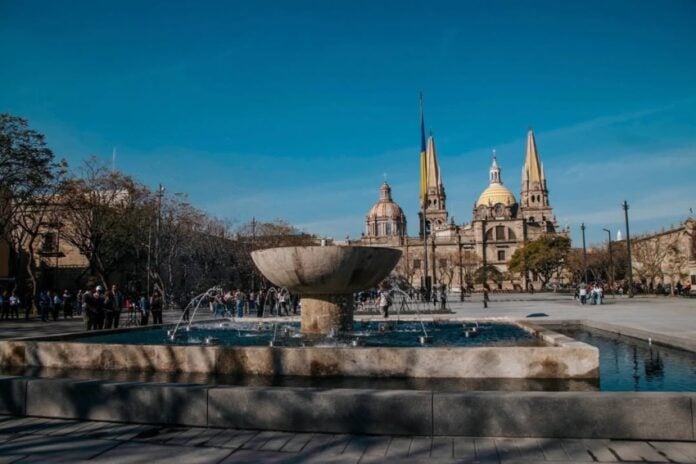
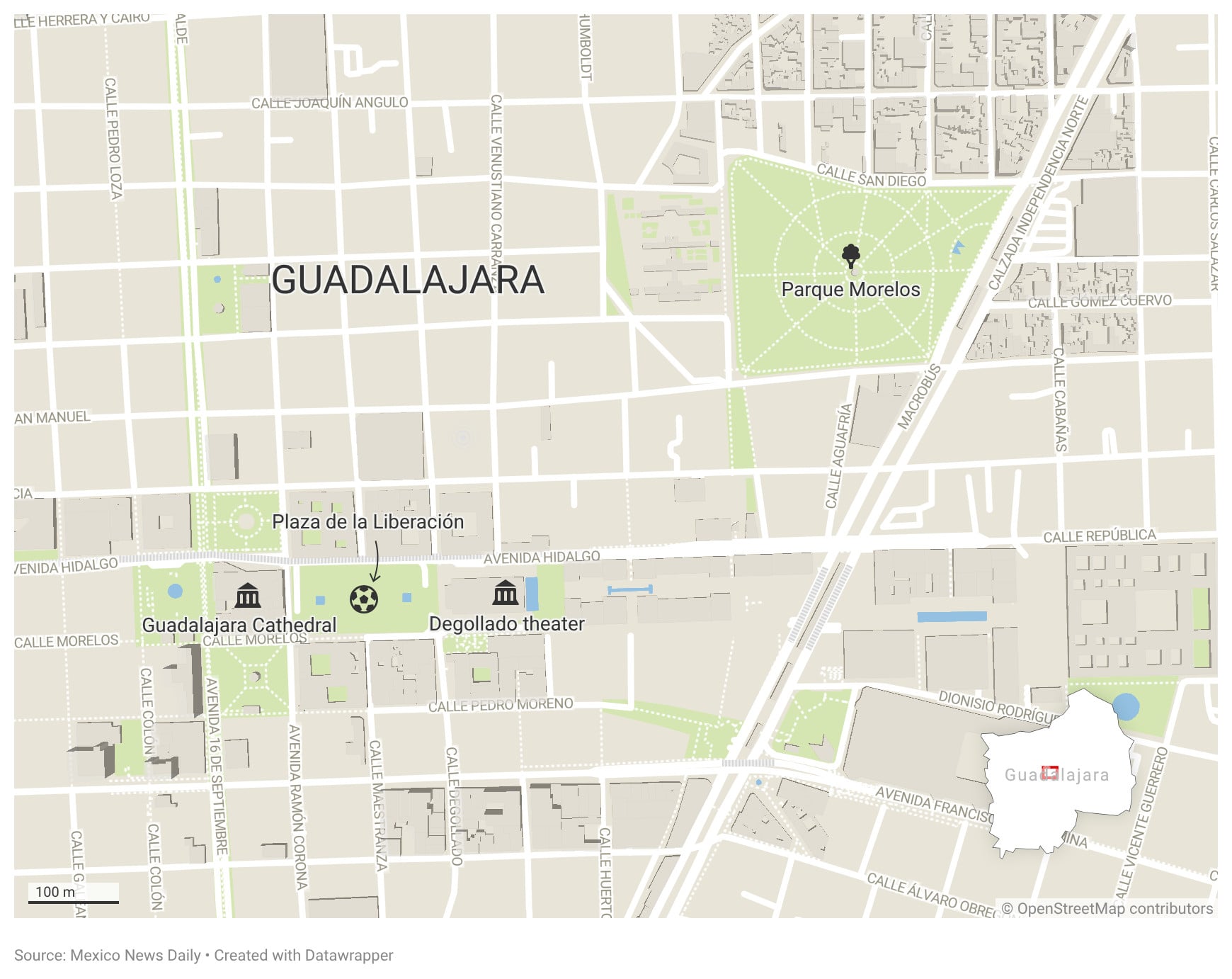
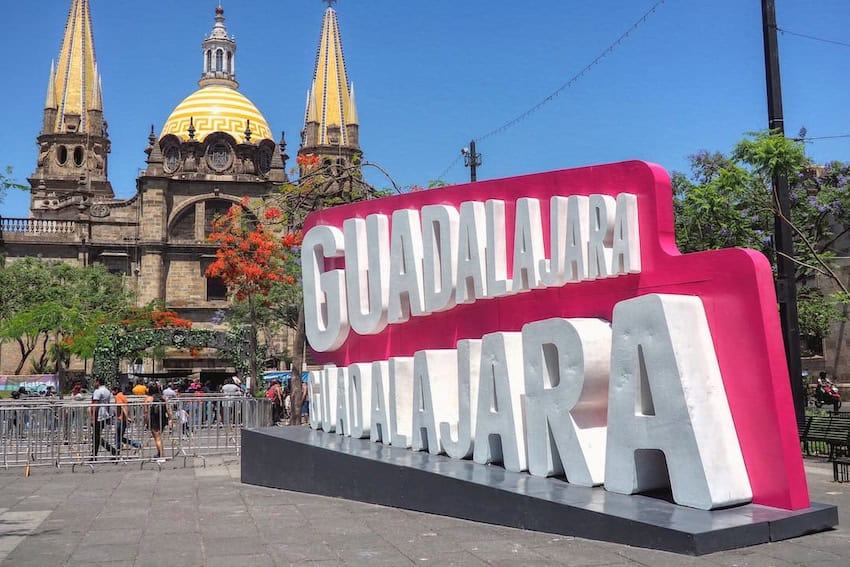
Plaza de la Liberación will be the center of the fan experience in Guadalajara for this year's World Cup. (Instagram)
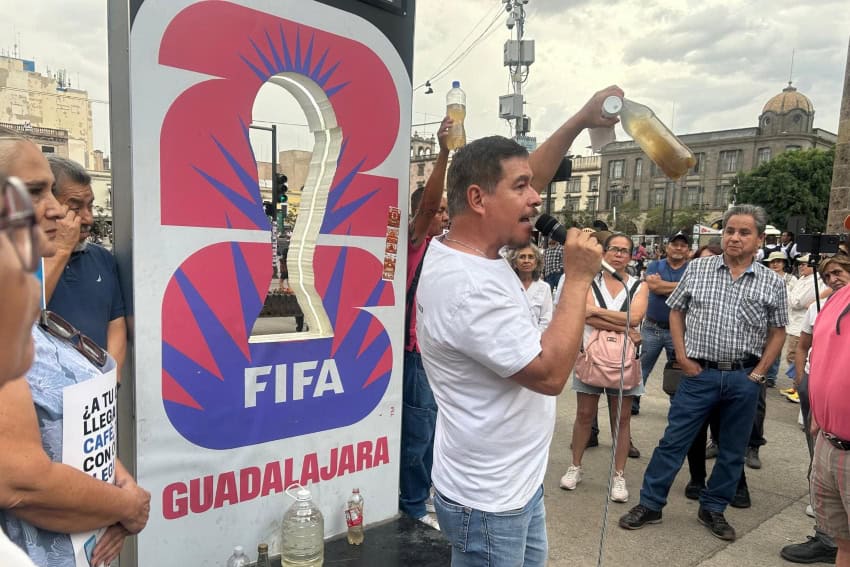
There’s major news this week in Guadalajara, as the new director of SIAPA, the public water agency, has unveiled an emergency 3-month water plan. Good news has also been announced regarding the 2026 fire season, and new details have emerged for Guadalajara’s World Cup fan festival.
New details emerge on Guadalajara’s World Cup fan experience
If you failed to snag a ticket to the upcoming World Cup games in Mexico, you are in good company. Fortunately, there are still numerous (more affordable) ways to enjoy the action with your family, friends and neighbors.
The FIFA Fan Festival at Plaza de la Liberación will be the epicenter of Guadalajara’s World Cup celebration. Located between the Cathedral and Teatro Degollado, it is one of Jalisco’s most iconic public spaces, surrounded by history on all sides, with the Government Palace and Regional Museum as its backdrop.
Plaza de la Liberación has a capacity of 40,000 people. Admission to the Fan Festival will be free, but advance registration will be required on FIFA’s digital platform. As of press time, this feature had not yet been added to the website.
Guadalajara’s Fan Festival will run daily, Monday through Sunday, from June 11 to July 19, 2026. Operating hours have yet to be confirmed.
While host cities such as Monterrey, San Francisco, Miami, and Vancouver have scaled back their fan festivals due to escalating costs, Guadalajara and Mexico City will publicly broadcast all 104 matches from start to finish.
Unlike Mexico City’s Zócalo, alcohol sales will be permitted at Guadalajara’s Fan Festival, according to Juan José Frangie, coordinator of the Guadalajara 2026 World Cup Organizing Committee.
Where to watch the World Cup in Guadalajara
First and foremost, there will be giant screens for viewing the game. But much more is planned to keep fans busy in between live play. Plaza de Armas will transform into a showcase for Guadalajara’s cuisine. Expect to find birria, tortas ahogadas, red pozole and jericallas, alongside dishes from other corners of Jalisco.
The Plaza de Armas will host food, music and cultural events to celebrate Mexico’s tenure as World Cup hosts. (Above Us Only Sky)
Teatro Degollado will host several live music performances on World Cup game nights by top-tier artists. These include local favorites Maná, returning to Guadalajara from their recently concluded world tour, rock legend Carlos Santana (who was born in Autlán de Navarro) and Mariachi Vargas de Tecalitlán, the renowned mariachi group from southern Jalisco.
There will also be hospitality spaces for sponsors, official tournament merchandise for sale and an interactive game zone. To show support for Mexico’s national team, the surrounding streets will be painted in green, white and red.
Alongside the FIFA Fan Festival at Plaza de la Liberación, additional fan zones will operate in Parque Rojo, Parque La Mujer, Parque de Las Niñas y Los Niños and Plaza Las Américas. Each will reportedly feature large-screen match broadcasts, family activities, and cultural programming. These gathering spots are also expected to offer free admission.
Jalisco has seen a significant reduction in drought and forest fires in 2026
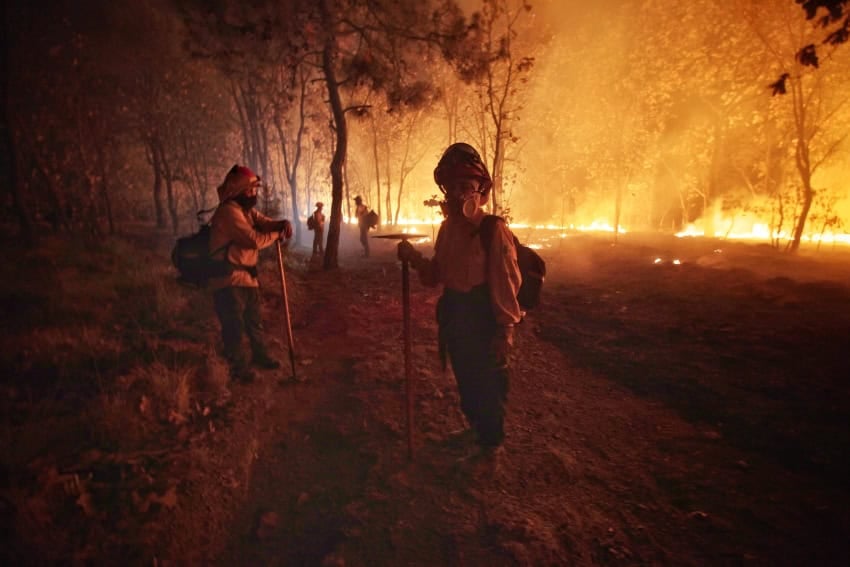
Through late April, a total of 393 fires have been reported across the state of Jalisco, impacting roughly 18,400 hectares of forest, according to numbers provided by the National Forestry Commission (Conafor). This is a significant reduction from the same period in 2025, when 925 fires occurred.
This positive trend exists throughout the country, with forest fires down 26% compared to 2025 in all 32 states. In addition, 95% of fires in the year to date have been classified as low severity.
The intense rainy season that hit the state last year continues to provide benefits, resulting in fewer fires and reduced severity when fires do occur. According to the National Water Commission, 96%of the state of Jalisco remains drought-free, with sufficient moisture in local forests.
The number of fires across the state of Jalisco has declined significantly in 2026. (Gobierno de Jalisco)
Fewer fires have also meant better air quality in the Guadalajara Metropolitan Area. So far this year, only eight air quality alerts have been issued in Jalisco, with those affecting the municipalities of Zapopan, Tlajomulco, Puerto Vallarta, Mascota and others.
The fires that have occurred
Despite the positive trend, the GMA has suffered several serious fires in the past two weeks. On April 28, a severe fire broke out at La Venta del Astillero immediately west of the Technology Park of Guadalajara, prompting the Ministry of Environment and Territorial Development (Semadet) to issue an atmospheric emergency for several neighborhoods in Zapopan and central and western Guadalajara. It also prompted the suspension of in-person classes on Wednesday, April 29, in parts of Zapopan.
On May 5, another fire broke out in Bosque Los Colomos in Guadalajara’s Providencia neighborhood, burning more than five hectares of the park before it was brought under control. The causes of both fires are still under investigation, but arson is suspected in the Colomos incident, which was sparked by burning trash on an adjacent property.
While water service failures persist, Siapa promises a fix within 90 days
Siapa recently announced a 3-month emergency plan to wash and sterilize water treatment tanks around metro Guadalajara to improve the cleanliness of water being delivered to area homes and businesses. This initiative aims to make up for long-neglected maintenance under prior agency leadership.
According to Siapa’s new director, Ismael Jáuregui Castañeda, work on this project began on April 1 and should be finished by the end of June. While work is ongoing, there is likely to be reduced water pressure and cuts to service in some neighborhoods, since each tank must be emptied, repaired and put back online.
During a visit to the College of Civil Engineers of the State of Jalisco (Cicej) in April, Jáuregui acknowledged the magnitude of the task he faces attempting to provide clean and reliable water service to the GMA. “Many say (that I won) ‘the tiger raffle’ … but it’s an old tiger, toothless, clawless, flea-ridden and however you want to put it,” he joked.
Clean tap water, or the lack thereof, has been a major issue in Guadalajara of late. (Tracy L. Barnett)
In Mexico, “a tiger raffle” refers to a high-stakes role, often in public service, that is difficult, risky or contains the strong possibility of failure.
Meanwhile, Cicej president Mirna Avilés Mis stressed the importance of Siapa taking a more proactive, strategic approach to solving the metropolitan water system’s needs. “We cannot continue with a reactive approach. We cannot continue to address the urgent needs of each day without tackling the underlying problem.”
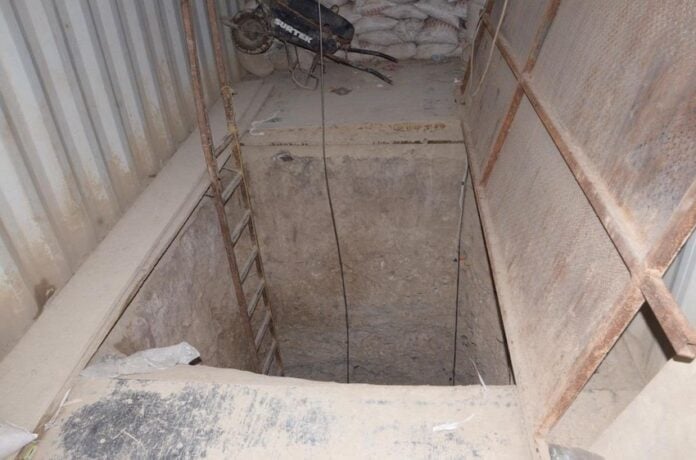
Given that the tunnel linked a pipeline in a Pemex facility to an adjacent property, it appears probable that state oil company workers were involved in the fuel theft scheme. (FGR)
The Federal Attorney General’s Office (FGR) announced on Monday that it had detected and secured a tunnel in Nuevo León that was used to steal fuel from a Pemex pipeline. Federal agents also seized more than 200,000 liters of fuel from a nearby property.
Ulises Lara, an FGR special prosecutor and spokesman, said that the tunnel connected an 18-inch pipeline within a Pemex facility in Santa Catarina — a municipality in the Monterrey metropolitan area — with an adjacent property.
La #FGR, en coordinación con @Pemex, @SSPCMexico, @Defensamx1, @GN_MEXICO_ y Policía de Nuevo León, desarticuló un sistema de robo de hidrocarburo.
Se aseguró un túnel conectado a poliducto, más de 205 mil litros de combustible, 23 tractocamiones y 10 autotanques, entre otros.… pic.twitter.com/fJQ9ozDO8V
“Agents of the Criminal Investigation Agency located the tunnel-like excavation in the facilities of the Pemex Storage and Distribution Terminal, located in Santa Catarina, Nuevo León,” Lara said in a video message.
“Upon carrying out on-site inspections, federal agents discovered that the tunnel connected with an adjacent property located on the old road to Villas de García,” he said.
Lara said that personnel with Pemex, the federal Security Ministry, the Defense Ministry, the National Guard and the Nuevo León state police collaborated with the FGR on the operation to secure the tunnel. He said that intelligence work and field work led to the discovery of the tunnel.
The newspaper El Financiero described the passageway connecting the Pemex facility to the nearby property as a “Chapo-style” tunnel “with sophisticated engineering.” In 2015, notorious drug lord Joaquín “El Chapo” Guzmán escaped from the Altiplano federal prison in México state via a tunnel.
Lara said that authorities found “equipment used for the illicit extraction of fuel” in the tunnel, including a “quick-closing valve” and a high-pressure hose.
He said that authorities found that the adjacent property — on which there is a large arch-like structure — was used to store fuel. Lara said that a “hidden” access to the tunnel was found within a “metallic maritime container” on the property.
He said that federal agents seized “approximately” 205,418 liters of fuel from the property as well as 23 tractor-trailers, 10 tanker trucks, a tow truck, three other vehicles, seven dry vans (box trailers) and various containers including a tank, a barrel and two drums. Lara also said that a range of “documentation” and a cell phone were seized, but no arrests were reported. Given that the tunnel linked a pipeline in a Pemex facility to an adjacent property, it appears probable that state oil company workers were involved in the fuel theft scheme.
Fuel theft has long been a problem in Mexico, and tunnels to facilitate the crime have been discovered previously, including in México state in 2024. Thieves commonly perforate, or “tap,” Pemex pipelines to steal fuel such as gasoline and diesel, a practice that can be extremely dangerous. Numerous perforated pipelines have exploded in Mexico. A pipeline explosion in Hidalgo in 2019 claimed more than 130 lives.
In 2025, Pemex recorded losses of almost 23.5 billion pesos (US $1.36 billion) due to fuel theft, a 14.4% increase compared to the previous year.
The cocaine packets were stowed within the car's interior. (@FSPE_Gto/X)
Guanajuato state highway police on Monday arrested an American woman found transporting dozens of packages of cocaine in a vehicle with Texas license plates.
The 33-year-old woman identified as Mariela “N” was stopped near the Valtierrilla tollbooth just east of Salamanca on the Morelia-Salamanca highway after police noticed she was not wearing a seatbelt.
The suspect handed over her documentation while a visual inspection was carried out, followed by a preventive inspection. In the process, an officer discovered a packet of what appeared to be cocaine in the glove compartment.
The police immediately informed the woman of her rights and seized the vehicle — a 2018 Chrysler station wagon — before summoning the Army and the National Guard. The two minors traveling with the woman were removed from the vehicle and placed in protective custody.
Authorities continued to conduct a more thorough inspection of the vehicle, from which they removed and secured dozens of packets of suspected cocaine, later estimating that the seized quantity amounted to 59,550 doses.
The drugs and the woman were turned over to the Federal Attorney General’s Office for processing. Consular notifications were also carried out in accordance with regulations.
Guanajuato Security Minister Juan Mauro González said the authorities will attempt to identify the final destination, as well as the weight and value of the drugs as part of the investigation now underway.
González explained in a social media post that the drug bust occurred as part of Operation Shield Guanajuato, a permanent surveillance and prevention strategy on state highways carried out in coordination with the Defense Ministry.
“From Sept. 26, 2024, to April 30, 2026, more than 2.3 million doses of drugs have been seized in our state, resulting in an estimated loss of more than 712 million pesos (US $41.3 million) to criminal economies,” González told reporters.
At President Sheinbaum's Tuesday mañanera, security officials presented the latest data on homicides, arrests and drug seizures. (Galo Cañas/Cuartoscuro)
Sheinbaum’s mañanera in 60 seconds
🩸 Homicides down 20% in April: Mexico recorded an average of 52.5 homicides per day last month, a 20.3% drop year-on-year and the lowest April figure since 2016.
🗺️ Most violent states in April: Chihuahua and Guanajuato led with 129 homicides each, followed by Morelos (112), Baja California and Sinaloa (101 each), and México state (90). Together, eight states accounted for 53% of all homicides nationwide.
📉 Year-on-year reductions in homicides (Jan–Apr): San Luis Potosí recorded the steepest drop at -80.8%, followed by Zacatecas (-61.8%), Quintana Roo (-60.3%), Guanajuato (-57%), and Nuevo León (-50.8%).
⚖️ Security results since Oct. 2024: Authorities have made more than 50,000 arrests for high-impact crimes, seized 391.7 tonnes of illicit drugs, confiscated over 28,000 firearms and dismantled 2,337 clandestine meth labs across 22 states.
🇺🇸 Mexico awaits U.S. proof on Sinaloa governor: Foreign Affairs Minister Velasco said Mexico has sent a diplomatic note requesting evidence against Governor Rubén Rocha Moya and nine other officials accused by U.S. prosecutors of drug trafficking, and is still waiting for a response from the State Department.
Why today’s mañanera matters
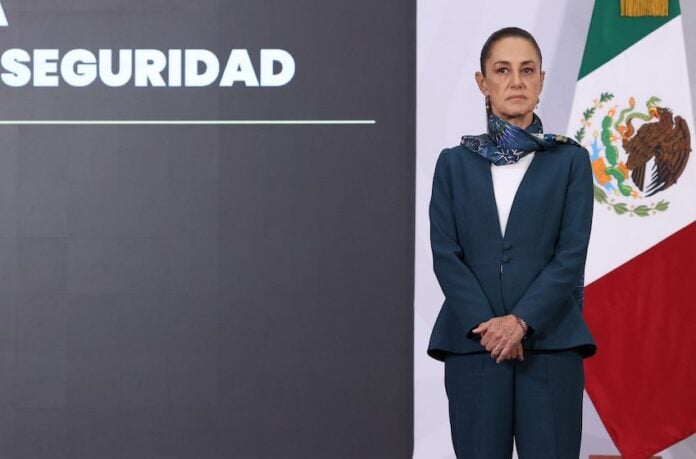
At President Sheinbaum’s Tuesday mañanera, security officials presented the latest data on homicides, arrests and drug seizures.
Reducing organized crime and homicides is one of the central challenges of the federal government.
The monthly security update provides the government with the opportunity to demonstrate the progress it has made in that respect — and on Tuesday, the security results presented were indeed impressive.
However, it should be noted that violence remains a major problem in various parts of Mexico, and that the accuracy of the federal government’s homicide numbers — provided by the country’s 32 Attorney General’s offices — has been questioned by experts.
Homicides down 20% in April
National Public Security System chief Marcela Figueroa presented preliminary data that showed there was an average of 52.5 homicides per day in Mexico in April, a reduction of 20.3% compared to the same month of 2025.
Figueroa focused on the larger reduction in homicides — 39.6% — between September 2024, the final month of Andrés Manuel López Obrador’s presidency, and April.
Durante la Conferencia del Pueblo, @Maffiguer, titular del @SESNSP, presentó el reporte nacional de incidencia delictiva con cifras consolidadas al 30 de abril de 2026, con información de las 32 fiscalías estatales. A 19 meses del inicio de la administración de la Presidenta… pic.twitter.com/bjJ7O8qmfH
— Gabinete de Seguridad de México (@GabSeguridadMX) May 12, 2026
“The 40% decline in the daily average of homicides since the beginning of the administration of President Dr. Claudia Sheinbaum Pardo stands out,” she said.
Figueroa also highlighted that there 34 fewer homicides per day on average in April than in September 2024. She said that last month had the lowest number of homicides of any April since 2016.
Figueroa also presented data that showed that there was an average of 51.2 homicides per day in the first four months of 2026, an annual reduction of 30%.
Chihuahua and Guanajuato were the most violent states in April
Figueroa reported that 53% of the 1,575 homicides recorded in Mexico last month occurred in eight states.
Chihuahua and Guanajuato recorded the equal highest number of homicides last month, with 129 murders in each state.
Ranked third to eighth for total homicides in April were:
Morelos: 112
Baja California: 101
Sinaloa: 101
México state: 90
Veracruz: 88
Guerrero: 84
There were 75 homicides in Mexico City last month, the 11th highest total among the 32 federal entities.
Yucatán and Baja California Sur recorded the fewest homicides, with just two murders in each state in April.
Homicides declined more than 80% in SLP in first 4 months of 2026
Figueroa also reported that homicides declined in 26 entities in the first four months of 2026 compared to the same period of last year.
The five states with the largest decreases in homicides were:
San Luis Potosí: -80.8%
Zacatecas: -61.8%
Quintana Roo: -60.3%
Guanajuato: -57%
Nuevo León: -50.8%
Figuero didn’t report the total number of homicides in those states between January and April.
More than 50,000 arrests since Sheinbaum took office
Security Minister Omar García Harfuch presented data that showed that 52,628 people were arrested for allegedly committing high-impact crimes such as murder, extortion and kidnapping between Oct. 1, 2024 — the date Sheinbaum was sworn in as president — and April 30.
The data he presented also showed that authorities seized 391.7 tonnes of illicit drugs and 28,031 firearms in the same period.
En la Conferencia del Pueblo se presentaron avances en materia de seguridad, resultado de la coordinación permanente entre las instituciones que integran el Gabinete de Seguridad, bajo el liderazgo de la Presidenta @ClaudiaShein. Estos resultados reflejan el fortalecimiento de… pic.twitter.com/WbO5ru2Ya5
— Gabinete de Seguridad de México (@GabSeguridadMX) May 12, 2026
In addition, the army and navy dismantled 2,337 clandestine methamphetamine laboratories in 22 states, García Harfuch said. The dismantlements prevented the sale and use of “millions of doses” of meth, he said.
“We’re waiting for a response from the State Department,” he said.
Sheinbaum has endorsed the view of the Federal Attorney General’s Office and the Ministry of Foreign Affairs that there is currently insufficient proof to detain Rocha and the other suspects.
Rocha, who has taken leave as governor, and the other defendants deny the accusations leveled against them, including that they colluded with the Sinaloa Cartel.
García Harfuch said Tuesday that the government hadn’t “detected” any illicit conduct by Rocha, and asserted that there had never been any “impediment” to the carrying out of federal security operations in Sinaloa.
By Mexico News Daily chief staff writer Peter Davies (peter.davies@mexiconewsdaily.com)
Guanajuato Education Minister Luis Ignacio Sánchez said that the decision taken on Monday to follow the original 2025-26 school year calendar was "unanimous." (Camila Ayala Benabib/Cuartoscuro)
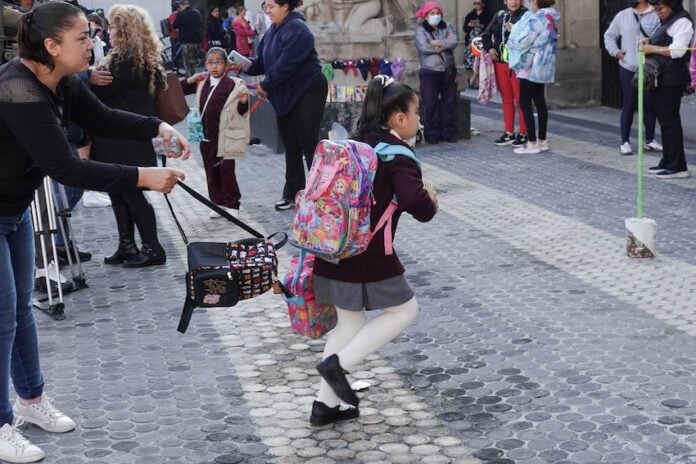
After a lengthy meeting on Monday with federal education officials, including Education Minister Mario Delgado, state education ministers told reporters that an agreement was reached to keep July 15 as the final day of the current school year.
Delgado subsequently confirmed that the school year would end on July 15, saying that the agreement reached by Mexico’s 32 federal entities seeks to guarantee students’ right to a comprehensive education.
According to a version of the agreement seen by the newspaper Reforma, adjustments to the school year could still be made on a state-by-state basis based on local conditions. Delgado confirmed that this was the case, saying that logistics related to the staging of FIFA men’s World Cup matches and weather conditions could lead the federal government to make adjustments in consultation with state education authorities and in accordance with the General Education Law.
Guanajuato Education Minister Luis Ignacio Sánchez said that the decision taken on Monday to follow the original 2025-26 school year calendar was “unanimous.”
Campeche Education Minister Víctor Sarmiento said that the opinions of citizens had been taken into account.
“Of course we’ve listened to all the voices of the people of Mexico,” he said.
The Education Ministry’s announcement last Thursday that the school year would end almost six weeks early due to the staging of 13 World Cup matches in Mexico and hot weather triggered an immediate backlash. Only three Mexican cities — Mexico City, Guadalajara and Monterrey — will host World Cup matches, while the school year hasn’t previously been shortened due to climatic conditions, not even in 2024, the hottest summer on record since 1880.
President Sheinbaum initially voiced her opposition to the shorter school year on Friday before defending Education Minister Mario Delgado (R) on Monday. A fierce public outcry over the plan likely influenced its reversal. (Moisés Pablo/Cuartoscuro)
Last Friday, President Claudia Sheinbaum questioned the wisdom of an early end to the academic year, and declared that a new school calendar had not been drawn up — even though the SEP had already published an updated calendar showing that the school year would end on June 5.
Delgado subsequently said that education ministers would review the decision on Monday, while insisting that the school year would indeed end on June 5. Sheinbaum’s opposition to the early end to the school year — expressed amid widespread backlash to SEP’s announcement — appeared to be a factor in the decision to scrap the plan to cancel classes beyond the first Friday in June.
“Classrooms are kept open without a pedagogical purpose, just to comply with a count [of school days]. Teachers’ dignity is detracted from and school becomes a forced stay,” he said.
Whether that is the case or not, the decision Delgado announced last Thursday was overridden on Monday.
Millions of working parents across Mexico — many of whom would have had to make alternative arrangements for their children if the school year finished 40 days earlier than anticipated — will no doubt be relieved that it was.
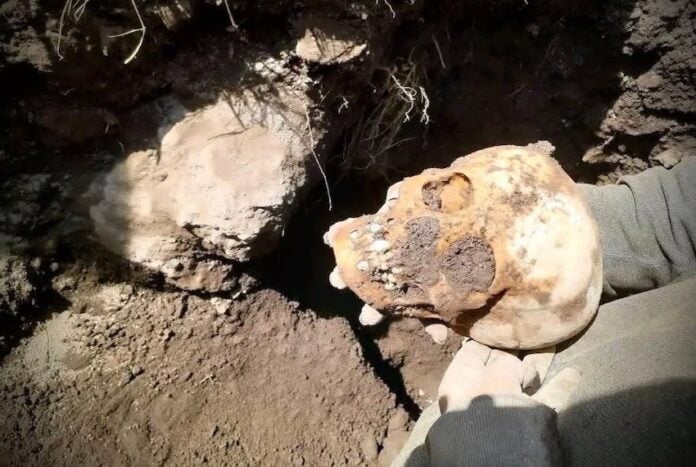
Looting at the Los Tlateles site in México state is so pervasive that it is estimated that 70% of the pre-Columbian artifacts sold on Facebook Marketplace and Mercado Libre are from there. (Imagen Oaxaca)
Archaeologists and nearby residents have been intensifying calls for intervention at an archaeological zone in México state where they say looting and destruction have continued unabated.
The site, Los Tlateles, consists of about 150 mounds (tlalteles) built on the former Lake Chalco — but it has never been declared a protected archaeological zone.
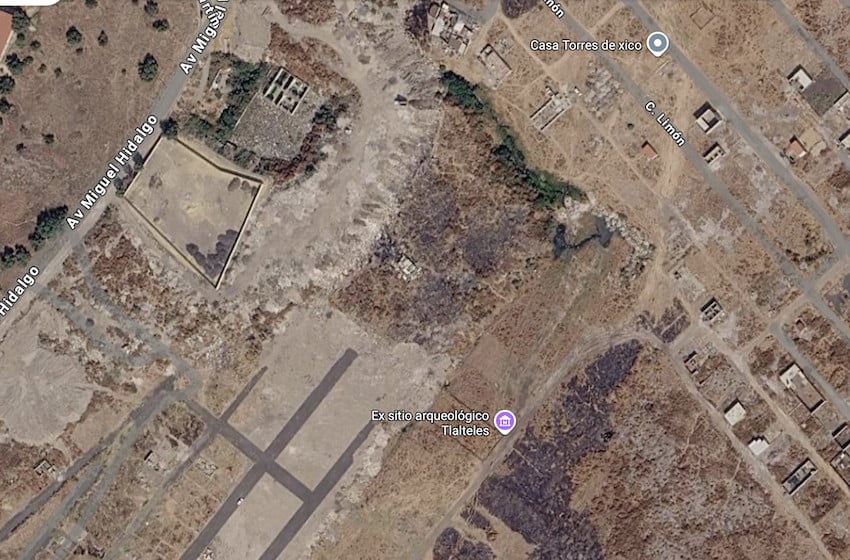
Once covering more than 200 hectares, the Los Tlateles site is down to 10 or 20 hectares, thanks to illegal land sales and settlements. (Google Maps)
Moreover, members of the local community have filed amparos (legal injunctions) against INAH that prohibit archaeologists from accessing the site.
With that as the backdrop, the labor union representing INAH academics, researchers and archaeologists condemned the looting in a statement last week on social media, according to the newspaper Excélsior.
Archaeologist and independent researcher Ricardo Arredondo estimated that approximately 70% of pre-Columbian pieces sold on some online sites — such as Facebook Marketplace and Mercado Libre — come from Los Tlateles.
Ceramics, bones and sculptures are stolen on a near-daily basis, according to the citizen group Frente Común Tlalteles, which stated on Facebook that “the authorities’ inaction has caused irreparable damage.”
Meanwhile, the INAH union’s Commission for the Protection and Legislation of Archaeological, Historical and Paleontological Heritage specifically called out Salvador Pulido, INAH’s director of archaeological salvage, and Nahúm Noguera, INAH México state center director.
Those two men, the commission contends, are responsible “for all the damage and looting caused to the archaeological heritage, since they have failed to act in accordance with current legislation and, in some cases, have authorized works to the detriment of archaeological and historical monuments.”
According to La Voladora Noticias, the news arm of a radio station in México state, history and archaeology influencer Señor Blue (real name Yaotzin Nell Mejía) has documented irregular excavations in videos.
These reportedly show bone fragments, pottery and skulls with stone inlays in teeth, possibly indicating high-ranking burials.
The site once covered more than 200 hectares but has been reduced to between 10 and 20 hectares due to illegal land sales and settlement, Excélsior reported. Arredondo said the site’s occupation spanned from 2050 BC to 1521 AD and was a precursor to chinampa systems (artificial islands built in shallow lakes, with canals running in between) later used in the Aztec capital Tenochtitlán, precursor to Mexico City.
The undated post argues that Los Tlateles is being severely damaged by unauthorized development and looting on ejido (communally held) land, and that court injunctions, vandalism and internal legal shortcomings have hamstrung INAH’s ability to enter, protect and legally defend the site.
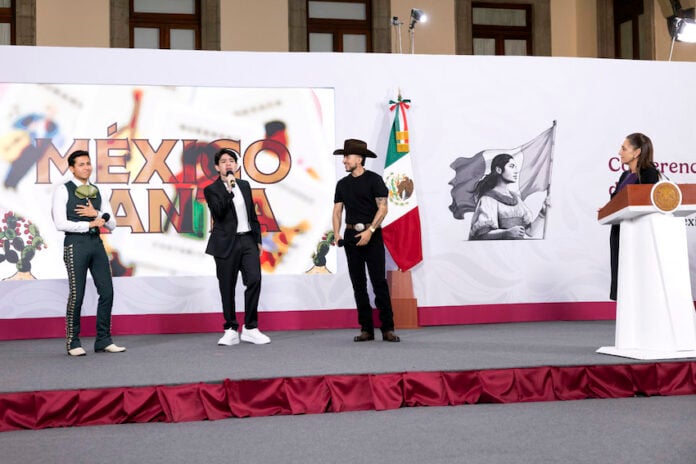
Monday’s announcement featured performances by Sergio Maya, the winner of the inaugural México canta contest last year (left) and Junior H (center). (Gabriel Monroy/Presidencia)
President Claudia Sheinbaum on Monday announced a second edition of México canta (“Mexico Sings”), a binational music competition sponsored by the government that aims to promote peace, combat addiction and foster a culture that rejects the glorification of violence.
“We start from the conviction that culture and music transform lives, build community and generate peace,” Culture Minister Claudia Curiel de Icaza said during a presentation at the National Palace.
El cantante Junior H interpretó su éxito “Y Lloro” durante la #MañaneraDelPueblo encabezada por la presidenta Claudia Sheinbaum
La presentación también contó con la participación de dos ganadores de la edición 2025 de “México Canta” pic.twitter.com/oEAbCnaidN
— La Resistencia Aguascalientes (@Resistenciags) May 11, 2026
The competition is open to young Mexican and Mexican-American artists (18 to 29 years old) and encourages new musical narratives focusing on love, tradition and culture.
Monday’s announcement featured performances by Sergio Maya, the winner of the inaugural México canta contest last year, and Junior H, a prominent Mexican singer-songwriter and pioneer of corridos tumbados (a modern subgenre of Mexican regional music that blends traditional corrido narratives with urban influences like trap, hip-hop and rap).
Junior H and Majo Aguilar, a Mexican singer-songwriter and a two-time Latin Grammy nominee, were presented as supporters of the competition.
After his performance,Junior H spoke about the social responsibility of artists to create positive impacts on young listeners while urging them to “trust in their talent.”
For his part, the 21-year-old Maya said México canta represents an unprecedented opportunity for young composers and singers to share positive messages through music.
“In the recent past, it was difficult to find spaces where new narratives of love, romance and unity could be presented beyond the family environment,” he said. “Promoting new messages through music can serve to strengthen pride in being Mexican and change the negative perception frequently heard about the country.”
Registration for this year’s edition of México canta is open to soloists, duos and ensembles through June 10. About 15,000 artists registered to compete in México canta 2025.
Fourteen performers — seven from the U.S. and seven from Mexico — will be selected in late July for the televised semifinals which will be held at the Million Dollar Theater in Los Angeles on Aug. 23 and the Ángela Peralta Theater in Mazatlán, Sinaloa, on Aug. 30.
Three finalists — chosen via direct voting by the public and guest artists — will advance from each semifinal. A seventh finalist will be presented on Sept. 6 during a televised recap of the semifinals.
The finals will be held on Sept. 13 at Mexico City’s Auditorio Nacional.
In addition to earning the opportunity to produce an album with the professional support of the Mexican Music Council, the three winners will be invited to perform at the Independence Day celebrations on Sept. 15.
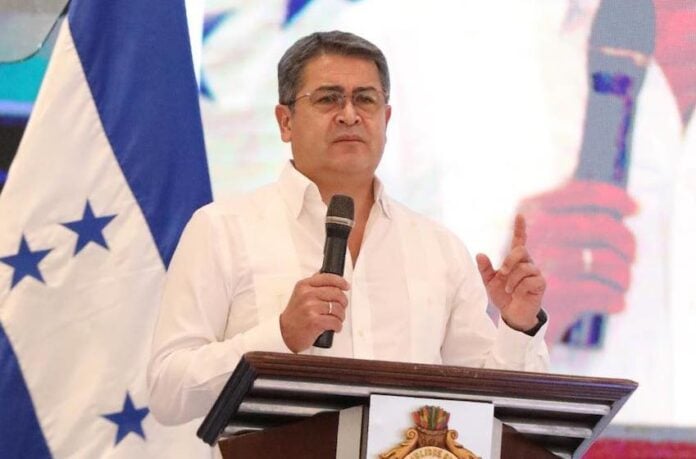
Juan Orlando Hernández, the former president of Honduras who was pardoned by U.S. President Donald Trump after being sentenced to 45 years in prison for drug trafficking, is accused by the media outlet Diario Red of being the prime mover in a right-wing plan to destabilize the government of Mexico and other Latin American nations through disinformation. (Juan Orlando Hernández/Facebook)
Leaked audio recordings suggest U.S. President Donald Trump, the Israeli government and Argentine President Javier Milei have teamed up to spread fake news in an effort to destabilize Mexico and other progressive left-leaning Latin American governments.
The allegations — first published by the Spanish digital newspaper Diario Red in late April — also point to former Honduran president Juan Orlando Hernández, current Honduran President Nasry Asfura and his vice president, María Antonieta Mejía, as well as the president of the Honduran Parliament, Tomás Zambrano.
The Spanish digital newspaper Diario Red included Argentine President Javier Milei among the current and former heads of state participating in the alleged disinformation scheme. (Facebook)
Hernández is considered the key cog in the alleged disinformation plot, described as a network of opaque financing and psychological warfare operations whose aim is to undermine the administrations of Claudia Sheinbaum in Mexico, Lula da Silva in Brazil and Gustavo Petro in Colombia.
So far, the accusations have swirled mainly around the internet, with little attention given to them by mainstream media and no notable official investigation. President Sheinbaum herself seemed unmoved by the possibility of a multinational smear campaign aimed directly at her, declaring, according to El País, “It won’t affect us, not at all.”
According to the investigation conducted by Diario Red, audio recordings from Jan. 30, 2026, reveal that Hernández requested US $150,000 of Honduran public funds to establish a digital journalism unit in the United States with the intention of spreading misinformation about Sheinbaum and other heads of state he considered leftist.
Diario Red says the office aims to mass-produce fake news and fear narratives that could pave the way for political and military interventions, which would complement Trump’s threats of ground interventions in Mexico.
The plot purportedly has the support of Israeli Prime Minister Benjamin Netanyahu, who lobbied Trump to grant Hernández a pardon, and sectors of the global far right.
Trump pardoned Hernández on Dec. 1, 2025, eight months after the latter had been sentenced to a 45-year prison term in New York for drug trafficking.
The price of this pardon, according to Diario Red, is turning Honduras into the base of operations for the MAGA-Milei-Netanyahu axis in the region.
Pie de Página, an independent Mexican media outlet, earlier this month described Hernández’s pardon as “the purchase of a regional henchman to finance attacks against Mexico and Colombia without sovereign restrictions.”
In the leaked recordings revealed by Diario Red, Asfura — who was endorsed by Trump ahead of the Nov. 30, 2025, elections in Honduras — agreed to transfer funds to Hernández “from a friend’s account,” before asking what the money was for.
Hernández allegedly replied: “We’re going to set up an intelligence cell … in the United States, so they can’t track us in Honduras.”
The revelations indicate direct contact with former U.S. intelligence officials to carry out a purge within Honduran institutions.
The underlying reason for this conspiracy is material, according to Pie de Página, reporting that Mexico is being targeted because of its strategic resources, such as lithium.
Asfura, who was in the U.S. last week, has not commented on the scandal, while Zambrano — the leader of the Honduran Parliament — insists the audios are fake.
On Friday, Diario Red reported that its website, which was given the scandal-implying name of Hondurasgate, suffered nearly 40,000 attempted cyberattacks on May 7, “with a concentration of vectors originating primarily from the United States and Israel.”
Mexico's 16.3% share of total U.S. trade is a record first-quarter high for Latin America's No. 2 economy. (Unsplash)
Trade between Mexico and the United States accounted for 16.3% of the United States’ total trade in the first quarter of 2026, according to U.S. data, confirming that the two countries remain each other’s largest commercial partner.
Trade between Mexico and the U.S. totaled US $231.3 billion between January and March, according to data published last week by the U.S. Census Bureau and the U.S. Bureau of Economic Analysis. The figure represents an increase of 7.4% compared to the first quarter of 2025.
Mexico’s 16.3% share of total U.S. trade with all countries around the world ($1.42 trillion) is a record first-quarter high for Latin America’s No. 2 economy.
Canada ranked as the United States’ second-largest commercial partner in the first quarter of the year, with trade between those two countries accounting for 12.4% of total U.S. trade.
China ranked third, with China-U.S. trade accounting for 6.2% of the United States’ total trade between January and March.
While trade between Mexico and the United States increased 7.4% in the first quarter, trade between the U.S. and Canada fell 10.6% and trade between the U.S. and China decreased 34.4%.
Trade between the U.S. and Taiwan increased 79.1% annually in the first quarter, but their total trade is only around one-third of that between the U.S. and Mexico.
The U.S. Census Bureau data shows that Mexico’s exports to the United States were worth a record-high $138.03 billion in the first quarter of 2026, a 5.1% increase compared to the same period of 2025. While a strong result, the year-over-year increase was well short of the 17.9% annual rise in Mexico’s total export revenue between January and March.
Mexico’s exports to the U.S. in March were worth a record high $51.2 billion, a 6.7% year-over-year increase.
One export category in which Mexico recorded very strong growth in the first quarter of the year was advanced technology products, including computers. Mexico’s export of such products to the U.S. between January and March generated revenue of $42.82 billion, a 35.2% increase compared to a year earlier.
By contrast, revenue from Mexico’s export of motor vehicles and parts to the U.S. declined 11.3% annually in the first quarter to $38.05 billion. The decline was largely due to the United States’ imposition of tariffs on light, medium and heavy vehicles made in Mexico.
The vast majority of Mexican-made tech products enter the United States tariff-free under the terms of the USMCA, even though a significant proportion of their inputs are imported by Mexico, especially from Asian countries. Mexico’s export of advanced technology products to the U.S. in the first quarter of 2026 was 12.5% more lucrative than the export of motor vehicles and parts to the same market.
Mexico had 16.9% share of US market for imports in Q1
Mexico’s exports to the U.S. between January and March accounted for 16.9% of the United States’ total outlay of $816.49 billion on imports.
Canada’s share of the U.S. market for imports was more than five points lower at 11.2%. China’s share was 7.4%.
Mexico’s imports from the US increased 11% in Q1
Mexico’s imports from the United States were worth $93.26 billion between January and March, an increase of 11% compared to the first quarter of 2025.
Thus, U.S. exports to Mexico grew at more than double the pace of Mexican exports to the U.S.
Mexico was the largest importer of U.S. goods in the first quarter of the year. Its expenditure on U.S. imports accounted for 15.5% of the United States’ total export revenue in the period.
Mexico’s trade surplus with the United States in the first quarter of 2026 was $44.76 billion, a 5.3% decrease compared to its surplus with the U.S. in the same period of last year.
Just over a year ago, President Claudia Sheinbaum and U.S. President Donald Trump agreed to work to narrow the trade imbalance between Mexico and the United States. Trump has cited the United States’ trade deficit with Mexico as one reason for his decision to impose tariffs on Mexican goods. The month before he commenced his second term, he suggested that Mexico should become a U.S. state due to its trade surplus with the United States.
However, last month, U.S. Trade Representative Jamieson Greer said that the U.S. is more concerned about its trade deficit with China than its trade deficit with Mexico. The United States’ outlay on imports from China declined more than 40% annually in the first quarter, while its deficit with the East Asian economic powerhouse fell 52.7% to $33.49 billion.