Home Blog Page 2119

More tourism infrastructure coming to Riviera Nayarit

0
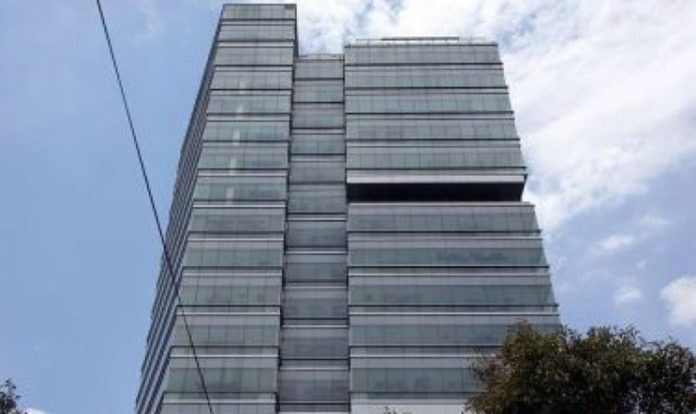
The Kyrstal Grand Nuevo Vallarta opened last year.

After a successful 2017 the Riviera Nayarit region is looking forward to further growth.

Riviera Nayarit is a 300-kilometer or so stretch of coastline in Nayarit state between the historic port of San Blas and the Banderas Bay in Nuevo Vallarta, adjacent to the resort town of Puerto Vallarta, Jalisco.

Tourism generated nearly US $200 million last year for the region, a 300-kilometer stretch of coast in the state of Nayarit. Hotel occupancy rates remained above 80%, while high-end properties saw levels of more than 90% on average, reported the travel website Travel Pulse.

“Riviera Nayarit is a destination like no other,” said Marc Murphy, managing director of Riviera Nayarit Convention & Visitors Bureau. “Our versatility and distinct appeal have translated into recent success for our pristine destination, from resort town Nuevo Vallarta to the historic village of San Blas, celebrity haven Punta de Mita, surfing mecca Sayulita, and everything in between.”

Several new properties opened in 2017, including the 480-room Krystal Grand Nuevo Vallarta, home to the largest convention center in the city.

Also last year, Grupo Autofin Monterrey inaugurated the Grand Sirenis Matlali Hills Resort & Spa, and Marival Group expanded its offerings with the opening of MozzaMare Casual Beach Gourmet, created for guests of Marival Residences Luxury Resorts.

Tourist infrastructure will continue to grow during the remaining half of 2018 with the opening of the region’s first Fairmont property at the Costa Canuva development, which will be home to five new hotels and more than 7,000 guest rooms.

Other projects under way is a Cirque du Soleil theme park that will offer evening shows for as many as 5,000 spectators. The Rosewood Mandarina is also scheduled to open next year, with 130 guest rooms, suites and villas.

The Grand Sirenis Matlali is expected to open the second stage of its development and Iberostar is on track to open a property in Litibu.

There are two developments in Punta de Mita readying for a 2019 debut: the Auberge Resort Collection’s Susurros del Corazon and Conrad Hotels & Resorts’ redesign of the former La Tranquila Resort, Conrad Playa Mita.

Finally, One&Only Mandarina will debut both its residences, One&Only Mandarina Private Homes, and the One&Only Mandarina Resort.

AMResorts recently announced plans for two resorts: Dreams Punta de Mita Resort and Spa and Secrets Punta de Mita Resort and Spa, both scheduled to open in 2020.

Source: TravelPulse (en)

In 9 municipalities, gun-related homicides up more than 100%

0
homicides with weapon
Tepic topped the list. snsp/milenio

Of Mexico’s 30 most violent municipalities in the first four months of 2018, homicides committed with firearms increased by more than 100% in nine of them, according to statistics from the National Public Security System (SNSP).

Tepic, Nayarit — where there were 59 gun-related homicides between January 1 and the end of April — experienced the largest spike with a 555% increase.

In the same four-month period last year, there were just nine such murders in the state capital.

Violent crime, including clashes between opposing drug cartels, has surged in Nayarit since the arrest of former state attorney general Édgar Veytia in San Diego, California, in March 2017 for alleged links to organized crime.

There was a total of 92 intentional homicides committed with firearms in the small Pacific coast state in the first four months of this year compared to 19 in the same period of 2017.

After Tepic, two municipalities in Guanajuato — Irapuato and Salamanca — recorded the second and third largest increases respectively.

In the former, which is known as Mexico’s strawberry capital, there were 78 homicides committed with firearms to the end of April, or 387% more than the 16 cases reported in 2017.

In Salamanca, where six traffic police were shot dead earlier this month, there were 55 gun-related murders, 358% more than the 12 cases recorded between January 1 and April 30 last year.

More than 1,000 people were murdered in Guanajuato in the first four months of 2018, making the central Mexican state the most violent in the country so far this year.

High levels of violence continued in May with a further 256 homicides in the state, according to a count by the newspaper Milenio.

A high percentage of the cases are believed to be linked to pipeline petroleum theft, with competing gangs of thieves known as huachicoleros fighting each other for control of the lucrative illegal fuel trade.

After 59 people were murdered during a five-day period last month, state Attorney General Carlos Zamarripa said that 85% of the homicides were related to “in one way or another” to petroleum theft.

Homicides in the municipality of Benito Juárez, Quintana Roo — which includes the resort city of Cancún — rose by 300% to 88, while San Pedro Tlaquepaque, located in the metropolitan area of Guadalajara, recorded the fifth highest increase, with a 272% upsurge.

The other four municipalities where the gun-related homicide rate more than doubled in the four month period are Silao, Guanajuato, by 241%; Reynosa, Tamaulipas, by 200%; Celaya, Guanajuato, by 127% and Guadalajara, Jalisco, by 117%.

The tenth municipality on the list is Tijuana, Baja California, where the number of homicides committed with firearms rose by a less dramatic 73%.

However, of the 15 municipalities that experienced the biggest spikes, the northern border city recorded the highest raw number of homicides from January to April with 510.

The figure is five times higher than the 102 recorded in Guadalajara, which recorded the second highest raw number.

In per-capita terms, SNSP data released last month showed that Tecomán, Colima, was the most dangerous municipality in the country followed by Zihuatanejo, Guerrero and Taxco in the same state.

Source: Milenio (sp)

Former ambassador slams Trump immigration policies

0
Jacobson: 'un-American policies.'

The former U.S. ambassador to Mexico has slammed President Donald Trump’s immigration policies, calling them “un-American” and counterproductive.

“Unless the administration can address the reasons why migrants from Mexico and Central America are coming to the U.S., no amount of draconian and frankly, un-American policies, as I believe these are, is really going to make a permanent difference,” Roberta Jacobson told National Public Radio’s Weekend Edition.

Instead, she said, the updated policies “may affect our own standing in the world and certainly in the region.”

The U.S. has come under widespread criticism for separating migrant children from their parents when they are detained at the Mexican border. Nearly 2,000 were separated from their families during a six-week period in April and May.

Jacobson was ambassador from March 30, 2012, to May 5, 2016. During that time, she said, her country’s approval rating in Mexico dropped by more than 30%.

In the end, Jacobson said, “it is very difficult to see how these policies either help the United States or the countries from which the migrants are coming.”

The administration has also changed asylum laws so that people fleeing domestic and gang violence are no longer eligible to apply for asylum.

The policies have been widely criticized by lawmakers, advocacy groups, medical experts and religious leaders.

Source: The Hill (en)

Mexico scores big 1-0 upset over Germany in its first World Cup match

0
Ochoa makes a big save against Germany yesterday.

Mexico caused the biggest upset so far of the 2018 FIFA World Cup soccer tournament by defeating defending champions Germany 1-0 in Moscow yesterday.

In a packed Luzhniki Stadium with an estimated 30,000 Mexicans in attendance, 22-year-old winger Hirving Lozano slotted a low shot past the diving German goalkeeper and into the back of the net in the 35th minute of the match, sending the thousands of Mexican fans present and millions back home into raptures.

In Mexico City, the simultaneous jumping in jubilation of millions watching in their homes, bars, restaurants or the capital’s central square known as the zócalo was so fervent that it caused an “artificial earthquake” just seconds after Mexico took the lead in the Russian capital.

The Institute of Geological and Atmospheric Investigations said that highly sensitive earthquake sensors detected tremors at two sites in Mexico City “possibly because of mass jumping.”

Back in Moscow, chants of “sí se puede,” or yes we can, rang out around the stadium as Mexican fans started to believe that the beloved national team known as El Tri could indeed complete an unlikely victory.

And in the end, they did. But the win didn’t come without several moments when Mexican supporters had their hearts in their mouths.

Just three minutes after Lozano’s impressive goal — set up by a deft pass from Mexico’s most famous football export Javier “Chicharito” Hernández — the Germans came very close to equalizing with a free kick, but Mexican goalkeeper Guillermo Ochoa managed to get a touch on the ball and push it onto the top bar to save the day.

There were more anxious moments in the second half as Mexico’s goal came under repeated threats from Germany but the determined Mexican side continued to hold off the reigning champions, who hadn’t lost an opening game in a world cup since then-West Germany was beaten by Algeria in 1982.

The victory was a redemption of sorts for the team’s Colombian coach, Juan Carlos Osorio, who has been widely criticized by pundits and a football-loving public for his tactics and management of the national team, but analysts praised Mexico for the pace of their attack.

In an on-field interview after the match, Osorio said that “all the credit” went to the players because “we designed a plan and executed it very well.”

The goal-scorer Lozano said, “I don’t know if it’s the biggest victory in [Mexico’s] history, but it’s one of the biggest for sure.”

Judging by the euphoric celebrations that broke out across the country, the significance of the win to the people of a country where rising levels of violent crime and the upcoming presidential election have dominated the news in recent times cannot be underestimated.

In Mexico City, around 20,000 fans gathered to celebrate the victory at the Angel of Independence monument on the capital’s most famous boulevard, Paseo de la Reforma.

For hours after the referee blew the final whistle, revelers chanted passionately, belted out the famous song Cielito Lindo, danced in the streets, drank beer and tequila and dared to dream that just maybe 2018 could be the year that Mexico goes further than it has ever gone before in a world cup.

“I am incredibly happy,” said one fan who went to the Angel monument with his girlfriend and son as part of a Father’s Day outing. “It’s a double gift: Mexico won and I get to celebrate with my son.”

A 54-year-old housewife who also rushed to join in the festivities told the New York Times that celebrating the win was a cathartic experience.

“This victory matters because it gives us the opportunity to express the joy we all carry inside as Mexicans, which we were unable to release and express due to all the bad news, the politics [and] the natural disasters,” Lucía Colunga said.

“We are here to let out all of that happiness that we have bottled up,” she added.

President Enrique Peña Nieto also celebrated the victory, writing on Twitter: “Confirmed: Mexico competes and wins against the best in the world. Many congratulations to @miseleccionmx! Great game!”

Millions more Mexicans lauded El Tri’s performance on social media and shared memes that took a humorous look at the triumph.

One which circulated widely showed a photograph of German Chancellor Angela Merkel with a telephone to her ear accompanied by the text: “Donald? It’s me Angela. Please build the wall.”

Mexico will take on South Korea in its second first-round match in Rostov-On-Don at 10:00am Saturday.

Source: Milenio (sp), Reuters (en), The New York Times (en)

Four years on and it’s time for a change at Mexico News Daily

0
mexico news daily front page

Four years on and we’re still plugging away here but having fun, too. In fact, publishing a newspaper — for me — has never been so much fun.

It’s a great job and a great business, particularly if you can show a profit at the end of the year.

Which we are not.

Mexico News Daily was born in June 2014 in the spare bedroom of a house in Puerto Escondido, Oaxaca. I had a computer, an internet connection and enough knowledge of WordPress to be able to throw together a site (it was, admittedly, a bit of a mess behind the scenes) and launch.

I had read somewhere there were 1 million expats from the United States living in Mexico.

Back in the days when I published a weekly community newspaper, 90% of adults in our community were readers.

So, my thinking went, if I can get 10% of those expats to read a newspaper with Mexican news in English we should do all right; 90% would be fantastic but unlikely.

Well, we attracted rather more than 100,000 readers — we had 400,000 in May — but I was naïve. Those numbers are nothing in digital publishing. They are not enough to generate the advertising revenues we need to be in the black. It was time for a change.

I decided well over a year ago that I would do two things in the next six months: redesign the site and initiate a metered paywall.

In the end it took some 18 months to reach the stage where we are today, and now comes the moment of reckoning: now that we’ve built this thing will they come — and pay to do so?

I say we’ve built this thing but in fact we haven’t finished the building: we need revenue to do that.

There are three of us here at Mexico News Daily and we ought to be at least six. That’s three more writers.

With additional editorial staff we can finally do what I really want: publish original content that will give us desperately needed balance in coverage.

Our email newsletter, Mexico News Today, has long been a reliable bellwether for indicating reader satisfaction. Although subscriber numbers have increased on average by more than 100 a week (to nearly 25,000 now), we have also lost a few — at least 3,000.

Many of those bailed after particularly gruesome, violence-filled issues. We know because many said so when invited to tell us why they were leaving.

Under our current business plan, we curate news from (mostly) Mexican sources. If those newspapers have days where there is little more than cartel murder stories, so do we.

Now it’s time to change that and do what we should be doing: informing our readers with coverage of Mexico news — however bad it might be — but entertaining them too with stories about Mexico. The good stories about the people and the culture that reflect the reasons why so many expats — this one included — live here and love it.

If all goes well, which is not likely considering the near-daily outages of either our phone, internet, electricity or all three, our new subscription service will take effect on Tuesday. Readers will be able to access up to 10 stories in a 30-day period, after which they will be asked to subscribe.

I invite you to stay with us for this next stage. These are interesting times in Mexico and we look forward to covering them, with a new and special emphasis on all the positive stories there are to tell.

—Tony Richards, Editor & Publisher

Click here if you would like to subscribe.

Consultancy identifies emerging tourism destinations

0
The waterfront walkway in La Paz, BCS.
The waterfront walkway in La Paz, BCS. iron roamer

As tourism continues to grow in Mexico, more and more destinations are seeking to attract higher numbers of visitors to compete with established hotspots such as Cancún and Los Cabos and cash in on a lucrative market.

The coastal cities of La Paz and Loreto in Baja California Sur, the Costa Alegre in Jalisco and the Riviera Nayarit are all among the emerging destinations that have experienced strong growth, according to statistics from the federal Tourism Secretariat (Sectur).

Mazatlán, Sinaloa, and Huatulco, Oaxaca, are also seeking to build on their existing tourism markets by attracting new investment in the sector.

“The time [in the sun] has to arrive for coastal areas like La Paz and Loreto, considering the success that Los Cabos already has,” John McCarthy, principal of tourism and real estate consultancy Leisure Partners, told the news website Expansión.

“The Baja California peninsula has a lot more to offer yet,” he added.

In order to develop destinations, McCarthy said, more hotels and entertainment venues are needed.

Visitor numbers to La Paz and Loreto grew by 12% and 26% respectively last year but the number of hotel rooms only increased by 2% in the former city and remained the same in the latter.

McCarthy added that to sustain growth in emerging destinations, tourists need to be drawn from a wider range of source countries as almost 80% of all international tourists to Mexico come from the United States and Canada.

Gustavo Ripol, who along with McCarthy is a founding partner of Leisure Partners, said that four projects in Huatulco will increase the number of hotel rooms in the resort city by 70% over the next few years.

He also said that Mazatlán has managed to reduce the perception of insecurity associated with the city and in turn had managed to increase its visitor numbers.

The city hosted the Tianguis Turístico — Mexico’s largest tourism industry event — in April, while hotel chain Pueblo Bonito and real estate development company Vicasa are planning large-scale developments there.

In Costa Alegre  a series of 43 beaches, capes and bays distributed along the Pacific coast between Puerto Vallarta, Jalisco, and Manzanillo, Colima — more luxury tourism projects similar to the existing El Careyes resort are planned but tourism industry experts say that more transport infrastructure needs to be built in the region because it currently lacks an airport that is nearby and good highways.

Almost 40 million international visitors came to Mexico last year and spent over US $21 billion in the country.

Mexico is now the sixth most visited country in the world and Tourism Secretary Enrique de la Madrid said in February that annual international tourist numbers could reach 50 million by 2021.

Record visitor numbers continued in the first quarter of 2018, testament to de la Madrid’s statement last week that the upsurge in violent crime has not deterred foreign or domestic tourists from visiting Mexico’s beaches, magical towns and largest cities.

Source: Expansión (sp)

NAFTA talks to resume in summer: Canadian minister

0
Guajardo and Freeland: talks to resume in summer.

The process to renegotiate the North American Free Trade Agreement (NAFTA) will resume over the summer, Canadian Foreign Affairs Minister Chrystia Freeland said this week.

“We decided to continue our work in an intensive way over the summer,” Freeland told reporters Thursday after meeting with United States Trade Representative Robert Lighthizer.

“We didn’t set specific dates today [Thursday]. We talked about following up on setting up specific dates for meetings and that is what we are going to do,” she explained.

“All three countries are clear that meaningful progress has been made to date and we need to keep working hard to get to a deal on a modernized NAFTA.”

Canadian media reported that Freeland received the support of several United States senators during the meeting with Lighthizer, including two Republicans.

Republican Senator Bob Corker, who is the chair of the Senate Foreign Relations Committee, later confirmed that the majority of U.S. senators are in favor of renewing NAFTA.

For her part, the minister said the meeting with Lighthizer was “constructive” and explained that its main aims were to set a path towards reaching a deal to continue the 24-year-old trade pact and to discuss and reconcile differences about the United States metal tariffs that were imposed on Canada and Mexico June 1.

Both countries imposed retaliatory tariffs on their neighbor in response.

Freeland also said that she had spoken with Mexico Economy Secretary Ildefonso Guajardo and they had agreed to continue working to reach an agreement regardless of the outcome of the July 1 presidential election.

Following Freeland’s remarks, the president of Mexico’s influential Business Coordinating Council, Juan Pablo Castañón, said the three countries’ technical teams were continuing to work to reach a deal and that only the political will to achieve a deal was stagnant.

United States President Donald Trump has made repeated threats to terminate the agreement and more recently suggested that the U.S. could seek to negotiate separate trade deals with both Mexico and Canada.

However, Castañón said he was hopeful that “internal dialogue in the United States” would lead the Trump administration to reconsider its position and that the three chief negotiators —Guajardo, Freeland and Lighthizer — would sit down to new talks soon.

Following the United States’ decision to impose tariffs on steel and aluminum imports, Mexican President Enrique Peña Nieto and Canadian Prime Minister Justin Trudeau both condemned the move but also reaffirmed their commitment to reaching a new NAFTA deal.

While the announcement of the new metal tariffs and Mexico and Canada’s retaliatory tit-for-tat measures didn’t deliver a knockout blow to an updated agreement, the trade tensions have further complicated a process that was already strained by differences on issues such as rules of origin for the auto industry and the so-called sunset clause.

According to former United States Commerce Secretary Carlos Gutiérrez, the United States’ decision to impose tariffs on its neighbors and allies effectively killed the possibility of reaching a new NAFTA in 2018.

Source: El Financiero (sp)

Orange weather alert in Guerrero as storm sits off coast

0
The tropical storm warning area, between Acapulco and Chacahua lagoon, Oaxaca.
The tropical storm warning area, between Acapulco and Chacahua lagoon, Oaxaca. the weather channel

The Guerrero Civil Protection office has raised its yellow weather warning to orange as Tropical Storm Carlotta continues to sit off the coast, generating steady and sometimes heavy rainfall in both Guerrero and Oaxaca.

Agency Secretary Marco César Mayares Salvador told a news conference this afternoon that Carlotta, which was designated a tropical storm yesterday, had been sitting off the coast of the two states for 72 hours.

Weather forecasts call for rain totaling 100-200 millimeters with totals up to 250 in some locations.

The United States National Hurricane Center’s report at 4:00pm CDT said Carlotta was about 70 kilometers west-southwest of Punta Maldonado, Guerrero, and 115 kilometers southeast of Acapulco.

Rainfall forecasts for today and tomorrow.
Rainfall forecasts for today and tomorrow. the weather channel

It was drifting at two kilometers per hour towards the north and was expected to move inland within the tropical storm warning area — between Acapulco and Chacahua lagoon in Oaxaca — by late tonight or early Sunday.

Maximum sustained winds at the eye of the storm were 85 km/h, but no significant change in strength is anticipated before it makes landfall, likely near or just southeast of Acapulco, when it will quickly dissipate.

Tropical storm-force winds are expected in the warning area into Sunday.

Mexico News Daily

Krispy Krunchy Chicken to open its first Mexican location

0
Opening this month in Mérida.

The United States-based fast food chain Krispy Krunchy Chicken is coming to Mexico, with its first outlet to open this month in Yucatán.

The food service chain that saw record growth in the U.S. last year will open on June 27 in the GoMart Montecarlo mall in the city of Mérida.

Sometimes called gas-station chicken for the fact that its product is sold primarily inside gas stations and convenience stores, Krispy Krunchy Chicken closed 2017 with 509 new stores, bringing its total to 2,294. Most of those are in the U.S.; the company also has a presence in Malaysia and American Samoa.

Last year the it sold 14 million chicken breasts, 24.5 million wings and 20 million thighs.

In Mexico, Krispy Krunchy Chicken will compete with brands such as Pollo Feliz and KFC. The latter has 328 restaurants throughout the country, operated by Premium Restaurant Brands.

According to the market research firm Euromonitor International, the food service market in Mexico recorded year-on-year growth of 3.9% last year, with sales of 819 billion pesos (US $43.4 billion).

The firm also found that the consolidation of convenience stores continued to rise. Of all the fast food companies in Mexico, Oxxo recorded the highest sales and the largest number of locations.

Source: Forbes (sp)

‘Not even fraud can stop me now:’ presidential frontrunner AMLO

0
AMLO on the campaign trail.

The man who appears likely to win the presidential election in two weeks says it will take a miracle to stop him from winning.

Leading presidential candidate Andrés Manuel López Obrador declared yesterday that he is absolutely certain he will win the July 1 election and that not even electoral fraud can stop him.

Only a miracle would allow one of his main rivals, Ricardo Anaya or José Antonio Meade, to become the next president of Mexico, the third-time hopeful said.

“They [Meade and Anaya] already know [I’m going to win], but they’re hoping there may be a miracle . . . only with a miracle [could they win], not even by fraud now,” the Morena party leader told reporters in Colima.

Asked what kind of miracle would have to happen in order for Anaya or Meade to beat him, the political veteran widely known by his initials AMLO declined to explain.

“I don’t want to say because the people [of Mexico] love me a lot and I love them a lot as well. They’re protecting me from above and science is protecting me. That’s all I can say,” he said.

Earlier, López Obrador said that he and his campaign team were in a buoyant mood and charged that it was now “just a matter of waiting” until his inevitable victory.

“. . . We’re taking it step by step, poco a poquito [little by little], like the song,” he said in reference to the hit song Despacito that AMLO said he, his team and supporters will dance to after they triumph on July 1.

Despite his optimism, the candidate for the three-party Together We Will Make History coalition said that he was concerned that state governors hadn’t committed to not interfere in the elections and to respect the decision voters make on July 1.

“[The governors] are very quiet, they’re not committing themselves to defend a [free and fair] vote, they’re involved in campaigning and using money from the budget, not in all cases but in the majority [of cases], they’re involved in the electoral process . . .” López Obrador said.

Meade: hoping for a miracle?

“I’m waiting for them to declare that they are committed to respect citizens’ votes and committed to not carry out electoral fraud and to not use money from the budget . . . to buy votes,” he added.

Apart from electing a new president and federal Congress on July 1, voters in nine states will choose a new governor and thousands more municipal and state-level positions are also up for grabs.

Meanwhile, ruling party candidate José Antonio Meade shared two opinion polls via his Twitter account yesterday that showed that he had moved past Ricardo Anaya into second place.

The first poll — supposedly conducted by the Mexican Business Council (CMN) and disseminated by the journalist David Páramo — showed that AMLO had 44% support on June 5, followed by Meade with 24% and Anaya with 20%.

In addition to publishing a graphic of the poll, which tracked voter intentions starting last November, Meade wrote:

“Here’s the sign that many expected . . . We’re in a clear and ascendant second place and we’re heading firmly towards victory. I ask for your free, conscious, strategic and reasoned vote. I will not fail you!”

In the second “tracking poll” — conducted by a polling company called Innovación Encuestas y Investigación — Meade’s overall support was slightly lower at 23.2% but the margin between him and López Obrador was reduced to just 11 points.

Anaya, of the right-left For Mexico in Front coalition, was again in third place with 20.2% while independent candidate Jaime “El Bronco” Rodríguez dropped one point to 2% backing compared to the first poll Meade shared.

Perhaps significantly, the second poll showed that 20.4% of respondents said that they didn’t yet know who they would vote for, potentially giving Meade ample space to catch the frontrunner.

The polling company said the survey was conducted between May 20 and June 14 with 800 eligible voters and that its margin of error was ± four points.

The polls contrast with other surveys that have consistently shown Anaya in second place with Meade languishing in third.

A poll published by the newspaper Reforma in the last week of May showed AMLO with 52% support, compared to Anaya with 26% and Meade with 19%.

Bloomberg’s poll tracker, last updated on June 8, shows similar results with López Obrador at 50.8%, Anaya at 24.8% and Meade 21.6%.

The Institutional Revolutionary Party (PRI) candidate has failed to gain much traction with voters, perhaps partially because of his largely mild manner but mostly because of his association with a government that has been plagued by corruption scandals and is led by a deeply unpopular president.

However, Anaya too has been damaged by claims of corruption and scrutiny of his alleged involvement in a money laundering scheme has intensified over the past two weeks.

Two recently-released videos allegedly provide evidence of his complicity in the scheme related to real estate purchases and sales in his home state of Querétaro. The federal Attorney General’s office (PGR) continues to investigate the case.

Anaya has repeatedly denied the allegations. He has also accused López Obrador of making a pact of impunity with President Enrique Peña Nieto, which AMLO has rejected.

In contrast, Anaya says that if he wins he will launch a corruption investigation focusing on Peña Nieto’s time in office and if the president is found guilty, he will go to jail.

However, given that election day is just two weeks away and the size of López Obrador’s advantage over his rivals, the likelihood of Anaya or Meade causing an upset and beating López Obrador would seem, barring miracles, unlikely.

Source: El Economista (sp), Milenio (sp)