Home Blog Page 2121

Army, state police take over policing in 3 Morelos municipalities

0
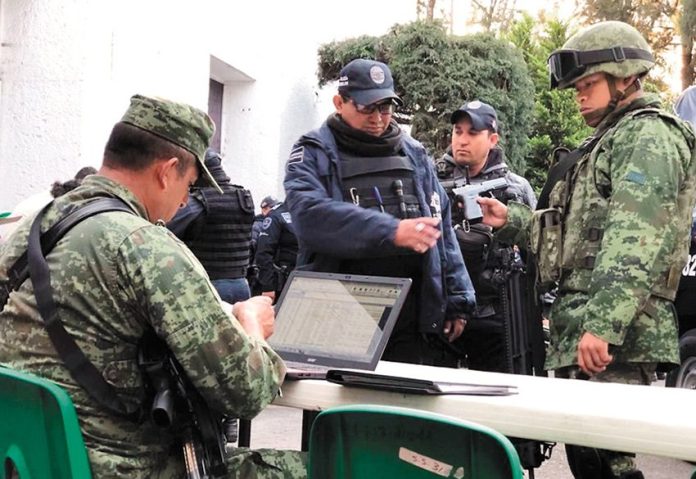
Military officials check weapons of municipal police.

Federal and state security forces assumed responsibility for policing in three municipalities in Morelos yesterday due to suspicions of criminal activities or corruption within the ranks of local police.

Officials are conducting an inspection of the municipal police forces’ weapons and ammunition and reviewing the list of inscribed officers in Jiutepec, Yautepec and Cuernavaca.

The three municipalities are among the most violent in the state.

Military sources said there have been citizen complaints of irregularities in the conduct of Cuernavaca police.

New mayors and other officials were being sworn in this weekend in all three municipalities.

Source: El Universal (sp), El Financiero

Irregularities detected in spending of 3 billion pesos in disaster relief

0
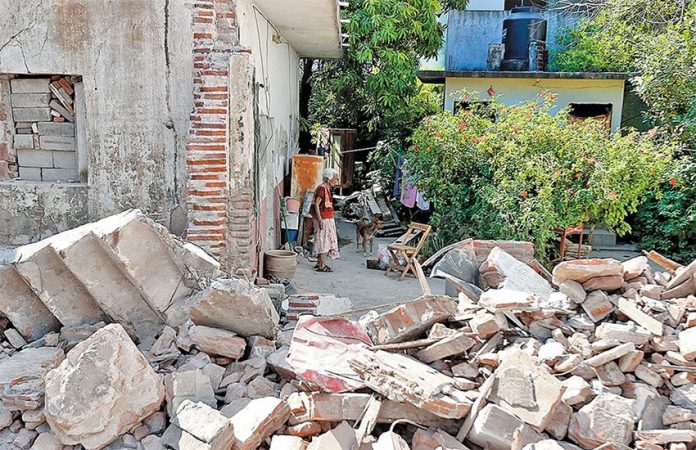
Earthquake damage in Oaxaca.

The spending of over 3 billion pesos (US $159 million at the time) from the national disaster relief fund Fonden in 2017 was administered imprecisely, lacked transparency and suffered irregularities, according to an internal report by the Secretariat of the Interior.

The analysis looked at 10 disaster declarations in which funds were granted to rebuild roads, water, marine, tourism and education infrastructure.

Seven of the declarations were issued in the states of Veracruz and Oaxaca in the aftermath of a hurricane and a series of earthquakes. The OIC also found “imprecise follow-up and supervision of activities related to the allocation [of funding]” because the governments of both states failed to follow new rules.

Before that update, Fonden regulations established that the federal and state governments each contributed 50% of the funding required to rebuild damaged public infrastructure.

The new rule dictates that the Fonden Technical Council must approve the percentage of federal contributions to the disaster relief fund.

The OIC probe found that all 32 states failed to follow the new procedure.

Source: Milenio (sp)

Street vendors in city center despite assurance they wouldn’t be permitted

0
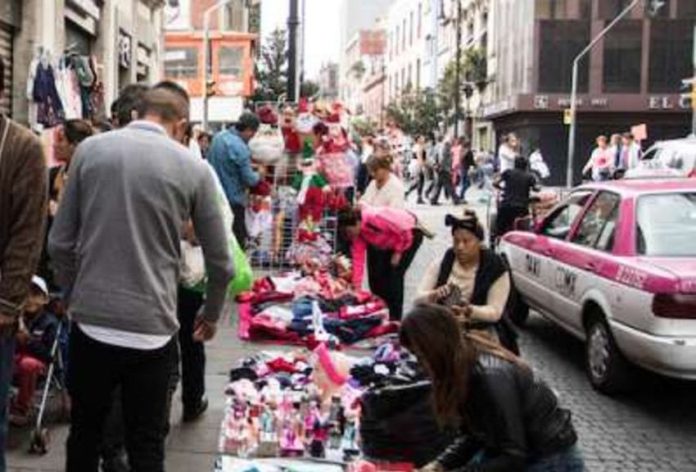
Vendors in Mexico City's historic center.

Street vendors have invaded Mexico City’s emblematic central square despite assurances from the new city government that they wouldn’t be permitted to sell their wares there.

The sellers commonly known as ambulantes or toreros have also recently moved in on other parts of the capital’s historic center where they are ostensibly banned. Those locations include city hall, the crowded pedestrian street Madero and in front of the Palacio de Bellas Artes (Palace of Fine Arts).

According to Mayor Claudia Sheinbaum “the zócalo [the central square] is not open” for informal commerce but the newspaper Milenio reported today that vendors selling there have not been removed by authorities.

Arts, crafts, clothing, toys and food are among the products ambulantes sell either by setting up portable shops or by roaming from place to place.

Police in most cases do nothing to stop the practice unless they have been given specific orders to carry out an operation against it.

The owners and managers of brick-and-mortar establishments claim that the growing presence of the informal economy on the city’s downtown streets is having a negative impact on their businesses.

“It mainly affects us because the street vendors divert attention away from us . . . They’re very insistent with people and they don’t come in here anymore,” the manager of a men’s clothing store on Madero Street told Milenio.

A café employee on the same street said that on occasions when police have tried to crack down on the practice, fights have broken out.

“. . . For businesses that pay taxes, [the situation] is ugly. As far as I know they don’t have permission [to sell here] . . .” she said.

City resident Luz Muñoz said she hasn’t seen the capital’s downtown so crowded and chaotic for years and that the vendors are at least partially to blame.

“. . . You can’t walk because the streets are full, it feels more unsafe and [the street stalls] look bad, especially at Bellas Artes,” she said.

A street sweeper said that the amount of rubbish on the downtown streets has also increased significantly as a result of the high number of hawkers.

In 2007, the former Mexico City government, led at the time by current Foreign Affairs Secretary Marcelo Ebrard, cleared a large area of the downtown of street vendors and in the decade since only small numbers have moved back in.

But with a new mayor in office, the ambulantes have reappeared en masse. Some are demanding that they be given be permanent spaces in the street to set up shop and that the massive informal sector be legally recognized.

Diana Sánchez Barrios, president of an organization that represents informal economy workers, acknowledged that street vendors in the historic center shouldn’t be selling there but argued that they have no other choice.

“People have to go out to earn their bread. . .” she said.

Source: Milenio (sp)

Opium prices plummet, narcos turn to mining and farmers left in poverty: bishop

0
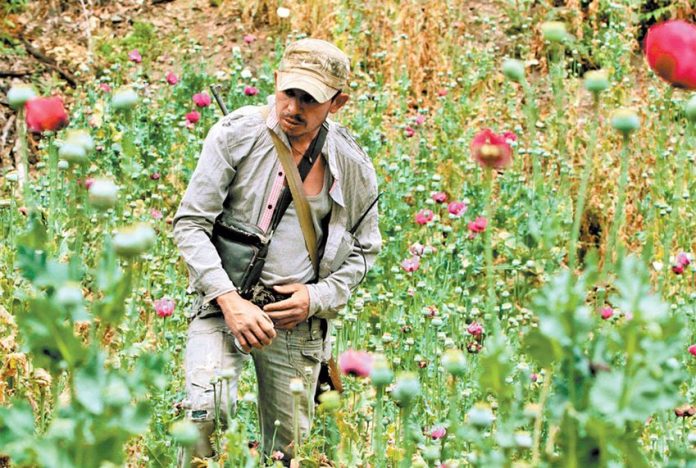
Guerrero farmers have been devastated by the collapse in opium prices.

Drug trafficking gangs in Guerrero are turning their attention to mining as opium gum prices plummet, violence increases and the opioid known as “china white” floods into Mexico, a local bishop says.

Salvador Rangel, bishop of the diocese of Chilpancingo-Chilapa, told reporters this week that cultivating opium poppies is no longer profitable due to the low prices their paste yields.

So they are turning their attention to mines and sawmills.

Turf wars between competing criminal gangs have intensified, Rangel said, as they attempt to seize control of gold and silver mines and lumber mills.

The bishop conceded that the Christmas truce he attempted to broker was unsuccessful.

“As long as drugs, in particular opium gum that is extracted from poppies, doesn’t provide a good profit, the problems will continue,” Rangel said.

Bishop Rangel concedes he was unable to broker a Christmas truce.

“The price fell completely. Three years ago, [opium gum] cost 35,000 or 40,000 pesos [US $1,800 to $2,000] a kilo and now they’re paying 3,500 or 4,000 pesos [US $180 to $200]. The people in the Sierra with whom I have contact don’t want to plant [poppies] anymore, they say simply that ‘it doesn’t maintain us anymore.’”

The bishop said that in mountainous areas of Guerrero, where the cultivation of poppies has supported communities for decades, people are now living in poverty.

“. . . Especially the campesinos [small-plot farmers], who were forced by organized crime to plant [poppies] and sell to a certain group. A lot of murders occurred in Guerrero because one community chose to sell to a different group who paid better,” Rangel said.

“They’re going through an unprecedented situation because of the fall in the price of opium gum and the invasion of china white into Mexico from the United States. It’s an opportune moment for the government to do something to support these people who are very poor. Hunger is the mother of all wars. If only there was economic stability so that there would be social stability,” he added.

Earlier this year, a group of community leaders from the state’s Sierra region appealed to then president-elect Andrés Manuel López Obrador to legalize the cultivation of opium poppies for use in the manufacture of legal pharmaceuticals.

In August, the Guerrero Congress almost unanimously approved a proposal to decriminalize the cultivation of poppies for medicinal purposes but it requires federal support in order for it to become law.

Interior Secretary Olga Sánchez Cordero has said that legalizing drugs is a possibility as part of the quest to bring peace to the country.

Source: Milenio (sp) 

Mexican band records mariachi version of Queen’s Bohemian Rhapsody

0
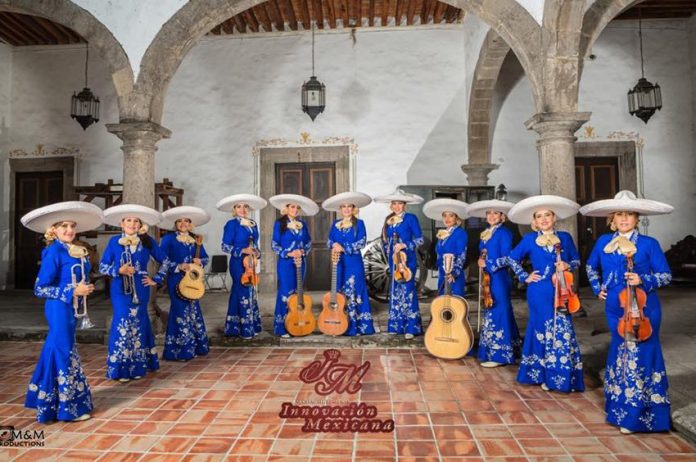
The mariachi band Innovación Mexicana.

An all-female mariachi band from Tlaquepaque, Jalisco, has given Bohemian Rhapsody, the most streamed song of the 20th century, a distinctly Mexican touch.

The 11-member Innovación Mexicana band released their version two weeks ago, a mariachi interpretation of the rock classic, performed with traditional mariachi instruments and a piano.

The 6-1/2-minute video posted to YouTube has earned over 143,000 impressions and overwhelmingly positive comments.

The hit by the band Queen, released in 1975, has been rediscovered by the streaming-era generation thanks in large part to the eponymous film released last month, accumulating a total of 1.6 billion streams on YouTube and Spotify.

Source: Candela (sp), The Guardian (en)

Bohemian Rhapsody mariachi innovación mexicana

Auto industry worried over reopening border to used vehicles from US

0
More used cars are finding their way into Mexico, says the automotive industry.

An auto industry leader has expressed concern that Mexico’s northern border could be reopened to the indiscriminate importation of used cars from the United States.

Guillermo Rosales Zárate, deputy general manager of the Mexican Automotive Dealers Association, said there is pressure to change the policy that regulates the importation of used cars even though “until today it has been successful.”

The pressure comes mainly from lawmakers and authorities in northern states, the news agency Notimex reported.

Rosales charged that abandoning the policy would represent a “very serious blow to the growth of the [auto] industry,” explaining that it would have a negative impact on employment.

He said several other industry groups, including the Mexican Auto Industry Association (AMIA), are also opposed to any move to change the existing policy, which has helped reduce the number of used vehicle imports from a peak of 1.3 million in 2006.

In recent months, Rosales added, efforts to “modify foreign trade rules are allowing [vehicle import] controls to be violated through fraudulent practices.”

Junk cars known as chatarras are brought into the country by importers and auction houses using phony documentation, he said. The policy as it currently stands is supposed to keep such cars out of Mexico.

“The increase in the traffic and commercialization of illegal vehicles in the border area, and even in northern states, is obvious. It’s a phenomenon that we observed decline over the course of 10 years but during 2018, it grew,” Rosales said.

He added that apathy and in many cases complicity on the part of state and municipal authorities in the north of the country had allowed the increase to occur.

He called on the government “to maintain the commitment to not give in to the pressure” to change the used car importation policy.

Around 150,000 used cars are expected to have been imported into Mexico by the end of the year.

Source: Notimex (sp) 

Tourists avoid Acapulco beach contaminated with sewage

0
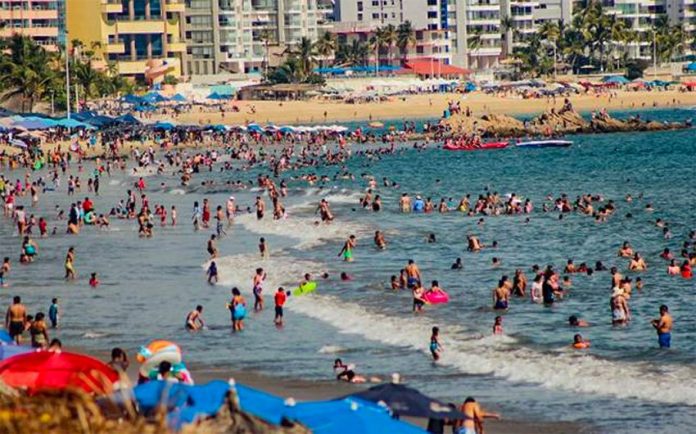
Tourists flock to Acapulco despite criminal violence and polluted beaches.
Tourists flock to Acapulco despite criminal violence and pollution.

The resort city of Acapulco, Guerrero, continues to be a popular destination despite the ongoing violence instigated by warring criminal gangs, but there is a beach to avoid and not because of stray bullets.

During this Christmas vacation period, tourists have discovered that the beach at Papagayo park is one to steer away from due to contamination by sewage.

Constantina Galeana Sánchez, a visitor from Puebla, shot video of the beach and posted it online. The recording shows that storm drains have become open-air sewage canals, discharging the fetid waters on to the beach, where it either accumulates in puddles or runs into the sea.

Galeana told the newspaper El Sol de México that she and her family decided to look for another spot to spend the day because the smell made it impossible to enjoy.

Francisco García Sotelo of Mexico City lamented the situation but said what was worse was that neither the municipal nor the state governments were doing anything to solve it.

Capama, the Acapulco water department, is reportedly unable to intervene due to a lack of funding.

But authorities are doing something about the garbage that tourists leave behind.

The city said that so far this holiday season it has removed 273 tonnes of trash from the beaches, 58 of which were picked up on December 24 and 25 alone.

Acapulco continues to report good hotel occupancy numbers. The state Tourism Secretariat said the occupancy rate yesterday was 76.4% but predicted the figure would go higher yet.

In Ixtapa-Zihuatanejo the rate was 83% and in Taxco, 60.4%.

The holiday season will end on January 4, and most students will return to their classrooms on January 7.

Source: El Sol de México (sp)

Thieves attack tourists traveling by bus in Chiapas

0
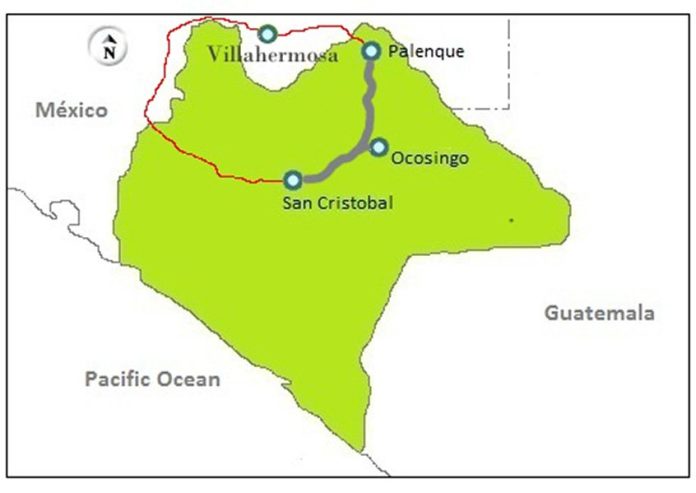
ocosingo-palenque highway

A bus carrying tourists from Puebla was attacked by thieves yesterday in Chiapas.

Police said the bus was traveling on the Ocosingo-Palenque highway when six balaclava-clad individuals carrying firearms forced it to stop.

Four of them boarded the bus and began shattering windows and threatening the passengers with their guns.

They took their phones, cameras and cash and fled the scene.

The tourists reported the theft upon their arrival in San Cristóbal de las Casas.

They had planned to spend three days traveling around the state but changed their mind after the incident, cutting their trip short and heading back home.

The highway is known for such attacks. Tour companies began traveling in convoys during Holy Week last year after 25 German tourists and their guides were robbed.

Source: Reforma (sp)

Morena lawmakers move to ban double semi-trailers

0
One trailer too many, says Morena deputy.

Double semi-trailers could become a thing of the past on the roads of Mexico if lawmakers from President López Obrador’s Morena party get their way.

Francisco Javier Borrego Adame, a deputy from Coahuila, presented a draft decree to the lower house of Congress yesterday that seeks to ban double semis on the basis that they place the lives of other motorists at risk.

Outlawing the extra-heavy vehicles requires an amendment to article 50 of the Federal Law on Roads, Bridges and Motor Transportation.

The draft legislation has been sent to the communications and transport committee of the Chamber of Deputies, which Borrego heads.

The lawmaker said that under the law as it currently stands, double semi-trailers that are longer than those in other countries and carry heavier loads are allowed to travel on the nation’s roads.

“Double semi-trailers up to 32.5 meters in length . . . carrying almost 75.5 tonnes are allowed. That’s why when braking [is required], the driver can’t stop in time,” he said.

“Compared to the standards of other countries, it’s too much. For example, Canada sets a 50-tonne load limit for a vehicle of a maximum length of 25 meters while in Germany, Belgium, Spain, Finland, Italy and Switzerland it’s 43 tonnes in units that don’t exceed 20 meters in length,” Borrego added.

He also said that the loads carried by double semis in Mexico often exceed the weight allowed by law, not only increasing the risk of accidents but also placing greater strain on roads and the vehicle’s engine, which in turn generates more pollution.

Borrego said that it was regrettable that for 10 years lawmakers in both houses of Congress have attempted to ban double-semi trailers without actually doing so.

In 2016, the Center for Legislative Studies on Ground Transportation, a civil organization, took legal action to try to limit semi tractors to towing only one trailer, claiming that double trailers are a “time bomb.”

Last year, 26 people were killed in a fiery head-on collision in Guerrero between a bus and a double semi-trailer after which there were renewed calls to ban the extra-heavy trucks.

Around 45,000 double semi-trailers are estimated to be in operation on Mexico’s roads, a figure which represents 10% of all tractor-trailers.

Source: El Financiero (sp), El Universal (sp) 

Trump threatens to close border over wall funding, ‘go back to pre-NAFTA’

0
Closing the border would stop 50,000 vehicles a day from entering the US at the San Ysidro crossing alone.

United States President Donald Trump threatened today to close the border with Mexico if the U.S. Congress doesn’t approve billions of dollars in funding to build his long-promised wall.

“We will be forced to close the Southern Border entirely if the Obstructionist Democrats do not give us the money to finish the Wall & also change the ridiculous immigration laws that our Country is saddled with . . .” Trump wrote on Twitter.

The threat comes amid a partial government shutdown in the United States which has now entered its seventh day.

Trump wants US $5 billion to build the wall he has promised since he was seeking the Republican Party nomination to contest the 2016 presidential election.

In the second and third posts in a string of early-morning tweets, the U.S. president framed his border closure threat within the context of NAFTA, the 25-year-old trade agreement between the United States, Mexico and Canada which was updated this year following a drawn-out and contentious negotiation.

“The United States looses soooo much money on Trade with Mexico under NAFTA, over 75 billion Dollars a year (not including Drug Money which would be many times that amount), that I would consider closing the Southern Border a ‘profit-making operation,’” Trump wrote.

“We build a Wall or close the Southern Border. Bring our car industry back into the United States where it belongs. Go back to pre-NAFTA, before so many of our companies and jobs were so foolishly sent to Mexico. Either we build (finish) the Wall or we close the Border . . .” he continued.

In a fourth tweet, Trump said the United States government would cut off aid to the three Central American countries whose citizens have made up the vast majority of members of the migrant caravans that have traveled through Mexico to the U.S. border in recent months.

“Honduras, Guatemala and El Salvador are doing nothing for the United States but taking our money. Word is that a new Caravan is forming in Honduras and they are doing nothing about it. We will be cutting off all aid to these 3 countries — taking advantage of U.S. for years!” he wrote.

Trump has railed frequently against the migrant caravans, portraying their arrival at the United States southern border as an “invasion.”

When a group of around 500 migrants rushed the border between Tijuana and San Diego on November 25, United States border agents fired tear gas and rubber bullets at them and the San Ysidro border crossing was closed for almost six hours.

Trump warned the day after the incident that the border could be shut permanently.

In spite of the contentious migration issue and their position on opposite sides of the political spectrum, the relationship between President López Obrador and Trump has been mostly cordial.

The two leaders spoke by telephone earlier this month to discuss migration and job creation in Mexico and Central America and less than a week later the governments of Mexico and the United States announced they had reached an agreement to work together on a development plan to curb migration.

At his early-morning press conference today, López Obrador refused to be drawn on Trump’s latest tweets regarding the border wall, stating “we have not offered an opinion on this issue because it’s an internal matter of the United States government and we prefer to abstain.”

He added that the Mexican government “seeks to always maintain a good relationship with the United States government,” explaining that “we don’t want to be imprudent.”

Source: AFP (sp), El Universal (sp)