Home Blog Page 2123

Río Caliente, Jalisco’s hot river, most popular attraction of Bosque la Primavera

0
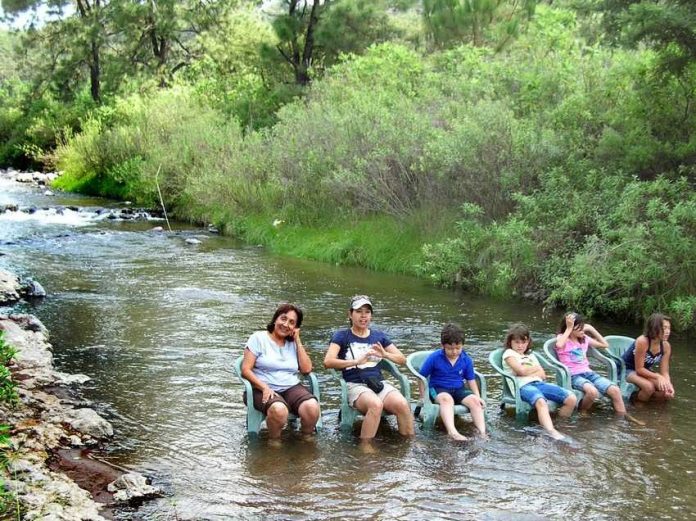
A family outing in the Salty River.

Bosque la Primavera is a huge forest located due west of Guadalajara that is home to 60 species of mammals, 205 species of birds and countless pine and oak trees, but without a doubt its most popular attraction is Río Caliente.

The “hot river” is born deep inside a narrow canyon where it literally boils out of the walls, sputtering and steaming, a testimony to the continuing presence of magma deep beneath the surface and a reminder that what is now a forest was once the site of a colossal volcanic explosion which took place 95,000 years ago, ejecting 40 cubic kilometers of ash and pumice into the air.

To visit the birthplace of Río Caliente you need high boots and a bit of derring-do, but only 360 meters west of the river’s birthplace can be found more conventional pools of hot or warm water and even a natural steam sauna.

These lie within the grounds of Río Caliente Spa which, for four decades, attracted visitors from all over the world.

“This was considered a place of healing long before the arrival of the Spaniards,” spa owner Caroline Durston told me. “The water is alkaline with a pH of 8.3 and it contains traces of all kinds of mineral salts, including natural organic lithium.”

This spa also offered vegetarian cuisine, yoga and tai chi, and was immensely popular among norteamericanos right up to 2003 when the United States government included the state of Jalisco in a negative Travel Advisory. Overnight, the spa lost almost all its clients.

“Were your guests experiencing problems caused by narcos?” I asked Durston.

“Narcos? Violence? We’ve never had a single case,” said the spa owner, “but still we had to close our doors, and now I’m forced to sell the place.”

Fortunately, only 1.6 kilometers downstream there’s a balneario that never heard of those travel advisories. Here you can soak in Río Caliente’s delightful hot waters, totally forgetting all your problems.

At this spot local entrepreneurs have built four small dams across the river, creating four pools, each slightly cooler than the one above. The walls of these dams are made with river rock and in my opinion are far more aesthetic than the concrete eyesores I’ve seen at other hot springs.

In the first pool I measured a temperature of 37 C (98.6  F) in the morning when it’s shaded. During Guadalajara’s hot season (the month of May), the water temperature could rise to a point of discomfort in the noon-day sun.

Access to the pools costs 25 pesos per carload plus 10 pesos per person parking fee. Other than the parking lot, there are no facilities to be seen. Access to this area is through the town of La Primavera, located 11 kilometers west of Guadalajara, but I suggest you avoid the pools during Semana Santa (Holy Week) when thousands of people mob the area.

Further downriver, feeder streams enter Río Caliente, some of them hot and some of them cold. There’s really no way to tell what you are going to get until you stick your toe in, which can make for great family fun. The further south you go, the fewer people you will find and eventually you may have a stretch of the river all to yourself.

Just after Río Caliente takes a sudden turn to the west, you come to the hottest feeder stream of all, which I call the Black River, as the algae growing in it are an ultra-dark green.

If you follow this feeder upstream you will come to la Cascada Esmeralda, the Emerald Cascade, eternally shrouded in great clouds of steam whose movement in the breeze is so enchanting you might sit there watching for hours, hypnotized by the swirling vapors.

The first time I visited this fairytale waterfall I was dying of curiosity to continue on to the source of the Black River and, yes, I did find a trail heading upstream, through a canyon whose walls are painted white by mineral deposits from long ago.

The only problem is that this trail crosses the stream four times, and to follow it, you are obliged to hop from slimy rock to slimy rock, and to creep along a horizontal bank just above the nearly boiling water, hoping and praying you will not slip and fall into the soup.

At last, I came to a bowl-shaped enclosure containing a delightful-looking pool of water deep enough for several people to bathe in at once. A narrow stream of water splashed into the pool from high above. It looked like the swimming hole of your dreams, but most of the water was coming from dark, slimy, steaming mini-caves on one side.

Here I took the temperature, which was a whopping 70 C or 15° F, the hottest I’ve recorded anywhere in the area. This was the source of the Black River, but it looked more like the source of the River Styx leading to Hades.

Around six kilometers from its origin, Río Caliente cools down to a pleasant temperature of 30 to 35 C, depending on the ambient weather, and is now called Río Salado, the “salty river.” Children, however, have nicknamed it “the rock-n-roll river” because here the warm water swirls around boulders and rushes down mini-dams, creating a bubbling effect that the Jacuzzi Corporation could only envy.

This part of the river can be accessed from Jalisco highway 70 and has facilities for camping.

Fifteen kilometers from its source, the river plunges down picturesque waterfalls called Los Chorros de Tala, which are well worth viewing both from above and below. The Chorros are, in fact, so lovely that many weddings take place here just so the bride and groom can have the falls in the background of their fotos de boda.

Totally cooled off after their final dramatic plummet down the Chorros de Tala, the waters of Río Caliente finally disappear languidly somewhere in the swamps surrounding La Vega Dam. Most of the sites along the river are fully described in volumes I and II of Outdoors in Western Mexico.

[soliloquy id="59494"]

The writer has lived near Guadalajara, Jalisco, for more than 30 years and is the author of A Guide to West Mexico’s Guachimontones and Surrounding Area and co-author of Outdoors in Western Mexico. More of his writing can be found on his website.
Intervention by ombudsman, state secure mayor’s release

0
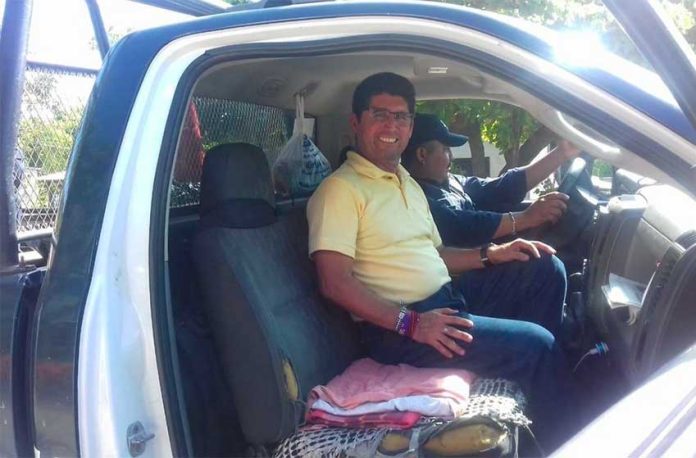
The mayor was in good spirits after his release from jail yesterday.

The Oaxaca mayor who was jailed this week by citizens who accused him of corruption was freed yesterday.

César Augusto Matus, the mayor of the Isthmus of Tehuantepec municipality of San Francisco Ixhuatán, was released from jail through the intervention of the state human rights ombudsman and the state government.

Citizens of the community of El Morro held the mayor for three days, accusing him of embezzling 3 million pesos in public works funding.

Following his liberation. Matus promised the community to complete as soon as possible an elevated storage tank and a deep water well to supply potable water to residents.

In addition, state officials will conduct an internal audit to clarify municipal expenditures this year and last.

The mayor was taken directly to a health clinic after his release after his wife accused residents of El Morro of “inhumane treatment” of her husband.

Oaxaca mayors have frequently been accused of embezzling public funds but criminal charges are rare.

Source: Milenio (sp)

Mexico’s university graduate numbers are well below OECD average

0
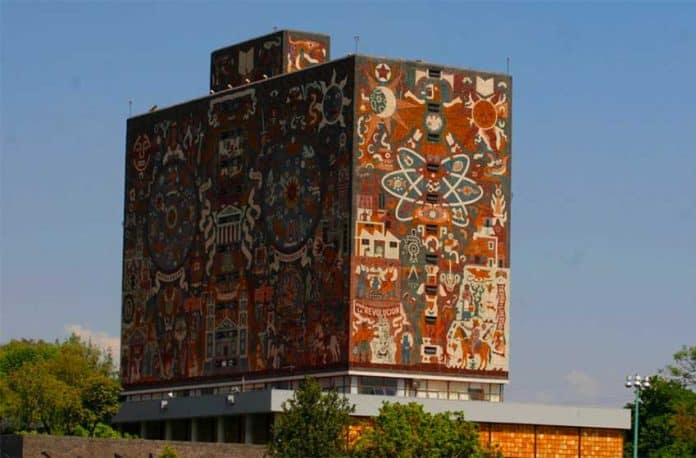
The Autonomous University of México offers a level of education that is unattainable to many.

Mexican adults are less likely to have a university degree than citizens of any other OECD country, statistics show.

Of every 100 students who start primary school in Mexico, 21 will go on to complete university studies, according to the Organization for Economic Co-Operation and Development (OECD).

In the publication Education Policy Outlook 2017, the OECD said that four of those students will study for a master’s degree and one will complete a PhD.

Of the population aged between 25 and 64, just 17% have completed higher education studies, the OECD found, placing Mexico last in the category among the 36 member nations, where an average 37% of people have a tertiary qualification.

Meanwhile, a national survey showed that 49.7% of Mexican students who don’t complete high school fail to do so due to a lack of financial resources to buy materials, pay enrollment costs and cover transportation expenses.

The survey highlighted the effect that a person’s education level can have on earning capacity and employment options.

“The average salary of someone who has completed university studies is 80% higher than someone who has completed high school. Finishing a degree reduces the risk of entering the informal economy by 51%,” it said.

The Mexican Institute for Competitiveness (Imco) said in a 2016 report that the average monthly salary of a person who has completed high school is 6,208 pesos (US $326) while a university graduate earns on average 10,855 pesos (US $571) per month.

One way that parents are seeking to guarantee their children’s continued access to education is through the purchase of education insurance policies.

Mexican insurance company GNP reported that it paid out more than 1 billion pesos (US $52.6 million) on such policies during the first half of 2018.

“Currently 24% of GNP’s individual life insurance portfolio is made up of . . . our education savings insurance, reflecting the need of parents to guarantee the resources to cover university [expenses] for their children, which is a fundamental piece in the building of a better future,” said Raúl Kuri, a GNP director.

That view is supported by OECD data that shows that 17% of Mexicans aged between 25 and 34 who don’t have tertiary qualifications are unemployed whereas only 9% of those in the same age bracket who have a degree are jobless.

Statistics from Coneval, a federal social development agency that measures poverty levels, show that 21.4 million people earn less than 2,975 pesos (US $156) per month, which places them below the minimum wage threshold for wellbeing.

Millions more lack access to health care services, social security, adequate housing and other basic services.

Statistics also starkly illustrate the economic inequality in Mexico.

The United Nations Economic Commission for Latin America and the Caribbean has determined that 36% of total wealth in Mexico is concentrated in just 1% of the population.

In 2016, more than 53 million Mexicans were living in poverty, with 9.4 million of that number in situations of extreme poverty.

Source: Milenio (sp)

San Miguel a model for Americas with cultural capital designation

0
San Miguel, cultural capital.

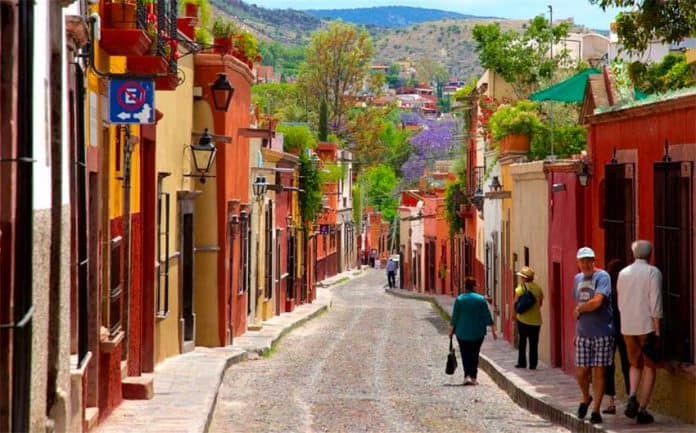
San Miguel de Allende has been selected as the American Capital of Culture 2019, a designation that can bring worldwide exposure.

The International Bureau of Cultural Capitals, based in Spain, said the Guanajuato city will be a cultural model for the Americas next year, along with the state’s other 45 municipalities, which will also be able to participate.

San Miguel will benefit from promotion through Antena 3 Internacional, the program’s official television channel with a potential international audience of 90 million viewers, said a statement issued by the organization.

Mexican cities have been designated cultural capitals before. Mérida has been selected twice, and Guadalajara and Colima have also been chosen. No other country has received the honor so many times since the program began in 1998.

Its objective is to promote cultural integration in the Americas, and contribute to greater understanding among people of the region.

The UNESCO World Heritage Site also won international recognition last month when it was named best city in the world for the second year in a row by readers of Travel + Leisure magazine.

Mexico News Daily

New government: private sector must be engine of economic development

0
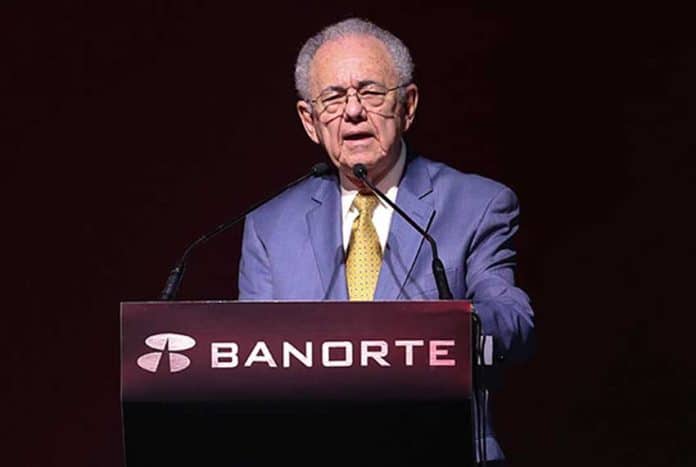
Nominee for transportation secretary, Javier Jiménez Espriú.

Two key members of the incoming federal government said yesterday that the private sector must make a significant financial contribution in order for Mexico to be able to fund the infrastructure projects it needs.

Javier Jiménez Espriú, president-elect Andrés Manuel López Obrador’s nominee for secretary of communications and transportation, said that he will seek a 20-peso contribution from the private sector for every peso that the new government allocates to new infrastructure projects.

Speaking at a strategic forum organized by the bank Banorte, Jiménez explained that private money will be required because the federal budget will not have sufficient resources to fully fund all the highway, airport, maritime and aerospace projects the new government plans to undertake.

Private investment could take the form of public-private partnerships, concessions or other arrangements permissible by law, he explained.

“All these actions have to do with a significant investment need [for infrastructure projects] and even though we’re going to redirect public spending, it’s not going to be possible to meet [all the costs]. Our ambition is to encourage the private sector to participate in a modest ratio of 20 to one,” Jiménez said.

Among the projects slated to be built with a combination of public and private funds are the so-called Maya Train between Cancún and Palenque and telecommunications projects to guarantee internet and mobile telephone services for all Mexicans.

At the same event, López Obrador’s prospective chief of staff said that programs to combat poverty and other social problems as well as projects such as development of the Isthmus of Tehuantepec and reforestation in the south of Mexico would also require the participation of the business sector.

“Mexico has to become a country that breaks paradigms and takes risks that it has never taken before,” said Alfonso Romo, a Monterrey businessman who owns a major brokerage firm.

“I include myself [as a member of] the private sector. We have to self-finance a lot of the projects that have been mentioned. Who’s going to be the engine? The national and foreign private sector,” he added.

In order to turn Mexico into an investment paradise and achieve the target of 4% economic growth, the new government must also work to strengthen the rule of law, improve security conditions, boost business confidence and combat corruption through the elimination of the use of cash for large transactions, Roma said.

With regard to Jiménez’s public-private investment proposal, the president of the Confederation of Chambers of Commerce, Services and Tourism (Concanaco) said the 20-to-one idea would be viable so long as the government ensures that conditions favorable to investment are in place.

“An invitation from the government to contribute in a proportion of one to 20 is a proposal that has to be taken very seriously . . .  Just two conditions are needed: certainty in the investment and profitability of the projects,” José Manuel López Campos said.

“Investors are willing to risk their capital but in a legal framework that offers certainty and where there is a scenario with the possibility of a return on investment and reasonable profits.”

Source: Milenio (sp)

Students create coffee-ginseng gum that relieves stress, improves energy

0
Coffee Gin, a substitute for energy drinks.
A substitute for energy drinks.

Stressed? Low energy levels? Physically and mentally fatigued? A chewing gum created by three university students contains caffeine and ginseng that might help.

The product is the brainchild of Lesly Figueroa Santos, Brenda Hernández Velasco and Mario López Luis, all biochemical engineering students at the National Polytechnic Institute (IPN).

They explained that the chewing gum, which they have called “Coffee Gin,” was designed as an alternative to commercially available stimulants, especially energy drinks, which have a high sugar content and are potentially harmful to human health.

Ginseng, the root of plants in the genus Panax, contains natural antioxidants that help to overcome fatigue, relieve stress and combat the formation of free radicals that cause cells to age, the IPN said in a statement.

The students said that “Coffee Gin” is suitable for people aged over 18 and there is no risk of addiction or any adverse effects.

The gum contains quantities of ginseng and caffeine that are below recommended levels, the students added, explaining that a person would have to chew 20 pieces of the product to consume the same amount of caffeine that is contained in a single cup of coffee.

They also said that in contrast to most energy drinks, their gum doesn’t contain taurine, which acts as a nervous system depressant.

Production of “Coffee Gin” is “very cheap” and consumption levels of chewing gum are very high, the IPN statement said, and therefore the students may seek to commercialize their product at some point in the future.

Source: Notimex (sp)

Sinkholes drain most of Quintana Roo lagoon

0
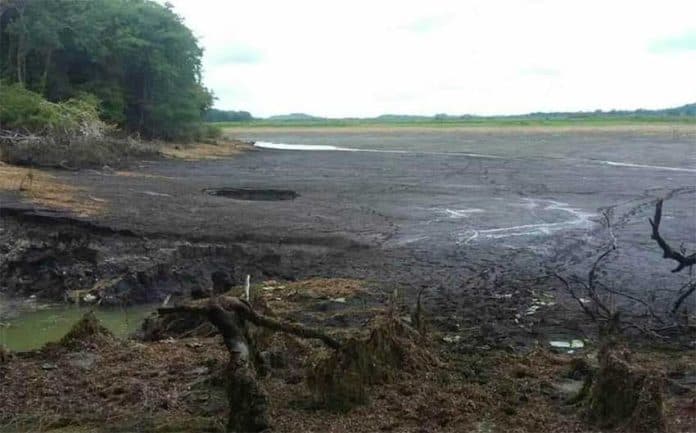
A much dryer Chakanbakán lagoon.

A lagoon in Quintana Roo has all but disappeared down half a dozen sinkholes.

State Ecology and Environment Secretary Alfredo Arellano said the Chakanbakán lagoon, located in the municipality of Othón P. Blanco, shrank yesterday from its former 20 hectares to just five after the sinkholes opened up.

The cause is believed to be the resettling of an underlying geological fault.

Public access to the area, also known as Om lagoon, has been suspended as a preventive measure by the federal environmental protection agency Profepa and local police.

The lagoon will remain off limits until the cause of the water’s disappearance can be fully assessed, Profepa said.

Local official Leopoldo Santos said the lagoon’s wildlife now finds itself crowded into a much smaller area.

” . . . Crocodiles, turtles and fish are all crowding” into the remaining five hectares of shallow waters. He said Chakanbakán has been the habitat of many animals but many disappeared yesterday.

Secretary Arellano said that investigations into the event will continue, and that an initiative to declare the lagoon region a natural protected area will also continue.

What remains of Chakanbakán lagoon lies near the archaeological zone of the same name, and about 90 kilometers to the west of Chetumal.

Source: Milenio (sp)

Fiber optic installation announced for Cancún-Tulum corridor

0
quintana roo hotels
Faster internet coming.

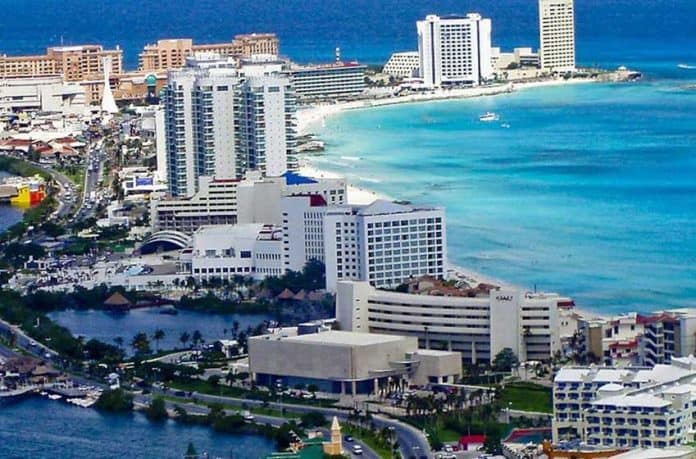
The internet is going high-speed for the millions of tourists who visit the Cancún-Tulum corridor of Quintana Roo as interest grows in investing in fiber optic communications in the region.

Wireless broadband developer Cobalt Holdings is spearheading the trend with its plans to lay a 180-kilometer fiber optic network in the northern part of the state to cater to the hotel industry.

Company president Lawrence Malone explained that the firm is interested in the economic potential of northern Quintana Roo due to its more than 100,000 hotel rooms, high occupancy rates and investments in the hotel and services industries that have been announced.

The newspaper El Economista explained that the Cancún-Tulum corridor is one of the world’s fastest-growing tourist destinations, with more than 17 million visitors per year whose economic impact is over US $7 billion.

Cobalt Holdings’ focus on the hotel industry comes at a time when hotels are shifting from the traditional business model to co-living and co-working spaces, shared living quarters and offices that are in demand by professionals working away from a traditional office.

The head of the Quintana Roo Institute for Innovation and Technology told El Economista that other firms have also shown interest in fiber optic communications, including the local Lomastel Telecommunicación and China’s state-owned telecommunications company China Telecom.

Marco Antonio Bravo Fabián explained that established companies like Telmex and Grupo Salinas continue to invest and expand their fiber optic networks in the state.

He explained that the state has received some 400 million pesos (US $21 million) in fiber optic communications investments in recent years, given the appeal of the Caribbean hotel industry and the needs of the public sector, which will only go up next year when the federal Tourism Secretariat moves to the capital of the state.

Source: El Economista (sp)

Oaxaca police begin drone surveillance pilot project

0
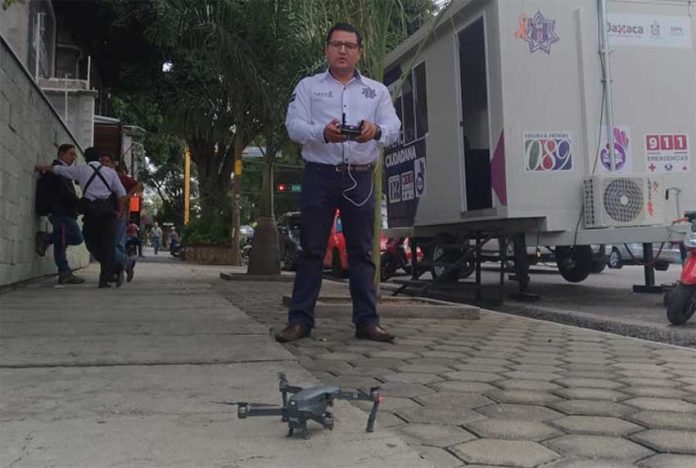
A police officer with one of Oaxaca's new drones.

Security officials in Oaxaca are anticipating a 40% reduction in crime through the deployment of surveillance drones in at least five communities.

Public Security Secretary Raymundo Tuñón said yesterday that surveillance by the unmanned aircraft is intended to halt assaults and kidnapping and identify retail drug traffickers.

They will be used in a pilot project at seven police installations in the city of Oaxaca, two in Tuxtepec and Salina Cruz and one each in Huatulco and Pinotepa Nacional.

The unmanned aerial vehicles will fly over areas where large numbers of people congregate, such as parks, shopping areas, markets and banks.

Tuñón said there is a five to 10-minute response time after the sighting of a crime using a drone. The fifth-generation aircraft are linked to C-4 security command centers.

The state has invested 25,000 pesos (US $1,320) in each one. They can remain airborne for up to an hour and 20 minutes and can operate within a radius of one kilometer.

Source: Milenio (sp)

US travel advisory update applies only to Ciudad Juárez

0
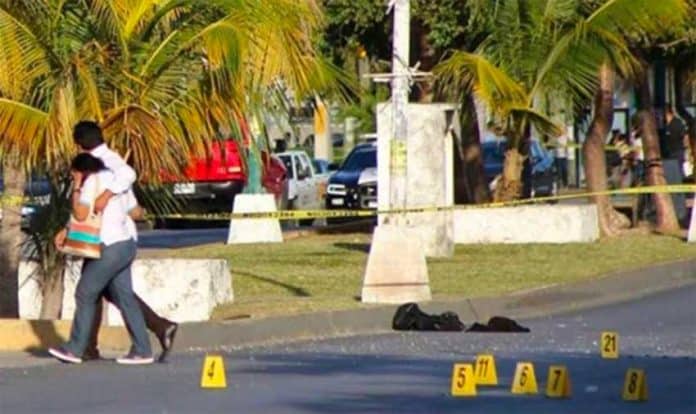
Body parts were found in plastic bags Tuesday in Cancún.

Further restrictions on Mexican travel by United States government employees have been widely interpreted as a new travel alert for several Mexican states, but they are not.

The U.S. State Department revised its travel advisory for Mexico yesterday by announcing that a July 13 personnel restriction against travel to the downtown area of Ciudad Juárez will continue until further notice because “the higher rates of homicides during daylight hours that prompted that determination have not decreased . . . .”

The Chihuahua border city has seen a drastic spike in homicides.

But nothing else appears to have changed in the Mexico travel advisory.

At least one Mexican newspaper implied that travel warnings for Colima, Sinaloa, Tamaulipas, Michoacán and Guerrero were new, where in fact they have not changed since January. Several U.S. newspapers offered similar reports, some linking the updated advisory to the violent murders this week of eight people in Cancún.

The bodies — three were dismembered and one was beheaded — were discovered during an eight-hour period on Tuesday in various parts of the city, bringing to about 350 the number of assassinations so far this year.

But there has been no change in the United States’ travel advisory for Cancún or Quintana Roo.

The state government said today that incidents that occurred this week are related to actions between organized crime groups and have not involved local citizens or visitors.

The violence is attributed to turf wars between the Jalisco New Generation Cartel and Los Zetas, as well as other regional crime gangs.

Source: ABC (en), Infobae (sp)