Home Blog Page 2171

Week’s death toll from flooding rises to seven

0
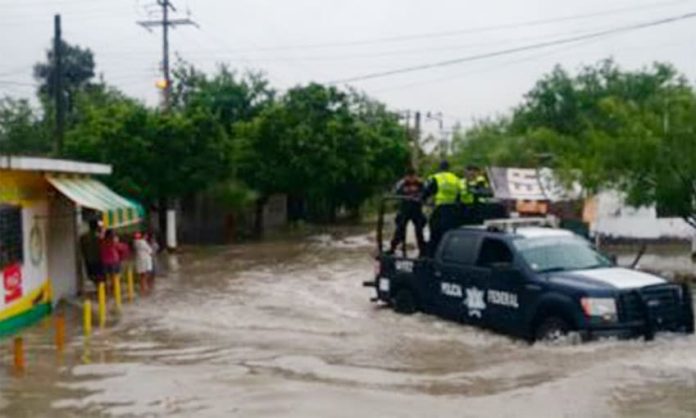
Flooding in Tamaulipas today.

Seven people have now lost their lives in less than a week due to flood-related incidents in four different states, including six in the past two days.

In Reynosa, Tamaulipas, a 40-year-old man drowned in his car yesterday after it was swept away by floodwaters on Río San Juan Avenue in the Fuentes neighborhood.

In the same city, a 20-year-old man also died yesterday after he accidentally touched an electrical cable while on the roof of his home. Another young man was also electrocuted in Matamoros in a similar incident.

A total of 40 neighborhoods reported flood damage in Reynosa and residents of five were forced to evacuate their homes. Dozens of drivers were left stranded inside their vehicles in floodwaters.

In Guanajuato, just north of the capital in the community of Llanos de Santa Ana, a man was killed Tuesday night after he was hit by rocks that fell from a ridge next to the Valenciana-Cristo Rey highway after being dislodged due to heavy rain.

There was also a landslide on the Panorámica-Cerro de los Leones near the entry to the Guadalupe mine. Both state highways were closed.

Flooding also affected the Guanajuato cities of Léon and Silao, the municipality of Romita and blocked the Silao-Irapuato highway near the turn-off to the state capital, stranding at least one car.

In the city of Aguascalientes, a woman and a teenage girl died of carbon monoxide poisoning while trapped in a vehicle caught up in floodwaters on Tuesday afternoon. Many other vehicles were left stranded by the flooding that occurred throughout most of the city.

At least 32 neighborhoods were affected and more than 70 shelters were opened in the city to attend to those forced to evacuate their homes.

Aguascalientes Governor Martín Orozco Sandoval said that a census would be carried out to determine the full extent of damage the heavy rains have caused.

The six flood-related deaths this week followed the drowning of a 14-year-old boy who last Friday was swept by floodwaters into a drain located on the Puebla-Mexico City highway in the Iztapalapa borough of the capital.

Source: Milenio (sp), Aristegui Noticias (sp), Expansión (sp)
Swell warning issued in six states

0
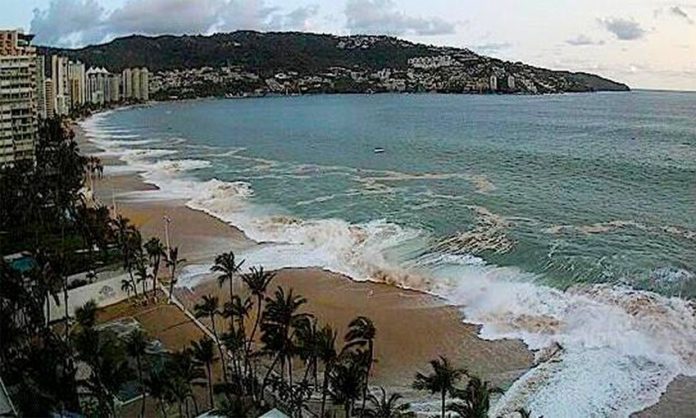
Big waves in the forecast.

A swell warning was issued yesterday evening for six Pacific coast states.

In Oaxaca, the Civil Protection office issued a 48-hour swell warning for the state’s 27 coastal municipalities.

Civil Protection chief Heliodóro Díaz Escárraga explained that the phenomenon, known in Mexico as mar de fondo, was caused by storms farther south in the Pacific Ocean and can bring unusually high waves to the coast.

Díaz urged the public to heed any and all warning issued by authorities.

As one tropical wave exits the state to the west, another is entering from the east. These phenomena, coupled with the influx of humidity from the Pacific Ocean, will continue to generate electrical storms and rains throughout the state.

The swell warning extends as far as the coasts of Chiapas in the south and Jalisco in the north. The National Water Commission (Conagua) warned that waves could be higher than 2.5 meters.

Source: Milenio (sp)

Another record month: May homicide numbers worst ever seen

0
A homicide investigation, an all-too-common sight.

Homicide numbers in May were the highest ever recorded, according to the National Public Security System (SNSP).

There were 2,530 reported cases of intentional homicides during the month, breaking the previous record of 2,371 set last October.

The total number of victims was 2,890, a figure that is 360 more than the number of cases because some investigations related to two or more deaths. On average, there were 93 intentional homicides per day last month, or almost four per hour.

Three of the four most violent months of the past 20 years have now been recorded this year. March 2018 was the third most violent month since comparable records were first kept in 1997 while April was the fourth most violent.

In its latest crime rate report, the SNSP also said there were 11,437 intentional homicide investigations in the five-month period to the end of May which related to the murder of a total of 13,298 people.

The number of cases is 15% higher than the 9,937 reported in the same period last year.

Colima remained the most violent state in the country, according to per-capita murder rates, with 33 intentional homicides per 100,000 residents in the January to May period.

Baja California was next with 29 intentional homicides per 100,00 followed by Guerrero with 26, Chihuahua with 17 and Guanajuato with 16. The increase in the rate in Guanajuato is particularly notable.

There were 1,302 murder victims in the state during the first five months of the year, more than double the 575 cases recorded in the same period last year.

The number of intentional homicides also increased in Mexico City between January and May, where there were 480 reported cases and 550 victims.

The homicide rate for Mexico as a whole was just over nine per 100,000 residents.

In raw numbers, Baja California recorded the highest number of cases during the period with 1,071 followed by Guanajuato with 1,005 and Guerrero with 966.

Yucatán had the lowest number of cases of any state with 18, followed by Campeche with 20 and Aguascalientes with 35.

SNSP data shows that just over two-thirds, or 68%, of the total number of murders were committed with firearms.

It also shows that gun-related homicides increased by more than 100% in nine of the country’s 30 most violent municipalities in the first four months of the year.

Tepic, Nayarit, experienced the sharpest spike with a 555% increase followed by the Guanajuato municipalities of Irapuato and Salamanca, both of which recorded upsurges greater than 350%.

The number of femicide victims — women and girls killed on account of their gender — is also on the rise.

There were 328 femicide victims in the first five months of the year, 135 more than in the same period last year. The incidence of the crime has more than doubled in the space of just three years.

In contrast, kidnapping rates were down. There were 401 cases reported at the state level in the first five months of the year compared to 482 last year.

Federal investigations into the crime are also down slightly, from 143 last year to 121 cases this year.

Tamaulipas, Veracruz and Zacatecas have the highest kidnapping rates in the country.

A total of 29,168 homicides last year made 2017 Mexico’s most violent year of at least the last two decades but if the rate recorded in the first five months of this year continues, 2018 will surpass that.

Source: Milenio (sp), Animal Político (sp)

Salmonella warning issued for Honey Smacks cereal

0
The cereal affected by salmonella contamination.

The federal consumer protection agency has issued a warning about the possible presence of salmonella in boxes of Kellogg’s Honey Smacks cereal.

The warning from Profeco comes almost a week after the first reports of the contaminated cereal, manufactured and packaged in the United States, began to surface.

That country’s Food and Drug Administration alerted consumers last week after 73 people in 31 states were reported to have become sick after eating salmonella-infected Honey Smacks. The illnesses took place between March and May.

Twenty-four people were hospitalized, but there have been no fatalities.

Kellogg’s issued a voluntary recall of the brand last Wednesday.

Profeco said the 434, 652 and 866-gram boxes of the cereal are most likely to be contaminated, but authorities in Mexico and the U.S. have advised consumers to avoid the cereal altogether.

The affected products have “best before” dates between June 14, 2018 and June 14, 2019.

On its Mexico website Kellogg’s asked consumers who bought the product not to eat it, dispose of it and contact the company for an exchange with another Kellogg’s product. It said no other product was affected by the salmonella contamination.

There had been limited distribution of the Honey Smacks cereal in Mexico and several other countries, the company said.

Source: Milenio (sp)

Black widow spiders identified in Yucatán for 3 years now

0
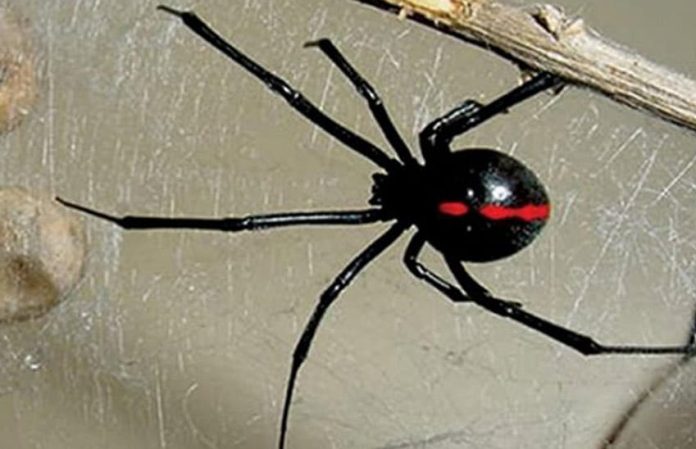
A black widow spider, now found in Yucatán.

Black widow spiders have had a presence in Yucatán for three years now, according to a state health official who says that on average two people are bitten every year.

The poisonous spiders, which are not endemic to the state, are thought to have arrived inside boxes of imported goods.

So far, most black widow bite reports have come from the southern part of the state, but infectious disease specialist Daly Martínez Ortíz said some have been sighted farther north in Valladolid, Tizimín, Tekkit and Mérida, the state capital.

“Some patients can overcome the effects of the venom by themselves,” explained Martínez, “but some experience lasting effects that can end in death.”

The specialist recommended that medical care be sought within two hours following a bite, because that window of time is ideal for the antidote to fight the effect of the venom.

Black widows have an unusually potent venom containing the neurotoxin latrotoxin. Females have unusually large venom glands and their bite can be particularly harmful; however, despite the arachnid’s notoriety, medical consensus is that its bites are rarely fatal or even produce serious complications.

Only the bites of the females are dangerous to humans.

This spider, which grows to about two centimeters long, is readily identifiable by the reddish markings on the abdomen, which are often (but not always) hourglass-shaped.

Source: El Universal (sp)

There will be no conditions on NAFTA negotiations: Guajardo

0
Guajardo: no conditions on NAFTA talks.
Guajardo: no conditions.

Mexico will not change its position regarding the placing of conditions on the negotiation process to reach an updated North American Free Trade Agreement (NAFTA), the economy secretary said yesterday.

“We’ve always believed that NAFTA can’t be conditional upon any other factor outside the negotiation,” Ildefonso Guajardo said during an interview at the official presidential residence, Los Pinos.

His comment came after United States Commerce Secretary Wilbur Ross told a U.S. Senate Committee earlier in the day that metal tariffs imposed on Mexico and Canada on June 1 on national security grounds would be removed if a new trade deal that is favorable to the U.S. is reached.

“Our objective is to have a revitalized NAFTA, a NAFTA that helps America and, as part of that, the [tariffs] would logically go away” for both Canada and Mexico, he said.

Ross also said that United States Trade Representative Robert Lighthizer is optimistic that talks “could pick up steam” after Mexico’s July 1 presidential election.

Canadian Foreign Affairs Minister Chrystia Freeland said last week that the process to renegotiate NAFTA would resume over the summer while her Mexican counterpart Luis Videgaray said Tuesday that he expected the next ministerial NAFTA meeting would be held in July.

Following Guajardo’s lead, the head of Mexico’s technical negotiating team reiterated in two Twitter posts that Mexico would not be pressured into signing a deal due to external factors.

“Mexico has never accepted a link between the steel and aluminum tariffs imposed by the U.S. and the NAFTA negotiation. We will continue to negotiate constructively but never under external pressure or threats,” Kenneth Smith Ramos wrote.

“The only impact that the imposition of steel and aluminum will have on the NAFTA negotiation is to strengthen Mexico’s resolve to ensure that NAFTA 2.0 will prevent the misuse of national security provisions as protectionist tools.”

United States President Donald Trump said Tuesday that progress was being made in NAFTA talks but he didn’t rule out the possibility that the U.S. would seek separate bilateral pacts with Mexico and Canada if a three-way deal couldn’t be reached.

“We’re trying to equalize it. It’s not easy but we’re getting there,” he told a group of small business executives at an event in Washington D.C. “We’ll see whether or not we can make a reasonable NAFTA deal.”

Trump has regularly railed against the 24-year-old trade agreement and has described it as “the worst trade ever made” and a “disaster” for the United States economy.

During his 2016 presidential campaign, he made renegotiating the deal a goal and trilateral talks started in August last year with a scheduled finishing date of December.

But talks have dragged on as the three countries struggle to reach consensus on issues including rules of origin for the automotive sector and a so-called sunset clause which would force a renegotiation of the deal every five years.

The United States’ decision to impose 25% and 10% tariffs on steel and aluminum imports from its neighbors and NAFTA partners was widely seen as a move to increase pressure on the two countries to agree to its demands and was reminiscent of similar hardball tactics that the Trump administration has used previously.

The U.S. president suggested in April that an agreement might be conditional on immigration policy, charging that Mexico “must stop people from going through Mexico and into the U.S.” and he has also threatened on several occasions to terminate the deal.

Mexico quickly rejected linking immigration with NAFTA and has also consistently said that it won’t conduct trade negotiations via social networks.

Freeland said Tuesday the Canadian government believes that an updated deal is still possible while Moisés Kalach, the top international trade official for Mexico’s Business Coordinating Council (CCE), said yesterday that the best way of increasing the chances of concluding a successful new deal is by remaining at the negotiating table.

Source: Notimex (sp), The Canadian Press (en), Reuters (en), El Financiero (sp)

Two more candidates for mayor assassinated in Michoacán

0
Gómez Lucatero, killed yesterday in Aguililla, Michoacán.

The violence against political candidates continued yesterday and today with the murder of two candidates for mayor in the state of Michoacán.

Omar Gómez Lucatero, who was running as an independent in Aguililla, was killed yesterday when armed civilians opened fire on him as he left his home in this Tierra Caliente municipality of about 16,000 people.

Gómez had run for office before with the Institutional Revolutionary Party but this time round he was running as an independent.

A security operation involving municipal and state police was implemented following the murder, but no arrests have been reported.

The second murder took place this morning in Ocampo when three armed men entered the home of Ángeles Juárez and shot and killed him.

Juárez was the Democratic Revolution Party candidate for mayor of Ocampo, a municipality of about 50,000 in the eastern part of the state.

The two murders come just a week after another Michoacán candidate was gunned down. Alejandro Chávez Zavala was killed last Thursday in Taretan.

He too was running for mayor.

There have now been 47 candidates assassinated during the election process that began last September.

Meanwhile, a 10-million-peso ransom (US $491,000) has been posted for information leading to the arrest of two brothers believed to have been behind the assassination of a candidate for federal deputy in Coahuila.

Governor Miguel Riquelme announced the ransom yesterday for information that would lead to locating and apprehending Erik and Ignacio Arámbula Viveros.

They have been identified as the authors of the assassination June 8 of Fernando Purón, the Institutional Revolutionary Party candidate for federal Congress.

Source: El País (sp)

7 die after semi loses brakes on Chiapas highway

0
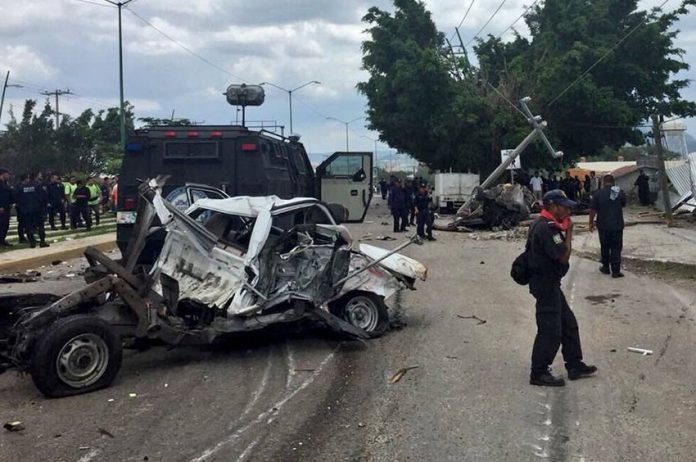
One of the vehicles wrecked in yesterday's accident.

A semi-tractor lost its brakes in Tuxtla Gutiérrez, Chiapas, yesterday and plowed into parked vehicles and taco stands, leaving seven people dead.

Ten people were injured, two of whom died later in hospital. Five died at the scene.

The accident occurred on the outskirts of the city near the site of a protest by teachers belonging to the CNTE union.

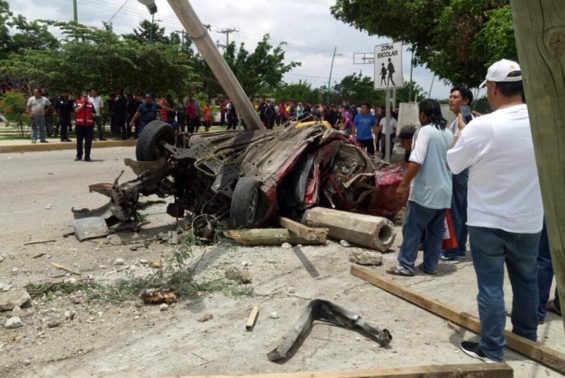
Mangled wreckage in Tuxtla Gutiérrez.

Among the victims were police officers who were on hand to monitor the protest.

One report said the double semi traveled for two kilometers without brakes before it struck three parked vehicles, three food stands and several utility poles before coming to a stop at the side of a house.

Authorities observed that a new runaway emergency ramp had been installed on the highway some two kilometers from the location of the accident but were unaware why the driver, who escaped unhurt, didn’t use it.

Source: Alerta Chiapas (sp), Televisa (sp)

Shipment of German pork belly arrives in Mexico

0
Pork belly arrived this week from Germany.

A shipment of German pork arrived in Mexico this week through efforts to diversify foreign trade.

It was the first shipment to arrive since tariffs were imposed on United States pork imports, the federal Agricultural Secretariat (Sagarpa) said yesterday.

The department said in a statement that 25.5 tonnes of frozen pork belly had arrived at the port of Veracruz, a result of its “market diversification policy” that aims to “guarantee the supply of a range of products at accessible prices.”

Mexico introduced a range of retaliatory measures against the United States’ metal tariffs on June 5, including 20% duties on U.S. pork, apples and potatoes.

The Sagarpa statement said the agriculture sanitation authority Senasica has already established sanitation protocols with other countries that allow them to supply agricultural products to the Mexican market.

Pork imports from Canada, Denmark, Spain, France, Chile, Italy, Belgium, Australia, New Zealand and Germany comply with the established sanitation rules.

The German pork was packed in 1,394 individual boxes and came from a Senasica-certified plant in Wiedenbrück, Sagarpa said, adding that it was the result of action taken by Senasica chief Enrique Sánchez Cruz during a meeting with Germany’s agriculture minister in Berlin.

Mexicans consume 2.11 million tonnes of pork annually and produces 1.45 million tonnes, of which 105,000 tonnes are exported. Imports account for the 754,000-tonne shortfall.

One-third of all pork consumed in Mexico comes from the United States and between 2010 and 2017 it supplied almost 90% of all imports. Government data shows that U.S. pork exports to Mexico were worth more than US $1 billion last year.

Jim Heimerl, president of the U.S. National Pork Producers Council, said earlier this month that Mexico’s 20% tariff on tariff on pork legs and shoulders eliminates his country’s ability to compete in the Mexican market.

With regard to apples, also subject to a new tariff, Sagarpa said importers of the fruit could look to countries including Argentina, Canada, Chile, China, Portugal and South Africa in order to maintain accessible costs for consumers.

Even before the United States imposed its 25% and 10% tariffs on Mexican steel and aluminum imports, Mexico was seeking to diversify its export markets due to uncertainty about the future of the North American Free Trade Agreement (NAFTA).

Mexico and the European Union (EU) reached an updated trade agreement in April while Mexico and 10 other Pacific Rim countries formally entered into a revised Trans-Pacific Partnership (TPP) trade pact in March.

Last week officials told the news agency Reuters that Mexico is also considering imposing tariffs on United States corn and soybean imports in case trade tensions with its northern neighbor should increase.

Source: El Economista (sp)

‘Archaeological window’ offers glimpse of ancient temple

0
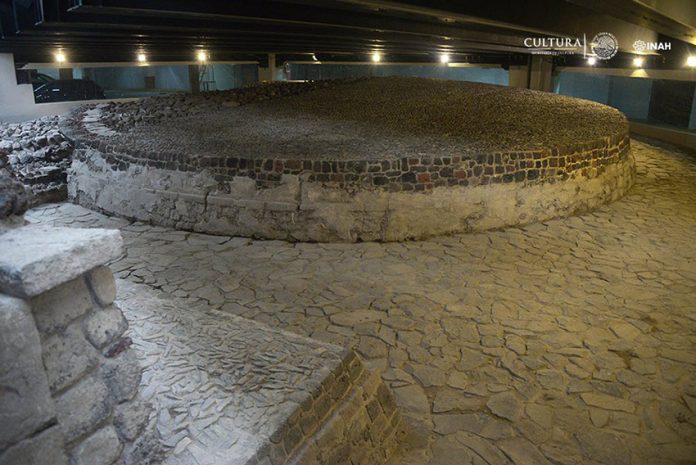
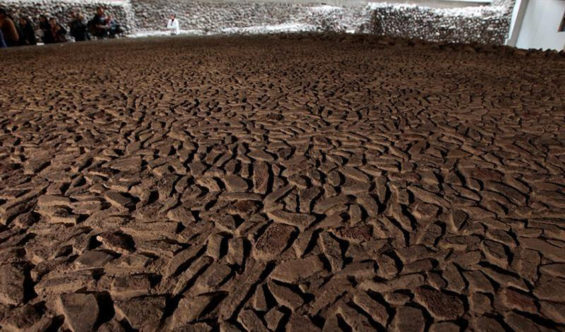
The temple that was hidden beneath a parking lot.
The platform that was hidden beneath a parking lot.

During the demolition of an old supermarket in the Mexico City neighborhood of Tlatelolco four years ago, an ancient pre-Hispanic temple dedicated to the Aztec god of wind was found beneath the site’s parking lot.

Now the temple can be seen and appreciated through a 361-square-meter “archaeological window” built by the National Institute of Anthropology and History (INAH) and opened to the public yesterday.

The temple’s structure consists of a circular platform that is located three meters below street level, measures 11 meters in diameter, is 1.2 meters high and has graves for 20 children, adults and animals. A range of artefacts was also found at the temple, which is believed to be more than 650 years old.

“It’s a temple [dedicated] to the god of wind [Ehecátl-Quetzalcóatl], who had a close relationship with the god of water Tláloc because this god was the one who swept and prepared everything so that the rains brought by Tláloc would come,” prominent Mexican archaeologist Eduardo Matos Moctezuma told the news agency EFE.

He explained that three temples dedicated to Ehecátl-Quetzalcóatl have now been found in Tlatelolco as well as another three in ancient Tenochtitlan, the precursor to modern-day Mexico City.

One of the platforms that are more than 650 years old.
The platform that is more than 650 years old.

The temples generally face towards the east, Matos explained, because according to Aztec myths Ehecátl-Quetzalcóatl and Xipe-Tótec — a god of spring and new vegetation —  believed that the fifth sun would rise in the east.

The archeological window is part of the Tlatelolco Project, which started two decades ago with the objective of saving archeological sites from threats posed by public and private construction projects in the area.

A total of 30 archaeologists participated in the restoration of the temple and found more than 43,000 objects made out of ceramics, shells, bones and other materials, of which 1,000 were intact and have been set aside for study.

Tlatelolco, located just north of the historic center of Mexico City, is well known for its archeological site of the same name and the adjacent Plaza de las Tres Culturas, or Three Cultures Square, where a massacre of protesting students carried out by the military and police occurred in 1968.

Source: EFE (sp)