Home Blog Page 2177

Congress proposes suspending bilateral cooperation with US

0
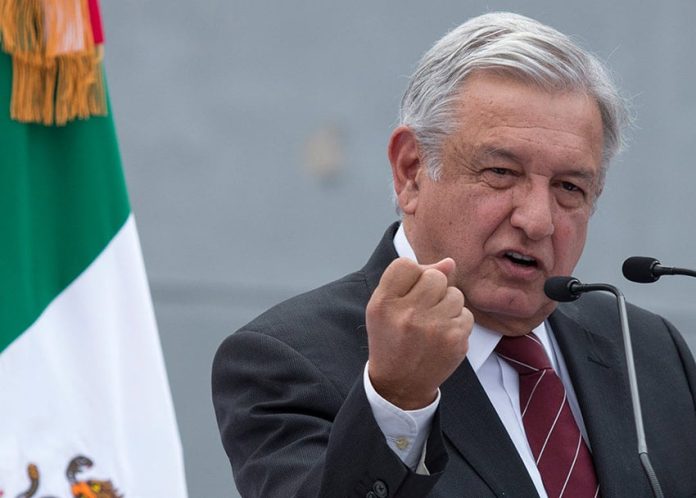
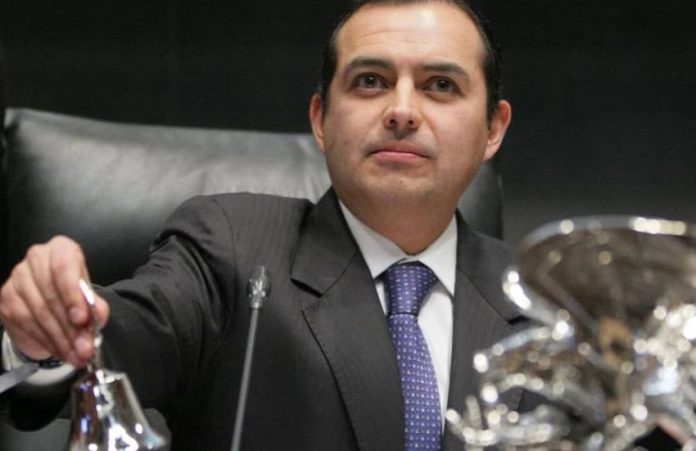
Senator Cordero: urges withdraw from bilateral collaboration.
Senator Cordero: urges withdrawal from bilateral collaboration.

Mexico’s Congress made a bold proposal to the government’s executive branch this week in response to the United States’ separation of migrant children from their parents at its southern border: suspend cooperation with the U.S. on migration, counter-terrorism and the fight against organized crime.

In a Permanent Commission session Wednesday, Senate president Ernesto Cordero read a pronouncement that condemned the United States government’s zero-tolerance policy which led to the separation of more than 2,000 children from their parents after they crossed into the United States without going through an authorized port of entry.

The pronouncement called on the federal government to “withdraw from any scheme of bilateral cooperation with the United States of America on matters of migration, the fight against terrorism and the fight against organized crime as long as President Donald Trump doesn’t behave with the respect that migrants deserve.”

The Permanent Commission also called on international organizations to condemn the United States’ immigration policy and said it would send a letter to every member of the U.S. Congress urging them to put an end to the “cruel and inhumane” practice.

The same day, Trump succumbed to domestic pressure and signed an executive order aimed at ending the separation of families at the border.

Prior to signing the order, Trump maintained that the United States’ southern border would not be jeopardized by the decision.

“We’re going to have strong — very strong — borders, but we are going to keep the families together,” he said.

“I didn’t like the sight or the feeling of families being separated . . .  [the policy] continues to be a zero-tolerance, we have zero tolerance for people that enter our country illegally.”

Trump’s signing of the executive order came just days after he said that the only way to stop the separation of families was through the actions of Congress because “you can’t do it through an executive order.”

However, after an onslaught of criticism he changed his mind.

Foreign Affairs Secretary Luis Videgaray, who earlier described the practice of separating children from their parents as “cruel and inhumane,” welcomed the decision in a Twitter post but added that the Mexican government would continue to provide consular protection to all children in vulnerable situations.

The president of the foreign affairs committee of the lower house of Congress, however, said that the executive order signed by Trump doesn’t go far enough to protect the rights of migrant children.

Víctor Manuel Giorgana of the ruling Institutional Revolutionary Party (PRI) told the newspaper Milenio that even though the new order meant that children wouldn’t be separated from their parents, they would still be subjected to inhumane conditions in United States detention centers.

He also said that Trump’s decision was only taken due to the international and domestic pressure the U.S. president came under and charged that the treatment of migrant children should be in strict accordance with the United Nations Convention on the Rights of the Child.

A delegation of Congress members traveled to Washington D.C. yesterday in order to meet with their United States counterparts to discuss the treatment of migrants and lobby them to protect their rights.

Source: El Universal (sp), Milenio (sp), The New York Times (en)
Mexico City market mural project enters second stage

0
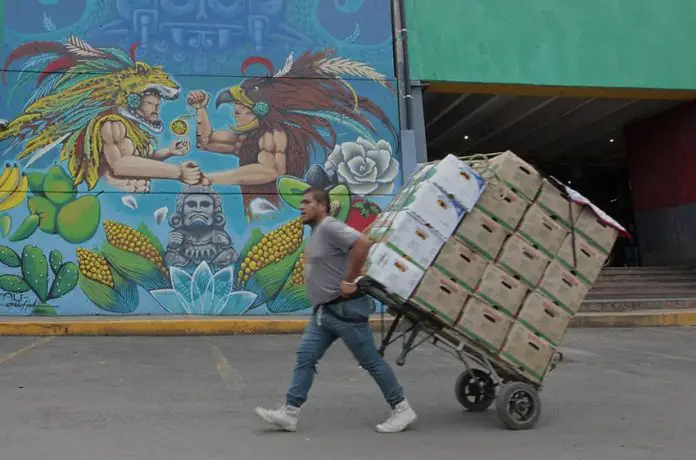
A man pulls a produce cart past one of the existing murals at the Mexico City market.

The second stage of an ambitious mural project that will turn the walls of Mexico City’s largest wholesale market into Latin America’s largest open-air art gallery is under way in earnest.

When the Central de Muros project is completed, 9,000 square meters of walls at the Central de Abasto (Supply Center) will be covered with colorful urban art.

Itze González, director of the We Do Things collective — which is coordinating the project — said that a total of 50 Mexican and international artists will complete 39 murals as part of the second phase.

The paintings will be between 20 and 26 meters wide and six meters high and are expected to be completed by the beginning of August.

The United Nations (UN) is also participating in the project and each of the murals will in some way integrate the organization’s 17 sustainable development goals in order to raise awareness of them.

Experienced Mexican artist Gabriel Macotela has been designated goal 16 — Peace, Justice and Strong Institutions — while other themes that will be featured include life below water, climate action, gender equality, clean water and and end to hunger.

“The aim of these global goals is to eradicate poverty, protect the planet and ensure the prosperity of everyone as part of a new agenda of sustainable development,” said Giancarlo Summa of the UN Mexico Information Center.

The first stage of the project started last September and involved the painting of 24 murals that celebrated the 35th anniversary of the market.

The head of the Central de Abasto Trust, Sergio Palacios Trejo, said the impact of the project had been positive because people have stopped throwing trash against the painted walls and none of the murals had been vandalized. It has also made the market more colorful and welcoming.

González said the murals have also made the market safer and that because members of the community participated in their creation, they have also helped to protect them from vandalism.

As part of the project’s second stage, two art workshops will be held including one in which children will have the opportunity to learn about and try their hand at creating urban art.

Artists that will paint new murals at the market, which is located in the eastern borough of Iztapalapa, include Hows, BeoHake, UNEG, Chula Records, Los Calladitos and Japanese artist Kenta Torii.

Source: Milenio (sp), El Universal (sp)

Banxico raises interest rate to 7.75% in move anticipated by markets

0
Peso may have already priced in an election win by AMLO.

The Bank of México increased its benchmark interest rate by 25 basis points today to 7.75%, the highest level since December 2008.

The rate hike is the second this year after the central bank, also known as Banxico, raised its key rate by the same margin in February. The decision, taken unanimously by the Banxico board, was widely anticipated by financial markets.

“It is forecast that the economy will continue to transit through a complex panorama, both externally and internally, which makes it particularly important that, in addition to pursuing a prudent and firm monetary policy, measures are adopted that encourage greater productivity and sustainably consolidate public finances,” the bank said in a statement.

In its final monetary policy announcement before the July 1 presidential election, Banxico also said it would not hesitate to make further moves if necessary.

Inflation decreased slightly in May to an annual rate of 4.51% compared to 4.55% in April but Banxico said that some previously identified upside risks have begun to materialize, meaning that the downward trend is likely to slow or stagnate.

“In particular, there has been a greater depreciation of the exchange rate and pressures on the price of gasoline and LP gas associated with increases in their international benchmarks. If these factors persist, the rate of decline in inflation would be affected,” Banxico said.

With regard to the United States’ recent decision to impose tariffs on Mexican steel and aluminum imports, Banxico said it expected that the duties would only have a short-term and limited impact on inflation.

However, if monetary policy was not modified, the tariffs too could contribute to a slowing of convergence towards the inflation target of 3%, the bank said.

Marco Oviedo, chief economist for financial services company Barclays in Mexico, told the newspaper El Financiero that he expected that today’s interest rate increase would be the last adjustment for the year before a downward adjustment is made next year.

Oviedo also said that he expected inflation to remain stable at around 4%, which he noted was above the central bank’s target and therefore would obviously “keep Banxico on the prudent side.”

Benito Berber, a strategist from Japanese financial company Nomura Securities, said that future monetary policy decisions will be heavily dependent on the prevailing exchange rate and inflationary pressures.

The peso has declined 12% against the U.S. dollar during the course of the second quarter of this year but rallied slightly to gain 0.85% this afternoon and is currently trading at around 20.2 to the dollar.

The currency has come under pressure this year due to uncertainty about the future of the North American Free Trade Agreement and the outcome of the July 1 presidential election.

Presidential candidate Andrés Manuel López Obrador has a commanding lead in the polls and according to an analyst from Exotix Capital, it’s likely that the peso has already priced in the “near certainty of an AMLO victory.”

However, Rafael Ellis added that “a period of heightened volatility” for the peso is expected “between AMLO’s likely election victory on 1 July and inauguration day on 1 December, since it will be during that period that investors will get to know AMLO’s likely cabinet.”

Source: El Financiero (sp), Business Insider (en)

In downtown Guadalajara, a revival of the art of handmade books

0
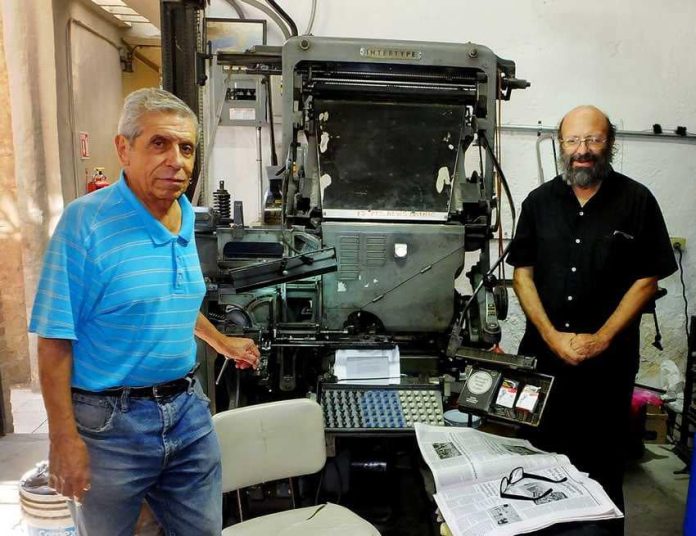
Villegas, left, and Orozco-Farias at Impronta.
Villegas, left, and Orozco Farías with a Linotype machine.

José Clemente Orozco Farías is the grandson of one of Mexico’s greatest muralists and bears his name.

“He’s also one of my best customers,” the owner of an English bookstore told me, “and you should see what he’s doing over at his place, which is called Impronta. I think you’ll find it interesting.”

The other day I did just that. The word impronta means impression in English, which didn’t give me too clear an idea of what sort of establishment it was, but I figured it was going to be plenty noisy inside, judging from its location right in the heart of the city of Guadalajara.

Wrong on that score! A little passage led us into a marvelously quiet patio with tables and chairs and a menu offering coffee and imaginative desserts like Ganache de Pistache (Pistachio Fudge). “Well, well,” I told my wife, “Impronta is a café.”

José Clemente Orozco Farias was there waiting for us, the most peaceful of men with the bushiest of beards. “Let me show you around,” he said, leading us into a room filled with bookshelves.

On a table were some of the most unusual books I’ve ever seen: the paper was beautiful, each letter was beautiful, the bindings were beautiful. Some of the books were large-format collections of fine art, while others were thin but elegant printings of a single poem.

“We made all these and we sell them here,” explained Orozco, who told us to call him Clemente. Just when I had concluded that Impronta is a bookstore, Clemente took us into another room, a big one, filled with very large machines. It was like walking into a museum of the history of printing, only most of these machines were in use, operated by the few old-timers left in town who not only knew what typesetting meant, but were experts in the craft.

“This is Rafael Villegas,” said Clemente. “He’s going to print your names the good old way.” Don Rafael sat down in front of a strange-looking keyboard with 90 pre-QWERTY keys, punched out some letters, pulled a few levers and PSHHH! With a release of steam out popped a little lead ingot saying “John and Susy Pint,” mirror-image of course.

“Careful, it’s hot,” said Don Rafa as he placed it in my hand. Clemente then put the ingot face up on another machine, inked it by hand, ran a drum over it, and out came our names in the center of a fine sheet of expensive paper.

“This,” I thought, “is something every new millennial needs to experience,” and, in fact, Clemente told us, Impronta regularly offers workshops on the forgotten kind of printing that actually lets you feel the letters on the other side of the paper.

Our tour took us through several more rooms containing creaking cabinets and chests of drawers filled with wooden and zinc engravings of every style of letter imaginable, some of enormous size.

At last we returned to the café where I asked José Clemente Orozco Farías just how he got interested in the art of book making.

“I grew up in Mexico City and came to Guadalajara when I was 17 to finish high school,” he told me in excellent English. “I was thinking of going into architecture, but then I went  off to the U.S.A. for college, to Dartmouth, where I got very interested in art history. One thing I liked was that I could take all kinds of courses and explore other disciplines.

“Well, I was in a work-study program and they sent me to a studio that produced posters for one of the cultural centers. They commissioned me to design posters for silk screening and I first learned about typography here. I had always done drawing — it’s in the family, from both sides, in fact — but here I focused on print making.”

Dartmouth’s library, I should mention, houses one of the most famous murals by Clemente’s grandfather, José Clemente Orozco, entitled The Epic of American Civilization, a U.S. National Historic Landmark.

Clemente ended up studying at the Rhode Island School of Design. “At that time they weren’t using computers; everything was done photomechanically, so that’s where I first came into contact with lead type and I learned typesetting.” Later he accepted a fellowship at the University of Texas Press in Austin “where I learned the more specialized craft of book design. In fact, I designed 20 books for them.”

In 2008 Orozco Farías and friends rescued their first cast-off Linotype machine and, the following year, started up the predecessor of Impronta in a garage, printing little booklets “in order to keep the machine running.”

Famed Mexican muralist José Clemente Orozco was one of the 20th century’s major artists, but few remember that he was also a skilled and versatile print maker. So is his grandson, Clemente, who is doing marvelous things in downtown Guadalajara.

The newspaper El Informador calls Impronta “a unique space in the city,” where one can find gorgeously printed and bound works available nowhere else.

An example is Impronta’s first book, Caminar – Walking by Henry David Thoreau, 92 pages. This is a bilingual edition — English and Spanish — of Thoreau’s most popular lecture, which discusses the importance of nature to mankind and how, in Thoreau’s words, “people cannot survive without nature, physically, mentally, and spiritually, yet we seem to be spending more and more time entrenched by society.”

This beautifully bound book is a collector’s item, printed on 100-gram Corolla Damasco paper. You can see what it looks like by visiting Impronta’s elegant web page.  You can also see a short video clip of the Impronta linotype machine in action here.

Sarah Smith of Dartmouth’s Book Arts Program says Orozco Farías and Impronta Casa Editora are part of a worldwide revival in handmade books.

The next time you’re in Guadalajara, you can discover for yourself what Clemente is doing by visiting Impronta and Café Diamante at Penitenciaría 414, between Libertad and La Paz. Their telephone number is 38252641 and they are open weekdays 9:00am to 5:00pm.

The writer has lived near Guadalajara, Jalisco, for more than 30 years and is the author of A Guide to West Mexico’s Guachimontones and Surrounding Area and co-author of Outdoors in Western Mexico. More of his writing can be found on his website.

[soliloquy id="54934"]

Ex-president Fox named to board of marijuana magazine

0
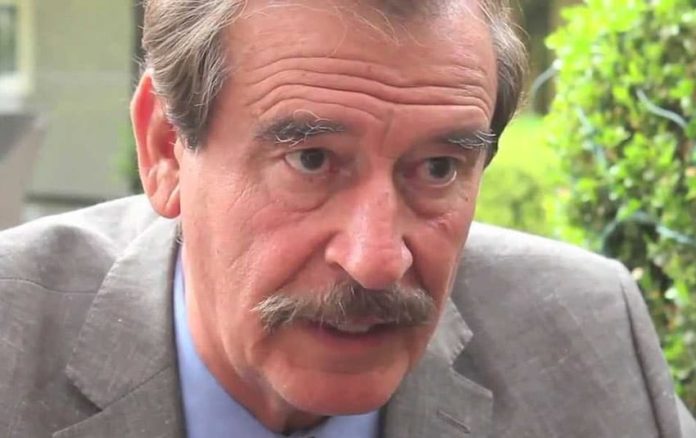
Legalization advocate Fox.
Legalization advocate Fox. high times

An ex-president and supporter of the legalization of marijuana has joined the board of directors of the company that owns the United States marijuana magazine High Times.

Vicente Fox, who served as Mexico’s president from 2000 to 2006, joins the board just as Hightimes Holding Corp prepares for an initial public offering on the Nasdaq exchange later this year.

High Times CEO Adam Levin said Fox was an invaluable addition to the board: “Vicente Fox brings international relationships and decades of experience in business, politics and policy to the company.”

Fox has been a vocal proponent of the global legalization of marijuana for a number of years.

In an interview with the Associated Press he said he believed a robust and legitimate marketplace in the U.S. and Mexico will inevitably curtail the latter’s cartel violence by hurting their profits and limiting their ability to buy weapons. He also expected it will create jobs and medicines.

Of High Times Fox said, “It’s very rare to see an organization in a growing industry that has already established so much strength and significance — especially before the industry was even truly born.”

He praised the publication, which was established in 1974, for building “an empire in the dark,” adding that “there’s never been a better opportunity to join the fight.”

Fox suggested that cannabis trade could someday fall under the parameters of the North American Free Trade Agreement (NAFTA). Canada approved legislation this week that legalizes marijuana.

“I don’t think that governments will ever have the capacity to impose behaviors, to impose conduct, to human beings,” Fox told the AP. “At the very end, prohibitions don’t work. What works is your own free decision.”

Like Fox, High Times has long advocated the legalization of cannabis.

Source: NPR (en)

Week’s death toll from flooding rises to seven

0
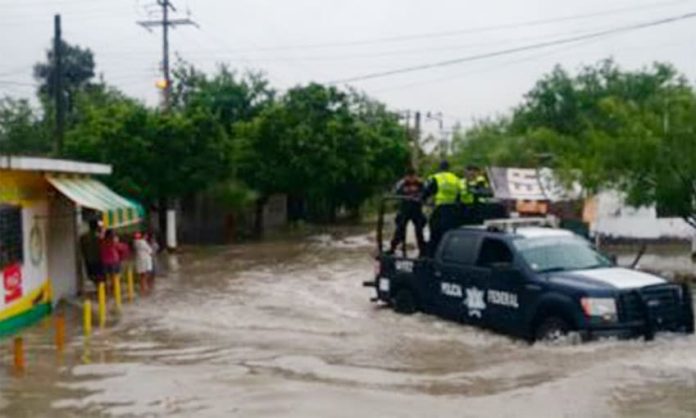
Flooding in Tamaulipas today.

Seven people have now lost their lives in less than a week due to flood-related incidents in four different states, including six in the past two days.

In Reynosa, Tamaulipas, a 40-year-old man drowned in his car yesterday after it was swept away by floodwaters on Río San Juan Avenue in the Fuentes neighborhood.

In the same city, a 20-year-old man also died yesterday after he accidentally touched an electrical cable while on the roof of his home. Another young man was also electrocuted in Matamoros in a similar incident.

A total of 40 neighborhoods reported flood damage in Reynosa and residents of five were forced to evacuate their homes. Dozens of drivers were left stranded inside their vehicles in floodwaters.

In Guanajuato, just north of the capital in the community of Llanos de Santa Ana, a man was killed Tuesday night after he was hit by rocks that fell from a ridge next to the Valenciana-Cristo Rey highway after being dislodged due to heavy rain.

There was also a landslide on the Panorámica-Cerro de los Leones near the entry to the Guadalupe mine. Both state highways were closed.

Flooding also affected the Guanajuato cities of Léon and Silao, the municipality of Romita and blocked the Silao-Irapuato highway near the turn-off to the state capital, stranding at least one car.

In the city of Aguascalientes, a woman and a teenage girl died of carbon monoxide poisoning while trapped in a vehicle caught up in floodwaters on Tuesday afternoon. Many other vehicles were left stranded by the flooding that occurred throughout most of the city.

At least 32 neighborhoods were affected and more than 70 shelters were opened in the city to attend to those forced to evacuate their homes.

Aguascalientes Governor Martín Orozco Sandoval said that a census would be carried out to determine the full extent of damage the heavy rains have caused.

The six flood-related deaths this week followed the drowning of a 14-year-old boy who last Friday was swept by floodwaters into a drain located on the Puebla-Mexico City highway in the Iztapalapa borough of the capital.

Source: Milenio (sp), Aristegui Noticias (sp), Expansión (sp)

Swell warning issued in six states

0
Big waves in the forecast.

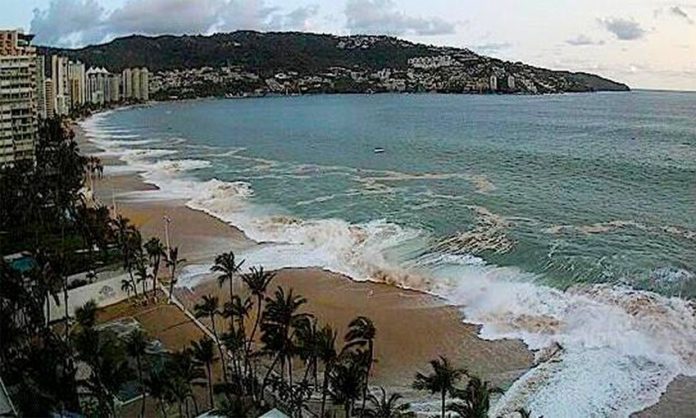
A swell warning was issued yesterday evening for six Pacific coast states.

In Oaxaca, the Civil Protection office issued a 48-hour swell warning for the state’s 27 coastal municipalities.

Civil Protection chief Heliodóro Díaz Escárraga explained that the phenomenon, known in Mexico as mar de fondo, was caused by storms farther south in the Pacific Ocean and can bring unusually high waves to the coast.

Díaz urged the public to heed any and all warning issued by authorities.

As one tropical wave exits the state to the west, another is entering from the east. These phenomena, coupled with the influx of humidity from the Pacific Ocean, will continue to generate electrical storms and rains throughout the state.

The swell warning extends as far as the coasts of Chiapas in the south and Jalisco in the north. The National Water Commission (Conagua) warned that waves could be higher than 2.5 meters.

Source: Milenio (sp)

Another record month: May homicide numbers worst ever seen

0
A homicide investigation, an all-too-common sight.

Homicide numbers in May were the highest ever recorded, according to the National Public Security System (SNSP).

There were 2,530 reported cases of intentional homicides during the month, breaking the previous record of 2,371 set last October.

The total number of victims was 2,890, a figure that is 360 more than the number of cases because some investigations related to two or more deaths. On average, there were 93 intentional homicides per day last month, or almost four per hour.

Three of the four most violent months of the past 20 years have now been recorded this year. March 2018 was the third most violent month since comparable records were first kept in 1997 while April was the fourth most violent.

In its latest crime rate report, the SNSP also said there were 11,437 intentional homicide investigations in the five-month period to the end of May which related to the murder of a total of 13,298 people.

The number of cases is 15% higher than the 9,937 reported in the same period last year.

Colima remained the most violent state in the country, according to per-capita murder rates, with 33 intentional homicides per 100,000 residents in the January to May period.

Baja California was next with 29 intentional homicides per 100,00 followed by Guerrero with 26, Chihuahua with 17 and Guanajuato with 16. The increase in the rate in Guanajuato is particularly notable.

There were 1,302 murder victims in the state during the first five months of the year, more than double the 575 cases recorded in the same period last year.

The number of intentional homicides also increased in Mexico City between January and May, where there were 480 reported cases and 550 victims.

The homicide rate for Mexico as a whole was just over nine per 100,000 residents.

In raw numbers, Baja California recorded the highest number of cases during the period with 1,071 followed by Guanajuato with 1,005 and Guerrero with 966.

Yucatán had the lowest number of cases of any state with 18, followed by Campeche with 20 and Aguascalientes with 35.

SNSP data shows that just over two-thirds, or 68%, of the total number of murders were committed with firearms.

It also shows that gun-related homicides increased by more than 100% in nine of the country’s 30 most violent municipalities in the first four months of the year.

Tepic, Nayarit, experienced the sharpest spike with a 555% increase followed by the Guanajuato municipalities of Irapuato and Salamanca, both of which recorded upsurges greater than 350%.

The number of femicide victims — women and girls killed on account of their gender — is also on the rise.

There were 328 femicide victims in the first five months of the year, 135 more than in the same period last year. The incidence of the crime has more than doubled in the space of just three years.

In contrast, kidnapping rates were down. There were 401 cases reported at the state level in the first five months of the year compared to 482 last year.

Federal investigations into the crime are also down slightly, from 143 last year to 121 cases this year.

Tamaulipas, Veracruz and Zacatecas have the highest kidnapping rates in the country.

A total of 29,168 homicides last year made 2017 Mexico’s most violent year of at least the last two decades but if the rate recorded in the first five months of this year continues, 2018 will surpass that.

Source: Milenio (sp), Animal Político (sp)

Salmonella warning issued for Honey Smacks cereal

0
The cereal affected by salmonella contamination.

The federal consumer protection agency has issued a warning about the possible presence of salmonella in boxes of Kellogg’s Honey Smacks cereal.

The warning from Profeco comes almost a week after the first reports of the contaminated cereal, manufactured and packaged in the United States, began to surface.

That country’s Food and Drug Administration alerted consumers last week after 73 people in 31 states were reported to have become sick after eating salmonella-infected Honey Smacks. The illnesses took place between March and May.

Twenty-four people were hospitalized, but there have been no fatalities.

Kellogg’s issued a voluntary recall of the brand last Wednesday.

Profeco said the 434, 652 and 866-gram boxes of the cereal are most likely to be contaminated, but authorities in Mexico and the U.S. have advised consumers to avoid the cereal altogether.

The affected products have “best before” dates between June 14, 2018 and June 14, 2019.

On its Mexico website Kellogg’s asked consumers who bought the product not to eat it, dispose of it and contact the company for an exchange with another Kellogg’s product. It said no other product was affected by the salmonella contamination.

There had been limited distribution of the Honey Smacks cereal in Mexico and several other countries, the company said.

Source: Milenio (sp)

Black widow spiders identified in Yucatán for 3 years now

0
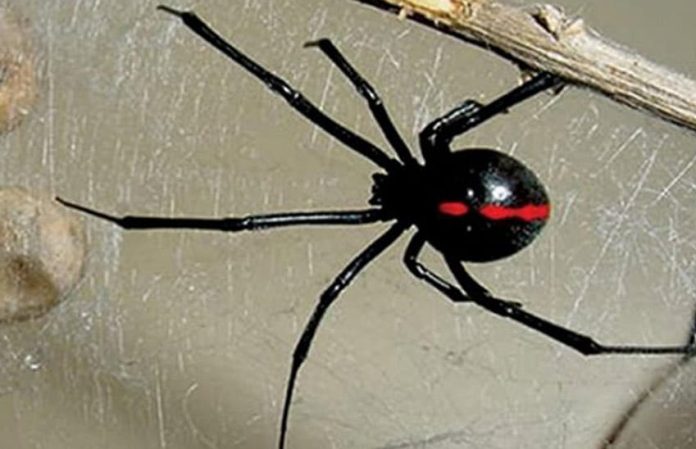
A black widow spider, now found in Yucatán.

Black widow spiders have had a presence in Yucatán for three years now, according to a state health official who says that on average two people are bitten every year.

The poisonous spiders, which are not endemic to the state, are thought to have arrived inside boxes of imported goods.

So far, most black widow bite reports have come from the southern part of the state, but infectious disease specialist Daly Martínez Ortíz said some have been sighted farther north in Valladolid, Tizimín, Tekkit and Mérida, the state capital.

“Some patients can overcome the effects of the venom by themselves,” explained Martínez, “but some experience lasting effects that can end in death.”

The specialist recommended that medical care be sought within two hours following a bite, because that window of time is ideal for the antidote to fight the effect of the venom.

Black widows have an unusually potent venom containing the neurotoxin latrotoxin. Females have unusually large venom glands and their bite can be particularly harmful; however, despite the arachnid’s notoriety, medical consensus is that its bites are rarely fatal or even produce serious complications.

Only the bites of the females are dangerous to humans.

This spider, which grows to about two centimeters long, is readily identifiable by the reddish markings on the abdomen, which are often (but not always) hourglass-shaped.

Source: El Universal (sp)