Home Blog Page 2210

Conflict continues between 2 Oaxaca municipalities over access to water

0
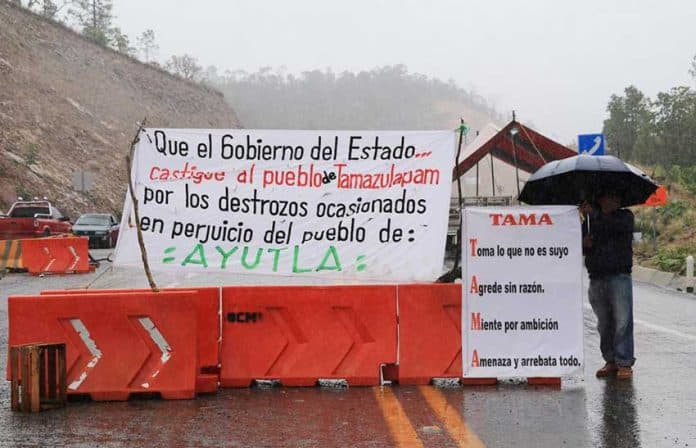
A highway blockade by Ayutla residents protests the water situation.

Land disputes in Oaxaca are common but a current conflict between residents of two municipalities is over access to drinking water.

A year and a half ago, authorities in San Pedro y San Pablo Ayutla, a municipality in the state’s Mixe region about 100 kilometers southeast of Oaxaca city, connected to the water supply of the neighboring municipality of Tamazulápam del Espíritu Santo when their own supply ran dry.

However, before doing so they failed to ask for permission, according to reports, triggering a conflict between comuneros (community landowners) in the two municipalities.

On May 17, 2017, a violent clash broke out between the two opposing groups, with both guns and sticks used in an ugly confrontation.

One person died, two people were kidnapped, dozens were injured and scores of houses were destroyed.

Tamazulápam councilor Román Rodríguez told the newspaper Milenio that an attempt by Ayutla residents to direct all the water to that municipality led to the violence.

“On that occasion, they blocked the passage [of water] to our pipes and dynamited our catchment system, they wanted all the water for themselves,” he said.

Ayutla Mayor Yolanda Pacheco described the clash as “a horrible encounter.”

Ever since, water supply to Ayutla has been cut off, forcing residents to find an alternative source or look to the sky for relief.

Since this year’s rainy season began three months ago, Ayutla resident Hermelinda Hernández and her children go out with buckets whenever the heavens open to collect rainwater for their everyday needs.

Hernández’s neighbors, one of whom is her brother, do the same.

[wpgmza id=”63″]

But things are more difficult when there is no rain.

“Before the rainy season, we had to go to a well that’s four kilometers down the mountain and fill our five-liter containers . . .” said Bernardo Hernández.

“The problem isn’t going down but rather having to walk [back up] for 40 minutes in the forest with the container on your shoulders or with a rope around your forehead,” he explained.

The Ayutla mayor said the lack of clean water is taking a heavy toll on the municipality’s residents.

“In Ayutla alone there are 5,686 citizens and those who have been affected the most are the elderly. There are already people who are sick and the outbreaks of gastrointestinal infections are becoming more frequent. Our children bathe every third day and us adults, once a week,” Pacheco said.

State authorities say they have tried to solve the problem by holding 17 meetings aimed at reaching an agreement between the two municipalities so that together they can install a new water capture and storage system to supply both.

However, a resolution has not yet been reached.

Residents of both municipalities are instead insisting that the National Water Commission (Conagua) and the state government install the new system in order to avoid further confrontations in the future.

Lack of a reliable water supply and water scarcity are major problems in several parts of Mexico.

Almost nine million Mexicans don’t have access to drinking water, according to Conagua, while a further 13 million rely on deliveries from water tankers or obtain their water from contaminated wells.

One solution is to install specially designed rainwater harvesting systems, which Mexico City organization Isla Urbana is doing in some of the capital’s most marginalized neighborhoods.

Source: Milenio (sp)

Tijuana council passes prohibition on plastic bags

0
plastic bags
No more of these in Tijuana.

The municipal council of Tijuana, Baja California, has unanimously approved a prohibition on plastic bags.

Convenience stores and supermarkets will have 180 days to phase out the ubiquitous plastic bags in favor of environmentally-friendly alternatives.

The municipality will also implement strategic solid waste management programs and a campaign that will inform the public and raise awareness about the harmful effects of the bags.

The measure is a direct result of Tijuana being the first city in Mexico to join the global Clean Seas campaign in June last year.

The campaign against plastic pollution was launched in the spring of 2017 by the United Nations Environment Program.

The ban on bags has the support of the local service industry, the Tijuana chapter of Canacintra, the National Chamber for Industrial Transformation and the non-governmental organization Economía Verde Aplicada.

The president of the municipal commission for the environment, sustainable development and health, Mónica Vega, explained that the measure puts Tijuana at the national forefront of sustainable cities by implementing an environmentally-aware public policy.

According to data compiled by the federal Secretariat of the Environment, Mexico generates close to 103,000 tonnes of trash every day, 10.9% of which are plastics which are often washed away by rain and end up in the ocean.

Tijuana is at least the second municipality to outlaw the bags in the last month. Querétaro appears to have been the first to do so. Ensenada, Baja California, recently followed suit.

Source: Milenio (sp), Excélsior (sp)

Goodbye Frida and Diego? New 500-peso bill coming Monday

0
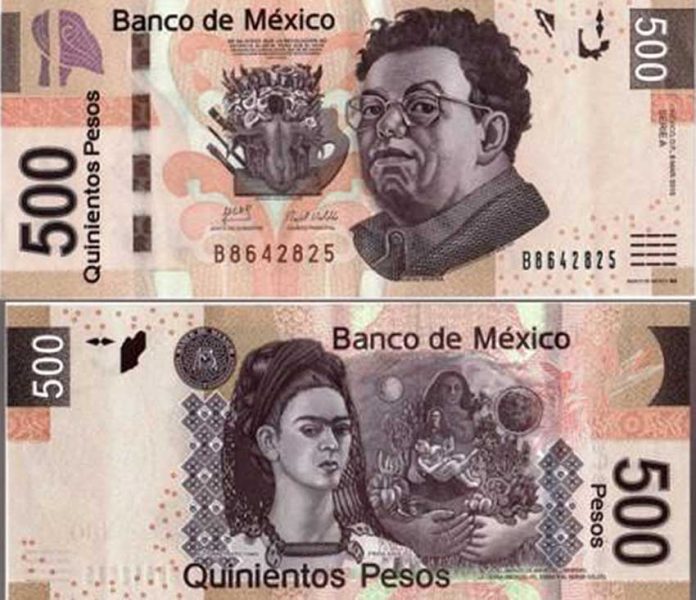
Rivera and Kahlo on the 500-peso banknote.

A new 500-peso bill will enter circulation Monday but whether images of renowned Mexican artists Frida Kahlo and Diego Rivera will remain features of the note is a mystery.

The Bank of México announced that it will officially launch the new banknote at an event in Mexico City but it didn’t provide any information about its design.

The 500-peso note is the most widely circulated denomination and first appeared in 1994 featuring an image of army general Ignacio Zaragoza, who led the Mexican forces to victory over invading French forces at the Battle of Puebla on May 5, 1862.

The version featuring images of Kahlo and Rivera — who married in 1929, divorced 10 years later then remarried in 1940 — has six anti-fraud features and has circulated since 2010.

A self-portrait of Rivera, considered one of Mexico’s “big three” muralists along with José Clemente Orozco and David Alfaro Siqueiros, appears on one side of the note alongside an image of his painting Desnudo con Alcatraces (Nude with Calla Lilies) adorned with three paint brushes and a palette.

A self-portrait of Kahlo, considered one of the great painters of the 20th century and almost certainly the most famous Mexican artist internationally, features on the opposite side.

An image of her 1949 painting El Abrazo del Amor del Universo, la Tierra (México), Yo, Diego y el Señor Xólotl (The Love Embrace of the Universe, the Earth (Mexico), Myself, Diego and Señor Xólotl) also appears.

Frida Kahlo’s image has been widely used on a range of consumer products and was also the inspiration for a Barbie doll.

However, a judge barred the sale of the doll in Mexico earlier this year after the artist’s family, who have sole rights to her image, launched legal action against toy multinational Mattel.

The banknote bearing her and Diego’s likeness will retain its value but will be gradually withdrawn from circulation, the central bank said.

There are banknotes of six denominations in Mexico, ranging from 20 pesos to 1,000.

Among the other prominent Mexicans who feature on the nation’s currency are former president Benito Juárez (20 pesos), pre-Hispanic ruler of Texcoco Nezahualcóyotl (100 pesos), nun, scholar and acclaimed writer Sor Juana Inés de la Cruz (200 pesos) and priest and independence hero Miguel Hidalgo y Costilla (1,000 pesos).

Source: El Financiero (sp), El Universal (sp) 

Palenque mask believed to represent 7th-century Mayan ruler

0
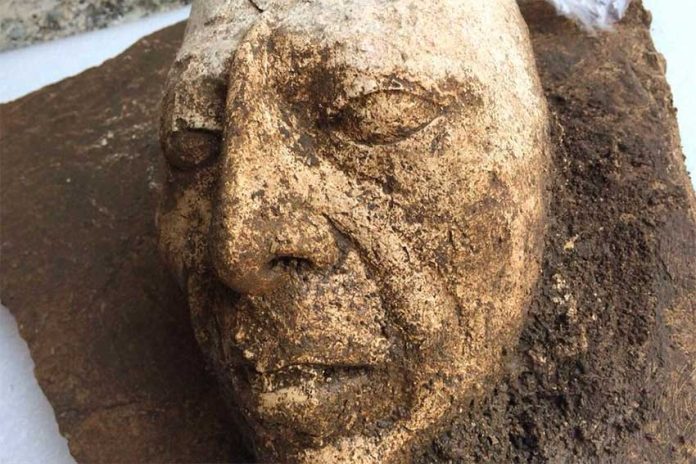
The mask believed to depict King Pakal.

Routine conservation work in the Mayan city of Palenque, Chiapas, led to the discovery this week of a trove of archaeological treasures, including a mask believed to depict the Mayan ruler Pakal in his old age.

A team of specialists from INAH, the National Institute of Anthropology and History, led by Arnoldo González Cruz, was working on the foundations of House E of the site’s central complex, The Palace, when they discovered a ritual offering.

Small objects including ceramic figurines and flower pots, carved bones, jadeite, flint, mother of pearl and obsidian fragments and bone fragments belonging to several animal species were found along the prize discovery, a stucco mask thought to represent King Pakal.

Given the wrinkled facial features, including a prominent lower lip, the archaeologists believe that the face represents the likeness of the Mayan ruler.

If proven true, “it would be the first representation we have of an old Pakal,” said González.

Offerings like this “are normally related to the end of a period, an architectural renovation or the building of a new edifice,” said the chief archaeologist. “In this case, it looks like it was a renovation.”

The House E discovery had a second remarkable object, an ornamental nose plug the likes of which had not been discovered “either in the Mayan area or in Mesoamerica. It is unique,” said González. He added that while the object did not belong to Pakal, it does belong to the epoch in which he lived, the Mayan late classic.

González and his team started a three-year-long conservation and restoration project at Palenque in January, funded by a US $500,000 donation by the U.S. Ambassador’s Fund for Cultural Preservation.

Born in 603, Pakal became king at the age of 12 and ruled until his death in 683.

Source: El Universal (sp), Milenio (sp)

Regional Gulf Cartel leader captured in Nuevo León

0
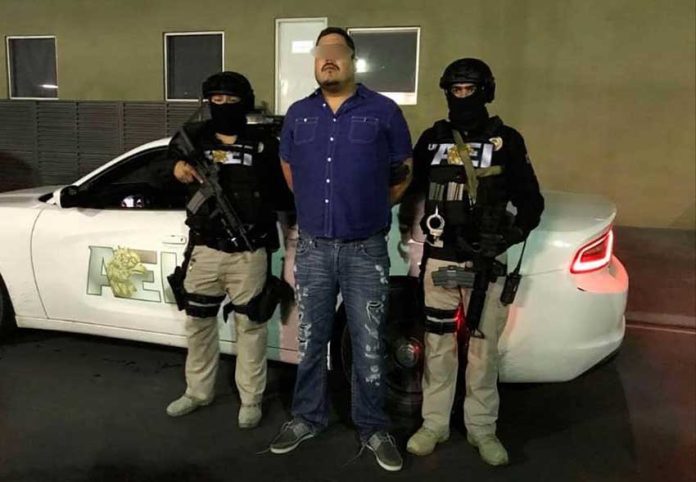
Suspected regional leader of the Gulf Cartel.
Suspected regional leader of the Gulf Cartel was arrested yesterday.

A suspected regional leader of the Gulf Cartel was arrested yesterday in a joint operation carried out by state and federal agents in Monterrey, Nuevo León.

Héctor Adrián “La Yegua” Lucio Benavides is believed to the head of the Ciclones gang, which works with the Gulf Cartel in the theft of fuel, extortion, kidnapping and trafficking migrants and drugs to the United States.

The Ciclones operate in Nuevo León and Tamaulipas, in the Huasteca region of San Luis Potosí and in northern Veracruz.

The arrest yesterday morning of Lucio and his right-hand man, Christian Aarón Hernández Cabrales, is the result of one year of collaborative investigation by the National Security Commission and local authorities.

Investigations have found that Hernández was in charge of the Ciclones’ kidnapping and drug smuggling logistics.

The two men were apprehended in the Cumbres Elite neighborhood of Monterrey without firing a single shot. The men were in possession of firearms, drugs, mobile phones and cash at the time of their arrest.

National Security Commissioner Renato Sales Heredia told a press conference that “Héctor Adrían is the organization’s main operator, and was considered a priority target by the federal government and by the states of Nuevo León and Tamaulipas.”

Lucio had an outstanding arrest warrant issued by the federal government for homicide and kidnapping, and his accomplice was wanted for the same crimes.

Source: El Universal (sp), La Jornada (sp)

10 dead after 4 attacks against police, military in Guerrero

0
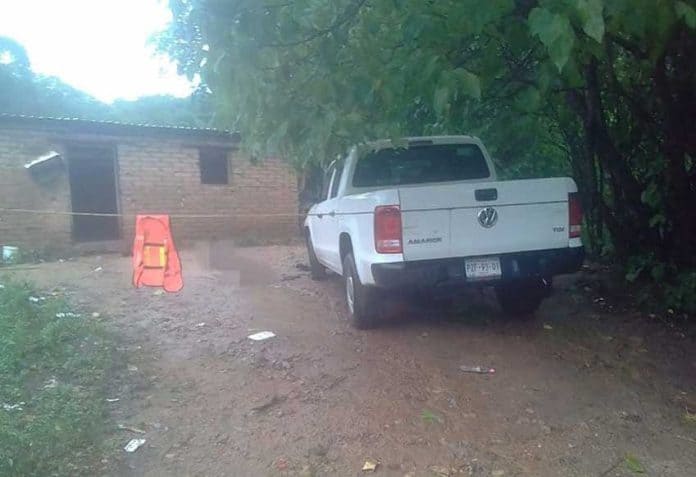
Site of a gun battle that left seven dead.

An army captain and six civilians were killed in one of four attacks against police and military forces in Guerrero this week that left a combined total of 10 fatalities.

Armed men attacked a military convoy at around 7:30am yesterday in El Naranjo, a community in the coastal municipality of La Unión, which borders Michoacán.

According to the police report, soldiers were conducting a routine patrol when they were shot at from inside a home.

The soldiers returned fire, leading to a gun battle that caused the seven deaths.

State security spokesman Roberto Álvarez Heredia said that six aggressors died at the scene of the incident while the army captain, identified only as Juan Manuel “N”, died en route to a hospital in Michoacán.

Armed civilians also attacked a group of state police officers yesterday on the Acapulco-Chilpancingo federal highway at a location around 10 kilometers south of the latter city near the community of Petaquilas.

Two civilians were killed and one police officer was wounded in the ensuing shootout and a self-defense group from Petaquilas blocked the highway for two hours after the incident.

Earlier in the week, two ministerial police officers were attacked Wednesday in the Acapulco neighborhood of Ciudad Renacimiento while investigating an extortion case.

According to a statement issued by the Guerrero Attorney General’s office, the incident occurred at around 1:00pm in the El Rinconcito restaurant.

The officers returned fire and one civilian was killed. Both officers were wounded and subsequently received medical attention.

Twelve spent bullet casings were found at the scene.

Also in Acapulco, armed civilians ambushed a contingent of state police officers Monday, wounding five including a policewoman. The officers were carrying out a patrol of La Venta neighborhood when the attack occurred.

In other incidents in the state’s most famous tourist draw, armed men set five cars on fire yesterday in a private parking lot and a man was shot on the city’s malecón, or seaside promenade.

Guerrero is one of Mexico’s most violent states and the nation’s largest opium poppy producer.

In a report published by the Washington Post last year, Acapulco was described as Mexico’s murder capital.

Source: El Universal (sp), Noticieros Televisa (sp)

Unions, officials that receive public funds will have to reveal their assets

0
New law is part of anti-corruption efforts.

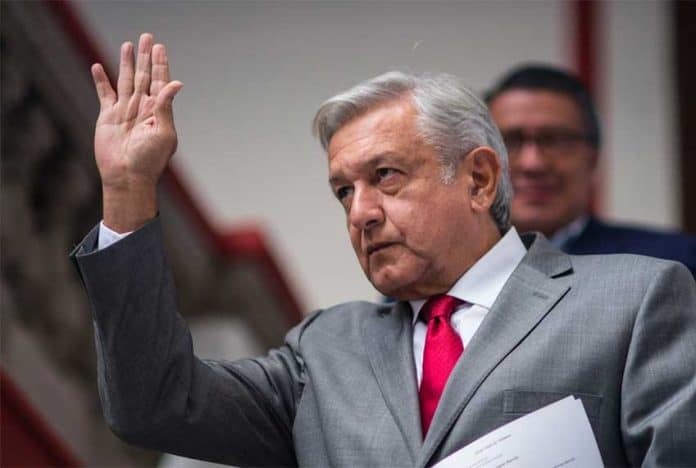
Union leaders, judges and all other officials who receive or manage public money will be required to publicly declare their assets under a new scheme proposed by the incoming federal government.

The aim of the so-called universal declaration system, put forward by president-elect Andrés Manuel López Obrador, is to avoid conflicts of interest and thus help stamp out corruption in the public sector.

Its implementation would require a reform to the General Law of Administrative Responsibilities.

According to López Obrador’s proposal, “all public officials, popularly elected representatives, judges, magistrates, members and officials of political parties and unions, members of civil associations and any other person who uses, collects, holds or manages [public] money or who assumes public duties of a pecuniary nature in the name of the government of the republic will participate, without any exceptions.”

The initiative also proposes the establishment of special criminal offenses for failing to disclose assets or providing false information on declarations, and aims to strengthen the punitive provisions for conflict of interest offenses as established in existing legislation.

“It would be necessary to complement this sophisticated regime of penalties with a new institutional design that allows them to be effective. The terrible institutional design for accountability has guaranteed total impunity for all public officials who offend in this respect,” the proposal states.

Anyone who occupies any public or judicial position would have to legally discharge himself or herself of any economic interests that could directly affect the exercise of their public responsibilities.

The proposal also stipulates that it would be “strictly prohibited for any public official or his or her family members . . . to use their public position to establish any kind of private business with national or international contractors, investors or business people.”

The proposal is critical of the fact that government departments that have the power to penalize public officials, such as the Secretariat of Public Administration (SFP) and the federal Attorney General’s office (PGR), are not independent from the Mexican president.

In addition, bodies that are independent — such as the Federal Auditor’s Office (ASF) and the federal Congress — have limited powers to investigate and punish officials, the document charges.

By eliminating conflicts of interest, the incoming administration estimates that it can save more than 764 million pesos (US $40.3 million) of public money.

The measures have received a positive reaction from union leaders.

Marco Antonio García Ayala, head of the National Syndicate of Health Secretariat Workers, said the system would help to avoid corruption.

“Without a doubt, it will be a measure to strengthen transparency and accountability in the management and use of public resources, which must be looked after. We’re in favor of the initiative in the terms proposed,” he said.

Fernando Salgado, political action secretary of the Confederation of Mexican Workers (CTM), also threw his support behind the proposal.

“The use of public resources must be transparent because when a union organization receives a donation, an allocation of funds or a subsidy . . . it must be used for the purposes for which it was intended, not go into someone’s pocket or bank account.”

Source: El Universal (sp)

Ex-Federal Police officer, ex-mayor sent to jail for organized crime

0
Former Michoacán mayor got 15 years.

An ex-cop and an ex-mayor got lengthy prison sentences this week for their links to organized crime.

In Mexico City, former Federal Police officer Germán Posadas Rico was sent to jail for 30 years for protecting cocaine shipments as they passed through the Mexico City airport, where he was stationed.

The drugs were being shipped from Colombia to Reynosa, Tamaulipas, before they were sent on to the United States.

Posadas was arrested in December 2014.

In Michoacán, the former mayor of Aguililla was sentenced to 15 years for engaging in organized crime.

Jesús Cruz Valencia was one of three mayors removed from office by self-defense forces in 2013 on suspicion of links to the Knights Templar cartel, or Caballeros Templarios. After he was expelled as mayor, he disappeared from the municipality.

When he showed up a year later at municipal headquarters, he was arrested by Federal Police.

Authorities say Cruz is a cousin of the Knights Templar’s ex-plaza chief in Aguililla, Tepacaltepec, Buenavista Tomatlán, Apaztingán and La Ruana.

Source: Milenio (sp)

López Obrador thanks Trump for refraining from ‘offensive comments’

0
López Obrador
López Obrador: 'There has been respect.'

Mexico’s incoming president expressed his appreciation yesterday to United States President Donald Trump for refraining from making “offensive comments” about Mexicans.

Andrés Manuel López Obrador remarked that Trump had been “very prudent” for some time in his references to Mexicans, which he felt ought to be acknowledged. “Up until now things are going well. There has been respect.”

He also said that talks to update the North American Free Trade Agreement (NAFTA) “are on the right track.”

But the winner of the July 1 presidential election, who has had baseball on his mind this week, paraphrased the legendary baseball player Yogi Berra with the caution: “It’s ain’t over till it’s over.”

Trump himself had a comment this week about López Obrador: “I think he’s going to be terrific.”

He also expressed optimism about the NAFTA talks with a tweet this morning that a deal was imminent.

“Our relationship with Mexico is getting closer by the hour. Some really good people within both the new and old government, and all working closely together,” Trump wrote. “A big Trade Agreement with Mexico could be happening soon!”

Source: El Financiero (sp), Reuters (en)

Police are not functioning properly at state or municipal level: López Obrador

0
federal police
They're not ready to replace the military.

Neither state nor municipal police are functioning properly in the fight against violence and crime in Mexico was the blunt assessment offered today by president-elect Andrés Manuel López Obrador.

“In my travels around the country, there is an almost generalized opinion that the state and municipal police forces are not working, to say it diplomatically, they’re not fulfilling their responsibility. There are honorable exceptions but that’s the bitter truth,” he told a press conference.

López Obrador also said that military forces will continue to carry out public security duties on the nation’s streets for the foreseeable future because the Federal Police are not ready to replace them.

“In the current circumstances, we couldn’t stop using the army and the navy to respond to the problem of insecurity and violence. The Federal Police are not prepared to replace what soldiers and marines currently do. Being realistic, it hasn’t been possible to strengthen the Federal Police, no progress was made,” he said.

The president-elect’s remarks follow meetings he attended with National Defense Secretary Salvador Cienfuegos Wednesday and Navy Secretary Vidal Soberón today.

“The situation of the Federal Police is regrettable, they don’t even have barracks. They send them to the states without support. They have to camp, live in hotels . . . really regrettable situations. The [right] conditions were not created . . . In the face of organized crime, you can’t work with a disorganized government,” López Obrador said.

Alfonso Durazo, López Obrador’s nominee for secretary of public security, said last month that the incoming government would gradually withdraw the military from public security duties, suggesting that “training police [and] improving their socio-economic conditions” is a better path towards peace.

Statistics show that the federal government deployed 52,807 soldiers to fight Mexico’s notorious drug cartels last year, the highest number in the 12-year war on drugs.

Yet, with more than 31,000 homicides, 2017 was the most the most violent year in at least two decades.

López Obrador has pledged to “attend to the root causes of violence” and his government could adopt a security strategy that includes an amnesty law for low-level criminals and the legalization of some drugs.

Today, the president-elect said there will be 248 territorial coordination groups that will act jointly with the federal government “to guarantee peace and tranquility” and stressed that he would personally analyze the security situation on a daily basis.

López Obrador also said that he will nominate the next chiefs of the army and navy “well before” he is sworn in on December 1, explaining that the new military leaders would be chosen from among the generals and admirals already in active service.

Source: El Financiero (sp)