Home Blog Page 378

Taste of Mexico: Cacao

6
Taste of Mexico: Cacao in a cup
Corn might be the basic foodstuff on which Mexico was built. Cacao was the bean on which it prospered. (Jonathan Pielmayer/Unsplash)

Who hasn’t fantasized about sipping a steaming cup of hot chocolate during these chilly seasons, wrapped in warm blankets while watching the rest of the world shiver outside? Just imagine: there you are, cozy and snug, feeling a sense of superiority over those braving the icy wind outside.

Now, picture this scene without your cup of hot chocolate. If it weren’t for the domestication of cacao by Mesoamerican cultures thousands of years ago, we might be stuck sipping lukewarm water and pretending it’s a “treat” — and honestly, that would be downright depressing.

Cacao: A fountain of pleasure and happiness
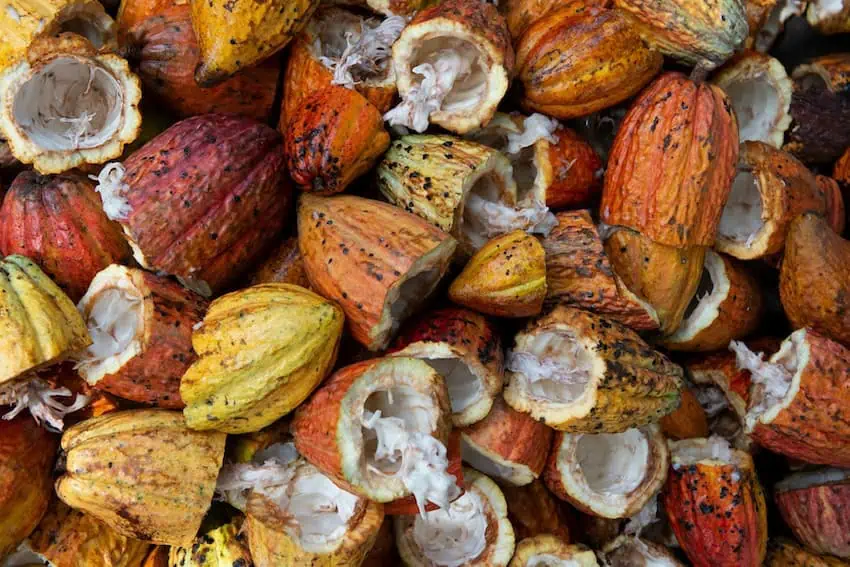
Taste of Mexico: Cacao pods
Surprisingly, this does not taste sweet at all. (Rodrigo Flores/Unsplash)

Have you ever tasted pure cacao by itself? It has a profoundly bitter flavor that can be quite unpleasant, making it difficult to comprehend why Mesoamerican cultures revered this fruit. Cacao is originally from southeastern Mexico and Central America, where it was first domesticated over 4,000 years ago.

The Mayans developed a method for preparing a beverage by grinding cacao beans and mixing them with chili peppers, achiote, and other spices, then combining this mixture with water. They frothed the drink using a simple whisk, an early version of today’s molinillo, until it was as foamy as a fancy cappuccino. They would drink it with loud, unapologetic slurps. While slurping your Starbucks mocha might earn you some side-eye today, back then it was considered extremely good manners.

The cacao-based drink was exclusively reserved for nobility, warriors, and priests. It played a significant role in rituals and held considerable commercial value, as cacao beans served as currency among various Mesoamerican cultures. This beverage was enjoyed at diplomatic events, wedding ceremonies, and other festive banquets. Throughout different Mesoamerican civilizations, cacao fulfilled important religious, social, economic, and political roles — essentially making it the VIP guest at every ancient social gathering.

In today’s society, it may seem strange that seeds were once used as gifts, offerings, and even currency. However, our relationship with chocolate hasn’t changed much over time. How often do we give a box of chocolates as a present or try to win someone’s heart with a warm cup of cocoa? There is something about chocolate that continues to captivate us, as if it has a direct connection to the pleasure centers of our brains and stomachs.

From Cacao to chocolate


View this post on Instagram

 

A post shared by Mexico News Daily (@mexiconewsdaily)

With the arrival of the Spanish, cacao continued to be a prized and valuable product, although its original bitter flavor did not appeal to European tastes. After the Conquest, the Spanish sweetened the mixture with sugar and added vanilla. They also replaced water with milk, creating a beverage that quickly became popular among the colonial elite in New Spain, the Spanish back in Europe, and even some royal courts across Europe. One can imagine them thinking, “This is so enjoyable; we should definitely celebrate it by donning our powdered wigs!”

Chocolate’s popularity skyrocketed. In fact, it became so beloved that during religious services in New Spain, the congregation’s noisy slurping of chocolate got so out of hand that it had to be banned. Imagine the priest trying to deliver a sermon while everyone happily sipped and smacked their lips. One could argue that chocolate was literally interrupting their path to holiness, though it must have tasted divine.

Let’s fast-forward to the industrial era. The advent of machinery enabled the mass production of various chocolate-based sweets around the world. While these confections gained popularity throughout Mexico, traditional methods of preparing cacao, particularly in the south, did not fade away. People continued to grind cacao beans, mix them with spices, and serve that delightful, frothy beverage.

In recent years, there has been a renewed interest in enjoying chocolate in a more traditional and less caloric form. You can find it on many menus as “Mexican chocolate,” and several cafés in Mexico City and beyond serve it the old-fashioned way.
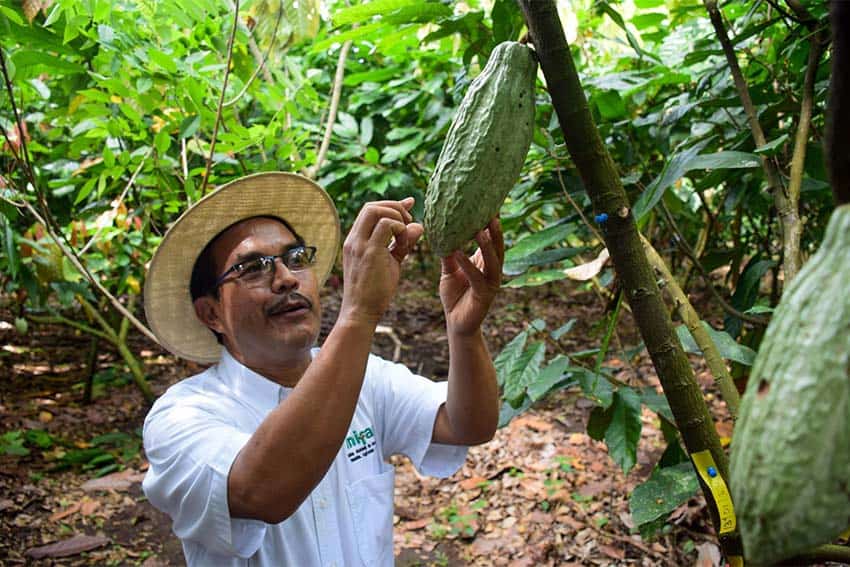
Cacao farmer in Chiapas, Mexico, checks a cacao pod on a tree
Modern Mexican cacao is filled full of artisanal joy. The southern regions of the country remain chocolate-producing hotspots. (Damien Sánchez Jesus/Cuartoscuro)

Pro tip: To experience a flavor closer to the original cacao beverage, ask for your Mexican chocolate to be made with water instead of milk. Additionally, using water helps preserve the nutritional and antioxidant properties of cacao, and it may even enhance your mood and feelings of euphoria. If you find yourself in an argument, try drinking a cup of Mexican chocolate; we don’t have the cientific proof, but we think it might just improve the situation.

Where to find the best chocolate

Thanks to globalization, quality chocolates can now be found worldwide. However, if you’re seeking authentic and traditional flavors, focus on bars from the states of Oaxaca, Chiapas, and Tabasco. Don’t overlook the often-neglected state of Campeche, which also offers delightful chocolate experiences. While you may not encounter big, flashy signs, exploring these regions can reveal hidden gems that keep the ancient chocolate-making tradition alive.

Is Chocolate Abuelita good quality?

Friends, let’s put aside any snobbery regarding traditional pre-Hispanic chocolate. Tablillas de chocolate, such as Chocolate Abuelita, Ibarra, and Mayordomo, are absolute classics. Many of us grew up enjoying these brands, and they continue to be delicious and comforting. They bring back fond memories of family gatherings and cozy mornings.

Closing remarks

Make yourself a cup of Mexican hot chocolate, and if you take a noisy slurp from your cup, remember that you’re sipping on centuries of history — and enjoying it! Pair your hot chocolate with churros; this is the most typical and delightful combination. Be sure to dip the churro into the hot chocolate, as that’s the proper way to enjoy them.

Finally, I have a challenge for you: step out of your comfort zone and try hot chocolate with chili. I know, I know. It sounds potentially risky for your stomach and mixing hot cocoa with chili may seem unappealing, but this was a favorite beverage of the pre-Hispanic elite. Who knows? It might just become one of your favorites too!

María Meléndez is a Mexico City food blogger and influencer.

A guide to whale watching in Baja California Sur

0
A friendly gray whale off the Pacific Coast of Baja California Sur
January through March is whale watching season in Baja California Sur. These are the best spots to get a glimpse of them! (Baja Expeditions)

If you’re looking for the best time to go whale watching, not just in Los Cabos, but around Baja California Sur (BCS), the months to target are January, February and March. It isn’t the entirety of the season. However, during these months bucket-list travelers have the best chance to see blue whales in Loreto, gray whales in several locations along the Pacific Coast and humpbacks and other species in Los Cabos. 

Whale watching in Loreto

A humpback whale jumping in Baja California Sur
January, February and March are the very best months for whale watching in BCS. (Brigitte Werner/Pixabay)

This targeted schedule, it must be noted, is only because of the brevity of the blue whale season in Loreto, which lasts from January through March. But if you’re going to go whale watching, don’t you want to see the largest creature ever to have lived on Earth? These 200-ton cetaceans can weight as much as 33 elephants and are also quite mysterious and shy

The shyness is understandable. By the middle of the 20th century, blue whales had been hunted almost to extinction. They’ve since been protected internationally and enjoy a double layer of national protection in Mexico, where the largest known population group of the species comes to breed each year. Not only are there strict guidelines for the sizes of boats that can approach them, the number of passengers they can carry and the distance they must maintain from the whales, but their breeding grounds are within Bahía de Loreto National Park. 

Other whale species can also be seen in Loreto, but the blue whales are the primary attraction.

Whale watching in Los Cabos

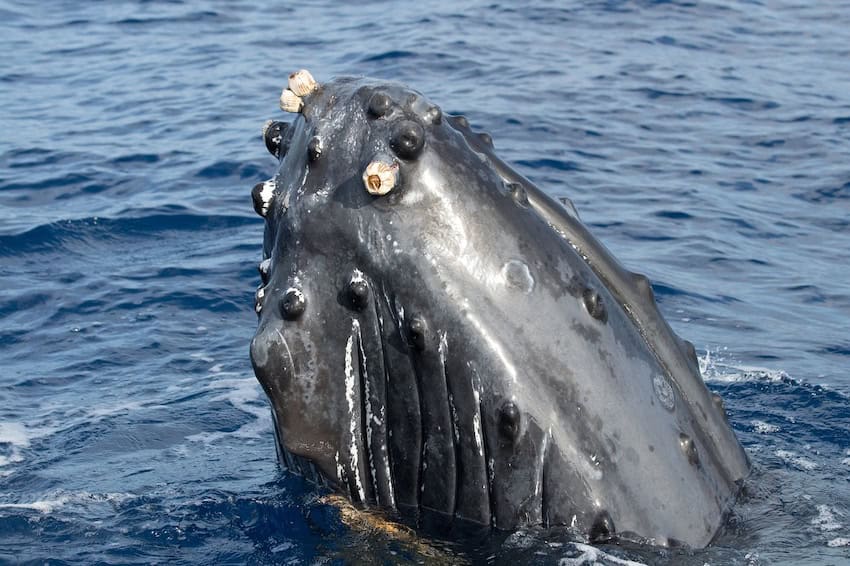
A humpback whale's snout.
Whale-watching season runs from mid-December to mid-April annually. (Lee Sommers/Pixabay)

The humpback is king in Los Cabos, where the whale-watching season runs from mid-December to mid-April annually. Yes, many of the same species of whales seen in Loreto can be seen in Los Cabos as they make their way to shallow water coves and bays around the state to breed; beaked, bryde’s, fin, gray, minke, orca, pilot, sei and sperm whales, to name a few.

But the humpbacks are the most commonly seen locally and that’s good for tour operators. Why? Because 40-ton humpbacks engage in some incredible behaviors, most notably breaching for epic splashdowns. No, this is not to put on a show – although it is awe-inspiring – but rather is a communication device that other whales can hear. The bigger the splash, the further the message travels. 

Of course, that’s not the only way whales communicate. They also have a language with syntax and grammar, achieved through clicks and vocalizations. Often called whale songs, these languages are specific to species, with accents varying regionally. If you’re interested in this fascinating aspect of whale behavior, choose a tour that offers hydrophones so you can listen in.

Gray whale watching on the Pacific coast of BCS

People taking pictures of a beautiful humpback whale
The Baja California Peninsula has seen the birth of 25 thousand gray whales in the past few years. (Andrew Riedel/Pixabay)

Gray whales are the main attraction on the Pacific Coast side of BCS, thanks to three primary breeding spots: Bahía Magdalena, Lagunas San Ignacio and Ojo de Liebre, the latter two of which are within the protected Vizcaíno Biosphere Reserve. 

It was reported last year that gray whale numbers had increased significantly in the Vizcaíno Reserve during a single year, a very positive sign. Even better, a greater rise has been generally noted in the Pacific gray whale population, which has climbed by 33% since 2022. Over 19,000 gray whales are estimated to be in the Pacific now, with some 25,000 gray whales being born in BCS alone over the past three decades. 

That’s great news for this remarkable species, which makes what is thought to be the longest mammalian migration, traveling from Arctic summer feeding grounds to warm winter breeding grounds in BCS, where they remain from late December to April each year. In fact, a gray whale holds the record for the longest whale migration, traveling over 14,000 miles round-trip between Russia and Cabo San Lucas in 2011. 

Gray whale watching in Magdalena Bay

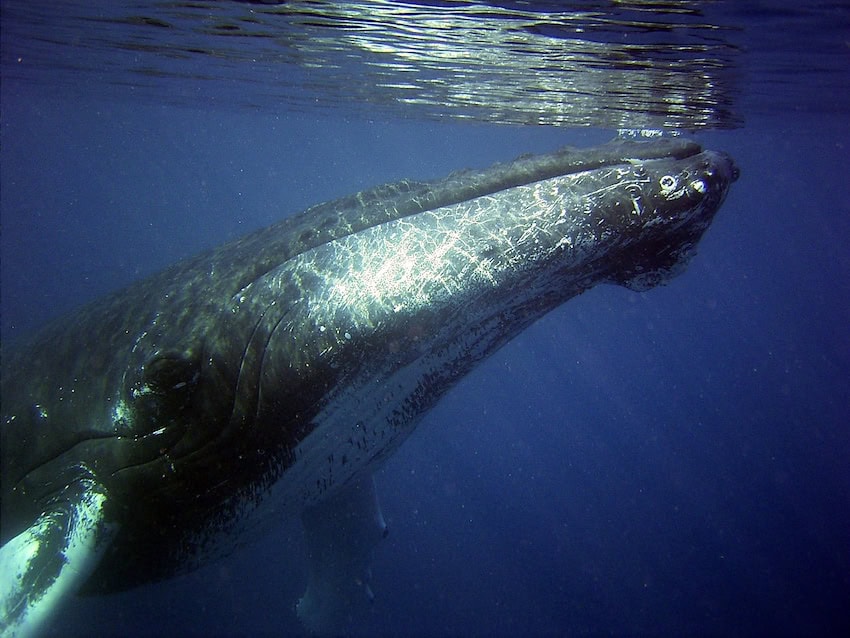
Portrait of a majestic gray whale
Gray whales (Eschrichtius robustus) travel to the warm waters of Mexico to have their babies during winter. (Pixabay)

Crispin Mendoza, also known as the “Whale Whisperer,” is the godfather of whale watching in Magdalena Bay, having begun taking out tourists as far back as 1970. That was two years before the first whale-watching protections were put in place by the Mexican government. Today, his family-owned company, Magdalena Bay Whales, remains one of the best local tour operators. 

Whether it is simply 50 years of positive interactions, gray whales are often extraordinarily friendly in BCS. It is the breeding season after all, with plenty of 2,000-pound newborn bundles of joy, and it probably helps that while these whales are in their breeding grounds they’re safe from predators like orcas, who avoid such shallow water. However, that doesn’t make it any less special when these enormous creatures approach pangas and invite interactions. 

It’s not something that can be scripted or expected. But it does happen occasionally, making experiences in Magdalena Bay and the Vizcaíno Biosphere Reserve far more intimate than those in Los Cabos or Loreto. But all rate as bucket-list adventures. 

Whale watching in the Vizcaino Biosphere Reserve

Vizcaíno, a federally protected biosphere reserve since 1988, is an amazing place, and not just because of the whales. With over 9,800 square miles, it’s the largest wildlife refuge in Mexico (indeed, in all of Latin America) and a sanctuary for a wide variety of species, from desert foxes and the peninsular pronghorn antelope to endangered sea turtles and 192 different kinds of birds. 

During the winter months, though, gray whales and their calves are the focus of most visitors. Of course, it bears noting Magdalena Bay and other BCS sites aren’t exactly Los Cabos when it comes to resort and lifestyle options. Neither is Loreto, for that matter, but at least it has the superb Villa del Palmar at the Islands of Loreto resort and world-class golf at TPC Danzante Bay

However, some adventure companies offer package deals, with whale-watching excursions in Los Cabos and Pacific Coast lagoons like San Ignacio. Baja Expeditions’ Ultimate Whales package, for instance, is an eight-day trip that starts from Cabo San Lucas after an afternoon of whale watching, then proceeds to La Paz for swimming with whale sharks and continues on Laguna San Ignacio in the Vizcano Biosphere Preserve for camping and gray whale encounters. Then, it’s back to Cabo. 

Naturally, such packages are expensive. But you aren’t obliged to book your own hotels or motels along the way. Everything is taken care of, from hotels, yachts and glamping to food and drinks— unforgettable moments, too.

Chris Sands is the Cabo San Lucas local expert for the USA Today travel website 10 Best, writer of Fodor’s Los Cabos travel guidebook and a contributor to numerous websites and publications, including Tasting Table, Marriott Bonvoy Traveler, Forbes Travel Guide, Porthole Cruise, Cabo Living and Mexico News Daily. His specialty is travel-related content and lifestyle features focused on food, wine and golf.

Why is MND going ad-free? A perspective from our CEO

27
A hand holds a can of spam
Mexico News Daily is cutting spammy Google Ads to improve our audience's reading experience. (Shutterstock)

Two years ago, when we purchased Mexico News Daily, one of the first things we did was reduce the amount of advertising on the site by 70%. We didn’t make the decision because MND had more ads than other news sites, but rather because we felt that many ads, especially those that popped up or those that dragged along with you as you scrolled down, were really annoying to the reader.

From a financial perspective, it was a painful decision, as at that point more than half of MND’s total revenue came from these types of ads. As you might imagine, the ads that most annoy you are by far also the most lucrative ones. Sexual dysfunction cures, toenail fungus treatments, dietary supplements and chest-enhancing products (for men and women) are precisely the ads that make the most money. But most people don’t want to see them, and they are created in a way that is meant to get your attention and distract you from reading the article so you click on the ad.

A collage of spammy debt-relief, IRS and social security online advertising
Do you skip over ads like these? Now you won’t have to. (Mexico News Daily)

Since day one, our mission has been to build an MND that we would be proud to have our name attached to, and that meant making the painful decision to remove the total number of ads from the site. I remember how nervous we were about the financial hit we would take when we made that decision, but we knew it was the right thing to do. We wanted to send a strong message to readers that we were serious about not only creating great content, but also an enjoyable experience for the reader. When we did it, I told the team that I hoped we would keep growing subscribers to the point at which we could eliminate ads entirely.

Since that decision, Mexico News Daily has worked with four different advertising agency partners (always using the Google Ad Manager platform), to try to improve the quality of the remaining ad blocks that we had. To say the least, it has been a very frustrating experience. Google has done an outstanding job at completely dominating the digital ad world, which results in media companies like MND (and the agencies in the industry) having to resort to increasingly (from my perspective) terrible ads to continue to earn ad revenue.

What do I mean by “terrible ads”? We have increasingly been seeing ads on our site (placed by the agencies through Google Ad Manager) that are very deliberately trying to trick the reader. Ads that say “Click here to continue” or “Click here for customer service” or “Click here for a rebate coupon.” All of these ads falsely and deliberately give the impression to our readers that they are MND ads, only to take readers to another site that tries to trick them further into giving credit card or personal information. We obviously hate those types of ads, and despite many, many attempts to block them, they keep popping up with different URLs (website addresses). It is a never-ending game of wack-a-mole and it gets more difficult each day as the ads become increasingly sophisticated, thanks to artificial intelligence tools. So as a result, we decided to take proactive action.

It is with that backdrop that we are announcing today that MND is removing all external advertisements from our site, effective today. We want to be able to control all of the content on our site and ensure that our readers are never being tricked into clicking on something that is not part of MND. Our guiding principles are a great reader experience as well as one in which our readers can trust any link on our site.

A photo of Mexico News Daily owners Travis and Tamanna Bembenek.
Mexico News Daily owners Travis and Tamanna Bembenek. (Courtesy photo)

This decision, of course, is yet another financial hit to our business, as we will now be reliant exclusively on subscription revenue to pay our team members, fund our software expenses (we need over 30 back-office software subscriptions to make MND run smoothly), and invest in growth initiatives. Tamanna and I still have yet to take one peso of salary in over two years, but we are confident that this is the right strategy. There will be short-term pain, but we will continue to build a better MND.

Our team takes very seriously our role to provide you with an apolitical, unbiased, and balanced front-row seat to Mexico across our news and features sections. It is a very exciting time for the world and for Mexico, and we are honored to be a trusted, reliable source of news and information for you.

Thank you for supporting MND and please consider sharing MND with family and friends so they get to know us as well. We make a great Christmas gift! 🙂

Travis Bembenek is the CEO of Mexico News Daily and has been living, working or playing in Mexico for nearly 30 years.

What to do when you lose your dog in Mexico — A reunion chronicle

7
A woman and her golden retriever
Microchipping pets in Mexico is not a thing. So, what do you do if you lose your four-pawed friend? (Adam Griffith/Unsplash)

“But isn’t she chipped?” my friends and family back home asked me when I told them about my lost dog.

No, she wasn’t chipped. And while I can’t speak for all places in Mexico, I can for my own city. Microchips in pets are not a “thing” here. Even if I’d had my dog microchipped somewhere else, no one where I live would even have a scanner to read it.

A dog with a collar behind a fence
Doggie day cares are the safe way to go when you need to travel and your pet can’t come along. (Osvaldo Florez/Unsplash)

So how did she get lost in the first place?

Now that my partner has started working in a nearby city, I travel quite a bit to see him. Unfortunately, dogs aren’t allowed where he’s renting, nor is the place suitable for a pet. Until we can find something better, I’ve simply got to find someone else to care for her when I’m away.

One option is a pensión, a doggie care facility where she can stay. These can come in all shapes and sizes, and aren’t all that expensive by U.S. standards. Sadly, I’m acclimated to Mexican prices, and 250 pesos a night adds up quickly when it’s frequent! It will do in a pinch, but like many hopelessly soft gringas, I’d so much rather she stay with someone she knows and trusts.

So when a friend who works from home offered to keep her, I breathed a sigh of relief and packed her little doggy bag.

A dog sleeping soundly in a couch

In Mexico, doggie day cares are known as “pensiones”. (Joshua Chun en Unsplash)Their time together was nice. Each day, I got cute photos and videos of Lola, lounging comfortably in her home-away-from-home. On the morning I was set to pick her up, though, my friend called me, shaken.

There had been fireworks early that morning. Because as we all know, saints love morning fireworks, and this was not going to be the year we disappointed Saint Jude!

Here’s what happened: my friend briefly left Lola on her enclosed front patio while she took her daughter to catch the bus. When she got back, Lola was gone, having slipped through the wider bars that had seemed much too high for her to reach.

But a panicked dog can jump to great heights. Oh no.

What to do if your dog gets lost in Mexico

Lost dog sign
Talking to neighbors and those in charge of nearby business is a good way to go when losing your dog. (Foto de Randy Laybourne en Unsplash)

Still, we tried. Had someone picked her up? Doubtful, as she’s quite skittish around strangers. Was she hiding in someone’s yard, or a park or one of the other million possible places she could fit? Perhaps.

Was she using her magical doggy nose to slowly but surely make her way back home, many kilometers away? This I felt sure of, but it was impossible to know what route she’d have taken, and the streets she would have had to cross were formidable.

My  friend and I got to work. We wandered the surrounding area for hours over three different mornings. We printed Lost Dog signs and put them up. We knocked on doors and talked to the people who notice things that go on in neighborhoods: the merchants, the trash collectors, the older people who sit on their porches all day. We posted on Facebook’s many local lost pet groups, over and over again. My friend paid for a lost dog service that promised to use geography-specific targeted ads to get the word out in the areas she was likely to be. I cried in despair and worry more than once.

A labrador in a busy street
Lost dogs often get anxious and confused, especially in neighborhoods they don’t feel familiar with. (Redd Francisco en Unsplash)

On the third day driving back home, what my religious friends call a miracle and my atheist friends call a wonderful coincidence occurred: I spotted Lola on the street.

Miraculously — I’m going with miracle — as I was driving back home in tears, I looked to my right. There was my little dog, crossing the street perpendicular to the one I was on. I quickly pulled into an X24’s tiny parking lot and rolled down the window to call to her. She looked around, confused, and finally spotted me when I opened the car door. She hopped in, and we had a happy, tearful reunion in front of a very confused X24 employee.

Now that all this has happened, I’m prepared: Lola has a new collar that never comes off, and an AirTag on her collar, as well. For good measure, she has her regular metal tag with my phone number on it, too.

There might not be any microchips, but this dog is not getting lost again. Although I do still need to figure out what to do with her when I have to leave town.

Sarah DeVries is a writer and translator based in Xalapa, Veracruz. She can be reached through her website, sarahedevries.substack.com.

Sheinbaum denies textile tariffs are aimed at China: Friday’s mañanera recapped

4
President Claudia Sheinbaum smiles from the podium during her morning press conference, or mañanera
Mexico's recent textile tariffs were a point of discussion at President Sheinbaum's Friday press conference. (Presidencia)

Among the topics President Claudia Sheinbaum spoke about at her final press conference of the week were Mexico’s new textile tariffs, the Senate’s approval of the controversial judicial reform bill in September and the still-incomplete Mexico City-Toluca rail project.

She also told reporters that she won’t hold morning press conferences on Dec. 24 and 25.

New tariffs not aimed at China, Sheinbaum says 

Sheinbaum bluntly declared that the new tariffs on clothing and textiles announced by the federal government on Thursday are not specifically aimed at China, even though that appeared to be the case.

“Some media outlets are today interpreting [the imposition of the tariffs] as if it were a message to China. No,” she said.

When a reporter suggested that the aim of the tariffs was to please Donald Trump, Sheinbaum said that wasn’t a motivation for the protectionist measure either.

“It has to do with the protection of the national [textile] industry. It’s part of what we call Plan Mexico, which we’re going to present at the start of January,” she said.

Chiapas woman making yellow woven textiles on a hand loom
Sheinbaum said the tariffs were designed to protect Mexico’s textile businesses from general competition, not just from cheap Chinese imports. (Alan de la Cruz/Unsplash)

“… There are a lot of family companies — they’re not even large companies — that have been working on the manufacture of products and creating their own brands for decades,” Sheinbaum said.

Many such businesses (whose products have to compete with cheap Asian imports) have shut down in recent years due to “the entry of products” from abroad, she said.

Sheinbaum noted that some textile products — as Economy Minister Marcelo Ebrard explained on Thursday — are exempt from “certain” importation taxes on the proviso that they are used as inputs for final goods to be exported. However, “in reality” they are imported as final goods to be sold in Mexico, she said.

In light of the situation, the government announced Thursday that some textile products won’t be allowed to be imported at all.

Colorful bolts of textile fabric
The new tariffs ended tax exemptions for some textile products that were being abused, Sheinbaum said. (Yuen Tao Chun/Pexels)

Sheinbaum said that the sale in Mexico of textile products that were imported as inputs for products destined for export is “in reality a trick.”

“And who does it affect? All these family companies that provide a lot of employment,” she said.

“So what was done yesterday was to avoid this trick being used. If you look at it, it is in fact a form of corruption,” Sheinbaum said.

“… Asian products” are not specifically “the issue,” she said.

President asserts there was no ‘negotiation’ with PAN senator who voted in favor of judicial reform  

As the ruling Morena party and its allies are one vote short of a two-thirds supermajority in the Senate, they have to convince at least one opposition party senator to vote with them in order to approve constitutional reforms. In the case of the judicial reform, that senator was Miguel Ángel Yunes Márquez, who was accused of being a “traitor” at the time and was ultimately expelled from the National Action Party (PAN).

As Mexico News Daily reported when the Senate approved the controversial judicial reform in September, there was widespread speculation that Yunes Márquez and his father, former Veracruz governor Miguel Ángel Yunes Linares, reached a deal with Morena that would result in the withdrawal of criminal charges against the two men and Yunes Márquez’s brother Fernando.

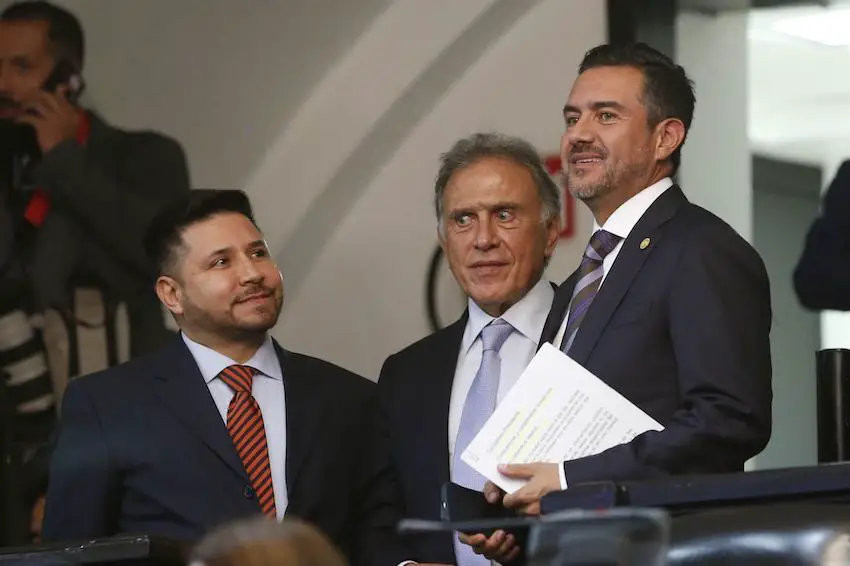
PAN Senator Miguel Yunes Márquez stands with other senators in suits and ties, holding documents
Miguel Ángel Yunes Márquez (at right) was expelled from the PAN party after he voted in favor of a constitutional reform to radically reshape Mexico’s judiciary. (Cuartoscuro)

Yunes Linares, who stood in as a “substitute senator” for his son the day before the judicial reform vote, also indicated he would vote in favor of the reform if presented with the opportunity.

On Friday, Sheinbaum said it was her understanding that supporting the judicial reform was a decision that Yunes Márquez and Yunes Linares reached on their own without any discussion with Morena.

“It has been said that it was to … remove investigation files [against them]. … It was their decision to vote in favor of the reform to the judicial power. There was no negotiation,” she said, also dismissing the suggestion that a deal involving the Yunes’ defection from PAN to Morena was reached.

Asked whether Yunes Márquez and his father could formally join Morena, Sheinbaum said that was a decision for the party’s leadership.

“I’m not going to get involved in that issue,” she said.

Project to complete CDMX-Toluca train line is ‘advancing,’ Sheinbaum says 

Sheinbaum noted that the final stretch of the Toluca-Mexico City passenger railroad is not yet complete, even though ex-president Andrés Manuel López Obrador said earlier this year that the section between the Santa Fe station and the Observatorio station would be finished by the end of the year.

“One part to get to Observatorio is missing,” she said, referring to the Mexico City terminus, where a subway station is also located.

“The project is advancing. At Observatorio the entire station has to be integrated with Line 1 of the Metro,” Sheinbaum said.

“We’re waiting for a bridge as well, it’s a suspension bridge that is being built before the entry to the fourth section of Chapultepec [Park], she said. “… They’re still working [on it].”

Sheinbaum didn’t say when the entire railroad — construction of which began a decade ago — would be finished. Trains are currently running between Zinacantepec, a municipality that adjoins Toluca, and Santa Fe on Mexico City’s west side. Much of the railroad is elevated.

Sheinbaum noted that she recently saw a “very cute video” on social media of a boy riding the train, known as El Insurgente.

In the video — which the president played near the end of her press conference — the boy declares that the train “can fly” and says that riding on it is “a dream.”

By Mexico News Daily chief staff writer Peter Davies (peter.davies@mexiconewsdaily.com)

With state oil company Pemex behind on payments, small suppliers face financial crisis

3
Floating rigs of a Pemex offshore oil drilling field, made possible by suppliers of goods and services
Many of the companies affected are based in the Gulf of Mexico's port cities, where they provide goods and services to keep offshore drilling fields. (Especial/Cuartoscuro)

Some suppliers and service providers for state oil producer Pemex are facing severe financial difficulties as the beleaguered company has fallen behind on payments.

Several businesses have been meeting with Pemex officials to address the mounting debt, but as of Thursday no payment plans had been announced, according to El Economista newspaper.

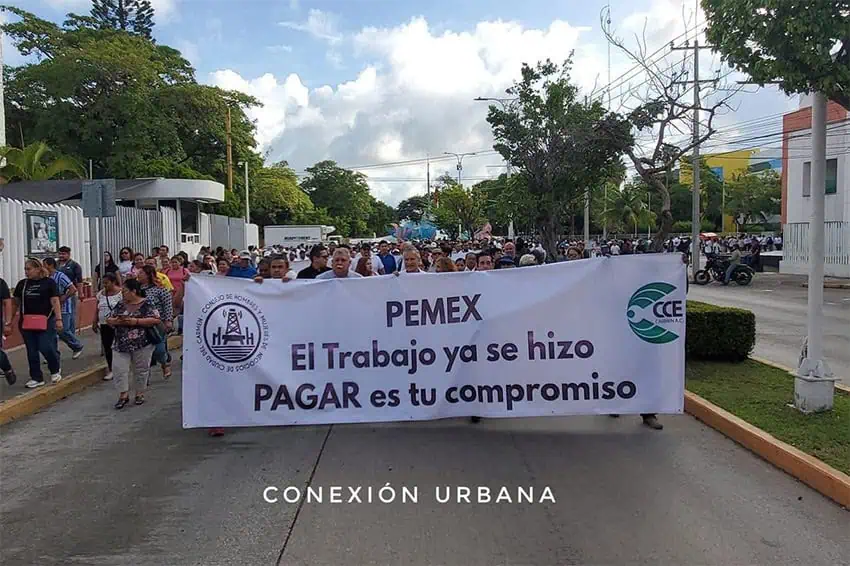
A crowd of people walk down a street bearing a banner reading "PEMEX: El trabajo ya se hizo. PAGAR es tu compromiso"
Pemex local suppliers in Ciudad Carmen, Campeche, protest lack of payment by the state oil company. (Petroleros al Aire)

“I can confirm that no payments have been made nor is there a tentative date for payments to be made,” one oil drilling company rep told El Economista. “It appears possible that we might not get paid until February.”

Oil and Gas Magazine reported on Wednesday that Pemex canceled a Monday meeting with Senate Energy Committee members during which the debt to subcontractors was to be discussed.

Committee member Óscar Cantón Zétina, a senator from the oil-producing state of Tabasco, expressed a desire to reschedule the meeting in the near future. Before the congressional session went into recess last week, Cantón had presented a point of order demanding that Pemex’s debt with suppliers be made public.

President Sheinbaum orders review of Pemex debt

Pemex has been the world’s most indebted oil company for years and owed national and international service providers nearly US $22 billion back in April, according to the news agency Reuters.

Earlier efforts to reduce its overall debt of nearly US $100 billion have done little to ease the debt owed to suppliers which now sits at around US $20.5 billion, according to El Economista.

On Nov. 28, President Claudia Sheinbaum ordered a review of the debt owed to suppliers, saying that a variety of payment mechanisms were being studied and refined, though she provided no details.

That same day, it was reported that Pemex had placed a freeze on new contracts with service providers.

The news agency Bloomberg News reported that an internal company document described the action as a temporary halt by Pemex’s exploration and production arm that applied to new agreements with contractors that had not been previously formalized.

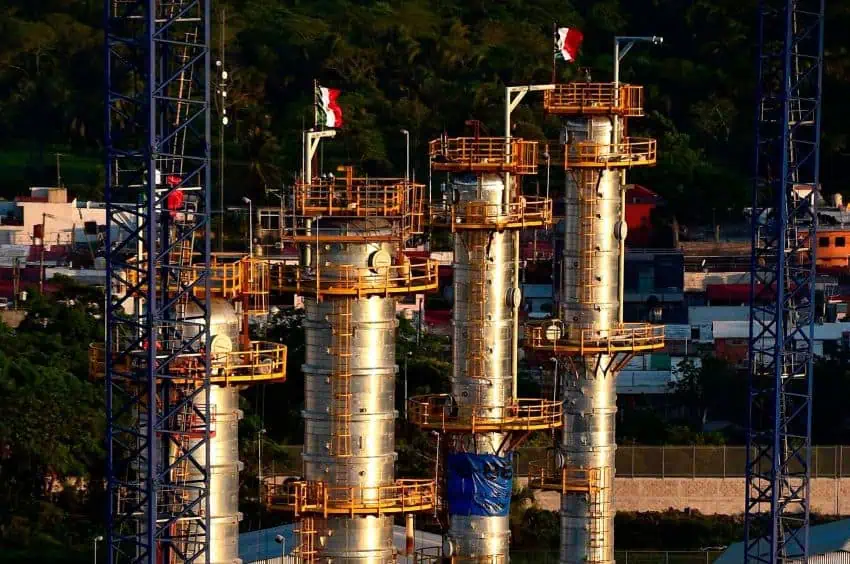
Alkylation unit at the Olmeca Refinery
With nearly US $100 billion in debt, Pemex is the most indebted oil company in the world. (Refinería Olmeca-Dos Bocas/X)

A Pemex statement explained that it would be performing an analysis of pending deals coming due before year-end and that select contracts deemed necessary could still be signed.

The Finance Ministry is reportedly working “to enlist a group of banks to provide Pemex with financing to pay off the company’s debts to service providers,” Bloomberg reported, but such loans may come too late for some suppliers.

Suppliers in Campeche sound off

Mexico Business News reported on Dec. 3 that business leaders in the state of Campeche sounded the alarm over the delayed payments from Pemex.

Many local companies are having difficulty meeting year-end obligations, such as employee bonuses, social security contributions, taxes and payments to Infonavit, Mexico’s public housing agency.

Some of the debt dates back to 2023, El Economista reported. Several businesses face threats of asset seizure due to their own unpaid loans, Mexico Business News reported, and the situation is so dire that an organization called “The Broad Front of Subcontractors Serving Pemex” was formed.

The Front staged several demonstrations in November, threatened to blockade a bridge in Ciudad del Carmen and announced a protest march for Friday.

A Pemex refinery
Commercial associations have tried both public requests and collective organization to pressure Pemex into paying its debts to suppliers. (Presidencia/Cuartoscuro)

Around the same time, Reuters reported, the Mexican Association of Oil Service Companies (Amespac) sent a letter to Pemex asking the company to pay its members overdue debts totaling US $5.1 billion. The association represents some of the most important oil service providers in Mexico.

Amespac argued that just setting up a schedule “would provide certainty for operations and allow companies to fulfill their commitments.”

“This situation has caused an adverse effect on our finances and a negative impact in the areas where we operate,” it wrote.

The financial difficulties impact a variety of businesses, including multinationals such as Baker Hughes and Halliburton.

Small companies also have been hit by the debt crisis. El Economista reported that a Campeche helicopter company that transports oil workers to offshore rigs closed down this month.

In the state of Tamaulipas, state Energy Development Minister José Ramón Silva said roughly 700 local businesses have been affected, including 400 companies that had bid on contracts or applied to be formally registered as suppliers.

With reports from El Economista, Bloomberg News and Mexico Business News

Annual Christmas Verbena sets Mexico City Zócalo aglow with light

0
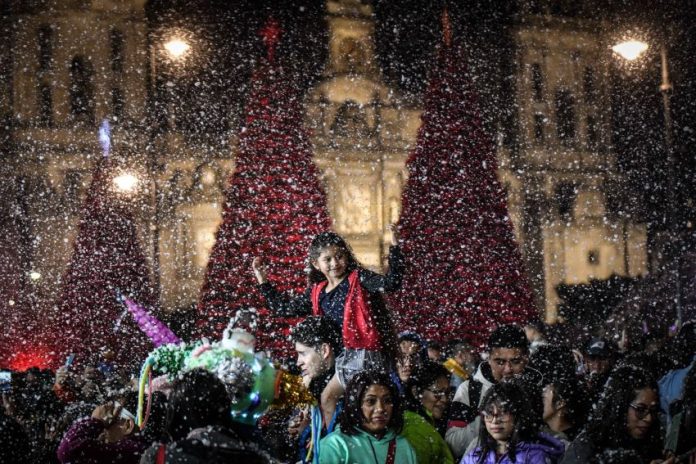
A child sits on an adults shoulders at the Mexico City Christmas Verbena, with giant Christmas trees in the background and fake snow falling
Families enjoy the Christmas Verbena in Mexico City Zócalo. (Mario Jasso/Cuartoscuro)

Running through Dec. 30, Mexico City’s annual Christmas Verbena at the Zócalo entertains visitors with a wide array of Christmas events.

A verbena refers to a public outdoor party in honor of a saint, religious figure or holiday where the community can enjoy music, food, and drinks in a festive atmosphere.

A crowd, including someone dressed as Santa with a calavera mask, inside a tunnel of Christmas lights
Chilangos crowd into the Verbena light tunnel in the Zócalo. (Andrea Murcia/Cuartoscuro)

This year’s Christmas Verbena commenced with the lighting of colorful Christmas decorations on Dec. 17.  The event, which drew hundreds of residents to Constitution Plaza, also known as the Mexico City Zócalo, was led by Mayor Clara Brugada and other city officials.

Holiday lights illuminated buildings around the plaza, including the National Palace, Old City Hall and the Grand Hotel of Mexico, among others. Additional decorations include a tunnel of hundreds of lights, three monumental Christmas trees made up of over 6,000 poinsettias or nochebuenas, and a gigantic Nativity scene featuring Iztapalapa’s monumental Niño Dios (baby Jesus).

This baby Jesus, also known as the the Child of Peace and Good, was handmade in 2013 by the Gómez Reséndiz family of artists and sculptures in the Mexico City borough of Iztapalapa. It has toured the country over the last decade and is now a major attraction at the Christmas Verbena.

A Christmas bazaar has also been set up by the local government, where over 250 artisans from different parts of the country sell their products. The bazaar, dubbed Artisans at Heart, features everything from piñatas to Nativity sets, clothes and various types of traditional handmade crafts. Food stalls selling Mexican delicacies have also been set up at the Zócalo.

A crowd takes pictures of a giant baby Jesus statue next to Mary and Joseph statues, at Mexico City's Christmas Verbena.
The Niño Dios of Iztapalapa rests in his cradle, accompanied by his human parents. (Graciela López/Cuartoscuro)

Furthermore, the Verbena offers free musical shows featuring 56 artists from Mexico and abroad, including Regina Orozco, Los Tecolines, La Perla (Colombia), Los Mirlos (Peru) and others.

The Verbena will feature daily shows and live performances, including traditional pastorelas — Nativity plays that often feature a bit more humor than their English-language counterparts.

Mexico City’s first annual Christmas Verbena was in 2019, replacing the ice rink that had formerly graced the Zócalo during the holidays. This year, all boroughs of Mexico City feature an ice rink free of charge during the holidays.

Upcoming Christmas Verbena concerts

As part of the festivities, the Zócalo will host various live music performances in upcoming days, including:

  • Guatemalan feminist rapper Rebeca Lane: Dec. 21 at 8:15 p.m.
  • Los Tecolines (bolero genre): Dec. 22 at 7 p.m.
  • Colombian vocals and percussion ensemble La Perla: Dec. 22 at 8:15 p.m.
  • Singer/actress Regina Orozco: Dec.  23 at 7:30 p.m.
  • Mexican-American flutist Elena Durán: Dec. 24 at 3:45 p.m.
  • Los Mirlos (Peruvian psychedelic cumbia): Dec. 25 at 7:30 p.m.
  • Ronda Bogotá, formerly led by Celso Piña (cumbia): Dec.  27 at 7:30 p.m.
  • Chetes (Rock en español): Dec.28 at 9:30 a.m.
  • Austin TV (progressive rock/instrumental): Dec. 29 at 7:30 p.m.

With reports from Milenio, Chilango and Infobae

Texas launches billboard campaign referencing sexual assault to deter US-bound migrants

13
Donald Trump, former President of the United States, and Greg Abbott, Governor of Texas, toured the banks of the Rio Grande, which is currently surrounded by a dense mesh of barbed wire to prevent the entry of migrants. There, the president praised the immigration policy of this entity.
Billboards endorsed by Gov. Abbott feature aggressive anti-migration messages, referencing sexual assault and incarceration. (Greg Abbott/X)

Texas Gov. Greg Abbott has unveiled a billboard campaign aimed at discouraging illegal border crossings into his state — especially by migrants who are hoping to cross illegally before President-elect Donald Trump takes office on Jan. 20.

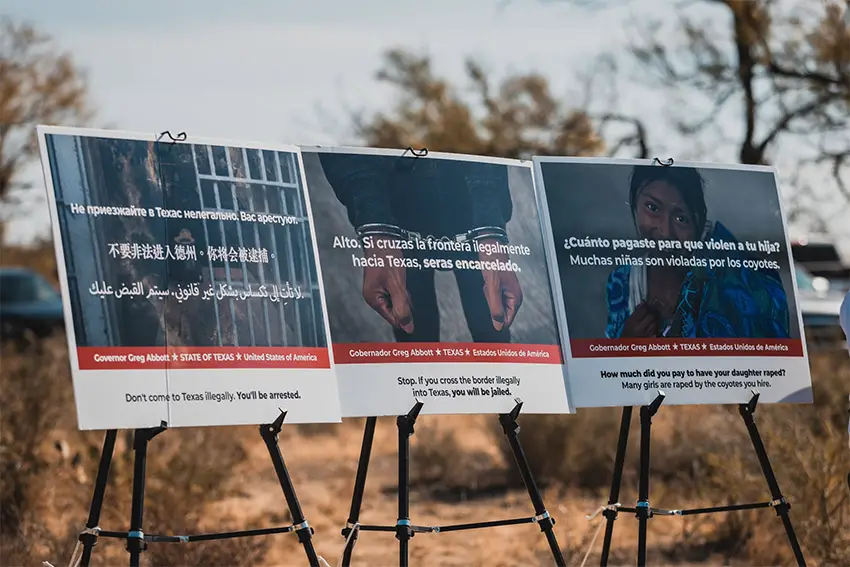
The billboards, which began going up on Wednesday along major migrant pathways — mostly in Mexico but also in El Salvador, Guatemala and Honduras — warn that undocumented entry into the U.S. through Texas risks incarceration by U.S. authorities and rape by the traffickers.

Posters set up in a desert display messages in various languages
The billboards feature warnings in multiple languages, including Spanish, Arabic, Chinese and Russian. (Greg Abbott/X)

One billboard in Spanish translates to “Danger ahead: If you cross into Texas illegally, you will regret it forever.” Another reads: “How much would you pay to have your daughter raped?”

The campaign, which the Republican governor estimated will cost $100,000, is part of Abbott’s broader efforts to combat undocumented crossings along Texas’ 2,018-kilometer border with Mexico — which accounts for two-thirds of the Mexico-U.S. border.

The billboards feature warnings in multiple languages, including Spanish, Arabic, Chinese and Russian.

Another message reads: “Your wife and daughter will pay for the trip with their bodies. Coyotes lie. Don’t put your family at risk.” A coyote is an individual or group that facilitates the illegal smuggling of people across borders, often charging significant fees for their services.

Donald Trump, former President of the United States, and Greg Abbott, Governor of Texas, toured the banks of the Rio Grande, which is currently surrounded by a dense mesh of barbed wire to prevent the entry of migrants. There, the president praised the immigration policy of this entity.
About 1,400 acres of land in Texas will be destined for detention centers to support mass deportations. (Cuartoscuro)

“We’re here to expose the truth to immigrants who are thinking about coming here — the truth about the traffickers who assault so many of the women and children along the way,” Abbott said during a Thursday news conference at a private ranch in Eagle Pass, Texas, which can be viewed on the governor’s Facebook page (starting at the 11-minute mark). “Our goal right now, immediately, is not only to discourage them from coming, but to help them understand the consequences.”

The number of migrants caught illegally crossing the Mexico-U.S. border soared to record highs after President Joe Biden took office in 2021. Trump has pledged mass deportations and aggressive border security efforts after he takes office next month.

“There are many people who may make a last-gasp effort,” Abbott said. “The message is: Do not risk a dangerous trip just to be arrested and deported.”

The initiative complements Operation Lone Star, launched in 2021 and which, according to Abbott, has resulted in over 529,000 migrant detentions and nearly 50,000 criminal arrests.

Texas has also allocated 1,400 hectares (acres) of land for detention centers to support Trump’s plans for mass deportations and border wall expansion. “We’d be more than happy to build the wall as long as the federal government pays for it,” Abbott added.

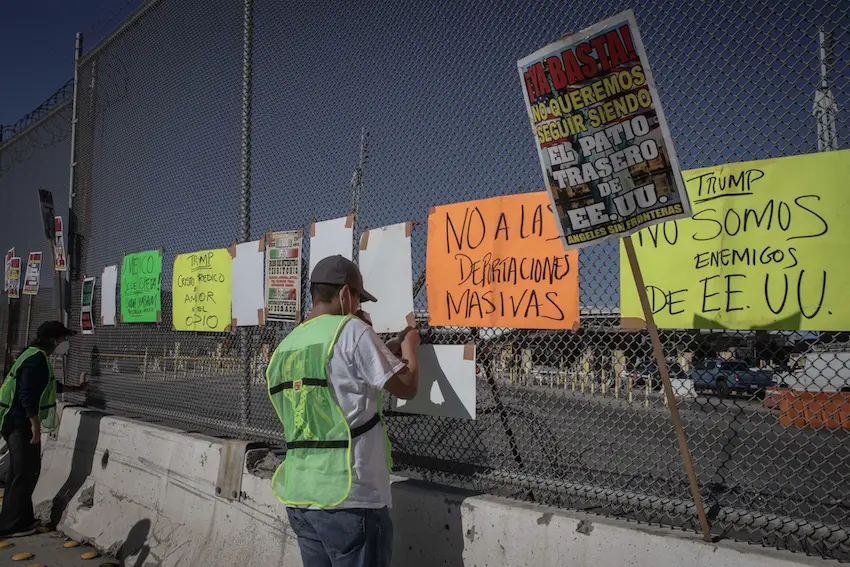
Migrants pasted posters on the fence of the San Ysidro border crossing. In order to commemorate Migrant Day, a group of people on the move marched from the Youth 2000 shelter located in the North Zone to the San Ysidro border crossing. The contingent of around 150 people of all ages, including children and women, of different nationalities, demonstrated on the side of the vehicle access to the neighboring country. With banners in their hands, they began to shout slogans against former President Donald Trump, who will officially take office at the end of January 2025. With adhesive tape, they pasted some of the posters they carried on the fence that separates Mexico from the United States.
Texas installed razor wire, stacked containers and erected other barriers that injure migrants. (Omar Martínez/Cuartoscuro)

Eagle Pass, Texas — where Abbott spoke on Thursday — was one of the busiest crossing points for illegal migrants a year ago. Then the Texas National Guard installed razor wire, stacked containers and erected other barriers that injure migrants trying to get around them.

According to reports from Human Rights Watch, the operation has caused injuries and deaths of migrants, along with harassment of organizations that provide humanitarian assistance to migrants. The Border Patrol, controlled by the federal government, says that the razor wire cuts off access to the Rio Grande and closes off the spaces needed to process arriving migrants.

However, Abbott’s office points to declines in border crossings as evidence of success.

In a report released Thursday by U.S. Customs and Border Protection, it was noted that there has been a “meaningful decrease in unlawful border crossings — including a more than 60% decrease in encounters between ports of entry along the southwest border from May to November.” It tied the decrease to the June 4 Presidential Proclamation on Securing the Border.

“November encounters between ports of entry are now at their lowest level since July 2020,” the release added.

It also noted that “from June 5 through the end of November, the U.S. Department of Homeland Security removed or returned more than 240,000 individuals to over 160 countries, not including CBP repatriations of noncitizens encountered at airports or the northern border.” More than 740 international repatriation flights occurred from June 5 through the end of November, the release noted.

With reports from El País, Reuters, Texarkana Gazette and Fox Texas Digital

Cancún releases nearly 1 million sea turtle hatchlings to the ocean

0
Sea turtle hatchlings on a beach
Local authorities considered this hatching season a success, with a 97% survival rate. (Isabel Mateos/Cuartoscuro)

As this year’s sea turtle spawning-and-nesting period nears an end, Cancún municipal officials have reported that roughly 950,000 hatchlings have been released and made their way to the ocean.

Fernando Haro Salinas, director of ecology for Benito Juárez municipality, told reporters this week that the majority of the hatchlings were green sea turtles (Chelonia mydas), locally known as tortuga blanca.

Sea turtle hatchlings on a beach
A reduced number of arrivals was recorded this year, due to erosion caused by the hurricane season. (Jolo Díaz/Pexels)

While three or four of the more than 50 incubation sites were still active, Haro called this year’s season a success.

“The total number of arrivals was slightly less than last year, but still quite a high number,” Haro told reporters

Haro said this is not unusual, explaining that it is common for a high spawning season to be followed by a lower one, according to Diario Cambio 22.

Last year in the municipality, more than 11,000 nests were identified with an estimated 1,282,839 eggs from which roughly 1,205,000 hatchlings made their way to the sea.

A baby turtle swimming in the sea
Benito Juárez municipality and authorized hotels protected 7,500 nests this year, for a total of roughly 978,000 eggs. (Jeremy Bishop/Pexels)

On the other hand, Haro said, the survival rate at the incubation sites was approximately 97% this year, an improvement over the 94% hatch rate in 2022 and 2023. 

In response to a question, Haro said meteorological conditions were also a likely contributor to the reduced number of arrivals, as this year’s hurricanes impacted nesting areas by causing beach erosion. 

In all, the municipality and participating hotels protected 7,500 nests, which contained an estimated 978,000 eggs. Haro said the municipality operates four nurseries and the hotels — with permits issued by the federal Environment Ministry — manage the rest.

“We provide training [for hotel personnel] and work with the public to protect the nests,” he said. 

It is a curious phenomenon that female sea turtles return to the precise location where they were born to lay their own eggs. 

Four different turtle species laid their eggs along Cancún beaches this year (Cancún is the municipal seat of Benito Juárez), according to Haro. In addition to the green sea turtles, loggerhead (Caretta caretta), hawksbill (Eretmochelys imbricata) and leatherback (Dermochelys coriacea) turtles were spotted laying eggs.

With reports from Noticaribe, Cambio 22 and Luces del Siglo

Know Your Neighborhood: San Ángel

1
Photographs of the "Saturday Bazaar". Federal District, Colonia San Angel, Alvaro Obregon.
Colorful crafts, cultural centers and Colonial architecture make San Ángel one of Mexico City's most picturesque neighborhoods. (Inakiherrasti/Wikimedia Commons)

Borough: Álvaro Obregón
Established: 1867
Location: 10 km south from of the Ángel de la Independencia

Who lives in San Ángel

San Ángel is one of the wealthiest neighborhoods in Mexico City, comprising a mix of professionals, academics and retirees. A significant number of residents are middle-aged and older adults. However, its proximity to the Autonomous Technological Institute (ITAM) and National Autonomous University (UNAM) draws in graduate students and young families, and its flair for the arts attracts creatives in droves.

El puente de san Antonio en el camino de San Ángel, junto a Panzacola
“El puente de san Antonio en el camino de San Ángel, junto a Panzacola” (1855), by Eugenio Landesio, depicts what San Ángel in Mexico City looked like in the 19th century. (Eugenio Landesio/Wikimedia Commons)

A brief history of San Ángel

The area that is now San Ángel has been an important agricultural area since pre-Columbian times due to the Magdalena River, now Mexico City’s last living river and flowing through San Ángel underground. In the 16th century, the Spanish established convents and monasteries here, notably those of the Discalced Carmelites. By the 18th century, wealthy families looking to move outside the urban hub of Mexico City began building haciendas and colonial-style mansions in San Ángel. With the Mexican Revolution came the redistribution of property, resulting in the loss of many family homes.

A few decades after the Revolution, San Ángel transformed into a creative center, drawing in painters, musicians and writers. Mexico’s most famous artistic couple, Diego Rivera and Frida Kahlo briefly lived and worked in San Ángel Inn in a duplex connected by a glass-enclosed bridge, now open to visitors. 

Francisco de Urquiaga, a notable philanthropist, lived near the center square during the early 20th century. Rumor has it Urquiaga hid Chucho El Roto — the Mexican Robin Hood said to have once stolen a gold watch from Porfirio Díaz — right here in his San Ángel home. 

A guide to San Ángel today

A stroll over San Ángel’s cobblestone streets and colonial architecture is a bonafide blast from the past. Between pastel-colored family homes overtaken by bougainvillea are contemporary galleries, trendy restaurants, cultural centers and churches that look as if they were lifted off a postcard from Spain. It’s historical yet artsy, residential yet bustling, quaint yet vibrant. It’s a bit more humid than the central zones of Mexico City, resulting in a lush ambience with a hint of tropical air.

Image survey of the façade of the San Ángel Cultural Center
San Ángel is one of Mexico City’s wealthiest neighborhoods, sparkled with a vibrant student life. (Secretaría de Cultura CDMX)

San Ángel is great if you love: Feeling like you’ve been swept back to the 19th and 20th centuries while still enjoying modern conveniences, like excellent dining, boutique shopping and contemporary art galleries.

What to do in San Ángel

An artisan on Bazar de los Sábados in San Ángel, Mexico City
Starting in Plaza San Jacinto and features artisan crafts, typical street food and live music (Inakiherrasti/CC BY-SA 3.0)

Bazar de los Sábados: No visitor should miss the famous Saturday market that starts in Plaza San Jacinto and features artisan crafts, typical street food and live music. Just steps away you’ll find Jardín del Arte, where local artists display their paintings in an open-air art market in Plaza San Jacinto.

Museo del Carmen: The former monastery known for its exquisite baroque architecture also houses religious art and historical artifacts. Beneath the main altar of the church is a magnificent crypt with original tiled floors from the 16th century. On display are a collection of mummies, discovered by Zapatista troops during the Mexican Revolution.

Templo y Ex-Convento del Carmen: The historic church above the crypt is known for its stunning altarpiece and beautiful tiled domes. There’s also a large garden in the back for relaxing.

Mercado del Carmen: Not to be confused with everything else named Carmen, this adorably charming, multilevel collection of shops and restaurants is located on Avenida de la Paz, a lively destination in itself for dining and socializing.

Fountain built in the 18th century located in the Casa del Risco Museum, San Ángel, Mexico City, Federal District. It represents the baroque style in Viceregal Mexico and is built with materials such as plates, cups, porcelain, mirrors and mother-of-pearl shell.
The Fuento del Risco is an icon of San Ángel in Mexico City: represents the baroque style in Viceregal Mexico and is built with materials such as plates, cups, porcelain, mirrors and mother-of-pearl shell. (r Karlavgc/Wikimedia Commons)

Casa del Risco: Housed in an 18th-century mansion, this cultural center showcases art and history, surrounded by gardens and fountains. Inside are seven permanent galleries showcasing art ranging from religious to baroque to colonial. It’s open to the public from Tuesday to Sunday and admission is free.

Where to eat in San Ángel

San Ángel Inn: You can’t go to San Ángel without going to its most historic restaurant, located in a beautifully restored 17th-century hacienda. Originally a Carmelite monastery, the restaurant is renowned for its blue-and-white Talavera-style table settings and elegant Spanish-Mexican colonial atmosphere. And margaritas.

Side view from inside the San Angel Inn hacienda of the main patio, decorated with different flowers that give life to the patio, in the center there are some tables from the hacienda restaurant.
San Ángel Inn is one of the neighborhood’s historic jewels. Do not miss it for a fancy Mexican meal. (Marypaz Musi/CC BY-SA 4.0)

La Taberna del León: Founded by Chef Mónica Patiño in 1994, this San Ángel staple boasts a menu of contemporary Mexican cuisine with a French twist. This beautiful restaurant on Plaza Loreto is situated in a magnificent, historic house which dates back to 1926 and is the perfect place to bring your parents.

Bistro 83: Casual and stylish, Bistro 83 features a diverse menu that includes everything from hearty breakfast options to classic Mexican dishes with an international flair. The bistro prides itself on using fresh ingredients and is ideal for relaxing with friends after a day of sightseeing.

Cluny: Head to this chic French eatery and order the most popular dish: duck confit with raspberry sauce. Pair it with the wine of your choice from an extensive menu. It’s intimate, authentic and romantic, a great date option evening out with girlfriends.

Inside Cluny Bistró in San Ángel, Mexico City
With a beautiful Art Déco style, Cluny is your choice if you’re looking for the best crépes in town. (Cluny)

Cafetería El Péndulo: No matter which of Péndulo’s multiple locations you visit, you’re in for a treat. This one is technically in Guadalupe Inn, but nonetheless is an excellent escape for anyone who wants to cozy up with a good book, live music and moody lighting. 

Zeru: If you’re in the mood for Mediterranean cuisine, look no further than Zeru. Here, it’s all about fresh ingredients, innovative seafood dishes and Instagram-worthy presentations. The vibe here is upscale but still relaxed, so whether you want a casual lunch or a celebratory dinner, this is your spot. Don’t miss the grilled king crab with saffron.

Séptimo Ostería: Nearly ten years old, San Ángel’s favorite Italian eatery is known for its fresh pasta and seafood dishes, not to mention a warm, rustic atmosphere. The menu emphasizes high-quality ingredients sourced from local markets which are used to create authentic Italian flavors. For a true taste of Italy, order the ravioli di ricotta.

One hidden gem

If you decide to walk to Coyoacán from San Ángel, you might cross Insurgentes Sur and find yourself lost in a fairy land of sorts. This is good, because it means you’ve made it to Mexico City’s most spectacular hidden gem, Chimalistac. The name is Nahuatl for “place of the white shield” and was once home to an important town paying tribute to the Tepanecs, the major power in the Valley of Mexico before the rise of the Mexica (Aztecs). It’s lush and green, full of flowers, fountains and the occasional ancient chapel. Visitors in the know wander this little slice of quiet paradise in search of the few 16th-century stone bridges that still exist. 

Bethany Platanella is a travel planner and lifestyle writer based in Mexico City. She lives for the dopamine hit that comes directly after booking a plane ticket, exploring local markets, practicing yoga and munching on fresh tortillas. Sign up to receive her Sunday Love Letters to your inbox, peruse her blog or follow her on Instagram.