Mexican director Alfonso Cuáron has for the last three years made short films for the Christmas holiday season. His latest is "An Almost Christmas Story." (X)
Mexican filmmaker Alfonso Cuarón, the Oscar-winning director of “Roma,” has produced his third short Christmas film in as many years.
Inspired by the true story of an owl that was trapped in the Rockefeller Center Christmas tree when it was cut down in the forest and transported to New York City, the 25-minute “An Almost Christmas Story” currently can be seen on the streaming service Disney+.
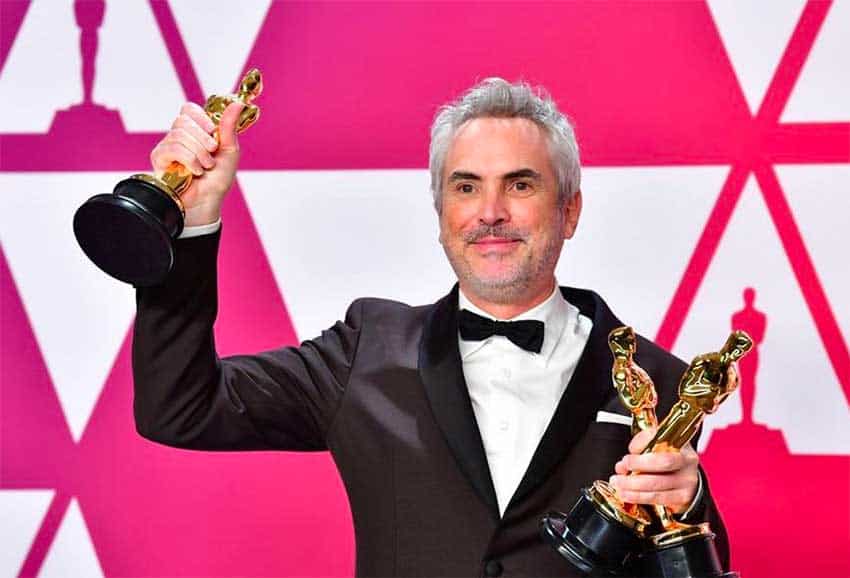
Cuarón in 2019 with three Oscars he won that year for the film “Roma.”
Cuarón, who turned 63 on Nov. 28, is a five-time Academy Award winner who has also won seven BAFTA Awards and three Golden Globe Awards. His 2018 feature film “Roma” won Oscars for best director and best cinematography. His Oscar for the 2013 space-survival film “Gravity” made him the first Latin American to win the Academy Award for best directing.
“An Almost Christmas Story” was written by Cuarón, director David Lowery (“A Ghost Story”) and Jack Thorne. It was produced by Cuarón, Lowery and Gabriela Rodríguez through Esperanto Filmoj, the TV and film production company owned by Cuarón.
The English-voice cast includes 8-year-old Cary Christopher (“Days of Our Lives”) as the little owl named Moon, John C. Reilly (“Boogie Nights”) as the folk-singing narrator and comedian Jim Gaffigan as Papa Owl, along with Mamoudou Athie (“Jurassic World Dominion”), Phil Rosenthal (“Somebody Feed Phil”) and Natasha Lyonne (“Russian Doll”).
A Collider review describes the short as not another routine Christmastime feature film but as one of “those sweet short-form stories that typically aren’t longer than 35 minutes [such as] ‘Rudolph the Red-Nosed Reindeer,’ ‘Santa Claus is Comin’ to Town’ and ‘A Year Without a Santa Claus.’”
“An Almost Christmas Story” follows the curious young owl, Moon, who unexpectedly finds himself stuck in a Christmas tree destined for Rockefeller Center. In his attempts to escape the bustling city, Moon befriends a lost girl named Luna. Together, they embark on a heartwarming adventure in which they form an unexpected bond and discover the magic of the holiday season.
“An Almost Christmas Story” is the third of Cuarón’s trilogy of Christmas shorts; he also produced “Le Pupille” by Italian director Alice Rohrwacher in 2022 and “The Shepherd” by English director Iain Softley in 2023. “Le Pupille” was nominated for an Academy Award for Best Action Short Film, and “The Shepherd” was shortlisted for the same award.
Rocky the saw-whet owl — discovered in a Norway spruce tree by the man delivering it to New York City’s Rockefeller Center — inspired Cuarón to write “An Almost Christmas Story.” (Ravensbeard Wildlife Center)
Disney+ is currently streaming all three shorts, but you have to sign up for a standard or premium plan to view them.
“It occurred to me that it could be a good starting point for a story about a rebellious child who, finding himself lost, rediscovers the importance of solidarity and family; it was very appropriate for Christmastime,” Cuarón told the newspaper Milenio.
Cuarón credited director David Lowery with creating “a really beautiful work” by using an “aesthetic that was not refined, but rather unfinished” — similar to craft projects Lowery made as a child using boxes and cardboard cutouts.
A press release from Disney referred to the short as “the third and final installment of Cuarón’s holiday collection for Disney+.”
However, when asked by Milenio columnist Susana Moscatel about the possibility of him making more holiday shorts, Cuarón was not so definitive.
“I would love to,” he said. “We’ll see what happens. It would be great to continue doing these kinds of stories in this format. I hope we do.”
An informal and rapacious money-lender. A loan shark.
Bolo
n. The gift given as a baptism present; usually money.
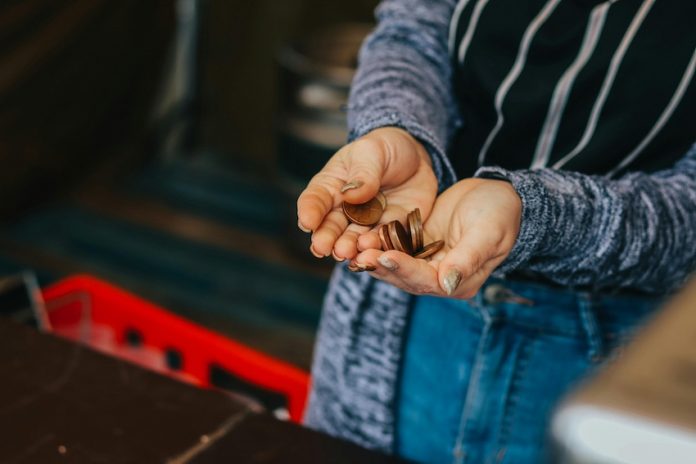
exclam. Traditionally shouted when cash falls to the floor, often in the form of coins, signifying a free-for-all where whoever grabs the money keeps what they gather.
“Aventar bolo” usually refers to people spending a lot of money. (Pixabay)
Codo adj.
Stingy or tight-fisted when it comes to money. This expression comes from the idea that a person might complain that their elbow hurts when it comes to getting their wallet out. The term is often substituted by an elbow-tapping gesture.
Jinetearv.
To rob, most often with the use of violence. From the days of mounted highwaymen, who would rob from horseback.
To turn a quick profit, with a small initial investment and minimal subsequent effort. To buy a six-pack of beers at the Oxxo and then sell them to tourists at the beach for double the price would be a perfect example.
Of an individual, to retain money that does not belong to them and spend it for other purposes, most often with the intention of using the extra money to make more, before paying what is owed.
Marroadj.
Stingy, or penny-pinching. Also codo.
Milky n.
The monetary amount of 1,500 pesos. An abbreviation of mil quinientos, or one thousand five hundred.
e.g. Me debes un Milky, wey. (You owe me fifteen hundred pesos, pal.)
Milpan.
A traditional agricultural field in which the “three sisters” of corn, squash and beans are produced.
The monetary amount of MXN $1,000. An adaptation of mil, or one thousand.
Pesetan.
The monetary amount of 25 pesos, although not commonly used nowadays.
A tax, or cut, of 25%.
e.g. Te dejo trabajar, pero me das la peseta.
I’ll let you work, but I want 25%.
Quiña n.
The monetary amount of 500 pesos. Abbreviation of quinientos, or five hundred.
Tostónn.
A squashed and fried slice of plátano macho.
The monetary amount of fifty pesos, traditionally a large thick coin, and so called given its similarity to the food.
A lady’s nipple, given similar size and shape to a tostón coin.
The monetary amount of fifty pesos, traditionally a large thick coin resembling a fried plantain slice. (Sebastian PH/Pexels)
Varon.
Colloquial term for the Mexican peso, equivalent of ‘bucks’ for U.S. dollars, or ‘quid’ for British pounds sterling.
A specific quantity of Mexican currency. Depending on the context, it can mean one peso or 1,000.
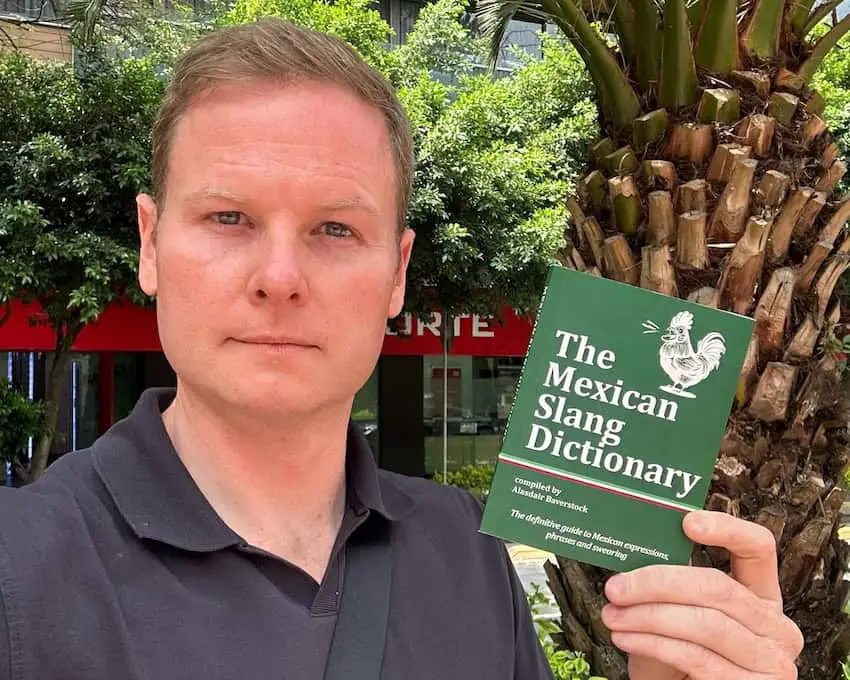
You can buy “The Mexican Slang Dictionary” on Amazon in the U.S., Canada and Mexico.
MND readers can find the physical book stocked in bookstores:
And lest you think Sectur-BCS is trying to rope in unsuspecting tourists, even The Oceanic Society — based in California, which boasts its own whale-watching season — describes the coast off the Baja California Peninsula as “one of the best places on earth for whale watching.”
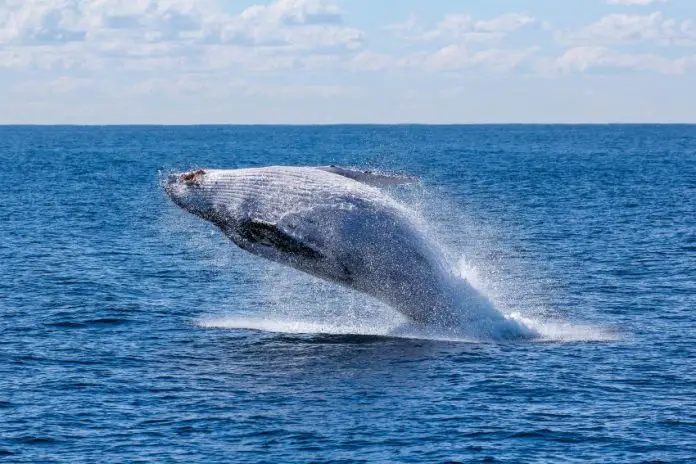
The Baja California Peninsula has become world-famous for playing host to the gray whales’ mating and calving season each winter. (Ryan Stone/Unsplash)
In part, this was made possible by Mexico’s decision to create the San Ignacio Lagoon Nature Reserve in 1972 in Baja California Sur (after a chance encounter that year between a gray whale and a local fisherman named Francisco Mayoral) and its subsequent designation of the lagoon as a whale sanctuary within the El Vizcaíno Biosphere Reserve in 1988.
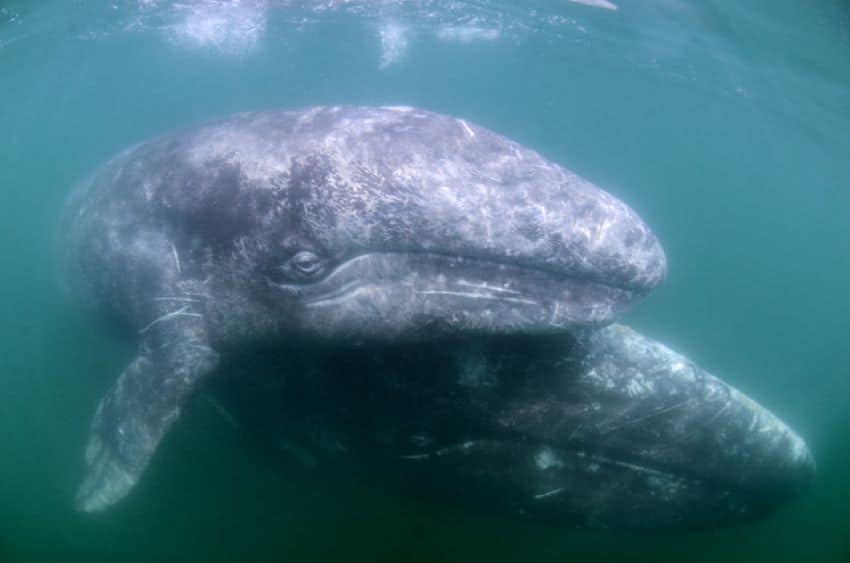
At the end of each summer, up to 1,500 California gray whales leave the cold Alaskan waters and journey to the warmer climes off the coast of the Baja California Peninsula, arriving by early December and remaining there for about three months.
As many as 1,500 gray whales make the journey from Alaska to the Baja Peninsula every year. (Sergio Martínez-PRIMMA-UABCS)
Here, whales mate, give birth and nurse calves conceived the year before, attracting tourists eager to see the world’s largest mammals up close.
The Oceanic Society explains that the unique geography of the peninsula and the diverse marine topography, which ranges from protective shallow lagoons to deep trenches rich with food, attract over 30 different species of whales and dolphins.
As a result, the National Resources Defense Council has referred to San Ignacio as “the last undisturbed breeding and calving lagoon” for the gray whale. Along with the nearby Scammons Lagoon (or Ojo de Liebre, near Guerrero Negro) and Magdalena Bay, these are the only places in the world where gray whales give birth. What makes the experience even more spectacular is that gray whale mothers regularly seek out human interaction, according to one tour operator.
The revival of the gray whale population has generated a thriving, heavily regulated and dedicated ecotourism industry, according to the BBC.
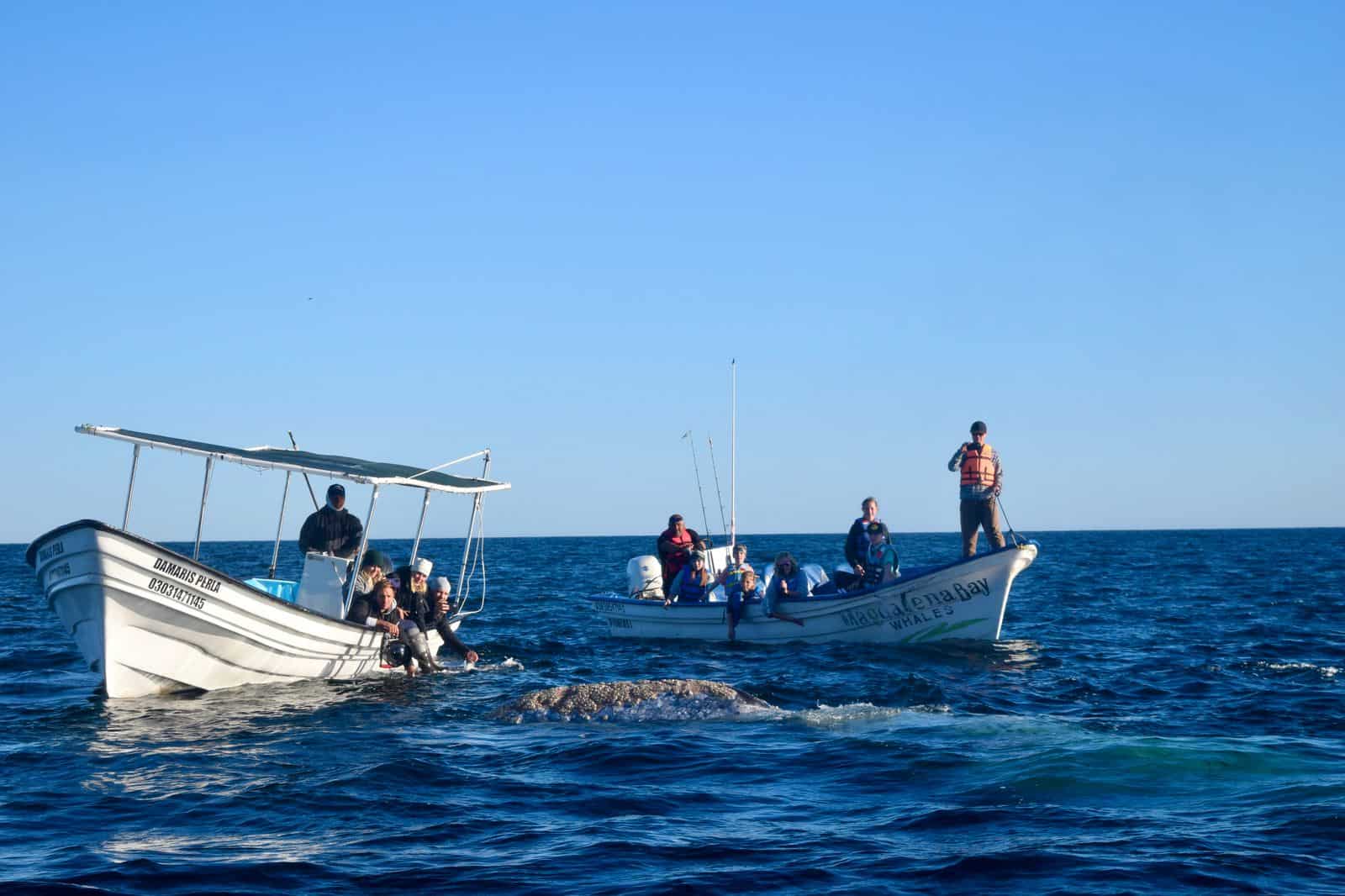
Whale watching has become a major draw for the peninsula in recent years. (Daniela Martinez Perez Vargas)
On its website, Baja EcoTours writes that the mothers “approach our boats to present their newborn calves to us while encouraging visitors to scratch their heads, back, and baleen as they lounge around our boats.” Another firm, Baja Expeditions, describes the San Ignacio Lagoon as “whale central,” where the gray whales participate in “human-watching and interaction.”
Protecting the whales
Mexico’s federal and state governments promote responsible tourism when whale-watching which is also possible farther south in Jalisco and Oaxaca.
Baja California Sur regulates the industry by issuing permits to tour operators and encourages tourists to rely exclusively on official operators.
Additionally, whale-watching is only allowed in specified areas of the protected whale sanctuaries, and there are strict rules:
Only 16 pangas (small fishing boats) are allowed at a time
All boats must turn off their motors when whales are nearby
Boat operators are prohibited from chasing or pursuing the whales
Although Baja California is best known for its gray whales, sightseers can also catch a glimpse of blue whales, fin whales, humpbacks, and even sperm whales feeding in the rich waters of the Gulf of California on the eastern side of the peninsula.
The drop in inflation has upended expectations that Mexico's central bank would ease off rate cuts this summer. (Shutterstock)
The Bank of Mexico’s benchmark interest rate will decline to 10% on Friday after the central bank’s governing board unanimously voted in favor of a 25-basis-point cut at a monetary policy meeting on Thursday.
Additional rate cuts appear likely in 2025, and some may even be larger than those implemented this year.
Thursday’s cut was the fifth time this year that the Bank of Mexico’s five-member board voted in favor of a 25-basis-point reduction to the central bank’s key interest rate. It came after the United States Federal Reserve cut its key rate by 25 basis points on Wednesday.
The Bank of Mexico’s overnight interbank interest rate, as it is officially known, was held at a record high of 11.25% between March 2023 and March 2024, when this year’s initial cut was made.
The reduction announced on Thursday was widely expected, even though Mexico’s annual headline inflation rate — 4.55% in November — remains above the 3% target of the Bank of Mexico (Banxico).
In a statement announcing the cut, the central bank noted that “annual headline inflation decreased from 4.76 to 4.55% between October and November.”
The bank’s governing board cited declining inflation as a reason for the rate cut. (Daniel Augusto/Cuartoscuro)
Banxico also acknowledged that “core inflation, which better reflects inflation’s trend, continued its clear downward trend, going from 3.80 to 3.58% in the same period.”
Banxico said that “looking ahead,” its governing board “expects that the inflationary environment will allow further reference rate reductions.”
“In view of the progress on disinflation, larger downward adjustments could be considered in some meetings, albeit maintaining a restrictive stance,” the bank said.
“… Actions will be implemented in such a way that the reference rate remains consistent at all times with the trajectory needed to enable an orderly and sustained convergence of headline inflation to the 3% target during the forecast period,” Banxico said.
The central bank anticipates that inflation will trend down in 2025 and 2026.
It is currently forecasting a 3.8% annual headline rate in the first quarter of 2025, with that rate predicted to fall to 3.5% in Q2, 3.4% in Q3 and 3.3% in Q4 of next year.
Banxico forecasts that the headline rate will continue to fall gradually in 2026 to reach the 3% target in the third quarter of that year.
Reuters reported that the Mexican peso “reversed earlier losses and strengthened marginally against the dollar following Banxico’s rate decision.”
It was trading at 20.31 to the US dollar shortly before 4 p.m. Mexico City time.
The plan features a portfolio of "very important" investments, which authorities hope will soothe the nerves of investors shaken by the political changes in the U.S. (Mario Jasso/Cuartoscuro)
President Claudia Sheinbaum responded to both good and bad news at her morning press conference on Thursday: a flattering poll result and the murder of a federal agent.
She also revealed that she would like to see a woman appointed to one of the world’s most important jobs.
While President Sheinbaum’s Thursday mañanera addressed the assassination of a federal Security Ministry agent in Sinaloa, it had lighter moments too, such as when she discussed a new poll that showed her current popularity rating to be 76%. (Mario Jasso/Cuartoscuro)
High approval rating recognizes entire cabinet, says Sheinbaum
The president declined to take complete credit for the high rating, stressing that while she is the leader of the government, its work is undertaken by a team of people.
“That is important,” she said. “If we didn’t have the cabinet we have, with colleagues who have a lot of experience, … we wouldn’t have the results we have now,” Sheinbaum said.
She noted that the poll also asked respondents to offer an opinion on various federal ministers. More than 70% of respondents had “very good” or “good” opinions of Security Minister Omar García Harfuch, Foreign Affairs Minister Juan Ramón de la Fuente and Economy Minister Marcelo Ebrard.
Four other ministers — Interior Minister Rosa Icela Rodríguez, Education Minister Mario Delgado, Finance Minister Rogelio Ramírez de la O and Energy Minister Luz Elena González — were regarded positively by 60% or more of those polled.
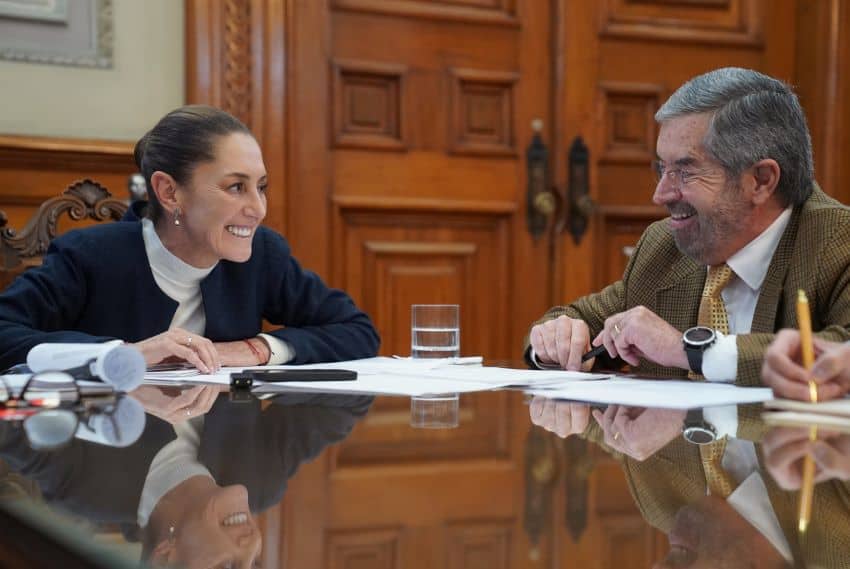
President Claudia Sheinbaum, left, and Foreign Affairs Minister Juan Ramón de la Fuente, on a call with U.S. President-elect Donald Trump on Nov. 27. De la Fuente was one of three members of Sheinbaum’s cabinet of whom respondents to a recent El Pais poll said they a “very good” or “good” opinion. (Claudia Sheinbaum/X)
All of the ministers have “very good ratings,” Sheinbaum said.
“He went there yesterday; he’ll be there for a period, strengthening security actions,” Sheinbaum said.
The president noted that she will travel to Sinaloa on Sunday, and that the federal security cabinet will hold a meeting in the Pacific coast resort city of Mazatlán.
A fierce war between rival factions of the Sinaloa Cartel has claimed hundreds of lives in recent months and sowed fear among residents of Sinaloa, especially those who live in Culiacán, the state capital, where most of the violence has been focused.
Mexico to back appointment of first female secretary-general of the UN
Sheinbaum confirmed that she spoke to Colombian President Gustavo Petro about their desire to support female candidates as the next heads of both the United Nations (UN) and the Organization of American States (OAS).
Neither organization has had a female secretary-general.
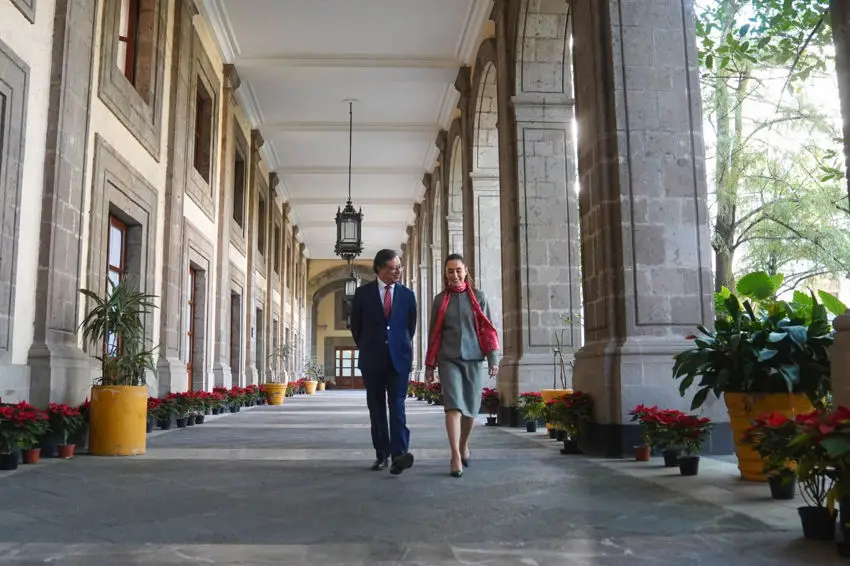
Sheinbaum hosted Colombian President Gustavo Petro on Monday at the National Palace for an informal private meeting between the two world leaders. (Cuartoscuro)
Sheinbaum said that she and Petro, who visited Mexico this week, didn’t speak about any specific candidates who they would support, but discussed “starting to work” toward the appointment of females as leaders of the UN and OAS.
She said that Foreign Affairs Minister Juan Ramón de la Fuente and her chief of staff, Lázaro Cárdenas Batel, would work on the issue.
The next UN secretary-general will take office in 2027, while a new OAS chief will be appointed next year.
By Mexico News Daily chief staff writer Peter Davies (peter.davies@mexiconewsdaily.com)
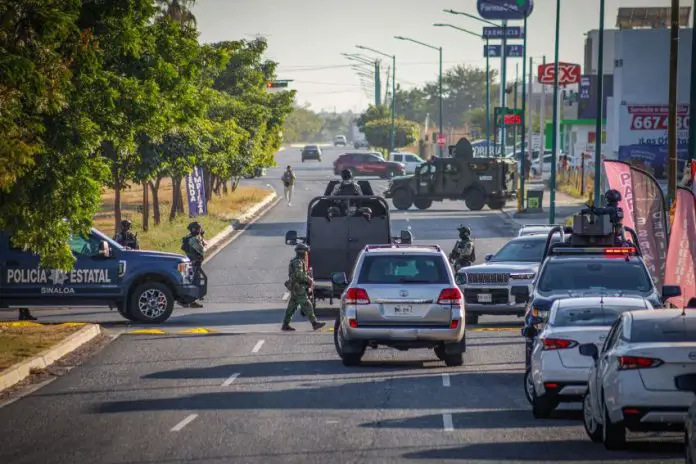
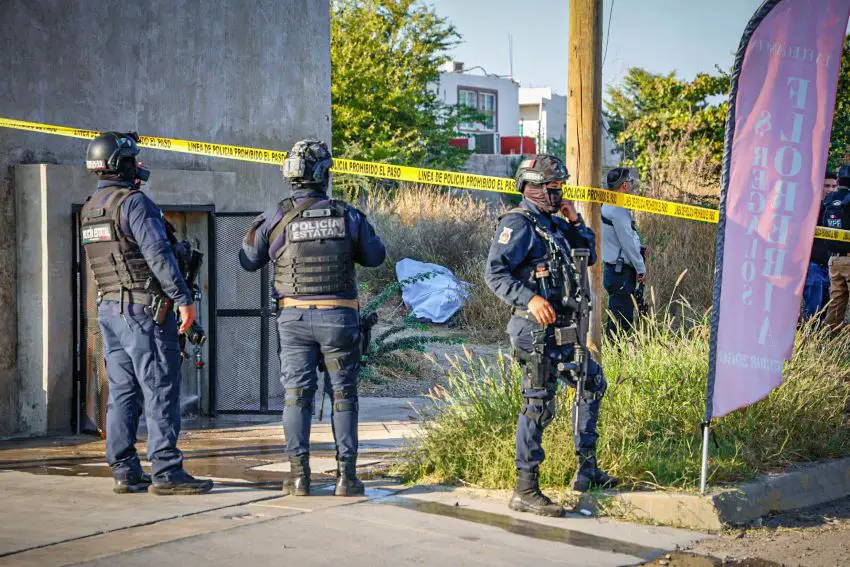
A security ministry investigator was ambushed and killed Wednesday afternoon in a "targeted attack," according to Sinaloa Governor Rubén Rocha Moya. (José Betanzos/Cuartoscuro)
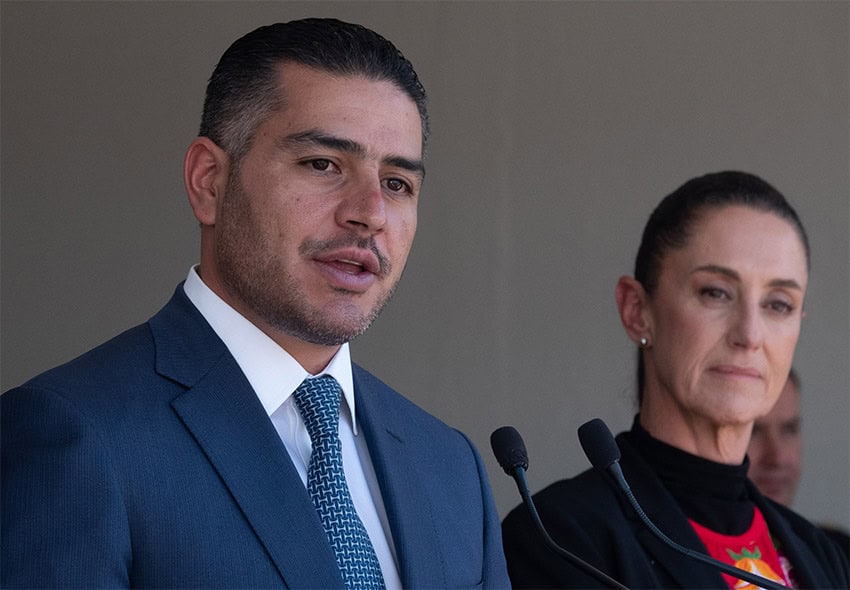
Mexico’s Security Minister Omar García Harfuch returned to the battle-scarred state of Sinaloa for the second time this month after one of his federal agents was slain Wednesday in Culiacán, in an attack attributed to organized crime.
President Claudia Sheinbaum told reporters during her Thursday morning press conference that García Harfuch will remain in the northwestern state for an undefined period of time.
After a federal agent was targeted and killed, Security Minister García Harfuch returned to oversee the state’s security operations. (Galo Cañas/Cuartoscuro)
Sheinbaum also said she will meet with the security minister and Sinaloa Governor Rubén Rocha in the southern resort town of Mazatlán on Sunday.
Early Wednesday, Security Ministry (SSPC) investigator Halexy Guadalupe Velderrain Con was ambushed and killed in Culiacán.
While the SSPC did not provide additional details at the time, at least one other agent was reported wounded, according to the newspaper El País, which added that witnesses told local media they had seen two men on a motorcycle approach the SSPC vehicle and open fire.
García Harfuch visited the scene where a federal agent was killed in Culiacán on Wednesday. (José Betanzos/Cuartoscuro)
On Thursday, García Harfuch met with the Sinaloa governor. After the meeting, Rocha confirmed that the agent’s death was the result of a “targeted attack.”
No end in sight to internecine drug war
Sinaloa — and especially Culiacán — has been the scene of near-daily violence since rival factions of the Sinaloa Cartel took up weapons against each other in early September.
Since then, more than 600 people have been murdered and over 900 people have been kidnapped or “disappeared,” according to the magazine Proceso.
The state’s economy has been paralyzed as businesses have closed down or dramatically shortened hours of operation, prompting Governor Rocha to start distributing cash to mitigate the impact of the drug war.
State business leaders say the violence has cost the state economy at least 18 billion pesos.
Last Saturday, a mid-day shootout in which more than 300 rounds were fired off occurred near a baseball park in Culiacán where Little League games were taking place. For five minutes, players and fans lay on the field waiting for the gunfire to stop.
The next morning, another five-minute-long firefight took place in a residential area of the state capital. One property was shot up as was a recently inaugurated fire station, damaging several fire trucks.
Some online companies have refused to make deliveries in the state due to concerns about the safety of highway travel. There have been shootouts along the Mazatlán-Culiacán highway — where bodies have also been regularly dumped along the road, Proceso reports.
Concern about the public’s psychological health has prompted the Autonomous University of Sinaloa to offer virtual counseling to residents who might be suffering from PTSD, anxiety disorders and shock.
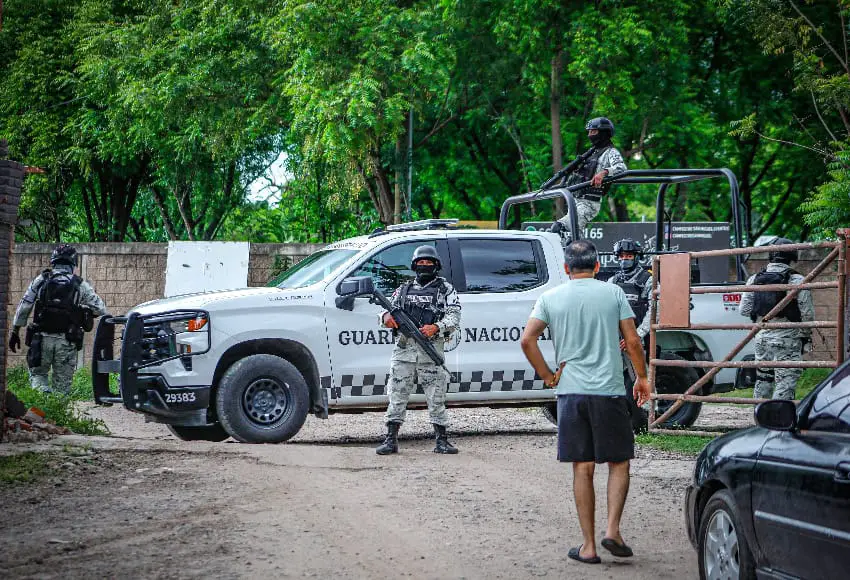
Even the army is not safe from the violence. On Wednesday, the same day the SSPC agent was killed, soldiers were ambushed in the village of Elota.
The attack resulted in a rapid reaction from the armed forces which summoned the National Guard. Witnesses reported seeing military helicopters transport several wounded soldiers out of the area, according to the online news site Infobae.
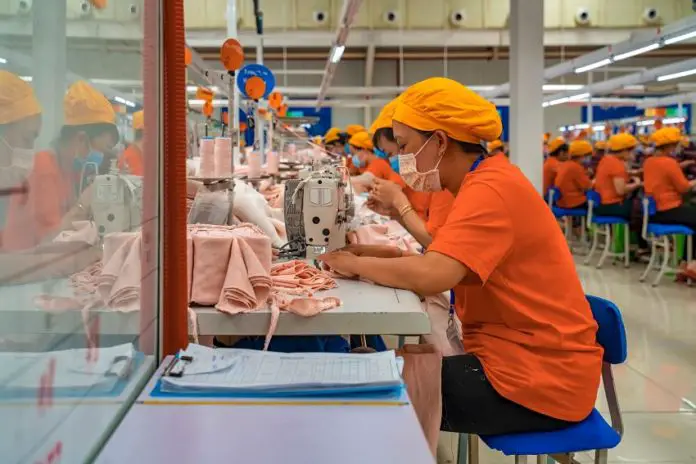
According to government data, employment in Mexico's homegrown textile industry hit a new low in 2024, with 79,000 jobs lost in recent years. (Shutterstock)
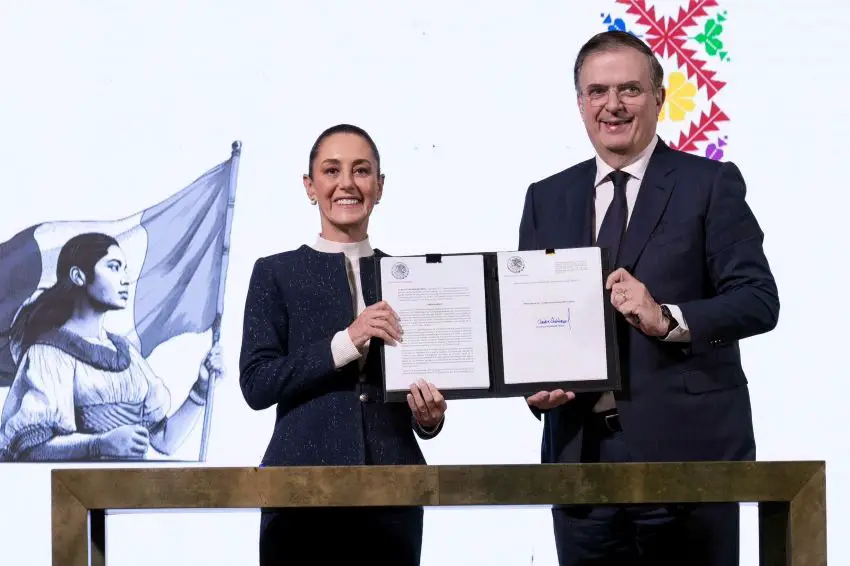
Economy Minister Marcelo Ebrard announced Thursday that Mexico will temporarily impose a 35% tariff on more than 100 finished textile imports in order to protect the Mexican textile/clothing industry.
President Claudia Sheinbaum, left, and Economy Minister Marcelo Ebrard, right, both signed the decree expanding the scope of an existing textile tariff to apply to 138 more products, mainly finished clothing. (Marcelo Ebrard/X)
The tariff, which will be imposed on products imported from countries with which Mexico doesn’t have a free trade agreement, appears to be mainly targeted at cheap Chinese clothing.
Ebrard said that the 35% tariff on 138 additional textile products “complements” the list of textile products on which a 35% tariff was imposed in April. In late April, Mexico implemented 5–50% tariffs on more than 500 goods imported from countries with which it doesn’t have a free trade agreement.
Ebrard also announced on Thursday that a 15% tariff will apply to 17 categories of unfinished “textile goods.”
He said that the 15% tariff would also “complement” tariffs that were imposed earlier this year. In addition, Ebard said that Mexico was “increasing the list of [textile] products that can’t be imported” to Mexico. He said that some companies are importing certain textiles as inputs for final goods to be exported, but are in fact selling them as is in Mexico and consequently evading the payment of taxes.
“In summary, we’re increasing to 35% the tariff on finished [textile] products … that [are currently sold at] unbelievably low prices. We’re increasing to 15% [tariffs on] the importation of [unfinished] textile goods to protect our national industry. And we’re closing this door that is being abused,” he said.
Ebrard said that Sheinbaum “instructed” the Economy Ministry to impose the new tariffs.
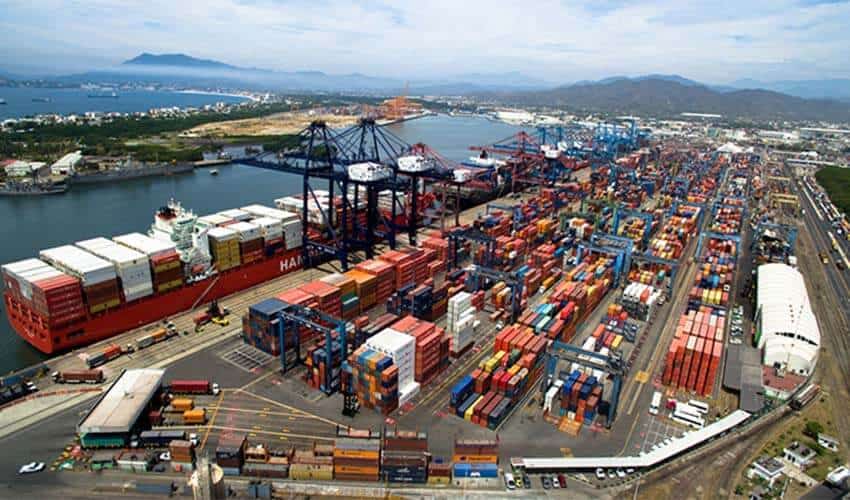
The Port of Manzanillo, a key shipping destination for imports to Mexico from China and the Pacific. (Government of Mexico)
The new duties will take effect the day after the tariff decree — which was signed by Sheinbaum and Ebrard — is published in the government’s official gazette. That could happen as soon as Thursday evening.
The temporary tariffs will remain in effect until April 22, 2026, according to Ebrard.
Federal authorities have recently carried out raids on stores in Mexico City and Sonora selling counterfeit and/or illegally imported Chinese goods.
It remains to be seen whether Mexico will increase tariffs on other imports from countries with which it doesn’t have a free trade agreement. One potential target could be Chinese electric vehicles, which have coming into Mexico in large numbers, raising concerns in the United States and Canada.
Ebrard: Without tariffs, textile industry jobs will be lost
Ebrard said that Mexico’s textile industry is “very important” as it employs some 400,000 people. He highlighted that México state, Puebla, Hidalgo, Coahuila and Guanajuato are Mexico’s largest textile producers.
Ebrard said that employment in the textile industry reached its “lowest level” in 2024 after 79,000 jobs were lost “in recent years.”
“That’s why measures were taken in April,” he said, referring to the imposition of tariffs on some textile products.
Ebrard said that 75,000 additional jobs will be lost “if we don’t close the door and don’t increase tariffs.”
Mexico has been flooded in recent years by inexpensive products imported from China, including everyday clothing bought wholesale by Mexican brick-and-mortar businesses cheaply enough that they can resell them for attractively low prices. (Screen capture/YouTube)
It wasn’t entirely clear, but it appeared that the economy minister was saying that that number of jobs would be lost in México state alone. That state, which borders Mexico City, is the country’s top textiles producer.
Ebrard also said that “the gross domestic product of the textile industry” in Mexico “has declined at an annual rate of 4.8%,” but didn’t specify the period he was referring to.
“In other words, we’re losing approximately 1.229 billion pesos (US $60.5 million) every year,” he said.
Ebrard highlighted that since 2019, Mexico has been importing more textiles and clothing than it exports.
With the protectionist plan announced on Thursday morning, “we’re going to promote the development of our national industry,” the economy minister said.
“… A strategic objective of the [government’s] shared prosperity [plan] is to increase the national content in everything we consume. The more Mexican content there is, the more jobs there will be in Mexico,” Ebrard said.
The tariffs and ban on the import of certain textile products will “avoid practices that affect employment and the competitiveness of our economy, [and] avoid technical contraband,” he said.
“What is ‘technical contraband’? Lying to the authorities, … saying ‘this is an intermediate product, I need this piece to finish what is going to be sold,’ and it isn’t true,” Ebrard said, noting that the products are often sold in markets as final goods.
“… In summary, these are measures to protect one of the most important industries in our country in terms of jobs. …. If these measures aren’t taken to avoid abuses or dumping prices, … which are extremely low, national industry will be at a disadvantage,” he said.
Holiday hotel bookings in Mexico have risen by 15% in the days leading up to Christmas compared to last year, according to a study conducted by hotelier technology company SiteMinder.
The company’s Changing Traveller Report 2025 said such growth is driven by a 7% increase in international bookings compared to December 2023. The countries fueling this demand include the United States, Canada, France, Germany and the United Kingdom.
“The Christmas holidays have always attracted people to Mexico,” said SiteMinder regional manager Alfredo Rodríguez. (Mara Lezama/X)
In addition to a rise in international bookings and arrivals, the study showed a year-on-year increase in both the length of stay and lead time for bookings during the Christmas week in Mexico. The average length of stays booked from Dec. 21 to 25 is expected to increase by 4%, from 3.07 days to 3.20 days, while the average lead time for booking would increase by 7%, from 84.80 days to 90.44 days.
“The Christmas holidays have always attracted people to Mexico,” Alfredo Rodríguez, SiteMinder’s Mexico manager, said in a statement. “It is encouraging to see that this year will be no exception.”
The increase in hotel reservations is occurring despite a 2% rise in the hotel’s average daily rate (ADR) during Christmas week, going from US $374.04 in 2023 to US $380.89 in 2024. According to Rodríguez, these figures will generate “significant revenue” for hotels by the end of 2024 and suggested that hotels in Mexico should take full advantage of Mexico’s popularity amongst travelers by focusing on providing memorable experiences this Christmas season.
Despite increasing popularity, Mexico has yet to break into the top 10 global destinations
Mexico’s popularity amongst international travelers has positioned the country amongst the 14th most visited destinations in the world, along with Australia, Canada, China, France, Germany, India, Indonesia, Italy, Singapore, Spain, Thailand, United Kingdom and the United States, according to SiteMinder.
In the first six months of the year, Mexico recorded a 6.24% increase in international tourist numbers compared to last year. Data by the National Institute of Statistics and Geography (INEGI) showed that Mexico received 21.8 million international tourists between January and June, compared to the 20.4 million during the first six months of 2023.
Still, Mexico does not appear on the list of the most popular travel destinations for 2025. According to SiteMinder, the countries at the top 10 of the traveler’s wish-list include Japan, the United States, France, Australia, Italy, China, Canada, South Korea, Spain and the United Kingdom.
The report concludes that the growing trend in international tourism shows that people’s trust in the tourism industry is strengthening as they become more familiar with international travel.
Baja California is finally getting the recognition it deserves as the home of world class food. Here's where to find it. (Villa Torél)
Besides my home base in Mexico City, Valle de Guadalupe and Ensenada in northern Baja California are my hands-down favorite places to eat in Mexico. The fresh seafood needs almost nothing added, the wine is outstanding and the chefs who live here have taken the culinary influences of the area and created a food scene that is a multicultural mosaic of flavor.
From sprawling countryside grills to intimate bistro-style restaurants and street food stands, there is a vibe for any eater, but come prepared to eat a lot and spend a lot. If you’re ready to go, here are some of my favorite places in northern Baja that you don’t want to miss.
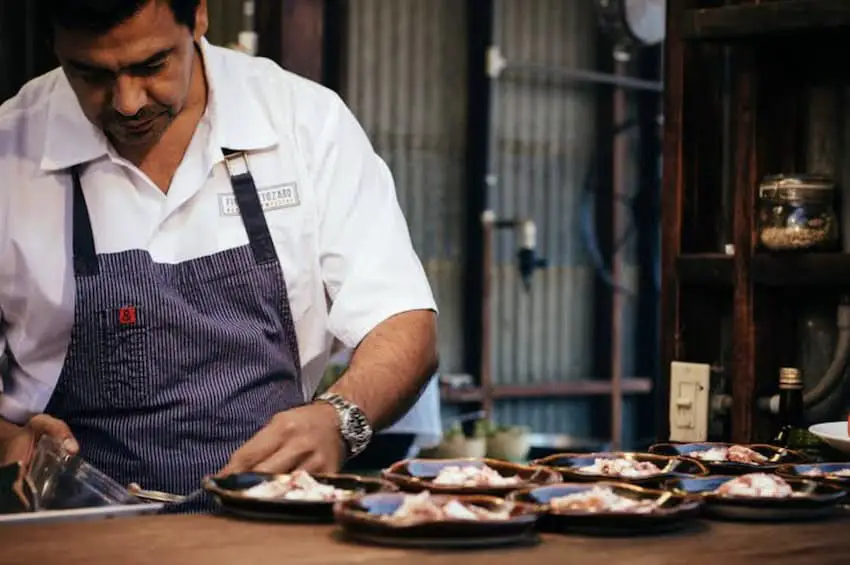
Walking in after dark, wood smoke drifted out to meet us at Fauna. The warm glow of the firepits and the low-lit Edison lightbulbs added to the rustic romance. Sitting down at the long, family-style wood table, the first dish, a fresh oyster in smoked tomato water, started everything in my body humming. The ceviche with chile toreado, mayo, cucumber and mushrooms was not watered down for anyone’s palate: its heat lingered in the back of the throat long after each bite. The rabbit and celery root chocochoyotas were mild but salty, the squash seeds give the dish a touch of nuttiness. Serendipitously, I found myself sitting next to chef David Castro, who told me his food doesn’t fit into any category, which is true — it transcends them all and leaves you wanting more.
This is true farm-to-table: diners walk through Lunario’s massive vegetable gardens to get to the restaurant. It’s the mix of flavors and textures that makes Chef Sheyla Alvarado’s food stand out. There are no power punches here, just a subtle blend of things that has you savoring and questioning each exquisite bite.
The crushed sage on the tomato salad that was our first dish was delicate and mouth-opening, and each dish that followed only got better. The striped bass brought a cornucopia of textures: crunchy skin, the slight chalkiness of the grilled blue corn kernels, baby soft panela cheese, plus an ultra creamy sauce that blends poblano chili, epazote and fish broth. We skipped the wine pairing but some wine-obsessed friends said that this was one of the best pairings they have ever experienced… anywhere.
Camino Vecinal Parcela 71 Fracc. 3 Lote 13, San Marcos, El Porvenir
Damiana
(Surya Valle)
Chef Esteban Lluis had to move around a little bit in Valle de Guadalupe to find the right home for his project. Damiana’s current location on the Viñedos de la Reina winery pairs well with the laid-back fine dining feel of his food.
Under the Brazilian pepper trees, diners go one by one through Chef LLuis’s tasting menu with wine pairing. The tetela stuffed with requesón cheese and bean puree is creamy with slight tang from the purslane garnish, topped with a salty chicatana ant salsa, roasted abalone and a cured egg yolk. The sea urchin gazpacho, made with almonds and geoduck clam, is perfectly cool and fishy. Everything was thoughtful and delicate.
Carretera Tecate–Ensenada, Km 71
Finca Altozano
(Finca Altozano)
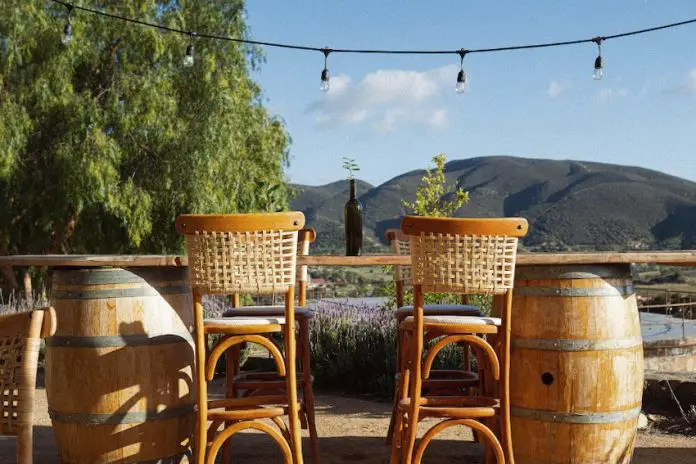
The experience of sitting out on the deck of Chef Javier Plascencia’s Finca Altozano, surrounded by the vineyards and slicing into a perfectly grilled prime rib or oak-grilled quail while sipping a glass of Valle de Guadalupe red feels quintessentially Baja. Brought to you by famed, Finca proves Plascencia hasn’t lost his touch.
Carretera Tecate–Ensenada, Km 83, Ejido Francisco Zarco
When a restaurant is the Monday night hangout of people in the food industry you know it has it together. The setting at Villa Torél gives oasis vibes with views of the distant mountains just beyond the vineyards of the Santo Tomas winery, where it is located.
The ambiance is lovely but not overly fussy. The beef tongue pastrami was seasoned just enough to overwhelm any gaminess and razor thin for an excellent texture. The charred carrot with citrus cream and duck au jus was deceivingly simple, but so decadent I could have eaten plate after plate of just that. The fideo seco with fried calamari with a squeeze of lemon? Perfection. Carretera 3, Km 94.7, Villa de Juárez
Just because this is the more casual spot at Bruma Wine Resort doesn’t mean its menu has been regulated to an afterthought. It’s obvious that Chef Castro wants diners to walk away impressed no matter which one of his restaurants they eat at.
Just as with Fauna, the acid, salt and umami flavors of the Bruma Wine Garden menu are on point. This is not the fine dining tasting menu of the former, but instead comfort food with pizzazz. For instance the carne apache, an amped up version of beef tartar with black sesame, or the tangy pork jowl sourdough pizza or even the fried chicken and waffles drizzled with maple syrup. This is by far one of the best hotel breakfasts you’ll ever have.
I tried to go to Doña Esthela’s three times on a holiday weekend and each time it was absolutely packed with people and I didn’t have the time to wait. When I finally did get there on a regular Tuesday morning I understood why. It’s like what a Cracker Barrel wishes it was: truly rustic and homey, with cowboys and families, antique tea pots sets and black and white photos on the walls.
The northern classics like machaca with eggs and vegetables were absolutely unbeatable. The fresh goat that they made was hands down the best queso fresco I have ever had: salty, moist, dense, cheesy without being gamey. Down-home and revitalizing, I will be back again, if only for the cheese.
Carretera El Tigre–El Porvenir between Km 13 and 14, Rancho San Marcos
This is the new-to-me spot on the Finca Altozano compound and it’s a more casual and quick option than doing a full meal at the namesake restaurant. I had a mouth-watering tripe and fresh tuna tostada with ponzu sauce, baked onion, tomato and cucumber, as well as the cilantro-laden green shrimp ceviche tostada. Both were amazing.
The salsa was fire, literally and figuratively, and the cocktails went far beyond my expectations for a low-key seafood joint. Lupe is great for lunch out in the country or if you need to slow down after having eaten all day. Carretera Tecate–Ensenada, Km 83, Ejido Francisco Zarco
The newest project of Chef Diego Hernandez in conjunction with Chef Ana Juncal, Parador Mercedes is easygoing, diner-style eating for breakfast and lunch in the valley. The mollejas (fried chicken gizzards) were fiery, crispy and melt-in-your-mouth delightful and the butter biscuits with fresh pineapple and strawberry jam provided a sweet balance to all that spice and salt.
The barbacoa was rich with a deep, cinnamon and clove flavor; the meat was pull-apart soft. Slivers of chewy, fatty machaca on top of the omelet with onion and bell pepper created an excellent version of this very traditional northern Mexico breakfast.
Carretera 3, Km 93, San Antonio de Las Minas
Da Toni
(Da Toni/Instagram)
This popular local spot in Ensenada is run by actual Italians and it shows in the cooking. The burrata brusetta was so creamy it was almost like dessert. The broccoli rabe with ear-shaped pasta, fresh Parmesan cheese and anchovy was only outshone by some of the creamiest panna cotta I have ever had.
The place is tiny, with a minuscule kitchen that only fits the four-person staff. A great mid-week treat for some serious carbs.
Av. Riveroll 143, Centro, Ensenada
Lydia Carey is a freelance writer and translator based out of Mexico City. She has been published widely both online and in print, writing about Mexico for over a decade. She lives a double life as a local tour guide and is the author of Mexico City Streets: La Roma. Follow her urban adventures on Instagram and see more of her work at www.mexicocitystreets.com.
Sonora's natural beauty has inspired new architects to create new homes and buildings across the state. (Colegio San José/Lumari)
The state of Sonora, best known for its striking landscapes, has been muse to many an architect. The region is traversed by majestic mountain ranges, including the Sierra Madre Occidental and its central sierras, while also boasting a vast desert and the stunning Sea of Cortez, renowned for its unique wildlife, including various species of whales.
In addition to Sonora’s natural beauty, its rich history also serves as a profound source of inspiration for architectural creation. Old factories, disused warehouses and former prisons provide a canvas on which architects can freely express their creativity.
Follow along for our selection of some of the most original examples of new architecture in Sonora.
Architecture in Sonora: a conversation between the Colonial and the Contemporary
Sonora House
(Sonora House/Behance)
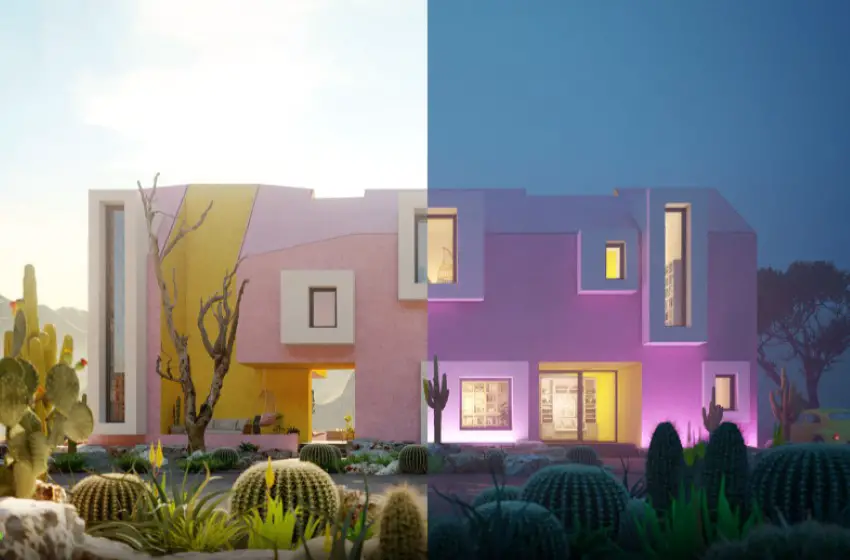
This residence resembles something out of a fantasy world, showing off a Tim Burton-esque flair while also paying homage to the styles of Mexican architects Luis Barragán and Ricardo Legorreta. The house has gained fame for its originality and its story is equally extraordinary.
Commissioned by a Mexican family, Russian architects Davit and Mary Jilavyan crafted this creation in the heart of the Sonoran Desert. Over time, the family stepped back from the project, allowing the architects to pursue their vision freely. Its garden, featuring cacti and biznagas, along with irregular windows and enchanting nighttime illumination, creates a perfect blend of surrealism and a lucid dream come to life.
Colegio San José
(Colegio San José/Lumari)
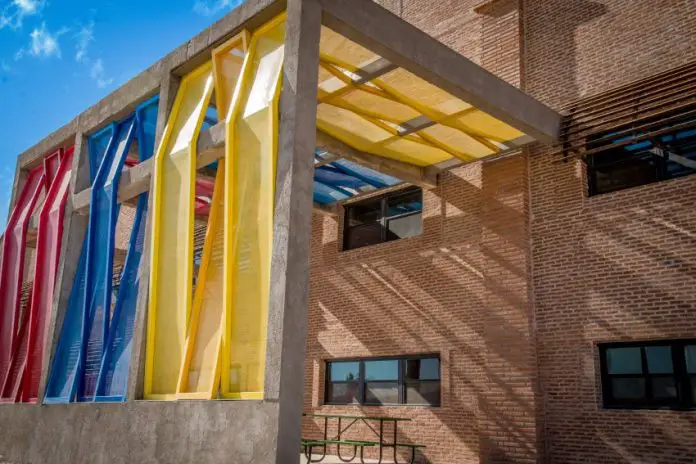
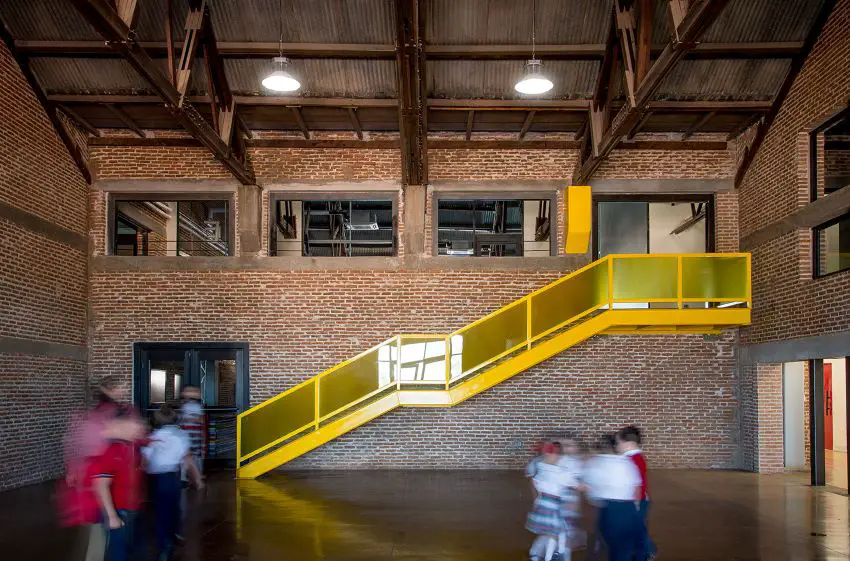
A pair of 1950s warehouses pay homage to the grandeur of ancient cellars while intelligently integrating modernity and its technology. Designed by Carte Architects, this space houses the Colegio San José, an educational institution that champions architecture and innovation in Sonora.
Sustainability is central to the Colegio San José’s design, which includes solar panels for generating electricity, a greywater treatment system for irrigating the school’s gardens and strategically placed roofing for solar protection.
Bar del Parque La Ruina
(Parque La Ruina/Facebook)
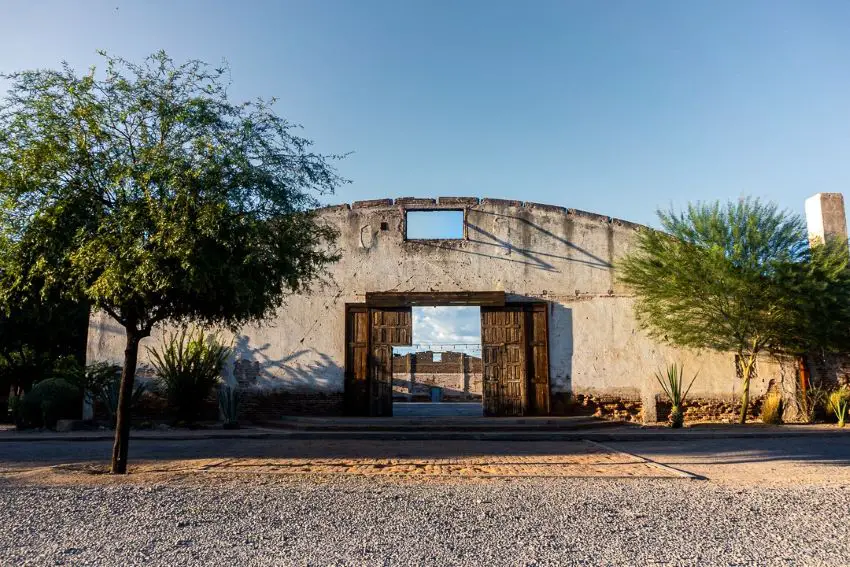
This establishment has rapidly become an architectural landmark in Sonora. Located in Hermosillo, the state capital, an old textile factory has been revitalized and transformed into a contemporary bar that serves as a hub for events, nightlife and gastronomy.
A standout feature of La Ruina is its open spaces, which provide views of the sky while preserving the original walls. The design is unique, featuring a marble roof that stretches from wall to wall and aged mirrors framed in wood salvaged from the old factory.
Museo Regional de Sonora
(Centro INAH Sonora/Facebook)
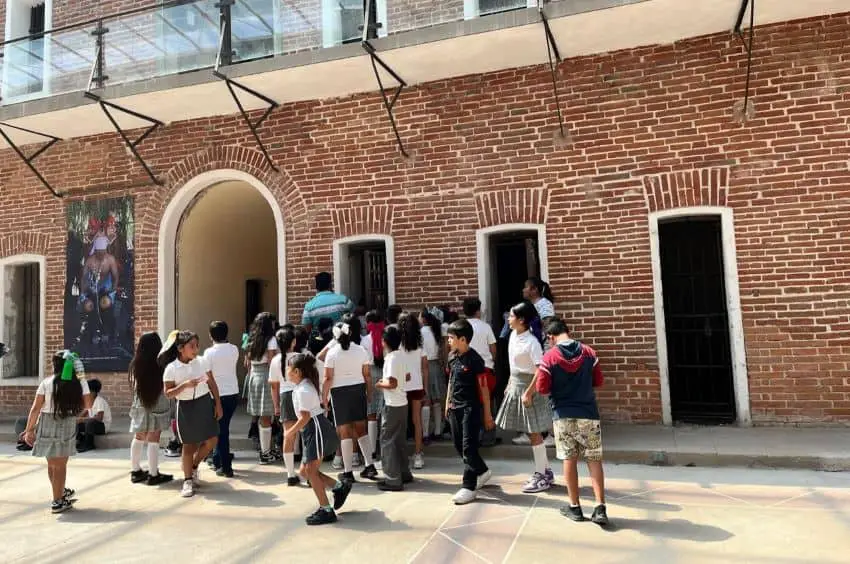
A former prison inaugurated in 1908 now houses the Museo de Sonora, one of the state’s most significant cultural institutions. The building underwent careful restoration in 1982 by the National Institute of Anthropology and History (INAH), which has preserved much of the original architecture while providing contemporary restoration elsewhere.
Today, the museum boasts 18 permanent exhibition rooms, five temporary exhibition rooms and a 130-seat auditorium with 130. Its beautiful stone facade and main hall, which features a glass ceiling, harmoniously blend modern additions with the original architecture.
Museo de Arte de Sonora
(Museo de Arte de Sonora/Facebook)
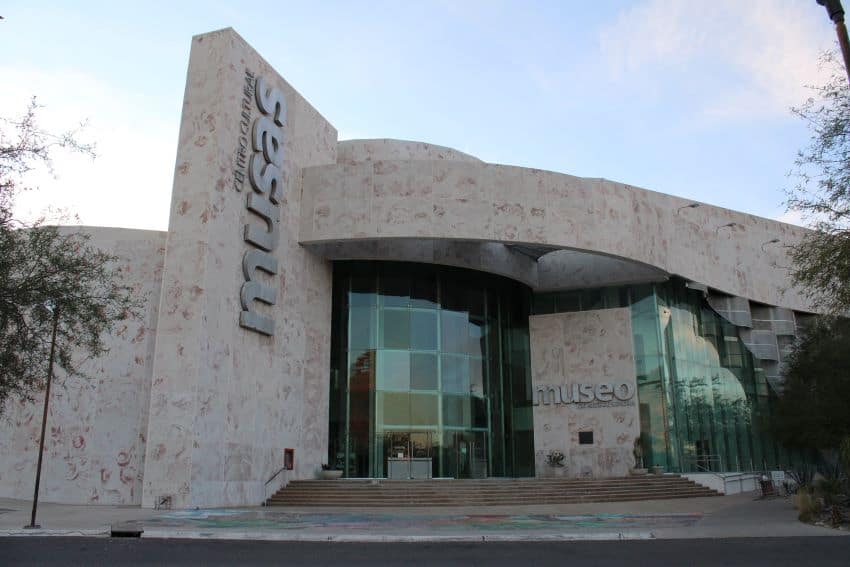
Inaugurated in 2009, the 5,000-square-meter building that houses the Sonora Museum of Art (MUSAS) stands as one of the state’s most complete cultural spaces. It includes spacious circulation areas, courtyards, warehouses, workshops, as well as office and residential spaces and six impressive exhibition halls.
One of its main aesthetic features is the facade, adorned with polymer concrete panels and large transparent windows that create a striking contrast; its curvilinear shape is yet another distinctive element.
Museum and Library of the University of Sonora
(Sistema de Información Cultural)
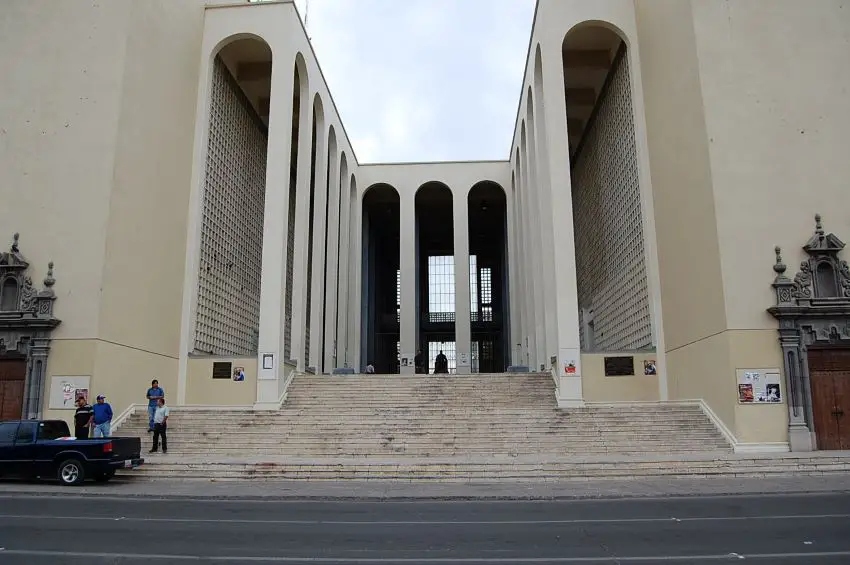
Though this Hermosillo building dates back to 1948, its design is as fresh now as it ever was. It is currently the most photographed monument in the city, thanks to its Soviet-inspired architectural style, which also incorporates elements of traditional Arabic-Spanish design. One side of the building reflects functionalist architecture, while the interiors are elegant, showcasing touches of Art Nouveau. This structure is truly a gem.
Ana Paula de la Torre is a Mexican journalist and collaborator for various outlets including Milenio, Animal Político, Vice, Newsweek en Español, Televisa and Mexico News Daily.