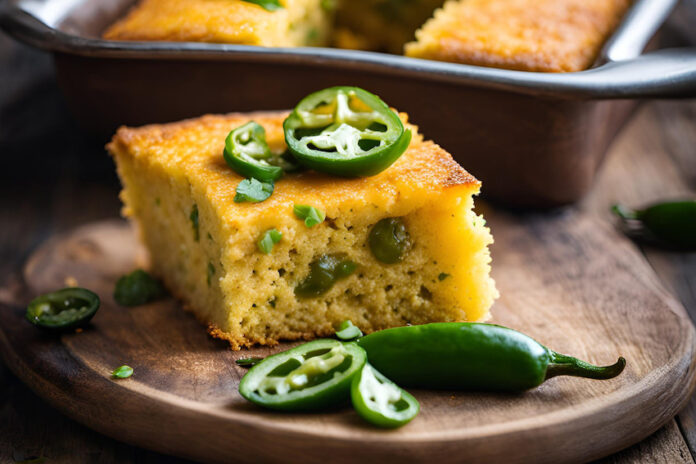
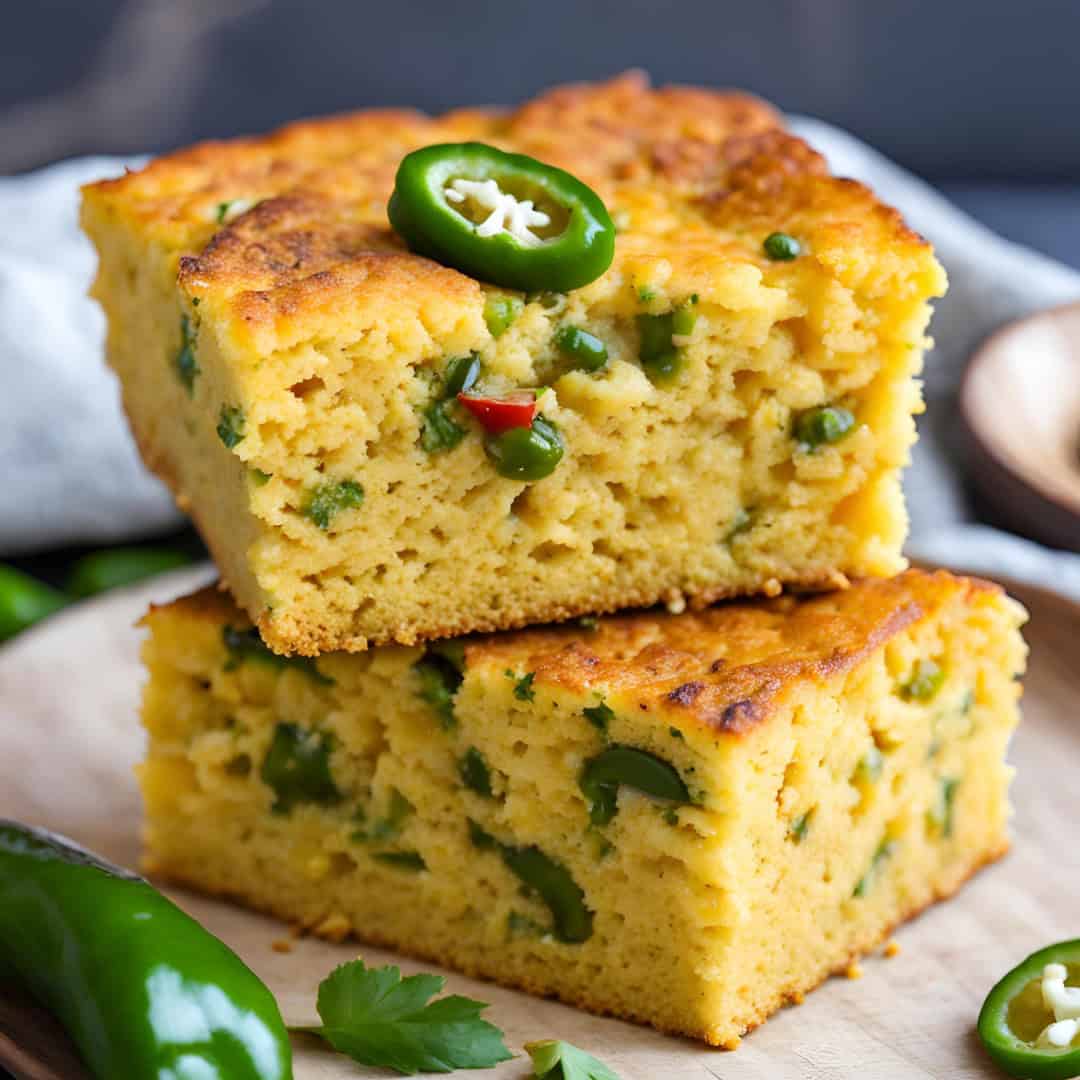
Heartly, wholesome and slightly spicy, this jalapeño cornbread is perfect for sharing with friends. (Canva)
Chilly weather and early sunsets have a way of making the world feel smaller and just a little lonelier. The light fades faster, the “chipi chipi” rains down softly, and everything seems to whisper, “Stay in bed, watch more Netflix.” That’s where jalapeño cornbread comes in — a dish as comforting as a warm blanket on a wet evening and perfect for sharing with friends.
You need food that hugs you back, and this cornbread does just that. The brown sugar brings a molasses-like warmth, the jalapeños add a kick, the cheese adds cheesiness and cheese is life. It’s a perfect balance, sweet and spicy, soft and hearty.
Is there a better recipe for a cold, wet January? (David B/Unsplash)
Cornbread is humble — no frills, no pretense, just simple ingredients doing extraordinary things together. It’s the kind of food that gathers people, even if it’s just you and your shadow on a Tuesday night. It pairs with everything: soup, chili, or just a pat of butter melting slowly across its golden surface. If you’re feeling bold, you can try it with some homemade hot honey.
As the sun dips below the horizon earlier than it should, leaving you wondering if you can stomach another four hour Hardcore History podcast or if you should bust out a 500 piece puzzle, let this cornbread remind you: warmth can come from within. You don’t need endless daylight when you have a kitchen full of possibilities and a dish that feels like an old friend. Enjoy it slowly. Make it, eat it, and let me know what you think in the comments.
Jalapeño Cornbread Recipe
(Canva)
Ingredients
1 cup yellow cornmeal
1 cup all-purpose flour
1/4 cup brown sugar
1 tablespoon baking powder
1/2 teaspoon salt
1/2 teaspoon garlic powder
1 cup buttermilk (or milk with 1 tablespoon vinegar)
1/2 cup unsalted butter, melted
2 large eggs
1 cup shredded cheddar cheese
1/4 cup diced jalapeños (fresh or pickled, seeds removed for less heat)
1/4 cup canned corn kernels, drained
Instructions
Preheat and Prepare: Preheat your oven to 400°F (200°C). Grease an 8-inch square baking dish, cast iron skillet, or muffin tin.
Mix Dry Ingredients: In a large bowl, whisk together cornmeal, flour, brown sugar, baking powder, salt, and garlic powder.
Mix Wet Ingredients: In a separate bowl, whisk together buttermilk, melted butter, and eggs until smooth.
Combine: Gradually mix the wet ingredients into the dry ingredients until just combined. Do not overmix. Fold in the shredded cheddar cheese, diced jalapeños, and corn kernels.
Bake: Pour the batter into the prepared dish or skillet, spreading it evenly. Bake for 20–25 minutes (15–18 minutes for muffins), or until the top is golden and a toothpick inserted in the center comes out clean.
Cool and Serve: Allow to cool for 5–10 minutes before slicing. Serve warm with butter, hot honey, or alongside your favorite dish.
Stephen Randall has lived in Mexico since 2018 by way of Kentucky, and before that, Germany. He’s an enthusiastic amateur chef who takes inspiration from many different cuisines, with favorites including Mexican and Mediterranean.
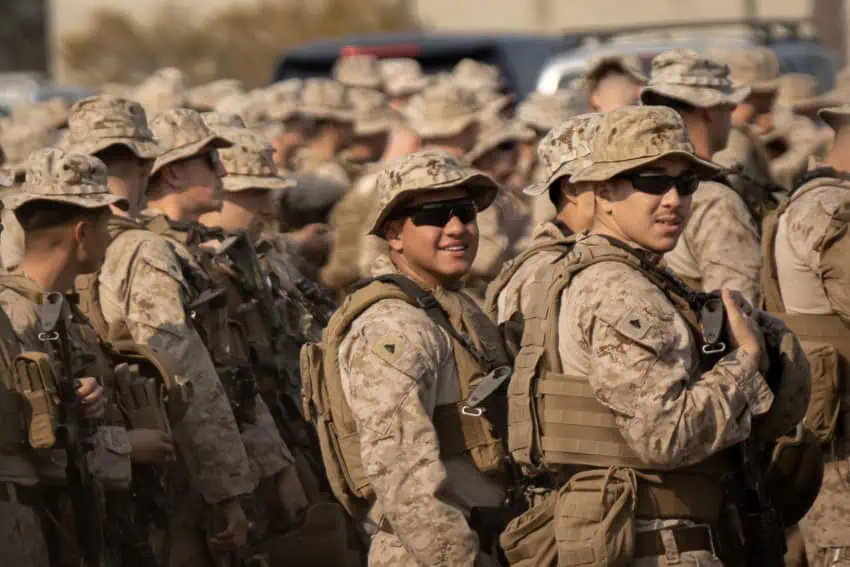
U.S. troops arriving at a U.S. Border Patrol station in San Diego on Friday. (Omar Martinez/Cuartoscuro)
And on Monday, an armed confrontation between suspected cartel members and U.S. border agents reportedly occurred.
Yes, a lot is happening at the Mexico-U.S. border — even before considering the huge volumes of goods and the significant number of people that cross the border legally on a daily basis.
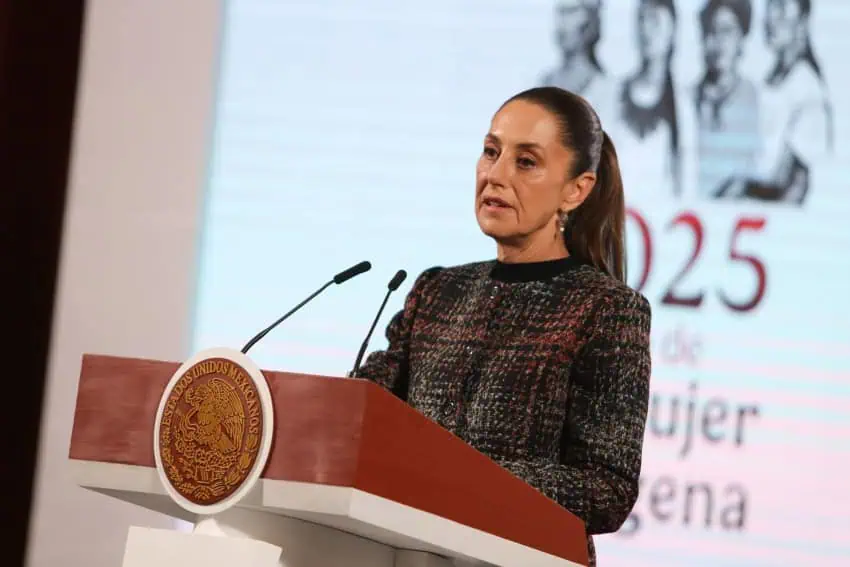
At her Tuesday morning press conference, President Claudia Sheinbaum acknowledged reports of the border clash but cast doubt on their accuracy.
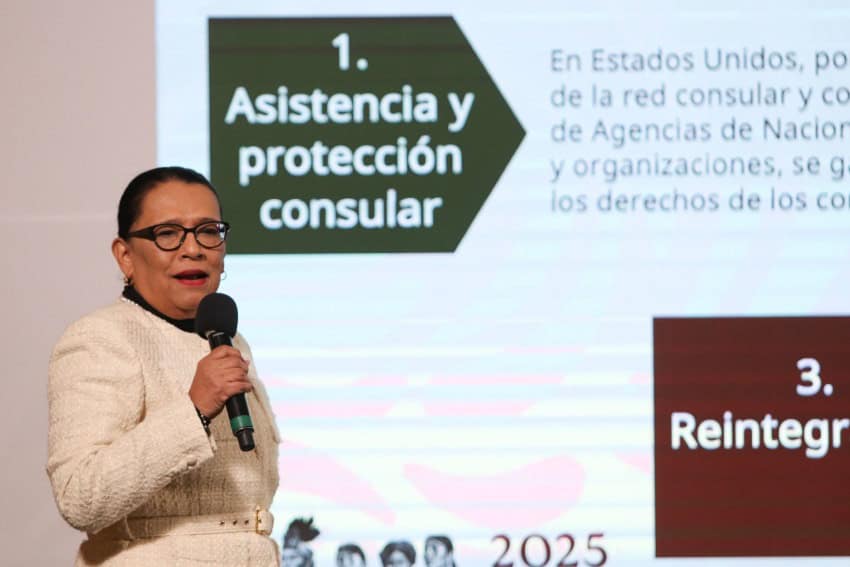
Interior Minister Rosa Icela Rodríguez spoke about Mexico’s preparedness to receive Mexicans deported from the U.S. while a senior security official provided an update on homicide numbers.
Mexico to investigate incident at US border
A reporter mentioned that media outlets and “United States authorities themselves” reported that an armed confrontation between suspected cartel members and U.S. border patrol agents occurred on Monday.
VIDEO: Earlier today, @TxDPS responded to assist the US Border Patrol after agents received gunfire from cartel members in Mexico while patrolling in Fronton, Starr County. DPS Drone Operators captured the gunmen fleeing Mexico due to military presence, & seeking refuge on an… pic.twitter.com/oPf5l7wltO
Chris Olivarez, spokesperson with the Texas Department of Public Safety (DPS), said on X on Monday night that “earlier today,” the DPS “responded to assist the US Border Patrol after agents received gunfire from cartel members in Mexico while patrolling in Fronton, Starr County.”
“DPS Drone Operators captured the gunmen fleeing Mexico due to military presence, & seeking refuge on an island between the US & Mexico,” he wrote.
Olivarez’s post included footage of the alleged cartel gunmen.
Fox News reported that “U.S. Border Patrol agents exchanged gunfire with suspected cartel members near the U.S.-Mexican border on Monday.”
“… The gunfire exchange — which happened exactly one week after President Donald Trump began ramping up border security on his first day in office — occurred at around 2 p.m. local time near Fronton, Texas,” Fox News said, referring to a location across the border from Ciudad Miguel Alemán, Texas.
“A group of illegal aliens was attempting to cross the Rio Grande while bullets were fired but did not make it across. Neither the Border Patrol agents nor the suspected cartel members were hit,” Fox said.
Sheinbaum told her morning press conference that she and other officials discussed the reported incident at their Tuesday morning security cabinet meeting.
“The first thing, before anything else, is to request information from the United States government about … if there really is this issue or not,” she said.
“It was published in various media outlets. It came out today in Reforma [newspaper] as well, which had no reason to put out the headline they did without [having] more information,” Sheinbaum said.
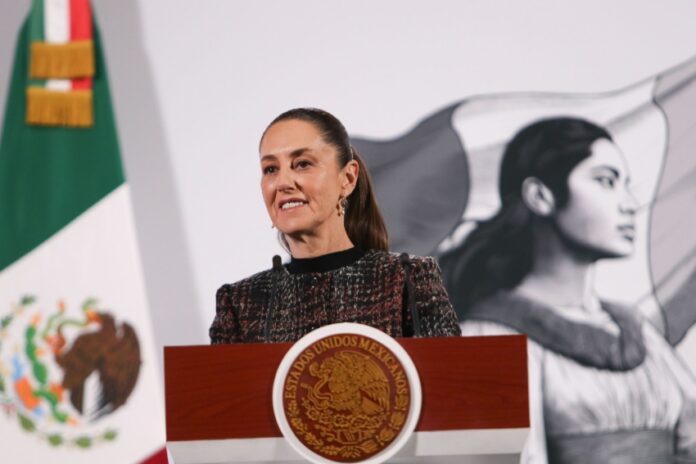
President Sheinbaum told reporters Tuesday that information Mexico received from its Consulate about the incident suggested that it did not occur in the way it had been reported in the news media. (Gustavo Alberto/Cuartoscuro)
“We all have to be responsible at this time — always, but particularly at this time,” she said.
“We received a note from one of the Consulates that [says the reported incident] doesn’t precisely have to do with the information that appeared in the media. But in any case, I asked the attorney general — or the attorney general was asked — to formally carry out an investigation,” Sheinbaum said.
Attorney General Alejandro Gertz Manero, who was at the president’s press conference, acknowledged that there is a “report” from U.S. authorities about the incident and said that report warranted the opening of an investigation by the federal Attorney General’s Office.
“And that is what was immediately done, and I believe we’re going to have [the results] in a very short period of time,” he said.
Reception centers for deportees are empty, says interior minister
Interior Minister Rosa Icela Rodríguez told reporters that 10 centros de atención (service centers) have been set up to receive immigrants deported to Mexico from the United States.
The centers — located in northern border cities that include Tijuana, Mexicali, Ciudad Juárez, Matamoros and Reynosa — are all currently “empty,” Rodríguez said before displaying images showing hundreds of unoccupied beds.
Sheinbaum said Monday that Mexico accepted 4,094 deportees between Jan. 20–26, but none are apparently currently housed in the government facilities in Mexican border cities.
Rodríguez noted that federal and state authorities are contributing to the “México te abraza” (Mexico embraces you) strategy that was formulated to support immigrants deported from the United States during the second Trump administration.
“We’re ready, and we’re coordinated with the conviction of looking after our compatriots with quality, warmth and humanism,” she said.
Interior Minister Rosa Icela Rodríguez. (Gustavo Alberto/Cuartoscuro)
Guanajuato remains Mexico’s most violent state
Marcela Figueroa Franco, head of the National Public Security System, presented preliminary data that showed there were 1,776 homicides in Mexico between Jan. 1 and 27.
She noted that 53% of those murders occurred in just seven states.
Guanajuato was the most violent state between Jan. 1 and Jan. 27 with 237 homicides, a figure that accounts for 13.3% of the national total in the period.
The other six states that contributed to 53% of the homicide total so far this year were:
México state: 144 murders.
Baja California: 141 murders.
Michoacán: 126 murders.
Sinaloa: 110 murders.
Chihuahua: 93 murders.
Jalisco: 91 murders.
Three states — Durango, Querétaro and Yucatán — have not recorded a homicide so far this year, according to the data presented by Figueroa.
By Mexico News Daily chief staff writer Peter Davies (peter.davies@mexiconewsdaily.com)
Mexico's President Claudia Sheinbaum said she is confident that a bilateral agreement to avoid the 25% tariff can be reached, but time for that deal is running out. (Gustavo Alberto/Cuartoscuro)
United States President Donald Trump intends to go ahead with his plan to impose tariffs on Mexican and Canadian exports to the U.S. this Saturday, White House Press Secretary Karoline Leavitt said Tuesday.
Karoline Leavitt on tariffs: “The President has made it very clear, again, that he expects every nation around this world to cooperate with the repatriation of their citizens. And the President has also put out specific statements in terms of Canada and Mexico…” pic.twitter.com/bXU7dL4GjY
White House Press Secretary Karoline Leavitt spoke about the issue at her first White House press briefing Tuesday.
“We’re thinking in terms of 25% on Mexico and Canada because they’re allowing vast numbers of people … to come in and fentanyl to come in,” Trump told reporters in the Oval Office.
At what was Leavitt’s first media briefing as White House press secretary, a reporter asked for an update on Trump’s tariff agenda, including his plan to impose the 25% duties.
“He was asked and answered this question this past weekend … and he said that the February 1 date for Canada and Mexico still holds,” said Leavitt, who, at 27, is the youngest-ever White House press secretary.
She also said that Trump is “committed to implementing tariffs effectively, just like he did in his first term.”
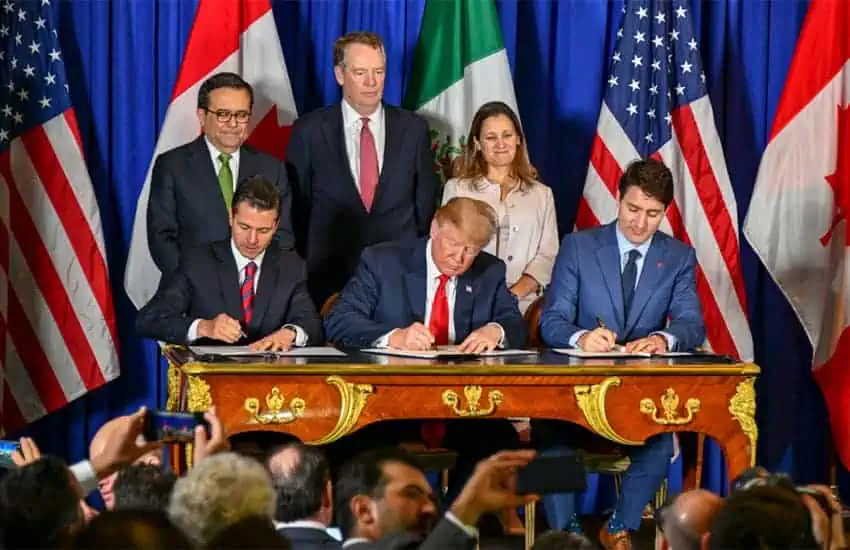
U.S. tariffs on Mexican and Canadian exports would violate the terms of the USMCA free trade pact, but the U.S. president appears unconcerned about falling foul of the rules of the agreement he signed during his first term.
Asked whether the Canadian and Mexican governments have “met the bar” set by Trump regarding ramping up efforts to stop the flow of fentanyl into the United States, Leavitt was circumspect.
Donald Trump first signed the United States-Mexico-Canada Agreement (USMCA) in 2018, the last time he was president of the U.S. But he seems unconcerned now about breaking the agreement by imposing the 25% tariff. (Ron Przysucha/U.S. Department of State)
“I won’t get ahead of the president on advocating to foreign nations on what they should and shouldn’t do to get away from these tariffs,” she said.
“The president has made it very clear that he expects every nation around this world to cooperate with the repatriation of their citizens, and the president has also put out specific statements in terms of Canada and Mexico when it comes to what he expects in terms of border security,” Leavitt said.
“We have seen a historic level of cooperation from Mexico but, again, as far as I’m still tracking, and that was last night, talking to the president directly, February 1 is still on the books,” she said.
President Claudia Sheinbaum reiterated Monday that her government will seek dialogue with the Trump administration over the proposed tariffs. She expressed confidence that a bilateral agreement to avert the planned 25% tariff will be reached, but time to secure a deal is running out.
But unnamed White House advisers who recently spoke to The Wall Street Journal said that Trump feels that Mexico and Canada aren’t taking his threats seriously and wants to impose tariffs on their exports to prove he isn’t bluffing and to force them to negotiate on a range of issues, including migration, drug smuggling and the USMCA.
The imposition of the proposed tariffs on Mexican exports would have a major impact on Mexico’s economy, where economic growth slowed in 2024. The tariffs could even trigger a recession.
The imposition of tariffs on Mexican exports would also likely cause the Mexican peso to depreciate against the US dollar.
On the social media platform X on Tuesday, above a graph showing that the peso has appreciated against the dollar — despite Leavitt’s remarks — the director of economic analysis at Mexican bank Banco Base, Gabriela Siller, wrote: “Almost nobody believes that Trump will impose 25% tariffs on [U.S.] imports from Mexico.”
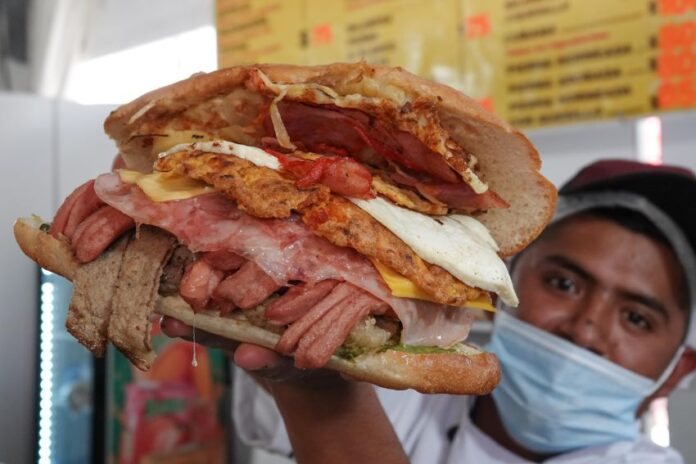
Mexico's beloved torta has been recognized by one of the best-known global culinary online platforms, TasteAtlas. (Graciela López/Cuartoscuro)
The global culinary platform TasteAtlas has placed the Mexican torta in the No. 8 spot on its newly released list, the Top 100 Sandwiches in the World.
Shawarma took the top spot on the list, which was updated on Jan. 15.
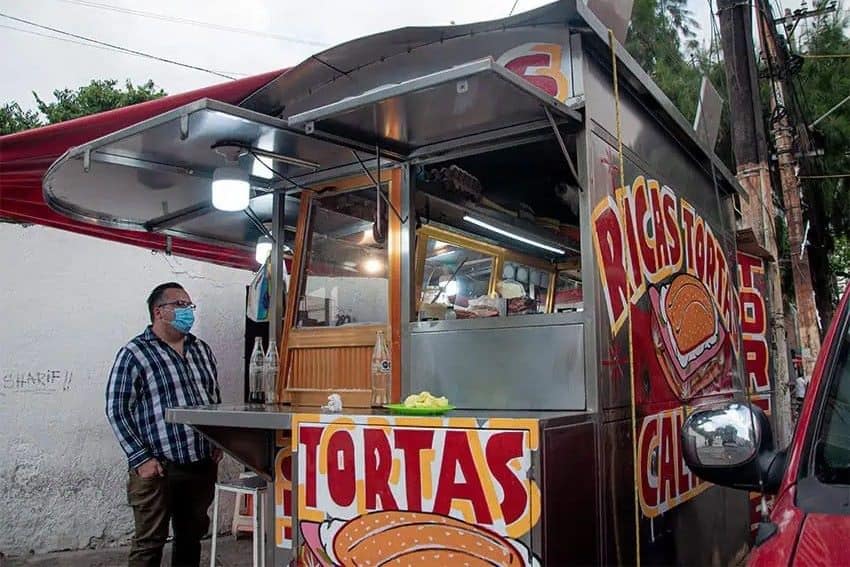
The torta is a popular street food in Mexico, thanks to its easy portability and adaptability making it appealing at any time of the day. (File photo by Lisbeth Chavez/Cuartoscuro)
The Lebanese specialty is followed by three variations of Vietnam’s bánh mì in the No. 2, 4 and 5 spots, along with Turkey’s tombik döner at No. 3. Puerto Rico’s jibarito took the No. 6 spot, and panino col polpo (octopus sandwich), of Bari, Italy, took No. 7.
The No. 8-ranked torta was recognized for its mix of salty and spicy flavors and its ability to be eaten at any time of the day. It finished one spot ahead of the Maine lobster roll.
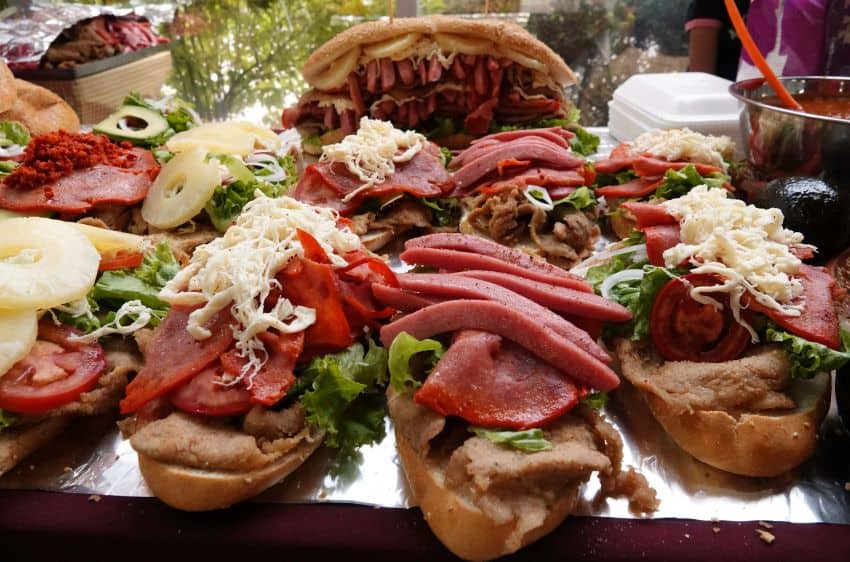
Tortas are “luscious traditional sandwiches filled with delicious, mostly authentic Mexican ingredients,” notes the Croatia-based TasteAtlas, which was founded by journalist Matija Babić in 2015. “They are a unique Mexican creation, considering they are served in bread rolls, an ingredient that is not so often associated with Mexico.”
Beyond noting that tortas are made on “traditional, French-influenced bolillos” or “round teleras … from Puebla,” TasteAtlas also offers a list of the 51 best places to sample tortas worldwide — 38 in Mexico and 13 in the United States.
The top five places on that list are Taquería El Turix (Mexico City), Taqueria Honorio (Tulum), La Chaya Maya (Mérida), Tortas Toño (Guadalajara) and Cemitas Las Poblanitas (Puebla).
The TasteAtlas website — which last year ranked Mexican food the world’s third-best cuisine and also cited Guadalajara as not only the No. 28 best food city in the world but the top city in Latin America — also includes an analysis, pictogram and “where to try” suggestions for eight types of tortas:
The torta, which can be stuffed with a wide variety of ingredients, even has its own fair each year in Mexico City. (Graciela López/Cuartoscuro)
Cochinita pibil — Slow-cooked, marinated pork that’s then shredded; originating from Yucatán.
Cemita — from Puebla; featuring a sesame-seed bun; usually humongous.
Torta ahogada — Guadalajara’s signature sandwich that’s “drowned” in a vinegar-based salsa; served on a birote salado, a crusty, salty bread with a soft, airy interior.
Torta Cubana — Various combos of meats and sauces; invented on Calle Republica de Cuba in Mexico City in the 1950s; not to be confused with a Cuban sandwich.
Torta de tamal — Also called guajolota, it’s a tamal sandwiched into a bolillo, and a common street-food breakfast.
Torta de la barda — Overstuffed offering from Tampico, Tamaulipas sold to workers in the early 1930s from stands along a fence (barda); nowadays prepared for Lent with canned sardines instead of meat.
Tortas hamburguesas — The Mexican take on an American classic.
Guacamaya — Originating from León, Guanajuato, where it’s sold from tricycle carts; a bolillo filled with crispy chicharrón (pork rinds), avocado, spicy salsa, lime juice and salt.
All of these tortas are also included on their own Taste Atlas list: “The Top 11 Mexican Sandwiches” — which also includes the pambazo, the mollete and the empalme.
Victoria’s Undersea World was organized by Javier Bredée, who is considered the premier event planner in northern Mexico. (X)
A 65-million-peso (US $3M) quinceañera extravaganza in the northern state of Coahuila stirred up social media activity last week, with some users gawking at the stunning images of the outsized 15th birthday celebration.
Others criticized the amount of money spent on a birthday party.
In Mexico, it is customary to celebrate a girl’s 15th birthday with a special bash. In Latin American culture, the event marks the passage of a young girl from childhood to adulthood. It is also used to announce the new young adult woman’s entrance into society in the company of family and friends.
While the newspaper Milenio identified the quinceañera as Victoria Quiroz, official confirmation was not forthcoming, leading to speculation about the source of the party’s financing, which was “presumed to have cost 65 million pesos,” according to Milenio. However, photos and video footage of the event were made public such that details of the party — held on Jan. 11 — were readily available.
At the center of the arena was a revolving 360-degree stage lit up by lights and lasers surrounded by elaborate ocean-themed decorations and sculptures of jellyfish, seahorses and coral reefs designed by Las Fabricadores from Iztapalapa in Mexico City.
Guests entered the “Undersea World” past an elaborate waterfall and six-foot-long sculptures of turtles and seahorses that led to a coral reef-lined tunnel, where ballerinas dressed as jellyfish greeted them.
Inside, they were treated to extravagant presentations and performances including stilt walkers, and musical entertainment from Luis R. Conriquez, known for his narco-corridos and Sinaloa-style genres, as well as the norteño band Los Tucanes de Tijuana.
Appetizers such as pizza, tacos and snacks from brand-name companies including Krispy Kreme, Bobalicious, Cinnabon, La La Land Café, Chick-Fil-A, Ladurée México and Crumbl Cookies were available to sample.
And who is Victoria Quiroz, the star of this lavish celebration?
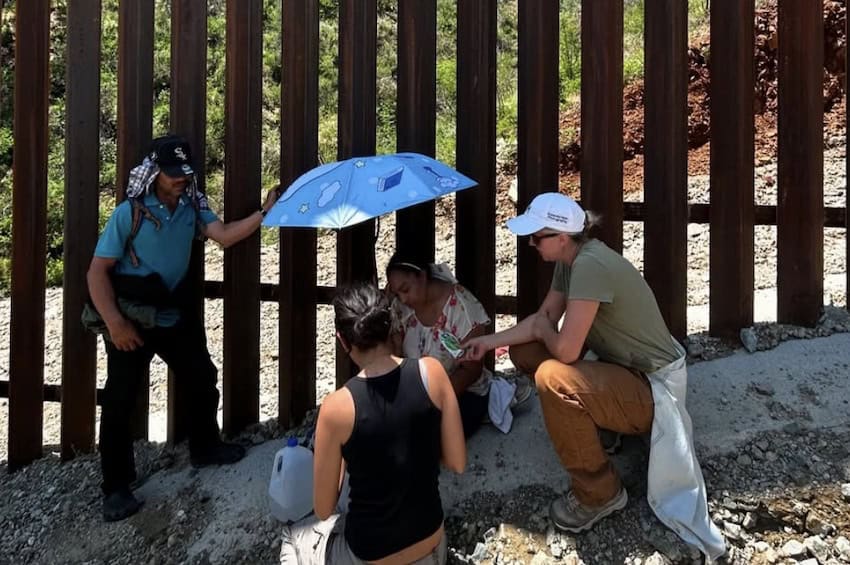
The Arizona volunteers have stood firm on providing migrant aid amid rising anti-immigrant sentiment in the United States. (@tucsonsams/Instagram)
A diverse group of volunteers in Arizona is looking out for migrants arriving at the United States-Mexico border despite an increase in anti-immigration rhetoric from U.S. President Donald Trump.
Tucson Samaritans, founded in 2002, is a grassroots, volunteer-run, humanitarian aid organization that provides water, food, first aid and other essential items to migrants who cross into Arizona from Mexico. They take up to 14 trips into the Sonoran Desert each week.
The volunteer group Tuscon Samaritans provides water, food, first aid and other essential items to migrants who cross into Arizona from Mexico. (@tucsonsams/Instagram)
According to their website, the volunteers “range in age from college students to people in their 80s. Some of us are multilingual; some speak only English. Some are recent immigrants while others trace their heritage for many generations in the Sonoran Desert.” Their stated mission is to save lives and relieve the suffering of migrants in Southern Arizona.
“What you don’t want to do is see people suffer,” Tucson Samaritan Gail Kocourek told KOLD-TV News in a recent interview. “One of my favorite pastors said, ‘[Migrants] are people too, and it’s not our place to judge, our job is to help people.’”
The Samaritans describe their work as a “civil initiative” in support of U.S. laws that they believe the government is not following and in opposition to laws that the group believes are causing suffering and death.
Acknowledging that the U.S. immigration system is broken, the Samaritans have lobbied U.S. lawmakers to take action. “We need more asylum judges to process cases faster. People are waiting three and four years [for their cases to be heard],” Nicholas Matthews, a Tucson Samaritan, told the Los Angeles Times in October.
“A nosotros lo único que nos importa es ayudar”, dicen los Tucson Samaritans, un grupo de voluntarios de adultos mayores que proporcionan agua, alimentos, ropa y primeros auxilios a los migrantes que cruzan la frontera por el sur de Arizona https://t.co/bpOIjcw5Abpic.twitter.com/bIug0dAkwH
The Samaritans are not alone. Tucson boasts a network of churches and nonprofits that provide temporary shelter and supplies for migrants seeking a better life in the United States.
Among other items, the volunteers leave cereal bars, soup packets and cookies, as well as clothing such as shoes, socks and caps.
The Salvavisión volunteers do their best to humanize the trip for the migrants, writing messages of support such as “God be with you” on the water jugs.
Tucson Mayor Regina Romero, the daughter of immigrant farmworkers from Mexico, is a vocal critic of Republicans who have turned immigration into a “wedge issue” while “spewing lies” about migrants with “cruel and dehumanizing” language.
While giving humanitarian aid to anyone is legal, members of the Tucson Samaritans frequently receive threats and get stalked by people who don’t agree with their work, according to KOLD-TV news.
The Samaritans have been harassed by anti-immigration vigilantes carrying cameras and rifles. The vigilantes have been known to shoot holes in the water jugs left by volunteers for the migrants.
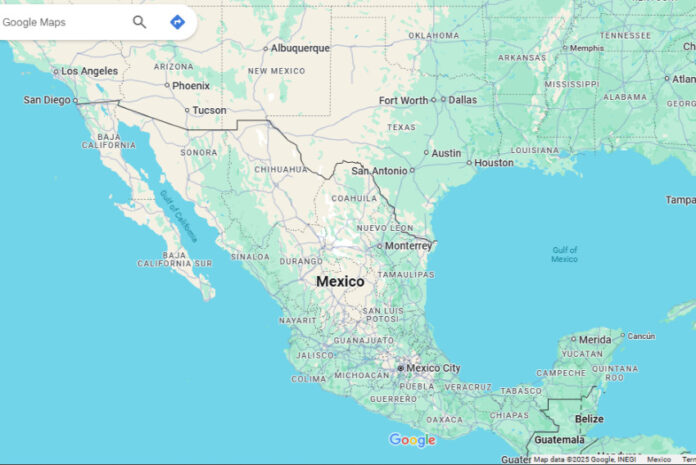
Google said the new name will be visible once the Geographic Names Information System (GNIS) is updated. (Screen capture/Google)
Google has said it will change the name of the Gulf of Mexico to “Gulf of America” in Google Maps following President Donald Trump’s executive order renaming the Gulf of Mexico in the U.S.
The announcement came Monday on X, when Google wrote that the new name will be visible to users in the United States once the Geographic Names Information System (GNIS) is updated.
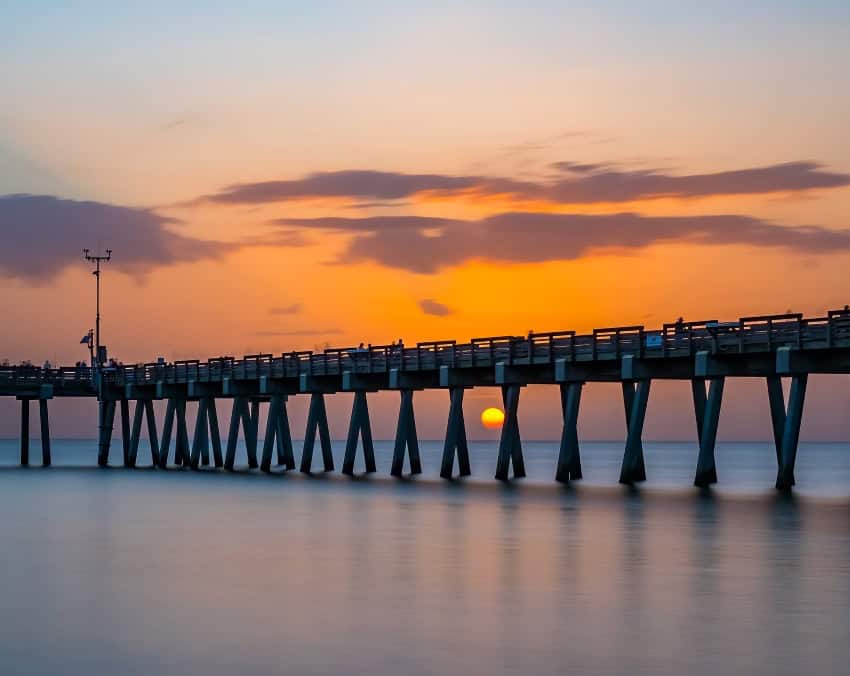
This part of the Gulf of Mexico, located in Venice, Florida, will soon be referred to as the Gulf of America by Google Maps. (Jim Schwabel/Shutterstock)
“When that happens, we will update Google Maps in the U.S. quickly to show Mount McKinley and Gulf of America,” Google said.
Mount McKinley, located in Denali National Park in Alaska, was changed from Mount McKinley to Denali in 2015 during the administration of former U.S. president Barack Obama. Denali is a local Athabascan name for the mountain.
Google explained that when official names differ between countries, Maps users see the official local name — meaning that the change will be visible in the U.S. but not in Mexico, where the name will remain “Gulf of Mexico.”
Following what the tech company called “a longstanding practice,” Google said that users located outside of the two countries will see both names on Google Maps.
Google’s announcement on X followed queries by users.
“We’ve received a few questions about naming within Google Maps,” the company wrote on X. These questions follow Trump’s executive order renaming the Gulf of Mexico as part of his pledge to honor “America’s greatness.”
The Gulf of Mexico was first shown as the official name on maps used by 16th-century Spanish explorers, prior to the founding of the United States.
On Friday, the Secretary of the Interior announced that efforts are underway to remove all mentions of the Gulf of Mexico in the GNIS, “effective immediately for federal use.” In Florida, Governor Ron DeSantis already began using the name Gulf of America after putting it in a weather forecast saying that an “area of low pressure was moving across the Gulf of America.”
A recent example of conflict over geographic nomenclature elsewhere involves Iran and Arabic nations, regarding the Gulf that both regions share. Historically known as the Persian Gulf, in recent years, Arab countries have pushed to change the name to the “Arabian Gulf.”
While Google Maps displays the official local name, the Gulf is primarily shown as the Persian Gulf in other countries.
The automotive and light manufacturing industries represent more than half of the demand for warehouse space in the Bajío region. (Shutterstock)
The industrial warehouse market in Mexico’s Bajío region — comprising the states of Aguascalientes, Guanajuato, Querétaro, Jalisco, Zacatecas, Michoacán and San Luis Potosí — saw strong growth in 2024 despite geopolitical tensions threatening nearshoring investments in Mexico.
According to a report by real estate consulting firm CBRE, industrial warehouse occupancy in the region increased by 51% compared to 2023. CBRE’s data shows that the region registered 722,000 square meters of net absorption, primarily driven by land sales transactions and the expansion of companies already established in the Bajío area.
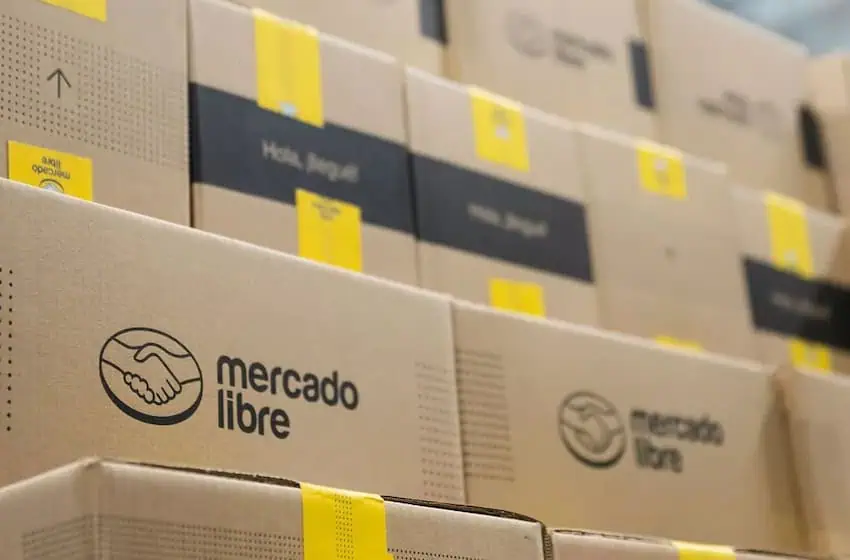
The Argentina-based Amazon competitor Mercado Libre emerged as the largest warehouse tenant in 2024, accounting for 11% of total rented square meters in Mexico. (Mercado Libre)
According to data collected by the Mexican real estate data tech agency Datoz, net absorption of warehouse space in el Bajío represented 28.28% of the national total, outpacing other industrial hubs like Mexico’s central, northeast and northwest regions.
“The demand for industrial space by tenants in the automotive and light manufacturing industries continues,” CBRE said. “These sectors represent more than half of the demand [in the Bajío region], and this trend is expected to continue during the first half of 2025.”
Rodrigo Folgueras, the regional vice president of CBRE Mexico, explained that the vacancy rate for industrial warehouses in El Bajío has remained relatively stable, closing at 3.6% at the end of Q4 — slightly lower than the 3.9% vacancy rate recorded at the end of the same period in 2023.
Folgueras estimated that the light manufacturing and automotive industries would continue to demand more industrial space in the region, primarily focusing on Build-to-Suit (BTS) projects. He also noted an upward trend in the asking prices for warehouses, similar to what is occurring in other markets.
Nationwide, the Argentina-based Amazon competitor Mercado Libre emerged as the largest warehouse tenant in 2024, accounting for 11% of total rented square meters in Mexico.
According to Silvia Gómez, an industrial market consultant at Datoz, this positive trend in the industrial real estate market will help mitigate the potential impacts of U.S. President Donald Trump’s threats of tariffs on Mexico’s main industrial sectors.
Key industries whose operations and sourcing are spread over both the U.S. and Mexico will be hit the hardest, the financial services agency predicted. (Shutterstock)
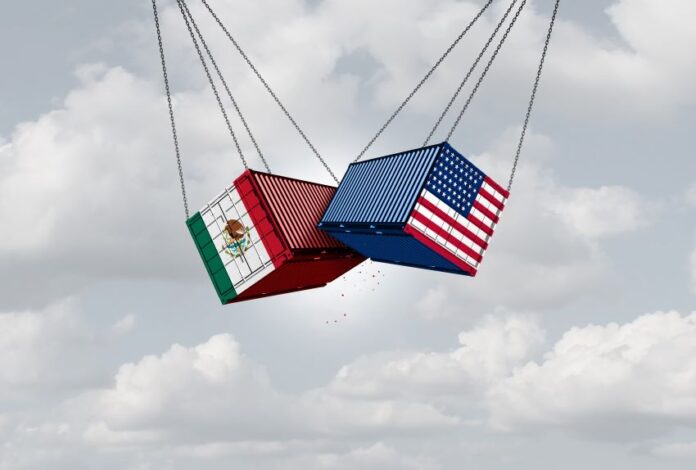
President Donald Trump’s tariffs on Mexico would disrupt trade flows by US $740 billion, financial services company Moody’s Ratings warned on Monday. They are likely to hit key strategic industries worst, including the automotive, technology and manufacturing sectors.
“The effect of tariffs and retaliation [from Mexico] would spill over into direct trade figures between the United States and Mexico, due to intermediate inputs for assembly and processing, which are transferred back and forth within the manufacturing, automotive and technology industries of both countries,” stated Moody’s.
The disruption to free trade between the U.S and Mexico — especially if Mexico retaliates with its own tariffs — could have far-reaching effects in Mexico, including severe peso depreciation and inflation. (Elizabeth Ruíz/Cuartoscuro)
Trump first proposed tariffs of 25% on Mexican and Canadian imports after winning the presidential election in November. He said the tariffs would remain in place “until such time as Drugs, in particular, Fentanyl, and all Illegal Aliens stop this Invasion of our Country!”
Moody’s figure of US $740 billion takes into account tariff implementation and potential similar retaliatory measures applied by Mexico.
Mexican exports to the United States contribute approximately 30% of the country’s GDP, and around 80% of Mexico’s exports are destined for the U.S. Therefore, tariffs would have a negative macroeconomic effect, as well as hinder several sectors.
New tariffs could also lead to the peso’s depreciation and drive up inflation. On Jan 20, Moody’s warned that proposed tariffs on Mexico could limit economic growth to 0.6% in 2025.
The ratings agency suggested that if Mexico were to respond with its own tariffs it“would complicate Mexico’s efforts to reduce the fiscal deficit and increase pressure on the sovereign credit profile.”
It remains uncertain whether Trump will impose the tariffs he pledged on both Mexico and Canada.
“Despite the president’s initial intentions to impose a 25% tariff on imports from Canada and Mexico as early as 1 February, recent statements indicate the U.S. government will review the measures’ economic effects, delaying a decision on tariffs to 1 April at the earliest,” wrote European affairs analyst Yannis Koutsomitis wrote on on X on Monday. “The delay would allow time for negotiation between country officials.”
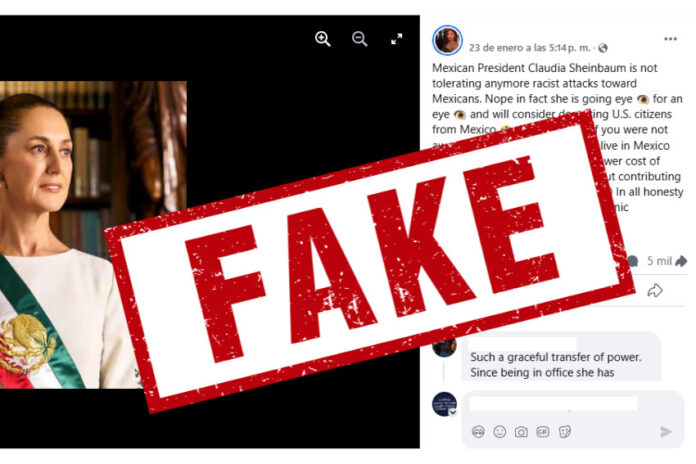
A post claiming that President Sheinbaum would go "eye for an eye, tooth for a tooth" and would consider deporting U.S. citizens from Mexico. (Facebook)
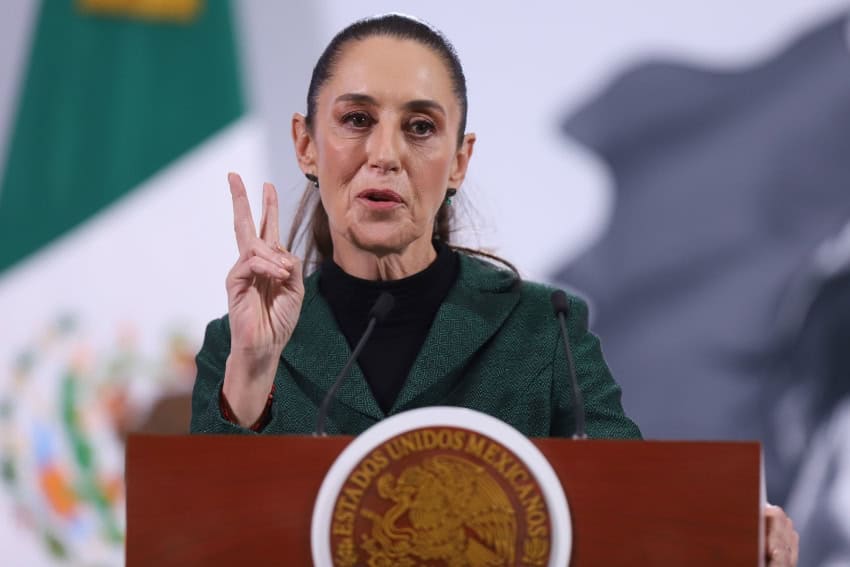
President Claudia Sheinbaum said in November that if United States President Donald Trump were to impose a 25% tariff on Mexican exports, her government would put a retaliatory tariff on U.S. exports to Mexico.
The president, however, HAS NOT said that her government is planning to respond to deportations of Mexicans from the United States by deporting U.S. citizens from Mexico.
Did Mexico’s president really say, “Get out, Gringos?” A flurry of fake news suggests President Sheinbaum wants to deport Americans living in Mexico, which is the furthest thing from the truth. (Daniel Augusto/Cuartoscuro)
Despite that, various posts circulating on social media sites such as Facebook claim that Sheinbaum has indicated that her government will consider deporting U.S. citizens in retaliation for the deportation of Mexicans from the United States, where Trump has said he intends to carry out “the largest deportation operation in American history.”
Let’s take a look at the claims, and the facts.
CLAIMS:
One Facebook post claimed that Sheinbaum “warned that her government could take drastic measures against U.S. immigrants residing in the country irregularly.”
The post quoted Sheinbaum as saying: “If Donald Trump continues to implement racist and anti-immigrant policies against Mexicans in the United States, we can also act. Eye for an eye, tooth for a tooth.”
The post said that “the president indicated that her government is evaluating a plan to deport U.S. citizens living in Mexico without paying taxes or without complying with local immigration laws.”
It also said that “currently, more than one million Americans reside in Mexico, many of them retirees living in communities such as San Miguel de Allende, Chapala and the Riviera Maya.”
“According to Sheinbaum,” the post added, “many of these residents do not contribute tax to the country and abuse the privileges Mexico offers them, such as a lower cost of living and flexible access to health care services.”
Other posts made similar claims.
“Mexican President Claudia Sheinbaum is not tolerating anymore racist attacks toward Mexicans. Nope in fact she is going eye for an eye and will consider deporting U.S. citizens from Mexico,” said one.
“In case some of you were not aware over a million U.S. citizens live in Mexico currently illegally and enjoy the lower cost of living, affordable healthcare without contributing to the economy,” the post continued.
An example of a Spanish-language video promoting the fake statements by Sheinbaum.
It quoted Sheinbaum as saying: “If the president of the United States deports all the illegal immigrants to our country, we’ll receive them with open arms. But in response we will arrest all United States citizens in our territory and we will deport them in the same way you are doing.”
President Sheinbaum HAS NOT outlined any plan to deport U.S. citizens living in Mexico. She HAS NOT said that her government is considering the possibility of deporting any U.S. citizens who live in Mexico.
Sheinbaum and other federal officials have expressed opposition to Trump’s plan to deport large numbers of immigrants from the United States. They have highlighted that Mexicans make a significant contribution to the United States economy and that the deportation of large numbers of them would thus have an adverse impact on the U.S.
Counting the number of U.S. citizens living in Mexico has become even more difficult in recent years due to an influx of remote workers (digital nomads) who typically enter the country as tourists. Many live and work in one place for a period of months or longer, with a significant number basing themselves in Mexico City neighborhoods such as Roma and Condesa.
The number of U.S. citizens who live in Mexico “illegally” is also unclear. There are certainly a significant number of U.S. citizens who live here for extended periods without applying for or obtaining residency, but their presence in the country would not typically be unlawful unless they have overstayed their visitor permits. U.S. citizens can remain in Mexico for up to 180 days on a visitor permit known as an FMM.
U.S. citizens living in Mexico on expired visitor permits (like in the above image) or working here without permission could be susceptible to deportation, but not U.S. citizens with valid residency permits.
Could Mexico deport a large number of US citizens?
In theory, yes.
Mexico, as a sovereign country, has the right to decide who can enter, and who can live within its borders.
Thus, U.S. citizens living in Mexico on expired visitor permits, or working here without permission, among others, could be susceptible to deportation.
The newspaper Excélsior reported in September that it is estimated that around 1 million U.S. citizens live in Mexico “irregularly,” i.e. without obtaining residency.
However, the federal government HAS NOT indicated any intention to actively look for such people and deport them.
The influx of U.S. citizens to parts of Mexico in recent years has led to an increase in anti-American sentiment (“gringo go home” graffiti and anti-gentrification protests, for example), but Mexican authorities have largely continued to welcome foreigners who want to live here or stay for extended periods.
In 2022, when Sheinbaum was mayor of Mexico City, the Mexico City government entered into a partnership with the accommodation booking platform Airbnb and UNESCO to promote the capital to digital nomads. For decades, many retirees from the United States (and other countries) have lived in Mexico for part of the year without obtaining residency, and without confronting any major problems.
Citing official Mexican data, Fox 5 reported in early 2024 that 261 Americans (i.e. U.S. citizens) were deported from Baja California in 2023.
However, deportations of U.S. citizens appear to be rare. Americans living here “irregularly” or “illegally” are more likely to face fines than deportation. Those fines could be levied when U.S. citizens seek to leave Mexico.
U.S. citizens (and other foreigners) who have not kept their residency status up to date could also face fines.
“If you need to enter a ‘Regularization’ procedure (for example, if your residency card has expired) then you will need to pay a ‘Regularization’ fee of $1,780 Mexican pesos in addition to any other [applicable] fees/fines,” the website Mexperience said in an article headlined “Legal Residency in Mexico: Residency-Related Fees for 2025.”