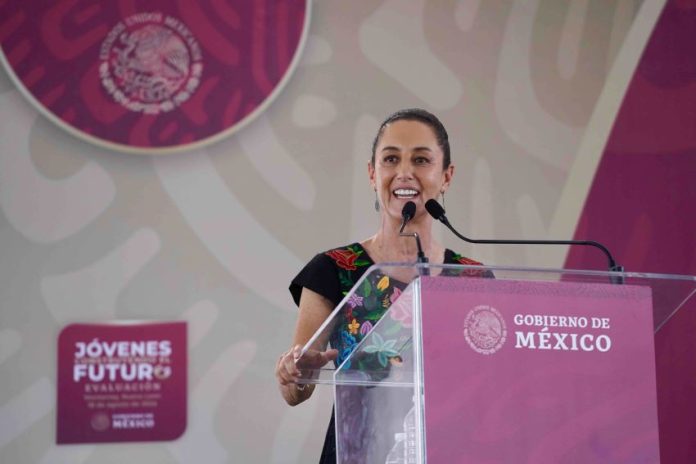
President-elect Claudia Sheinbaum unveiled a raft of new investments for the border state of Nuevo León. (Presidencia)
President-elect Claudia Sheinbaum promised to fund and support major infrastructure projects in the northern industrial state of Nuevo León on Sunday, completing her weekend tours of all 32 states six weeks ahead of her Oct. 1 inauguration.
Sheinbaum spoke in Monterrey, the capital of Nuevo León, accompanied by President Andrés Manuel López Obrador and Governor Samuel García — a member of the opposition Citizens Movement (MC) party.
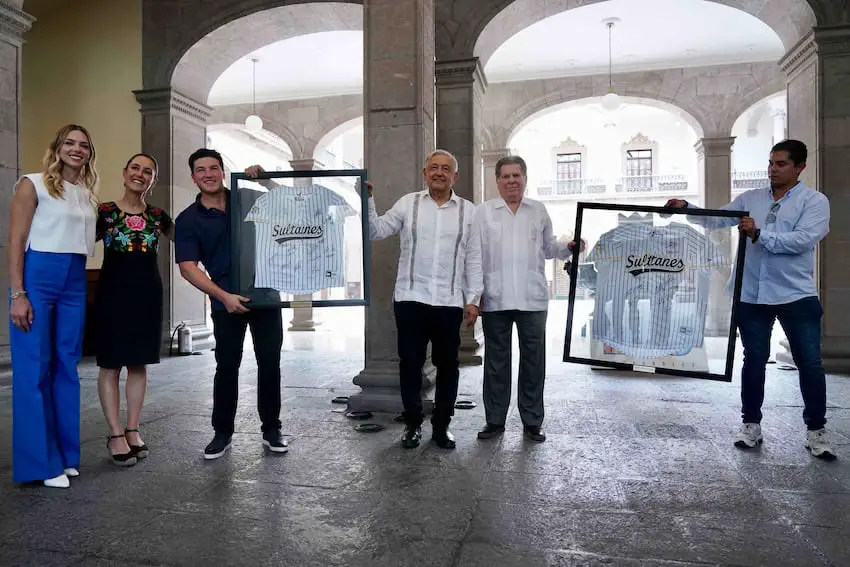
Sheinbaum (second from left) and Nuevo León Governor Samuel García (third from left) announced the investments together on Monday. (Presidencia/Cuartoscuro)
The three were attending the annual report presented by the federally funded Youth Building for the Future (Jóvenes Construyendo el Futuro) program, which provides job training for young people between 18 and 29 years old.
During her comments at the Explanada de los Heróes, outside the state Government Palace, Sheinbaum told García that the public good will outweigh politics in her administration.
“We will continue to support Nuevo León,” she said. “We’ll help Samuel build roads and fund indispensable public works that will benefit the state.”
For his part, García, whose term ends in October 2027, expressed confidence in Sheinbaum. “These next three years are going to be fantastic for Nuevo León,” he said. “The president-elect has promised to focus on four key issues: water, jobs, housing and infrastructure.”
Sheinbaum also committed to restoring passenger train service from Monterrey to the border city of Nuevo Laredo.
“We’re going to build three new passenger lines: Pachuca-to-AIFA; Mexico City-Querétaro-Guadalajara and San Luis Potosí-Monterrey-Nuevo Laredo,” said the president-elect.
Sheinbaum gave a nod to López Obrador, as well, crediting him with restoring passenger train service two decades after such trains had been relegated to holding yards.
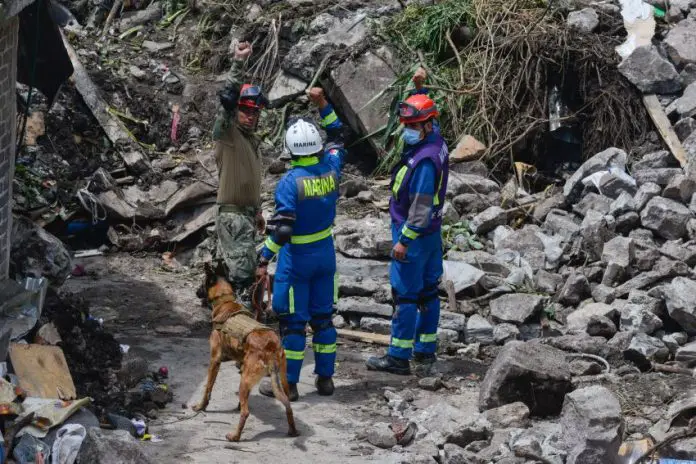
Business chiefs have warned the Mexican government that the country is not ready to face significant natural disasters in coming years. (Mario Jasso/Cuartoscuro)
Roughly one third of Mexican residents and 30% of the country’s economy are vulnerable to at least three kinds of natural disasters and more must be done to be prepared, a powerful business council is warning.
The Business Coordinating Council (CCE), the country’s largest private sector organization, celebrated World Humanitarian Day on Monday by signing an agreement with Cenaced — an NGO which promotes natural disaster and pandemic relief — to promote and support emergency readiness.
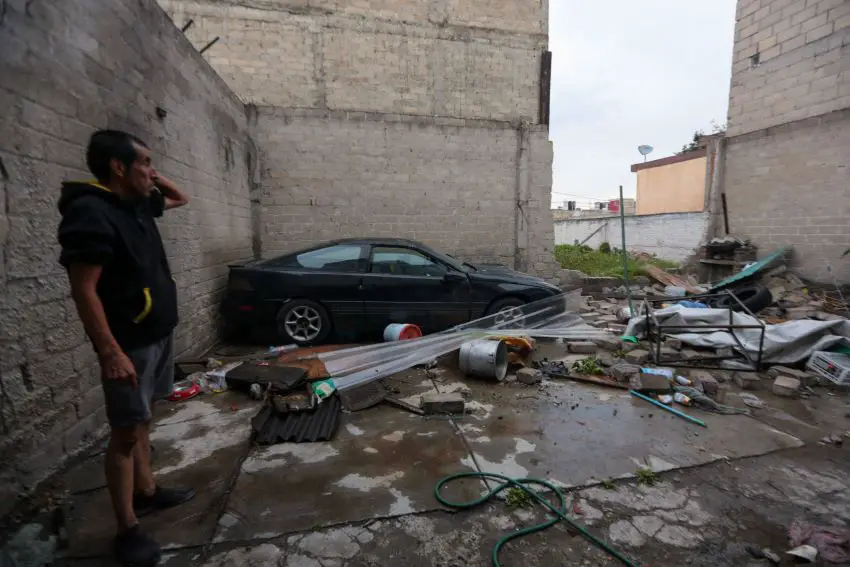
Flooding, earthquakes and hurricanes are among the disasters threatening much of Mexico. (Crisanta Espinosa Aguilar/Cuartoscuro)
“Mexico is extremely vulnerable to natural disasters,” said Francisco Cervantes, president of the CCE, which represents about 80% of private sector GDP. The CCE estimates that 40% of national territory and one-third of the population is at risk, and roughly 30% of national GDP is vulnerable to three or more natural disasters, according to Cervantes.
The percentage of the economy at risk of suffering two natural disasters is 71%, he told newspaper El Economista in an interview.
Cervantes said the agreement with Cenaced reflects the urgent need for action, citing the government’s 2021 decision to shutter the Natural Disasters Fund (Fonden) on the grounds of corruption. This year, the Finance Ministry (SHCP) cut the national disaster relief budget from 18.2 billion to 13.5 billion pesos (US $711 million).
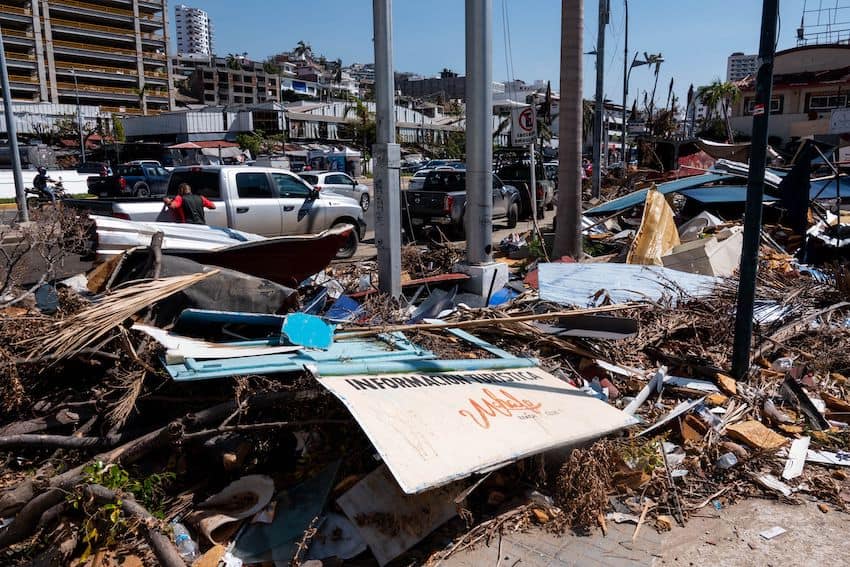
The threat of more and stronger weather events due to climate change is also a concern, Cervantes said, recalling that Hurricane Otis hit Acapulco last October as the Pacific Ocean’s most intense tropical storm ever to make landfall. The hurricane caused an estimated US $15 billion worth of damage.
Hurricane Otis, a Category 5 hurricane, struck Acapulco in October 2023, causing extensive damage to the resort city. (Galo Cañas/Cuartoscuro)
Roberto Delgado, former Cenaced president, said Mexico has experienced 300 natural disasters since the turn of the century, citing a few of the hurricanes, extreme weather events, floods, earthquakes and volcanic eruptions that have stricken the country since 2000.
More than 40 million people have been impacted by these disasters, Delgado asserted after the signing ceremony. Already this year, there have been two hurricanes and a series of forest fires, he added.
“The objective of this agreement is to build a more resilient Mexico, to put in place a more efficient and more coordinated emergency response system.”
Finally, Cervantes encouraged state governments to step up and accept responsibility.
“I think states should establish disaster funds because their constituents are the ones that pay the price,” he told El Economista, while pledging support from the business community.
Mexico will be hoping a return to home soil will bring them success against the United States, who they will face in Guadalajara this October. (Mario Jasso/Cuartoscuro)
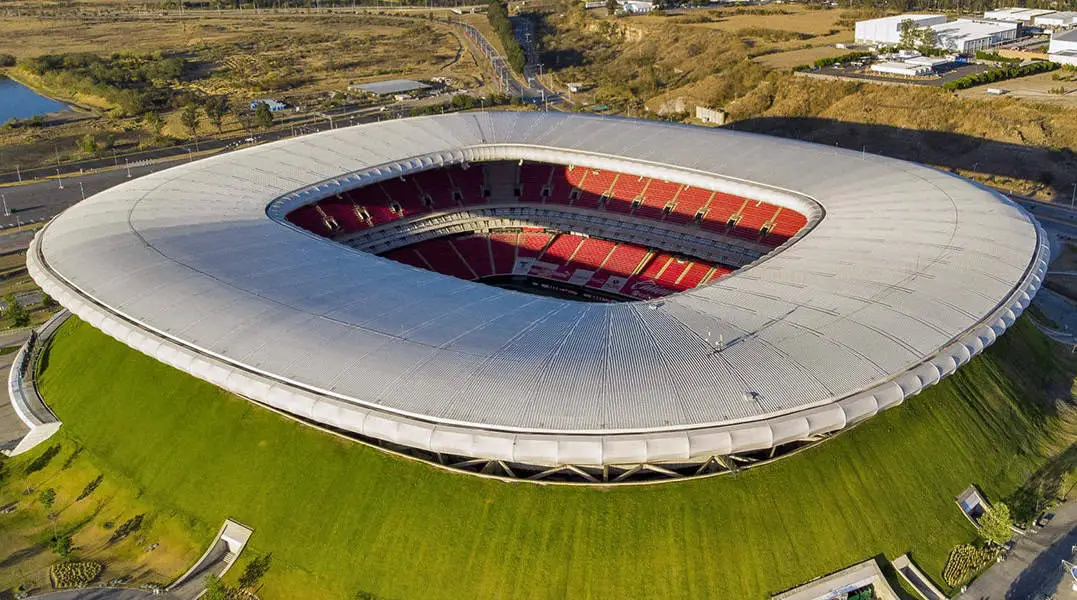
The men’s national soccer teams of Mexico and the United States will meet on Oct. 15 at Estadio Akron in Jalisco, home of C.D. Guadalajara (“ Las Chivas”), one of three Mexican venues for the 2026 World Cup.
The highly anticipated “friendly,” an exhibition match, announced Monday, is notable for several reasons.
The 49,850 seater Estadio Akron will play host to El Tri’s return to Mexico. (Big Span Structures)
First, it will be just the second time in the past seven years that Mexico will host the United States on home turf. The other was a World Cup qualifier played in Mexico City in March 2022.
Moreover, the U.S. squad hasn’t played a friendly in Mexico since 2012, mainly because scheduling such games in the United States (where huge crowds of mostly Mexican fans attend) is financially beneficial to both teams.
Mexico desperately wants to end a seven-game winless streak against the United States that has stretched throughout the 2020s. During the run, Mexico has been beaten five times with two ties, and has been outscored 12-3. Historically, however, Mexico has dominated the fixture, winning 36 times to the United States’ 24.
A third factor of interest: Both teams will have new head coaches.
Javier Aguirre has returned to lead El Tri for a third time. (Fernando Carranza García/Cuartoscuro)
The United States will have a new head coach too,, expected to be former Paris San German and Chelsea manager Mauricio Pochettino. . After the U.S. also suffered a staggering first-round Copa América exit, after which head coach Gregg Berhalter was fired.
The Oct. 15 game will kick off at 8:30 p.m. in the 49,850-seat Estadio Akron in Zapopan, a municipality of 1.5 million people in metro Guadalajara. Tickets went on sale Tuesday, but only for Banorte clients; general sales for tickets are yet to be announced.
Ivar Sieniega, executive president of the FMF, said Monday there will be more “dress-rehearsal” games in Mexico leading up to the World Cup.
“Beyond the formal organizational efforts that are made within the framework of FIFA rules, we [want to] have a very intense preparation agenda for the World Cup here in Jalisco,” Chivas president Amaury Vergara said.
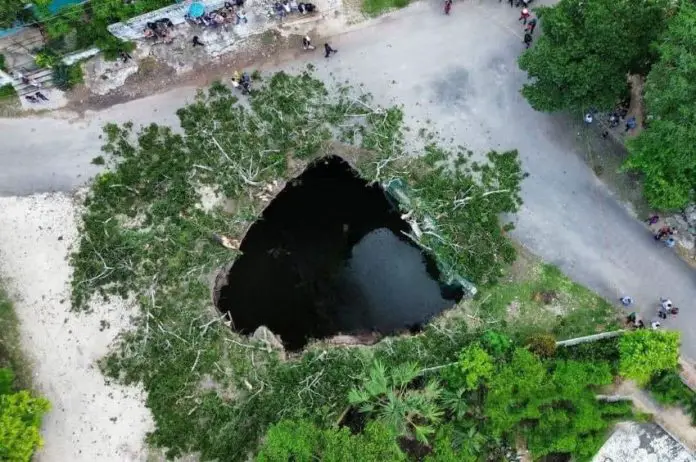
A 30ft tree fell into the Cenote Xocén, a move which has sparked interest from Maya priests who believe it to be the center of the world. (Hola Valladolid)
After a 30-meter-high ceiba tree fell into a cenote — a natural sinkhole full of fresh groundwater — in the community of Xocén, Yucatán, Maya priests and Mexican officials have started investigating the unusual event, as certain Maya cosmologies consider Xocén to be “the center of the world.”
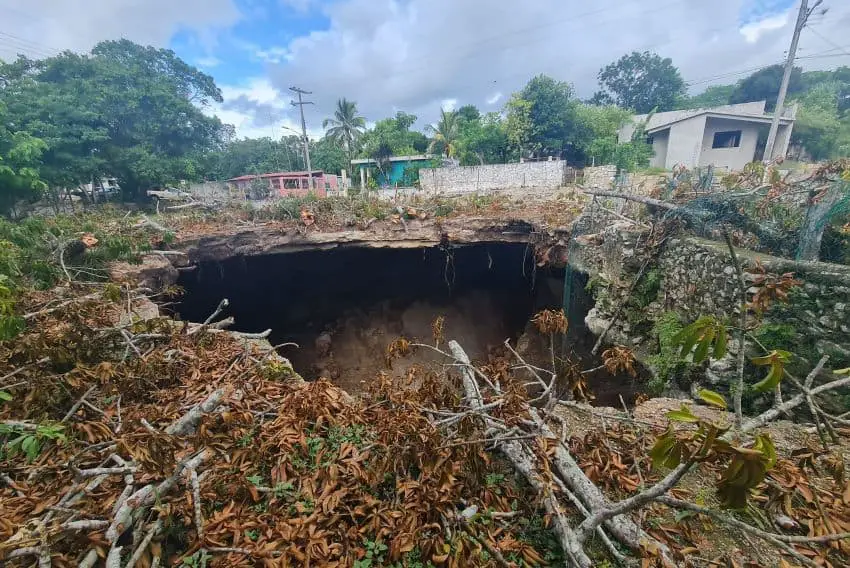
The collapse occurred last week, when nearby residents heard thunder-like cracks. Upon arrival, they discovered a massive hole into which the tree had disappeared due to the collapse of a cenote vault.
The hole left by the disappearance of the ceiba tree into the cenote. (Erick Sosa/Facebook)
“I felt like it was raining,” Luis Emanuel Ku Ku, who lives a few meters from the place, told news agency EFE. “At that moment, my mother and I went out to see and we heard the well collapse. We thought everything was going to fall and we wanted to go back when we heard the second sound and then we saw the tree completely gone.”
Ku Ku said that the incident could have been fatal, as a group of neighbors had been cleaning up the area just two hours before the incident.
Valladolid Mayor Alfredo Fernández Arceo said the event has captured the residents’ attention due to the sacred significance of Xocén.
“Many sacred books of Maya culture show this place as the center of the world,” Fernández said. “This implies an important baggage of mysticism with the community and leads to speculation on many topics because people here are aware of the importance [Xocén] has within Maya culture.”
The tree prior to its collapse. (Facebook)
Due to the significance of the event, Maya priests are accompanying a group of experts and cave divers who are conducting studies in the cenote with the support of the Ministry for Sustainable Development of the Government of Yucatan.
Fernández explained that the divers are studying the entire structure of the cenote’s soil, its stone and its resistance. However, divers are diving into cloudy water with low visibility due to the soil that fell into the water and the branches that cover the vault’s roof.
“We’re carrying out an entire geological study to have reliable information that allows us to make decisions together with the community,” he added.
Even though Xocén is part of the municipality of Valladolid, it has its own customs, traditions and authorities. These authorities are elected by a body known as the 13 Maya sergeants, guardians of the Sanctuary of the Talking Cross. The Talking Cross was an important element of the 50-year long Caste War of Yucatán. No photographs or videos are allowed in this place.
Infighting among members of the Sinaloa Cartel has continued following the arrest of Ismael "El Mayo" Zambada. (José Betanzos/Cuartoscuro)
Violence has spiked in the northern state of Sinaloa in recent days, as organized crime responds to the recent arrests of alleged Sinaloa Cartel leaders Ismael “El Mayo” Zambada García and Joaquín Guzmán López.
Ten homicides in the state on Friday and Saturday are linked to organized crime, Sinaloa Governor Rubén Rocha Moya told a press conference on Monday.
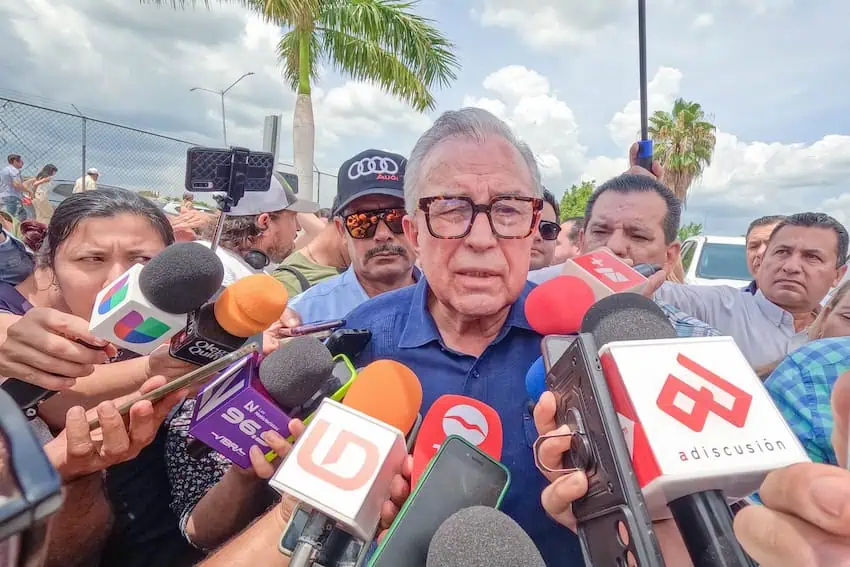
Sinaloa Governor Rubén Rocha addressed the media on Monday after 10 more cartel-related murders during the weekend. (Jose Betanzos/Cuartoscuro)
There were two more murders in the northern state on Sunday, but they weren’t immediately linked to cartel activity.
“On Saturday there were six [murders] and on Friday there were four. These 10 murders have to do with organized crime groups,” Rocha said.
Among the homicide victims was Martín García Corrales, an accused fentanyl trafficker and alleged “close associate” of Zambada, Joaquín “El Chapo” Guzmán Loera and “Los Chapitos,” as El Chapo’s sons are known.
The recent arrest of Ismael “El Mayo” Zambada has triggered infighting between rival factions of the Sinaloa Cartel. (Cuartoscuro)
Earlier last week, an alleged gunman for Zambada known as “El Vampi” and another man nicknamed “Tocino” (Bacon) were murdered in Culiacán.
A faction of the Sinaloa Cartel led by El Mayo and another headed up by Los Chapitos have been involved in a dispute for years.
Rocha said that the current situation in the state is concerning and didn’t rule out an escalation of violence in the coming days. Authorities are alert to that possibility, he said.
Zambada claims he was kidnapped by Guzmán López and his associates, forced onto a private plane and flown to an airport near El Paso, Texas, against his will. He alleges his kidnapping occurred outside the city of Culiacán after he was lured by Guzmán López to a supposed meeting between Governor Rocha and former Culiacán mayor Héctor Cuén, who was murdered on July 25.
Rocha has denied any knowledge of the meeting, and highlighted that he traveled to Los Angeles that day.
Feds beef up security
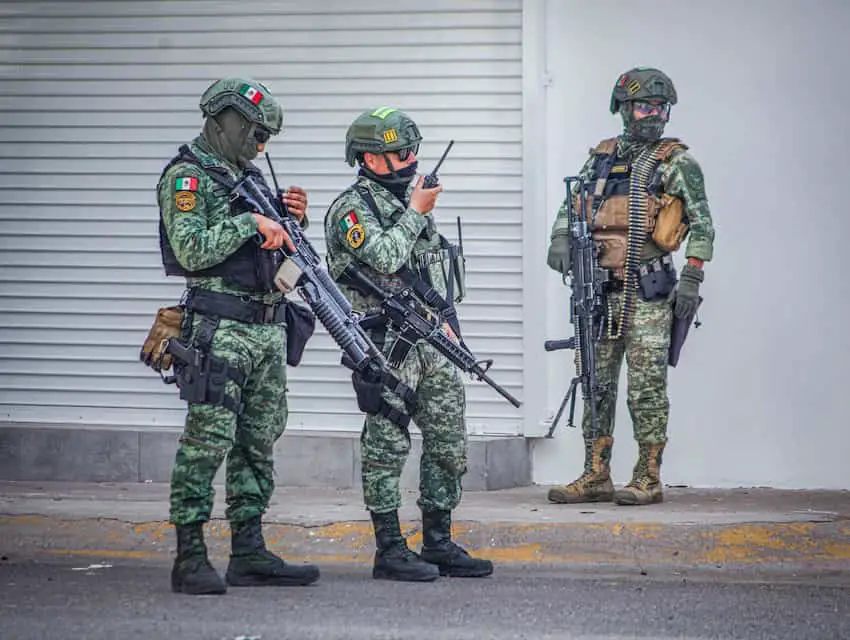
The federal government dispatched an additional 600 troops to Sinaloa in the wake of the recent homicides. They are mainly deployed to Culiacán and surrounding areas.
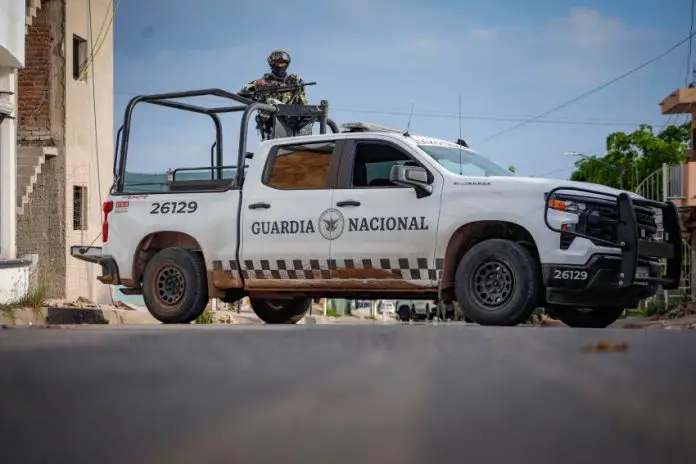
Security across Sinaloa has been increased in the wake of rising cartel violence. (José Betanzos/Cuartoscuro)
The Reforma newspaper reported that the strong presence of soldiers in Culiacán on Monday reminded residents of the deployment of troops to the city in October 2019 after the so-called Culiacanazo — a wave of cartel attacks in response to the capture of Ovidio Guzmán López — one of Los Chapitos — who was released by federal authorities amid the mayhem.
The additional 600 troops join 400 soldiers who were deployed to Sinaloa in the days after the arrests of Zambada and Joaquín Guzmán López.
Before the two men were taken into U.S. custody, there were already some 2,800 soldiers deployed to Sinaloa, though these have mainly been involved in activities such as the detection and dismantling of clandestine drug labs and natural disaster response.
Rocha said Monday that “the army knows where the hotspots are” and is acting accordingly.
“They have a strategy that I believe is adequate,” the governor said.
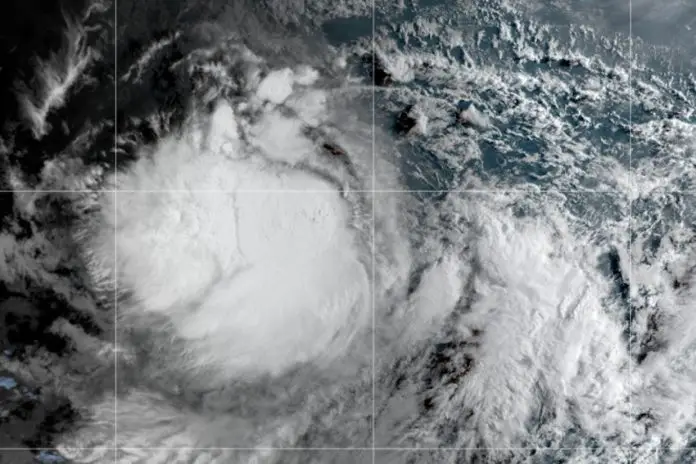
Tropical Storm Gilma is expected to dissipate in the coming days, though stormy weather will still cause heavy rains throughout much of Mexico. (NOAA)
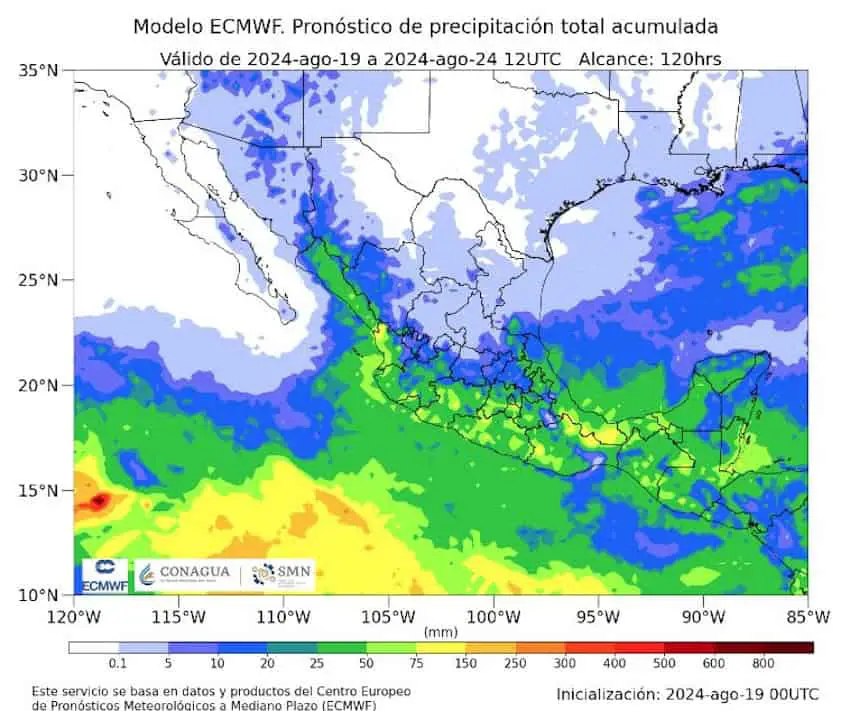
More rain is expected for several parts of Mexico this week, according to weather forecasts by the National Meteorological System (SMN).
On Tuesday, a new tropical wave will move between the southeastern states of Quintana Roo and Yucatán, bringing heavy rain along the way. On Wednesday it will reach southern Oaxaca and Guerrero before extending to the Valley of Mexico, Puebla, Morelos and surrounding areas.
The government forecast suggests significant rains are ahead for much of Mexico. (Conagua)
By Thursday, another tropical wave will enter the Yucatán Peninsula and move west between Friday and Sunday to the Valley of Mexico, the Southern Bajío, western Jalisco and Nayarit. Both waves are expected to become unstable and generate strong storms along their path.
Despite the rain, afternoons will continue to be hot in the northwest, north, northeast and the Yucatán Peninsula. In these regions, temperatures are expected to soar over 40 C in Baja California, Baja California Sur, Sonora, Chihuahua, Coahuila, Nuevo León, Tamaulipas and Campeche.
Rain forecast by state
Very heavy rains (75 to 150 mm): Sonora, Sinaloa, Nayarit and Jalisco.
Heavy rains (50 to 75 mm): Chihuahua, Durango, Colima, Michoacán, Guerrero, Oaxaca, Veracruz, Tabasco, Chiapas, Campeche and Yucatán.
Light rains (25 to 50 mm): Baja California Sur, Tamaulipas, San Luis Potosí, Puebla, México state and Quintana Roo.
Showers (5 to 25 mm): Baja California, Coahuila, Nuevo León, Zacatecas, Aguascalientes, Guanajuato, Querétaro, Hidalgo, Tlaxcala, Mexico City and Morelos.
Tropical Storm Gilma expected to dissipate
The SMN forecasts that Tropical Storm Gilma will evolve into a category 2 hurricane off the coast of Punta Eugenia, in the Baja California Sur municipality of Mulegé. At this time, Gilma poses no threat to the country and meteorologists expect it to dissipate by Saturday.
Meanwhile, the National Water Commission (Conagua) is monitoring three low pressure areas in the Pacific Ocean that could develop into tropical cyclones in upcoming days.
The low pressure area closest to mainland Mexico is south of the coasts of Colima and Jalisco. The likelihood of cyclone development is 70% in 48 hours and 90% in seven days. The second low pressure area is southwest of the Baja California peninsula, with a 70% probability of becoming a cyclone in seven days.
The third and farthest zone is likewise southwest of the Baja California Peninsula, with 20% probability of becoming a cyclone in the next week.
Volunteering in the local community can make a huge difference - but don't mistake willingness to help with being a saviour. (United Planet)
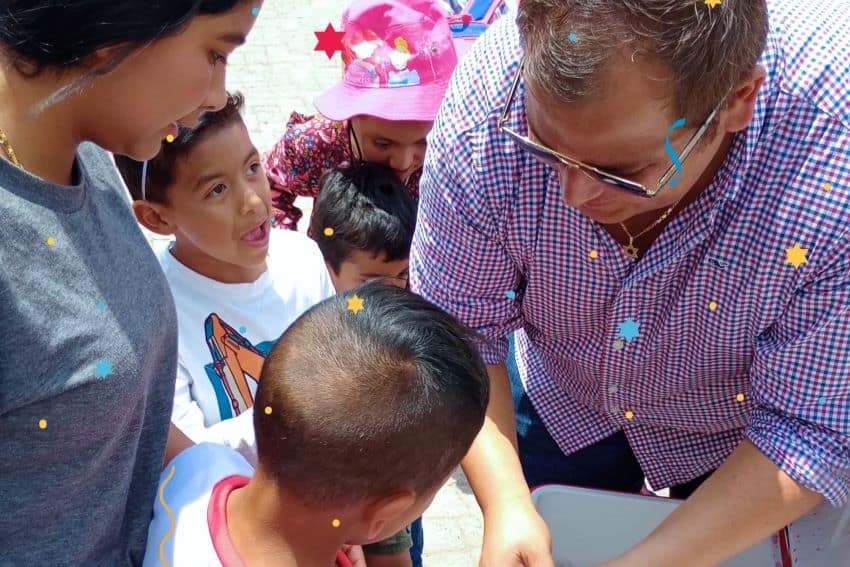
While chatting with a woman headed to Hawaii at the San Diego airport, I explained that my husband and I live in Mexico for part of the year. “Are you able to help the folks down there?” she asked. “Help?” I asked, bristling. “Well, I like to connect with people. I don’t know about ‘helping’ them.” I was annoyed by her comment, the idea that Mexicans need help. I did not decide to move to Mexico to be some kind of missionary, but rather to experience a different way of life, culture, language and worldview.
Patronato Pro Niños in San Miguel de Allende is a civil association that helps the welfare of children. (Facebook)
There’s nothing wrong with helping, of course. In fact, I think it’s important wherever we are to contribute to the society where we live. Many expats I know, not only in Guanajuato where we live, but all over Mexico, volunteer their time, energy, and money to support their local communities — and that’s a good thing.
But the attitude that Mexicans need our help and that we are in a superior position to offer it is condescending and disrespectful. Besides, I could use some help myself. In Mexico, I notice how impatient and intolerant I can be. Nothing like living in another culture to wake you up! I thought about this again when I offered to give a series of presentations on personal health to working-class moms through DIF, the Mexican federal government department whose mission is to strengthen the welfare of families. I’d led similar workshops in the United States, so the content of my talks in Guanajuato was not new. But giving them in Spanish was something else!
I prepared for a couple of weeks, working with my Spanish tutor to review my grammar and vocabulary. Then, she and I spent another session discussing the dynamics. How could I engage the audience members and get them involved? What could I expect from the participants? Would they respond to questions or sit there passively? Would they interact when I offered an exercise?
During this period, a new Mexican-American acquaintance with whom I was discussing these presentations unexpectedly challenged me. She said that she thought what I was doing was insulting and that it was inappropriate for me, as an outsider, to offer my expertise.
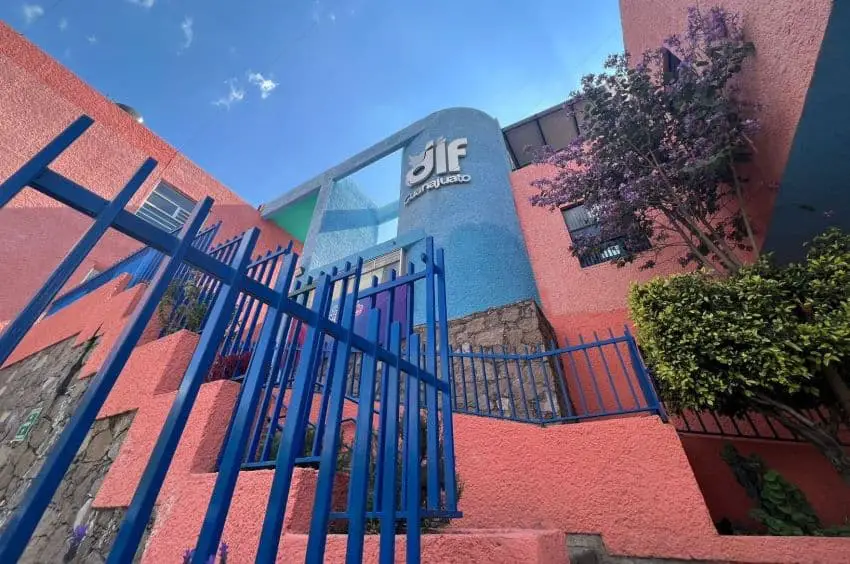
The Guanajuato DIF, where the workshops were held. (Gobierno de Guanajuato)
I was so blindsided by her criticism that I didn’t dig in and try to find out why. Later I talked it over with my tutor — the last thing I wanted to do was insult people! She disagreed with my friend, pointing out that I wasn’t taking a job away from anyone but simply offering information as a volunteer. Since the director of the agency had welcomed my ideas, it seemed unlikely that I was being offensive.
Painful though my friend’s comments had felt, her feedback did ultimately help me, though I never felt comfortable with her again. I realized I didn’t want to come across as an expert with answers, telling people what they “should” do; rather, I wanted to be a peer, another woman trying to figure out how to take care of her mind and body in a complicated world. And I also wanted to honor the wisdom and intelligence of the women I was addressing. Particularly in a male-dominated, classist-based culture like Mexico, I sense that women often feel inferior, inadequate and “wrong.” If these women did indeed feel that way, would it be possible to help them feel stronger?
With that in mind, I went through the content again and shifted the emphasis so that it was more about reinforcing the healthy habits Mexican moms already had, and less about improvements they could make. For example, in my talk on walking, I started by asking the women how they had arrived at the center where I gave the presentation. All but two had walked. Congratulating them, I said, “I imagine owning a car sounds good, but you’re actually far fitter because you walk every day, rather than many of my compatriots who drive.” And it’s true; in Guanajuato, most residents conduct their lives on foot and by bus.
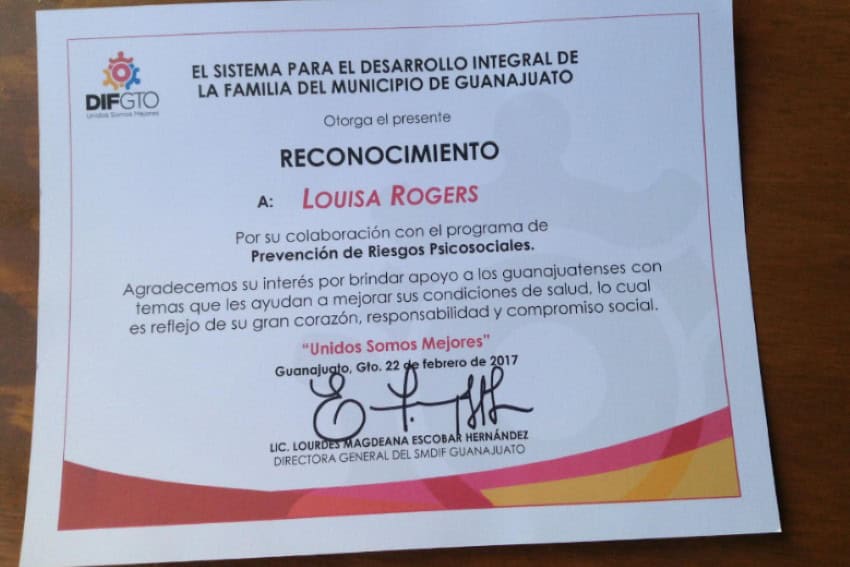
The certificate presented to Louisa as thanks for her work with the DIF. (Louisa Rogers)
Meanwhile, there were several surprises in store for me. After my presentation on mindful eating, one participant approached me, asking if I could offer a workshop on overcoming emotional eating. A woman after my own heart! And in the session on stress, two house cleaners said that their favorite time of the day was being alone in their client’s home, so they could finally enjoy solitude. And I thought Mexicans always preferred to be surrounded by family!
At the end of the series, I was deeply touched when the coordinator of the program honored me with a certificate and the gift of a red shawl.
Of course, I hope the women in my audience came away feeling empowered by the themes we discussed. But the talks also benefited me. As we discussed areas that mattered deeply to all of us, these women, through their honesty and sharing, helped me gain insights into their lives and into Mexican culture. Thanks to them, I’m learning, and what could be more exciting than continual learning in my adopted home?
Louisa Rogers and her husband Barry Evans divide their lives between Guanajuato and Eureka, on California’s North Coast. Louisa writes articles and essays about expat life, Mexico, travel, physical and psychological health, retirement and spirituality. Her recent articles can be found on her website.
It might be very immoral. But also, it might be a lack of nuance. Sarah DeVries explores society's complex relationship with our history. (Channel 4)
Here’s a lesson I’m trying to instill in my daughter: don’t take yourself (or anything) too seriously.
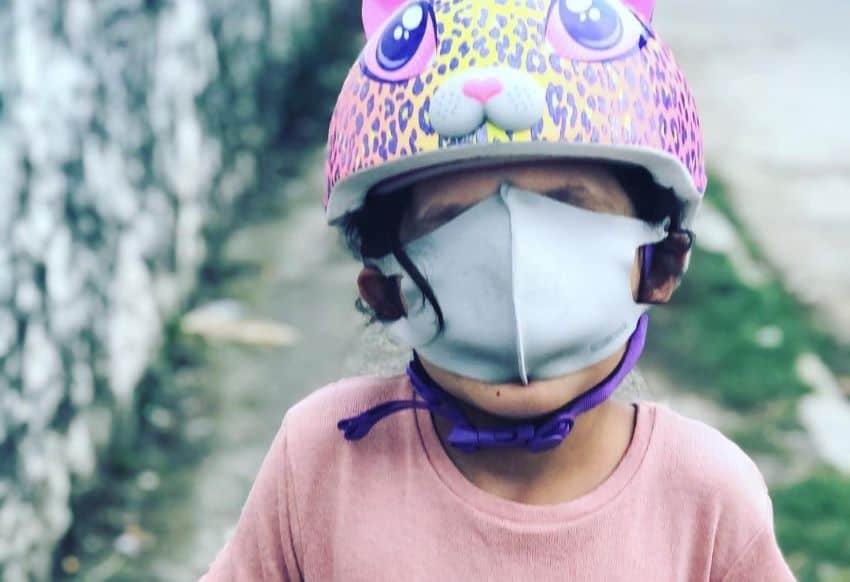
How successful have I been? Honestly, not very; she’s a serious, sensitive kid. Think of a Mexican Wednesday Addams, but one that smiles and plays occasionally. She’s also super cool and smart in ways that I will never be, and I know that some of the things that drive me a little nuts now will serve her well when she’s grown.
Wednesday Addams in pink and a facemask, that is. (Sarah DeVries)
As for me, super intense people downright repel me. It’s okay to be passionate about things, but also, freaking relax. Everyone just seems so worked up lately, you know?
Norm MacDonald in his last show, Nothing Special,summed up all this newly intense energy well. To paraphrase: When I was young, people had, maybe, six opinions. And most of them were about food!
What they did to us
Back to my daughter. She’s at an age now (10) where she’s starting to decide, firmly, what she thinks is good and bad. When you’re a kid and don’t have a lot of experience in the world, it’s easy to be an absolutist. “This is good, and this is bad.”
Really, though, nuance seems to be in short supply in general, even for those far older than 10.
We found ourselves facing exactly this situation last week when, on our way home from Veracruz, we decided to stop in La Antigua.
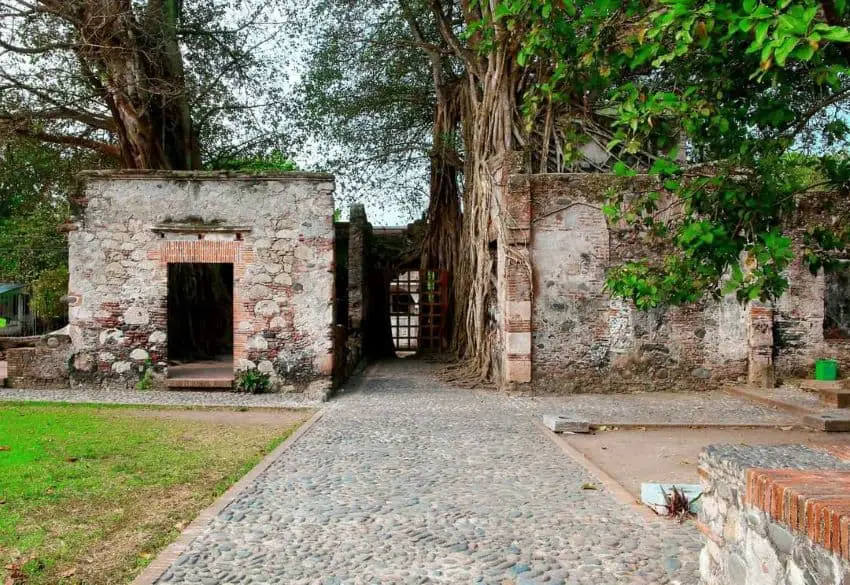
Ironic. Cortés could conquer Mexico, but now his empire has been conquered by these trees. (La Antigua/Government of Mexico)
La Antigua is tiny little town on a river which happens to be home to one of the first “Casas de Cortés.” Its structure has been preserved, but as happens in many places in Veracruz, the trees have taken over. “This is ours now.”
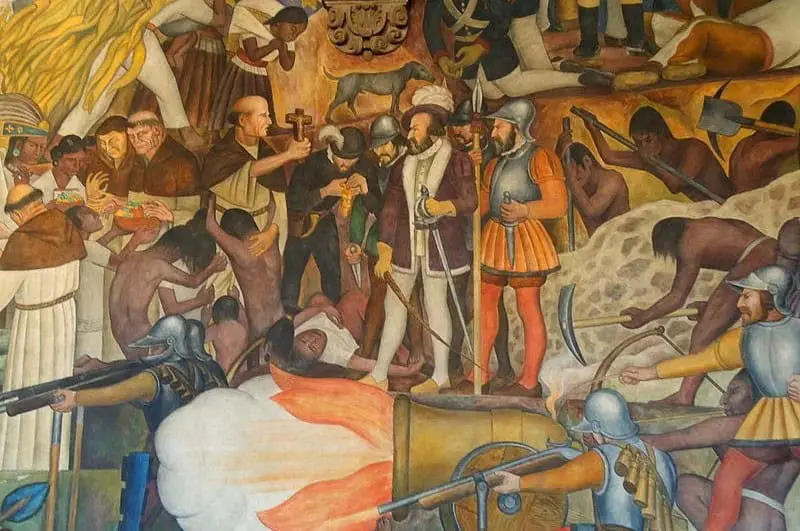
It’s just as well. Who loves Cortés?
Not my kid, that’s who. She spent most of the time walking around the ruins talking about how terrible the conquest had been. Yes, I said. It was bad. But also, it wasn’t quite as simple as you’re imagining, and certainly not a battle between “all good” and “all evil.”
What do Mexicans think of Cortés?
She seemed to consider my boring lecture about how things went down for a few minutes. But then she launched into how she didn’t like Spaniards because of “what they did to us.”
Now, just hold it right there.
Humans are humans everywhere, and who happens to be the more powerful ones in any given point in history isn’t even all that important. It’s not who the powerful are as people; it’s the fact of being powerful. Being powerful makes humans feel and act a certain way.
Was it Cortés’ Spanishness that led him to conquer Mexico, or a lust for power – and should the Spanish of today be held responsible for it? (Gaceta UNAM)
Given our vast cultural differences, you’d think we’d all treat power vastly, vastly differently. But as anyone who’s studied history knows, that’s not the case. Our entitled behavior when we’ve got a leg up on others is embarrassingly universal.
Besides, modern-day Spaniards, goofy accents aside, are perfectly nice people. The only Mexican thing they want to conquer these days are the hearts of cute Mexicans.
Meaningless activism
This “We hate the Spaniards because of what they did to us,” of course, did not originate with my daughter. It’s a sentiment I hear quite a bit, and one I have little patience for. Admittedly, it draws out my defensiveness too, because I know that we gringos aren’t far behind in line for the chopping block.
And I do not want my daughter thinking that it’s cool to disown half of who she is. She was upset the day her friend from school had said a nuclear bomb should be dropped on the United States. I will not let her get close to agreeing with that statement.
Monuments to Spanish hegemony are frequent targets for activists across Mexico. (Moisés Pablo/Cuartoscuro)
How easy “activism” is when you don’t even have to do anything other than act mad! When I hear that particular complaint, I can’t help my usual quip. “If you hate them so much, then why don’t you boycott them? Learn some indigenous languages and then stop speaking Spanish. And stop worshiping the gods they brought you.”
That, of course, would require a lot of effort, and it’s not practical. Not the language part, anyway. I think this is exactly why we should learn to acknowledge our complicated history. Sometimes, you just have to sit uncomfortably with things.
Besides, there are plenty of problems to solve right now. We can use those passionate, worked up feelings for actually fixing things rather than wasting them on some vague sense of resentment. You know, problems we’ve currently got in front of us. Solutions that will benefit us, and our kids, and (hopefully) future generations.
So I don’t care how bored and fed up she gets. She’s getting a lot of lectures on nuance and the human condition.
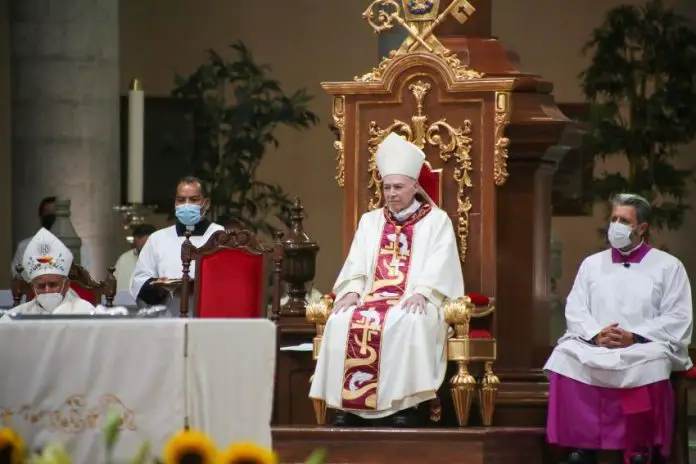
The Catholic Church called on Sheinbaum to focus on reconcilation as Mexico, like many countries, faces an era of political polarization. (Crisanta Espinosa Aguilar/Cuartoscuro)
The Catholic Church in Mexico has urged President-elect Claudia Sheinbaum and other incoming politicians to prioritize the construction of national reconciliation in a recently published editorial.
“We call on our president-elect, her working group and all elected politicians who will soon take office to promote during this period of transition the path toward building a reconciliation with solid foundations, which helps to overcome the conflicts that divide us, strengthens national unity and opens the doors to dialogue and mutual listening. We are convinced that in this way we will achieve social peace,” the editorial said.
Sheinbaum will be sworn in as Mexico’s first female president on Oct. 1, while federal lawmakers elected at the June 2 elections will assume their positions a month earlier.
The Catholic Church also invited citizens “to join this collective effort for reconciliation because the construction of a united country requires the joining of efforts.”
“In addition, the majority of reconciliation activities occur in small groups, in families, among friends, at work, and from there they grow until they strengthen into an action that can unite millions,” the editorial said.
The editorial appeared in Desde la Fe, the official magazine of the Roman Catholic Church in Mexico. (Desde la Fe)
While Sheinbaum and the ruling Morena party won comprehensive victories on June 2, there is little doubt that Mexico is a politically polarized nation.
President Andrés Manuel López Obrador has maintained high approval ratings throughout his six-year term, but millions of Mexicans believe that he — and the president-elect — pose a threat to Mexico and its democratic institutions, in part due to the constitutional reform proposals the president submitted to Congress earlier this year and which Sheinbaum supports.
In its editorial, the Catholic Church sought to explain what real reconciliation would entail.
“When we talk about reconciliation we’re not referring to a fragile peace, much less a forced embrace or a commitment that only seeks to please groups that think differently. A reconciliation that has these individualistic foundations and with partial interests runs the risk of breaking quickly,” the Church said.
It also said that “the path to reconciliation is not about a fight between good or bad or “a clash of ideologies.”
“It means learning to walk together,” the Church said.
“When we talk about reconciliation we’re referring to coming to terms with events that have hurt us, that have caused suffering,” the editorial said, without offering specific details.
“… We’re talking about coming together to renew ourselves and grow together. Finding ourselves in that place where we stop thinking selfishly and individually in order to recognize ourselves as brothers, looking into each other’s eyes, embracing our histories and differences,” the Church said.
The publication of the editorial coincides with Pope Francis’ call for prayers for political leaders in August, specifically that they “be at the service of their own people, working for integral human development and for the common good, especially caring for the poor and those who have lost their jobs.”
The Catholic Church in Mexico suggested that readers of its editorial should ask God for “the gifts” required to be “builders of peace and reconciliation.”
There is considerable expectation that Sheinbaum will be less confrontational than López Obrador, who often uses his morning press conference to attack political opponents, a tactic that many say foments, or at least contributes to, divisiveness in Mexico.
In March, Sheinbaum and the two other candidates who contested the presidential election endorsed a “Commitment for Peace” document drawn up by Mexico’s Roman Catholic leadership.
However, the then Morena party candidate and now president-elect expressed disagreement with the Church leaders’ assessment of Mexico’s security situation and some of the peace-building proposals they put forth.
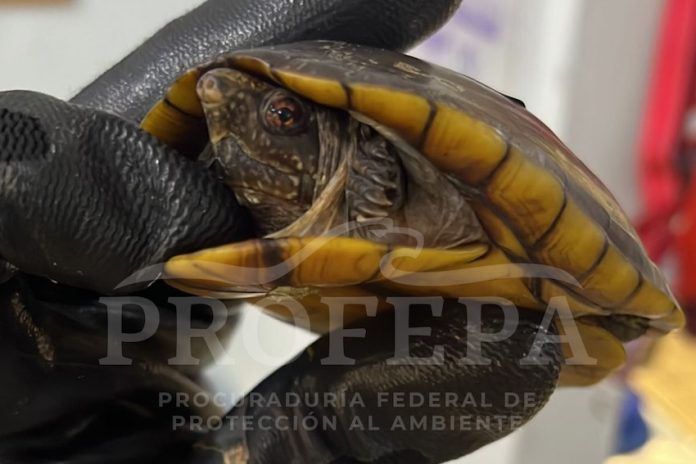
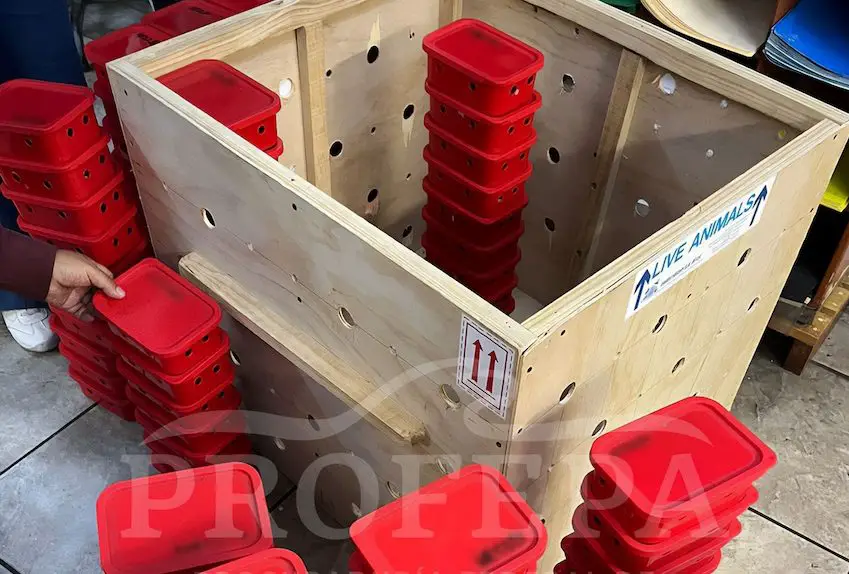
200 endangered sea turtles were seized by federal regulator Profepa at Mexico City International Airport. (Profepa)
Officials from the Federal Environmental Protection Agency (Profepa) conducted a seizure of 200 turtles at Mexico City International Airport (AICM) after their export paperwork was found to be incorrect.
The passenger was traveling with 193 live specimens of broken-breasted turtle (Kinosternon acutum), one dead, and six live specimens of broken-chest scorpion turtle (Kinosternon scorpioides). They were all traveling under documentation that corresponded to the white-lipped broken-breasted turtle (Kinosternon leucostomum).
The surviving turtles were sent to a federally managed facility. (Profepa)
The illegal pet market is one of the main factors contributing to the extinction of species in their natural habitat.
In Mexico City metro area alone, Profepa said, between 150 and 200 exotic animals are seized every year. Mexico City Profepa chief Lucio García Gil told newspaper La Jornada that the most common species seized in the capital include exotic birds such as macaws or parrots, reptiles, primates and big cats. These are owned by wealthy families, merchants and even drug lords.
One such example was a monkey named “Botas,” a who belonged to notorious cartel boss Joaquín “El Chapo” Guzmán.
Mexican law permits the ownership of exotic wildlife provided they are acquired from authorized firms and proper care is provided
In Mexico, illegal possession and trafficking of turtles can result in up to nine years in prison and fines ranging between 74,400 pesos to 744,000 pesos (US $3,981 to $39,810).