One of three tunnels the Guadalajara-Puerto Vallarta highway will have when it's complete. (SICT)
A shorter drive to the coast. That’s what everyone who lives inland wants, right?
And that’s what the people of Aguascalientes, Zacatecas, Guanajuato, Jalisco and surrounding states now have, thanks to the opening of another section of roadway to the Riviera Nayarit Corridor.
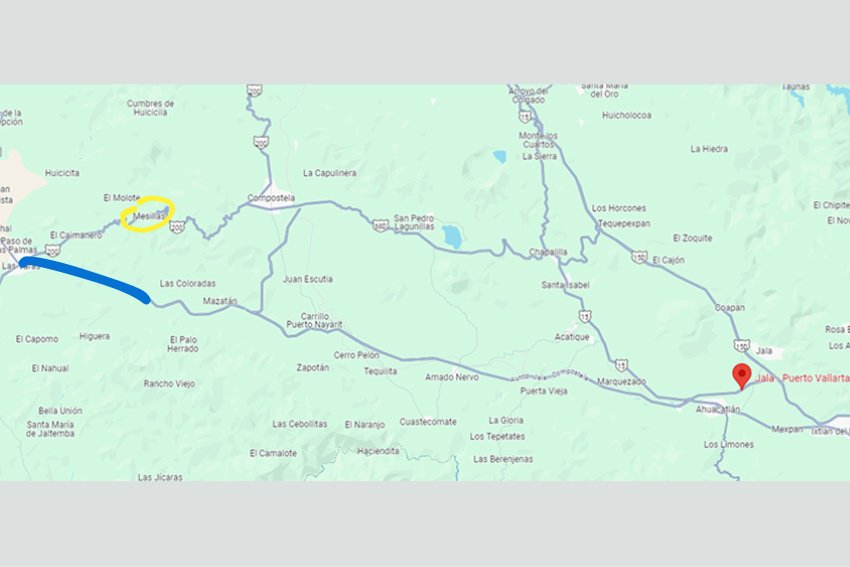
The newly-opened stretch of highway provides the final link (the blue line) to connect highway 15D in Jala, Nayarit (see the red pin), and highway 200 in Las Varas, Nayarit, which drivers take to Puerto Vallarta. Besides cutting down some of the driving time, using the new stretch reroutes drivers around a dangerous section of Route 200 that has been the site of numerous accidents near the town of Mesillas, Nayarit (circled in yellow). (Google Maps)
The newest portion of the Guadalajara–Puerto Vallarta highway, which stretches from Compostela to Las Varas, opened Wednesday, shortening the journey between the two Nayarit cities by about 50 minutes. That is, provided traffic is moving at a good pace, almost an impossibility at the moment amidst an abundance of people in their cars on Holy Week getaways.
One more 32-kilometer section remains to finish, after which, officials promise, the drive between Guadalajara and Puerto Vallarta will have been reduced from 4 hours, 30 minutes to 2 hours, 30 minutes. Estimated travel times, however, vary depending on which Mexican newspaper one is reading.
“A special effort was made to finish the work [before an April deadline] to benefit users during the holiday period,” the construction firm Mota-Engil México noted on its website. “Starting [Wednesday] at 2:30 p.m., it will facilitate the journey of more than 1 million tourists who are expected on the beaches of the Riviera Nayarit and Puerto Vallarta.”
According to the news outlet Informador, the project to shorten the drive was announced in 2011 and was intended to be completed in 2014.
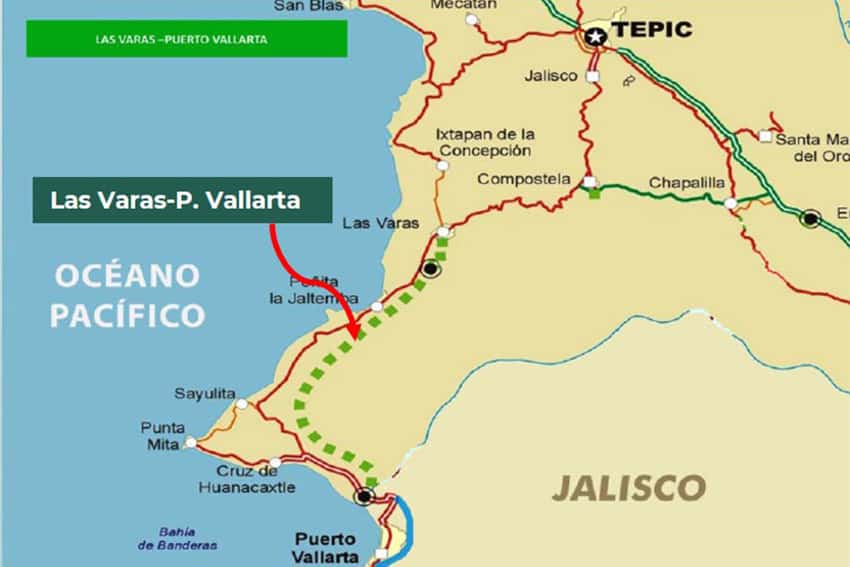
The final section of the highway to be built, which will connect Las Varas to Puerto Vallarta and provide a an alternate route to the Puerto Vallarta International Airport through San Vicente. (Fonadin)
“But 10 years later is when its conclusion has begun to become a reality,” the paper added.
The newest section is seen as perhaps the most important of the route because it avoids a dangerous area of mountain curves on Route 200 near the town of Mesillas that has been the site of many accidents.
The final section, connecting San Vicente with the Puerto Vallarta International Airport will reportedly be ready in August.
The entire route will be 86.5 kilometers of new or improved highway, benefitting 17 communities and costing 10.6 billion pesos (US $637.7 million), according to the Tribuna de la Bahía newspaper.
The paper said that the finished work will have 45 bridges, seven interchanges, three tunnels and three viaducts, and that it will serve 6,000 vehicles a day
In addition, the paper added, the project would generate 1,500 direct jobs and 14,000 indirect jobs.
“This work is synonymous with tangible transformation since the state’s infrastructure guarantees the progress of Nayarit,” Nayarit Governor Miguel Ángel Navarro said.
Mexico's economy is predicted to grow between 2.5% and 3.5% this year, according to the Finance Ministry. (Shutterstock)
The Mexican economy will grow between 2.5% and 3.5% in 2024. The peso will trade at 17.8 to the US dollar at the end of the year. Headline inflation will be 3.8% in December.
They are among the forecasts in a Finance Ministry (SHCP) document submitted to the federal Congress on Wednesday. Entitled “General Pre-Criteria for Economic Policy 2025,” the document also includes forecasts for next year.
Let’s take a look at what’s in store for the Mexican economy, according to the federal government.
Economic growth
The SHCP predicts that GDP growth will slow to 2-3% in 2025 from 2.5-3.5% this year.
The Mexican economy grew 3.2%, but will likely slow down this year as projections of economic growth in the U.S. are also lower. (Cuartoscuro)
The SHCP said in a statement that it expects economic growth in 2024 and 2025 to be driven by “solid internal demand” and also predicted “a significant contribution from greater levels of investment, both public and private.”
“To a large extent, the resources [from investment] will go to the development of non-residential infrastructure, which will allow Mexico to increase its participation in international value chains,” the ministry said.
Foreign direct investment (FDI) in Mexico is currently increasing as a growing number of international companies – especially manufacturing ones – establish a presence here or expand their existing operations. High FDI could help to boost GDP growth in coming years as those companies commence or ramp up their production.
The SHCP said that the “possible moderation” of economic growth this year and next compared to 2023 “would be due to the normalization of the performance of some sub-sectors of the services sector” that performed extremely well after the full resumption of economic activities following the COVID-19 pandemic, as well as a reduction in “the accumulated savings of households” and projected lower growth in the United States, which would affect Mexican exports, tourism and the entry of remittances.
The USD:MXN exchange rate
If the peso ends the year at 17.8 to the dollar, as the SHCP predicts, the currency will have depreciated 7% from its closing level on Wednesday of 16.55.
The Mexican peso has strengthened against the US dollar so far this year, but is predicted to weaken by the end of 2024. (Cuartoscuro)
The SCHP forecasts that the peso will weaken further in 2025 to end the year at 18 to the dollar.
Inflation
The SHCP anticipates that headline inflation will be 3.8% in December of this year and 3.3% a year later. Both levels are within the Bank of Mexico’s target range of 3% +/- one percentage point.
The Bank of Mexico maintained its key interest rate at a record high of 11.25% for a year from March 2023 as it sought to drive inflation down, but it made a 25-basis-point cut last week and additional reductions are considered likely later in the year.
Crude oil production and exports
SHCP predicts that average crude oil production will be 1.85 million barrels per day (bpd) in 2024 and 1.86 million bpd in 2025.
State oil company Pemex pumped an average of just 1.55 million bpd of crude in February, its lowest level since 1979, Reuters reported.
“Pemex’s oil output, the sales of which are a major contributor to public finances, has been on a steady decline from its peak of 3.4 million bpd two decades ago,” the news agency added.
The Dos Bocas refinery in Paraíso, Tabasco is one of the president’s key infrastructure projects. (Gob MX)
Meanwhile, the SHCP predicts that crude exports will average 967,600 bpd this year before falling to 958,400 bpd in 2025.
The federal government is aiming to achieve self-sufficiency for fuel and thus crude exports are expected to decrease. Projections presented by Pemex CEO Octavio Romero in January showed that the soonest self-sufficiency can be achieved is 2027.
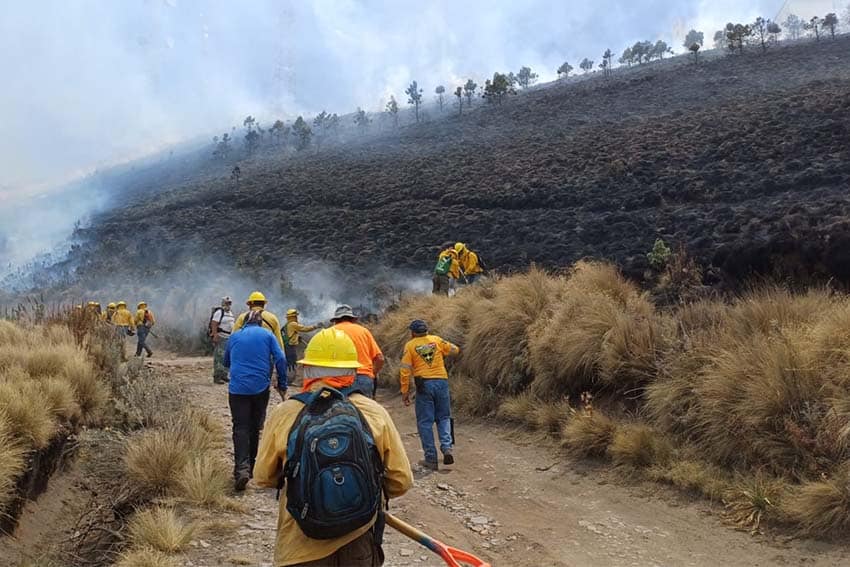
Mexico’s National Forestry Commission (Conafor) reported Wednesday that 6,195 firefighters, along with 7 helicopter teams, are battling blazes that have ravaged 7,137 hectares.
At least four people have died fighting the fires, according to government sources, including two volunteers. (Conafor)
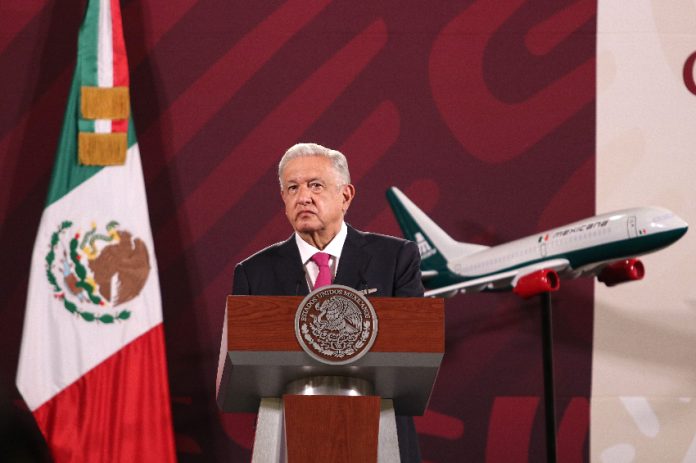
President Andrés Manuel López Obrador told reporters Thursday that four people died this week while fighting the wildfires in México state. They included a police officer, a firefighter and two volunteers, he said.
The Aristegui Noticias news agency reported that the number of fires has increased sixfold since last week. Conafor’s March 15–21 report indicated there were only 20 active forest fires, covering just 208 hectares. On March 26, the commission reported 126 forest fires threatening 4,725 hectares.
In the past two days, at least six fires have been brought under control, but active fires have burned an additional 1,400 hectares.
México state, which surrounds Mexico City on three sides, has the most active fires in the country, with 20, while Veracruz has the greatest amount of affected surface area, according to government officials.
The president said the National Civil Protection Coordination is working with the Defense Ministry, the Naval Ministry and Conafor in cooperation with state and municipal agencies to control the fires.
Other federal entities besides México state that have been hard hit this year during the wildfire season include Hidalgo, Guerrero, Chiapas and Michoacán. The Mexico City Atmospheric Monitoring System (SIMAT) on Wednesday cited the fires in issuing a poor air quality alert to capital residents.
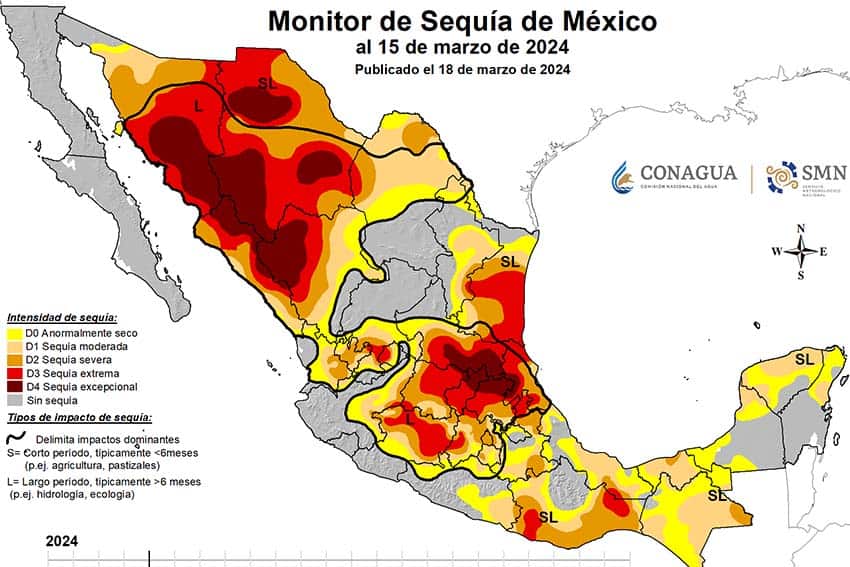
A federal drought map published last week. The red areas signify areas with “extreme drought” conditions and the maroon areas “exceptional drought.” Most of Mexico is considered to be experiencing at least abnormally dry conditions. (Conagua)
Since Jan. 1,667 forest fires have been registered in 23 of Mexico’s 32 federal entities, impacting more than 22,000 hectares, according to Conafor.
According to official data, the causes include both intentionally set fires as well as agricultural activities. Extended drought conditions, high temperatures and strong winds have combined to fuel the conflagrations.
Budget cuts to Conafor have also complicated fighting the record number of blazes. On Wednesday, the newspaper El Universal published columnist Héctor de Mauleón’s piece detailing how Conafor’s budget has been continually slashed since the beginning of López Obrador’s presidency.
In former President Enrique Peña Nieto’s final year in office, Conafor’s budget exceeded 5.3 billion pesos — about US $265 million in 2018 pesos. The following year, López Obrador’s government reduced Conafor’s budget by 34% to 3.5 billion pesos (worth about US $187 million in 2019).
When Conafor’s budget was decreased yet again in 2020, by an additional 8.5%, Greenpeace and other civil society organizations issued a statement warning that the dismantling of Conafor’s technical, human, financial and operational capacities put Mexico at great risk.
However, Conafor’s 2024 budget came in at just under 2.7 billion pesos — for a total 49% cut from where it had been in 2018 — even as the agency announced it was bracing for a potentially explosive wildfire season.
The risk of wildfires is exacerbated by the fact that Mexico has experienced an intense, generalized drought in recent years, as well as extreme temperatures. Earlier this month the National Water Commission (Conagua) identified 14 federal entities as suffering from extreme drought.
The Mexican government announced it is now a member of a leading global regulatory forum on medical devices this week. (Shutterstock)
There was some good news for the growing medical device sector this week with the announcement that Mexico has become an affiliate member of the International Medical Device Regulators Forum (IMDRF).
The ministries of Health, Economy and Foreign Affairs announced that Mexico had joined the forum in a joint statement on Monday.
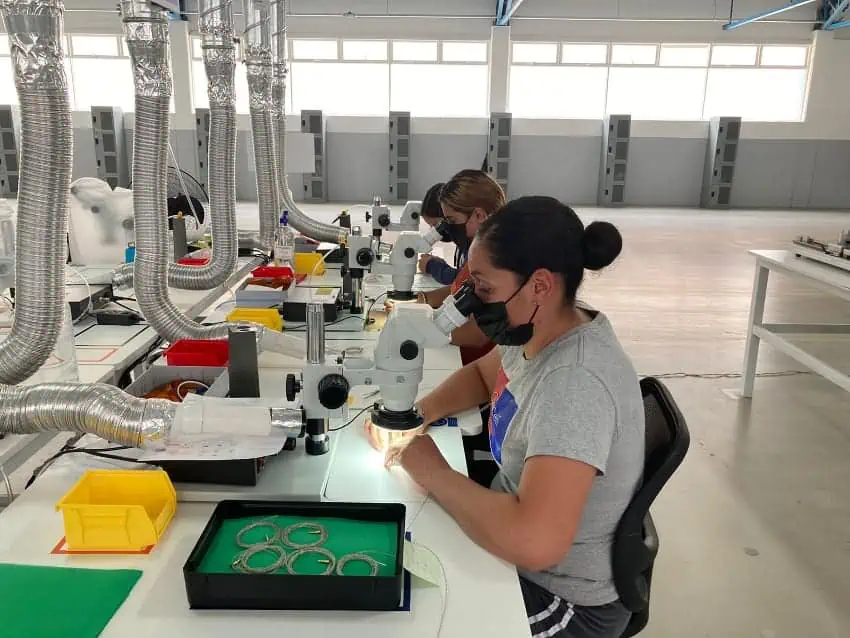
Medical device manufacturing is a growing industry in Mexico. (Entrada Group)
“Mexico’s participation in the forum will lead to greater regulatory convergence, facilitate international trade in medical devices and reduce technical barriers to their distribution,” the ministries said.
According to the IMDRF website, the forum is “a voluntary group of medical device regulators from around the world who have come together to build on the strong foundational work of the Global Harmonization Task Force on Medical Devices and aims to accelerate international medical device regulatory harmonization and convergence.”
The Mexican government said that it submitted a membership application “that was received positively by the IMDRF Management Committee, which is composed of the national regulatory agencies of Australia, Brazil, Canada, China, European Union, Japan, Singapore, South Korea, the United Kingdom and United States.”
“… The IMDRF is the leading forum for medical device regulation in the world. Its standards are benchmarks for international trade agreements, such as the U.S.-Mexico-Canada Agreement (USMCA) and the Pacific Alliance, which have become a parameter for reducing technical barriers to trade,” the joint statement added.
Mexico’s medial device sector
X-ray machines, syringes, catheters and medical lighting products are among a wide range of medical devices made in Mexico.
Production in the sector was worth US $18.14 billion in 2023, according to an estimate from the National Association of Health Providers (ANAPS), a 6.7% increase compared to 2022.
“In the next five years, Mexico could go from being the seventh largest producer of medical devices to fifth,” ANAPS president Carlos Salazar Gaytan said late last year.
Ambu, a Danish company, already has a large manufacturing center in Ciudad Juárez. (Ambu México/Facebook)
The relocation of international medical device manufacturers to Mexico is expected to drive growth in the sector.
“We’re predicting that in the next five years we’ll be able to attract investment of at least US $500 million per year,” Salazar told the El Economista newspaper last month.
He highlighted that Danish company Ambu is among the foreign medical device manufacturers that have already established a presence in Mexico. Ambu, which makes devices such as gastroscopes and breathing bags, spent US $20 million to build a plant in Ciudad Juárez, Chihuahua, in 2022.
Salazar said that more companies are moving to Mexico as part of the nearshoring trend, and asserted that there is “every possibility” that Mexico will become a “medical devices hub” that mainly supplies products to the United States market.
Exports increased 8.6% last year to $13.7 billion, he said, highlighting that the U.S. was the top purchaser of Mexican-made medical devices.
Exports have been growing consistently for two decades, with average annual increases of 8.6% between 2003 and 2020, according to the national statistics agency INEGI.
The airline has faced a number of challenges since the government acquired the brand last year, including acquiring sufficient planes for its fleet. On Wednesday, a U.S. company hired by the state-run airline filed a lawsuit against it in a New York court for US $840 million. (Cuartoscuro)
Just three months after it completed its first flight, the new state-owned commercial Mexicana airline faces a US $840 million lawsuit in the United States.
A Texas-based company hired by the Mexican government to provide a range of services to Mexicana de Aviación, including obtaining aircraft, sued the airline on Wednesday, accusing it of various breaches of contract.
The state-operated airline launched in December with flights today to 17 cities nationwide. (Cuartoscuro)
SAT Aero Holdings, which was also tasked with obtaining insurance for Mexicana, organizing maintenance of aircraft and recruiting and training pilots and cabin crew, filed its lawsuit in a U.S. federal court in New York.
The San Antonio-based company is seeking $838.5 million in damages — the total value of its contract — plus “out of pocket” costs that currently exceed $2.4 million.
SAT alleged that Mexicana failed to fulfill its contractual duties starting in the early days of their commercial relationship.
According to a Reuters report, among the company’s claims are that Mexicana failed to pay $5.5 million of aircraft lease deposits, refused to sign documents, poached its pilots and crews, and failed to obtain licenses needed to import planes to Mexico and operate them.
SAT said that it “has endeavored to work with the Mexican Ministry of Defense [Sedena] to resolve these issues” but “instead of remedying these several breaches, Mexicana Airlines has … instead sought to impose financial penalties on SAT and hold it responsible for the failure to deliver any of the aircraft identified” in its agreement.
The company said it had “no choice” but to sue Mexicana due to the the airline’s “material breaches and its unwillingness to work with SAT on solving the problems caused.”
SAT said that it had an agreement with Mexicana that contract disputes could be heard in New York courts in accordance with that state’s laws.
Sedena, which operates Mexicana and entered into the agreement with SAT, told Reuters that it didn’t have any information about the case.
General Leobardo Ávila Bojórquez, the deputy director of the airline, talks about its initial weeks of operation at a January press conference. (Cuartoscuro)
Mexicana began operations on Dec. 26, just 14 months after President Andrés Manuel López Obrador confirmed a media report that the government was considering the creation of a state-owned commercial airline to be operated by the army.
The revived state-owned Mexicana “initially struggled to acquire aircraft,” Reuters reported, noting that it began operations with just three military-owned Boeing planes and two Embraer aircraft leased from regional Mexican carrier TAR Aerolineas.
López Obrador said earlier this month that Mexicana will purchase 20 planes by October. The president’s successor will take office Oct. 1.
Mexicana operated 160 flights in January, according to government data. It operates routes between the army-built Felipe Ángeles International Airport (AIFA) north of Mexico City and 17 Mexican cities including Acapulco, Mazatlán, Tijuana, Tulum and Monterrey.
The airline is seeking to compete with Mexican budget carriers such as Volaris and Viva Aerobus. It is operated by the the Olmeca-Maya-Mexica company, a military-run state-owned firm that also manages the Maya Train railroad, AIFA and several other airports.
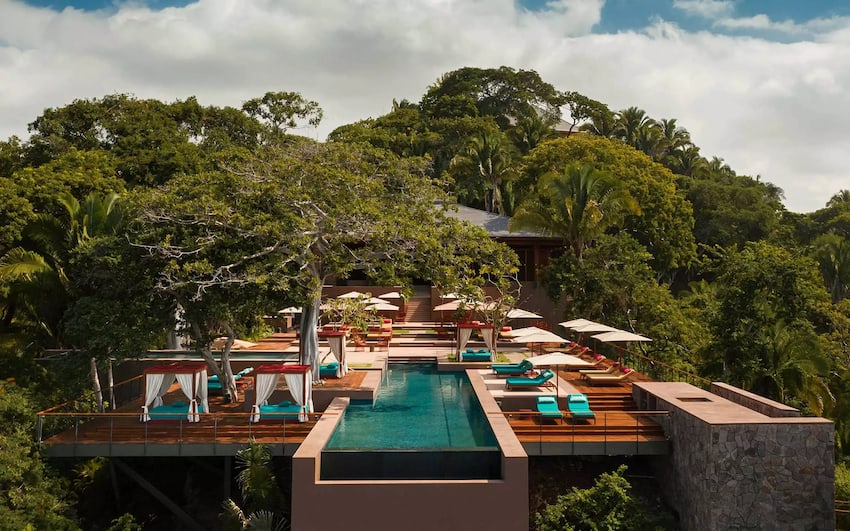
Nayarit is the home of some of Mexico - and the world's - best hotels. Meagan Drillinger investigates. (One&Only Mandarina)
The Riviera Nayarit is a veritable treasure trove of spectacular hotels and resorts. This stretch of coastline, which starts just north of the Puerto Vallarta airport, curves around the northern rim of the Bahia de Banderas and continues up the Pacific coastline towards the state of Sinaloa. This 200-mile stretch of coastline is one of the most famous in Mexico for its natural beauty, outdoor activities and health and wellness centers.
Getting to the Riviera Nayarit is easy. Visitors fly into the Puerto Vallarta International Airport and make their way north past the strings of fishing villages that dot the coastline. Home to some of the most beautiful beaches in Mexico, as well as the rugged Sierra Madre mountains and steeped in Indigenous Wixárika (Huichol) culture, it’s no wonder this is one of the best places in Mexico to post up for a beach holiday.
With so many top class hotels and resorts, how can you pick just one for your stay? (One&Only Mandarina)
The only challenge is deciding where to stay. Fortunately, the Riviera Nayarit has such a wide variety of hotels and resorts that it truly is a destination for everyone. To make it easier, we’ve rounded up some of the most popular hotels and resorts in the destination. This is by no means an exhaustive list, but it will certainly give you a starting point when planning the perfect Riviera Nayarit getaway.
Luxury Riviera Nayarit Resorts
One&Only Mandarina
(One&Only Mandarina)
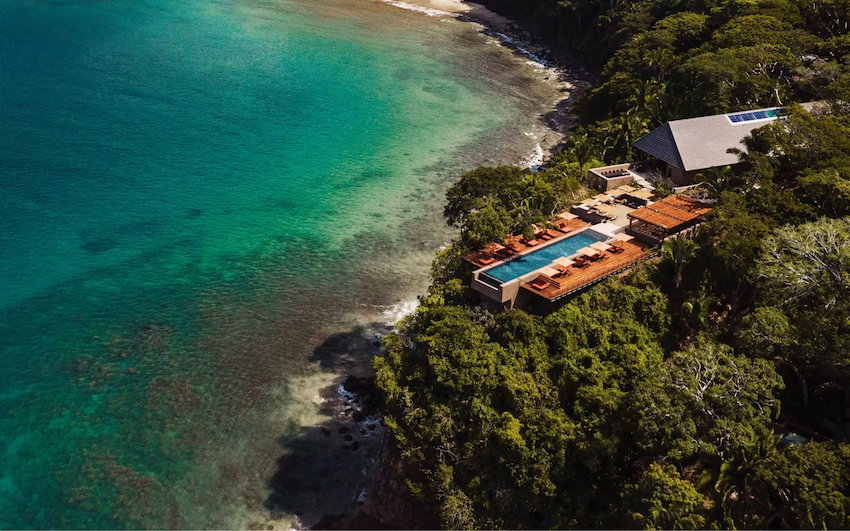
You cannot mention luxury in the Riviera Nayarit and not put One&Only Mandarina at the top of the list. This exclusive resort raised the bar for what was already a destination filled with elegant hotels when it opened in 2020. Just over 100 treehouse-style villas sit perched in the lush foliage that overlooks the sprawling, rugged beaches just north of Lo de Marcos. Villas feature floor-to-ceiling sliding doors that open out to terraces with private plunge pools.
The hotel exudes an earthy, yet highly sophisticated vibe. Infinity pools extend out over dramatic cliffs, surrounded by sexy daybeds and lounge chairs. Clifftop bars look out over the crashing surf, and signature restaurant Carao is helmed by superstar Mexican chef Enrique Olvera.
Down on the beach is Playa Canalan Beach Club, which is not exclusive to One&Only, but is part of the overall Mandarina development. This breezy beachfront club has its own pool, as well as a toes-in-the-sand restaurant serving rustic Italian cuisine.
Susurros del Corazon, Auberge
(Susurros del Corazon)
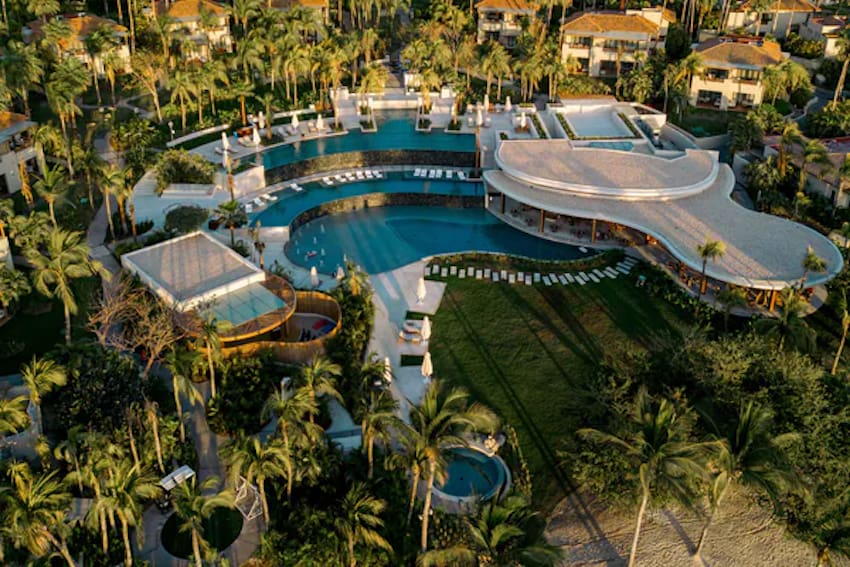
One of the newest resorts to grace the luxe-heavy Punta de Mita, Susurros del Corazon, Auberge Resorts Collection keeps things local to the core. From the soap and furniture to the farm-to-table restaurant concepts, this relaxed, yet supremely high-end, resort is all about peace, tranquility, and spectacular views.
The resort is centered around its three different pools, all of which tier down towards the beach. Each pool has its own vibe — think energetic, family-friendly and quiet. Rooms are evocative of bohemian beach hideaways, complete with seashell and driftwood accents. The boho-chic vibe permeates the resort, with the occasional sound bath and singing bowl experience and an emphasis on wellness, a sense of place and local art.
A sprawling 31,300-square-foot spa has its own pool and 11 treatment rooms, with a menu of treatments to match the resort’s earthy aesthetic developed by local healers. The restaurant, Casamilpa, serves regional favorites like ceviche and tacos, along with a menu of raicilla cocktails, a local spirit.
St. Regis Punta Mita
(St. Regis Punta Mita)
St. Regis is one of the earliest resorts to help set the luxury bar for Punta de Mita. The resort sits in the exclusive gated Punta Mita community and is one of the best options for both couples, as well as families. It’s not often that you get both in one resort. While the resort had been showing some wear and tear, it recently wrapped a multi-million dollar renovation, which includes the public spaces and the villas.
Guests check in at the hilltop lobby with exquisite views out over a cascading infinity pool that leads down to the beach. The palm-lined paths give way to beach bungalow-style villas, restaurants and relaxing pool spaces.
I love the luxury bungalow-style rooms here, which are complete with their own patios or terraces, sprawling marble bathrooms, and both an indoor and outdoor shower. Room rates include Butler Service, which guests can use for everything from unpacking your suitcase to morning coffee service.
Food at St. Regis Punta Mita is exceptional, as is to be expected from a St. Regis hotel. From the poolside casual fare to fine dining, everything is outstanding. I love the Mita Mary restaurant for its toes-in-the-sand atmosphere and fresh seafood menu. The spa was also recently renovated and has been transformed into a space of traditional wellness, from a Temazcal experience to facials, massages, singing bowls, and more. A well-equipped gym has Peloton bikes and Technogym treadmills.
Four Seasons Punta Mita
(Four Seasons Punta Mita)
In the same gated community is the iconic Four Seasons Resort Punta Mita, a 52-acre oasis that has captured the hearts of Nayarit luxury travelers for more than two decades. The sprawling resort sits across two white sand beaches, surrounded by two PGA golf courses and sprinkled with private villa sanctuaries.
Check-in at the open-air lobby leads to spectacular views of the Pacific, while three swimming pools each offer a different vibe. The most popular is the free-form, semi-circle infinity pool that overlooks both of the powder-soft white sand beaches. Another pool is for families, and a third is for adults only. You’ll even find a lazy river for a relaxing cooldown. Luxe cabanas are available to rent, decked out with televisions and minibars.
Activities abound with miles of trails for biking or walking. Guests can also use the two professional golf courses or the tennis center. For wellness enthusiasts, the Apuane Spa is a posh paradise of detox and relaxation, with a steam room and sauna and a treatment menu that harnesses local ingredients for its therapies.
The signature Mexican restaurant here is Dos Catrinas, serving regional cuisine from around Mexico, like the traditional beef tlayudas or the citrusy guacamole. Guests can also dine at the Asian-inspired Armara or directly on the beach at Bahia by Richard Sandoval. Guests will also find a handful of casual snack restaurants and bars.
Riviera Nayarit All-Inclusive Hotels
Secrets Bahia Mita Surf & Spa Resort
(Secrets Bahia Mita Surf & Spa Resort)
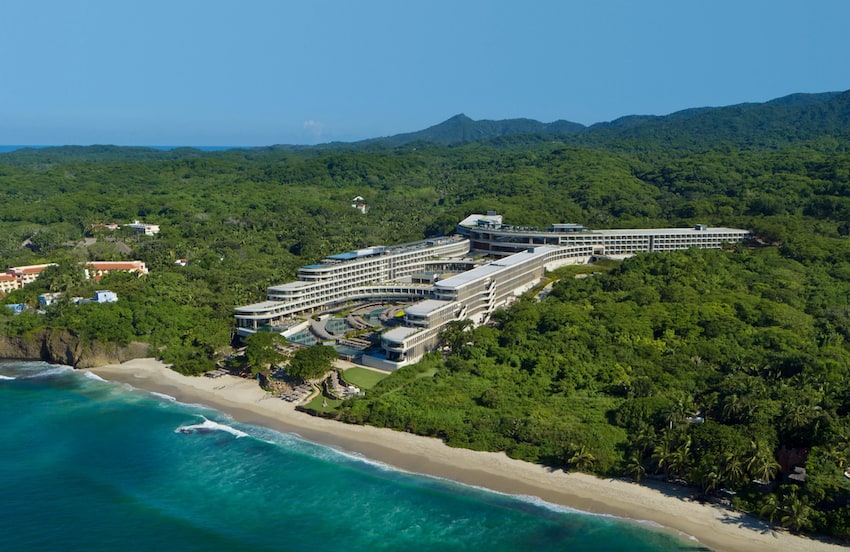
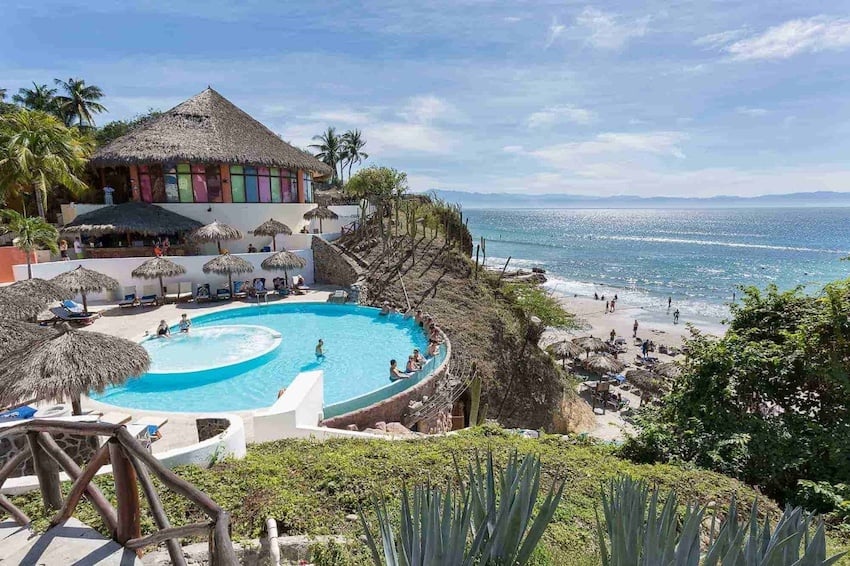
Relatively new to the Punta Mita scene is Secrets Bahia Mita. The adults-only, all-inclusive resort is perched right at the northern end of the Bay of Banderas, with views of the Sierra Madre that wreath the bay. While the resort itself is adults-only, guests should know that the property shares space with the family-friendly Dreams Bahia Mita Surf & Spa Resort. Some amenities are shared, so there’s a chance you’ll see kids around.
The 278-room resort feels massive, rising out of the thick jungle with a sleek and modern design. It features 12 different dining options, plus five bars. That said, five of the 12 options are part of Dreams Bahia Mita, which means that they allow children.
Explore the four adults-only pools, but guests say that the Preferred Club Sky Bar and the small infinity pool next to restaurant Olio are the best.
Speaking of the Preferred Club, it is totally worth the upgrade. Preferred Club rooms have extra perks like the adults-only Sky Bar, rooftop club and pool. Additional perks include the private Preferred Club Lounge, which serves breakfast, as well as snacks throughout the day.
Grand Velas Riviera Nayarit
(Grand Velas Riviera Nayarit)
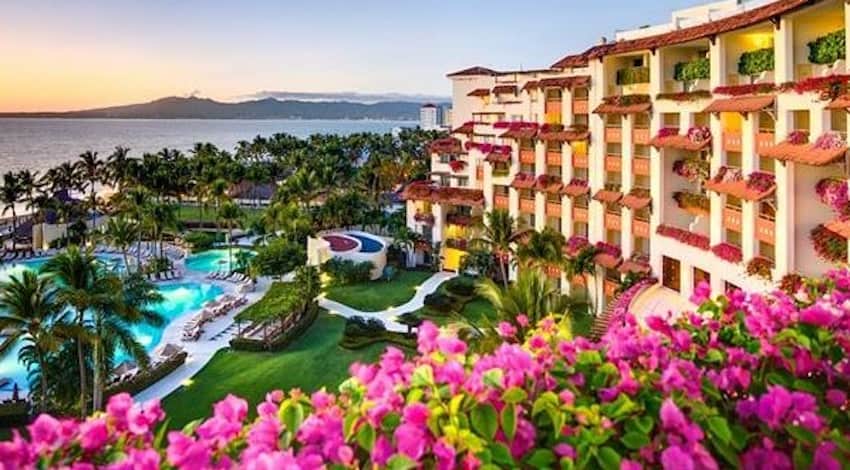
Just 20 minutes north of the Puerto Vallarta airport, Grand Velas Riviera Nayarit is one of the original luxury all-inclusive on this stretch of coast. It is also one of the easiest to get to and overlooks one of the best beaches in the Bay of Banderas.
All 267 rooms at this resort are suites, complete with private terraces and Jacuzzis. The central infinity pool is surrounded by strings of plush chaise lounges, while the 650 feet of beachfront is peppered with luxurious Bali beds.
All four of the signature restaurants have been awarded Four Diamonds by AAA. Lucca is a favorite for its fresh pasta and Mediterranean cuisine. Grand Velas Riviera Nayarit also has a 16,000-square-foot SE Spa, a fitness center, and kids’ and teen clubs.
Grand Palladium Vallarta Resort & Spa
(Grand Palladium Vallarta Resort & Spa)
Perched on a stretch of beachfront on the northern edge of the Bahía de Banderas, Grand Palladium Vallarta Resort & Spa is a larger all-inclusive hotel geared towards families. The 420 rooms offer Garden or Ocean Views, with the best category being the Deluxe Panoramic Ocean Views. All suites, however, have jetted bathtubs and furnished terraces.
The resort has an impressive selection of restaurants and bars — 11 to choose from. La Adelita is a guest favorite for its Mexican cuisine. Grand Palladium Vallarta Resort & Spa has an impressive wellness center with a sauna and Turkish baths, hydromassage waterfalls, and a selection of massages, facials, body treatments, and beauty services.
But where the resort shines is how it caters to family travelers. Guests can upgrade to the Family Selection at Grand Palladium Vallarta Resort & Spa, which is a hotel within a hotel geared exclusively to families. This includes areas dedicated exclusively to families, as well as personalized services. Think entertainment areas, welcome kits for kids, mini bathrobes and mini slippers, a special turn-down for kids, a reserved beach area, and a dedicated pool.
Riviera Nayarit Boutique Hotels
Agua de Luna Boutique Hotel
(Agua de Luna Boutique Hotel)
Further up the coast, away from the communities of Punta Mita and Nuevo Vallarta, the scene gets much more boutique and small-scale, particularly in the towns of Sayulita and San Pancho. Agua de Luna Boutique Hotel is a dreamy, adults-only boutique hotel nestled alongside the cobblestone streets of this sleepy fishing village.
The charming hotel is tailored to travelers who crave a bohemian design and a laid-back lifestyle. The 15 suites are impeccably dressed, with accents of wood, stone, and woven textiles. Luxury Suites open out directly to the saltwater pool.
This is a hotel ideal for digital nomads, or boho-style backpackers with a bit more money to burn. While the hotel itself is not expensive, it attracts a crowd that appreciates organic cuisine, wellness experiences, and Instagrammable moments.
La Joya
(La Joya)
Sayulita is arguably the most famous town along the Riviera Nayarit. Once sought out for its sleepy, off-the-beaten-path vibes, today it is a standalone destination complete with dozens of restaurants and bars and a great nightlife.
La Joya, however, is a small boutique hotel that sits removed from the downtown fray and somewhat chaotic energy of Sayulita. This intimate space is often used as the setting for wellness retreats, perched overlooking a stretch of beach, with intimate bungalows, casitas and larger houses that sleep six.
Onsite restaurant Tekuamana serves organic local ingredients transformed into Mexican recipes, as well as designer cocktails, craft beer and organic wines.
To make the most out of La Joya, guests should sign up for one of their many retreats. Themes include yoga, healing and soul alchemy, among others — all with wellness and connection to body and spirit in mind.
Meagan Drillinger is a New York native who has spent the past 15 years traveling around and writing about Mexico. While she’s on the road for assignments most of the time, Puerto Vallarta is her home base. Follow her travels on Instagram at @drillinjourneys or through her blog at drillinjourneys.com.
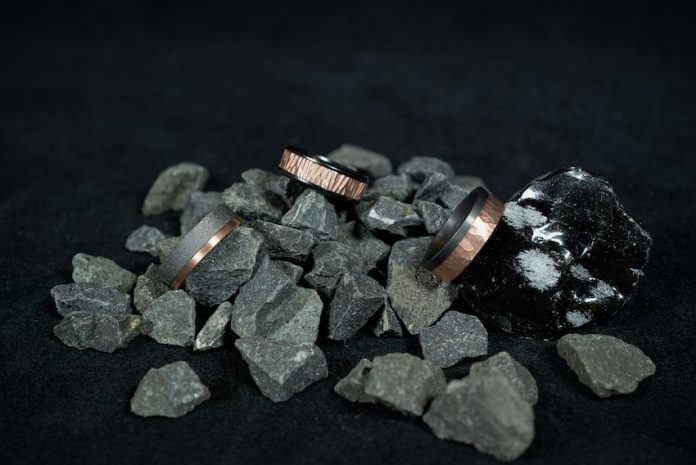
Obsidian, the volcanic glass that has played an important role in Mexican history, is most plentiful in the state of Jalisco. (Avonlea Jewelry/Unsplash)
Archaeologist Rodrigo Esparza has been studying obsidian for twenty years. In a recent online conference sponsored by the University of Guadalajara, he summed up his observations about this volcanic glass which played a vital role in the history of Mexico.
The biggest deposits of obsidian on this planet, he said, are found in the U.S. in the great plateau of Oregon. The next largest are in South Africa and then in Russia’s Kamchatka Peninsula, with the Mexican state of Jalisco taking fourth place on the world stage.
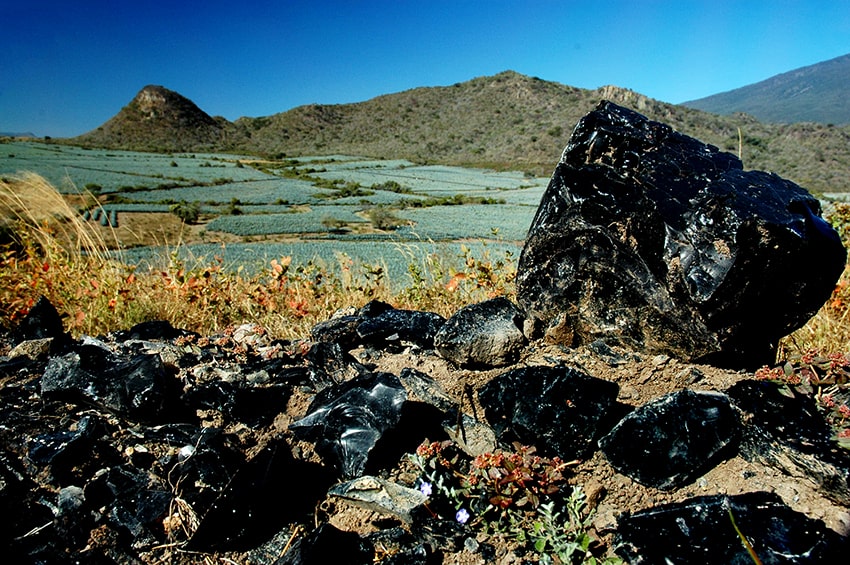
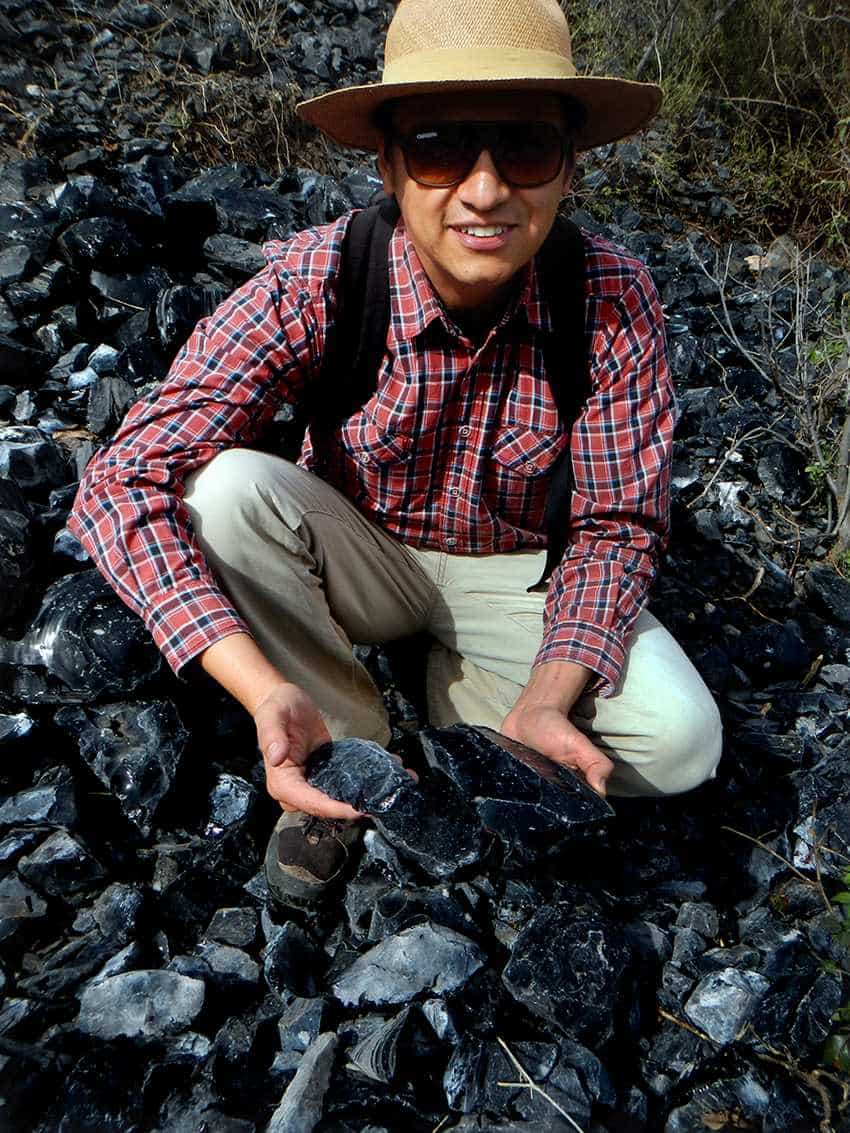
The El Pedernal obsidian field, sat amongst the agaves fields that dot the Jalisco landscape. (John Pint)
Jalisco: Mexico’s obsidian heartland
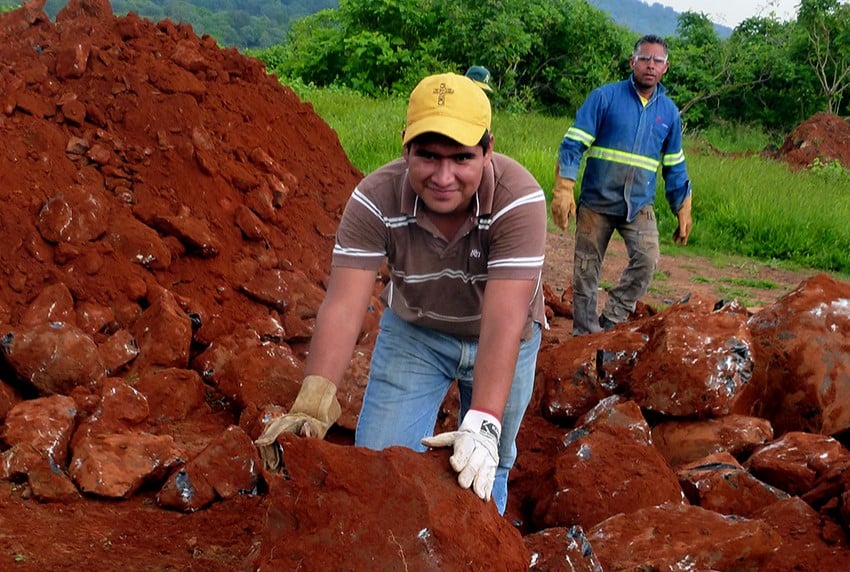
“Jalisco has 54 deposits, but more are being found all the time” says the professor. A case in point is the Sierra de Ahuisculco Wildlife Reserve (Selva Negra) whose obsidian fields are presently being studied for the first time: “More than 300 hectares of high-grade black and red obsidian have been mapped so far—dotted with hundreds of old mines and workshops—and the outer limits of the deposit have not yet been reached.”
“Thanks to the discovery of two Clovis points [traditional speartips] in Jalisco,” Esparza went on, “we know for sure that obsidian was being worked in this part of Mexico ten thousand years ago. The Clovis points date back to Pleistocene times and were found at San Marcos Lake, just west of Lake Chapala.”
The sharpest blades in the world
When it comes to producing a sharp edge, nothing beats obsidian. It is, after all, natural glass, and like all glass it has no crystalline structure. This means there is no limit to how far you can sharpen an obsidian knife. So, obsidian spearheads, blades, and scrapers have a keener edge than their metal counterparts. The Spaniards learned this the first time they encountered the macuahuitl, the meter-long native Mexican sword which was flat and made of wood, with incredibly sharp obsidian blades set into grooves along the edges and glued in place with natural asphalt (bitumen).
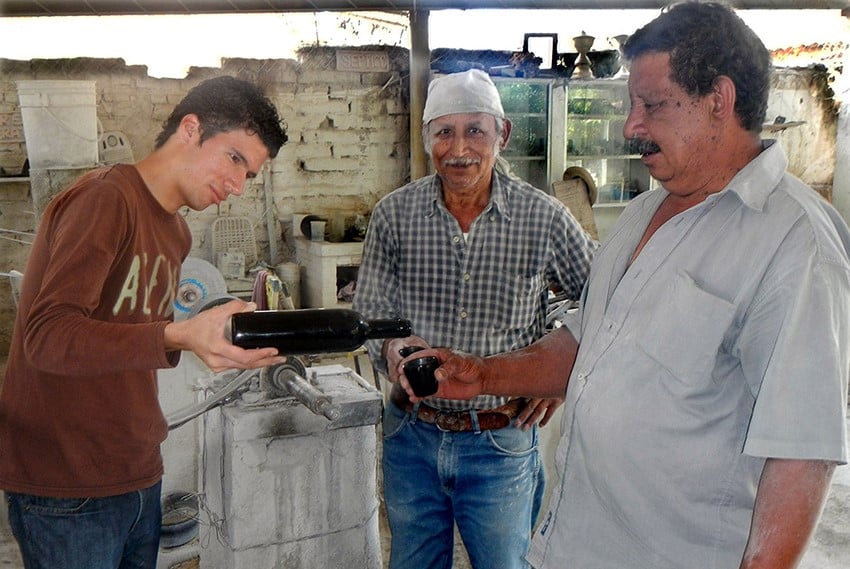
Obsidian has many uses. Some craftsmen have worked the glass into wine bottles. (John Pint)
The macuahuitl was so deadly that with one blow a warrior could cut off a man’s leg or decapitate a horse, as Spanish conquistador Bernal Diaz Del Castillo, witnessed:
“Pedro de Morón was a very good horseman, and as he charged with three other horsemen into the ranks of the enemy the Indians seized hold of his lance and he was not able to drag it away, and others gave him cuts with their broadswords, and wounded him badly, and then they slashed at the mare, and cut her head off at the neck so that it hung by the skin, and she fell dead.”
Ancient artisans and the art of working obsidian
An obsidian knife could be made by knapping or chipping away at a chunk of obsidian, just as was done with flint over ages, but eventually, artisans discovered a much more efficient procedure: percussion. At the site of an obsidian mine, they would extract a piece of the material weighing perhaps eight kilos and give it a conical shape with a flat bottom. This is what archaeologists call a core.
The most promising cores would then be carried off to an artisan sitting beneath a tree. He would place the piece, tip downward, between his legs and with a deer horn, apply pressure to the right spot on the flat surface, popping off a long, thin blade. This technique resulted in elegant prismatic blades that had two naturally sharp edges.
The many colors of obsidian
Although most of the world’s obsidian is black, it also comes in colors. In Jalisco alone, Rodrigo Esparza has come upon more than 25 colors, such as marbled red, blue, green and even white, as well as a mix of colors known as rainbow.
Rodrigo Esparza, a Mexican archaeologist, has spent a quarter of a century studying obsidian. (John Pint)
“Obsidian also comes in a variety of sheens, including silver and gold, which can only be appreciated when you move the piece in the sunlight.”
Mexican artisans have always appreciated the beauty of obsidian and have used it not only to sculpt statues but also to produce fine jewelry.
“In shaft tomb burials 2000 years old, we found amazingly thin pieces of obsidian, perhaps three centimeters in diameter, but less than two millimeters in thickness,” Esparza says. “Some were perfectly round discs and others had the shape of animals or humans. They looked very much like charms, each inevitably perforated by a tiny hole. At first, we thought the discs might be mirrors, but they were too small for that. It soon became clear that they were something like spangles that could be strung together to make a necklace, bracelet, or an elaborate pectoral. Perhaps these were sewn on clothing to give a sort of Elvis Presley effect. I’ve written a paper on the clever percussion technique they probably used to get such thin flakes. No modern artisan knows how to make obsidian so thin … and, much less, how to put a hole in it!”
Obsidian workshops today
Though most often associated with the color black, obsidian actually comes in a variety of shades. (Luz Mendoza/Unsplash)
Today’s artisans use modern techniques for working obsidian, but their creations are no less surprising and attractive than the ancient ones.
An example, Esparza says, is the taller (workshop) of Don Eleno Espinoza in the little town of Navajas, located 30 kilometers southwest of Guadalajara. Here they carry on an ancient tradition but employ modern devices like grinding wheels for polishing.
In one corner of the workshop, piled on the floor, visitors can find a collection of just about every type, color and sheen of obsidian, brought to Navajas from all over Jalisco.
That collection, however, is shrinking.
“The artisans of Navajas report two problems,” Rodrigo Esparza says “One is the spread of agave fields over what were once obsidian deposits. Aerial photos show that several historically important — and ‘protected’ — obsidian deposits have simply disappeared, covered with agaves.”
Magdalena black obsidian, which will be exported to China. (John Pint)
Mexican obsidian catches the eye of China
The second problem is on an international scale. Rainbow obsidian, for example, has come to the attention of Chinese entrepreneurs, who eventually find their way to remote backwaters where they will buy everything that the local people can produce … until there is none left. They are also on the lookout for deposits that have large blocks of obsidian. Although these weigh tons, they are transported to docks and eventually end up in China.
“Foreigners can spirit obsidian out of Mexico without paying tariffs of any kind,” says Esparza, “because the government officially lists obsidian as cascajo, gravel, and it sells for one peso a kilo. In ancient times it was a priceless resource but now it’s classified as worthless.”
John Pint has lived near Guadalajara, Jalisco, for more than 30 years and is the author of A Guide to West Mexico’s Guachimontones and Surrounding Area and co-author of Outdoors in Western Mexico. More of his writing can be found on his website.
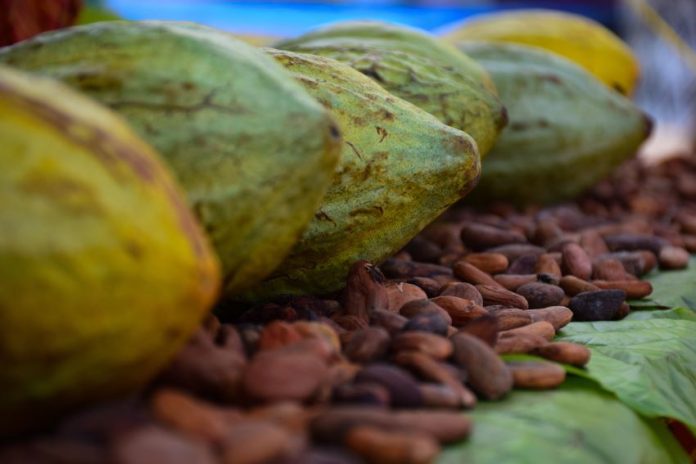
According to an economic analysis by Mexico’s Banco Base, the commodity with the greatest global price growth in 2023 — at 61.3% — was cocoa, and the price keeps increasing.
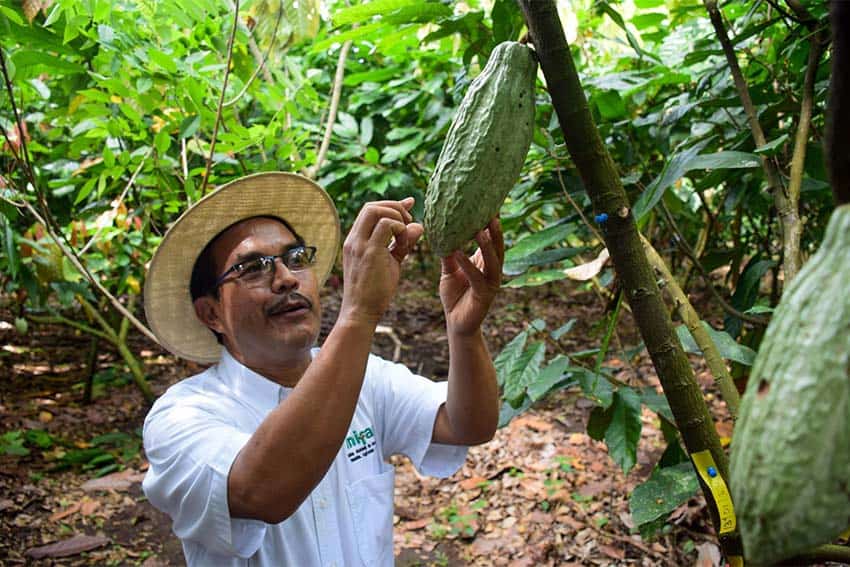
Carlos Hugo Avendaño of the Rosario Izapa farm in Cacahoatán, Chiapas, works on developing cacao varieties more resistant to black pod disease, one of the diseases responsible for widespread cacao shortages in West Africa. (Damien Sánchez Jesus/Cuartoscuro)
How much have global cocoa prices increased and why?
And it’s only getting worse: the prices of global cocoa futures for May delivery temporarily surpassed US $10,000 a ton on Tuesday, a more than 129% increase in 2024. Tuesday’s final price eventually dropped somewhat to US $9,641.50.
Abel Main Rodríguez, information director at the Agricultural Markets Consulting Group, explained that the rise in prices worldwide is due to crop shortages in the West African countries of Ivory Coast and Ghana, which combined, account for 70% of the global supply.
El Niño and the oomycete fungus phytophthora palmivora — responsible for black pod disease — are causing the cacao crop shortages in these two countries. Drought has also decreased cacao crops in other major producing nations — Ecuador, Cameroon, Nigeria and Brazil.
How will this affect chocolate prices in Mexico?
Currently, global price increases have not had as great an impact on Mexican consumers, although local prices have indeed been rising. According to the National Institute of Statistics and Geography, chocolate prices in the Mexican market have increased by an average of 8% in the past year — a figure higher than the inflation rate of 4.6%.
Cuauhtémoc Rivera, president of the National Alliance of Small Merchants, estimates that chocolate prices will double in the second half of the year, when consumption is at its peak.
But despite the increase in the cost of raw materials such as cocoa — and sugar, whose prices rose globally by 7% in 2023 — Paolo Quadrini, the general director of the National Association of the Confectionery and Chocolate Sector, predicted in February that chocolate and candy sales will rise by 10% in the Mexican market during 2024.
How much cacao does Mexico produce?
Cacao — which is native to Mexico — is one of the country’s most important shade crops in tropical regions, just behind coffee. According to federal government figures, around 45,000 Mexican farmers cultivate cacao beans, mainly in the states of Tabasco, Chiapas and Guerrero.
While Mexico is expected to produce 38,000 tonnes in 2024 according to the Agriculture and Rural Development Ministry (Sagarpa), it doesn’t grow enough to meet national demand. Mexico ranks among the top 11 producers worldwide.
According to Main Rodríguez, Mexico will need to import around 43,000 tonnes this year to meet market needs.
Victims in the accident that destroyed the Francis Scott Key Bridge in Baltimore Tuesday included three Mexican nationals, the government of Mexico said Wednesday. (Screen capture)
President Andrés Manuel López Obrador told reporters that three Mexican workers were on the Francis Scott Key Bridge in Baltimore, Maryland, when it collapsed after a cargo ship struck a support column on Tuesday.
One of the three was rescued, but two are still missing, he said.
President Lopez Obrador declined to share the names of the victims, saying that their families in Mexico were highly sought after by the media. (Presidencia)
“The report we have is that there are three Mexicans, one was rescued and came out alive— injured, but safe,” López Obrador said during his Wednesday morning press conference, adding that consular assistance is being provided to the relatives. At least eight people went into the water. Two were rescued, but the other six are missing and presumed dead.
The Mexicans were part of a construction crew filling potholes on the bridge. President López Obrador said the families of the victims are being highly sought after by the media and refrained from giving further details about their relatives.
The Foreign Affairs Ministry said in a statement Wednesday that the Mexican rescued alive is from Michoacán. One of the missing men is also from the state of Michoacán, and the other is from the state of Veracruz, it added.
Guatemalan and Honduran diplomats have confirmed that some of the missing workers on the crew are their nationals.
On Tuesday evening, Maryland State Police announced that the search and rescue mission was transitioning to one of search and recovery. Maryland Governor Wes Moore said Wednesday morning that rescue divers faced dangerous conditions.
“They are down there in darkness where they can literally see about a foot in front of them. They are trying to navigate mangled metal, and they’re also in a place [where] it is now presumed that people have lost their lives,” Moore said.
“operations have shifted from a search and rescue operation towards recovery efforts,” said White House press secretary Karine Jean-Pierre in a press conference.
According to the Associated Press, the ship, the Dali, struck the bridge at 1:30 a.m., moments after the vessel’s crew issued a mayday call warning that it had lost power and steering capability. Police officers who were warned that the ship was headed toward the bridge had only about 90 seconds to stop traffic on the interstate highway before the bridge collapsed.
Reportedly, one officer parked sideways across the lanes and planned to drive onto the bridge to alert a construction crew once another officer arrived. However, he did not get the chance as the drifting ship barreled into the bridge.
The accident destroyed a major transportation link in Baltimore, leading to the complete closure of river traffic. This will impact not only the 30,000 daily commuters who use the bridge but also U.S. consumers, who are likely to experience shipping delays.
The Port of Baltimore is a major entry point on the East Coast for vehicles from Germany, Mexico, Japan and the United Kingdom, as well as for coal and farm equipment.
U.S. Transportation Secretary Pete Buttigieg said it is too soon to give a time frame for clearing the channel and resuming normal activities.
“We need the ships to enter and those who were [in the port] to be able to leave,” he stressed.
The vessel, owned by Grace Ocean Private Ltd., a Singapore-based shipping company, was en route from Baltimore to Sri Lanka. Maersk, a Danish shipping giant, had chartered the ship.
The project is expected to be completed in 2026 and to generate 4,500 jobs. (Engie Energy)
Energy company Engie México will invest US $2 billion to build a second gas pipeline in southeastern Mexico, according to a senior executive with the French-owned firm.
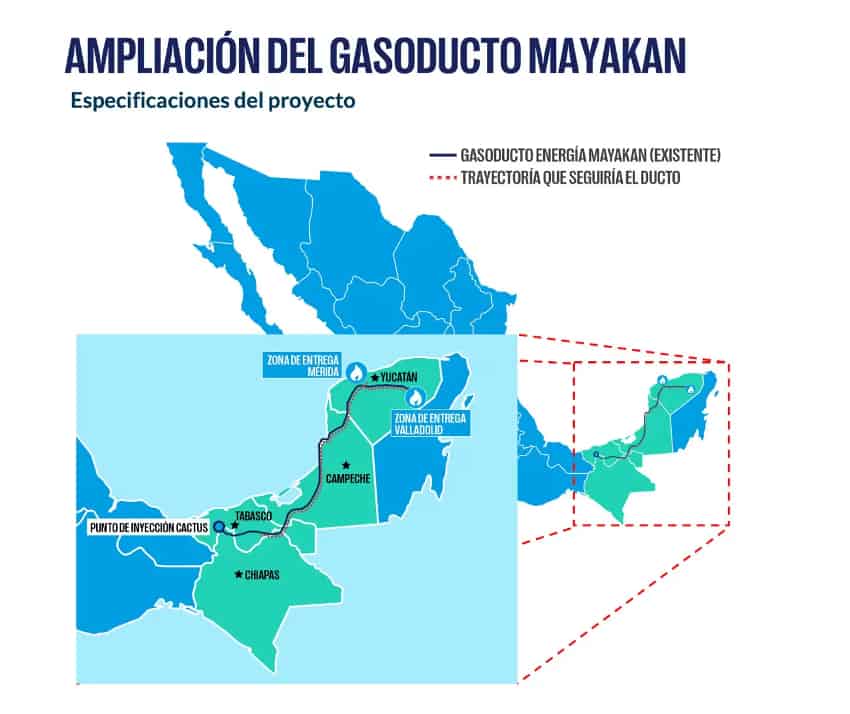
Engie is committed to building a new pipeline parallel to the existing Mayakan pipeline that runs between Chiapas and Yucatán. The second pipeline will be shorter, beginning in Tabasco rather than Chiapas, but running to the same final delivery point in Valladolid, Yucatán.
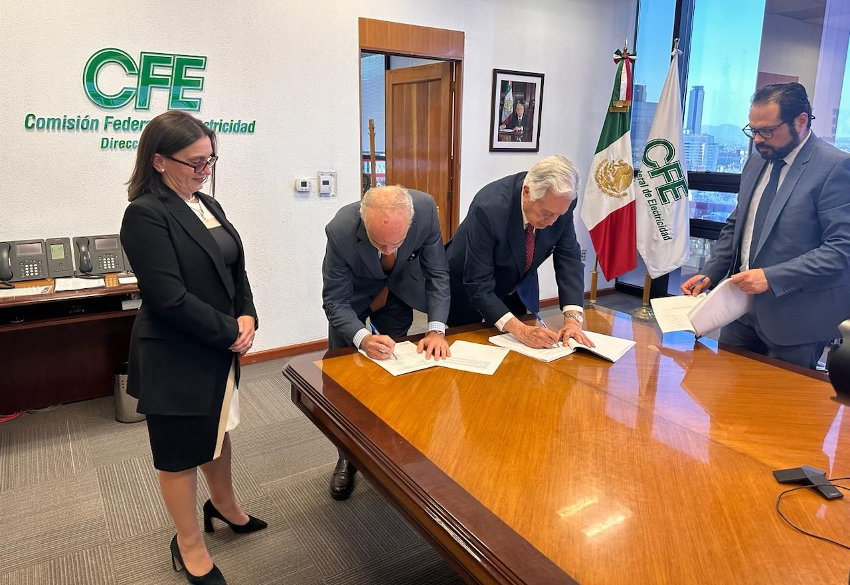
The energy company signed an agreement with CFE earlier this week to “guarantee the transport of natural gas” for the Yucatán peninsula. (Engie Energy)
Ana Ludlow, Engie México’s chief government affairs and sustainability officer, told the news website Bloomberg Línea that the new pipeline will supply gas to two new Federal Electricity Commission (CFE) power plants in Yucatán, one in Mérida and another in Valladolid. The Mérida plant is slated to open in November, while the Valladolid one is scheduled to begin operations in January 2025.
Engie subsidiary Energía Mayakan signed an agreement with the state-owned CFE earlier this week for “the expansion of the Mayakan gas pipeline” in order to “guarantee the transport of natural gas for the generation of electricity required by the Yucatán Peninsula,” according to a company statement.
Ludlow said that construction of the new pipeline will cost approximately $2 billion and that it will be finished by the end of 2026. The money will come from Engie and its partners, Ludlow told Bloomberg Línea without offering further details. She also said that the project will create 4,500 jobs.
According to Engie’s statement, Energía Mayakan will be in charge of the project. It already operates a gas pipeline between a Pemex facility in the municipality of Reforma, Chiapas, and Valladolid.
Map of the second pipeline to be built alongside the existing Mayakan pipeline, which will also have the same final delivery point in Valladolid, Yucatán. (Engie Energy)
The new pipeline will run more than 700 kilometers between Ciudad Pemex in the Tabasco municipality of Macuspana and Valladolid. Ludlow said that the new pipeline will use “practically” the same right of way as the existing pipeline.
The operation of a second pipeline will increase Engie’s capacity to transport gas in southeastern Mexico from 250 million cubic feet per day to 567 million cubic feet, according to the company.
Engie also said that its project will “favor interconnection with the Puerta del Sureste project,” a joint initiative of Canadian company TC Energy and the CFE. The TC Energy project will allow natural gas to be transported from Brownsville, Texas, to Tuxpan and Coatzacoalcos in Veracruz and Paraíso in Tabasco.
Engie said that its project will “trigger economic development,” attract investment to southeastern Mexico and reduce electricity generation costs and the bills of millions of electricity customers in Chiapas, Tabasco, Campeche and Yucatán.
The company said that the operation of the two new CFE plants in Yucatán will avoid the annual emission of 4.6 million tonnes of carbon dioxide.
The supply of natural gas to the plants via the new pipeline will help eliminate the need to use dirtier and more expensive fossil fuels for electricity generation, Ludlow said.