The high school research team are from Mazatlan, Sinaloa, but hope to take their invention across the world. (Prepa Vasconcelos/Facebook)
Mexico’s flag shone brightly at the International Festival of Engineering Science and Technology in Tunisia (I-FEST²) as students from the José Vasconcelos high school in Mazatlán, Sinaloa, won a gold medal for an innovative plastic substitute project.
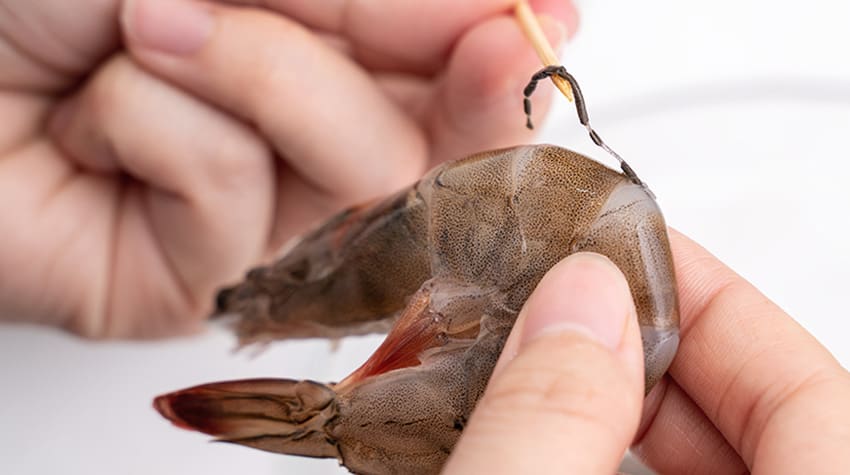
Using residue from the local shrimp industry — Mazatlán is the top producer of aquaculture shrimp in the country — aspiring scientists Samantha Guadalupe Carrasco Tovar, Natalia Quetzalli Martínez González and Génesis Ayón Loza created a bioplastic with shrimp shells that can replace single-use plastic.
Génesis Ayón, one of the team behind the invention, shared photos of their medals on social media. (@geneayon/Twitter)
“We recovered the shrimp waste, meaning everything that we didn’t consume, and took it to the [high school] laboratory to create plastic,” Samantha told El Economista newspaper.
The project will take them next to another international competition in Romania.
To develop their idea, the 17 year-olds had to turn to the experts.
“We received guidance from chemists, engineers, doctors, and laboratory workers. We gathered a great team around us,” Génesis said.
The team was inspired by the abundance of shrimp in the Mazatlan region. (Shutterstock)
But it was their teacher and mentor, aquaculture biologist Judith Rebeca González, who accompanied the young women along the way.
“She has fully supported us at an academic and personal level. She’s the one who has always been at the forefront looking for [financial] support,” Natalia said.
After winning the National Sciences Expo 2022 in San Luis Potosí, the young women had to look for ways of covering travel expenses for the nine-day festival in Tunisia.
“We worked hard looking for sponsorships. [We did] raffles, fairs. There were many people who believed in us and helped us to attend this event,” Génesis said.
In hopes of industrializing the process, the young women have presented their project as a prototype to obtain a patent for their idea, Génesis explained.
The benefits would be numerous, Natalia said, pointing out that the material is fully biodegradable and acts as both a pesticide and fertilizer when placed in the ground. It doesn’t generate bacteria or provoke an allergic reaction. “It is environmentally friendly and a low-cost product,” she concluded.
Finally, Génesis added, they feel proud to be women breaking the mold of what society expects of them.
“We want to get out of the box society usually puts us in and overcome the roles and stereotypes that pigeonhole you.”
“Girls can also be in the sciences. Girls can also be good at math,” Natalia stressed.
The banks sought to reassure customers that their savings were not at risk. (Shutterstock)
Annual headline inflation declined to a 17-month low of 6.85% in March, while Mexico’s core rate also fell but remains above 8%.
As reported by the national statistics agency INEGI on Wednesday, the headline rate is 0.77 percentage points below the February reading of 7.62%.
Increases in the Bank of Mexico’s interest rate have helped to bring inflation down in 2023. (Wikipedia)
The headline rate, which has dropped more than one percentage point since January and almost two points since last year’s peak, is slightly below the 6.89% consensus forecast of economists surveyed by Citibanamex. It is still well above the central bank’s target of 3%, with a tolerance of one percentage point in either direction.
INEGI reported that the annual core inflation rate, which excludes volatile food and energy prices, was 8.09% in March, down from 8.29% in February. In contrast to the headline rate, the core rate is slightly above the consensus forecast of analysts polled by Citibanamex.
Alberto Ramos, head of Latin America economics at Goldman Sachs, said in a research note that “core inflation was impacted by the high readings in services, driven by the seasonal increase in airfares and tourism packages, and food services.”
INEGI data show that annual inflation for services was 5.71% in March, up from 5.55% in February.
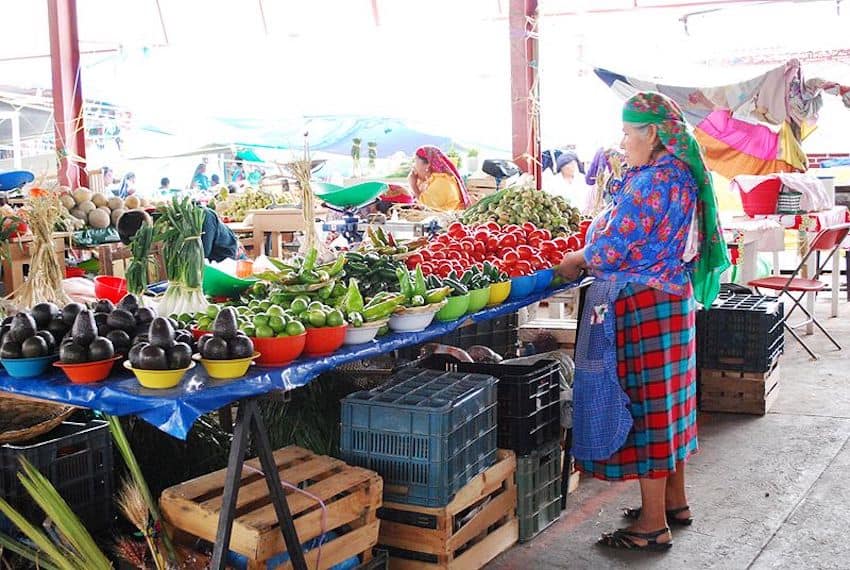
The volatile price of food has driven inflation in recent months. (Alejandro Linares Garcia)
Inflation for processed food, beverages, and tobacco was 12.95%, whereas prices for fresh agricultural products, including fruit, vegetables, and meat, were 7.24% higher than a year prior. Energy prices, including those for fuel and electricity, rose just 0.16% on an annual basis.
Publication of the latest INEGI inflation data comes six days after members of the Bank of Mexico (Banxico) governing board voted unanimously to raise the central bank’s benchmark interest rate by 25 basis points to a record high of 11.25%. The bank has lifted its key rate by 725 basis points in the current tightening cycle, which began in June 2021, as it seeks to combat high inflation.
Andrés Abadia, chief Latin America economist at the economic research consultancy Pantheon Macroeconomics, wrote that the latest INEGI data allows Banxico to breathe a “sigh of relief” as it confirms inflation is continuing to decline. Abadia said he expects the downward trajectory to continue in the months ahead.
Zélika García talks about the evolution of the Mexican art scene, the impact of the pandemic and how this latest project has stretched her team's imagination. (Courtesy)
Over the last two decades, Zona Maco has evolved from an upstart Mexico City festival to the one of the world’s most important art fairs.
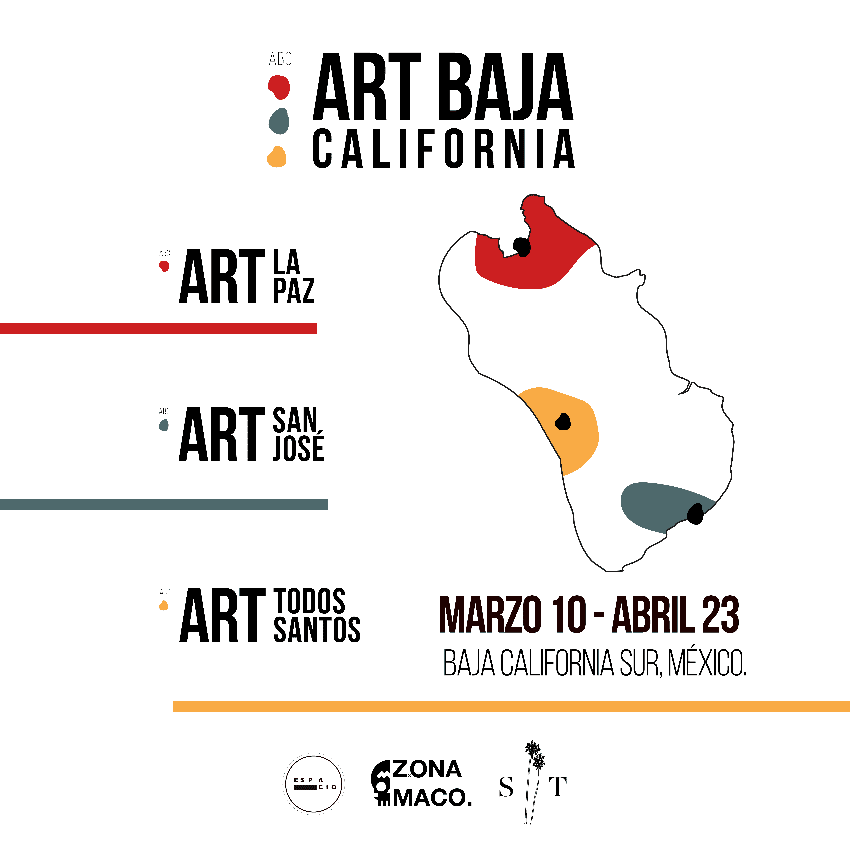
Founder Zélika García has teamed up with her son Kareem Reza to start a new project called Art Baja California (ABC) in Baja California Sur, which is taking place in La Paz, San Jose del Cabo, and Todos Santos from March 10 to April 23.
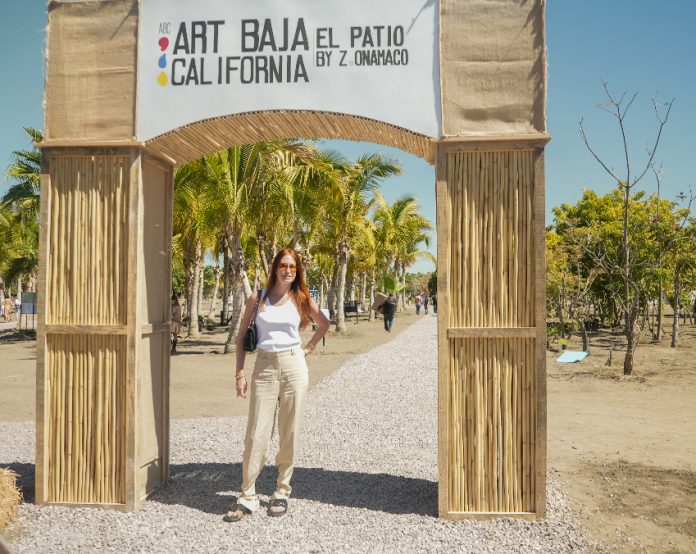
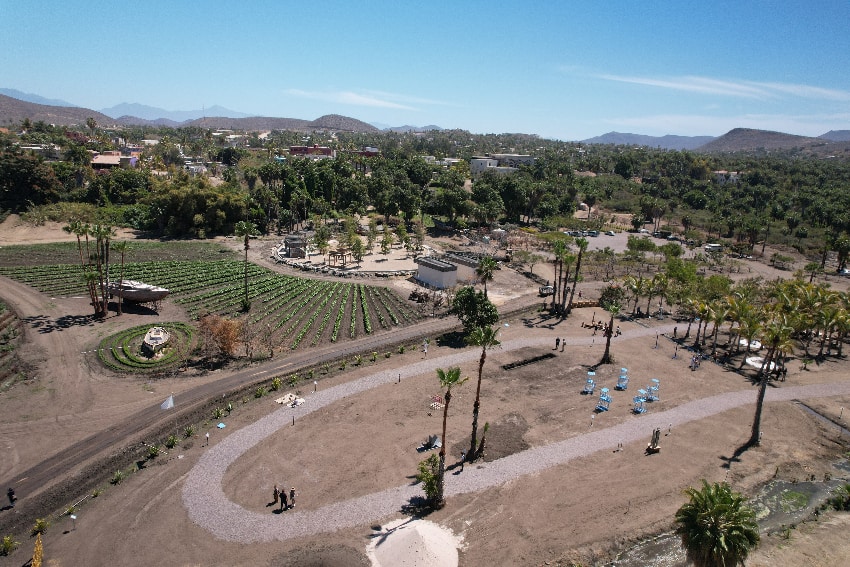
Zona Maco has produced a central area in Todos Santos called “El Patio” with installations from 40 artists spread over 7,000 square meters. “Lo Local” is a series of exhibitions happening in over 60 galleries, restaurants, and hotels. “El Cine” is a selection of short films and features screened on rotation in all three cities.
Zélika sat down with writer Marko Ayling to discuss her ongoing mission to put Mexican art on the world stage. This interview has been edited for clarity and length.
Zélika García
The idea for ABC (Art Baja California) came from how we adapted to the pandemic in 2021, when we couldn’t do Zona Maco in the convention center. To support local galleries and artists we created five routes around Mexico City – San Miguel Chapultepec, Polanco, Juarez, Condesa, and Roma – and we invited local Mexican galleries to participate.
It was a huge success – 90 spaces took part and everyone loved walking around the barrios. But we needed a central hub, so we created “Zona Maco Patio” in Casa Ortega, a Luis Barragán house with a huge garden where we hosted gatherings and talks every single day.
Then my son, Kareem Reza, moved to Baja during the pandemic and pitched co-founding a project there. At first, I said no. But the more I thought about it, the more I wanted to do it. I knew that a traditional art fair wouldn’t work in Baja. You don’t want to be inside a convention center – you want to walk around outside.
So we decided to replicate this idea of routes in La Paz, San Jose, and Todos Santos. We found a space in Santa Terra to host a new “Patio” and invited local curators and artists to participate in the design. Zona Maco built “El Patio”, but it’s just one part of Art Baja California.
Marko Ayling
Why spread ABC over multiple weeks and locations instead of just choosing a central place for a single week like Zona Maco?
ZG:
Baja is a very young art scene and it’s spread out around the region. Most local artists don’t have representation outside the area and galleries don’t do projects abroad. And a lot of foreign artists moved there during the pandemic and stayed. It feels like Zona Maco 20 years ago. It’s very fresh.
ABC makes exploring the scene more enriching because all three cities have totally different vibes. Over five weeks, locals can experience it at their leisure, tourists can visit during Semana Santa, and you can even come multiple times and have a different experience each time.
El Patio seen from above. (Courtesy)
That’s also why we created “Lo Local” as a way of inviting local galleries, hotels, and restaurants to participate in the festival by hosting art exhibitions, live music, and special events. This allows local artists to present their work, even if there are not so many established galleries in the area. Everybody can collaborate and visitors have a different experience in every place.
MA:
What makes each of the three cities unique?
ZG:
San José has more tourism, hotels, and a large international community – and naturally more buyers. Our goal is to encourage this community to visit La Paz and Todos Santos by cross-promoting events from all three cities in the galleries, hotels, and restaurants of San José.
Todos Santos is where most of the artists live, precisely because it is still difficult to get to. It’s more pueblo. You can walk the whole town in a single day. It’s very charming.
La Paz has a totally different feel. It’s the capital, it’s on the Sea of Cortéz, and it’s a small community with fewer resorts, more boutique hotels.
MA:
Baja Sur has some of the most exciting recent hotel openings in Mexico. How are design and tourism in Baja shaping the way you conceive of this fair?
ZG:
We’ve worked with the owners of Baja Club Hotel, El Ganzo, and Paradero for many years and they were some of the first to join the festival. All three helped us meet the other local galleries, hoteliers, and restaurants and helped us figure out what dates to do the festival.
We have to take advantage of Baja California’s proximity to the U.S. and its international tourism, but we need the local community’s support for this festival to work. Ultimately, our goal is to foster relationships and exchanges between local artists, galleries, collectors, the general public, and curators – and that’s already happening naturally.
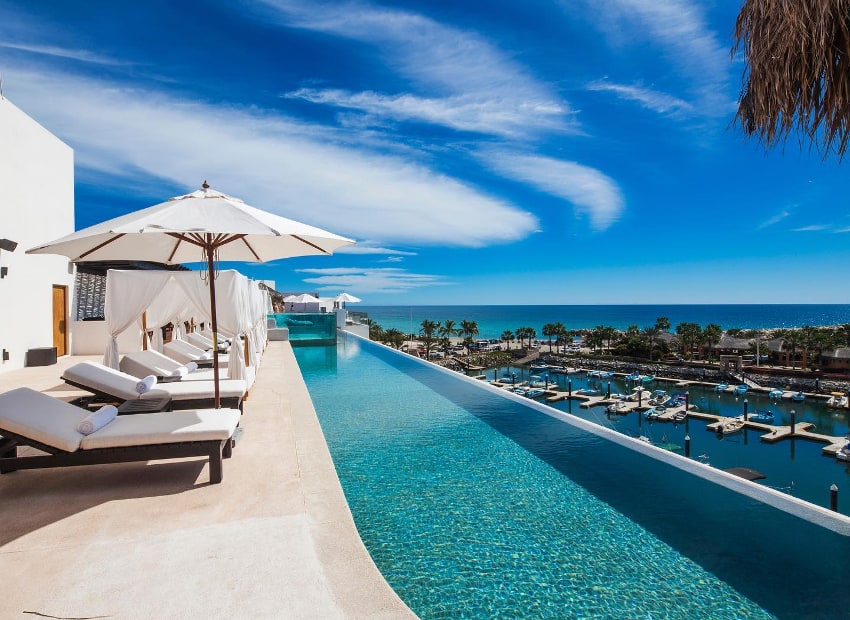
A view from El Ganzo hotel in San José del Cabo, Baja California Sur (Facebook)
Many didn’t know each other existed, but they are already collaborating on future events and pop-ups together.
MA:
How has the Mexican art scene changed in the two decades since you founded Zona Maco?
ZG:
In 2004, Zona Maco started with around 40 galleries. 90% were Mexican, mostly young local artists. Now we have more international galleries – probably 50/50. And this evolution has helped local artists develop their careers. Local artists no longer have to go to Europe to be discovered and galleries that started in small apartments have grown into bigger, better spaces.
MA:
Recently there’s been so much controversy around foreigners moving to Mexico City and making it more expensive for everyone – artists included. Do you think foreign arrivals are hurting the art scene in Mexico?
ZG:
I think it’s helping. Sometimes this has to happen to grow. Rents are rising, but artists and galleries sell more art. This year Zona Maco had over 55 museum groups from abroad visit with their board members. Twenty years ago, those board members would have never known these artists or considered acquiring their work for international museums. Artists would just stay local forever. Not anymore.
MA:
What does success look like now after already having achieved so much with Zona Maco?
ZG:
I’m very proud of the amazing team behind Zona Maco and the galleries, local artists, museums, and collectors who make it possible. But if we stay the same, it becomes boring – and that would no longer be a success. So we need to keep thinking outside the box to make it better every year.
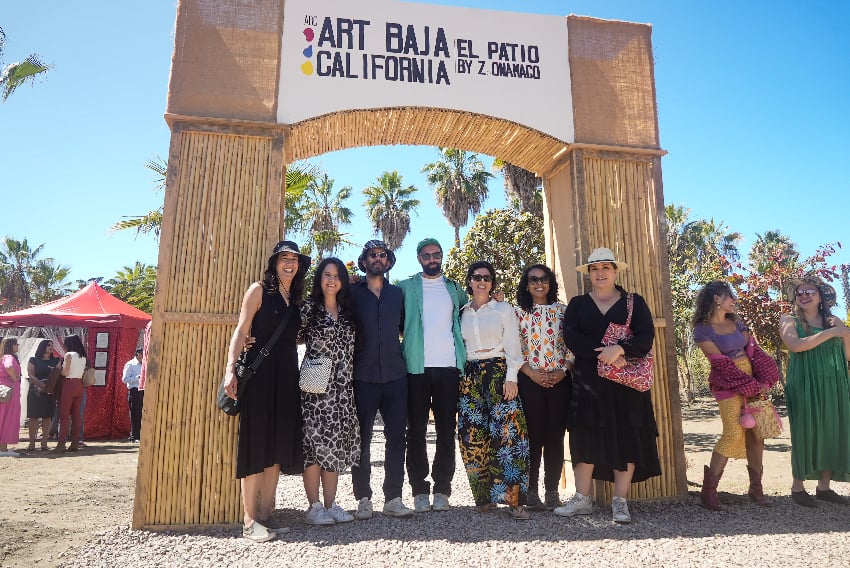
Curators of “El Patio” at Art Baja California. (Courtesy)
We have to use our imagination for ABC because we’re starting from scratch. For example, we were surprised by the high cost of shipping everything for “El Patio” to Todos Santos. So artists adapted and made their pieces in situ with local materials – which makes their work much more interesting and made our team sharper because it’s taken us out of our comfort zone.
And next year’s Zona Maco will be really special because it’s our 20th anniversary in February of 2024. We are planning some incredible events and we invite you all to celebrate with us.
Marko Ayling is a life-long traveler and the creator and host of Vagabrothers, one of the most trusted and popular travel shows on YouTube, with 1M+ subscribers worldwide. He now writes “The Missive” on Substack, a weekly dispatch of travel tales, reading recommendations, and curated cultural recommendations.
In his letter to the Chinese premier, AMLO said China could provide "invaluable" help by giving Mexico Information about when and where fentanyl is being shipped into the country. (lopezobrador.org)
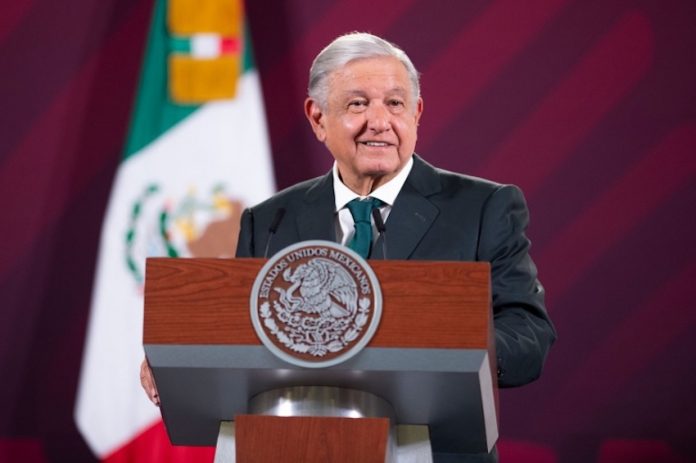
President López Obrador revealed Tuesday that he wrote to his Chinese counterpart Xi Jinping to seek his support in the fight against fentanyl.
Speaking at his regular morning news conference, López Obrador said he sent the letter after a group of United States lawmakers requested that he ask China not to send fentanyl to Mexico, the United States or Canada.
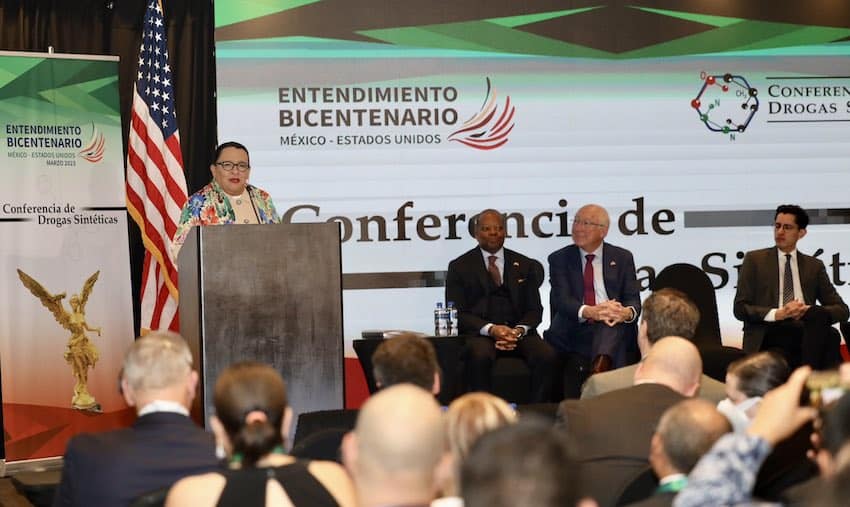
Mexico recently hosted a summit to discuss the prevention of the trafficking of synthetic drugs — but some U.S. lawmakers say Mexico isn’t doing enough. (@rosaicela_/Twitter)
“I told the lawmakers I’m going to intervene because we have a very good relationship with all the governments of the world, especially with the government of … China,” the president said before reading out his March 22 missive.
In the letter, López Obrador requested Xi’s “support and cooperation” in the fight against fentanyl trafficking, asserting that,“according to the information available,” the synthetic opioid is produced in Asia and “sold freely for export to Canada, the United States and our country.”
“… We turn to you, President Xi Jinping, to ask you for humanitarian reasons to help us control the shipments of fentanyl that may be sent from China to our country,” he wrote.
Information about who fentanyl is being sent to, the quantities being shipped, the vessels used to transport the drug and when and where shipments will arrive in Mexico from China would be “invaluable” as it would allow Mexican authorities to have “greater control” over the entry of the opioid, López Obrador told the Chinese president.
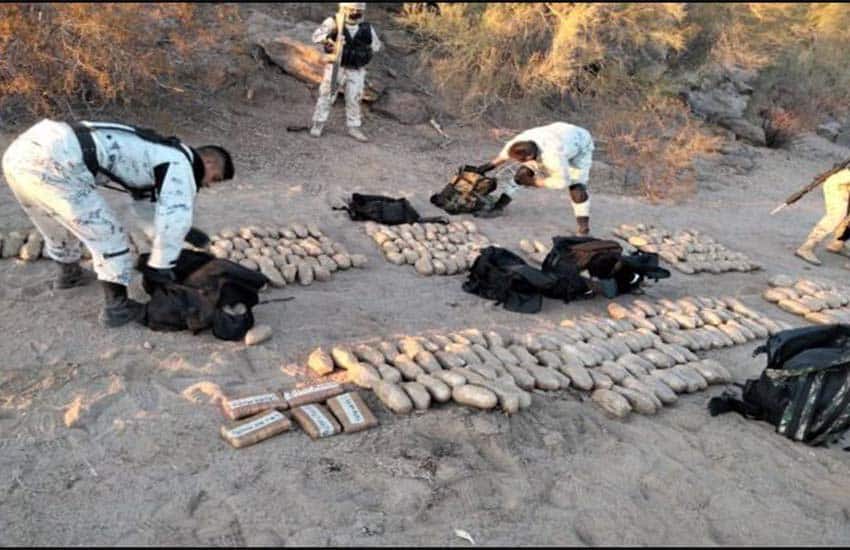
Fentanyl seizures are increasing, but Mexico is concerned that China is not preventing shipments of raw ingredients to make the drug from being exported across the Pacific. (Cuartoscuro)
“… Friend, president, we await your response with great interest. I’m sure we will have your assistance, as has always occurred.”
The president also wrote that fentanyl is “considered 50 times stronger than heroin” and acknowledged the high number of overdose deaths in the United States as well as the “high economic profitability” associated with the trafficking of the drug.
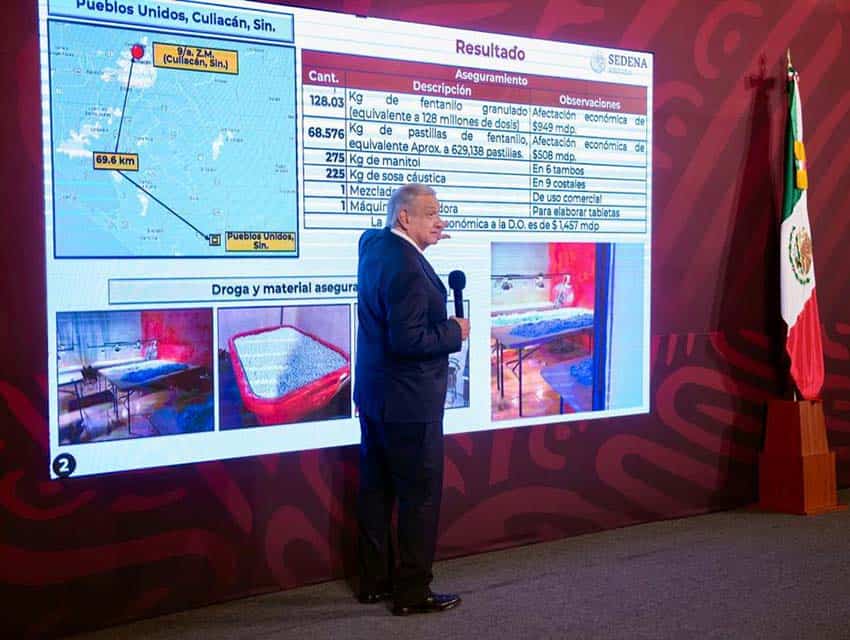
López Obrador highlighted Mexico’s efforts to seize fentanyl and asserted that only 30% of the illicit fentanyl consumed in the United States is smuggled across the Mexico-U.S. border.
“Nevertheless, in a deceitful and irresponsible way, some United States lawmakers have recently blamed Mexico for the misfortune they suffer in their country due to the use of fentanyl,” the letter said.
As deaths pile up from the opioid crisis in the United States, President López Obrador is facing greater pressure from the U.S. government to tackle fentanyl production in Mexico. (Photo: Government of Mexico)
“They have even gone so far as to say that if we don’t arrest the drug trafficking groups that operate in Mexico and bring this drug [into the United States], they could present an initiative in their Congress … [in favor of] the armed forces of the United States invading our territory,” López Obrador wrote before describing such a proposition as an “unacceptable threat.”
He did not mention whether Xi or the Chinese government had responded.
López Obrador and other federal officials have recently emphasized the government’s commitment to combating the trafficking of fentanyl as they seek to refute claims from some Republican Party lawmakers in the U.S. that Mexico is doing little to stop the drug flowing across the northern border.
Foreign Affairs Minister Marcelo Ebrard asserted Tuesday that Mexico “is the country that does the most against fentanyl.”
The government has also highlighted its anti-narcotics collaboration with United States authorities, and last week hosted U.S. officials who traveled to Mexico City for the U.S.-Mexico Synthetic Drug Conference.
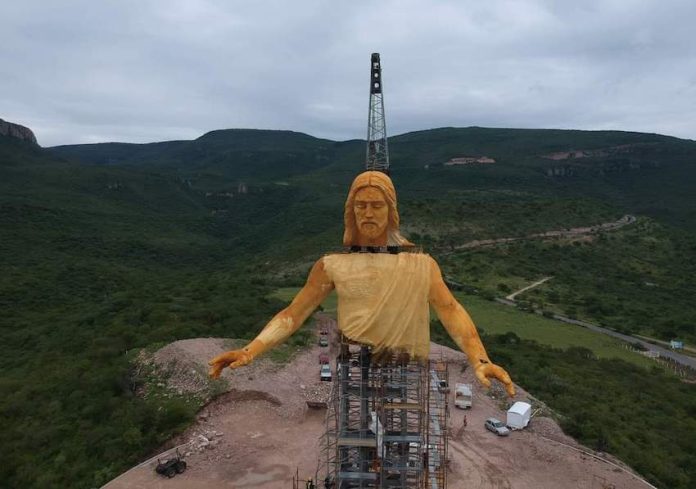
The statue, which was first announced in 2020, is now almost completed and will be unveiled on Easter Sunday. (@CruzTZacatecas)
The municipality of Tabasco, Zacatecas, is set to unveil the largest statue of Jesus Christ in Latin America.
Initially announced in 2020, the monument will be officially inaugurated on the Cerrito de la Fe on Sunday, April 9.
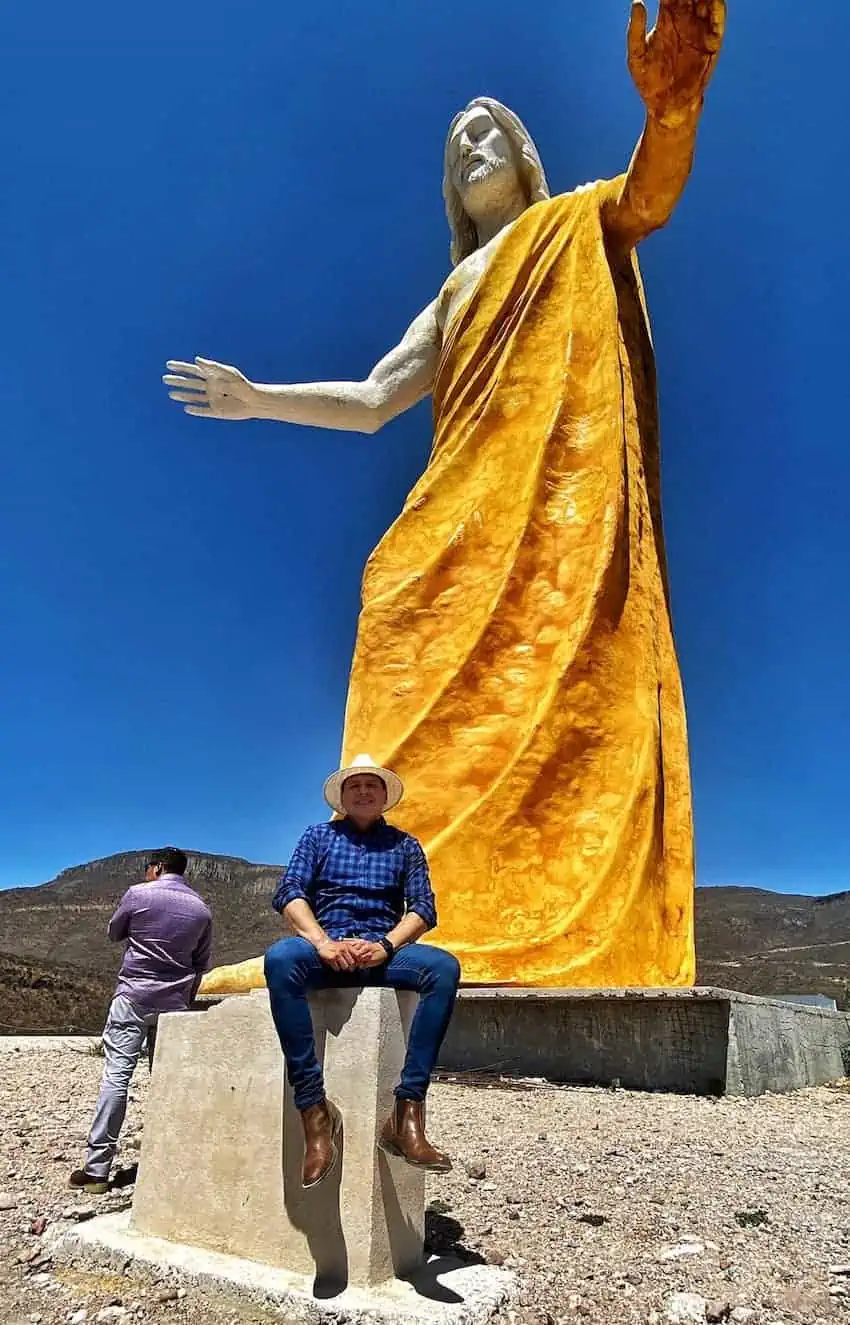
The statue in Zacatecas dominates the local landscape. (@xRODRIx/Twitter)
Measuring 31 meters, the colossal figure — named Christ of Peace — will be even larger than the iconic Cristo Redentor (Christ the Redeemer) in Rio de Janeiro, beating out Brazil’s landmark by a single meter.
Other giant statues of Christ in Mexico include a 28-meter statue in Aguascalientes, a 23-meter statue in Tijuana and a 22-meter statue in Torreón, Coahuila.
While the statue of Christ the Protector in the town of Encantado, Brazil, claims the title of tallest Jesus statue in the Americas, it is standing on top of a significant pedestal. The new statue in Zacatecas achieves its full 31 meters without any help at all.
“Very soon, this great monument is going to become, without a doubt, a tourist icon of Tabasco, of the Juchipila Canyon region and of the entire state of Zacatecas,” Tabasco’s mayor Gil Martínez said as he officially led the lighting of the new scenic illuminations at the foot of the statue. “We are proud to have it here.”
This baby Jesus statue is said to be the world’s largest and it is also found in Zacatecas. (Twitter)
As part of the unveiling ceremony, there will also be a concert by the Zacatecas Symphony Orchestra, officials said.
While the unveiling of the Christ of Peace is making headlines, this isn’t Zacatecas’ first enormous religious effigy: in 2019, a 6-meter statue of the baby Jesus was installed in the nearby town of Zóquite.
Of the 23,314 vascular plant species native to Mexico, anywhere from 3,000–5,000 are thought to have medicinal benefits. (Government of Mexico)
From time to time, I’m presented with a topic that transports me into a rabbit hole of investigation from which I emerge only days later. This is one of them.
Traditional plant medicine in Mexico is layered. To say I have even scratched the surface with the research for this article would be a gross understatement. But, I must pull myself out of the weeds (pun intended) to share my findings.
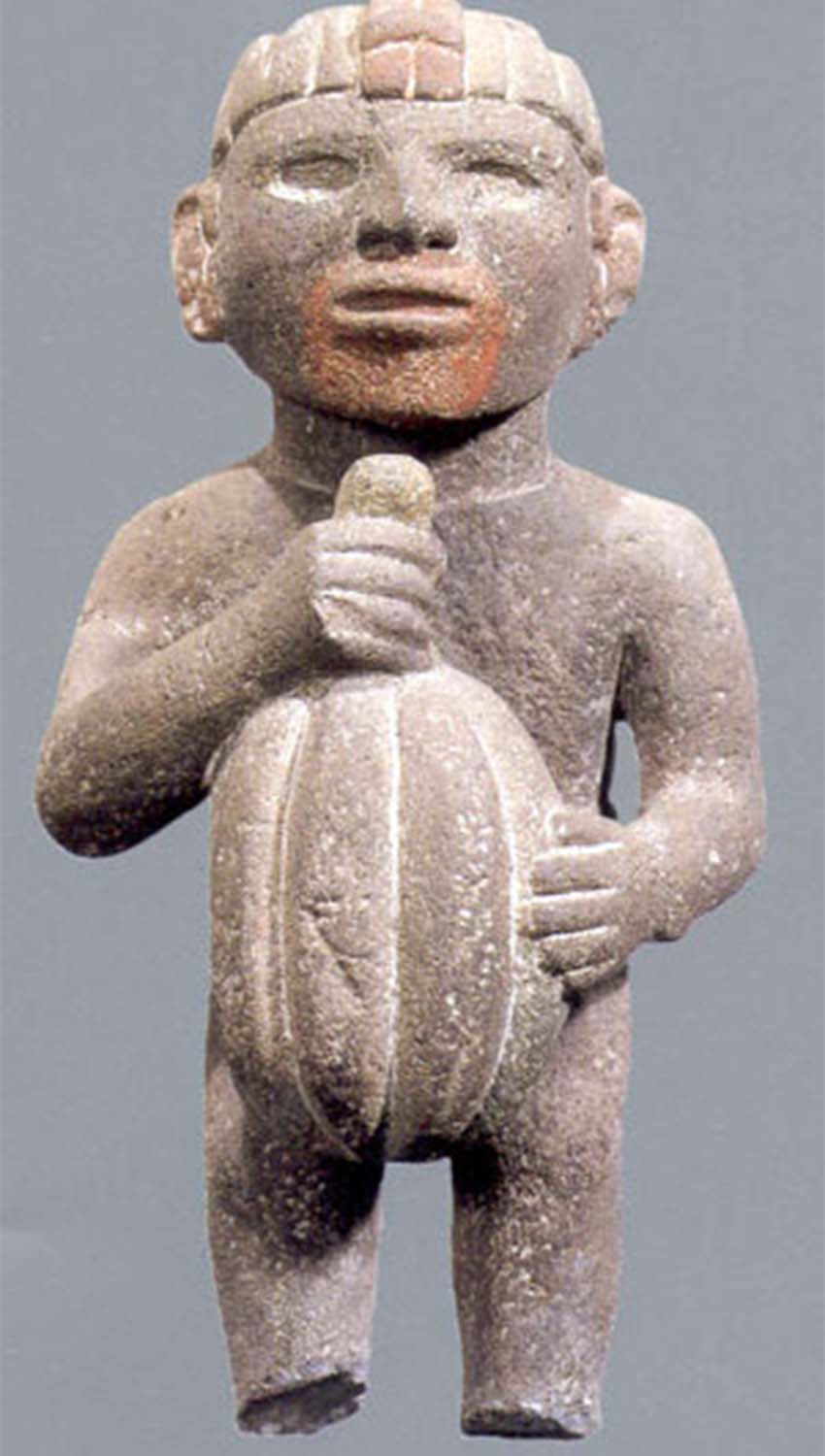
A Mexica sculpture carrying a cacao pod. Cacao and chocolate were both used medicinally by ancient indigenous cultures in Mexico. (Wikimedia Commons)
I’m not referring exclusively to psychedelics. This genre encompasses a much larger swath of the plant kingdom, nearly all of which can be traced back to the beginnings of Mesoamerican civilization.
Of the 23,314 vascular plant species native to Mexico, anywhere from 3,000–5,000 are thought to have medicinal benefits, according to the University of Texas at El Paso’s Herbal Safety website. Many, like the ones I’ve listed below, are still used today.
For the record: I am not a doctor, nor a scientist. Please find out more details on these herbs before deciding to use them at your own risk.
Mexican arnica
Not to be confused with European arnica, Mexican arnica still reaps similar anti-inflammatory benefits. For stomach issues and nervous disorders, it was traditionally ingested in a tea form. Today, it is commonly found as a tablet or cream applied topically to reduce swelling and inflammation.
Like its European counterpart, Mexican arnica is known for anti-inflammatory properties. (Biobotanica)
Aloe vera
Aloe, like leather bombers, is a forever trend. For centuries, it’s been used to improve digestion and treat burns. It’s now found in beverages, lotions and other over-the-counter skin-care products. Several Mexican states use the plant as a supplement for Type 2 diabetes.
Sarsaparilla (Mexican zarsaparilla)
Sarsaparilla was a Mesoamerican go-to for patients in need of an anti-inflammatory or an immunity booster. It’s also thought to improve liver function. You will most commonly find it today sold as a tea.
Mexican oregano
Oregano oil is a staple in most plant-medicine cabinets as an alternative to antibiotics. Mexicanoregano was, and is, used to fight respiratory illnesses and stomach ailments and promote overall healing. The Maya have been using it for centuries to cure or relieve patients of asthmatic conditions.
Damiana
Found in the driest regions of Mexico, damiana boasts a wide variety of health benefits for your intestinal tract and bladder. It’s even used as an antidepressant. However, damiana’s real draw is its aphrodisiac qualities, a fact long known by the Maya.
Copal
You probably know very well that distinct, smoky scent of burning copal used to cleanse unnecessary energies from your body or home. For thousands of years, the coveted tree resin was also used as a Mesoamerican medicine to cure toothaches, headaches and diarrhea.
Maize
A self-proclaimed tortilla addict, I was disappointed to learn medical maize isn’t used as often today as it was in the past. Everyone from the Mexica (Aztec) to the Maya used corn to cure fevers, fatigue, ulcers and kidney problems.
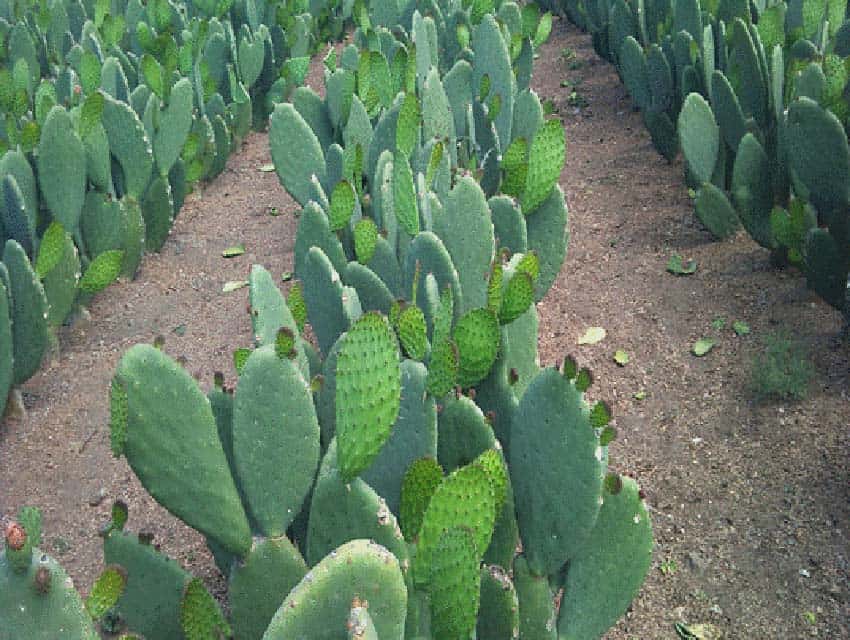
Nopal (prickly pear cactus) has been consumed for centuries in Mexico. It may be helpful for conditions like diabetes and inflammation. (Government of Mexico)
Nopal
Joint pain? Nausea? Diabetes? If you like to “eat your medicine,” you’ll be delighted to learn that nopal cactus was used traditionally to cure such ailments. Modern alternative medicine practitioners tout the prickly pear’s ability to lower inflammation and regulate blood glucose levels.
Chayote
Originally used medicinally by the Mexica, we now know that the compounds in chayote squash promote heart health and control blood sugar. It’s often suggested as an anti-arteriosclerosis.
Cacao
Its use to treat fatigue, promote weight gain and improve digestion among the Mexica and Maya has been well documented by researchers. But why are cacao ceremonies all the rage these days?
Aside from mood-boosting phenylethylamine and high levels of antioxidants, some indigenous peoples of Mexico believe that the deity Quetzalcoatl brought it from the gods.
“[It’s] the blood of the earth, through which we can obtain strength, sensitivity and joy at being alive,” says Giovanna Navarro, a Mexico City native who has been leading cacao ceremonies for five years.
Okay, okay. You’re itching to hear a bit about the trippy stuff, aren’t you?
Not one to disappoint, let’s continue into the field of hallucinogenic plant medicines, better known as psychedelics.
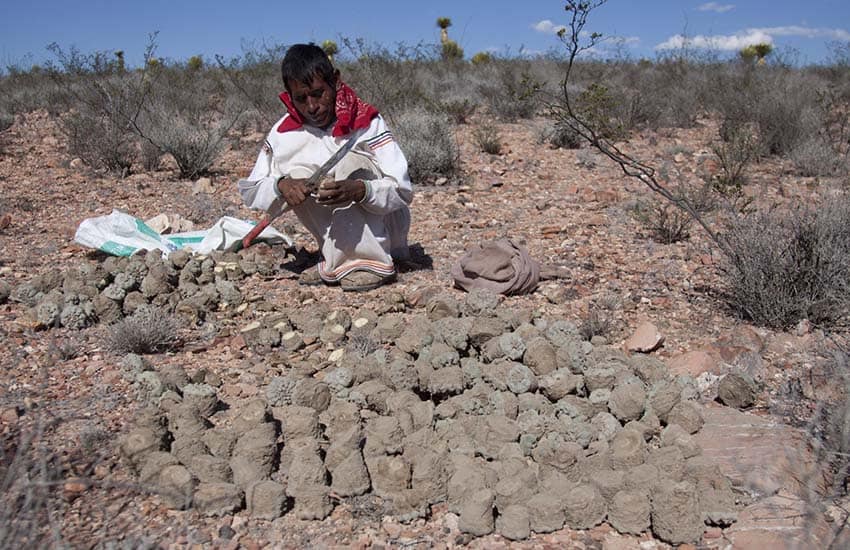
An indigenous member of the Wixárika people collects peyote in rural San Luis Potosí state. The natural hallucinogen has long been used by the Wixárika medicinally, religiously and for rituals of daily life. (Iván Stephens/Cuartoscuro)
Peyote
A cactus native to Northern Mexico that contains mescaline, peyote is a naturally- occurring psychoactive alkaloid. (I mentioned I’m not a scientist; that sentence made me feel like one.)
Its use can be traced back more than 5,000 years as both a hallucinogen and enema for fever reduction. Eating it raw can be highly nauseating, so it’s common to ingest it as a powder. Peyote is used today to increase creativity, awareness, euphoria and assist in chronic pain relief.
Salvia divinorum
Also known as la hierba de la pastora (the shepherdess’ herb) Salvia divinorum is grown in Oaxaca’s Sierra Madre Oriental and used ritualistically by the Mazatec. Medicinally, it’s said to improve stomach ailments like “swollen belly” and diarrhea, as well as anemia and headaches.
It’s usually smoked or taken as a tincture and is so powerful that high doses can lead to complete loss of physical control. The trip is said to be colorful, light and full of laughter when taken properly.
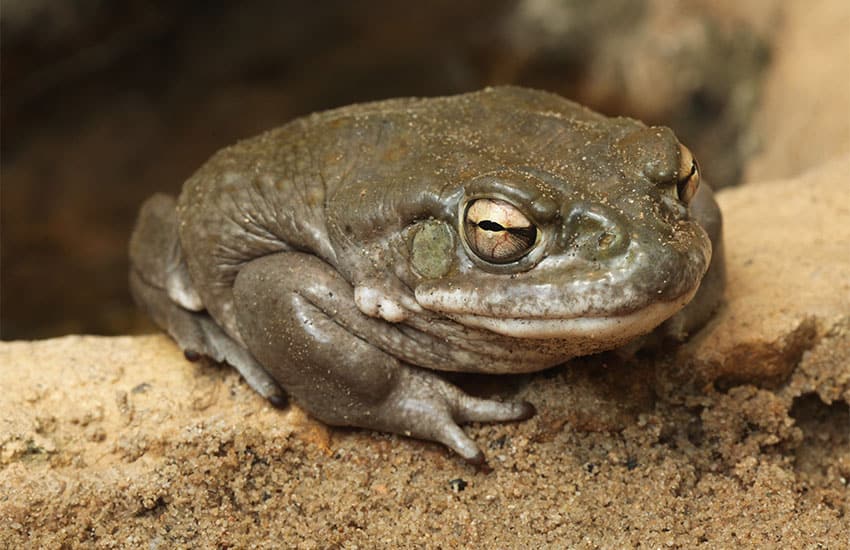
The use in Mexico of the bufo alvarius, or the Colorado river toad, dates back as far as the Olmec period. (depositphotos.com)
Bufo alvarius
Not a plant, but natural nonetheless. The Bufo alvarius (Colorado river toad) is native to the state of Sonora, and it was used as far back as the Olmec period. Its skin secretes a powerful substance with high concentrations of 5-MeO-DMT, a substance that some believe is produced in the human pineal gland during birth, death, positive moods and REM sleep. It has not yet been scientifically proven to be present in humans, though animal studies have shown that trace amounts can be found in rats.
This medicine “stimulates the immune system and triggers healing by eliminating the emotional root of disease”, according to Emmanuele Rodríguez (IG @mandalacafe_), an ancestral medicine therapist in Mexico City.
The substance is crystallized and smoked in sessions lasting up to 15 minutes.
Note: If you plan on experimenting with psychedelics of any kind, please talk to a professional and please do so in the presence of an experienced practitioner.
Bethany Platanella is a travel and lifestyle writer based in Mexico City. With her company,Active Escapes International, she plans and leads private and small-group active retreats. She loves Mexico’s local markets, Mexican slang, practicing yoga and fresh tortillas. Sign up for her (almost) weeklylove letters or follow her Instagram account,@a.e.i.wellness.
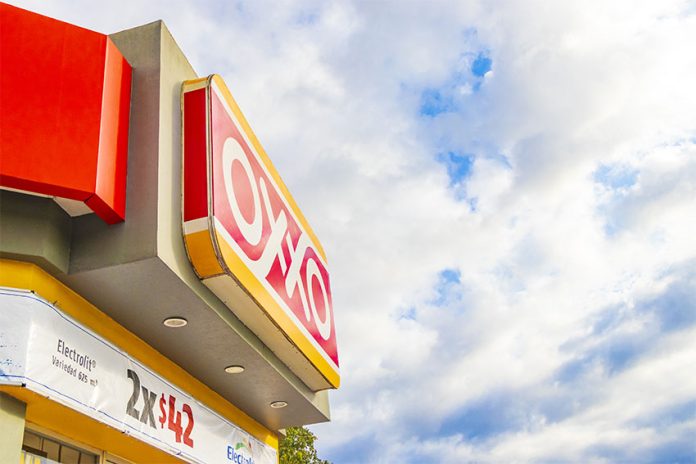
The conglomerate, best known for ownership of convenience store chain Oxxo, has taken further steps into the fintech sector with this acquisition.(Depositphotos)
FEMSA, the Coca-Cola bottler that owns the Oxxo convenience store chain, announced it has successfully closed on the acquisition of Mexican fintech startup NetPay. FEMSA had originally announced its intention to purchase the company in November.
NetPay, founded in 2008, offers payment services and solutions to micro, small and medium-sized businesses, such as payment terminals and electronic wallets. The company is based in Monterrey.
NetPay has offered digital payments services in the Mexican market since 2008. (@NetPayMX/Twitter)
According to a FEMSA statement sent to the Mexican Stock Exchange (BMV) in November, the acquisition will boost the company’s share in the fintech segment and the digital solutions markets as part of the company’s three strategic pillars – its Business-to-Business (B2B) division, Oxxo’s proprietary fintech Spin and the Oxxo Premia loyalty program.
FEMSA’s participation in NetPay dates from 2019, when the company acquired a minority equity stake in the startup. To buy the outstanding shares, the company closed a purchase deal with NetPay’s majority shareholders last year.
José Antonio Fernández Garza, CEO of FEMSA’s technology division Digital@FEMSA, said in November that the acquisition would help the company in its objective to transform “the relationship between the people of Mexico and their money,” and to help “independent entrepreneurs to strengthen their operations and increase their profitability.”
In 2021, FEMSA entered the fintech sector with their Spin by Oxxoservice, which can be used to send and receive money from other Spin accounts, in addition to regular bank accounts and non-bank users. In February, the app had 5 million users and the company estimates it will reach up to 10 million this year.
There are over 20,000 Oxxo stores across Mexico and their loyalty program has 26 million users, according to analyst Marisol Huerta at Ve por Más bank in an interview with La Jornada newspaper.
FEMSA announced in February its decision to exit the brewery industry by selling its Heineken shares, prioritizing instead investment in the company’s most profitable businesses, such as the Oxxo convenience stores and digital services.
“Oxxo has managed to position itself as one of the main retail companies in the country,” said Huerta. “If there’s potential, they [FEMSA] always go after new businesses.”
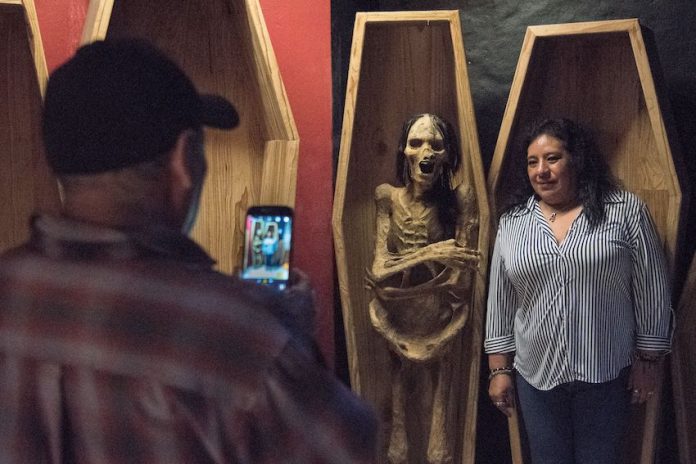
The mummies were displayed as a part of the
Guanajuato state stall at the Tianguis Turístico in Mexico City. (Mario Jasso/Cuartoscuro)
“Watch out for those mummies!”
That’s pretty much what experts from Mexico’s National Institute of Anthropology and History (INAH) were screaming last week after a traveling display of six mummies from Guanajuato was presented in Mexico City.
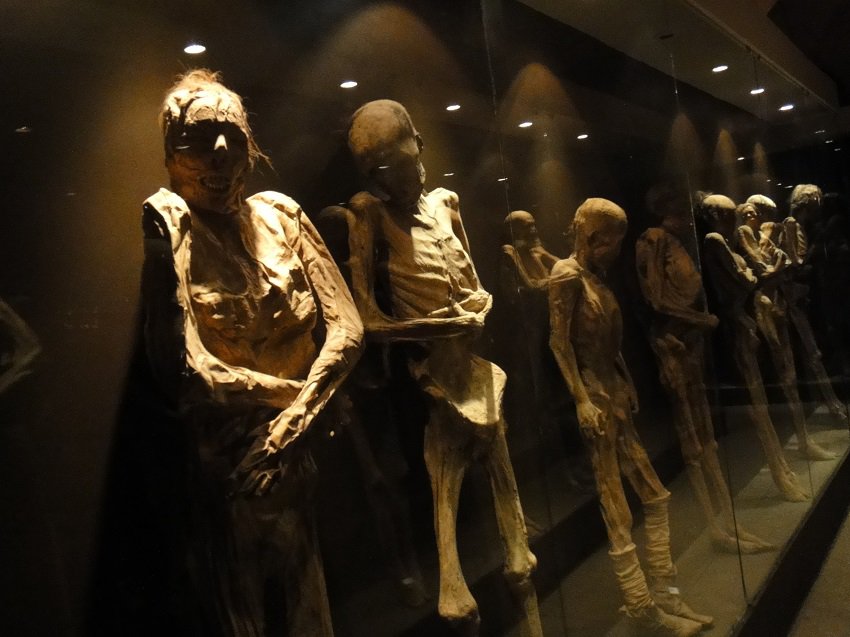
The Guanajuato mummies date back to the 19th century, and were preserved in the mineral-rich soil of the state. (ReyungCho/Wikimedia)
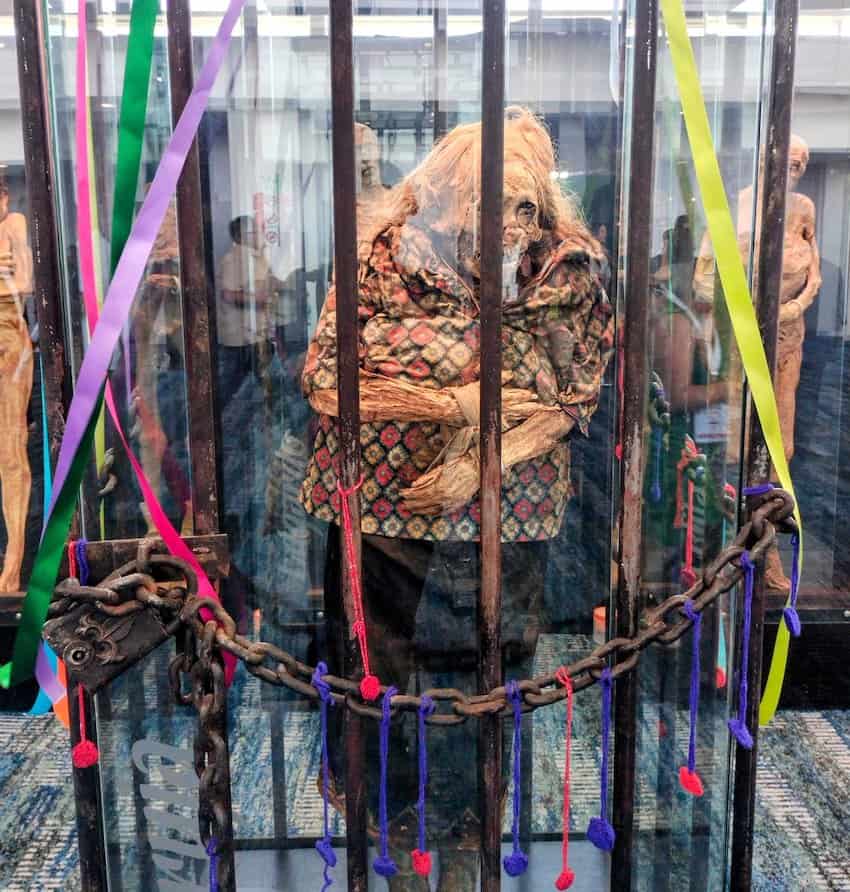
The mummies were displayed inside glass cases at the Tianguis Turístico, a four-day tourism fair, but officials from INAH expressed concerns that the 190-year-old corpses could pose a public health risk, especially since one of them appeared to have fungal growth.
INAH issued a statement on March 31 distancing itself from a decision by the state government of Guanajuato to display the mummies, saying it had not been consulted about the transfer and handling of the bodies and questioning whether the glass cases were airtight.
The mummies were reportedly viewed by more than 15,000 people during the 47th edition of the fair — Mexico’s biggest tourism industry event — held at the Centro Citibanamex convention center from March 26 to 29.
“It is even more worrisome that they are still being exhibited without the biohazard safeguards needed for the public,” the institute wrote, alluding to the dozens of corpses on permanent display at the Mummy Museum in the city of Guanajuato (which is not operated by INAH) — a visit to which is perhaps one of the most macabre experiences in the country.
Some have expressed concern about the ethics of using corpses as an advertisement for tourism. (@aliasLIMBO/Twitter)
Upon seeing published photos of the six traveling mummies, INAH stated, officials observed that “at least one of the corpses on display, which was inspected by the institute in November 2021, shows signs of a proliferation of possible fungal colonies.”
In general, added INAH, the Guanajuato mummies should “be carefully studied to see if these represent signs of risk for the cultural patrimony, as well as for those who handle them and come to see them.”
The preserved corpses were unintentionally mummified when they were buried in crypts in Guanajuato’s dry, mineral-rich soil, reportedly in the 1830s. Some still have hair, leathery skin and their original clothing.
They were exhibited at the tourism fair without authorization from INAH, the agency stressed, although Guanajuato mayor Alejandro Navarro said he received thanks for the display from Miguel Torruco, Mexico’s tourism minister.
The mummies began to be dug up and put on display in the 1860s because their families could no longer pay a local “perpetual burial” fee.
“This may be the most important exhibit on Mexican culture in the last 30 years,” Martina Guzman, the exhibition’s content developer, said at the time.
García Luna was convicted by U.S. prosecutors of international cocaine distribution, among other charges. His attorneys have been granted more time to pursue potentially favorable new evidence they say has come to light since the conviction in February. (File photo by Tercero Diaz/Cuartoscuro)
A federal judge in the United States has agreed to postpone the sentencing of former security minister Genaro García Luna, who was convicted on drug trafficking charges in February.
Judge Brian M. Cogan of the United States District Court for the Eastern District of New York granted defense lawyers’ request for a three-month adjournment for posttrial motions and the sentencing of their client, who was Mexico’s security minister in the 2006–2012 government led by former president Felipe Calderón and head of the now-defunct Federal Investigation Agency before that.
Juez Brian Cogan aceptó pedido de abogados de Genaro García Luna, amigo, asesor, confidente, mano derecha y Secretario de Seguridad Pública de @FelipeCalderon de aplazar 3 meses la fecha de su sentencia que ahora será el próximo 27 de septiembre. pic.twitter.com/HQUKnEYFeH
US federal judge Brian M. Cogan granted García Luna’s attorneys more time to pursue new evidence leads that could support planned motions requesting an acquittal and/or a new trial.
García Luna, who was found guilty of colluding with the notorious Sinaloa Cartel and lying to U.S. authorities, will now be sentenced on Sept. 27. He faces a maximum sentence of life imprisonment.
Defense lawyers, including the ex-official’s lead attorney César de Castro, wrote to Cogan on Monday to request the postponement so as “to permit the defense to continue developing evidence in support of a potential Rule 33 motion.”
Rule 33 in the U.S. Federal Rules of Criminal Procedure allows a court to grant a new trial “if the interest of justice so requires.”
De Castro and his colleagues wrote that since the guilty verdict was reached on Feb. 21, “several individuals, including former law enforcement officials, have contacted us with potential new evidence favorable to the defense that could result in the filing of a Rule 33 motion in the short term.”
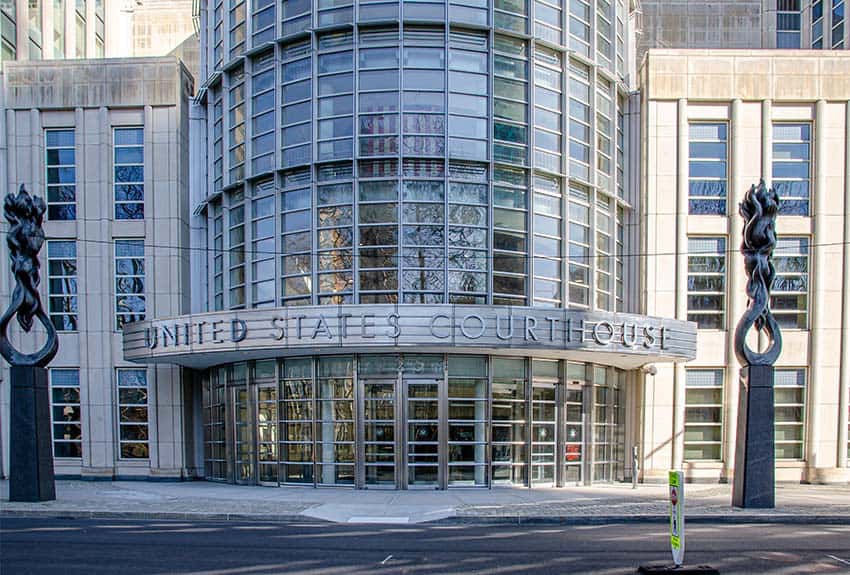
Genaro, who remains in custody, was convicted in U.S. District Court in the Eastern District of New York, seen here. (Shutterstock)
“Following these numerous substantial leads, potentially filing a Rule 29 [acquittal] motion, and preparing for significant sentencing advocacy is too difficult,” they wrote.
“Rather than proceed with Mr. García Luna’s sentencing and initiation of an appeal, which would divest the Court of jurisdiction to hear the motion until the Second Circuit granted a motion to remand the case to Your Honor … the appropriate use of resources would be to simply adjourn the dates as we request,” the letter continued.
“After all, the government is not prejudiced in any way — Mr. García Luna is not at liberty and will remain detained.”
Under the new posttrial timeline, any application for a new trial must be submitted by July 7.
García Luna’s conviction in February came more than three years after he was arrested in Dallas, Texas, on charges that he allowed the Sinaloa Cartel to operate in exchange for multimillion-dollar bribes.
A jury in the United States District Court for the Eastern District of New York found the former security minister guilty of engaging in a continuing criminal enterprise, international cocaine distribution conspiracy; cocaine distribution and possession conspiracy; cocaine importation conspiracy; and making a false statement on an application for U.S. citizenship.
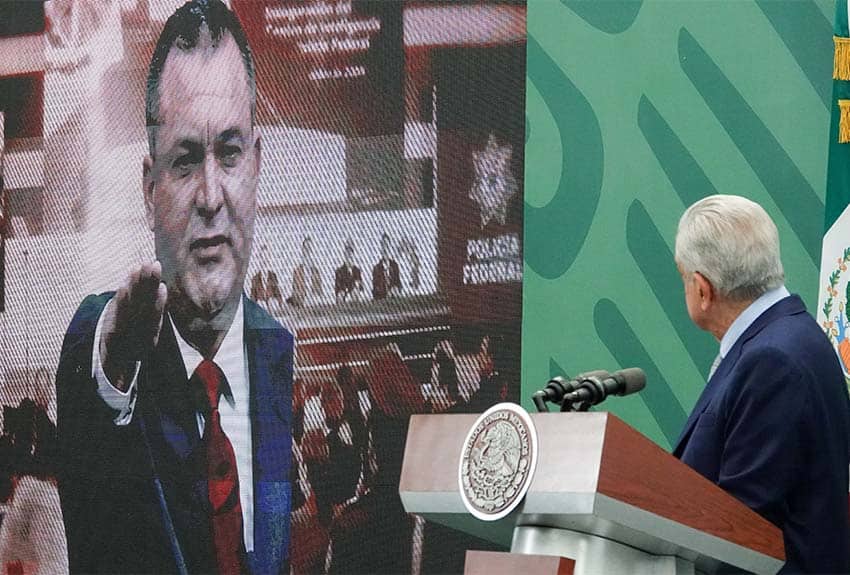
President López Obrador, seen here at a press conference on March 9, has used the García Luna trial to support his assertions that during the ex-security minister’s tenure under President Felipe Calderón, Mexico was a “narco-state.” (Galo Cañas Rodríguez/Cuartoscuro)
The unanimous decision came after an almost month-long trial that included damning testimony from cartel figures such as Jesús “El Rey” Zambada, brother of current Sinaloa Cartel leader Ismael “El Mayo” Zambada.
President López Obrador has used the conviction to support his claim that Mexico was a “narco-state” during the presidency of Calderón.
The former president has denied having any knowledge of García Luna’s criminal activities, and defended his integrity and crime-fighting record in a statement issued in response to the conviction of his security minister.
De Castro asserted in his closing statement at the trial that the government’s lack of evidence against his client was “shocking.”
“They’re asking you to condemn a man solely on the words of some of the most notorious and ruthless criminals this world has ever seen,” he told the 12-person jury.
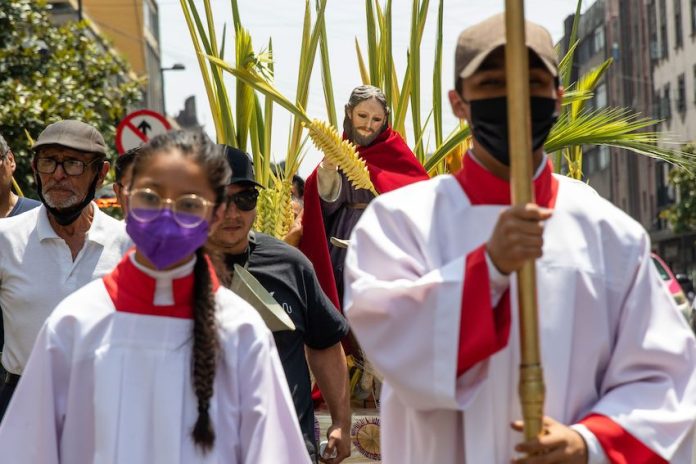
In many places across Mexico, Holy Week, which marks the lead up into Easter Sunday on April 9, kicked off with Palm Sunday processions. According to Christian tradition, Palm Sunday is when Jesus entered Jerusalem. (Moisés Pablo/Cuartoscuro)
Holy Week (Semana Santa), the week leading into Easter Sunday, is an important time of year in Mexico. Visitors to the country might be surprised to discover that many businesses and public institutions will be closed on Thursday April 6 and Friday April 7 — Holy Thursday and Good Friday, and that Mexicans will be celebrating not only during Semana Santa but the week starting after Easter Sunday, known as pascua.
Although not government-sanctioned holidays, many Mexicans traditionally take at least Holy Thursday and Good Friday off, giving themselves an unofficial puente (long weekend). As many Mexicans will take these days off anyway, many businesses simply close for the long weekend — maybe going on vacation themselves. You may find a sign on your favorite restaurant or local store saying “closed for Semana Santa.” Don’t expect them to be open until at least Easter Monday.
With schools out for two weeks, many families look to spend time making the most of their vacations. (Elizabeth Ruiz/Cuartoscuro)
Even many banks have announced that they will be closed this year on April 6 and 7. ATMs will remain in service, however.
As usual, the Education Ministry (SEP) has given students a two-week break, which already started Monday and lasts through April 14. (Some private schools not affiliated with SEP may follow an alternative calendar.) This means families who can afford to take off Holy Week or even both weeks for beach vacation or travel abroad.
Spending Holy Week with family is also traditional, and families often travel around the country to do so, meaning that this time of year sees high volumes of traffic on roads and at airports, so plan accordingly.
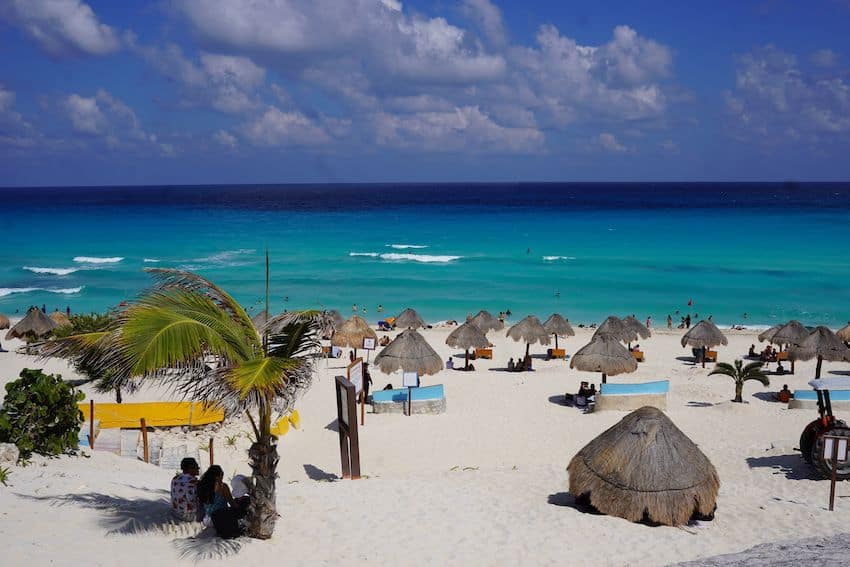
If you beat the traffic, however, you can look forward to a country that is fully in the holiday spirit, with beaches, monuments and parks likely to be full of vacationers looking to make the most of a rare week off work.
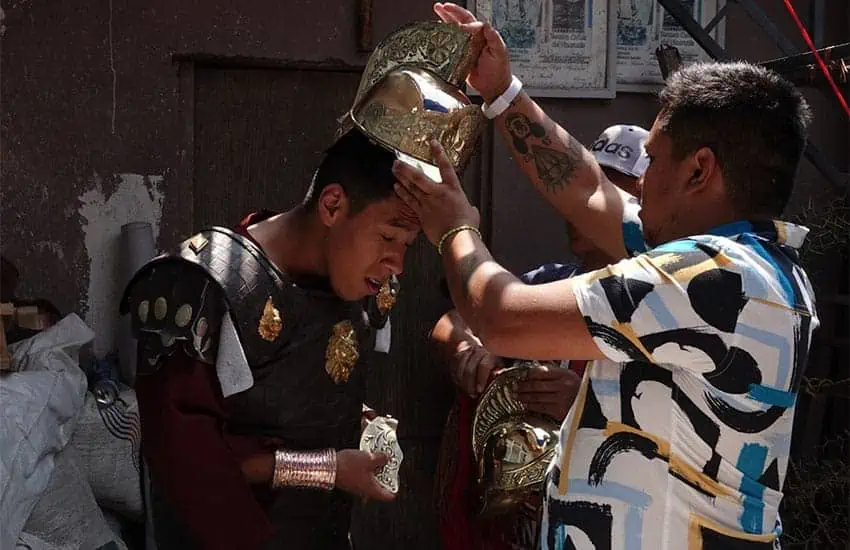
A young man prepares to play an ancient Roman soldier in a Holy Week procession later this week in Itzapalapa, Mexico City. The neighborhood will mark its 180th consecutive iteration of the event this week. (Graciela Lopez Herrera/Cuartoscuro)
Semana Santa can also be a perfect time to visit a normally busy place, like Mexico City for example — exactly because residents have left the megalopolis.
Whether you stay at home or travel yourself, wherever you are, Holy Week festivities will be taking place across the country in your area. They started already on Sunday, in fact, which was Palm Sunday.
According to Catholic tradition, the day marks Jesus’ entrance into Jerusalem, and so in town squares all over Mexico, there are processions recreating this biblical event, and vendors often sell palm fronds and all sorts of food, souvenirs and toys to visiting tourists or people-watching locals.
While many Mexicans will spend Semana Santa reclining on a beach, for those foreigners looking to immerse themselves in Mexican culture, there is a lot to discover this week, as the nation celebrates.
From elaborate processions reenacting the Stations of the Cross to the devout making intense public displays of faith, to fireworks fueling sputtering castillosand “exploding” Judases, there will likely be something interesting to see in your town square on many days of Holy Week.
Normal hours for most businesses and institutions will resume on Easter Monday, April 10.