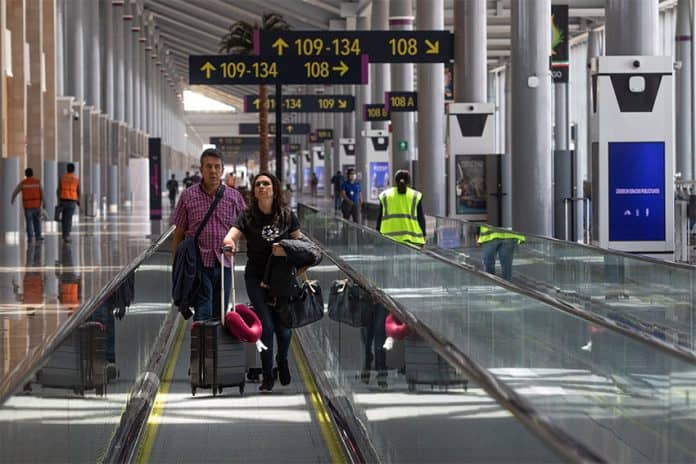
Passengers make their way through the new Felipe Ángeles International Airport in May. (Moisés Pablo Nava/Cuartoscuro)
Passenger numbers at the Felipe Ángeles International Airport (AIFA) almost doubled between September and October and have increased almost 400% since the new facility’s first full month of operations earlier this year.
A total of 173,873 passengers used the México state airport in October, a 90.9% increase compared to September.
The former figure is 397% higher than the 34,981 passengers who passed through AIFA in April. The airport, located about 50 kilometers north of central Mexico City, opened on March 21.
Much of the 90.9% month-over-month increase in passenger traffic came from higher passenger numbers on flights between AIFA and Cancún and AIFA and Guadalajara.
Aeroméxico, Volaris and VivaAerobus offer flights on AIFA’s most popular routes, which connect to Cancún and Guadalajara. (File photo)
Passenger numbers on each of those two routes increased by more than 25,000 in October compared to September, and thus 61% of the total increase in airport users came from people flying to and from the Quintana Roo resort city and the Jalisco capital.
Aeroméxico and Volaris both fly to Cancún from AIFA, while those two airlines and Viva Aerobús operate between the new airport and Guadalajara.
Among the other routes that saw higher passenger numbers in October were AIFA-Monterrey and AIFA-Mexicali.
Aeroméxico, Volaris and Viva Aerobús have all recently increased the number of flights they operate to and from AIFA, which was built by the army on an Air Force base in the municipality of Zumpango. They have been forced to reduce flight numbers at the Mexico City International Airport because the number of operations per hour has been cut there by 15% for the winter season.
One challenge the airport faces as it seeks to maintain growth in passenger numbers is keeping intruders out. Earlier this year, AIFA awarded a 26.4-million-peso (about US $1.4 million) contract to a company to control “harmful fauna” in and around the airport, according to a report by the news website Infobae.
Servipro de México’s job is to “drive away or even kill animals such as mice, ants, flies, mosquitos, cats, dogs and wild birds that represent a risk to the operation of aircraft on the take-off and landing runways,” Infobae reported.
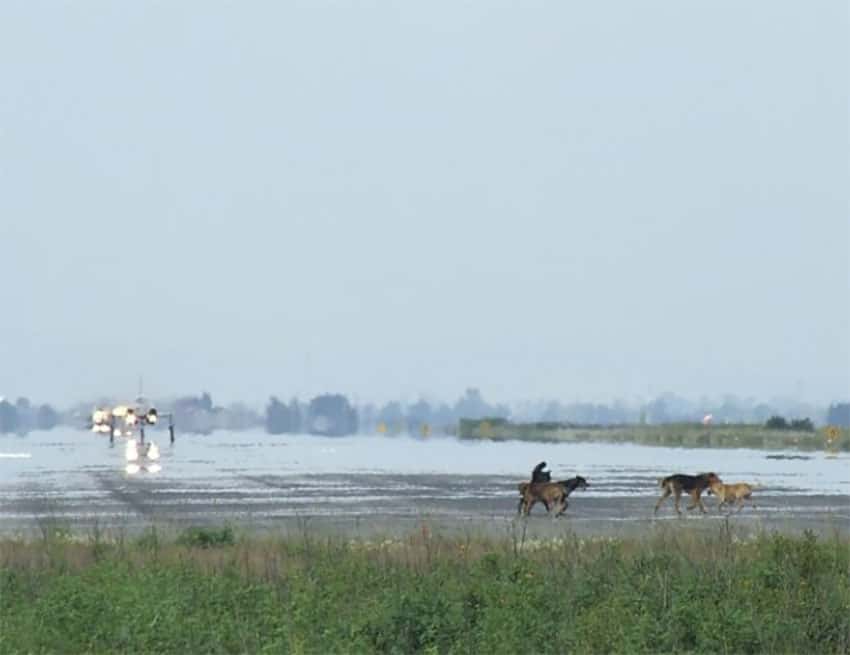
However, the company’s work failed to keep stray dogs off the runway earlier this week. A passenger flying into AIFA from Oaxaca on Monday reported on Twitter that pilots on a Volaris plane had to abort their landing due to the presence of dogs on the runway.
AIFA officials have reportedly struggled to keep the runways clear of stray dogs and other animals. (Twitter @mrxmx2019)
“We had to do a go-around … because the control tower informed the pilots that there were dogs on the runway,” wrote the Twitter user Chip Diamond, who shared a video of the aborted landing.
“This is the level of security travelers have at AIFA,” he added.
He also shared an audio clip in which a person — purportedly a Volaris pilot — remarked in English that “the tower reported some dogs on the runway.”
AIFA hasn’t publicly commented on the presence of canine intruders, but the dogs were reportedly captured by airport personnel and transported to an army-run shelter called Los Perritos de Santa Lucía, or The Doggies of Santa Lucía.
President López Obrador still has a 55% approval rating, although a poll by the newspaper El Financiero said that number slipped slightly since a month ago. (Photo: Presidencia)
Four years after taking office, President López Obrador has an approval rating of 55%, according to the latest poll conducted by the newspaper El Financiero.
However, only 41% of those polled described the first four years of his government as a success and just 31% believe that Mexico is on the right track under AMLO’s leadership.
El Financiero polled 1,100 adults across all 32 federal entities for the survey, and found that 55% approve of the work López Obrador is doing as president.
That’s a decline of one point compared to the newspaper’s previous poll, conducted a month earlier in October. The percentage of respondents who disapprove of the president’s performance rose by one point to 44%.
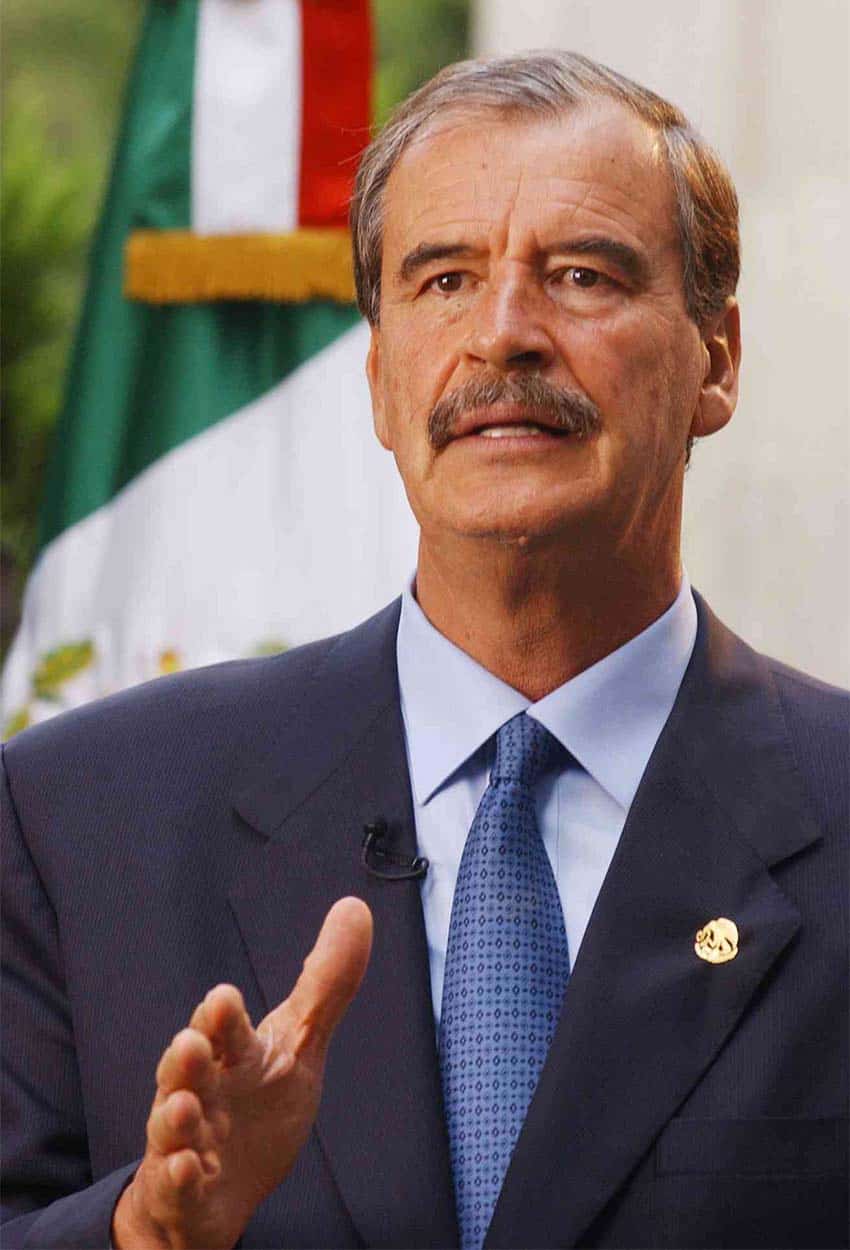
Although AMLO’s approval rating is strong, he actually falls below the approval ratings of other recent presidents two thirds of the way through their terms, including Vicente Fox, Felipe Calderón and Carlos Salinas. (Photo: Government of Mexico)
The political issue that attracted the most attention last month – during which the latest poll was conducted – was the federal government’s plan to overhaul Mexico’s electoral system via a constitutional bill.
Among other objectives, the bill seeks to disband the National Electoral Institute (INE) and state-based electoral authorities and replace them with one centralized body.
Just under half of those polled by El Financiero – 48% – said they approved of the protests in defense of the INE, while 45% said they disapproved.
Asked about the AMLO-led “counter-march,” 45% said they approved, and the same percentage of people indicated the opposite. The remaining 10% didn’t offer an opinion.
In a lengthy address after Sunday’s march, López Obrador enumerated 110 “actions and achievements” of his government during its four years in office. The president says he is leading a “fourth transformation” of politics and public life in Mexico, and a majority of poll respondents – albeit a slim one – agree with him.
Asked to choose between two different descriptors to sum up the first four years of the López Obrador-led government, 52% opted for “transformation,” while 34% selected “more of the same.”
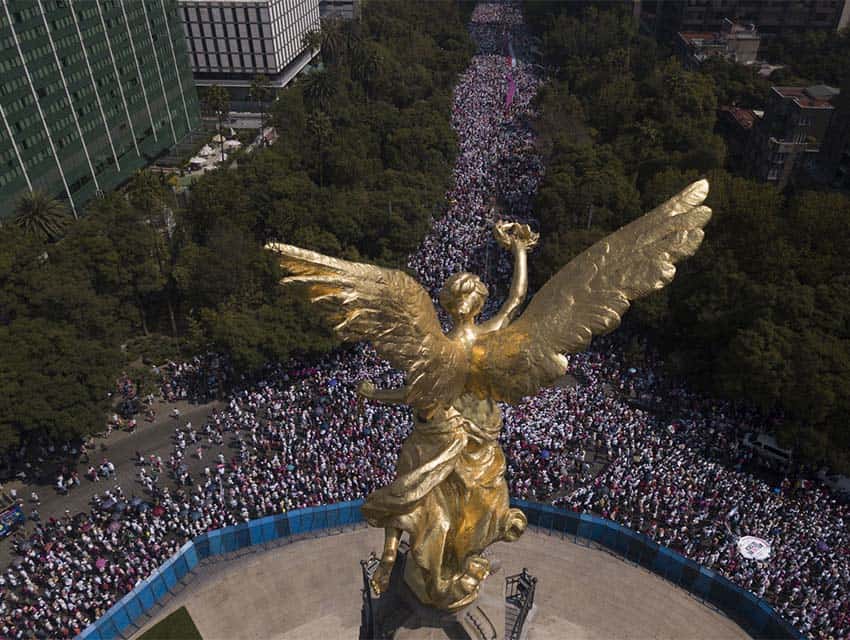
Marches to protest AMLO’s proposed electoral reform saw heavy turnout in Mexico City and many other cities across the country. A slight majority in El Financiero’s poll, 48%, approved of the marches. (Moisés Pablo Nava/Cuartoscuro)
The remaining 14% of respondents declined to endorse either of those options.
While only 41% said that AMLO’s first four years in office were a success, that figure is 10 points higher than the 31% who described the period of governance as a failure.
Just under half of those polled – 49% – said that the federal government has offered “hope” over the past four years, while 33% asserted that it has led to “disappointment.”
The percentage of respondents who believe that Mexico is on the wrong track under López Obrador’s leadership increased one point to 34%, while the percentage of those who think the opposite declined three points to 31%.
El Financiero also asked the 1,100 respondents to offer opinions about three key infrastructure projects of the current government: the Felipe Ángeles International Airport (AIFA) in México state, the Dos Bocas refinery and the Maya Train railroad.
AIFA, which started operations in March, and the refinery on the Tabasco coast, which officially opened in July although it’s not yet refining oil, were seen as “very good” or “good” projects by 45% of respondents, while 44% offered the same opinion about the U.S. $10 billion Maya Train, which will connect cities and towns in five southeastern states and is slated to start running in 2023.
Just over one-third of respondents – 34% – said they had a “very bad” or “bad” opinion of AIFA, 29% said the same about the refinery and 37% condemned the Maya Train, whose construction has been opposed by residents of Mayan communities, environmentalists and others.
Asked to assess López Obrador’s personal attributes, 53% of those polled praised him for his honesty, while 51% expressed a positive opinion about his leadership skills. However, only 42% said he has shown he has the capacity to achieve results.
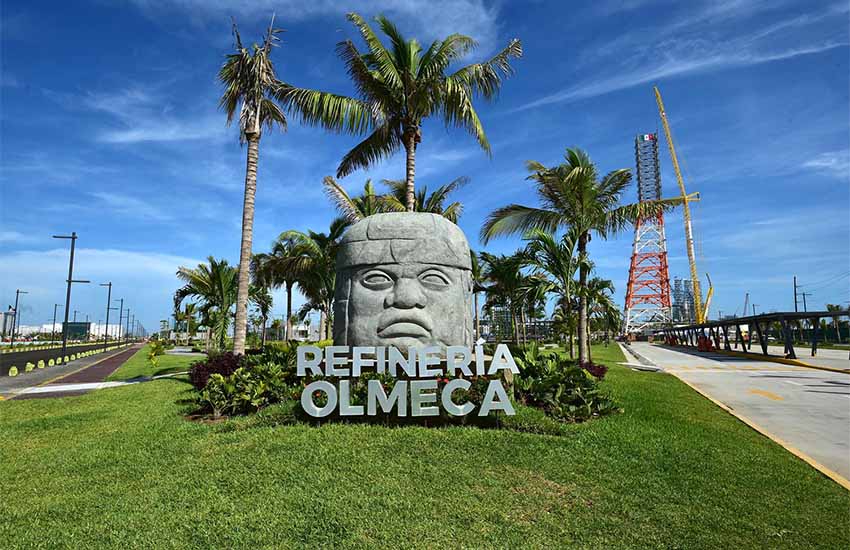
AMLO signature infrastructure projects the Olmeca Refinery in Tabasco and the Felipe Angeles Airport in México state were rated as “very good” or “good” by 45% of the poll’s respondents. (Presidencia)
The president’s approval rating four years after he was sworn in is more than double that of Enrique Peña Nieto at the same point in his 2012-18 presidency, but AMLO is not as popular now as Felipe Calderón, Vicente Fox, Ernesto Zedillo and Carlos Salinas were two-thirds of the way through their six-year terms.
López Obrador’s presidency will end on Oct. 1, 2024 – rather than Dec. 1 as has previously been the case – and a new president will be sworn in the same day.
Foreign Affairs Minister Marcelo Ebrard and Mexico City Mayor Claudia Sheinbaum are the leading contenders to secure the ruling Morena party’s candidacy for the 2024 presidential election, while the main opposition parties are expected to choose a common candidate from a large field of potential contenders.
In the immediate aftermath of the match, Martino said to reporters that his contract with El Tri “ended as soon as the referee blew the final whistle.”
Martino had coached the team since 2019. He will leave his position as coach following El Tri’s first group stage elimination in seven World Cups — that is, since 1978.
“I couldn’t say anything else because I am the only one responsible for this terrible disappointment and frustration.”
Mexican midfielder Luis Chávez said in a press conference that the team “didn’t understand” El Tata’s strategy of focusing on defense instead of attacking.
“Of course, I take responsibility. We were the ones playing.” However, he added that in the game against Argentina they “didn’t quite understand what he [Martino] wanted to do.”
Chávez, who scored Mexico’s second goal, was named best player of the match.
Sunset in Tulum, Quintana Roo, a popular destination in the Yucatán Peninsula. (Darren Lawrence via Unsplash)
In November, Oaxaca and the Yucatán Peninsula made it to two of the most important must-see travel destination lists in the editorial world — The New York Times “25 Travel Experiences You Must Have,” and “The 23 Best Places to Go in 2023” from Condé Nast.
First The New York Times published a list of the most extraordinary adventures a person should have in their lifetime in mid-November. The 25 experiences line-up, which is not a ranking and is grouped geographically, was selected by two writers, a chef, an architect, and a landscape photographer.
The list covers experiences related to food, history, religion, art, and architecture. However, it excludes hotels, because as participating writer Pico Iyer said, “hotels offer luxury and comfort, but they rarely touch my soul.” As such, a culinary experience in Oaxaca was ranked as part of the exclusive list.
Oaxaca cuisine is known for its diversity and complexity, in flavors and ingredients. (Restaurante Alfonsina Facebook)
Recommending readers to “Feast on the Cuisines of Oaxaca City,” the list says that thanks to the “growing awareness of Oaxaca’s cultural wealth and diversity […] it is possible for chefs with local roots to open revelatory new businesses in spaces as simple as they are unforgettable.” From fine dining restaurants to market stalls and relaxed mezcalerías, the list highlights that both the city and its countryside are filled with “culinary jewels.”
In Condé Nast’s annual ranking of the best places to visit, the Yucatán Peninsula was picked as a favorite by the magazine’s worldwide network of editors and writers, sharing the list with places like Marrakech in Morocco and Queensland in Australia.
The “23 Best Places to Go in 2023” recommends places that share new kinds of offerings. Yucatán was recognized for its “design-forward boutique hotels amid the region’s jungle and waterways.”
Unlike The New York Time’s list, Condé Nast does name a variety of exclusive hotels in the Peninsula that are worthy of a visit in one of the world’s most “enticing areas to visit next year.”
Oaxaca and Yucatán aren’t the only places that made it to a ‘hot travel list.’ According to Forward Keys, a specialized firm on data analytics, three Mexican beach towns were among the top 10 global destinations with the highest growth: San José del Cabo, Puerto Vallarta and Cancún.
These results are thanks to less strict health controls post-pandemic as well as to the proximity to the United States, with travelers from that country preferring closer destinations with fewer restrictions.
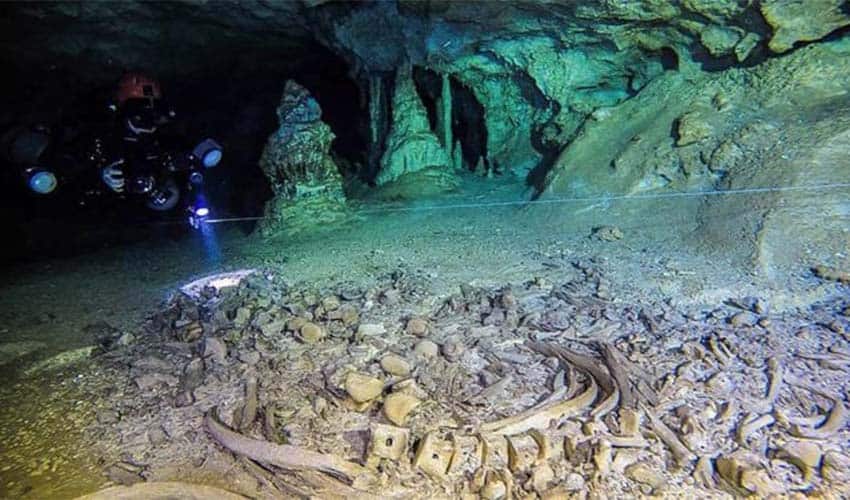
A glimpse inside Sac Actun, the largest underwater cave system in the world. (Photo: UNAM)
Sac Actun, a 368-km cave system under the Yucatán Península, is one of the world’s 100 most important geological sites according to the International Union of Geological Sciences (IUGS).
The first-ever ranking to compile a database of geological sites of scientific value, the project had the support of UNESCO and seeks to accomplish a worldwide inventory of geological heritage of international relevance.
Sac Actun, the only site in Mexico to have made the list, is the largest underwater cave system in the world and the second largest cave after the Mammoth Cave in Kentucky, United States.
According to the IUGS report, “the extensive cave systems under the Yucatán Peninsula have been a guardian of hidden and invaluable treasures to learn from our history,” and a crucial site to understand how sea level has changed over the past 800,000 years.
Sac Actun has not only contributed to the advancement of geological science but also in anthropology and paleontology: remains of Pleistocene humans and extinct prehistoric animals have been found there. (Photo: INAH)
According to the IUGS website, “a geological heritage site is a key place with geological elements and/or processes of scientific international relevance,” that have made a major contribution to the development of geological sciences throughout history.
Being underwater, the caves also have created a unique environment for the conservation of human and animal remains, which has led to changes in science’s understanding of human history on the continent. Well-preserved remains of Pleistocene humans and animals dating back thousands of years before the Maya inhabited the area have been discovered there, including the remains of a 13,000 year old adolescent girl.
The importance of the cave system also lies in its ecological value – Sac Actun provides almost all the fresh water used in the area, while also supporting the entire jungle ecosystem above it.
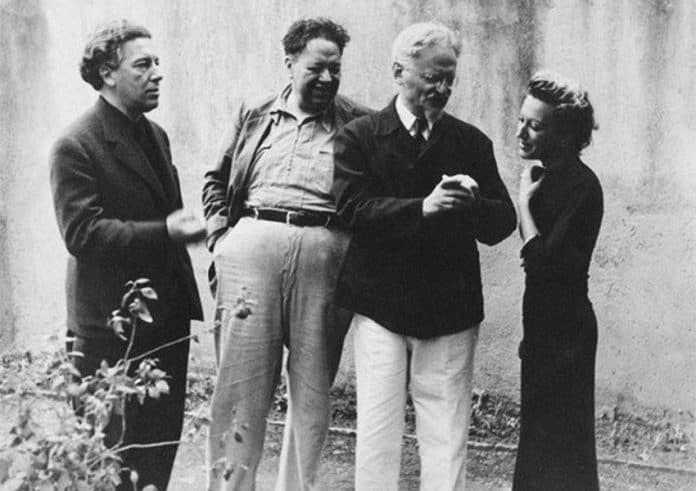
A meeting of minds and movements. From left to right: Surrealism founder André Breton, Muralism founding father Diego Rivera, Leon Trotsky and French Surrealist Jacqueline Lamba in Mexico City.
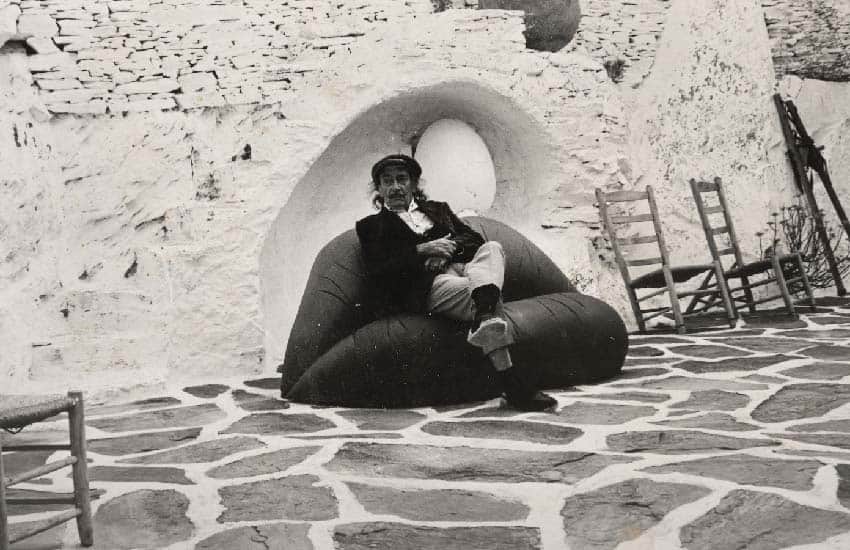
Shortly after arriving in Mexico in 1938, André Breton, the French father of Surrealism, had proclaimed the country “…the surrealist place par excellence.” Years later, Salvador Dalí would reinforce this notion saying, “In no way will I return to … a country that is more surreal than my paintings.”
Today, the word “surreal” is still used to describe Mexico, often by us foreigners to describe aspects of its culture that are both awe-inspiring and inscrutable. But the European concept of the Surreal was not initially accepted by the Mexican elite.
Breton and the Surrealists wanted to turn away from rationalist Western thought to re embrace more “marvelous” ideas, which they found in part in (sub)cultures relatively unaffected by European Renaissance heritage.
Not surprisingly, Mexico — with its pyramids, feathered serpents, shape-shifting naguals, voladores hanging from tall poles and dancing calaca skeletons — caught their attention.
Dali found Mexico supremely surreal, but he eventually left, claiming it was more surreal than his paintings and therefore he could not stay here.
Breton wrote extensively about Mexico. It was superficial, but it brought other artists here, such as Wolfgang Paalen and Gordon Onslow Ford, who went well beyond Breton in their understanding of Mexico’s indigenous cultures.
Surrealism dominated Europe starting in the 1920s, but when European artists came to Mexico, they ran up against the other major artistic movement of the time – Muralism.
The work of Diego Rivera and others not only dominated a very nationalistic Mexico at the time but had international acclaim as well.
Artists from the two movements shared a number of common interests: a romanticization of Mexico’s indigenous past and present, Marxist and anti-fascist politics and an artistic focus on the figurative. How each approached these interests, however, reveals significantly different worldviews.
The Wounded Deer (El venado herido) by Frida Kahlo (1946). Despite acceptance of early help by Surrealists, Kahlo would eventually repudiate the movement.
But the Muralists were busy creating a new Mexican identity for a post-Revolution nation, whereas after World War I in Europe, the Surrealists were not particularly interested in nationalism. And as Marxism split into factions in the Soviet Union and elsewhere, Muralists and Surrealists found themselves supporting different factions.
Lastly, Muralists’ figurative work was more realistic, looking to portray history and indigenous heritage. The Surrealists were looking to portray dreams and other images that exist only in the mind.
In the 1930s and 1940s, many Surrealists and other European artists and intellectuals found themselves in Mexico as the Spanish Civil War and yet another world war raged. They were welcomed because of their politics and education, but they were still foreign refugees.
All of these issues led to Surrealism being marginalized in Mexico for decades until the 1950s, when Muralism’s dominance began to significantly wane. Surrealist artists such as Leonora Carrington, Remedios Varo and Kati Horna would form semi-separate communities in places like the Roma and Condesa neighborhoods of Mexico City.
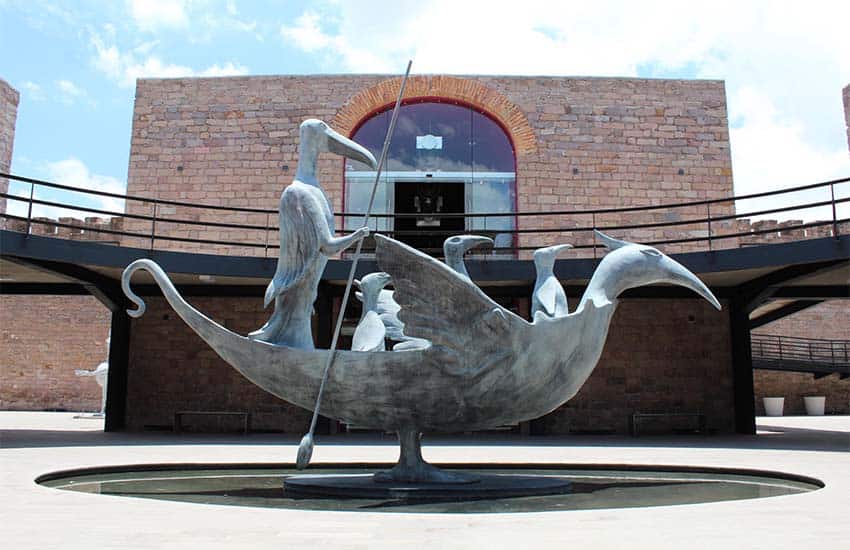
The Ship of Cranes (La barca de las grullas), a bronze work by Surrealist Leonora Carrington at the Carrington Museum in Xilitla, San Luis Potosi. Her breakthrough came when British Surrealist art patron Edward James promoted her abroad.
It is notable that Mexico’s most prominent “classic” Surrealist artists are women, whose work would not receive national recognition until the 1950s or later. One possible reason is that male Surrealists such as Paalen, Onslow Ford and later Alan Glass would abandon Surrealism and even Mexico to develop their careers.
But what about Frida Kahlo? In Mexico, she is generally not recognized as a Surrealist artist despite the many obvious similarities. She was recognized as such by Breton, who promoted her work in Europe, but eventually Kahlo would disavow Surrealism over issues of nationalism and communist ideology. Most Mexican writing about her work “respects” her insistence that her work is completely her own.
However, it would be wrong to say that Surrealism has had no effect on Mexican art. Many artists from the two movements formed professional and personal ties. Mexico’s artists and writers borrowed from Surrealists. Surrealist influence has been attributed to work by Juan Soriano, María Izquierdo and even Rufino Tamayo.
And the Surrealists and other European artists set the stage for post-Muralism.
“Rebirth” by Breakaway Generation artist Gustavo Arias Murueta.
The Breakaway Generation (Generación de la Ruptura), a movement from approximately 1950-1970, essentially was a rebellion against the nationalism and aesthetic restrictions of Muralism. Many Breakaway artists had European teachers influenced by Surrealism.
Overall, the Surrealists’ presence reminded Mexico during the height of its insular Muralism era that the outside world still existed — and now these younger artists wanted to explore. Unfortunately for Surrealism, by the time the Ruptura gained traction in the 1950s and 1960s, the art world had shifted from dreams to abstract art.
Surrealists also were responsible for sparking the beginning of internationalizing Mexican art, a process that continues to this day.
With the exception of politically charged work, such as that of Los Grupos or Neo-Mexicanismo, avant-garde art produced in Mexico is nearly indistinguishable from that produced in other Western countries.
“Len nima” by current-day Oaxacan artist and illustrator Filogonio Naxín. Mazatec words are also an important part of Naxin’s works.
This has been strengthened by the influx of globally-minded artists that have migrated to the country since the mid-century for both cultural and economic reasons.
But surrealism never completely died in Mexico. Interestingly enough, there are a number of indigenous artists who are creating canvases and more, drawing upon their native cultures, including the spiritual. French art critic Serge Fauchereau has written that the “marvelous” that the Surrealists adored appeared long before and after the movement.
Supernatural concepts find their way into the work of Jorge Domínguez Cruz of Veracruz, who draws from indigenous Huastec culture. Oaxacan Filogonio Naxin combines elements of his Mazatec culture, in particular naguals, with modern print/graffiti sensibilities to create what he calls “social surrealism.”
The word “surrealist” may turn out to be a way to make the work of at least some indigenous artists more relatable to other cultures. If this is the case, the original Surrealists’ obsession with indigenous Mexico may not have been entirely misplaced.
“The Baptism” by current Huastec artist Jorge Domínguez Cruz.
Leigh Thelmadatter arrived in Mexico 18 years ago and fell in love with the land and the culture in particular its handcrafts and art. She is the author of Mexican Cartonería: Paper, Paste and Fiesta (Schiffer 2019). Her culture column appears regularly on Mexico News Daily.
Édgar Valdez Villarreal, alias "La Barbie", was arrested in 2010. (Photo: Cuartoscuro)
The U.S. government has confirmed that former Beltrán Leyva Cartel capo Édgar Valdez Villarreal, alias “La Barbie,” has been transferred out of a Florida prison, amidst heated speculation that he is collaborating as a protected witness.
On Monday, it was revealed that Valdez is no longer listed as a federal inmate by the Bureau of Prisons (BOP), an agency within the U.S. Department of Justice. No further information is available on his whereabouts, and both agencies have declined to comment on his case.
“Inmates who were previously in BOP custody and who have not completed their sentences could be out of BOP custody for a period for court hearings, medical treatment or for other reasons,” said BOP spokesman Benjamin O’Cone.
Kent Schaffer, Valdez’s former lawyer, speculated that his former client’s disappearance from BOP records may indicate that he has agreed to give evidence as a protected witness.
“Often what happens, hypothetically, is that if you’re going to testify against someone, the [federal] marshals will move you to a detention center, for example Rikers Island or the MCC [jails in New York],” he told La Jornada newspaper.
Former DEA official Mike Vigil expressed a similar opinion to Milenio Television, emphasizing that Valdez’s status as a high-ranking drug trafficker meant he would have privileged information about his former criminal associates.
“Neither La Barbie nor other criminals want to die in a prison here in the United States… He was related to the Beltrán Leyva Cartel; he was in meetings with ‘El Chapo’ Guzmán and other members of the Sinaloa Cartel, so he can testify against many people, many officials,” Vigil said.
Valdez was sentenced to 49 years in prison by an Atlanta federal judge in 2018, after pleading guilty to charges of drug trafficking and money laundering. He was captured in Mexico in 2010 and extradited to the US in 2015. At his trial, prosecutors alleged that he was a senior member of the Beltrán Leyva Cartel at a time when its leaders had close links to the Sinaloa Cartel.
Both Schaffer and Vigil pointed out that one of the cases in which Valdez could be a valuable informant was the case against Genaro García Luna, a former Mexican federal security minister who was arrested in Texas in 2019 on charges he colluded with the Sinaloa Cartel.
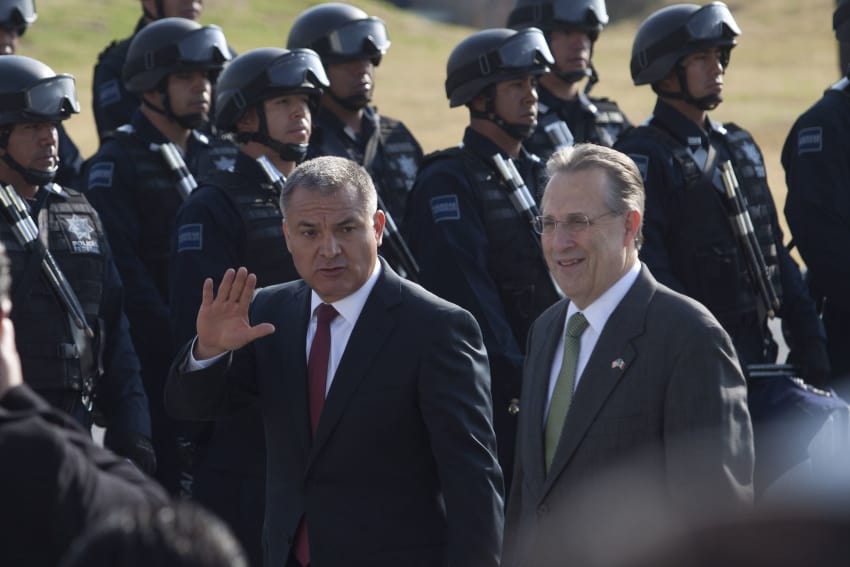
Genaro García Luna was Mexico’s security minister during Felipe Calderón’s administration. He is scheduled to go on trial early next year. (Cuartoscuro)
“When I represented [Valdez Villarreal] 10 years ago, [U.S. authorities] were already asking about García Luna back then,” Schaffer told La Jornada. “We had several government interrogations about García Luna. So, it might make sense that if the trial is in New York, they would move him to that city so prosecutors would have time to talk.”
Even before his extradition, Valdez had accused García Luna of receiving bribes from his cartel. From his arrest onwards, Valdez’s legal strategy has centered on attempting to expedite his extradition to the U.S. – where he was born and holds citizenship – and negotiate a reduced sentence in exchange for offering information.
For his part, President López Obrador expressed concerns about Valdez’s disappearance from BOP records and demanded that U.S. authorities clarify his whereabouts.
“We want to know where he is,” AMLO said in his Wednesday press conference. “The inquiry has been made and there is no clarity on the subject, but we will continue asking them to inform us.”
He insisted that U.S. authorities would have no justification for releasing Valdez, who would also face criminal charges in Mexico.
“There have been cases where extraditions are carried out, also with sentences of many years, they make deals over there and they don’t come back, they are released,” he said. “But even if there is a deal, we would still have to act if there are charges in Mexico.”
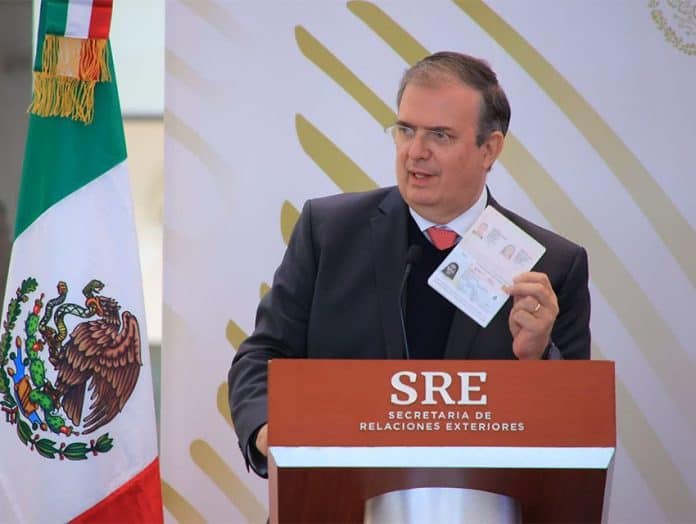
Foreign Affairs Minister Marcelo Ebrard, who opened the new express passport center, said it's expected to serve 350,000 people a year, with a capacity of 1,000 per day. (SRE)
A new passport office with the capacity to attend to 1,000 people per day has opened at the Tijuana International Airport.
Accompanied by Baja California Governor Marina del Pilar Ávila Olmeda, Foreign Affairs Minister Marcelo Ebrard formally opened the office on Tuesday.
It is located on the ground floor of the airport’s parking lot building.
“The new office will provide an express passport issuing service to those who need to replace this document,” the Ministry of Foreign Affairs (SRE) said in a statement.
Baja California Governor Marina del Pilar Ávila, who attended the opening of the new SRE office, said the express passport office will meet the unique demands of Tijuana, which she said has the “most dynamic” border in the world. (Governor —Ávila/Twitter)
“It’s estimated that it will attend to more than 350,000 people a year, with a capacity of 1,000 people per day,” Ebrard said.
The SRE said that people who need an emergency passport will be able to get one in less than an hour.
The ministry noted that the Pacific Airport Group, which operates the Tijuana airport, invested over 40 million pesos (just over US $2 million) in the new office, which will operate seven days a week from 8 a.m. to 8 p.m.
“With the commencement of operations of this office, Baja California becomes the second state of the republic … [with] three passport offices, after Mexico City,” the SRE added.
Ebrard emphasized the speed with which the new office issues passports. It’s an “express” office of a kind that “almost doesn’t exist anywhere in the world,” he said.
“It’s even quicker than the fastest [passport] office outside airports,” the foreign minister added.
Ávila, a Morena party governor who took office just over a year ago, said that the new passport office is “another example of the extraordinary projects we can complete when we … work as a team.”
A testament to how many people cross back and forth between the border daily is the existence of the Cross Border X-press, a border crossing that connects Tijuana International Airport with San Diego, California.
In opening the office, the SRE is meeting “the demands, needs and requirements” of Tijuana, she said after claiming that the city has the “most dynamic” border in the world.
One of the Mexico-U.S. border crossings in Tijuana is the Cross Border Xpress, which gives airline passengers direct access into Tijuana airport from San Diego county and vice versa.
Ávila also said that Mexico is “one of the few countries in the world” that issue passports the same day as applications are lodged.
All Mexican citizens can make appointments to get a passport at the new office at Tijuana airport, regardless of whether they are airline passengers. Click here to access the SRE’s appointments website.
Luis Chávez's scored on a free-kick goal in the second half of the match today. (Photo: FIFA World Cup Twitter)
Mexico has been eliminated from the FIFA World Cup despite beating Saudi Arabia 2-1 in Qatar on Wednesday.
El Tri finished on four points after a tie, loss and win in its three group games.
Poland also finished on four points, but with a superior goal difference to Mexico, allowing the European nation to finish in second place in Group C behind Argentina and advance to the knockout stage of the tournament.
Mexico dominated the match against Saudi Arabia at Lusail Stadium north of Doha, scoring two second-half goals and simultaneously raising Mexican supporters’ hopes that El Tri would get through to the round of 16.
“El Tri” played a good game in Qatar today, but needed a higher score to move on to the next round of the World Cup. (Photo: Selección Mexicana Twitter)
However, La Selección Mexicana was ultimately unable to get a third goal that would have allowed it to snatch second place in Group C from Poland.
Instead, Saudi Arabia scored a goal in injury time and thus ended Mexico’s 2022 World Cup campaign.
El Tri had several opportunities in front of goal in the first half, but failed to find the back of the Saudi net.
The team’s first goal came just after half-time in the 47th minute when forward Henry Martín scored after a deflected corner kick reached his left boot. Mexico’s second goal came via a Luis Chávez free kick in the 52nd minute.
The 26-year-old Jalisco native struck a powerful shot from well outside the 18-yard box, and the ball sailed past the Saudi goalkeeper’s outstretched arms and into the top right corner of the net.
With almost 40 minutes left to play, it seemed likely that El Tri would continue adding goals to the scoresheet, but it failed to capitalize on several other promising opportunities. Chávez came close to netting himself a second goal after another powerful free kick in the 73rd minute, but on this occasion goal keeper Mohammed Alowais was able to make a save after diving high to his right.
Mexico would have finished its three group matches with a goal difference of 0 had it maintained its 2-0 lead. However, Salem Aldawasari’s injury-time goal pegged back Mexico’s goal differential to -1, whereas that of Poland was 0.
It is the first time since 1978 that Mexico failed to get out of the group stage at a World Cup at which it played. At the seven World Cups played between 1994 and 2018, El Tri stumbled at the round of 16 stage, while it reached the quarter finals at Mexico ’86. Mexico didn’t play at the 1982 and 1990 World Cups.
At Qatar 2022, the first World Cup to be played in the Arab World, El Tri’s failure to get more than a single point from its first two matches – or even score a goal – ultimately led to its downfall.
It will be a long four years before Mexican supporters can cheer on their team at the next “mundial” – the 2026 World Cup to be played across 16 cities in Mexico, the United States and Canada.
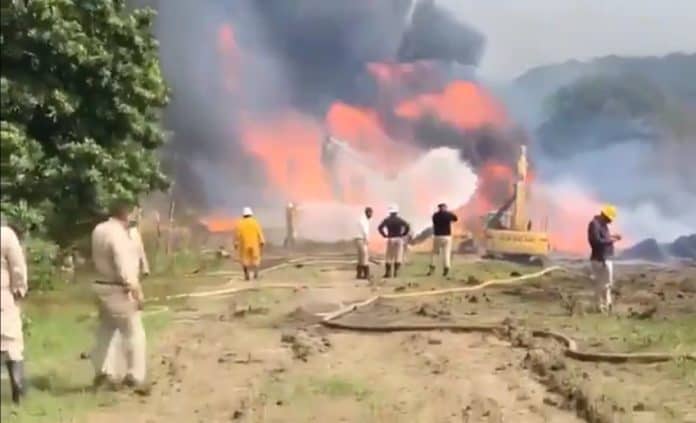
The explosion occurred on Tuesday afternoon as workers conducted a controlled burn on a Pemex pipeline. (Photo: Twitter video screenshot)
Pemex workers and Civil Protection personnel are among 19 people who were injured when a leaking pipeline exploded in southern Veracruz on Tuesday.
The Veracruz Civil Protection agency said that an explosion occurred at about 3 p.m. as workers conducted a controlled burn at the site of an ethane leak on a Pemex pipeline in the municipality of Agua Dulce, located south of Coatzacoalcos on the border with Tabasco.
The agency said in a Facebook post Tuesday night that the majority of injured persons sustained first degree burns. It said in an earlier post that one person suffered second degree burns.
Video footage shows a raging blaze and huge quantities of black smoke emanating from the leaking pipeline.
Those injured by the fire were taken to hospitals in Agua Dulce and the nearby municipality of Nanchital.
The pipeline, located next to the Coatzacoalcos-Villahermosa highway, began leaking ethane on Sunday night, prompting a deployment of Pemex workers to attend to the situation.
Approximately 170 people who live near the pipeline were transported to shelters as a precaution, the newspaper Reforma reported.
Explosions along Pemex pipelines due to leaks are relatively common as crime gangs perforate the lines to steal petroleum and gas.