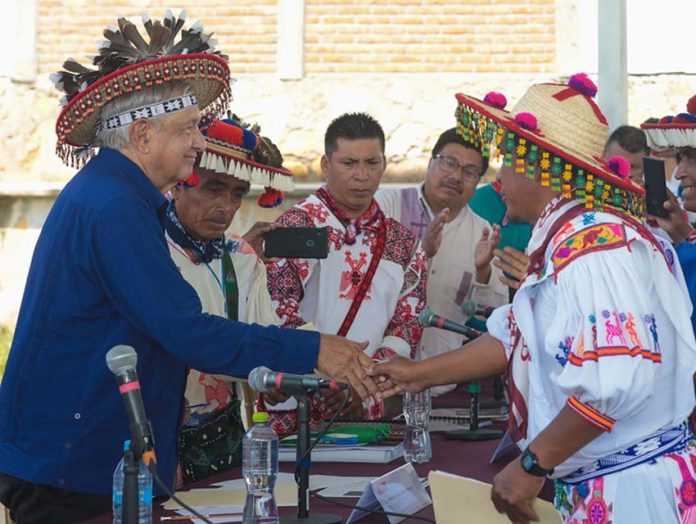
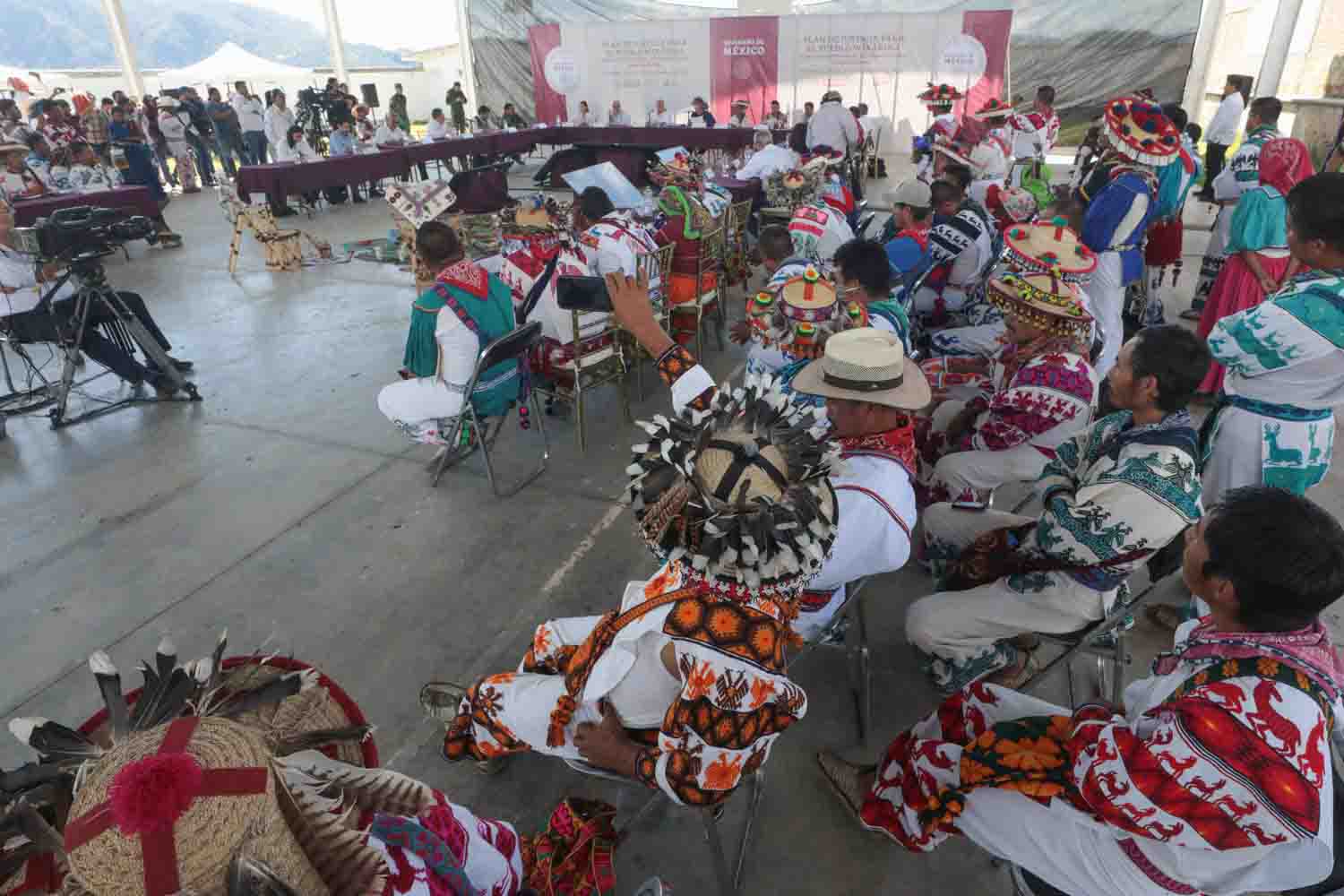
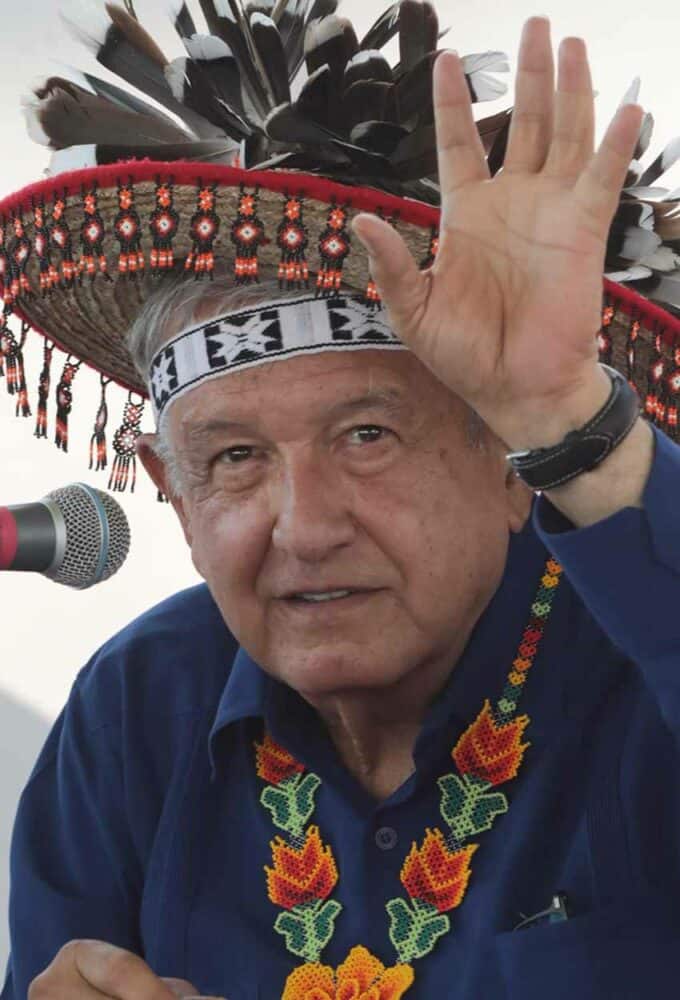
Wixárika community members in Mezquitic, Jalisco, told the president that organized crime's presence there is affecting people's freedom of movement and daily lives.
Highlighting the presence of “very powerful” crime groups, President López Obrador on Saturday promised that the federal government would develop a security plan for the Gran Nayar, a mountainous region that encompasses parts of Nayarit, Jalisco, Durango and Zacatecas.
Speaking during a meeting with members of the Wixárika, or Huichol, community in Mezquitic, Jalisco, the president said he would ask Defense Minister Luis Cresencio Sandoval to present “a comprehensive plan for the entire region.”
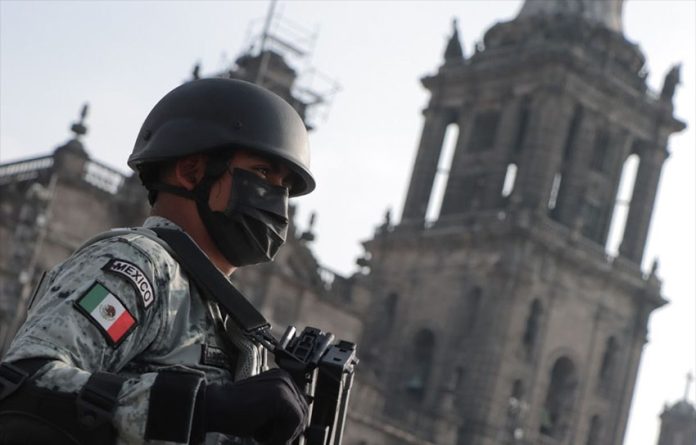
He said that residents of indigenous communities in all four states that comprise the Gran Nayar had requested the presence of the National Guard, the three-year-old security force that superseded the Federal Police.
“The communities … have conserved the tranquility of their towns, but there are now very powerful crime groups and the support of the state is needed,” López Obrador said. “… We can build the necessary National Guard barracks so that you have security and protection, as you deserve,” he said.
Among the Wixárika community’s main requests were the issuance of a decree to protect five sacred sites and assistance in recovering dispossessed lands.
Patricio Ortiz de la Cruz, an official in the Wixárika community of San Andrés Cohamiata, told the president that locals are “very concerned about the high levels of insecurity and violence in our region.” The presence of organized crime affects people’s capacity to move freely about the region and their daily lives, Ortiz said.
He and other representatives, — including the head of the National Institute of Indigenous Peoples, Adelfo Regino, called for National Guard barracks to be built in Mezquitic, the neighboring municipality of Bolaños and Valparaíso, Zacatecas.
“Reinforcing security in the already identified strategic points is essential,” Ortiz said.
The Jalisco New Generation Cartel is the dominant criminal organization in Jalisco and Nayarit, according to a recent report by the United States Congressional Research Service. In Zacatecas, the organized crime group is engaged in a turf war with the Sinaloa Cartel.
The president said he would ask Defense Minister Luis Cresencio Sandoval for “a comprehensive plan for the entire region.” One Wixarika leader said he wants National Guard presence in already identified strategic points.
Formerly led by notorious drug lord Joaquín “El Chapo” Guzmán, the Sinaloa Cartel is the dominant criminal force in Durango, part of which is located within the opium poppy and marijuana-growing region known as the Golden Triangle.
At Saturday’s meeting, Wixárika representatives also presented a “plan for justice” for the Wixárika people. Among their main requests were the issuance of a decree to protect five sacred sites and assistance to recover lands of which they have been dispossessed over the years.
Ortiz said that the dispossession of land began in colonial times and hasn’t stopped, asserting that “our struggle has been tireless.”
The Wixárika people also called for improvements to educational, health care and highway infrastructure and the implementation of environmental programs. In response, López Obrador said that the federal government would “comply with the plan” presented to it.
“We’re going to confront the land problem, I feel that it’s the main problem in this region,” he said.
“It’s already been going on for a long time; there have been differences, there is confrontation and it’s very clear that it’s a fight between indigenous communities and small, medium and large private landowners,” López Obrador said.
“… There has to be an agreement so that the underlying problem is resolved. … We have to speak with the private landowners … and offer them alternatives, compensate them; it’s called indemnity,” López Obrador continued. “We can do it. … That’s what we’re doing to return the land that was taken from the Yaqui people.”
Add a special something to your butter — it's so easy!
How can something that’s already so good be even better? Well, that’s what compound butters are all about.
Using the freshest, best-quality butter you can find, you mix in small amounts of ingredients that add bold or subtle flavors. Then the butter is rolled into a log and stored in the fridge or freezer until you’re ready to use it.
Finding good butter in Mexico can be challenging; most brands have vegetable oil added that may not be listed on the label. (Regulations as to what qualifies as “butter” are different than in the U.S. or Canada.) Your best bets will be imported butters like President from France or the Danish Lurpak.
Some lucky folks will have a local dairy that sells fresh butter or be able to find the delightful Flor de Alfalfa brand butter from an organic dairy in Querétaro. But you can also just use whatever butter or margarine you normally eat.
Liven up whitefish with buttery chives and garlic!
Now comes the fun part: compound butters can be used in ways you’d never consider for regular plain ol’ butter. They’re an easy way to liven up basic cooked or grilled meats, veggies, chicken or fish, and it impresses guests as well.
Put a slice of garlic-parsley butter on a just-grilled burger right before serving for a rich finish; top a salmon filet with lime-herb butter to add lush citrusy overtones; sauté shrimp in ginger-curry butter; brush bleu cheese butter on grilled steak or vegetables; add any flavor to pasta, soups or stir-fries.
All of the recipes below use the same process. Put slightly softened butter in a food processor or bowl. Add the other ingredients and salt to taste; mix well — or for a different look, only mix a little, so that the add-ins create more of a marbled effect.
Scrape butter onto a piece of waxed or parchment paper large enough to tightly roll into a log about 1½ inches in diameter. Twist the ends to seal and refrigerate. When ready to use, just cut off a slice. Voila!
Garlic-Parsley Butter (Beurre Maître d’Hôtel)
Great on burgers or steak!
1 stick unsalted butter (4 oz.) softened
¼ cup packed fresh parsley leaves
1 Tbsp. juice plus 2 tsp. zest from 1 lemon
2 medium cloves garlic, minced
Salt and freshly ground black pepper
Combine butter, parsley, lemon juice, zest and garlic in a food processor or bowl; pulse until garlic and herbs are chopped and juice is incorporated, or mix well by hand. Season to taste with salt and pepper; pulse to combine. Wrap butter tightly and refrigerate.
Lime-Herb Butter
2 tsp. fresh lime juice + zest from 2 limes
1 stick (4 oz.) unsalted butter
2-inch piece of fresh ginger, peeled and sliced
8 sprigs fresh cilantro
¼ tsp. salt
⅛ tsp. black pepper
⅛ tsp. cayenne or pinch of red pepper flakes
Finely grate zest from 2 limes; set aside. By hand or in food processor, combine butter, ginger, 8 sprigs cilantro, lime zest and juice. Process until smooth.
Season to taste with salt, pepper and cayenne/red pepper; process again, wrap tightly and refrigerate.
Chipotle Butter
1 stick (4 oz.) unsalted butter
1½ Tbsp. canned chipotle pepper, minced
2 tsp. fresh lime juice
¼ tsp. coarse salt
By hand or in food processor, combine all ingredients. Wrap tightly and refrigerate.
Jalapeño Lime Butter
1 stick (4 oz.) unsalted butter
½-1 jalapeno pepper, stemmed and seeded, minced
Juice of 1 lime
¼ tsp coarse salt
By hand or in food processor, combine all ingredients. Wrap tightly and refrigerate.
Garlic-herb compound butter livens up grilled steak, fish or veggies in a flash.
Smoked Paprika and Rosemary Butter
1 stick unsalted butter (4oz.)
1 Tbsp. minced fresh rosemary
1 tsp. smoked paprika
½ tsp. salt
By hand or in food processor, combine all ingredients. Wrap tightly and refrigerate.
Cinnamon Maple Butter
1 stick unsalted butter (4oz.)
1 Tbsp. pure maple syrup
¾ tsp. ground cinnamon
By hand or in food processor, combine all ingredients. Wrap tightly and refrigerate.
Ginger-Curry Butter
1-2 tsp. freshly grated peeled ginger
¼ – ½ tsp. curry powder
1 stick (4 oz.) unsalted butter
Salt to taste
By hand or in food processor, combine all ingredients. Wrap tightly and refrigerate.
Blue Cheese Butter
1 stick unsalted butter (4oz.)
½ cup blue cheese or gorgonzola (add more or less as desired)
Salt and pepper to taste
By hand or in food processor, combine all ingredients. Wrap tightly and refrigerate for at least 30 minutes before slicing.
Garlic-Herb Butter
1 stick (4 oz.) unsalted butter
2 garlic cloves, minced
1 Tbsp. chopped fresh oregano
1 Tbsp. chopped fresh rosemary
1 Tbsp. chopped fresh chives
¼ tsp. coarse salt
¼ tsp. freshly ground black pepper
By hand or in food processor, combine all ingredients. Wrap tightly and refrigerate.
1 tsp. freshly ground black pepper, plus more as needed
Combine butter, zest, garlic, salt and pepper in a food processor or bowl; pulse until thoroughly combined or mix well by hand. Season to taste with more salt and pepper if needed; mix again. Wrap butter tightly and refrigerate.
Sundried Tomato Butter
1 stick unsalted butter (4oz.)
2 garlic cloves, minced
2 tbsp finely chopped fresh basil
1/3 cup finely chopped sundried tomatoes
¼ tsp. coarse salt
¼ tsp. freshly ground black pepper
By hand or in food processor, combine all ingredients. Wrap tightly and refrigerate.
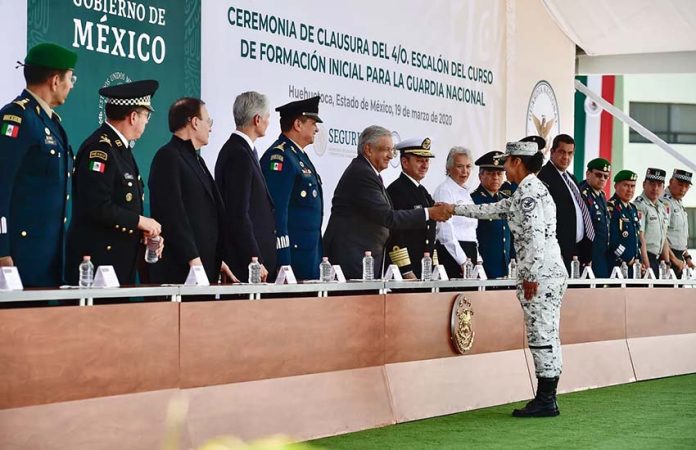
The president shakes hands in 2020 with a newly minted member of the National Guard, a federal civilian police force that, thanks to a congressional vote on Friday, now answers to the military. Presidencia
There’s a lot going on with the justice system lately.
What’s not going on? Major changes in how justice happens (or doesn’t, for that matter) in Mexico.
Unfortunately, the country’s security problem hasn’t seen any real improvement in a very long while. Impunity reigns as much as it ever did, and while there have been a handful of accomplishments — ridding the state of Michoacán of many of its illegal checkpoints, for example — our security situation remains much the same, only now with more uniformed gun carriers than before.
What needs to be done first, second and third to get things moving around here?
To begin, choose your own metaphor regarding our current attempts: we’re filling a car with gas when the problem is four slashed tires; throwing bandages at stomach cancer; repainting a house whose main problem is a series of burst pipes. The only thing we know for certain is that what we’re doing isn’t working.
Now that he’s president, he seems to have embraced militarization with an unexpected fervor even though, as Transparency International Defense & Security details, “the military is one of the least transparent state institutions and benefits from a privileged position that exempts it from standard reporting, disclosure and transparency requirements.”
Or is that part of the appeal?
What I personally don’t understand is why he presents the military as more honest and less corruptible than —admittedly notoriously corrupt — civilian forces. Wasn’t a former army general just implicated in the murder of several Ayotzinapa students, after all?
It’s hard to say what brought about his change of heart from his “man of the people, speaking truth to power” days to his actions as president. I’m not sure which reasoning I hope more to be true: that the president really does believe that security has immensely improved during his administration, or that he’s simply a cynic like most humans expect their politicians to be.
I’m admittedly no security expert. All I know is that a bunch of people in uniform carrying big guns makes me personally feel less safe, not more. I mean, it’s not as if the majority of those with even a little bit of power (and firepower) around here have ever gone out of their way to not abuse that power.
And yet, AMLO seems determined to continue increasing the influence of the military over daily life and is ever-careful to point out his (sometimes imagined) accomplishments — while making sure to place the blame for continued high crime rates on others.
On the one hand, yes, bringing attention to potential corruption amongst judges is important. On the other hand, publicly shaming them rather than quietly firing them seems to use spectacle to communicate this message to the public: “See? It’s not my fault. How do you expect me to get anything done with people like this around?”
He may have a point there, but he certainly doesn’t have a stellar track record on taking rule of law seriously, given his habit of dismissing real complaints and insisting that everything is fine. Meanwhile, there are many who go to prison because a police officer made up an accusation in order to make an arrest. Poor prisoners who don’t have money for private legal counsel have been known to languish in pre-trial detention for years before trial.
As Saskia Niño de Rivera, president of the nonprofit advocacy Reinserta, pointed out, “Forty-seven percent of people in prison have been waiting for years for their culpability to be determined.”
Chale.
So, I don’t know if increasing the presence of the military in Mexico will help (though I think I’ve got a pretty guess). I don’t know if publicly shaming judges will help. I suspect that putting a limit on how long those accused of crimes can sit in jail before facing trial and possible conviction would help, as would independent international organizations brought in to audit our police and military forces and implement changes. If you come, would you mind hanging around for like 20 years to make sure it really sticks?
I just hope that we decide to replace the tires, start treatment, and finally call in the plumber.
Sarah DeVries is a writer and translator based in Xalapa, Veracruz. She can be reached through her website, sdevrieswritingandtranslating.com
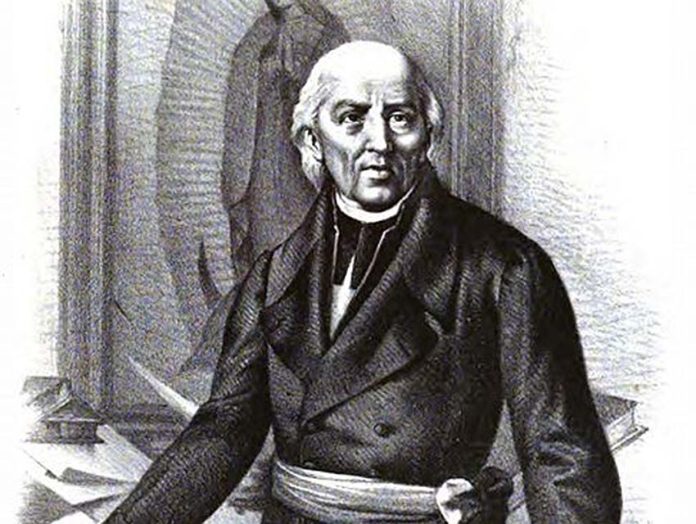
This image of Miguel Hidalgo appears in just about every history textbook in Mexico, credited to Luis Garcés.
Last year, Mexico News Daily published a primer about Mexico’s War of Independence for the upcoming holidays. This year, we focus on Mexico’s independence hero, Miguel Hidalgo.
“Father of the country” is not a concept unique to the United States. Many countries have figures honored with that title, and in Mexico, that man is Miguel Hidalgo y Costilla.
For those of us raised to revere George Washington as a near-saint, it’s perhaps curious that Hidalgo is remembered not only as the father of his country but also a Catholic priest — and despite the latter detail, the father of two daughters.
Born in Guanajuato in 1753, Hidalgo was a criollo, a person of Spanish heritage born in New Spain. They were the second highest-ranking caste in New Spain, under peninsulares, those born in the mother country. This class system was significant to both Hidalgo’s life and Mexico’s War of Independence.
Mexico’s “founding father” attended school in Valladolid (today Morelia, Michoacán) and Mexico City. He was ordained as a Catholic priest in 1778. Some sources emphasize that Hidalgo was not a particularly pious priest, in it more for the position and economic gain, but that was not uncommon during the time period.
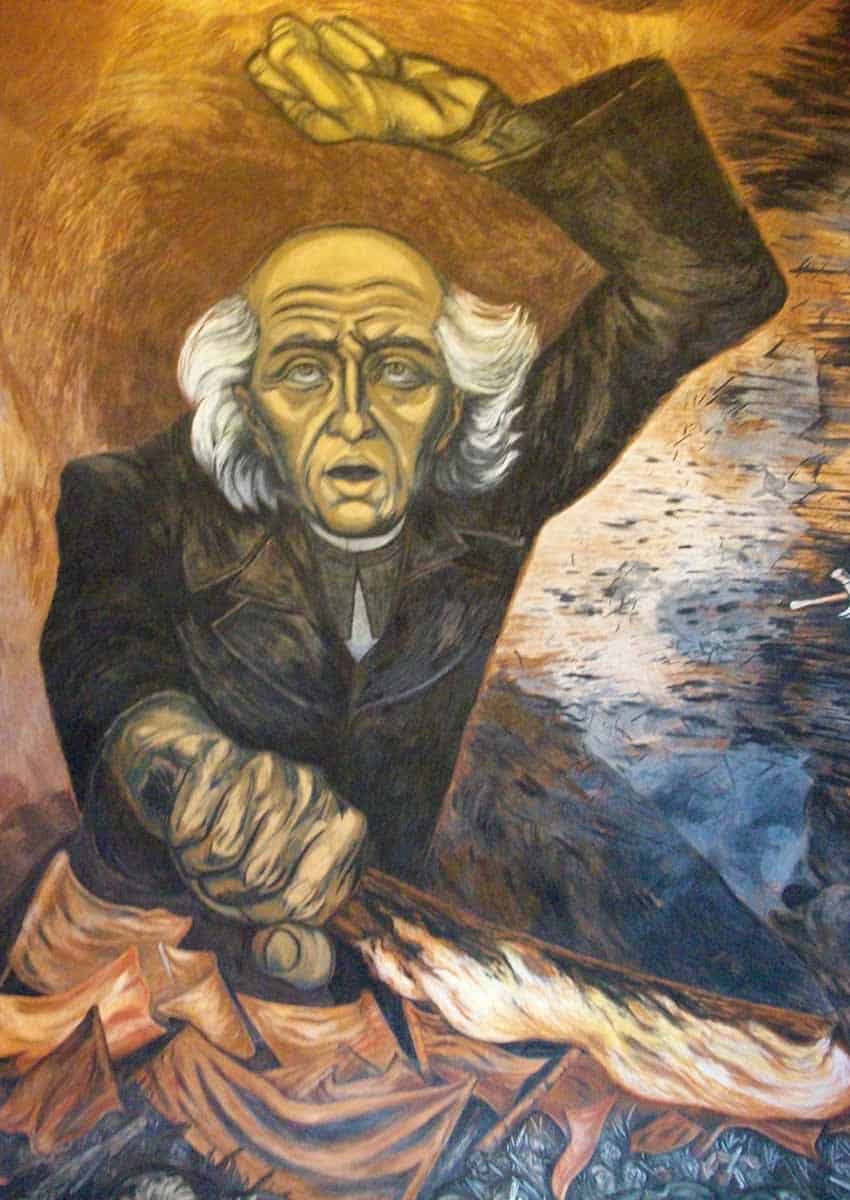
Jose Clemente Orozco’s portrait of Miguel Hidalgo in Guadalajara, one of the most famous modern images of the rebel leader. Salvador alc/Creative Commons
In 1803, he landed the position of parish priest in Dolores, in the state of Guanajuato; it was a wealthy community. Aside from his salary, he earned money through various businesses, including the raising of olives and grapes, which were both banned in the colonies by the Spanish crown so as not to compete with Spain’s imports.
Charismatic and intelligent, Hidalgo had good relationships with people in all of New Spain’s castes, including the mestizos (mixed-race) and the indigenous. However, some of his behavior, like having mistresses, got him in hot water with his superiors. He was also influenced by Enlightenment values and other then-radical ideas which led him to work for the economic betterment of the poor. This did not often sit well with hacienda owners.
Hidalgo’s independence career began in literature-reading circles — a popular pastime for criollos. These literature circles were not only social but political. They provided cover for those sharing banned news and ideas. A pivotal moment came when Spain was invaded by Napoleon in 1808, installing his brother onto the Spanish throne.
As Spaniards, the criollos of Mexico could not accept the usurper, but as “Mexicans” they saw an opportunity in Spain’s chaos and weakness. Also a factor: the new French-installed government in Spain began to economically squeeze the colonies, to the detriment of both criollos and the lower classes.
The first revolts against Spain’s control of Mexico were quickly put down, but this did not settle anything. Although he’d been active in rebel circles beforehand, Hidalgo’s main shift towards independence came through a group known as the Querétaro Conspiracy.
The group planned to start the revolt in December 1810, but before the time came, they realized that they had been exposed. Rather than run, Hidalgo decided simply to push the start date up two months.
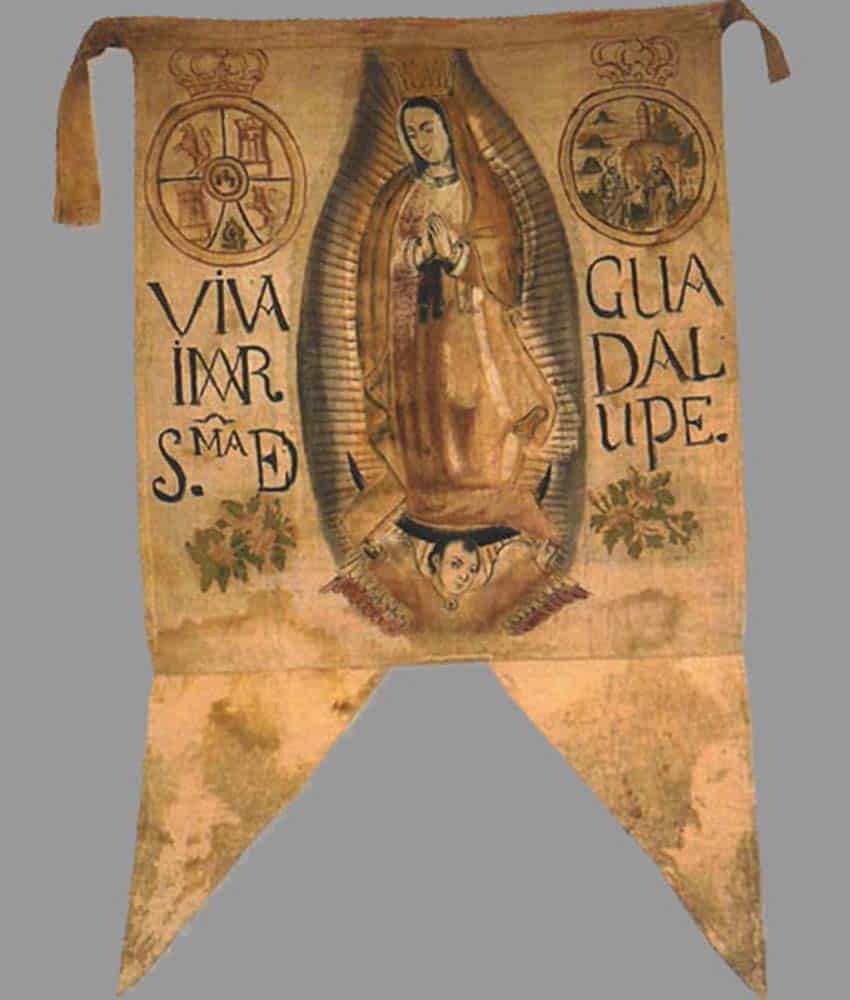
His first move was to ring the bell on the Dolores parish church to convene the locals. With a speech that is now known as the Cry of Dolores (El Grito de Dolores), he urged the mestizos and indigenous to “free themselves” from the “hated Spaniards” under the banner of the Virgin of Guadalupe, who was already a Catholic symbol of Mexico, said to have appeared in visions to an indigenous man here in 1531.
Hidalgo’s social status and charisma brought several hundred recruits to serve under his command with Ignacio Allende, a professional soldier who would be remembered as another Independence hero. Really a mob, this “army” marched on cities in Guanajuato, starting with San Miguel el Grande (now San Miguel de Allende), plundering and gathering more recruits by the thousands.
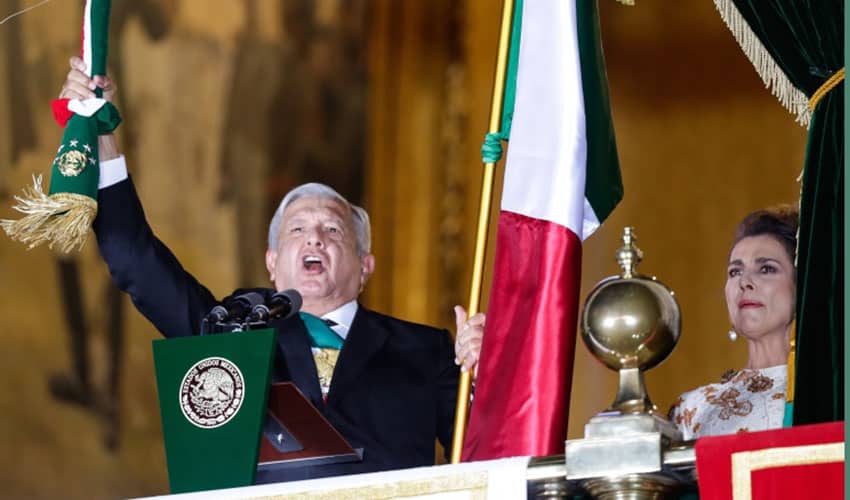
President López Obrador’s first Grito, or reenactment of the Cry of Dolores done by Miguel Hidalgo. Xinhua
On September 28, Hidalgo took the city of Guanajuato, with the mestizos and indigenous taking vengeance on the city’s elite. Hidalgo did little to stop them despite being a priest, and both he and Allende were quickly excommunicated as a result.
Hidalgo’s army took Valladolid (i.e. Morelia) on October 17 and Toluca (today in México state) on October 25.
On October 30, Hidalgo was outside of Mexico City, where a royal regiment was sent to confront the rebellion. At the ensuing Battle of Monte de las Cruces, Hidalgo and Allende won, but it was bloody. What happened next is something of a mystery.
Allende urged Hidalgo to press on to Mexico City, but Hidalgo decided to retreat. There is no documentation as to why.
One story states that Hidalgo was upset over the carnage. Another says that he received false information that royalist forces in the capital were far stronger than they really were.
History records the retreat as a catastrophic mistake. Recruits began to desert and the royalists were in pursuit. Hidalgo managed to get to Guadalajara in November 1810, where he was greeted as a liberator, but the rebels were attacked again, forcing Hidalgo and Allende northward to look for help from the United States. However, both were captured in Coahuila on May 21, 1811.
Hidalgo was executed by firing squad on July 30, 1811, supposedly putting his hand over his heart to indicate to the soldiers where to aim. His body was beheaded and the head sent to Guanajuato city to be displayed there as a warning. It did not work. The reins that fell from Hidalgo’s hands were taken up by José María Morelos.
One possible lesson from Hidalgo’s story might be not to believe your own hype. His charisma and initial successes made him impervious to questioning. He would not listen to Allende, although the latter had the needed military knowledge.
Hidalgo carried a banner of the Virgin of Guadalupe as a “Mexican.” The Guadalupe virgin was already considered a symbol of Mexico at that point. Marcuse/Creative Commons
If Hidalgo had decided to attack Mexico City, it is very possible that the War of Independence would have ended then, but it is doubtful that it would have ended the bloodshed.
First of all, there is no indication that Hidalgo would have made a better head of state than he did a general. The coups and civil wars of 19th-century Mexico just would have started 10 years sooner.
What Hidalgo provides is an inspiring figure and story on which to hang the concept of Mexican independence. This is evident with the reenactment of the Cry of Dolores each year at 11 p.m. on September 15, done by every ranking politician in the country, including the president, whose Grito is broadcast on national television.
Leigh Thelmadatter arrived in Mexico 18 years ago and fell in love with the land and the culture in particular its handcrafts and art. She is the author of Mexican Cartonería: Paper, Paste and Fiesta (Schiffer 2019). Her culture column appears regularly on Mexico News Daily.
A National Guard member at a 2021 military parade in Mexico City. Twitter @Luis_R_Bucio
The National Guard will be placed under the complete control of the army after the Senate passed a bill to that end early Friday.
Senators with the ruling Morena party and its allies voted in favor of the bill, ensuring its passage through the upper house.
President López Obrador, who announced the plan to put the National Guard under military control last month, will now sign the bill into law.
The National Guard is currently the responsibility of the Security Ministry, although it operates under army leadership on the ground.
The vote in the Senate was held in the early hours of Friday after a contentious debate that lasted almost 12 hours. A total of 71 senators voted in favor of the bill while 51 opposed it. Morena Senate leader Ricardo Monreal abstained due to concerns about the bill’s legality.
Opposition lawmakers indicated they would challenge the constitutionality of the soon-to-be law in the Supreme Court.
“Public safety is not achieved by violating the rule of law, by violating the constitution,” said Senator Claudia Anaya Mota of the Institutional Revolutionary Party (PRI).
The National Guard was established in 2019 under a constitutionally-enshrined civilian command but the bill that passed the Senate on Friday reforms secondary laws rather than the constitution.
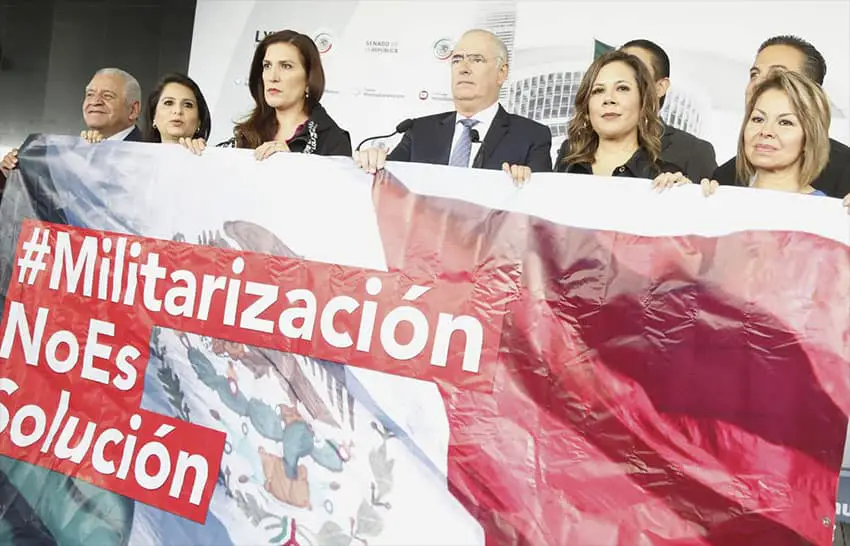
National Action Party (PAN) lawmakers hold a banner reading “Militarization is not the solution” to protest the passage of the new law. Twitter @AccionNacional
National Action Party (PAN) Senator Lilly Téllez accused Morena senators of being subservient to López Obrador and his plan to further militarize the country.
“You are not legislators, you’re subjects of the pejelagarto [a kind of fish],” she said, referring to the president by one of his nicknames.
López Obrador, who has relied heavily on the military since taking office in late 2018, argues that the National Guard needs to be under the army’s control to prevent corruption and guarantee its professionalism.
Amnesty International (AI) said Friday that the move would lead to more human rights violations.
“We have already seen the disastrous results of the militarization of public security forces in Mexico over the last 16 years,” Edith Olivares Ferreto, director of AI in Mexico, said in a statement.
“We call on the executive branch to design a plan for the progressive withdrawal of the armed forces from the streets, prioritizing the strengthening of civilian police forces and the development of public prevention policies aimed at guaranteeing public safety.”
Acting UN High Commissioner for Human Rights Nada Al-Nashif also raised concerns about the bill approved by the Senate, saying that “the reforms effectively leave Mexico without a civilian police force at the federal level, and further consolidate the already prominent role of the armed forces in security in Mexico.”
López Obrador responded on Friday by questioning why human rights groups and international organizations didn’t speak out when abuses were committed during previous governments.
“[They] kept silent like accomplices during the whole period of massacres and torture, and protection of organized crime. They never said anything and now they are so worried about militarization in Mexico,” he said.
Michael Scott, the incompetent manager from the sitcom The Office, also stars in this ad for the business administration program at Innova University in Veracruz. Facebook / Universidad Innova Veracruz
Innova University in Veracruz went viral this week with the publicity posted to their social media channels about its specialty degree programs.
The tyrannical headmistress Miss Trunchbull from the movie Matilda advertises the courses in teaching. Hannibal Lector in full straitjacket and mask announces the psychology degree and Saul Goodman, the shady lawyer from the hit TV series Better Call Saul, encourages future lawyers to join the law program, saying there is a difference between being a criminal lawyer and a lawyer who’s a criminal.
The publicity coincided with the university’s announcement that they would provide scholarships to cover up to 50% of the school fees for their new degree programs.
The publicity for the degree courses has received thousands of likes and comments on Facebook and greatly enhanced the visibility of a university unknown to many students before this.
Instead of experiencing fallout from using proprietary images that aren’t in the public domain, it seems that the university has received nothing but positive feedback from this publicity gamble. The school has gotten the attention of the Mexican arm of Netflix, the giant streaming service conglomerate which always keeps on top of viral trends on social media. The company produced its own parody advertisements using characters from its most popular series. Mob boss Thomas Shelby from Peaky Blinders publicizes the business administration program, Woo Young-woo from Extraordinary Attorney Woo is teaching law, and Number Five from the Umbrella Academy, engineering.
“Because you can’t take your future lightly,” says the Netflix post, “come study today at UNINETFLIS, the University for you.”
Perhaps this viral marketing campaign will become part of the publicity degree curriculum at Innova, with a minor in Netflix binging?
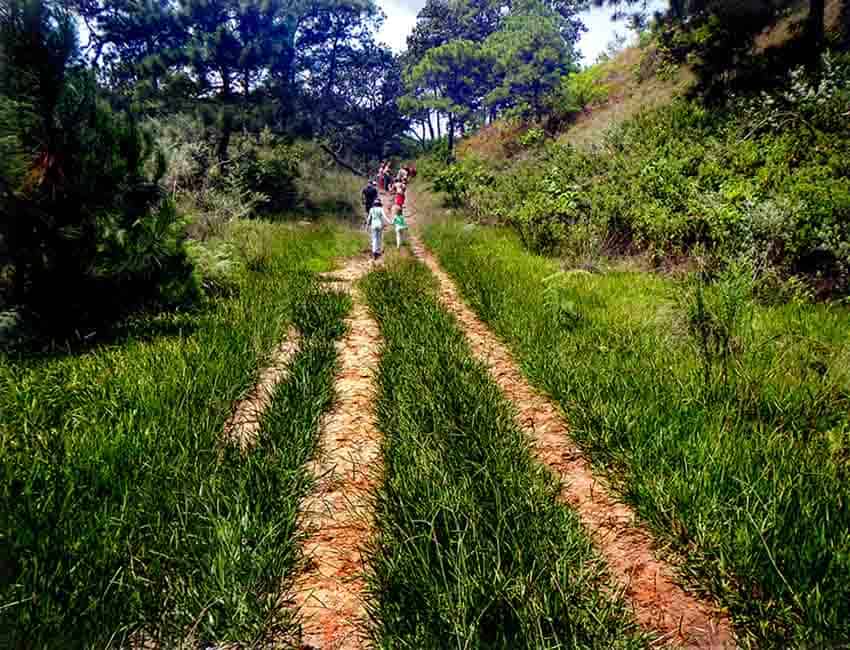
Truly observing nature while moving through it is part of the concept of senderismo.
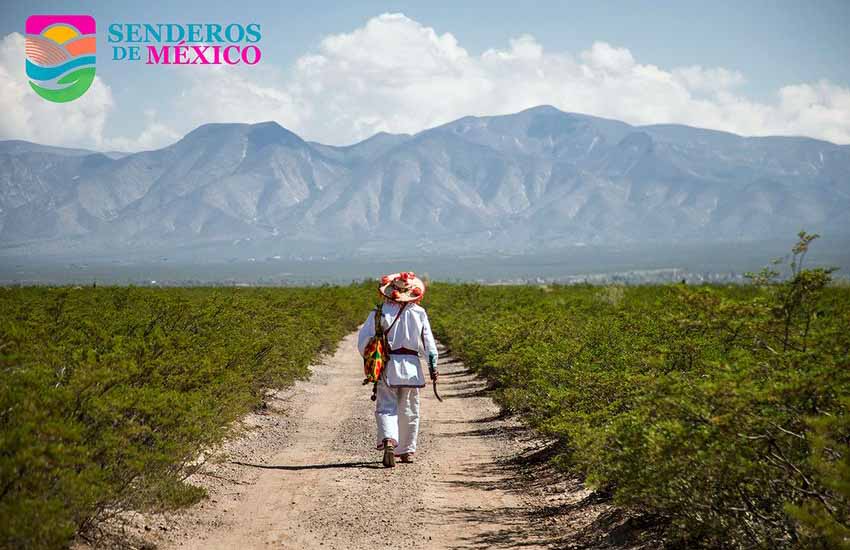
Senderos de México is an organization that catalogs, maintains and signposts trails (senderos) In Mexico. More than that, it promotes a concept called senderismo, which I find quite impossible to translate into English.
To many, the word senderismo evokes the joy, the elation and the mystique of wandering in the great outdoors. It’s often translated into “hiking” in English, but this word strikes me as ponderously practical, somehow embodying more of the exertion and perspiration of senderismo than the exhilaration.
I see the word “hiking” as down to earth, while senderismo is a word that seems to float in the air like a fleecy cloud.
Not long ago, Senderos de México (Trails of Mexico) gave a presentation on “the experience of trail walking,” featuring two speakers. One was Matteo Volpi, a long-distance hiker and creator of the Volpi backpack, the only ultralight knapsack made in Mexico. The other speaker was Jesús “Chuy” Moreno, a nature photographer who teaches hands-on natural science courses in the woods. I thought these two were perfect choices for speakers, as each helps us focus on a different aspect of senderismo.
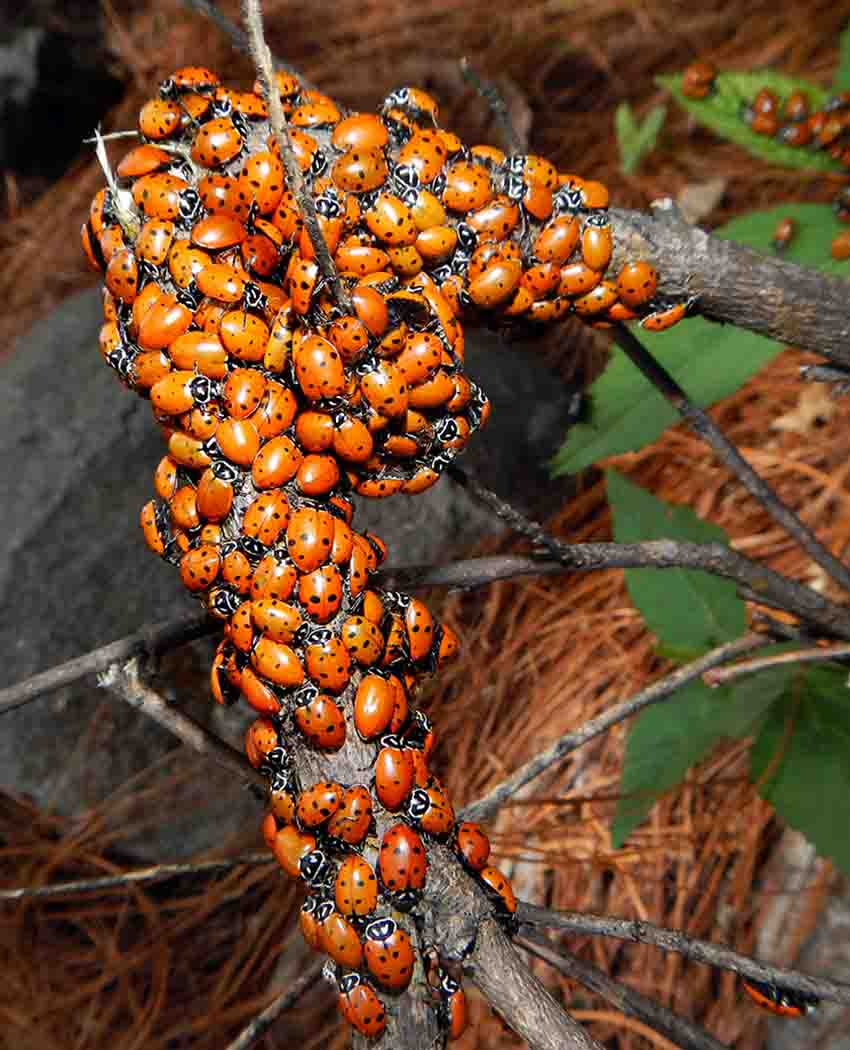
You’re not likely to see this in the city: a convention of ladybugs gathered at the Huehuentón Lookout in the Sierra de Quila Nature Reserve.
Volpi spoke about his experience hiking along the 4,000-kilometer-long Pacific Crest Trail, which stretches across the United States from its border with Mexico all the way to Canada.
Long-distance hiking emphasizes the sport aspect of senderismo. The hiker learns to travel light and to travel far, all the while enjoying the panoramic vistas of mountains forests and deserts, never losing sight of the aesthetic side of the experience.
Chuy Moreno reminds us of another aspect of senderismo. Hiking along a trail takes us out of the city and into the realm of nature. Here we encounter insects, birds, reptiles, mammals, flowers, trees, fungi and rocks, each of which has more than a story to tell because each is really an entire universe inviting us to step inside. Have you ever tried hiking with a botanist? Beware! You may spend all day without getting more than 10 meters from the trailhead!
Yet another aspect of senderismo is encountering the unexpected. Getting up off the couch and onto a trail leading who knows where will most certainly leave you with plenty of anecdotes to tell around the campfire. I asked Susan Street, a member of the hiking group that founded Senderos de México, if she could give me an example of an excursion that turned up a few surprises.
Long-distance hiker Matteo Volpi makes his way through the deep canyons of the Primavera Forest, located directly west of Guadalajara.
She proceeded to tell me the story of “that hike where we were all thrown into jail in the Sierra Huichola.” This mountain range spreads over Jalisco, Nayarit and Zacatecas.
Street had a plan to walk to the village of Santa Catarina Cuexcomatitlán, where the language, customs and clothing of the Wixárika people have been preserved. She and her hiker friends first flew to San Andrés Cohamiata, a small town located in Mezquitic, Jalisco.
“Here,” she told me, “we met our ever-smiling guide, whose name I won’t mention lest I offend indigenous customs. He wore his traditional clothing, including huaraches [traditional sandals], and carried all his gear in a morral [a traditional woven bag] throughout all the days and nights we were hiking and camping.
“Well, we walked and walked, passing small shrines called ririki, which were dedicated to minor deities but looked a bit like dollhouses, with entrances about a meter high and all filled with offerings such as ojos de dios [God’s eye weavings], deer horns, feathers and candles.”
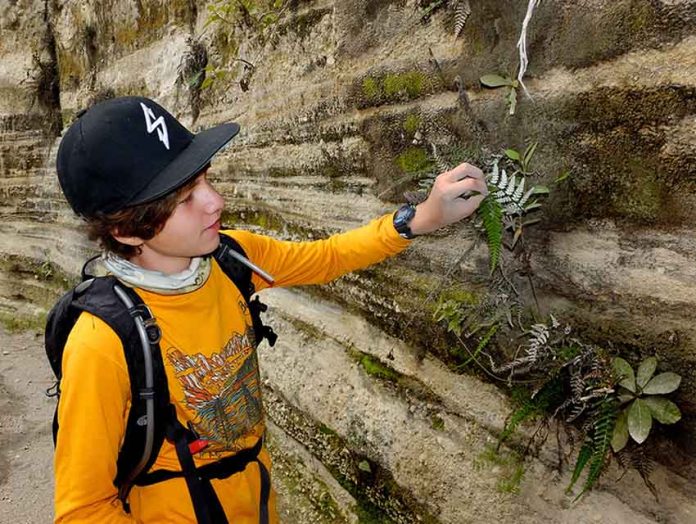
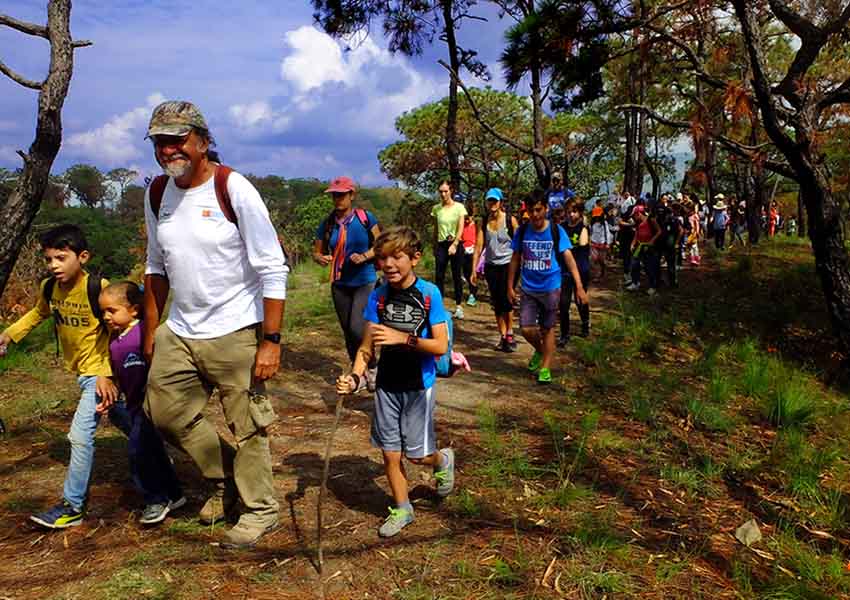
Jesús “Chuy” Moreno teaches children about science and nature in an interactive way — by hiking through the woods.
At last, the hikers arrived at Santa Catarina, where they expected to be welcomed and given shelter. At this point, they were no longer with their guide, who had gone on ahead to meet with the local tatohuani (governor).
“So when we reached the plaza of Santa Catarina, we just plunked down our mochilas [backpacks] and were relaxing and taking pictures of some children there when who walks up to us but the tatohuani himself, who, for some reason, had not seen our guide at all,” she said. “After interrogating us, the governor declared that we had no authorization to be there and that he was putting us under arrest — and he also confiscated the camera he had seen one of us use.”
One member of the hiking group remarked that it was the best jail a prisoner could ever have dreamed of “as it had a roof of beautiful stars and no walls whatsoever.”
“Eventually,” said Street, “our guide appeared, and a lot of talking took place, during which we got to know the local people. In the end — after making us pay a fine — they declared that we were no longer under arrest, and they put us up for the night as originally planned.”
Part of the joy of senderismo is the little surprises like this visit from the harmless San Miguelito, a hoverfly that often lands on fingers.
Whether you are attracted to senderismo because it throws you into the arms of the unexpected or because it brings you into contact with nature, or because it challenges you physically, as a senderista, you are surely ever on the lookout for new sites where you can go trekking.
Senderos de México is dedicated to showing you where those places are and how to get there.
You can look for trails on their website, Senderos de México or their Facebook page. On top of that, the organization has just announced the imminent publication of guides, in both Spanish and English, to trails around Lake Chapala. In the future, they say, they hope to include hiking sites all over Mexico.
If you happen to be a nature enthusiast living in the vicinity of Guadalajara or Puerto Vallarta, you can also find close to 100 places to hike and camp in my three volumes, entitled Outdoors in Western Mexico. If you are located in another part of the country, you can find plenty of nearby places to hike at Wikiloc.com or Alltrails.
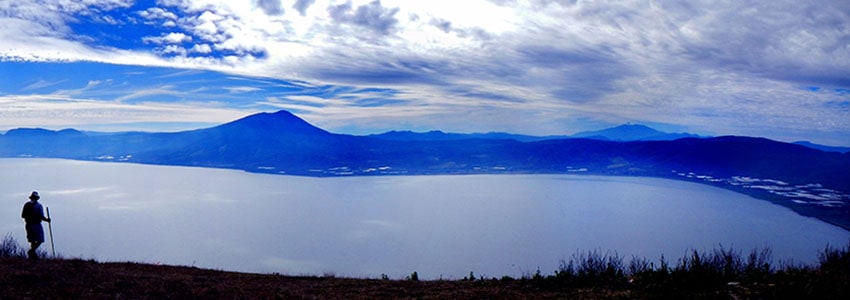
A transcendent view of Lake Chapala awaits you at the upper end of the El Chante hike described in the new Senderos de México Trail Guide.
Pick out a trail and discover what senderismo is all about!
The writer has lived near Guadalajara, Jalisco, since 1985. His most recent book is Outdoors in Western Mexico, Volume Three. More of his writing can be found on his blog.
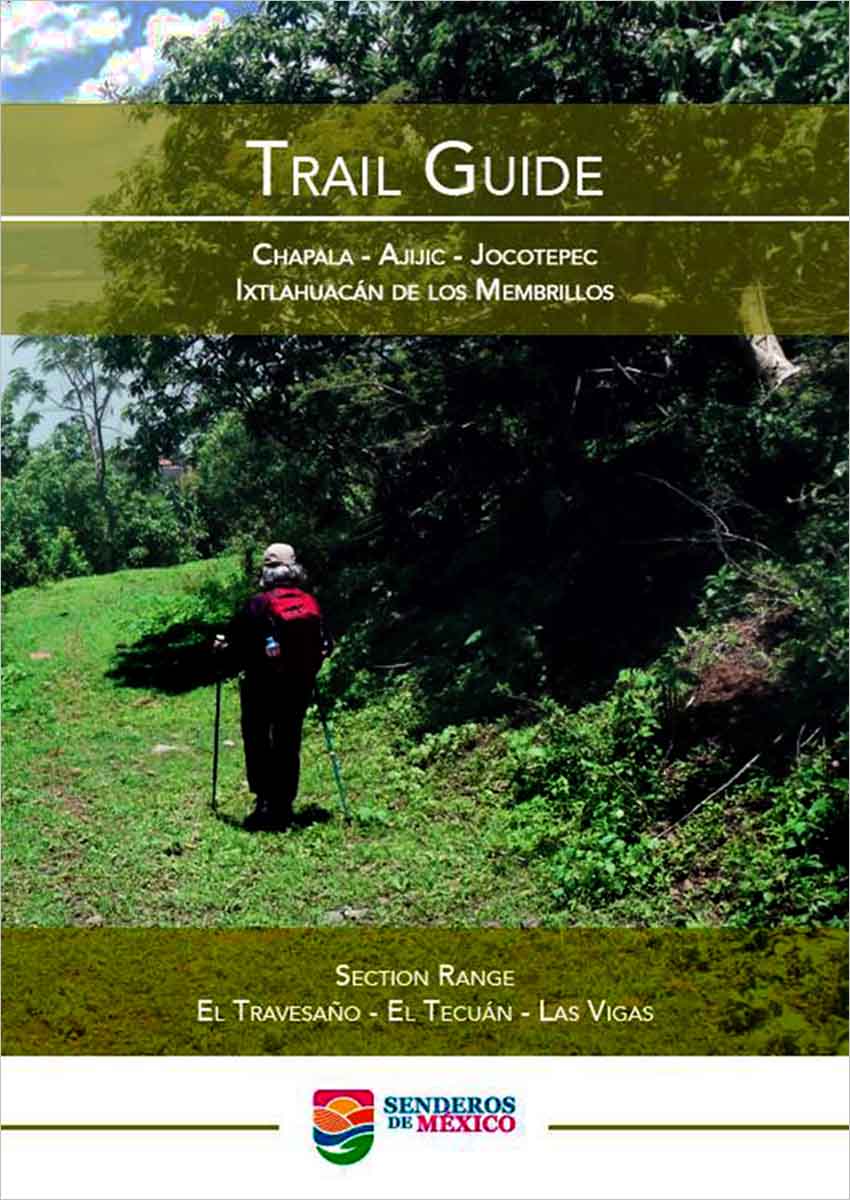
If you want to hike in Jalisco, Senderos de México’s new Trail Guide features 26 hikes starting from the shores of Lake Chapala.
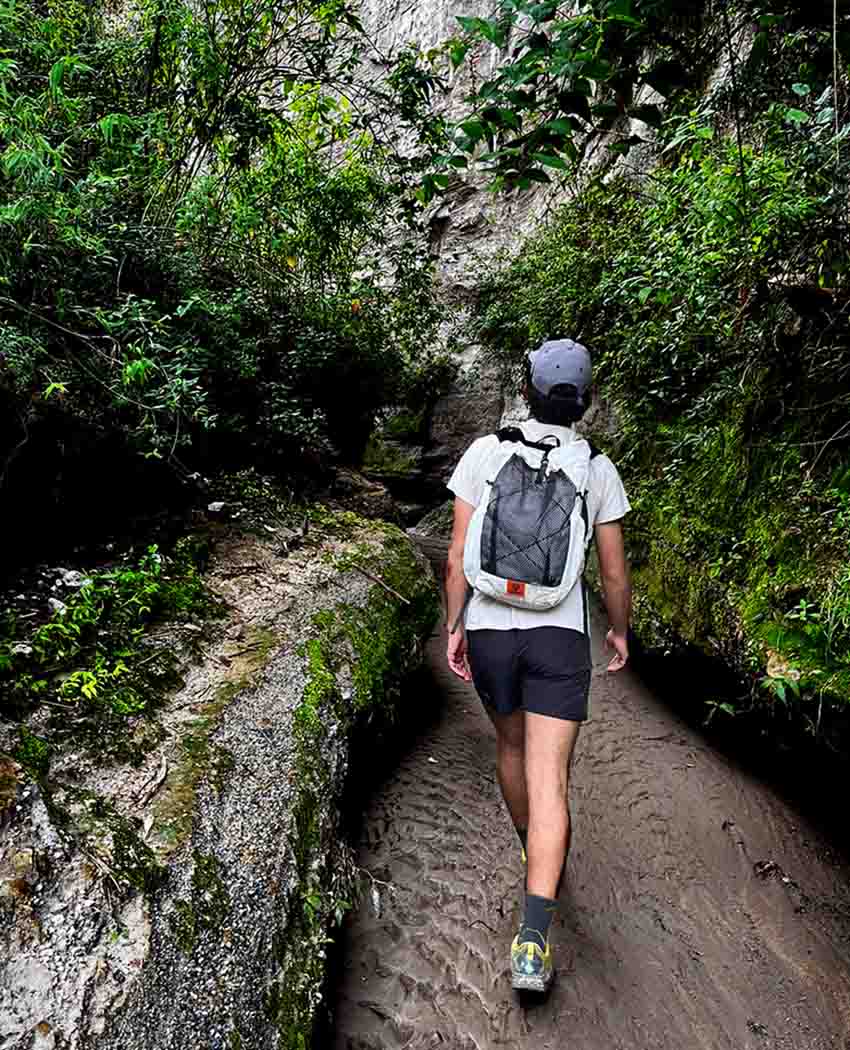
A great way to get started learning about nature or to get to know an unfamiliar place is by following an interpretive trail like this one in the Primavera Forest.
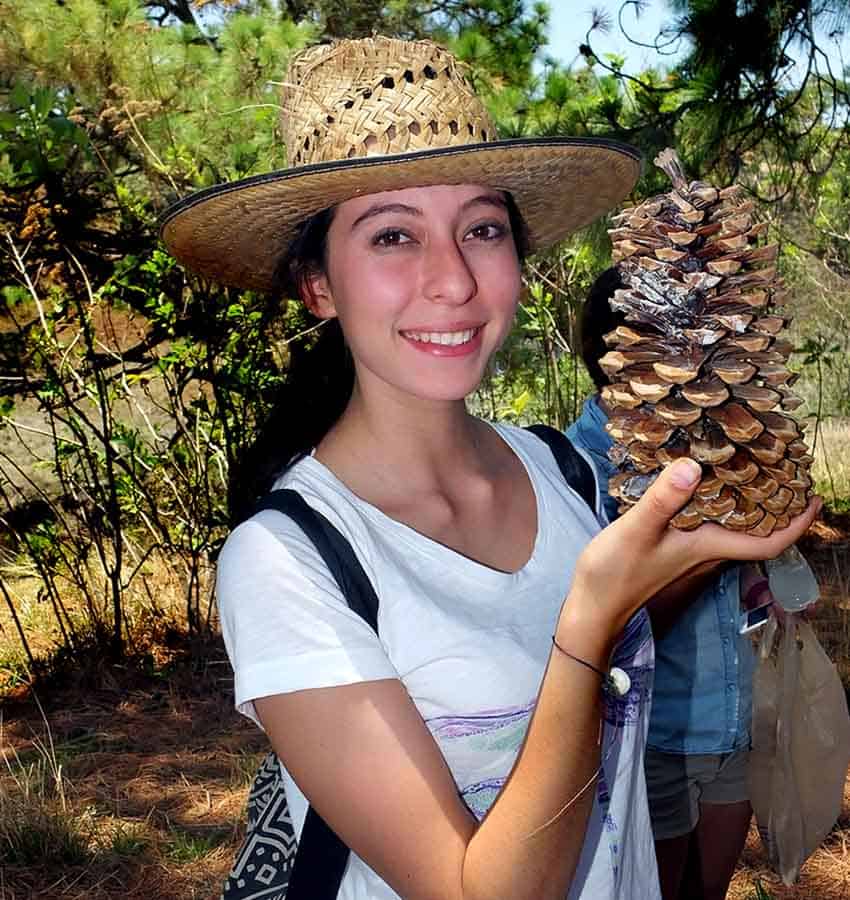
“Now this is what I call a pine cone!” The Pino blanco tree (Pinus devoniana) can be found everywhere from Sinaloa to Chiapas.
Senderos de México is dedicated to showing people where to hike in Mexico. Right now, they have mostly documented Jalisco’s trails.
A team of European scientists published a paper earlier this year that details the “ultra-emission event.”
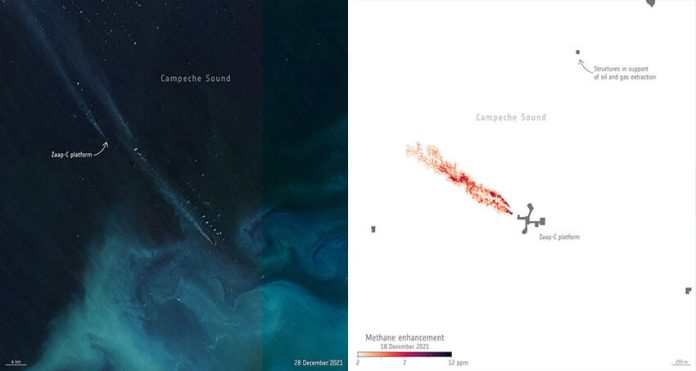
Announcing the results of the study in June, the European Space Agency (ESA) noted that the scientists used satellite data to detect methane plumes from Pemex’s Zaap-C platform.
“This is the first time that individual methane plumes from offshore platforms are mapped from space,” the ESA said. “… The team found that the platform released high volumes of methane during a 17-day ultra-emission event which amounted to approximately 40,000 tonnes of methane released into the atmosphere in December 2021.”
Methane, the main constituent of natural gas, is much more harmful to the environment than carbon dioxide and is considered a major contributor to global warming.
In a statement published Wednesday, Pemex said that a government-commissioned study carried out by the company Solal-Genermasa confirmed that “there were no large emissions of methane” at the Zaap-C platform.
The state oil company said that last December’s emissions had a 22% concentration of methane, while the remainder was made up of nitrogen and other gases “that don’t affect the environment.”
“The images captured by the satellites referred to in the Environmental Science & Technology Letters article were considered, incorrectly and unprofessionally, to be entirely methane gas emissions,” Pemex said.
Burning methane is a common way to avoid emitting the gas into the atmosphere, as can be seen in the upper left side of this image of a Pemex processing center off the coast of Campeche. Pemex
The state-owned firm said that the authors failed to “take the care” of asking Pemex for “feedback with regard to the composition of the gas” and the quantity of methane emitted into the atmosphere.
“The company Solal-Genermasa determined … that the emission of methane was 2,224 tonnes, which corresponds to 5% of what was published in the aforementioned article,” Pemex said.
“Finally, it’s important to point out that these emissions were an extraordinary event due to the meteorological conditions,” it added, explaining that there was strong rain and gusts of wind that caused a burner to shut down during the period in question.
Concerns about Pemex’s methane emissions were also raised last year. Daniel Zavala, a senior scientist at the United States-based non-profit Environmental Defense Fund, said in July 2021 that methane was leaking from Mexican gas and oil operations at “alarming and worrying” levels.
A study to which he contributed found that Mexico’s methane leak rate was more than double that of the United States, the world’s largest oil producer.
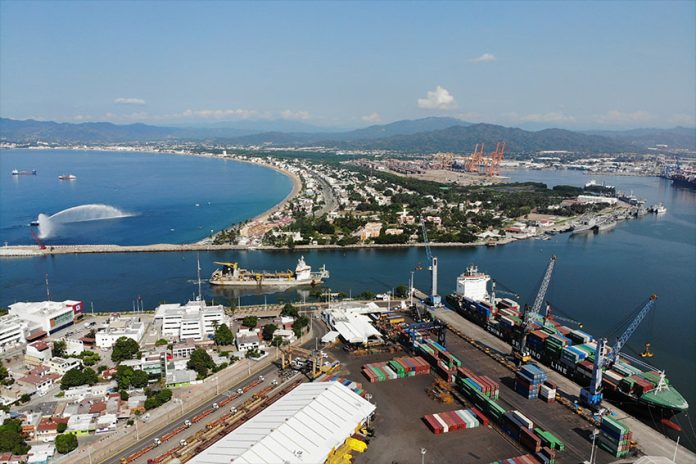
An aerial view of Manzanillo, Colima, an important port of international trade. Fernando Macías Romo / Shutterstock.com
Mexico was the United States’ second largest trade partner in the first seven months of the year with two-way trade worth almost US $450 billion, U.S. government data shows.
United States Census Bureau data published this week shows that two-way trade increased 19.8% between January and July to $449.8 billion. Almost 60% of that amount – $261.9 billion – came from Mexican exports to the United States, while imports from the U.S. were worth $187.9 billion.
The value of Mexico’s exports to the United States increased 20% compared to the first seven months of 2021, while imports from the U.S. rose 19.5%.
Most of Mexico’s export income comes from manufactured goods, including vehicles, machinery, computers and televisions. However, it also sends a range of other products to the United States and other countries further afield, among which are crude oil, fruit and vegetables, chemicals, beer and alcoholic beverages such as tequila, mezcal and wine.
Among the products that Mexico imports are gasoline and other refined fuels – a situation President López Obrador is trying to bring to an end – food (including corn) and consumer goods such as cell phones.
Canada edged out Mexico as the United States’ No. 1 trade partner in the first seven months of the year, with Canadian-American trade totaling $466.7 billion. China ranked as the United States’ third largest trade partner, with Sino-U.S. trade worth $402.3 billion between January and July.
The trade between Mexico and its northern neighbor left the former with a surplus of almost $74 billion so far this year. However, taking into account all trade partners, overall Mexico is running a trade deficit for 2022.
Data from national statistics agency INEGI shows that the value of Mexican exports to all countries around the world in the first seven months of the year was $327.3 billion. Imports in the same period totaled $346.2 billion, leaving Mexico with a trade deficit of $18.9 billion.
Trade surpluses have only been achieved in two months this year – February and March – while there were deficits in January and the four months between April and July. Mexico recorded a trade deficit of $10.9 billion in 2021.
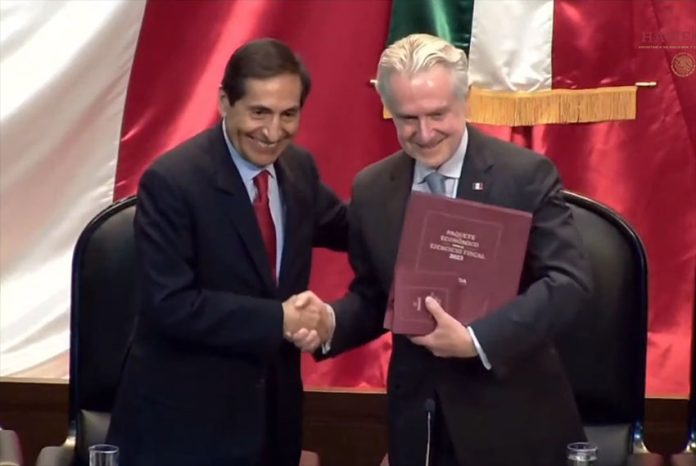
Finance Minister Rogelio Ramírez de la O officially handed over the budget proposal to Congress on Thursday. Screenshot / Secretaría de la Hacienda
Infrastructure projects, seniors’ pensions, health care and social programs are among the big-ticket items in the federal government’s proposed 8.3-trillion-peso (US $417 billion) 2023 budget.
Delivered to Congress on Thursday, the economic package outlines proposed spending whose total is 11.6% higher in real terms than that approved for 2022.
The Ministry of Finance (SHCP), which prepared the budget, said that the package is “aligned with the 2019-24 National Development Plan,” whose purpose is to “achieve an environment of security and general well-being for the Mexican population.”
The proposed expenditure, which must be approved by Congress to be implemented, “confirms the Mexican government’s commitment to maintain healthy public finances despite the complex international situation,” the SHCP said in a statement.
The Tourism Ministry is slated to get 145.6 billion pesos, an increase of 111% compared to the resources it was allocated for 2022.
However, 98% of that amount is earmarked for construction of the Maya Train railroad, one of the government’s priority infrastructure projects. The total cost of the project, which is not yet 50% complete, is now slated to be 230 billion pesos (US $11.5 billion).
The Environment Ministry is also in line to get a substantial funding boost: it received 42.8 billion pesos in 2022 but is set to get 75.6 billion pesos next year, a 77% increase.
The Welfare Ministry, responsible for paying pensions to seniors and government benefits to citizens in general, is slated to get a more modest 30% increase in funding, but its proposed budget – just over 400 billion pesos – is the largest of any ministry. Over 80% of that amount will go to paying pensions to millions of Mexican seniors.
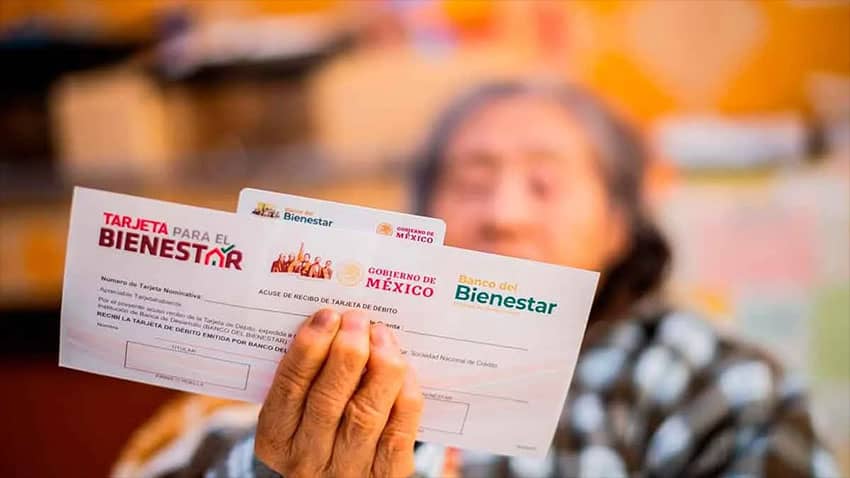
An elderly woman displays her pension card and Welfare Ministry paperwork for the camera. Twitter @bienestarmx
The SHCP also outlined significant spending on health care. The Mexican Social Security Institute, a major health care provider, is slated to receive over 1.1 trillion pesos – an increase of almost 10% compared to this year – while the Ministry of Health is in line to get 209.6 billion pesos.
Among the other ministries with large proposed budgets for 2023 are Public Education (402 billion pesos) and National Defense (111 billion pesos). The former is responsible for implementing a new curriculum model in the nation’s schools, while the latter is engaged in a range of non-traditional tasks including public security, management of customs and infrastructure construction.
The government has proposed cutting the Federal Electricity Commission’s budget by 6.9% to just under 440 billion pesos, while the state oil company Pemex is slated to get 678.4 billion pesos, a slight increase compared to this year. President López Obrador is determined to “rescue” both state-owned companies from what he describes as years of neglect.
He is also determined to deliver a range of infrastructure projects – including the Maya Train, the Dos Bocas refinery on the Tabasco coast and a new railroad to link the Pacific and Gulf of Mexico coasts across the Isthmus of Tehuantepec – and improve the living conditions of the nation’s most disadvantaged people.
Almost 830 billion pesos are slated to go to the construction of strategic projects next year, while 1.75 trillion pesos is earmarked for social programs, including the pension scheme, the Youths Building the Future apprenticeship scheme and the Sowing Life reforestation and employment program. Some 1.2 trillion pesos is set to go to state and municipal governments, a 14% increase compared to the 2022 budget.
The government’s budget document also includes a range of economic forecasts, including projected income of 7.1 trillion pesos in 2023.
The SHCP forecast GDP growth of 2.4% in 2022 and predicted that the annual inflation rate will be 7.7% at the end of the year, which would be 1% lower that the level reached in August.
The ministry also predicted an exchange rate of 20.6 pesos to the U.S. dollar at the close of 2022 and a central bank benchmark interest rate of 9.5%, one point above the current level. In addition, it predicted an average 2022 price of US $93.60 per barrel of Mexican crude and a production level of 1.83 million barrels per day.
State-owned oil company Pemex is set to receive more than 650 billion pesos, a small increase over the funds it received in 2022. Facebook / Pemex
For 2023, the SHCP forecast growth in the range of 1.2% to 3% and predicted that inflation would come down to within the central bank’s target range of 3% give or take a percentage point by the end of the year. It predicted that a greenback will buy 20.6 pesos at the end of next year and that the key interest rate will be 8.5%. A lower Mexican crude price of US $68.70 is anticipated but output is slated to ramp up to 1.87 million barrels per day.
The SHCP also predicted public debt of 49.4% of GDP at the end of 2023. It highlighted that debt as a percentage of GDP “has only grown four points” since the government took office despite the economic downturn precipitated by the coronavirus pandemic, described as “the worst crisis of the last 80 years.”
It emphasized the role the government’s “prudent fiscal policy” played in keeping debt levels down.
In an address to lawmakers on Thursday, Finance Minister Rogelio Ramírez de la O asserted that the 2023 economic package is “balanced, responsible and realistic” and will drive the country’s economic recovery from the pandemic-induced downturn.
The budget ensures that government will continue to function, but directs the majority of resources to projects that will benefit the well-being of the Mexican people, he said.