Home Blog Page 982

10 trapped in flooded Coahuila mine

0
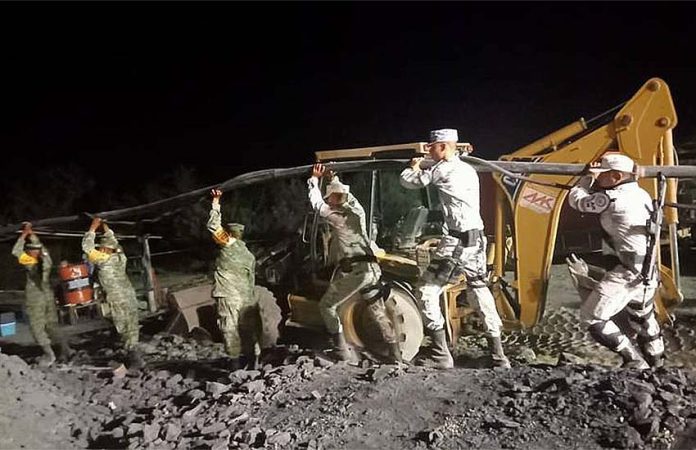
Military in Coahuila for miners rescue
The military arrived on the scene Wednesday, deploying a rescue plan for the 10 trapped miners. NG/Twitter

Ten miners remained trapped Thursday afternoon following an accident Wednesday at a coal mine in the northern state of Coahuila.

The tense situation began Wednesday afternoon when workers reportedly were excavating one shaft and ran into an adjoining shaft that was full of water, which caused a flood and trapped the miners.

According to an update early Thursday, five miners were able to get out shortly after the accident and were taken for medical care; three remain hospitalized.

Later, during the morning press conference of President López Obrador, an official reported that a group of 30 military personnel with specialized equipment left for the scene late Wednesday night, as did divers from the National Guard. A coordination post has been set up onsite, added Agustín Radilla Suástegui, the deputy minister of national defense, and there was an early-morning meeting among agencies to coordinate rescue efforts.
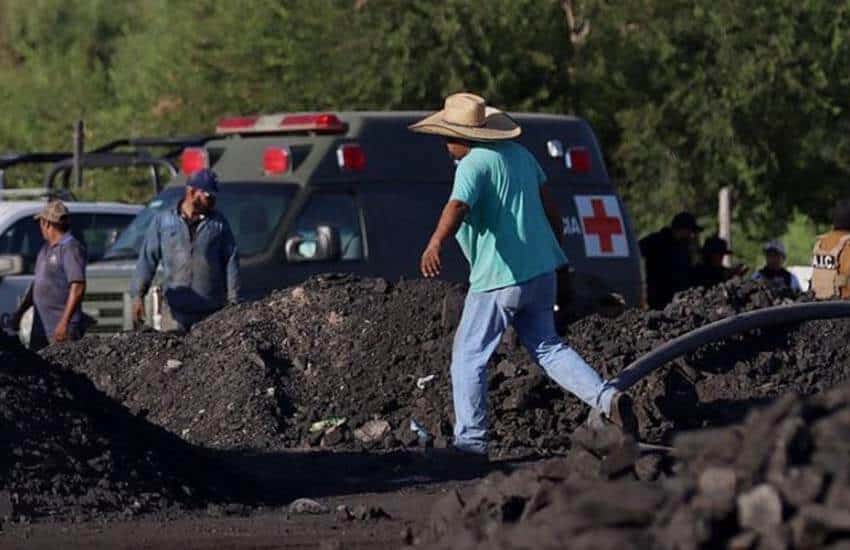
trapped miners in Coahuila
Families of the trapped miners said that their loved ones had been prohibited from entering the mine earlier this week due to flooding concerns but had re-entered when finances became an issue. Internet

The mine is located near the small town of Agujitas, which is about 110 kilometers from the Texas border in the municipality of Sabinas, Coahuila. 

Radilla said the miners were trapped between two pits flooded with approximately 34 meters of water. The mine is made up of three 60-meter-deep shafts.

López Obrador said he had instructed the heads of the military (Sedena), CFE, Pemex and Conagua to streamline support. “What I wish with all my soul is that we rescue the miners,” he added.

According to an account from Sedena, the accident occurred while the miners worked with hand tools in a 50-meter-deep pit. When they tapped into the adjoining area full of water, a tunnel collapsed, causing the flood that trapped the men.
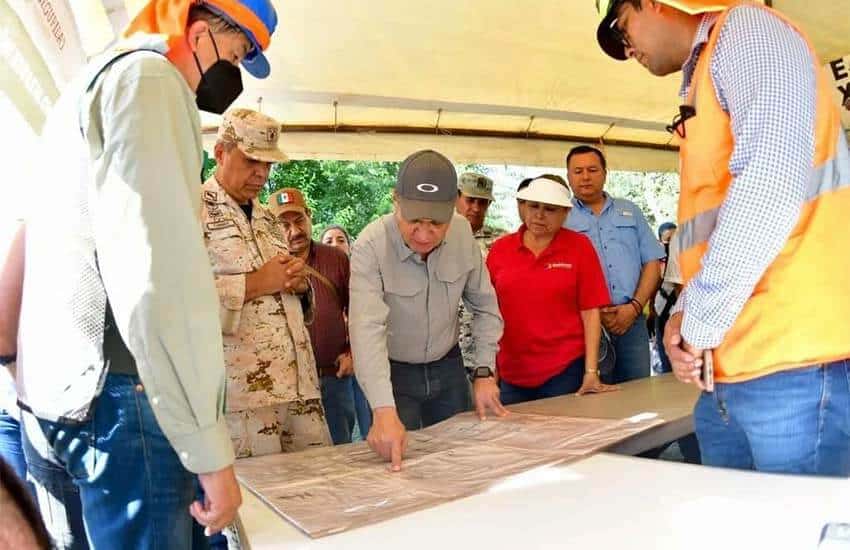
Governor Miguel Ángel Riquelme Solís
Governor Miguel Ángel Riquelme Solís, center, conferring with the rescue team at the mine. Twitter

The newspaper El Sol de México reported that relatives of the miners said it had been known since Monday that working there was risky because a farm in the Agujita area had a pocito (well) with excess water. For that reason, “the workers were not allowed to enter [the mine] on Monday and Tuesday,” the newspaper wrote.

El Sol de México added that on “Wednesday it was decided that they should go down to work, since they are paid for each tonne of coal extracted, and a stoppage would” result in financial setbacks.

The goal of the rescuers is to get pumping equipment into place to drain the coal pit, sources reported, so search-and-rescue teams can enter. According to media reports, the rescue force in the mine area numbers 269 people, including nearly 100 soldiers and seven agencies of the federal government, as well as state and municipal organizations and four military canine pairs.

“It is complicated, but … the important thing is to place the pumps strategically to extract the greatest amount of water and have immediate access to the mines,” said national Civil Protection coordinator Laura Velázquez.
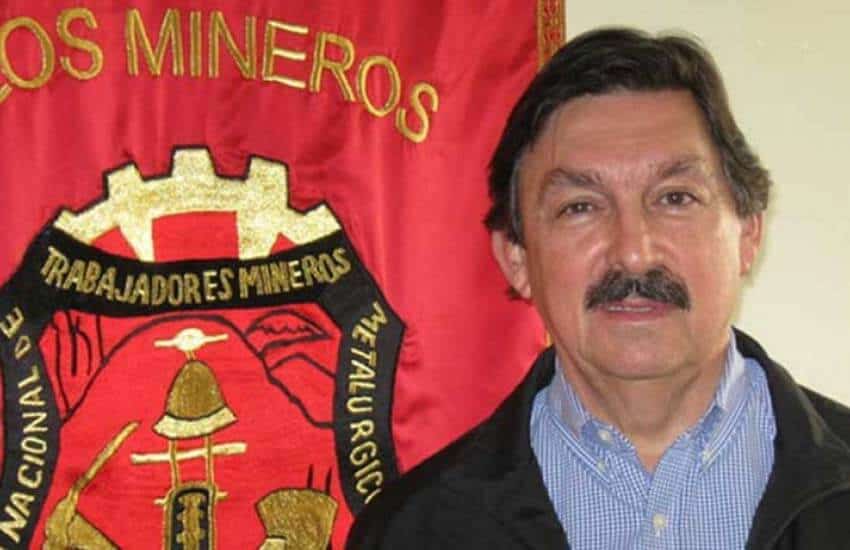
Napoleon Gomez Urrutia
Senator Napoleon Gómez, seen here in an old photo from when he was the head of a national mine workers’ syndicate, said the accident made a case for reforming the Mining Law. The miners were not unionized.

The mine began operations in January 2022 and hadn’t had any incidents before this week, the Ministry of Labor and Social Security (STPS) reported, according to El Sol de México, which also reported that, like most mine workers in Mexico, the trapped miners are not unionized.

“For that and other fundamental reasons, we need a comprehensive reform of the Mining Law,” Morena Senator Napoleón Gómez Urrutia said.

Gómez’s father was a mining union leader for 40 years and he, too, has been involved in union leadership.

On Twitter, Gómez, the president and general secretary of the National Mining Union wrote that authorities do not comply with their obligation to inspect or supervise coal-mining operations, and “that is why these tragedies occur very often,” El Sol de México reported.

The accident recalls a previous disaster in February 2006 at the Pasta de Conchos mine, also in Coahuila, where 65 workers died. Only two bodies were recovered. Since then, there have been more than 100 deaths of miners in the area, the Excélsior newspaper reported.

The most recent accident was in June 2021, in the municipality of Múzquiz, Coahuila, when a flood caused the roof and walls of a mine to rupture, killing all seven miners who were trapped inside.

With reports from El Sol de México, Infobae and Milenio

Gunmen attack and kill Guanajuato journalist

0
murdered Mexican journalist Ernesto Mendez
The director of the Tu Voz news website was shot while celebrating in a bar owned by his family. Article 19

A journalist was shot and killed in Guanajuato Tuesday, becoming the 13th media worker to be murdered this year.

According to Article 19, a press freedom advocacy organization, Ernesto Méndez, director of the Tu Voz news website, was attacked by gunmen at approximately 11 p.m. while in a bar owned by his family in San Luis de la Paz, a city in northern Guanajuato.

Article 19 said on Twitter that it was aware that Méndez had received threats prior to his murder and called on the federal Attorney General’s Office to investigate the case and consider the journalist’s work as a motive for the crime.

At least nine of the 13 murders of journalists this year were related to their work, the organization said. “We demand that the Mexican state act urgently to stop this phenomenon and join in the grief of Ernesto’s family, friends and colleagues,” Article 19 said.

amlo and mendez
This file photo of slain photographer Méndez and President López Obrador has been described as a metaphor for the reality of journalism in Mexico: the victim of the latest attack against a journalist has his eyes fixed on the president, who looks the other way.

The newspaper El País reported that Tuesday began as a day of celebration for Méndez because he had been awarded a permit to stage a regional festival. The journalist and businessman was celebrating with friends and family when gunmen opened fire.

Guanajuato Governor Diego Sinhue Rodríguez said that two other people were killed in the attack. “We strongly condemn the crime in which the businessman and journalist Ernesto Méndez and two other people lost their lives,” he wrote on Twitter.

The governor said he had instructed the state’s governance minister to provide support to the families of the victims and pledged that his government would ensure that justice is served.

With the June murder of Tamaulipas journalist Antonio de la Cruz, 2022 became the most violent year on record for Mexican media workers. There have been some arrests in connection with the crimes, but impunity remains common in cases involving journalists.

Murdered Mexican journalist Ernesto Mendez
Méndez was also a businessman involved in organizing the Feria del Noreste, a regional fair in San Luis de la Paz scheduled for this month.

President López Obrador has been accused of fomenting violence against journalists with his frequent diatribes against them and against media organizations that are critical of him and his government.

Jan-Alberto Hootsen, Mexico representative for the Committee to Protect Journalists, said in 2020 that reporters who have been criticized by López Obrador at his weekday news conferences have received thousands of adverse and hostile messages on social media and even death threats.

Article 19 said in 2019 that the president’s “stigmatizing discourse” against the media “has a direct impact in terms of the … risk it can generate for the work of the press because [his remarks] permeate in the discourse of the rest of society and can even generate attacks.”

With reports from El País

Bus and Metro parkour stunts alarm authorities

0
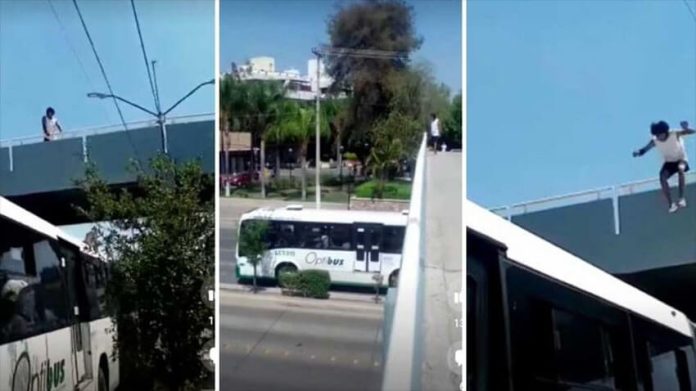
Several people recorded the stunt on cellphone cameras.

Videos went viral this week of a youth identified only as Noah jumping from the Hidalgo Park bridge in León, Guanajuato, onto a transit vehicle below as part of parkour, an increasingly popular form of athletic training.

Officially originating in the 1980s in France, parkour pulls from many ancient traditions and cultures from around the world. It is a kind of training and gymnastics where participants take on challenges to move from one obstacle to the next in the most fluid and efficient way, often including jumps and rolls. It takes place mainly in urban settings and groups of young people can often be found in parks practicing.

The pastime has become popular in the last several years across Mexico and recently in Mexico City, young people have been filming themselves jumping and riding on Metro cars and other public transportation.

The León incident was captured on several cellphone videos and shows the young man jumping from the bridge onto a city bus known as an oruga or caterpillar become of its several sections connected by moveable accordion-like connectors that allow one section of the bus to turn independently of the other and then pull the back section behind it.

Se hacen virales por hacer "parkour" en las Orugas del SIT
Video of the stunt was posted on YouTube.

One of the biggest dangers, according to León public transport association president Daniel Villaseñor, is that the accordion-like middle sections could crush someone if they landed on it. He added that the fabric of those sections is not strong enough to take the force of a jump and could rip. The young man in the video does not land on the middle section of the bus, but Villaseñor said it was still disruptive for the driver and passengers when they heard someone jump onto the top of the bus and then run off into the traffic laughing.

Villaseñor warned against these kinds of tricks and feats and urged the public to report those involved to the authorities. The young man in question, Noah, is expected to have to pay some kind of fine or have to perform community service, but as of now, authorities have not located him.

With reports from AM and Noticias Vespertinas

Bank of America forecasts zero growth for Mexico in 2023; raises specter of recession

0
economic downturn graphic mexico
Bank of America said Wednesday that it expects a U.S. economic slowdown to eventually extend to Mexico. deposit photos

Bank of America (BofA) has lowered its 2023 growth forecast for the Mexican economy from 1% to 0%, predicting that GDP will stagnate as the United States economy slows.

In a note published Wednesday, the bank predicted that an economic deceleration in the United States, “in part driven by higher interest rates,” would be the main driver of a slowdown that would put Mexico on the brink of recession.

It said the fortunes of the United States and Mexican economies have historically risen and fallen together and that it expects that a U.S. slowdown will extend to Mexico “with a lag.”

BofA predicted that internal factors will also contribute to a slowdown here, specifically citing higher interest rates, tight fiscal policy and renewed uncertainty generated by the energy dispute between Mexico and its North American trade partners.

Bank of America building
Bank of America also cited internal factors: higher interest rates, tight fiscal policy and uncertainty over Mexico’s relationship with its North American trade partners. Ken Wolter/Shutterstock

The central bank raised its benchmark interest rate by 75 basis points to 7.75%  in June and is expected to lift its key rate again next week as it attempts to tame inflation that rose above 8% in the first half of July. BofA predicts that the benchmark rate will be 9.5% at the end of the year and remain at that level through 2023.

The energy dispute precipitated by federal government policies that favor the Federal Electricity Commission and state oil company Pemex over private and foreign firms intensified in late July when both the United States and Canada launched challenges under USMCA, the three-way North American trade pact.

BofA said the formal dispute resolution process requested by the U.S. and Canada due to Mexico’s “nationalist energy policies” would take “many months” and could result in the imposition of tariffs on Mexican exports. Uncertainty about the potential tariffs dissuades investment in Mexico, it said.

BofA said that one factor that could cushion the anticipated slowdown is remittances, which reached a record high of over US $27.5 billion in the first six months of the year.

US trade representative Katherine Tai and Canada trade minister Mary Ng
U.S. Trade Representative Katherine Tai and her Canadian counterpart, Minister of International Trade Mary Ng. Both countries have invoked USMCA rights to review Mexico’s “nationalist” energy policies, creating investor uncertainty.

The bank’s 2023 growth forecast for Mexico is below the current outlooks of many other financial institutions, but not as gloomy as Moody’s Analytics’ prediction that the economy will likely fall into recession next year.

On a positive note, BofA raised its 2022 forecast to growth of 1.9%, a 0.2% uptick compared to its previous prediction. Better than expected economic results in the first half of the year – annual growth was 1.9% in the April to June quarter – were the catalyst for the upward revision.

In contrast, Ve Por Más (BX+), a Mexican bank, cut its 2022 forecast by 0.2% to 1.8%. It also made a slight downward adjustment to its 2023 growth outlook, but at 1.7%, it is decidedly more optimistic than that of BofA.

BX+ chief economist Alejandro Saldaña said Wednesday that “the engines of economic growth are cooling due to inflation and [high] interest rates.”

“We’re no longer so worried about production obstructions, now it’s [consumer] demand that concerns us,” he told a virtual press conference. Saldaña noted that the government is following a policy of austerity and therefore federal expenditure won’t be an “engine for growth in the coming quarters.”

With reports from El Universal and Expansión

As turtles arrive on Chiapas beaches, their eggs appear in the marketplace

0
olive ridley turtle in Oaxaca
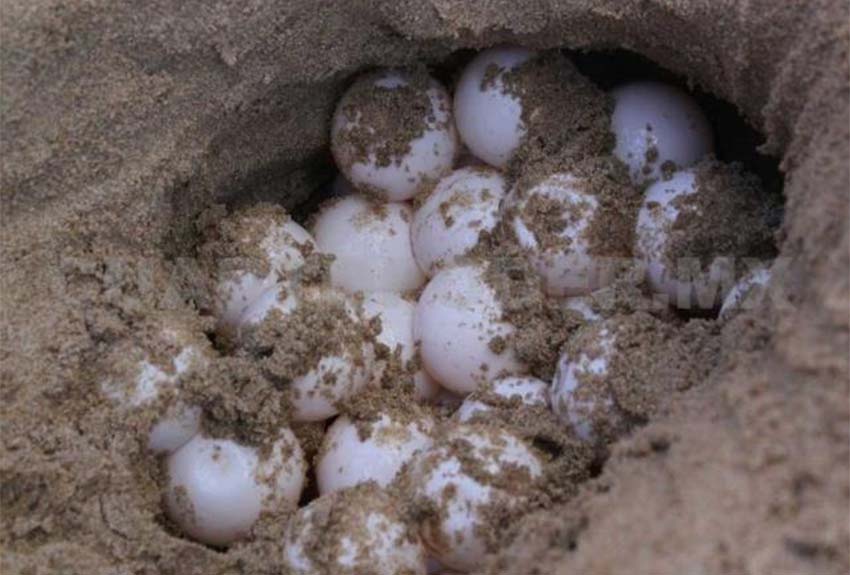
Turtle eggs face several predators, but none worse than poachers, who can collect up to 20 dozen eggs a night. Carlos Slim Foundation

With sea turtles once again nesting on the coast of Chiapas, turtle eggs have reappeared on the black market in the southern state.

The newspaper Diario de Sur reported that poachers are removing olive ridley turtle eggs from beaches in Mazatán, a coastal municipality in southern Chiapas that borders Tapachula.

On the black market, a dozen eggs sell for around 70 pesos (US $3.40), according to José Alfredo González Gerardo, a biologist who collaborates with a Mazatán community group dedicated to the protection of flora and fauna.

Unfortunately, some people see the poaching and sale of turtle eggs as a money-making exercise, he told Diario de Sur. González said that a single poacher can collect up to 20 dozen eggs in a night and make 1,400 pesos (US $68) by selling them on the black market.

turtle eggs
Despite being illegal contraband, turtle eggs are an entrenched food in southern Chiapas.

During nesting season, large numbers of poachers descend on Mazatán beaches to look for eggs, he said. Authorities do little to stop the illegal practice and volunteers attempting to protect nests are outnumbered and outpaced by the poachers, many of whom use quad bikes.

González said the eggs are subsequently sold in municipalities such as Tapachula, Tuxtla Chico, Cacahoatán, Unión Juárez and Suchiate. People from those municipalities come to Mazatán to remove eggs from turtle nests, he added.

González said the eggs are illegally sold in public markets and served as snacks in bars and cantinas.

He attributed the high demand for turtle eggs to the erroneous conception that they are an aphrodisiac. There is no conclusive medical evidence that they are, he said.

The biologist called on authorities to do more to stop the poaching, especially on the Emiliano Zapata ejido (communal land), which is easily accessible via a coastal highway that runs through Mazatán. Under federal law, the poaching of turtle eggs is punishable by imprisonment of up to nine years as well as large fines.

Despite a federal ban on the hunting, sale and consumption of sea turtle eggs taking effect over 30 years ago, they continue to be poached, sold and eaten in some other parts of the country, such as Oaxaca’s Isthmus of Tehuantepec region.

With reports from Diario del Sur

Magical Town imposes controls on visitor numbers to avoid saturation

0
Real de Catorce, San Luis Potosi
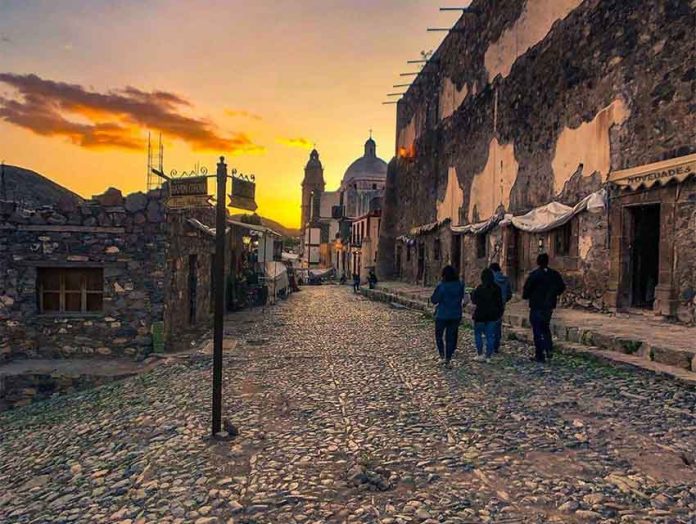
Tourists suddenly began converging on this sleepy San Luis Potosí locale after it received Magical Town status in 2001.

Like many popular locations in this post-COVID summer, the Magical Town of Real de Catorce in the state of San Luis Potosí has been inundated with tourists and is now putting measures into place to keep the numbers of visitors from getting out of control.

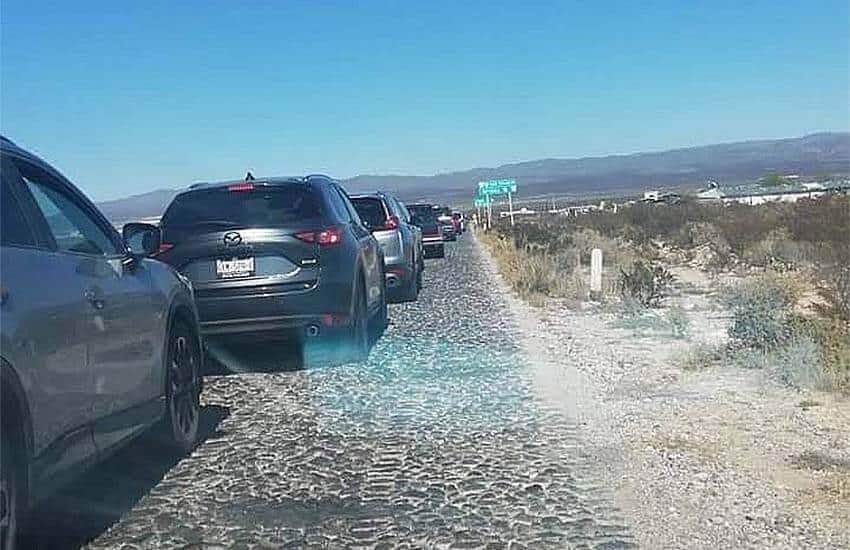
Mayor Guadalupe Carrillo said the town only has space for 1,000 vehicles and that once they reach that limit, city workers stand at the town’s entrance to tell drivers that the city is full and that they can no longer enter. Some visitors are so desperate not to change their weekend plans that they wait at the town’s border for cars to leave.

The nearly 1,000 residents of Real de Catorce — named a Pueblo Mágico in 2001 — have long been accustomed to receiving both Catholic and Huichol pilgrims, but those previous visitors have been dwarfed by the new surge of tourists to this tiny mountain town. What was for years a ghost town has become a draw for domestic and international tourists that come to experience the town’s lost-in-time quality and reputed spiritual energy.

During the low-season months of May and June, the city welcomed around 6,000 visitors each weekend, but now that summer vacation is in full swing, they are seeing visitor numbers between 10,000 and 12,000. Currently, tourists can wait hours to enter.

cars lined up outside Real de Catorce, San Luis Potosi
Cars of visitors are often lined up waiting to enter Real de Catorce, San Luis Potosí.

While municipal officials have entertained creating another entrance, they’ve discarded the idea for the time being because officials are limited by the town’s historical status. Also, such a project would require an environmental impact study and negotiations with local indigenous groups first.

They also worry that providing for many visitors poses the danger of exhausting the town’s services and the cobblestone streets that run its length.

With reports from El Universal de San Luis Potosí and El Sol de San Luis

‘Crocodile’ causes alarm in Xochimilco canal in Mexico City

0
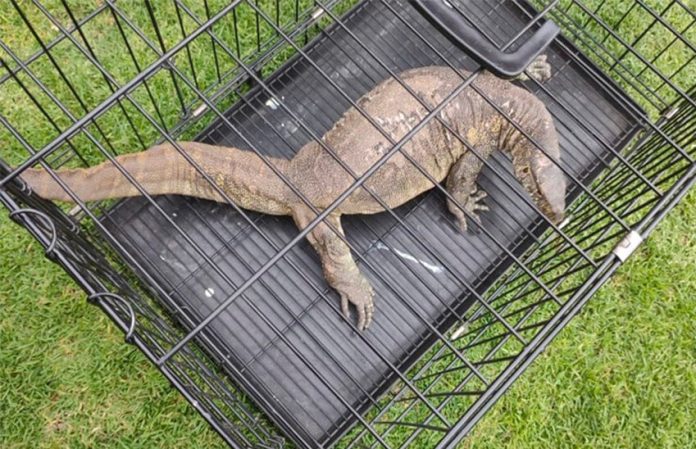
The Nile monitor
The Nile monitor after it was captured this week in Xochimilco.

Visitors to Mexico City’s southern canals on Tuesday were met by an uncommon sight in the waters of Xochimilco, a breed of water lizard endemic to sub-Saharan Africa and in the Nile River region called a Nile monitor.

What onlookers believed was a crocodile swimming in the water was actually a non-native specie of reptile with sharp claws, muscular bodies, and strong jaws, and one of the world’s longest lizards in existence. It is thought likely that the lizard was released into the water by someone who could no longer afford its extensive upkeep or control its often aggressive behavior. Reptiles and crocodiles have been encountered in Mexico City before, and all have been the result of animal trafficking as the species are not native to the area.

The Nile monitor is a threat to the local ecosystem as a predator of other native animals and has even been known to attack domestic dogs and cats. The monitor found in Xochimilco was over a meter long and probably young because as adults they can reach over 2 meters long.

It was captured by the city’s Animal Protection Brigade (BVA) and police for medical revision and observation, and later reported to have been injured and sick, other possible reasons why its previous owner had released it into the Xochimilco canals instead of selling it on the black market. Authorities mentioned that this species can carry Amblyomma ticks which can be vectors for ehrlichiosis, but the probability of that being an issue with this particular animal was low.

Members of the BVA reminded the public that animals are living beings that require care and time, “and we entreat you to care for them and not mistreat them.”

With reports from Vanguardia

Searching mothers express their appreciation to drug lords

0
Delia Quiroa acknowledges cartels' support
Delia Quiroa acknowledges cartels' support in her video message.

A year after issuing a plea to the Gulf Cartel to allow them to search for their loved ones’ remains in an “extermination camp” near the border city of Matamoros, mothers of missing people in Tamaulipas have thanked the crime group for taking heed.

In August 2021, the Tamaulipas Union of Collectives of Searching Mothers (UCMBT) sought a “truce” from the criminal organization, which is based in the northern border state, to allow them to enter a property in an area called La Bartolina, located about 25 kilometers east of Matamoros.

“We’re not looking for culprits, we’re looking for our children, fathers, mothers, siblings and [other] relatives,” the group said in a statement directed to the leader of the Gulf Cartel faction known as the Cyclones of Matamoros.

A year later, a spokeswoman for the UCMBT said that the faction had granted its request and allowed mothers to search for their missing loved ones.

“We’d like to thank the Cyclones of Matamoros for respecting our lives and [right to] free movement, allowing us to continue searching for our loved ones,” Delia Quiroa said in a video message.

In a written statement, the UCMBT said the criminal faction’s cooperation allowed two families to locate the remains of missing loved ones in La Bartolina.

In her message, Quiroa also thanked the leader of the Jalisco New Generation Cartel, Nemesio “El Mencho” Oseguera Cervantes, for joining the union’s “call for peace.”

Oseguera is the “first and only” criminal leader to speak publicly in favor of peace, Quiroa said.

The CJNG leader – a wanted man in both Mexico and the United States – has advocated limiting armed conflicts to between criminal groups. The cartel recently instructed its rivals to leave priests, doctors, nurses and teachers alone.

“I’m communicating with all the cartels to invite you to make the war [just] between us and not interfere with those we shouldn’t interfere with,” a masked and armed man said in a video posted to social media. There was some speculation that it was Oseguera who read the message, but that wasn’t confirmed.

In its statement, the UCMBT expressed admiration for El Mencho’s pronouncements in favor of peace and “leaving citizens to live a normal life.”

The group said it hoped that leaders of other cartels would follow Oseguera’s advice, “mainly for the sake of eradicating the disappearance of people in Mexico,” where more than 100,000 are classified as missing.

In her video message, Quiroa thanked President López Obrador for allowing the United Nations Committee on Enforced Disappearances to visit Mexico, but urged the government to follow its recommendations.

In its statement, the UCMBT called for the dismissal of Deputy Interior Minister Alejandro Encinas, who has been at the forefront of the government’s efforts to locate missing people and respond to the country’s forensic crisis.

“Encinas can’t continue in the position simply because he hasn’t produced results,” the group said before also calling for the dismissal of three other federal officials including National Search Commission chief Karla Quintana.

With reports from Infobae and Milenio

Mexico City records 19% increase in attacks by dogs

0
aggressive dog
Federal data shows there were 5,665 dog attacks in the capital between January and July, 920 more incidents than in the same period of 2021. Byrdyak/iStock

Dog attacks have increased over 19% in Mexico City this year, with well over 100 victims seeking treatment for their injuries in public hospitals.

Federal data shows there were 5,665 dog attacks in the capital between January and July, an increase of 19.4%, or 920 incidents, compared to the same period of 2021.

Data obtained by the Milenio newspaper showed that 141 people have arrived at the emergency departments of public hospitals to seek treatment for dog bites this year. The number of people who sought hospital treatment for such injuries surged 40.7% last year to 280 from 199 in 2020, when COVID-related restrictions were at their peak in many cities, which seemed to explain a marked decrease in dog attacks across Mexico in that year.

Although none have been reported in 2022, fatal dog attacks have occurred in the capital in recent years, including one that claimed the life of a toddler in the borough of Iztapalapa in 2019 and another in which a grandmother was killed in the Condesa neighborhood in 2020. A pit bull was involved in each attack.

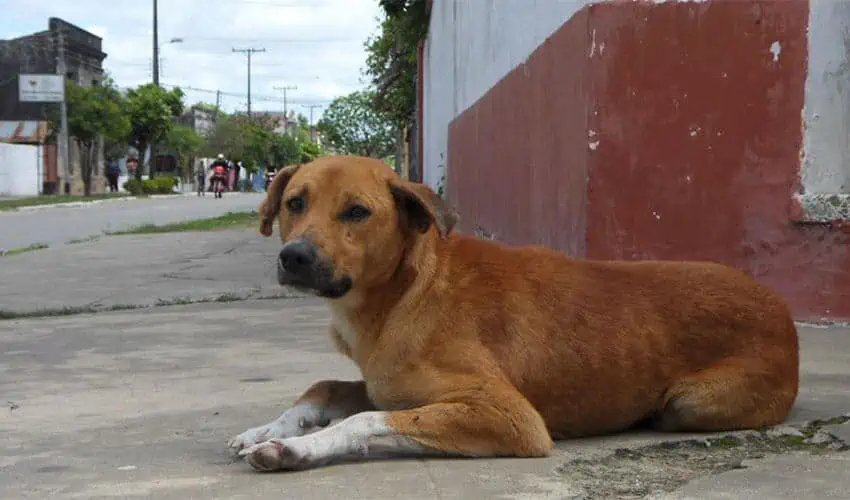
stray dog
It’s believed victims don’t report attacks because they think it’ll lead nowhere or they make a deal with the owner or the canine is an unidentifiable stray.

While dog attacks in the capital are on the rise, few victims file criminal complaints. Only 66 complaints have been filed so far this year, Milenio reported, adding that authorities in Iztapalapa, Gustavo A. Madero, Xochimilco and Azcapotzalco received the most. The complaints resulted in a few arrests, the newspaper reported.

Factors like agreements made between dog owners and victims, the speedy retreat of the former after an attack has occurred and victims’ belief that filing a complaint with authorities is a waste of time are believed to be among the reasons why most dog attacks don’t lead to criminal complaints.

“A lot of situations can be resolved at the time [of the attack] when the two parties reach an agreement in which the owner of the dog that attacked assumes responsibility for the harm [caused],” said Ismael García Valdés, an official with Mexico City’s Animal Surveillance Brigade.

He said the filing of a criminal complaint is more common when a victim suffers serious injuries. Aggressive dogs have been seized and euthanized in some cases.

According to Mexico City law, dog owners are required to compensate victims for any injuries they sustained as a result of an attack by their pet in a public place. However, some victims have had to pay their own medical bills because they were attacked by a street dog or the owner fled after the incident and wasn’t identified.

Besides humans, many dogs have also been victims of attacks by their canine bretheren in Mexico City. According to information on the Facebook page of animal protection association Mundo Patitas, dog owners have paid veterinary bills of up to 20,000 pesos (almost US $1,000) after their pets sustained injuries inflicted by other canines.

With reports from Milenio

COVID’s fifth wave on the wane but some hospitals still seeing high demand for beds

0
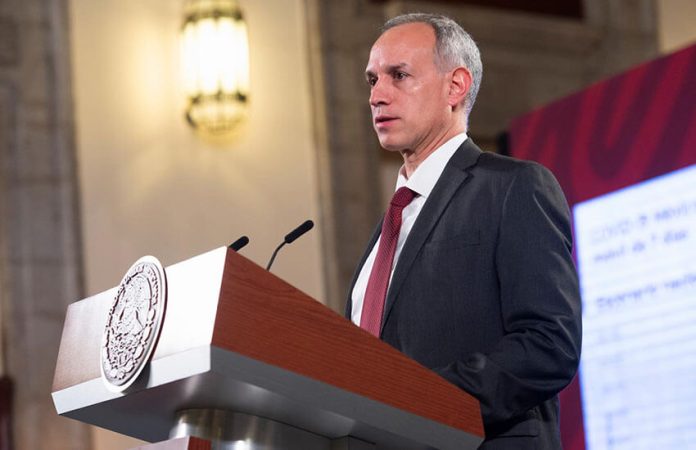
Mexico Deputy Health Minister Hugo Lopez-Gatell
According to Deputy Health Minister Hugo López-Gatell, new cases peaked the week of July 3–9, when new cases averaged 28,000 per day. Presidencia

July was the second worst month of the coronavirus pandemic in terms of new cases, but the fifth wave has now begun to ease, Deputy Health Minister Hugo López-Gatell said Tuesday.

Mexico recorded 699,967 new cases last month, the highest monthly total after January of this year, when over 960,000 new infections were registered amid the omicron-fueled fourth wave.

López-Gatell, the federal government’s coronavirus point man, presented data Tuesday that showed that case numbers began to trend downwards in the first half of July. An average of over 28,000 cases per day were recorded between July 3 and 9 – the peak for any week last month – but the daily figure decreased to just under 8,000 between July 24 and 30, a decline of over 70%.

“We now have a very clearly established downward trend,” López-Gatell told President López Obrador’s regular news conference.

people waiting for COVID testing outside Queretaro pharmacy
A line of people waiting for COVID testing at a pharmacy in Querétaro in July.

“… There are fewer cases in a week compared to the previous week, there are fewer cases per day compared to the previous day. It’s expected that this trend … will be maintained until we reach minimal levels [of cases] in this fifth wave,” he said.

A prediction that Mexico could record some 70,000 new cases per day at the peak of the fifth wave didn’t come to pass, although widespread testing has never been a strong suit here.

While the coronavirus has spread rapidly across the country during the fifth wave, COVID-19 has caused far fewer deaths than earlier in the pandemic. López-Gatell said that vaccination has “very significantly reduced the risk of hospitalization and the risk of death, and for that reason we will continue calling on the public to get vaccinated.”

The vast majority of adults and a growing number of children are vaccinated against COVID-19.

The official death toll rose by 2,014 in July with an average of 65 fatalities reported each day. The former figure is 94% lower than the 32,729 COVID deaths recorded in January 2021, the worst month for pandemic fatalities.

An additional 133 fatalities were reported Tuesday, lifting Mexico’s COVID death toll to 327,883 – the fifth highest total in the world. The accumulated case tally rose to just over 6.78 million with over 21,000 new infections reported Tuesday, while almost 137,000 cases are estimated to be active.

López-Gatell said that authorities had expected occupancy in hospital COVID wards to rise in the coming weeks — increases in hospitalizations and deaths tend to lag spikes in case numbers — but noted that it has in fact declined.

“Last week, [occupancy] was at 18% for general care beds. Today, it’s at 16%,” the deputy minister said, referring to the national average.

children being vaccinated in Mexico
The majority of adults in Mexico are vaccinated, and the government is currently focusing on vaccinating children. CDMX Health Ministry

The Health Ministry reported later on Tuesday that occupancy was 15% for general care beds and 6% for those with ventilators.

However, some hospitals continue to face high demand for beds in their COVID wards. Federal data shows that 126 hospitals are currently at 100% capacity for general care beds, while an additional 14 have occupancy rates above 70%. The 126 “at capacity” hospitals are spread across the country, from Baja California in the northwest to Chiapas in the south and Quintana Roo in the southeast.

Federal data also shows that 12 hospitals are at 100% capacity for beds with ventilators, while an additional three have rates above 70%.

In Oaxaca, state authorities reported that general and intensive care COVID units in two hospitals in the municipality of San Bartolo Coyotepec, located just south of Oaxaca city, are completely full. One is a speciality regional hospital and the other is a children’s hospital.

Oaxaca, like all states across the country, recorded a spike in case numbers during the fifth wave, but it is not currently among the most affected states.

Mexico City – the country’s coronavirus epicenter since the beginning of the pandemic – currently has the highest number of active cases in both absolute terms and on a per capita basis. There are over 27,300 active cases in the capital for a rate of just over 300 infections per 100,000 people, federal data shows.

Ranking second to fifth for per capita case numbers are Baja California Sur, Colima, San Luis Potosí and Tlaxcala. Chiapas, Veracruz, Jalisco, Quintana Roo and Michoacán are, in that order, the five states with the fewest cases on a per capita basis.

With reports from Milenio, El Universal and El Financiero