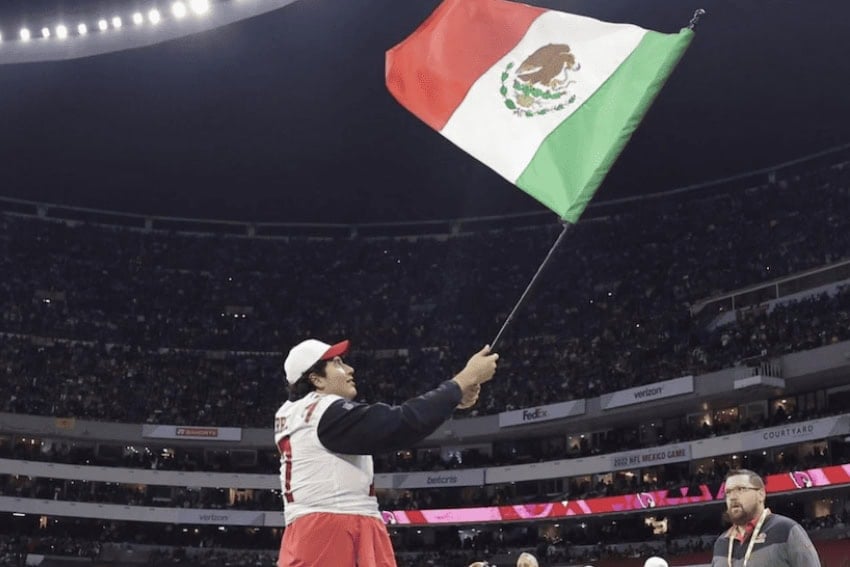
Though it might not seem like it, people of Mexican descent have been integral to the National Football League (NFL) since the onset of the league’s existence — and throughout time, the presence of not only Mexican Americans but also Mexicans born and raised in Mexico has been subtly evident on the game’s biggest stage: the Super Bowl.
In fact, before the NFL even established the Super Bowl in 1967, Mexicans were already part of the action. The first known Mexican-born NFL player is Tom Fears, a receiver who signed with the Los Angeles Rams for US $6,000 in 1947.
A Hall of Famer from Guadalajara
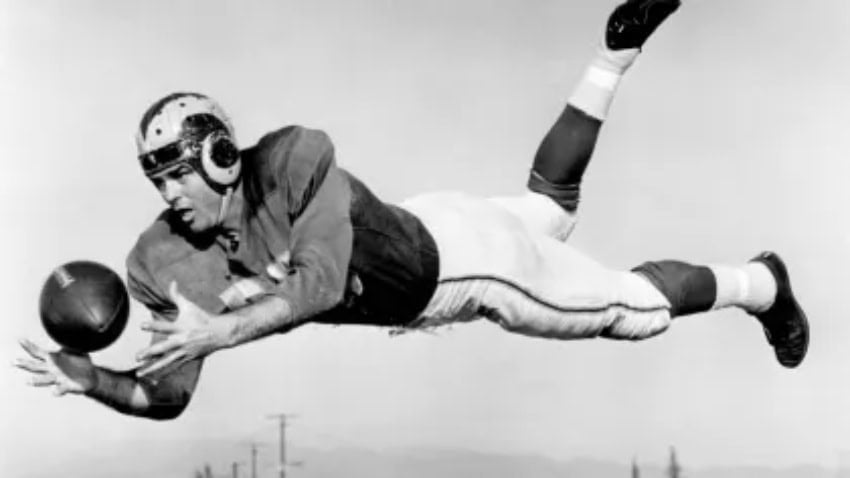
Fears would become the first Mexican to win a championship as a player in 1951, and as a coach in 1962 and again in 1965. Born in Jalisco to a Mexican mother, Fears — whose father was a U.S. citizen working as an engineer in Mexico — famously embraced his Mexican roots, never forgetting his native Spanish and often visiting Mexico. He wound up having a Pro Football Hall of Fame career, becoming one of the earliest NFL players to rack up over 1,000 receiving yards in a season.
In his personal life, Fears opened a small chain of taquerias known as Taco Thoms in Los Angeles, and took his family on trips to cities like Tijuana, Mazatlan and his hometown, Guadalajara. Though Fears never technically appeared in the Super Bowl — since his career preceded the event’s formal inception — he certainly set the stage for Mexicans to compete — and be proudly represented — in the NFL’s biggest moments and championships.
Mexican Super Bowl two-timers
There have been a few notable figures of Mexican nationality Tony who appeared in the Super Bowl. Perhaps none are more revered than Raúl Allegre, a two-time Super Bowl kicker from Torreón, Coahuila.
Allegre originally arrived in the United States in 1977 as a high school foreign-exchange student. Having joined the soccer team, his school’s football coach spotted him at practice and enlisted the Mexican booter to give the American pigskin game a shot.
Allegre proceeded to kick his way into the NFL history books as the only Mexican-born athlete to win two Super Bowls, once in 1987 and again in 1991, both with the New York Giants. Currently, Allegre is a prominent Spanish commentator for ESPN’s NFL coverage in Mexico and Latin America.

Outside of Allegre and Fears, there are others: Tony Casillas, a defensive lineman for the Dallas Cowboys of the 1990s — teams famous for triplets Troy Aikman, Michael Irvin and Emmitt Smith — won back-to-back Super Bowl victories in 1993 and 1994.
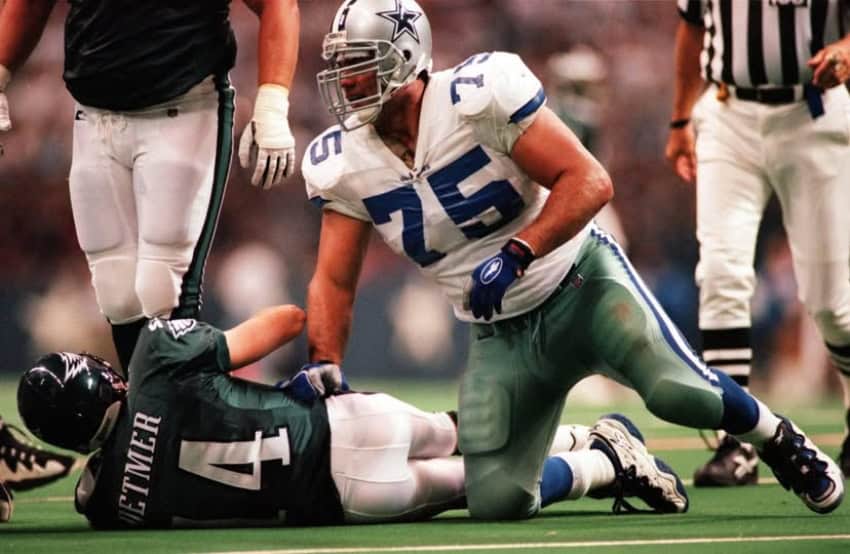
Although he was born and raised in Oklahoma, Casillas’ Mexican father was born in Acuña, Coahuila, Casillas was a star of his day, spending 12 seasons in the NFL and earning a place in the Hall of Fame in Canton, Ohio, as one of only a handful of Mexican Americans to do so.
Manny Fernández and ‘The Perfect Season’
Before Casillas, Manny Fernández of the Miami Dolphins won two Super Bowls as a defensive lineman under the legendary tutelage of head coach Don Shula. A key member of “The Perfect Season,” the 1972-73 Dolphins are enshrined in NFL lore as being the only team ever with an undefeated season to also win the Super Bowl in the same year. In that championship game against the Washington Redskins, Fernández notched 17 tackles and an interception — a dominant performance that many believe should have earned him Most Valuable Player honors.
Fernández and Miami would win back-to-back Super Bowls, defeating the Minnesota Vikings in the following season. Fernández, a Californian Mexican American who didn’t speak Spanish, would claim another Vince Lombardi trophy in 1974. He also appeared in a Super Bowl with the Dolphins during the 1971 season, although they lost to the Dallas Cowboys.
Add Mexico City’s Rafael Septién and Chihuahua’s Frank Corral to the list of Mexican kickers who appeared in the Super Bowl — playing for the Dallas Cowboys in 1979 and the Los Angeles Rams in 1980, respectively. Unfortunately, neither walked away a Super Bowl champion, in both cases defeated by the Pittsburgh Steelers. Guadalajara’s Efrén Herrera, on the other hand, became a Super Bowl champ as the kicker for the Dallas Cowboys in 1978.
Super Bowl bona fides for Tom Flores and Joe Kapp
The most versatile of all Mexican-heritage NFL-ers at the Super Bowl, though? Tom Flores. The Californian Mexican American (a recurring theme on this list, along with kickers, it seems) is the only person in football history besides Mike Ditka to have achieved Super Bowl victories as a player (1969), assistant coach (1977) and head coach (1981, 1984) — all of which he realized with the Kansas City Chiefs and Oakland/Los Angeles Raiders.
The accomplishments for Mexicans in the Super Bowl don’t end there. The first known Latino quarterback to appear in a Super Bowl was Joe Kapp, a New Mexico-born Chicano. In 1970, Kapp was featured on the cover of Sports Illustrated magazine with a feature profile titled, “The Toughest Chicano” — the very same year in which the black-haired slinger led the Minnesota Vikings to a Super Bowl appearance.
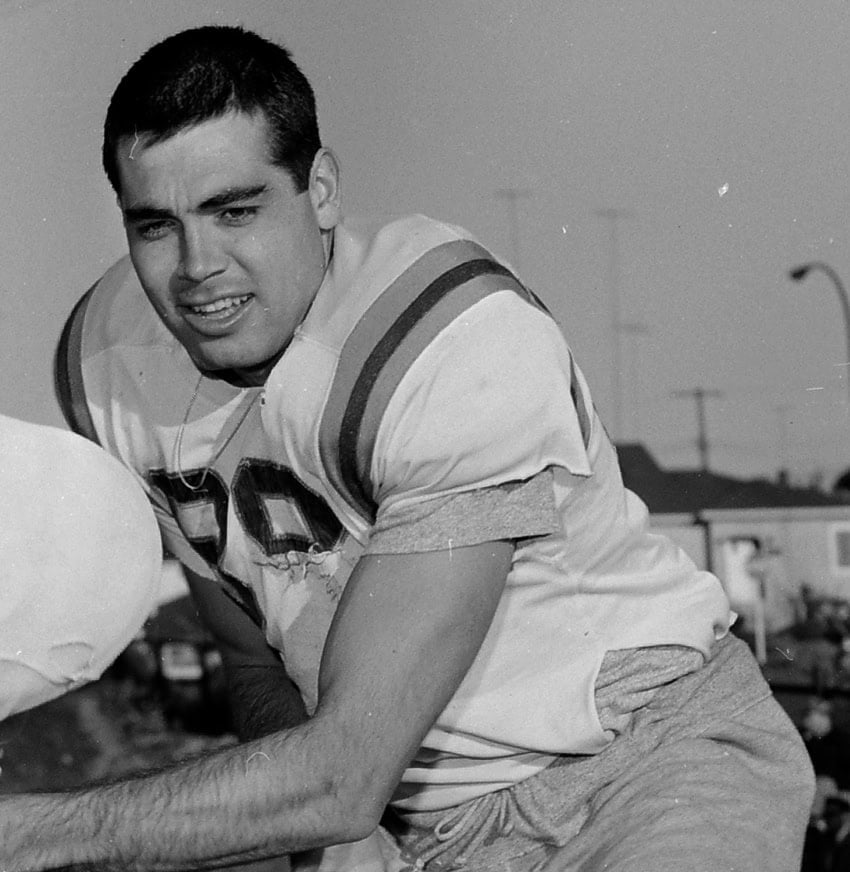
The late Kapp spent his later years visiting farming communities like Salinas, California, inspiring hope among other community members of Mexican heritage and NFL fans who looked up to Kapp as one of the first, and primary, examples of Latinos in the sport.
Pre-game shows and halftime performances
Off the field, there are further glimpses of Mexico’s relationship with the Super Bowl — particularly with halftime performances.
Rapper Taboo of the band Black Eyed Peas was the first Mexican American artist to grace the halftime stage in 2011, while Mexico City dancer and choreographer Mike Bautista was featured as part of The Weeknd’s Super Bowl entertainment production in 2021. On Spanish-language broadcast stations, Los Tigres del Norte, Los Tucanes de Tijuana and Gabito Ballesteros have all appeared in Super Bowl pregame shows.
In 59 years of Super Bowl history thus far, Mexicans have left their imprint on the game in more ways than one might assume about the star-spangled sporting event. And as the NFL continues to expand in Spanish-speaking markets — particularly with a massive fandom in Mexico — there will only be more Super Bowl opportunities that unfold across the Mexico-U.S. border.
Alan Chazaro is the author of “This Is Not a Frank Ocean Cover Album,” “Piñata Theory” and “Notes From the Eastern Span of the Bay Bridge” (Ghost City Press, 2021). He is a graduate of June Jordan’s Poetry for the People program at UC Berkeley and a former Lawrence Ferlinghetti Fellow at the University of San Francisco. His writing can be found in GQ, NPR, The Guardian, L.A. Times and more. Originally from the San Francisco Bay Area, he is currently based in Veracruz.