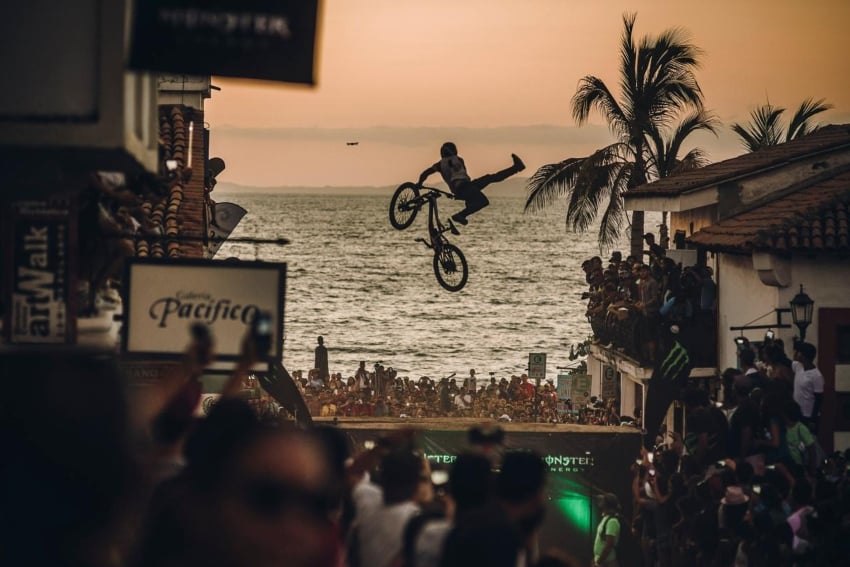
The first riders dropped in under a hazy coastal sun, tires buzzing against pavement as morning light stretched across the hills of Puerto Vallarta. By the end of the weekend, those same tight, twisting and unforgiving streets had delivered two days of crashes, comebacks and razor-thin margins at the second edition of the Puerto Vallarta Downhill and Freestyle.
Day 1 at the Puerto Vallarta Downhill and Free Style
Friday, May 1, was a day of discovery. Riders walked the urban mountain biking course in the morning, tracing lines through narrow alleyways and steep stair sets, studying every crack in the concrete. By the time the warm-up runs began, the city had already transformed. Locals leaned out from balconies, tourists paused mid-stroll and the first wave of racers began threading their way downhill, testing grip and nerve in equal measure.
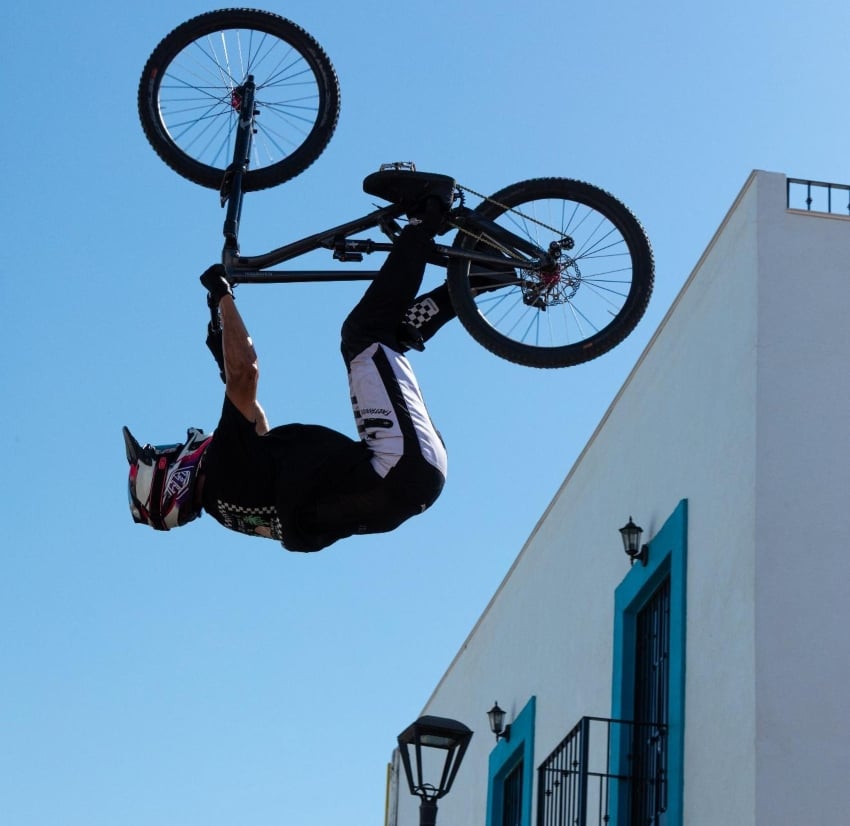
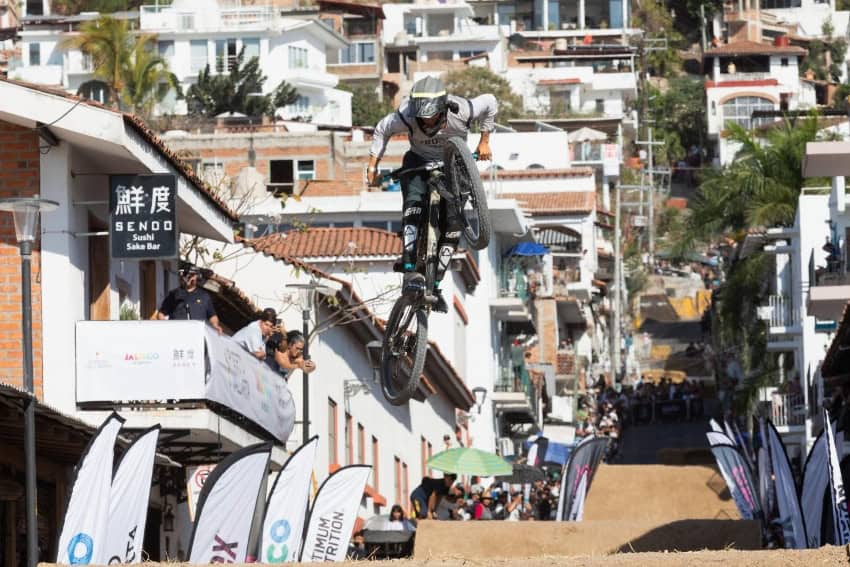
The course was short, a bit over a minute at race pace, but it packed in everything from blind corners to sudden drops to bursts of speed followed by technical choke points. There was no rhythm handed to the riders. They had to invent it on the fly.
Expectations were high for heavy hitters like Tomáš Slavík and Bernardo Cruz, both known for thriving in exactly this kind of urban chaos. But even in practice and early runs, the course hinted at how little it would forgive mistakes.
Lines that looked clean on foot became unpredictable at speed. Corners tightened and landings came faster than expected. By late afternoon, the tone was set. This weekend wouldn’t just reward speed; it would punish anything less than precision.
Day 2 winners and losers
Saturday, May 2, was when everything sharpened. The air felt heavier, the crowd thicker and the stakes unmistakable. Riders now knew the course, but familiarity didn’t make it safer. If anything, it raised the pressure. With two timed runs to decide the standings, there was no room for hesitation.
The drama came quickly. Slavík saw his weekend unravel early. A mechanical issue forced him out during his first run, ending his challenge almost as soon as it began.

Cruz came agonizingly close to holding his ground, charging toward the finish with a competitive time until his chain snapped just before the line, a split-second failure that erased his shot at the podium. In a race this tight, there’s no recovering from that.
At the front, the battle condensed into fractions of a second. France’s Rémy Métailler put together a run that felt both explosive and controlled, carving through the course as if he’d smoothed it out in advance. He crossed the line in 1 minute, 21.41 seconds, a benchmark that immediately looked difficult to touch.
It almost didn’t hold. Portugal’s Pedro Ferreira came within striking distance, stopping the clock at 1:21.47. Six hundredths of a second, barely perceptible to the eye, separated first from second.
It was the kind of gap that turns a city street into a stage for millimeter-perfect racing.
Then came the loudest roar of the day. Mexico’s Raymundo Fournier surged into third with a 1:22.26, securing a podium finish that electrified the crowd. Flags waved, voices echoed off concrete walls, and for a moment, the international field gave way to a homegrown celebration.
Behind them, the depth of the field told its own story. Brazil’s Bernardo Neves and France’s Adrien Loron rounded out the top five, while Mexico’s Fabián Alcántar claimed sixth. Sweden’s Oscar Härnström, alongside Mexico’s Rayitas Ramírez, Roberto Castillo and Antonio Villoni, filled out a top ten that mixed global talent with a strong local presence.
As the final runs wrapped and the echoes faded, the city exhaled. Riders swapped stories of near-misses and perfect lines. Spectators lingered in the streets, still tracing the invisible path of the course with their eyes.
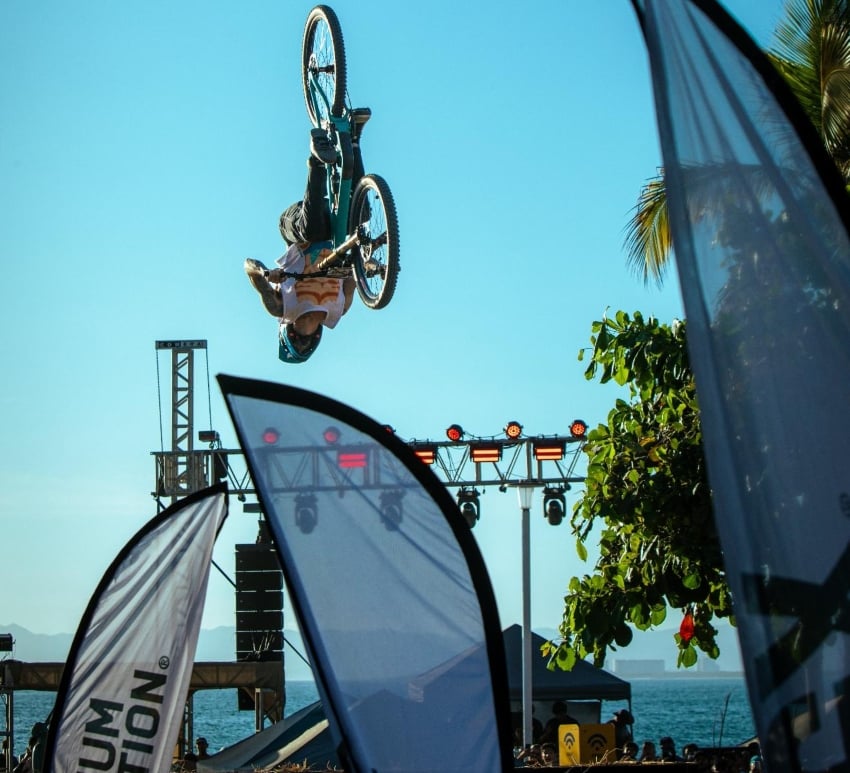
Over two days, Puerto Vallarta didn’t just host a race; it became part of it. From the lookout at La Cruz del Cerro, to the narrow alleys and staircases, to the finish at the Malecón, to the heat and to the walls closing in at speed, all of it shaped the outcome.
And in the end, victory wasn’t just about being the fastest. It was about finding out who could dance closest to the edge without falling off.
Charlotte Smith is a writer and journalist based in Mexico. Her work focuses on travel, politics, and community. You can follow along with her travel stories at www.salsaandserendipity.com.