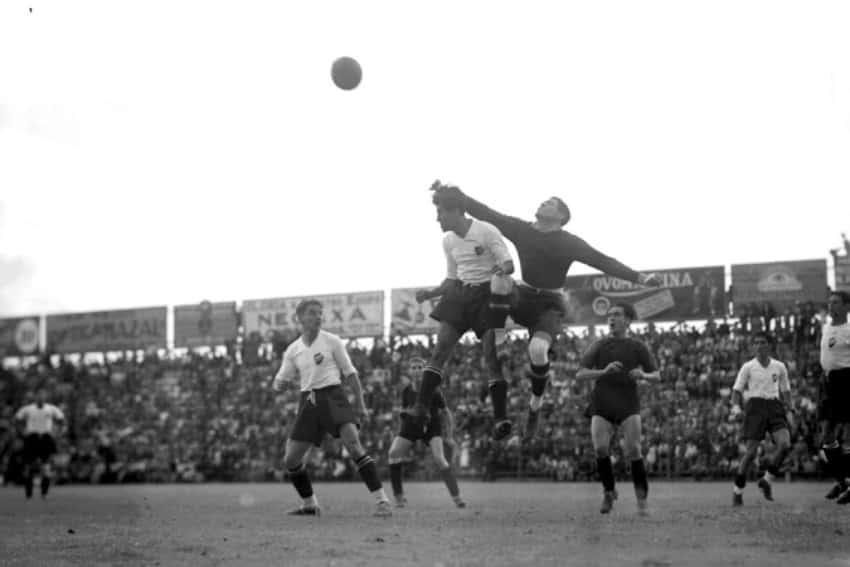
In the late 1930s, both FC Barcelona and a football team selected from the best players from the northern Basque area of Spain made prolonged tours of Mexico. The Basque side even registered as a Mexican club and came within one game of winning the Mexican league.
This remarkable story was driven by events back in their Spanish homelands.
The early decades of Spanish football
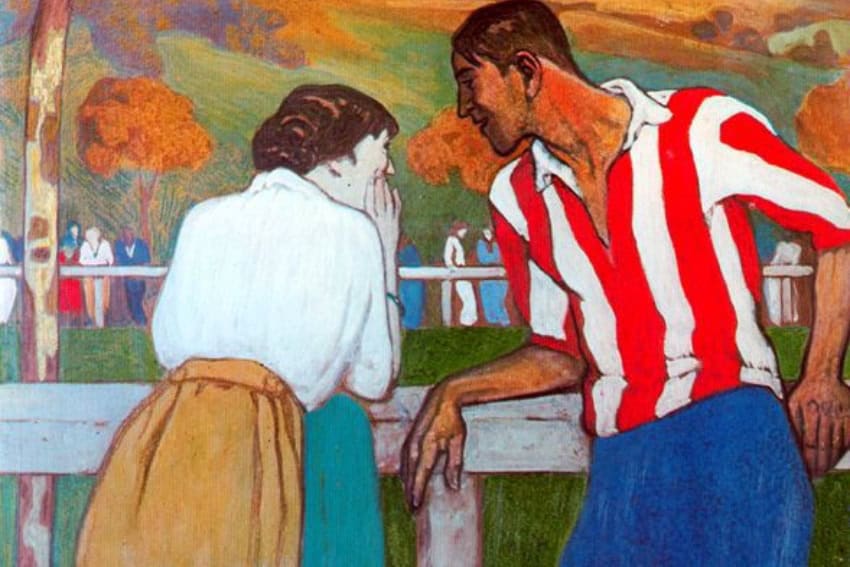
In the 1930s, Spanish football was closing the gap on the established powers of France, Italy and England. The 1934 World Cup saw them beat Brazil and draw with eventual winners Italy before losing a replay.
Football, a sport still less than 50 years old in Spain by then, was strongest in the Basque Country, that northern area of Spain that centers on the city of Bilbao. Athletic Club in Bilbao won four of the first six Spanish titles, and three other northern teams played in the top division. One explanation put forward for this dominance is that, over the centuries, the region’s isolation had helped breed a people noted for being bigger than the average Spaniard of this era. This was reflected on the football field, where teams had a physical side to their play more associated with the British game.
While Basque football was thriving, 600 kilometers to the east, Barcelona’s fortunes had faded after the success of the 1920s. The team was struggling in the middle of the table, crowds were down and the club was in financial difficulty.
The Spanish Civil War and an unexpected offer
Then, in July 1936, Spain was thrown into the turmoil of civil war after an army coup attempted to remove the recently elected government. Led by General Franco and supported by Nazi Germany and the National Fascist Party in Italy, the Nationalists seized the western part of Spain.
The war had an immediate impact on football. La Liga, Spain’s national soccer league, was suspended, and many players were recruited into one or the other of the opposing armies. In August 1936, Josep Suñol, a local politician and Barcelona club president, was stopped at a road check, where he was murdered by Franco’s soldiers. Isidro Lángara, a hero of football fans in the Basque region, also found himself in trouble, but from the opposite side, the Republicans. He was arrested and imprisoned after being accused of fighting against the miners in the violent strikes of a couple of years before.

Friends rushed to defend him, arguing that as an army conscript, he had been forced to obey orders. His fame as a footballer probably helped, and instead of a prison sentence, he was conscripted into the army.
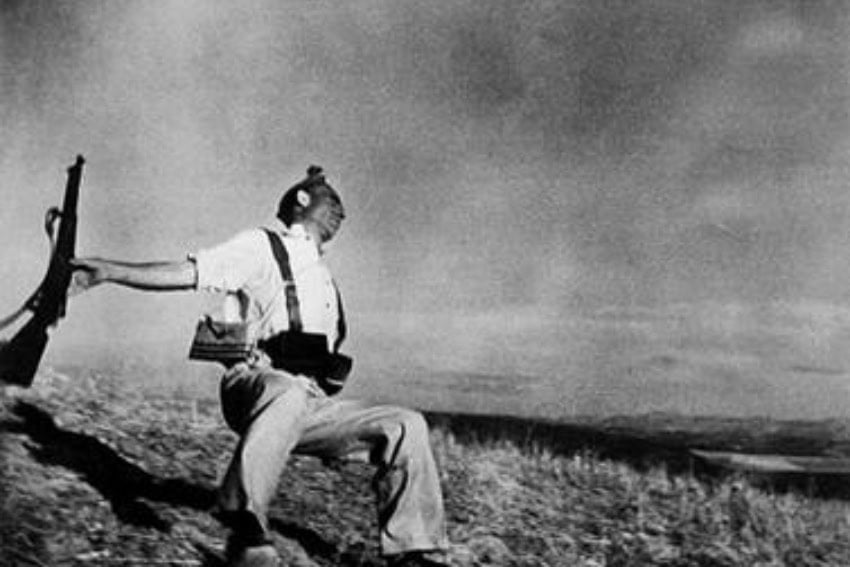
As the war rolled into 1937, the Nationalist forces pushed northward into the Basque territory and eastward toward Madrid and Barcelona, which were all strong Republican supporters. The war edged Barcelona Football Club closer to bankruptcy. The local regional competitions that continued throughout the war could not draw in big crowds, particularly when people were more likely to spend the afternoon at a political rally than at a football match.
With the club moving ever closer to collapse, they received an unexpected offer.
An invitation from Mexico
Manuel Mas Soriano was a Catalan businessman now based in Mexico. Then, as now, Barcelona was a multisport club, and as a youth, Manuel had played for the basketball section. He now offered to sponsor a tour of Mexico by the football team.
Mexico’s close ties with Spain, the general sympathy of the Mexican population towards the Republican cause — Mexico supported the Republican side and in 1937 began accepting refugees from the Spanish Civil War — and the thousands of Spanish refugees in the country would all help to pack stadiums. Manuel Mas Soriano would cover the initial expenses of the tour and promised the club a fee of $15,000.
At the start of the summer of 1937, with the war turning in the Nationalists’ favour, a squad of Barcelona players left for France. Before they crossed the border, their train had to wait in a tunnel for an air raid to pass, but they reached Mexico in early June.
The Spanish Embassy in Mexico City was pro-Republican and welcomed them, but not everybody shared that opinion. The players entered one of the Spanish social clubs to find a National flag flying at the entrance and a hostile reception. Despite these sorts of incidents, the Barcelona tour was nevertheless a great success and was extended to 14 matches, 10 in Mexico and four in the United States.
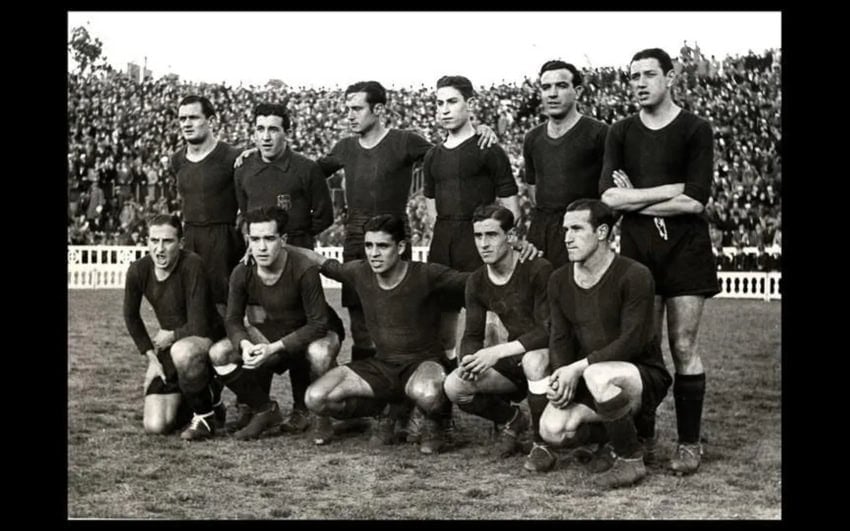
The games generated a considerable profit, which was deposited in the safety of a Paris bank. At the end of the war, this money paid off the club’s debts and laid the foundation for the “super club” that would arise in the 1950s.
A new autonomous Basque region builds a new national team
Back in Spain, the fighting had become particularly fierce in the north, where the Basque people were on a double crusade: First, they had no love for the Nationalists, and, second, the war offered an opportunity to achieve the old dream of Basque independence. In October 1936, José Antonio Aguirre was appointed as the first President of Euzkadi, the local name for the Basque homelands.
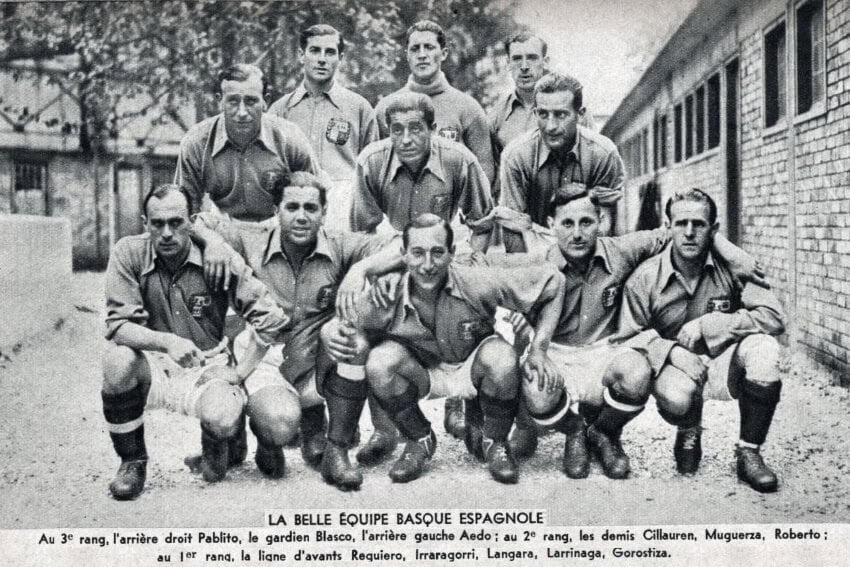
As a young man, the new president had played for an Athletic Club team that had won the Spanish Cup, and Aguirre saw the propaganda possibilities that football offered: They would form a Basque national football team to tour Europe, showcasing to the world that the Basque region was now an independent nation.
From April 1937, Team Euzkadi toured France, Czechoslovakia, Poland and the Soviet Union, which was a major supporter of the Republican war effort. Isidro Lángara was included in the squad, his football skills having saved him again, this time from the front line. With the European tour over, and their Basque homelands about to fall to Nationalist forces, the team boarded a ship in Le Havre and followed Barcelona’s route to Mexico.
The Basque team played four games against Mexico’s national team, winning three of them, as well as five matches against club sides. In January 1938, they departed for a tour of South America, beginning in Cuba before heading for Chile and Argentina. By now, a new football federation had been established by the Franco government, and they called for any further matches against Euzkadi to be suspended.
Argentina, finding the Republicans too close to the communist Russians for their liking, duly cancelled the tour in their country.
Where Spain’s players went afterward
The Spanish footballers’ time in Mexico came to an end in September 1937, and the players had to decide what to do. There was a reluctance to return home, where the frontline was now pushing toward Madrid and Barcelona. Some players stayed on in Mexico. The influence of these “exiles” reflected in the top scorers list: Over nine years, Efraín Ruiz, Miguel Gual, Martí Ventolrá and Isidro Langara (twice) would finish as the highest goal scorer in a Mexican league season.
One of the most remarkable stories was that of Martí Ventolrà, a Barcelona-born, small but powerful winger with an eye for a goal and a sparkle in his smile who had been one of the most famous players in the Barcelona squad, having played for Spain in the 1934 World Cup.
At a welcome reception upon the Barcelona team’s arrival in Mexico, Ventolrà had noticed a pretty girl, Josefina Rangel Cárdenas. Not put off by the fact that she was the niece of President Lázaro Cárdenas, he had courted her and they were now married. So Martí Ventolrà stayed on in Mexico, playing for the Mexican teams Real Club España and Atlante while he and Josefina raised four children.
Meanwhile, by 1938, the cancellation of the Argentina leg of their tour spelled financial disaster for the Basque team, which had spent all its funds traveling south. In August 1938, the players arrived back in Mexico, where the Basque national football team registered as a club side, Club Deportivo Euzkadi. They would spend the 1938–39 season playing in the Mexican league.
Club Deportivo Euzkadi in the Mexican League
They started strongly, beating Club América 3-2 and then scoring 7-1 wins over Atlante and Marte. However, Mexican football was still on an amateur level, and as the season went on, several of the best Euzkadi players left to pursue professional careers in Argentina. These included Isidro Lángara, who had already hit 17 goals in the first nine Mexican league games.
At the end of April 1939, a depleted Euzkadi team met their closest rivals, Asturias, and despite twice taking the lead, could only draw at 3-3. With that, the last chance of the title slipped away, although they finished at a creditable second place. With the end of the season, many of these players joined Real Club España, which would win league titles in 1940 and 1942.
The Spanish Civil War ended in April of 1939, and as Spain settled back into peace, some players took the opportunity to return to Spain, but many still felt a lifelong close affection for Mexico. Euzkadi player Ángel Zubieta, after a long career in Spain and Portugal, returned in 1974 to become manager of the National Autonomous University’s highly successful team, the Pumas.
A legacy in Mexico
Even more remarkable was the journey of Isidro Langara. In 1943, in anticipation of the creation of a professional league here, he returned to Mexico and signed with Real Club España. In 1946, he finally returned to Spain, where the 34-year-old veteran played for Real Oviedo for two more seasons. After his playing career finally ended, he retired to Mexico, where he became manager of El Club Puebla, taking them to victory in the 1953 Cup competition.
The last legacy of the “Spanish period” came in 1970, when José Pepe Rangel, one of the sons of Martí Ventolrà and Josefina Rangel Cárdenas, played for Mexico in the 1970 World Cup, making Ventolrá and Rangel the only father and son to ever play in the World Cup for different nations.
Bob Pateman is a historian, librarian and a life-term hasher. He is editor of On On Magazine, the international history magazine of hashing. For many years he reported regularly for World Soccer on football around the world.