A historic train line between Mexico and Panama looks to be moving forward after leaders from six Central American countries presented a US $52 billion regional rail integration plan in Leipzig, Germany.
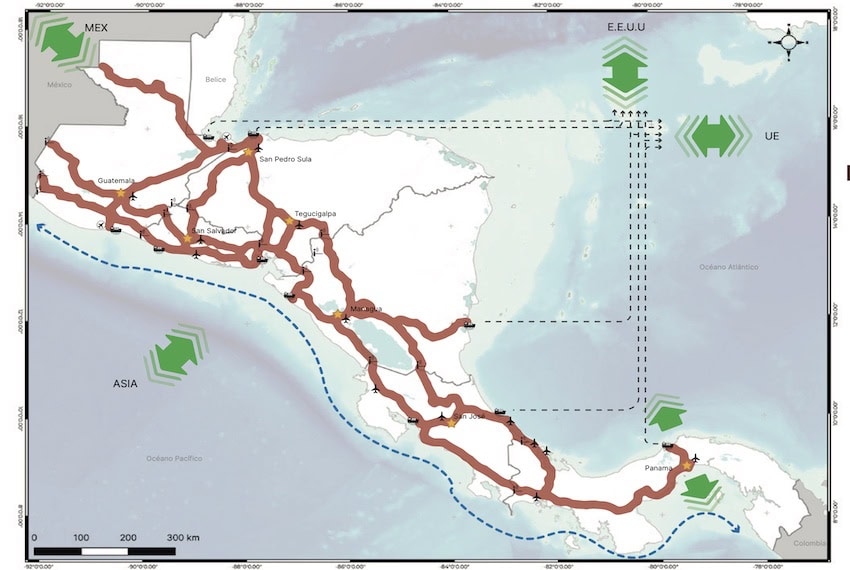
The Regional Mobility and Logistics Master Plan 2035 outlines the creation of 11 new rail corridors across Costa Rica, El Salvador, Guatemala, Honduras, Nicaragua and Panama — with the goal of linking these networks to the Maya Train in southern Mexico and the Interoceanic Train across Mexico’s Isthmus of Tehuantepec.
The plan, which aims to be completed by 2035, was presented last month at the International Transport Forum 2025 Summit by the Secretariat for Central American Economic Integration (SIECA).
It would enable seamless rail service from Panama to Mexico, opening new trade routes and economic opportunities across the region — including direct access to North American and Asian markets.
The proposed lines between countries are intended for both cargo and passenger service, according to the master plan.
“The talks are advanced, and the Guatemalan government is very enthusiastic about this issue,” Francisco Lima Mena, secretary general of SIECA, told the newspaper Milenio after the May 23-25 summit. “Much of this requires coordinated management at border crossings, so significant efforts are being made.”
Lima Mena said Mexico has already pledged to support Guatemala with 400,000 meters of rails, railroad ties and other materials to help reactivate its freight lines and connect to Mexico’s southern network.

And El Salvador has already committed US $1.8 billion to reviving its rail lines as part of the initiative, though broader funding relies on public-private partnerships and international lenders.
Officials say the project is about more than just moving cargo.
By linking remote and underserved communities to major markets, leaders hope to spur economic growth and reduce migration pressures.
“No one migrates for fun,” Lima Mena said. “Everything happens for a reason, and it’s usually economic, and that’s why we have family disintegration … [We want to have] sustainable and decent work. Sustainable jobs can keep families together.”
That’s a big reason why the plan is a good one, he added.
“It’s an important infrastructure plan for the region, and that’s why we have the interest of commercial partners,” he said.
The plan also includes harmonizing technical standards, establishing regional biosafety protocols and creating a permanent regional rail authority.
While Belize is not yet part of the corridors, SIECA noted that its inclusion would be straightforward if momentum continues.
Train projects in Mexico picked up steam under former President Andrés Manuel López Obrador and have remained a priority under current President Claudia Sheinbaum.
In April, Sheinbaum talked about plans to extend Mexican train service into Guatemala at a mañanera, her daily press conference.