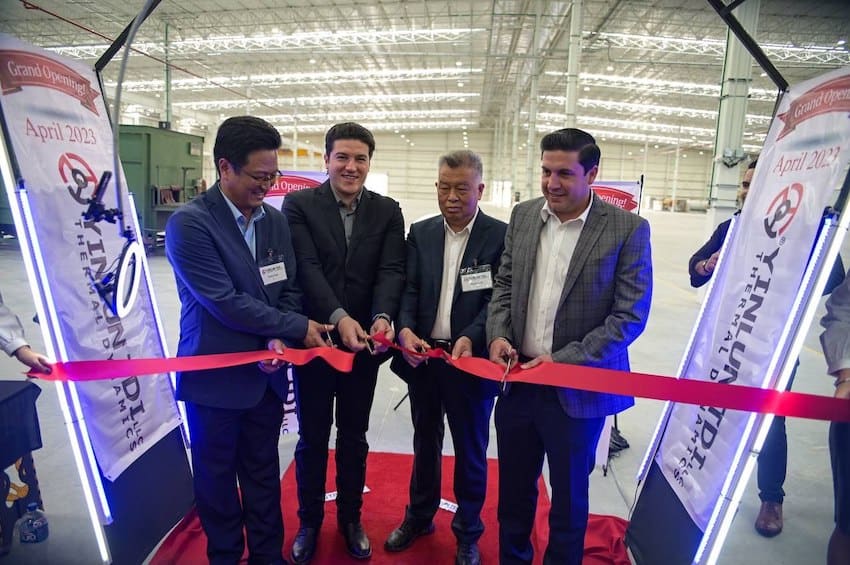
Chinese automotive parts manufacturer Yinlun opens US $80M plant in Nuevo León

Chinese auto parts manufacturer Yinlun has opened a new plant in Salinas Victoria, Nuevo Leon, an investment of US $80 million. 

The company, which provides thermal management solutions including coolers, battery heaters and radiators, expects to generate over 1,000 jobs and is considering opening another plant in the northern state. It recently opened a plant in the nearby municipality of Ciénega de Flores.
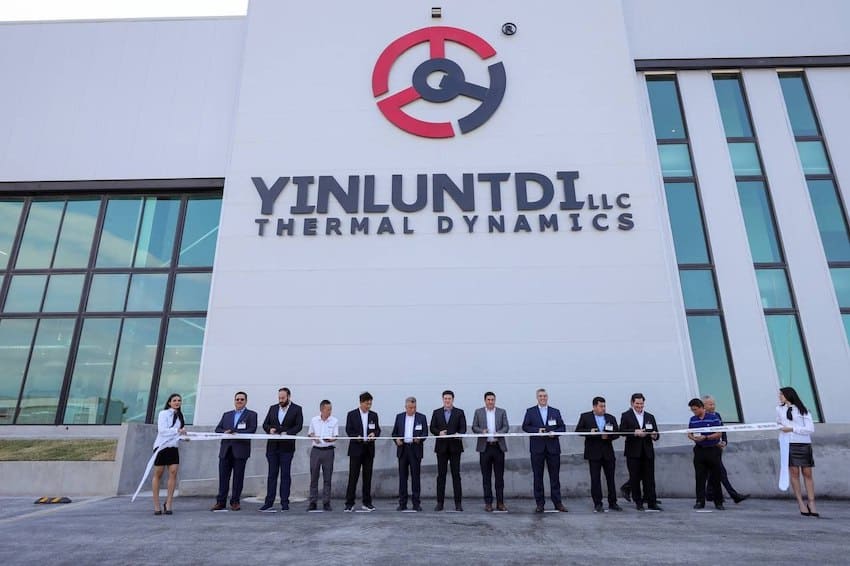
Outside the new Yinlun factory
The new factory in Salinas Victoria is the second Yinlun facility in the state. (Samuel Garcia/Twitter)

Yinlun has manufacturing plants in China, the United States and Poland. Its customer portfolio includes Caterpillar, Volvo, GM, Stellantis, Ford and Paccar. 

Speaking at the plant’s inauguration, Governor of Nuevo León Samuel García said that “a powerful economic boom is coming [to Nuevo León], and the government is not going to be left behind.” 

State Economy Minister Iván Rivas added that companies like Yinlun continue to arrive in Nuevo León because “they find the right conditions to thrive — particularly, the most competitive human capital.”

He also said automotive sector investments represent 26% of the total that has arrived in Nuevo León since García took office in 2021.
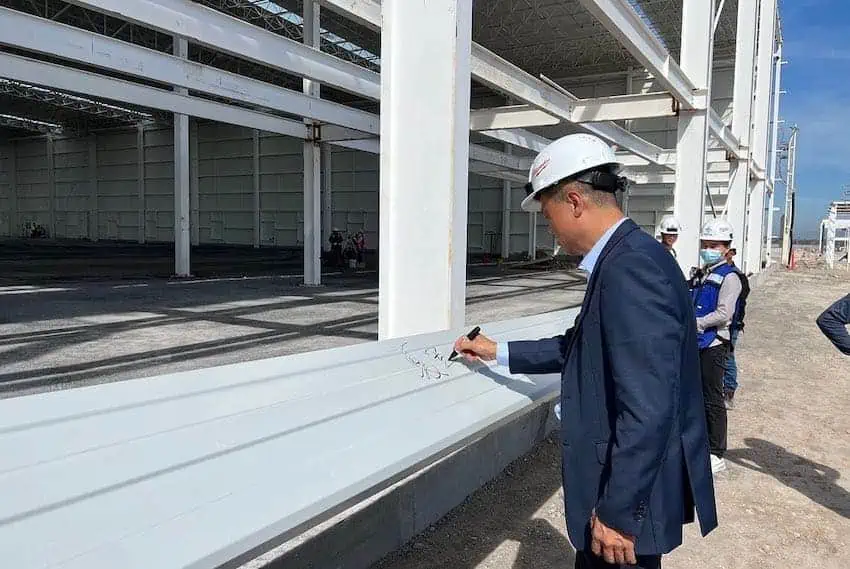
The Yinlun Salinas Cruz factory under construction in 2022
The Salinas Cruz factory, seen here under construction in 2022, is part of a wave of nearshoring by Asian manufacturers looking to strategically access the North American markets. (Hofusan Industrial Park/Twitter)

Growth in the state has been fueled by the boom in nearshoring —  where companies relocate to strategic foreign markets to take advantage of a more favorable investment climate. As part of the trend, companies like Tesla and Unilever have recently announced significant investments in the state.

Mexican brokerage firm Grupo Bursátil Mexicano recently noted that Nuevo León was the biggest nearshoring winner in all of Mexico last year. In February, García predicted that foreign direct investment in his state could double those of 2022.

With reports from El Economista

Have something to say? Paid Subscribers get all access to make & read comments.
Manzanillo, Colima, México, 13 de marzo de 2026. La doctora Claudia Sheinbaum Pardo, presidenta Constitucional de los Estados Unidos Mexicanos en conferencia de prensa matutina, “Conferencia del Pueblo” desde Colima. La acompañan Indira Vizcaíno Silva, gobernadora Constitucional del Estado de Colima; Omar García Harfuch, secretario de Seguridad y Protección Ciudadana (SSPC); Raymundo Pedro Morales Ángeles, secretario de Marina (Semar); Bulmaro Juárez Pérez, divulgador de lenguas originarias, presentador de la sección “Suave Patria”; Ricardo Trevilla Trejo, secretario de la Defensa Nacional (Sedena); Jesús Antonio Esteva Medina, secretario de Infraestructura, Comunicaciones y Transportes; Bryant Alejandro García Ramírez, fiscal general del Estado de Colima; Fabián Ricardo Gómez Calcáneo; Rocío Bárcena Molina, subsecretaria de Desarrollo Democrático, Participación Social y Asuntos Religiosos de la Secretaría de Gobernación; Efraín Morales López, director general de la Comisión Nacional del Agua (Conagua); Marcela Figueroa Franco, secretaria ejecutiva del Sistema Nacional de Seguridad Pública (SESNSP) y Guillermo Briseño Lobera, comandante de la Guardia Nacional (GN). Foto: Saúl López / Presidencia

Mexico’s week in review: Congress deals Sheinbaum her first legislative defeat

0
The week of March 9 in Mexico was marked by standoffs between allies in Congress and adversaries at the airport. Here's what you missed.
A soldier displays seized handguns

The US and Mexico, growing together and growing apart: A perspective from our CEO

0
From a historic drop in homicides to opposite bets on electric vehicles, Mexico News Daily's CEO breaks down where the U.S. and Mexico are converging — and where they're not.
Veracruz Gov.

Veracruz governor blames private vessel for 200-kilometer Gulf Coast oil spill

1
The spill, which has spread to over 200 kilometers of Mexico's Gulf Coast beaches, has been traced to a private oil tanker off the coast of Tabasco.
BETA Version - Powered by Perplexity