The Mexican economy contracted 0.8% in the first quarter of 2026 compared to the previous three-month period, according to seasonally-adjusted preliminary data published on Thursday by the national statistics agency INEGI.
Compared to the first quarter of 2025, GDP increased 0.2% in seasonally-adjusted terms between January and March and 0.1% in original terms.
The quarter-over-quarter contraction was the worst result for the Mexican economy in any first quarter since 2020. In addition, the contraction was the largest sequential decline for any quarter since Q4 in 2024.
The 0.8% contraction came after 0.9% quarter-over-quarter growth in the last three months of 2025. Mexico’s annual growth rate in 2025 was 0.8%.
All 3 economic sectors declined from Q4 2025
INEGI data shows that the primary, secondary and tertiary sectors all contracted in the first quarter of 2026 compared to the final quarter of last year.
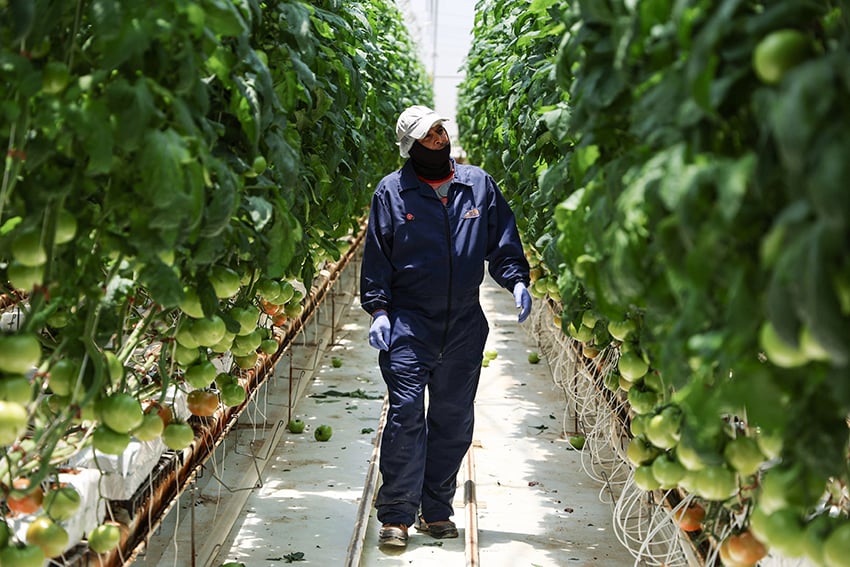
The primary sector, which includes agriculture and fishing, recorded the biggest decline, slumping 1.4% compared to the final three months of 2025.
The secondary sector, which includes manufacturing and construction, contracted 1.1%, while the tertiary or services sector declined 0.6%.

Gabriela Siller, director of economic analysis at Mexican bank Banco Base, wrote on social media that the factors that caused the decline in GDP in the first quarter of the year are “internal.”
In a separate post, she wrote:
“Mexico is in an economic stagnation trap due to:
- The weakening of institutions.
- A decline in fixed investment.
- An increase in [employment] informality.
- A decline in productivity.”
For his part, Andrés Abadía, chief Latin America economist at U.K.-based Pantheon Macroeconomics, said that “lower consumption, lower investment of capital and still restrictive financial conditions” are all affecting economic activity in Mexico.
The quarter-over-quarter contraction occurred despite Mexico’s export revenue increasing 17.9% annually in the first three months of 2026. Tourism numbers have also been positive with international arrivals up more than 8% in January and February.
The sequential contraction is a blow for the federal government, which is aiming to grow the Mexican economy and attract more investment within the framework of its ambitious Plan México initiative.
However, President Claudia Sheinbaum has argued that economic growth should not be the sole measure of well-being in Mexico, where more than 13 million people exited poverty between 2018 and 2024 due to factors including increases to the minimum wage and the federal government’s welfare and social programs.
Primary and secondary sectors also declined in annual terms
The primary sector contracted 0.1% in the first quarter compared to the same period of last year, according to INEGI’s preliminary data.
The secondary sector also contracted, declining 1.1% compared to the first quarter of 2025.
The tertiary sector bucked the trend, expanding 0.9% annually in the first quarter of 2026.
Mexico’s economic outlook
Abadía said it’s “probable” that economic activity will pick up in the second quarter of 2026, “supported by a series of temporary favorable factors,” such as the FIFA men’s World Cup, which Mexico will co-host with the United States and Canada.
The tournament will take place in June and July, and millions of tourists are expected to come to Mexico during the period, helping boost GDP.
Abadía also said that construction activity and end-of-year sales could help boost economic activity in Mexico later in 2026. Pantheon Macroeconomics is forecasting that the Mexican economy will grow 1.2% this year.
Siller noted that Banco Base is now forecasting that Mexico’s GDP will grow 1% this year.
“This implies that per capita GDP will continue being lower than in 2018,” she wrote on X.
Citing Banco Base forecasts, Siller also noted that it is anticipated that Mexico’s economy will grow at half the pace of the U.S. economy this year.
With reports from El Economista and Reforma