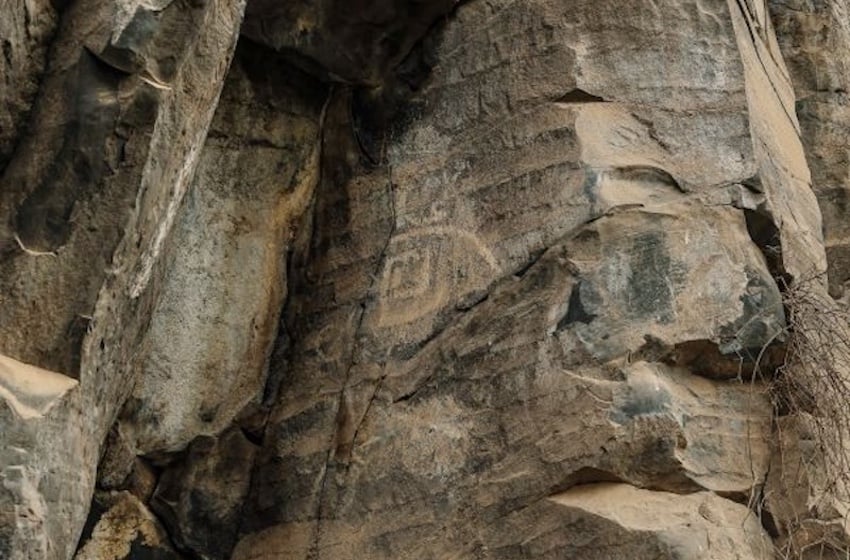
Sixteen pre-Columbian cave paintings and petroglyphs have been discovered at the El Venado archaeological site in the state of Hidalgo. The discoveries, made in January, were a direct result of rescue archaeology carried out along the route of the under-construction Mexico-Querétaro passenger train.
According to the National Institute of Anthropology and History (INAH), the works’ dates range from prehistoric times (nearly 4,000 years ago) to the Mesoamerican Postclassic period, which included the time of the Toltecs and later the Mexica, or Aztecs.

The paintings are located on two cliffs near the Tula River and the La Requena Dam, close to the state capital of Hidalgo. The area has been a source of pre-Columbian art since famed Mexican archaeologist Eduardo Matos Moctezuma unearthed a painting featuring a deer, thus giving this archaeological place its name of El Venado.
Subsequent findings have included images of other regional animals, natural phenomena, anthropomorphic figures and humans.
Archaeologists found several figures near the dam in January, including human pictures with distinctive elements such as shields, headdresses and weapons. One of the figures is wearing accessories associated with deities such as Tláloc, the Mexica god of rain. A face with ornaments and compositions in red with a white stripe was also identified.
Other less visible figures worn by time include a stylized human figure in red, along with shapes that could represent a snake or lightning.

The general area of the findings.
A figure depicting a human face and the legs of a bird or horse suggests that the work was created around the time of Spanish contact. This would also imply a continuation of the symbolic use of the site into the early colonial period.
Researchers are carrying out comparative analysis with other artistic expressions of this type found in the region.
President Sheinbaum announced last year that the original route of the Mexico-Querétaro railway would be adjusted by eight kilometers to avoid interference with the area where the latest discovery was made.
With reports from La Jornada Hidalgo