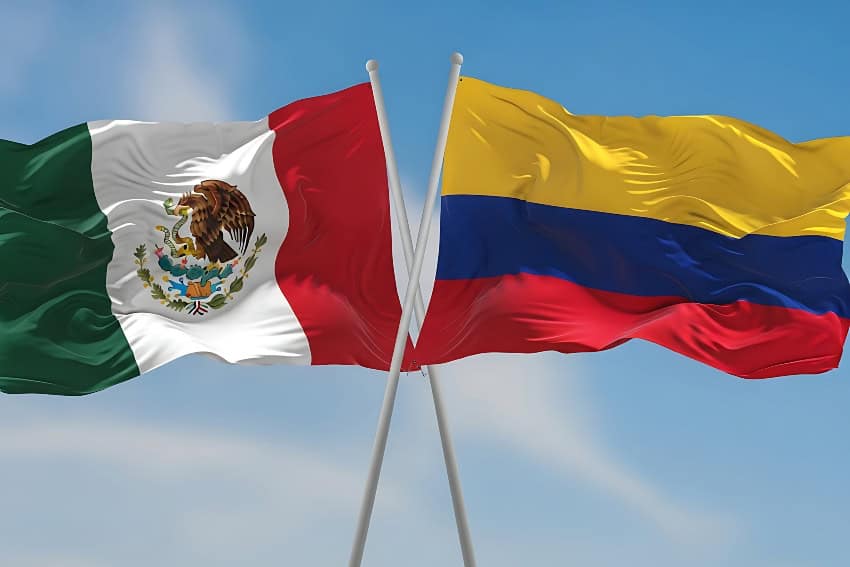
The ties that bind Mexico and Colombia have been interwoven for generations. From Bogotá’s first mariachis around the middle of the 20th century to the Cholombianos, a subculture in Nuevo León in the early 2000s, a cross-cultural exchange of music, fashion, film and cultural icons has passed between these two countries. While many of the immigrant populations we have covered previously in this series first came to Mexico at the end of the 19th or early in the 20th century — Chinese, Japanese and Lebanese, for example — Colombian immigration is comparatively more recent and has grown significantly in recent decades.
Colombian emigration began to increase in the 1970s, during the political transition following the end of the National Front, with Mexico becoming a favored destination.
Colombian migration to Mexico
By 1990, only a few thousand Colombians were registered as residents of Mexico. A series of agreements between the two countries — a 1995 trade agreement, a 2001 agreement to mutually recognize educational certificates and diplomas, the 2002 Tourism Cooperation Agreement and, perhaps most importantly, the forming of the Pacific Alliance in 2012 — have deepened cooperation and created more channels for mobility, especially for students and professionals; to the point that Colombians are now one of the top five immigrant groups in the country.
The Pacific Alliance eliminated short‑stay tourist and business visas for each other’s nationals, allowing Colombians to enter Mexico with only a passport for stays of up to 180 days, and eventually to apply for residency or citizenship.
Mexico, with the second-largest economy by gross domestic product (GDP) in Latin America, has been a natural draw for lots of Latinos (as well as U.S. citizens, who have been the largest immigrant group by far for years), but while many Central Americans have used Mexico as a pass-through country during their trek north of the border, many Colombians have come to stay.
The appeal of Mexico City
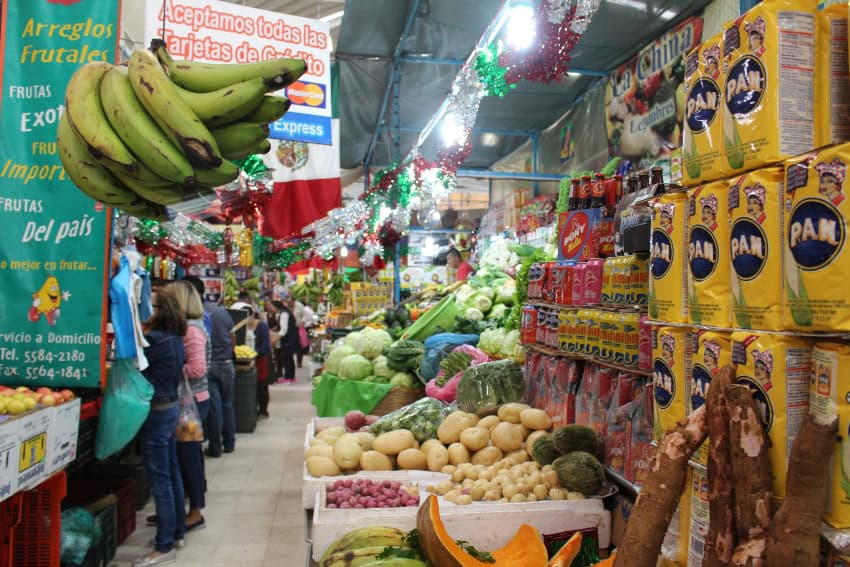
Neighborhoods in Mexico City, like Colonia Roma, have a strong Colombian presence. If you’ve ever been inside Mercado Medellín — its colloquial name, a funny coincidence given that it sits on Medellín Street and predates the arrival of the Colombian community — you may have noticed something peculiar. Several stands are dedicated 100% to the products and ingredients of other Latin American countries, particularly Colombia and Venezuela.
You can purchase arepa flour and mixes to make Colombian-style natilla, yuca, green plantains, Colombian candies and even homemade buñuelos and pan de bono, sold by several stands.

There are plenty of products from other places, too — Yerba maté from Argentina, Bucanero beer from Cuba — but Colombian products dominate. “El Paísa,” a vendor who claims to be the first to sell these foreign products in the market, claims that the community came first.
Colombian restaurants and vendors
View this post on Instagram
Customers from Colombia, Venezuela and Cuba started coming to the market and asking him if he could procure certain ingredients and foodstuffs that they were finding it hard to get their hands on. Even as Colombians and other South Americans have spread across the city’s neighborhoods, this market is still a meeting point for finding the flavors of home.
Along Medellín street near the market are also a handful of Colombian restaurants, the best-known of which is Pollos Marios, where you can buy frozen arepas and pan de bono (bread made with yuca starch, corn flour and a mix of cheeses) or sit for a massive bandeja paisa (a Colombian smorgasbord of sausage, arepa, chicharrón, rice, beans, fried green plantain, finely ground beef and a Colombian-style condiment called hogao). While the Colombians in the neighborhood will tell you that the best bandeja is the one they make at home, Pollos Mario is a good place to go in case you don’t get invited over.
Next to the market on Coahuila Street is a tiny outdoor food stand set up just a year or so ago that sells Colombian street food: hard-boiled eggs encased in mashed potato and deep-fried, corn empanadas filled with savory potatoes or meat, and the crispy on the outside, tender in the middle pan de bono. My partner Sergio’s Colombian father, a demanding critic of Colombian food in Mexico, loves this place.
A family’s story of immigration
Sergio’s family is a classic story of Colombian immigrants to Mexico. They came at the beginning of the 2000s, not exactly fleeing but definitely looking to distance themselves from the state-sponsored violence that was prevalent in Colombia at the time. They were also searching for economic and educational opportunities.
Mexico’s expansive higher education system, which until recently offered a bounty of scholarships for foreigners, meant that every person in the family went to college. A large number of the Colombian immigrants in Mexico are studying, and we have several friends who have graduated and now work in those same university systems.
Like many of their compatriots, they were drawn to the capital. The largest percentage of the Colombian immigrant population is concentrated in Mexico City and just over the border in the State of México.
Sergio’s family started their own business 15 years ago — a bar and restaurant — and 11 years later, a café. Statistics show that most Colombians who arrive in Mexico work in the service industries. Their introduction to Mexico, like the majority of immigrant communities around the world, was through a fellow Colombian living in Mexico who encouraged Sergio’s father to come and work for the company where she was employed.
Education and social mobility
Their story is a classic, but it’s not the only one. Many Colombians have come fleeing the violence that continues to affect regions of the country; some came in response to their persecution after the National Strikes in 2019 and 2021. Some are here for the social mobility that Mexico offers, which many other Latin American countries do not.
Angela and Luis came in 2005. Luis was recruited at his university in Cali by representatives from Mexico’s National University (UNAM). He was offered a scholarship for a master’s program and came to Mexico at first on his own, with Angela following two years later with their baby girl, now 21 years old.
While Luis was eventually offered a permanent position as a professor at UNAM, Angela went into the service industry, first selling Colombian food out of her house for parties and events, and eventually opening La Tertulia Valluna in Del Valle two months ago. Her business partner, also from Cali, arrived 9 years ago and has been working in the restaurant industry in the city since landing.
In the area of Colonia Del Valle, where they opened La Tertulia, there are several other Colombian restaurants nearby, as well as a handful of Colombian-owned beauty parlors and a few Venezuelan restaurants. For this generation of immigrants, it seems this area is set to become the next “Little Colombia” of Mexico City.
For a taste of Colombian food in Mexico City, here are a few standout eateries:
View this post on Instagram
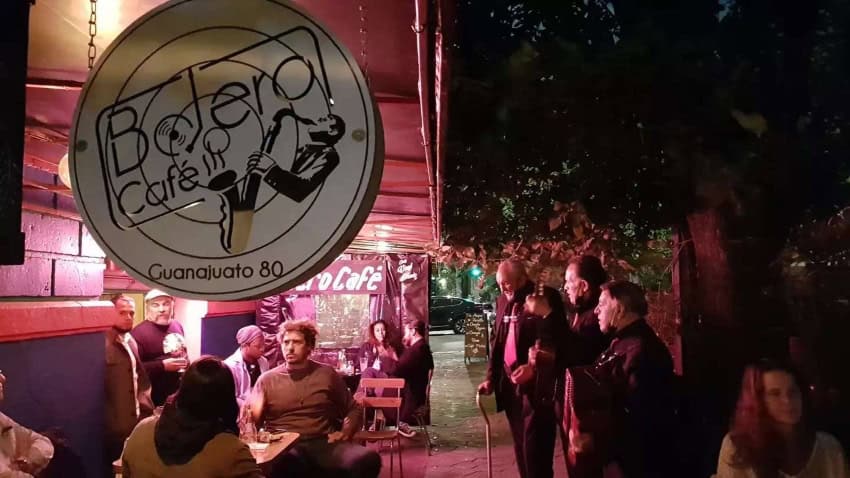
Bolero Café
They don’t serve a full menu of Colombian food but have the best patacones (with various kinds of toppings) that I have had in the city.
Medellin street stand
This stand doesn’t show up on Google Maps, but it can be found next to the Discos Aquarius store on Calle Coahuila in Roma. The papas rellenas are divine.
La Tertulia Valluna
A cozy new spot in Colonia Del Valle where Angela sells her famous empanadas with shredded beef and potatoes, as well as a whole menu of delicious Colombian classics.
Pollos Marios
One of the most old-school options for Colombian food in the city, Pollos Marios serves a full menu of traditional Colombian dishes as well as frozen foods to go.
Lydia Carey is a freelance writer and translator based in Mexico City. She has published extensively both online and in print, sharing her insights about Mexico for over a decade. She lives a double life as a local tour guide and is the author of “Mexico City Streets: La Roma.” Follow her urban adventures on Instagram and see more of her work at mexicocitystreets.com.