If you flip through the Guía México Gastronómico — an annual 200-page book that maps a flavorful constellation of Mexico’s most delicious restaurants, from the northernmost corner of Baja California to the southernmost point of Chiapas — you’ll find it: Múcara.
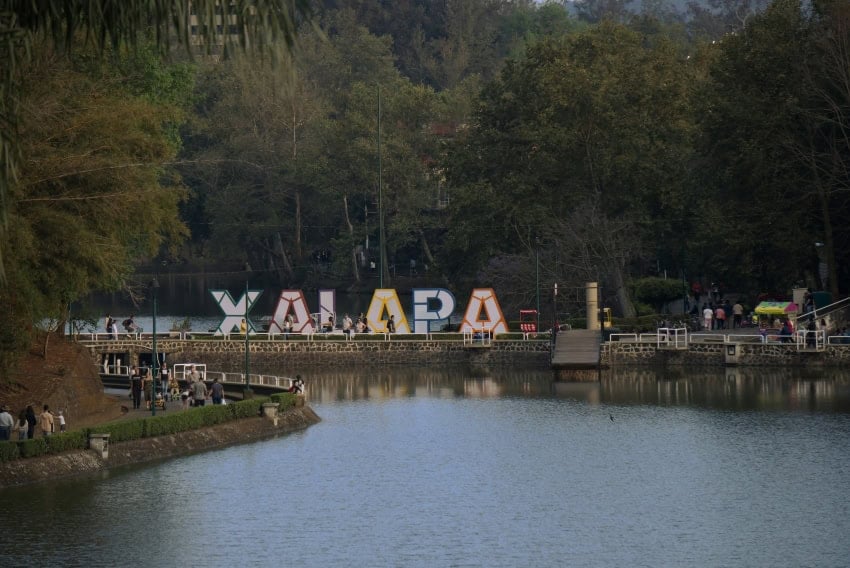
Off the page, the restaurant is located on a steep, narrow road in the historic center of Xalapa, Veracruz, tucked away — somewhat inconspicuously — between a comic shop, a tamalería, apartments, cafés and bars crammed with college students. It’s easy to miss. In fact, if you were to pass by for the first time, you’d likely skip right past it.
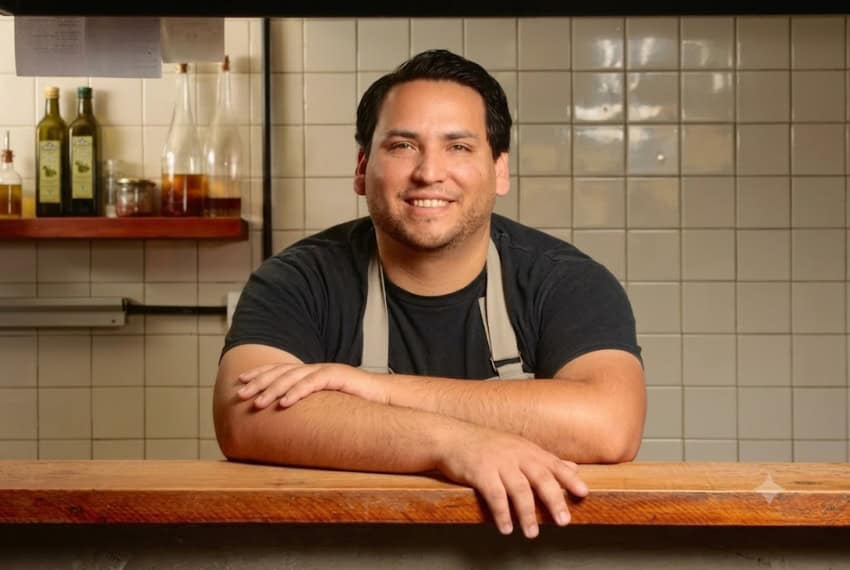
And yet, the intimate fonda, which seats a maximum of 20 diners at seven tables, has quietly risen to become among the most notable restaurants in the country — and is the first in Xalapa’s history to garner such prestigious national recognition, as designated by an editorial board of influential food critics, journalists, sommeliers and hospitality experts in Mexico.
How Múcara became a destination eatery
That is, Múcara is one of Mexico’s best places to eat. And they’ve earned it, despite not being in a buzzy or touristic hub of the nation.
Múcara’s objective is clear. Their menu is about retaining and expanding the overlooked culinary lineage of Veracruz through a delicious balance of elevated-yet-homely dishes — highlighting seasonal ingredients, refined cooking techniques and hyper-regional recipes. Strangely, it’s a radical concept in Veracruz’s capital city, where the dominant foods seem to be burgers, wings, pizza and pasta, and where if you were to ask a local where to find the best traditional Xalapeño bites, the list would be brief. That glaring absence is what inspired Múcara to open in 2016, when Lesterloon Sánchez Trinidad, a lifetime Xalapeño and the founding chef behind Múcara, first launched his vision.
“I wanted people to discover the regional foods from this area; Veracruz food is one of the oldest in the world,” says Sánchez Trinidad. “Veracruz includes the Olmec, and this region has been a historical crossing for Europeans, Asians, Arabs and the world. It’s the cradle of Mexican food. But at the national level, Veracruz is very forgotten. Modernity has caused us to spend our time differently and change our techniques in the kitchen. The previous generation is turning off their ovens, and things are rapidly changing. The history is being lost.”
A life-changing dining experience
At Múcara, that history is potent, and edible. And most of it is life-changingly delicious.

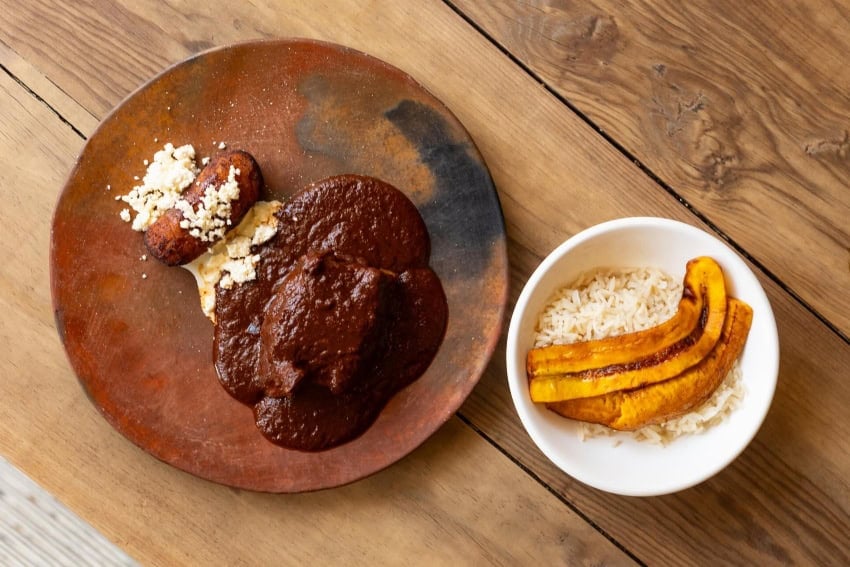
For lunch, that might taste like a courtesy apéritif of tepache de limón (a bold, citrusy shot of fermented lime juice) to go along with a glass of agua de acuyo (a refreshingly sweet and herbal dose of pepperleaf extract), anchored by a round of enchiladas encacahuatadas (a rich portion of four enchiladas, made with in-house tortillas that are rolled up and with filled shredded chicken, then bathed in a very mildly spiced peanut mole and blanched peanuts sprinkled atop).
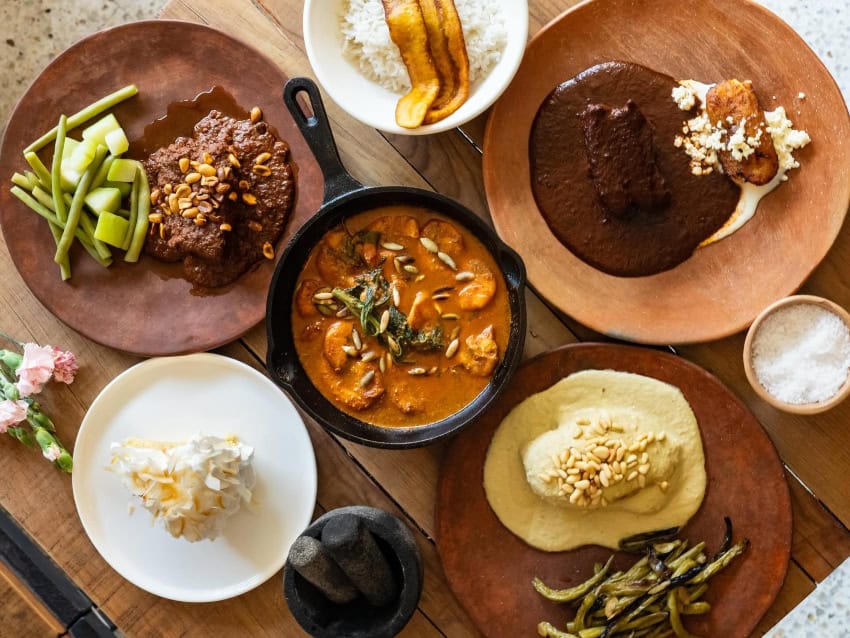
There’s also envueltos de plátano (rolled tortillas, stuffed with mashed bananas and drenched in sweet, chocolatey mole); enmoladas de tlatonile (tortillas with chicken and regional tlatonile sauce, brought over from the nearby mountain town of Huasteco, and accompanied with epazote, a tea plant, and chile compeño, a rare pepper that is cultivated in Comapa, Veracruz).
Salads include a rich fig variety or a native peach criollo option. Another standout is the pasta with huitlacoche (house-made pappardelle pasta mixed with flavorful corn fungi, nata, garlic, onion, aged cheese and a touch of olive oil). The menu is relatively compact in its offerings, but at Múcara, it’s about quality and perfection, rather than empty spectacle. It’s about savoring the basics, rather than seeking the bombastic.
Mixing and matching the menu
Of course, aspects of the menu are constantly in flux, depending on the time of year and what ingredients are available from producers and local markets, making it an interactive dining experience where you can jigsaw yourself into nirvana with just about any combination of plates at your table.
Having studied the culinary arts in Mexico City with some of Mexico’s most prominent chefs as a young cook, Sánchez Trinidad — who is relatively young — has compiled and combined over a decade of experience in the kitchen through trial and error. Initially, he opened Nao as a café and pambassería (a small shop that only sold pambazos, the small sandwich of Xalapeño fame, of which he says were prominent in his upbringing but are no longer seen as commonly around Xalapa). Unfortunately, Nao closed during the pandemic, though its closure allowed him to shift his full attention to Múcara, the more ambitious of his projects. That focus has paid off, as Múcara has converted into a decade-long fixture in the city’s culinary scene.
If you go to Yucatán, you’ll easily find 20 or 30 places to eat Yucatán food,” Sánchez Trinidad tells Mexico News Daily. “Same in Puebla for Poblana food. Or in Oaxaca. But in Xalapa, there’s nothing like that. It’s an interesting case study. How is it possible that as a state capital we don’t even know our own cuisine that well? What are our dishes?”
Old-school Veracruz cuisine made modern
On a drizzly Xalapeño afternoon, you can discover the answer to Sánchez Trinidad’s rhetorical question. Múcara is a refuge for the state’s fading past — a slow-cooking, old-school type of joint in modern digs, where no one is rushing the process for the sake of instant gratification, but instead cherishing each bite and all that it offers and imparts about Veracruz’s diverse history. In many cases, Sánchez Trinidad has pulled recipes from his childhood memories of preparing food with his mother and grandmother. His restaurant isn’t just a love letter to his state; it’s an entire library’s worth.
Elegant yet elemental
As a result of his careful attention and thoughtful choices, the meals are orchestral: simple, yet highly calibrated and masterfully executed, highlighting the contradictory pleasures of Mexican cuisine as being elegantly refined while, simultaneously, retaining its most elemental essences.
“The origin of the name Múcara comes from a rock (fossilized coral and marine sediments) that was taken out of the sea,” Sánchez Trinidad explains. “They made buildings out of that. The oldest buildings in the Veracruz port are made from it. Churches, forts, everything. Those old buildings remain and haven’t fallen, and that’s what we strive to be for Veracruz cuisine.”
Alan Chazaro is the author of “These Spaceships Weren’t Built For Us” (Tia Chucha Press, 2026), “Notes from the Eastern Span of the Bay Bridge” (Ghost City Press, 2021), “Piñata Theory” (Black Lawrence Press, 2020), and “This Is Not a Frank Ocean Cover Album” (Black Lawrence Press, 2019). He is a graduate of June Jordan’s Poetry for the People program at UC Berkeley and was selected as a Lawrence Ferlinghetti Poetry Fellow at the University of San Francisco. His work can be found in NPR, The Guardian, SLAM, GQ, L.A. Times, and more. He is currently based in Veracruz.