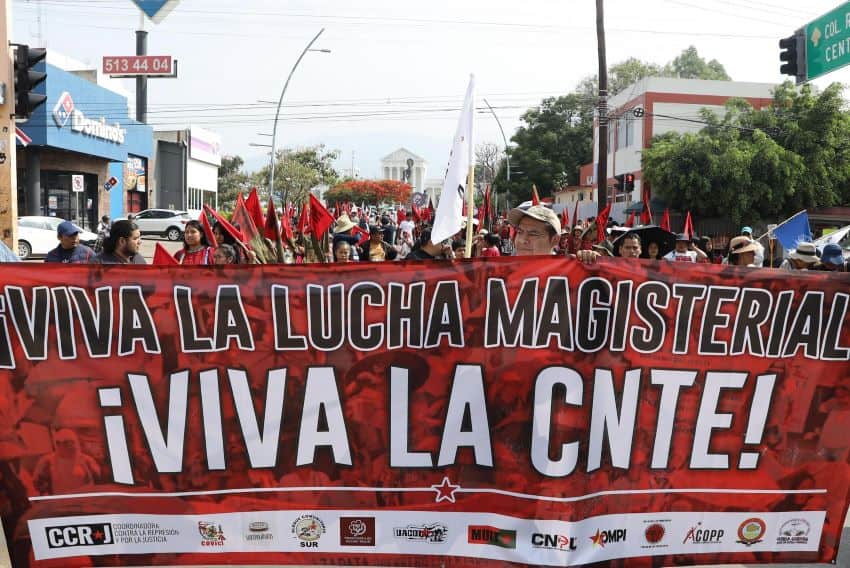
The National Coordinator of Education Workers (CNTE), one of Mexico’s most powerful teachers’ unions, has maintained a series of protests in Mexico City since May 15 as part of a national strike to demand changes in working and educational conditions.
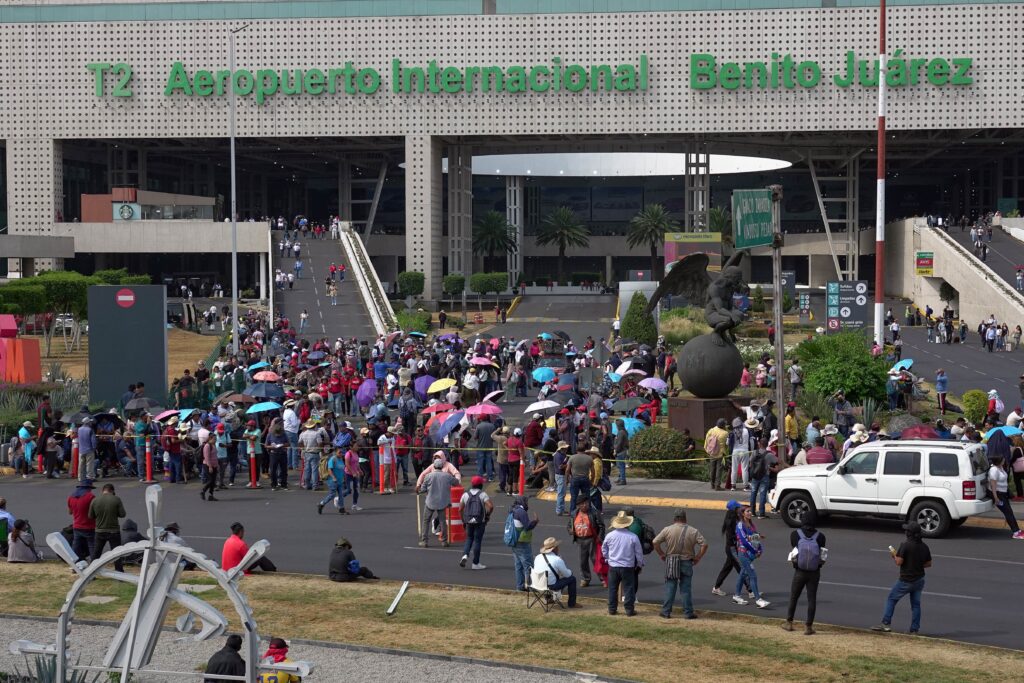
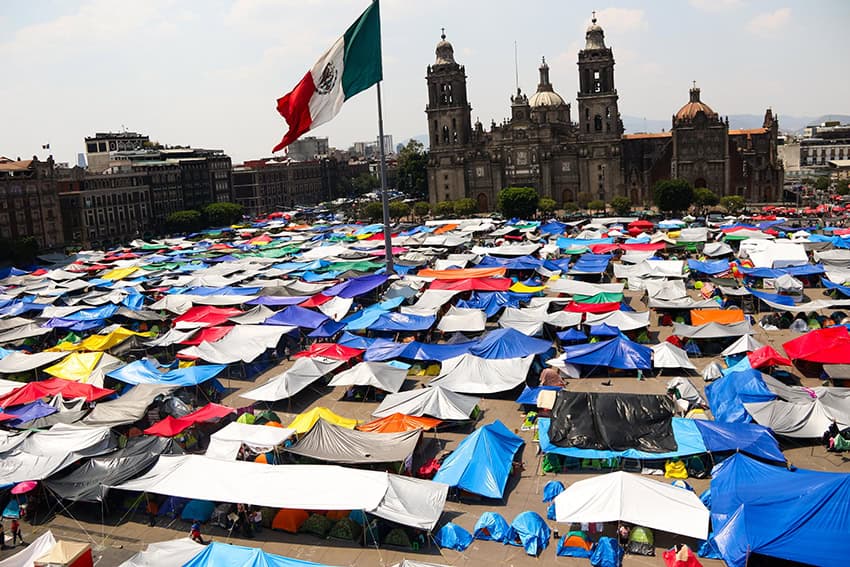
Demonstrations have included toll booth takeovers, embassy protests, sit-ins at the capital’s Zócalo, blockades at Mexico City International Airport (AICM) and main roads such as Chapultepec, Cuauhtémoc, Paseo de la Reforma and Blvd. Adolfo López Mateos, significantly affecting traffic and daily life in the capital.
The CNTE protests have also resulted in school closures, affecting some 1.2 million children who are unable to attend classes. The Education Ministry (SEP) reported that most of the affected schools are located in the southern states of Oaxaca, Chiapas, and Guerrero.
What are the teachers’ demands?
The teacher’s main demand is the repeal of the 2007 ISSSTE Law, approved during President Felipe Calderón’s term, which President Claudia Sheinbaum promised to repeal during her campaign.
CNTE members say the law affects their pension system by requiring pensions to be based on individual savings funds. The amount is calculated using the current UMA (Unit of Measurement and Update), instead of the minimum wage, as the teachers demand.
CNTE members also accuse the government of benefiting private pension fund administrators (Afores), pointing out that their operation is backed by international commitments such as the USMCA. Teachers say the current model indebts the state and chains workers’ resources to financial markets and large corporations.
Teachers are additionally advocating for a retirement system based on years of service, not age. They demand that women be able to retire after 28 years of service and men after 30 years, as was the case before the 2007 ISSSTE Law. The current law sets the minimum retirement age at 56 for women and 58 for men, regardless of years worked, which CNTE considers unfair.

They also demand that salaries be doubled for teachers across the country.
What has the government offered?
On May 15, Teacher’s Day, Claudia Sheinbaum announced an initial 9% salary increase retroactive to January, with an additional 1% increase starting in September, as well as an extra week of leave for teaching staff.
Sheinbaum also issued a decree forgiving debts, reducing loan amounts and freezing interest on Fovissste (publicly subsidized) loans, benefiting over 24,000 teachers. The move will cost the government more than 19 billion pesos (US $989 million).
Sheimbaum also issued a decree freezing the minimum retirement age, but did not modify the age criteria as requested by teachers.
What is the status of the negotiations?
CNTE has rejected Sheinbaum’s proposals, saying they do not address the teachers’ core demands.
En 2024, Sheinbaum prometió derogar la reforma de pensiones del 97 y 2007, “con ayuda” de la aplanadora morenista.
Hoy, ya como presidenta, se retracta. Mintió. Engañó a la CNTE. Y como en sexenios pasados… nadie los detiene.
Gracias a sus mentiras, 8 millones de niños hoy no… pic.twitter.com/iZlVNEGKJk
— Alejandra Escobar (@AleEsat) May 27, 2025
“This does not address the demand for the repeal and creation of a new ISSSTE Law, which would return us to a solidarity-based pension system,” CNTE members told newspaper La Jornada. “As for more leave time, we’ve never demanded that. No, what we’re asking for is the repeal of these two central reforms that undermine workers’ rights.”
So far, CNTE representatives have met with high-ranking Mexican officials but not with Sheinbaum herself. She has refused to meet with them, claiming they broke off dialogue by attacking a cameraman on May 21, as they blocked the entrance to her morning news conference.
The teachers have threatened to continue protesting through June 1, the day of Mexico’s first judicial election, unless they receive a “concrete response” from the government.
“Of course, we don’t want to wait until June 1st. If they gave us a concrete answer today or tomorrow, then we wouldn’t be crazy enough to continue suffering what we’re going through,” said Pedro Hernández, of Section 9 of the CNTE, at a press conference outside the National Electoral Institute.
With reports from Animal Político, El País, Crónica, El Economista, Infobae and EFE