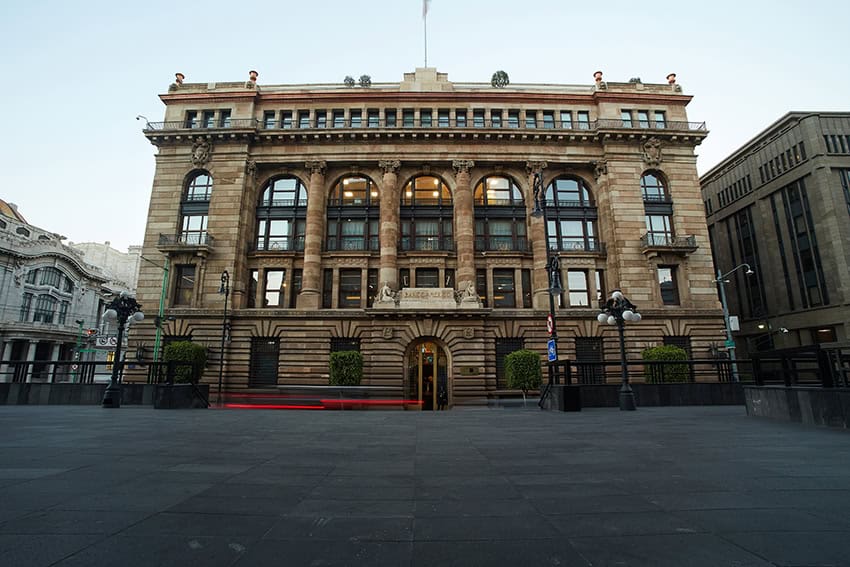
Inflation in Mexico fell to just 0.12 points above the Bank of Mexico’s 3% target in July, but the central bank’s governor says it’s too early to declare victory in the fight against rising prices.
“At the Bank of Mexico, we’re not claiming victory yet,” Victoria Rodríguez Ceja told the newspaper El Financiero in an interview published on Monday.
Her remarks came after the national statistics agency INEGI reported on Friday that Mexico’s annual headline inflation rate was 3.12% in July, down from 3.37% in June.
Rodríguez noted that the headline rate in July was the lowest since May 2020. However, “even though inflation is practically at the [3%] target,” the Bank of Mexico will continue to seek low and stable price rises, the central bank governor told El Financiero.
INEGI’s 3.12% annual inflation reading in July was the product of 3.95% year-over-year core inflation and 0.29% non-core inflation. Annual core inflation remained reasonably high due to factors such as 4.85% year-over-year price rises for processed food, beverages and tobacco and 4.36% year-over-year increases for services.
The low non-core reading was the product of a 3.34% annual drop in prices for agricultural products (fruit, vegetables and meat) and a 3.31% increase in energy prices, including those for electricity and gasoline. Prices for agricultural products also declined on a month-over-month basis in July, falling 1.51%.
Rodríguez: Lower prices for agricultural products won’t last
Rodríguez’s interview with El Financiero came after Mexico’s headline inflation rate fell during four consecutive months from April to July. The headline rate last month was 1.47 percentage points below the 2026 peak of 4.59% in March.

Rodríguez said that the recent decline in inflation is explained, in part, by “changes in relative prices caused by favorable supply shocks.”
That was a reference to increased supply of fresh food, such as fruit and vegetables, and, as a result, lower prices for such products, as reflected in INEGI’s latest inflation data.
Rodríguez said that the Bank of Mexico doesn’t anticipate that lower prices for agricultural products will last due to “the unique characteristics of these prices and their exposure to meteorological phenomena.”
The easing of drought conditions in Mexico is a major reason why fresh food prices have recently come down, but there is no guarantee that weather-related factors won’t cause increases in the future.
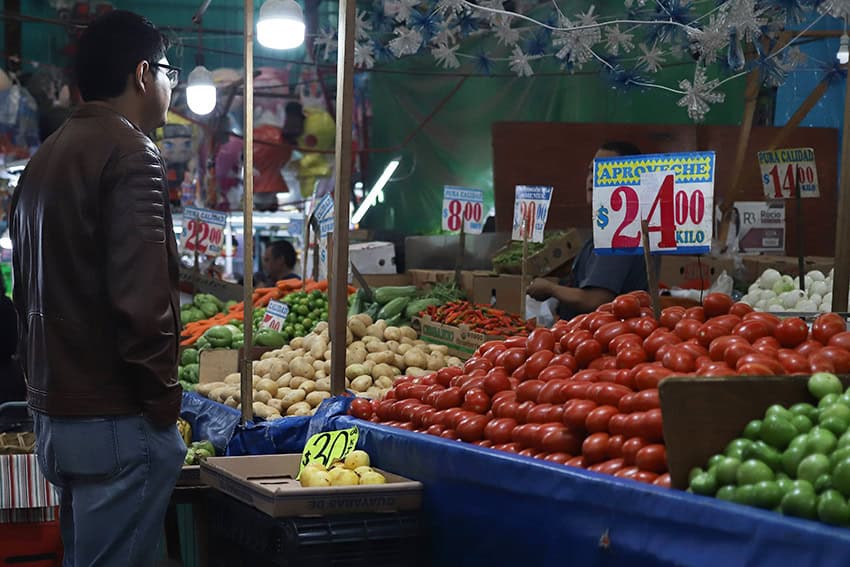
Further explaining why the Bank of Mexico isn’t yet declaring victory in the fight against rising prices, Rodríguez noted that core inflation was 3.95% in July, while services were 4.36% more expensive than a year earlier. Inflation for services has recently trended down, but is still higher than the central bank would like. One factor driving the increase in prices for services was a 5.93% year-over-year increase in private school fees in July.
The Bank of Mexico’s inflation outlook
The Bank of Mexico (Banxico) forecasts that Mexico’s average annual headline inflation rate will be 3.5% in both the third and fourth quarters of 2026. In other words, the central bank anticipates that inflation will be higher between August and December than the 3.12% reading in July.
Banxico sees inflation declining in every quarter next year. It anticipates an average rate of 3.4% in Q1 of 2027, 3.3% in Q2, 3.2% in Q3 and 3% in Q4.
Those forecasts are included in a monetary policy statement released by Banxico last Thursday after its governing board voted in favor of maintaining the central bank’s key interest rate at 6.50%. Rodríguez told El Financiero that the bank’s current benchmark rate will contribute to the consolidation of “inflation’s downward path toward the [3%] target.”
However, she noted that the bank’s interest rate is subject to change based on “our assessment of the inflation outlook.”
In its Aug. 6 statement, the Bank of Mexico noted that headline inflation is “expected to converge to the target in the fourth quarter of 2027,” two quarters later than the bank anticipated when announcing its board’s interest rate decision in late June.
It said that its inflation forecasts “are subject to various risks.”
On the upside, they include “persistence of core inflation; disruptions due to foreign trade policies or to an inflationary impact from geopolitical conflicts; climate-related impacts; cost-related pressures, and a trend towards depreciation of the Mexican peso.”
On the downside, the risks include “lower-than-anticipated economic activity in Mexico and/or the United States; lower pass-through from increased costs, and lower pressures stemming from the appreciation that the national currency has been registering since last year.”
In her interview with El Financiero, Rodríguez stressed that the Bank of Mexico’s focus when making monetary policy decisions is the “inflation dynamic,” rather than economic growth, which had been very weak — or non-existent on a quarter-over-quarter basis — until a 1.5% sequential expansion in the second quarter of 2026.
With reports from El Financiero