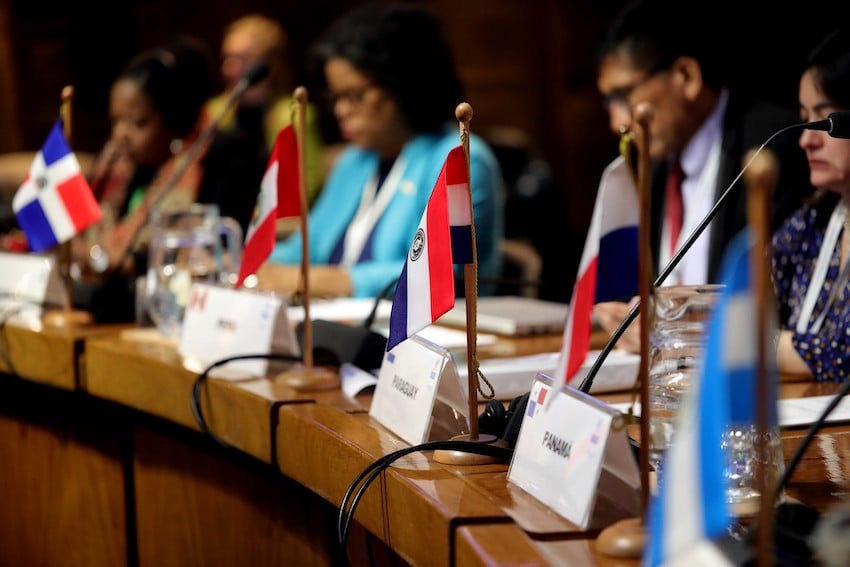
Delegates from all Latin American nations got some sobering news as they gathered in Santiago, Chile, this week to assess the region’s progress toward achieving sustainable development.
According to the most recent report from the Economic Commission for Latin America and the Caribbean (ECLAC), no part of the region is remotely close to being on pace to achieve sustainable development goals set for 2030, and many are actually losing ground.
More than a decade ago, United Nations-generated goals were adopted, setting precise targets in such areas as clean water, sanitation, affordable clean energy and industry infrastructure, among many others. With four years to go, the sub-region of South America is on pace to meet only 19% of its goals, which is a percentage point higher than the 18% of the sub-region Mexico shares with Central America. Lagging behind is the Caribbean at 13%.
More disturbingly, the report found that the region as a whole is making negative progress on 39% of the targets — that is, it is further away from meeting them than it was a year ago.
ECLAC cited the new era of geopolitical uncertainty and fragmentation as a major challenge to achieving the targets.
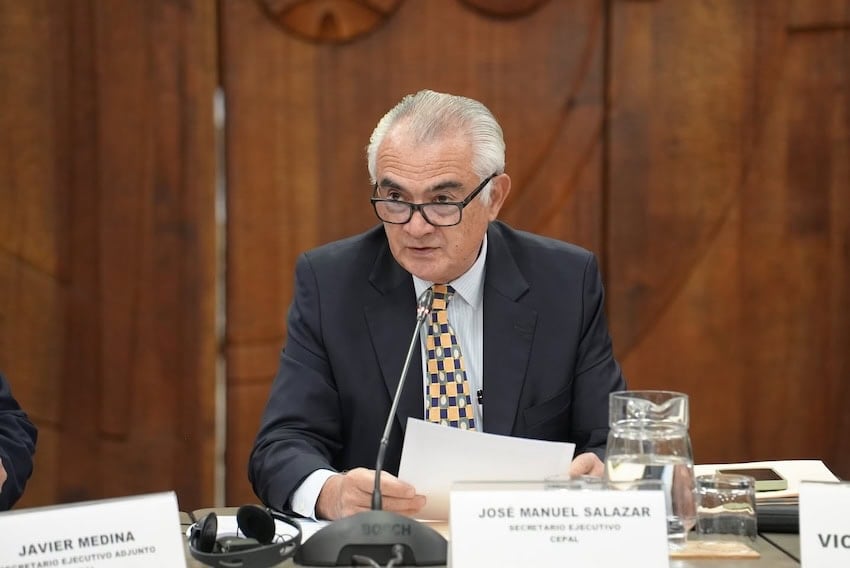
Its executive secretary, José Manuel Salazar-Xirinachs, blamed both external and domestic factors, citing specifically the deterioration of institutional capacities, low priority given to some of the goals, inadequate financing, limited fiscal space, ongoing debt burdens and, especially, low economic growth in various countries of the region.
Forum leaders tried to prevent pessimism from derailing their campaign, essentially adopting the approach that nobody said this would be easy. The ultimate objective, Salazar-Xirinachs emphasized, is worth extra effort.

“The 2030 Agenda is, in the end, an agenda for transforming societies in order to achieve shared human aspirations: to live better, live in peace, live in a healthy environment, live free of injustice and excessive inequalities,” he told the gathering. “This is not the time to throw in the towel, but rather to roll up our sleeves and keep working.”
With reports from La Jornada and Mexico Business News