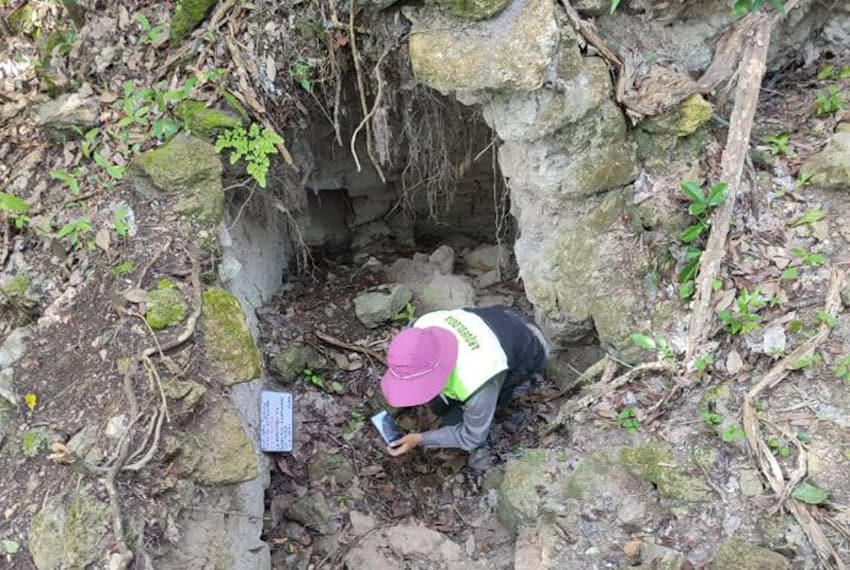
Mexican archaeologists have registered a sprawling ancient Maya city in southern Quintana Roo after local residents flagged the site during work on the Maya Train project.
According to the National Institute of Anthropology and History (INAH), the settlement includes around 80 structures and Petén‑style architecture spread across at least 100 hectares in Othón P. Blanco, a municipality including coastal and jungle areas south of the Bacalar Lagoon. INAH publicly announced the registration of the site on Monday.

Specialists say the city — named El Jefeciño (meaning roughly “the Little Boss”) for the monumental scale of its ruins — likely dates to the Early and Late Classic periods, between A.D. 250 and 900, when Petén-style Maya architecture flourished in the region.
Petén is a lowland jungle region centered in northern Guatemala, part of a wider basin that extends into Mexico and Belize; it’s home to major Maya cities such as Tikal and Calakmul.
In archaeology, “Petén style” refers to a Classic Maya architectural tradition from the region.
In the case of El Jefeciño, the new city — discovered via a resident report submitted during 2023-24 work on the Maya Train — is marked by large vaulted buildings, rounded and recessed corners and apron moldings.

Culture Minister Claudia Curiel de Icaza noted that the finding is a good example of how INAH’s work “recognizes the value of the communities in safeguarding a historical memory that belongs to everyone.”
Several archaeologists led the registration work as part of the Tren Maya Archaeological Salvage Project on Section 7. Their survey suggests the city may extend beyond the 100 hectares already mapped.
At the site’s core, they documented an area of five large structures forming a C-shaped plaza. The buildings are between 11 and 14 meters high (36 to 46 feet) and 16 to 40 meters long (52 to 131 feet).
In one building, they recorded stucco fragments with murals painted in white and orange with red stripes, along with pieces of a human skeleton that may belong to a burial context.
Since no excavation has begun, the evidence remains in place. It includes three well-preserved Maya vaults — stone-roof structures inside temples, palaces or other buildings.
INAH plans future airborne LiDAR mapping to refine the city’s layout and guide conservation, consolidation and further exploration.
A pre-Columbian settlement with a similar number of structures was located in the same municipality, Othón P. Blanco, about six or seven years ago, near the coastal village of Mahahual. However, while El Jefeciño includes large, monumental buildings, Mahahual is mainly domestic structures such as homes and walls.
Experts say both settlements could help clarify how ancient Maya communities in southern Quintana Roo were linked through political, social and trade networks.
With reports from La Jornada, Infobae and Finestre sull’Arte