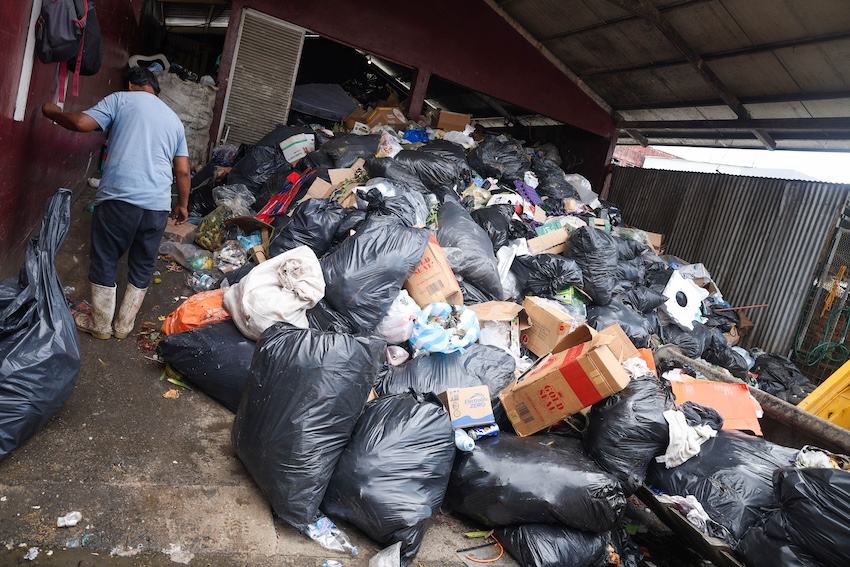
Mexico City’s latest attempt to improve waste management in the capital is an ambitious trash separation strategy that aims to ensure that by 2030, 50% of the estimated 8,600 tons of waste generated daily in the city is recycled or reused instead of being sent to landfills or tossed in streets and empty lots.
To achieve that goal, Mexico City Mayor Clara Brugada has presented the campaign: “Transform your city, each piece of trash in its place.” Beginning January 1, 2026, homes, schools, offices and businesses will be required to separate their trash into three categories: organic waste, recyclable inorganic waste and non-recyclable inorganic waste.
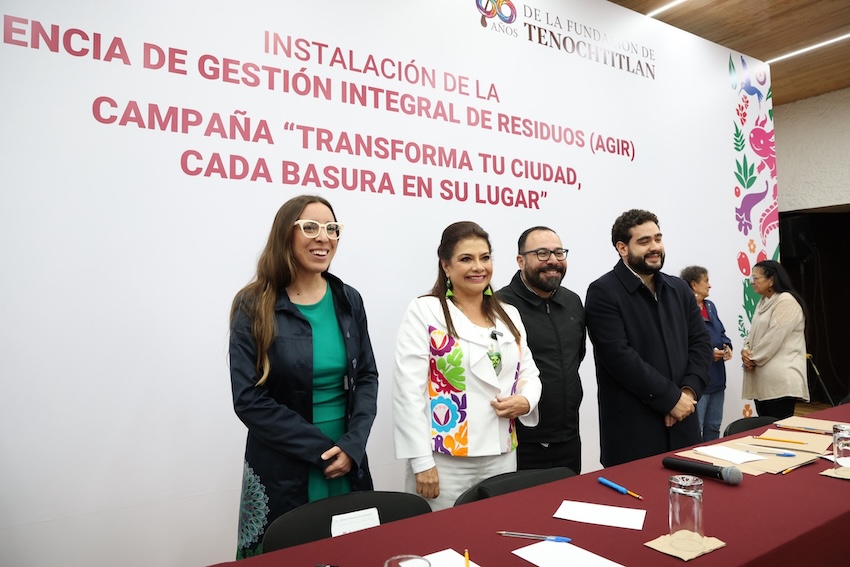
In a ceremony that installed the governing body of the new Integrated Waste Management Agency (AGIR) — officially created in November 2024 — Brugada noted that only 15% of the city’s garbage is properly separated today.
“Every piece of waste we throw away has a direct impact on the air, water and land,” she said. “Therefore, we believe that with good organization, awareness and determination, we can transform this challenge into a great opportunity to build a cleaner, more equitable and sustainable city.”
The program’s initial investment will be 400 million pesos (US $21.5 million) 250 million of which will go to the purchase of new waste collection trucks, and the rest to improve the Bordo Poniente recycling plant and to build new plants throughout the city.
For the remainder of the year, Brugada’s government will coordinate an educational campaign to teach residents how to separate their waste.
Brugada said that once this program kicks in, garbage collection will be carried out on a daily basis, as follows:

- Tuesday, Thursday and Saturday: organic waste (food scraps, garden scraps, etc.)
- Monday and Wednesday: recyclable inorganic waste (paper, cardboard, glass, PET, aluminum, metals, etc.)
- Friday and Sunday: non-recyclable inorganic waste, such as sanitary waste, diapers and cigarette butts.
This isn’t the first time the capital has sought to organize its waste management, as garbage separation is a long-standing environmental goal.
In 2003, the local government approved the Solid Waste Law of the Federal District, which established the obligation to separate waste into two basic categories: organic and inorganic. However, the lack of collection infrastructure and weak educational campaigns prevented effective implementation of the law.
With reports from El Universal, Lopez Dóriga, Chilango and TV Azteca