In the aftermath of a landmark anti-cartel operation, normalcy began to return to Mexico the first week of March. Drug lord “El Mencho” was laid to rest Sunday, a week after his death — and his cartel’s response — brought everyday life to a halt across the country. Throughout the week, an escalating war in the Middle East rattled markets and stranded citizens abroad, while back at home President Sheinbaum fought headwinds as she and the Morena party attempted to push their electoral reform forward. Through it all, World Cup preparations continued apace for a competition now less than 100 days away.
Didn’t have time to catch this week’s top stories? Here’s what you missed.
The end of El Mencho — and what’s next for the CJNG
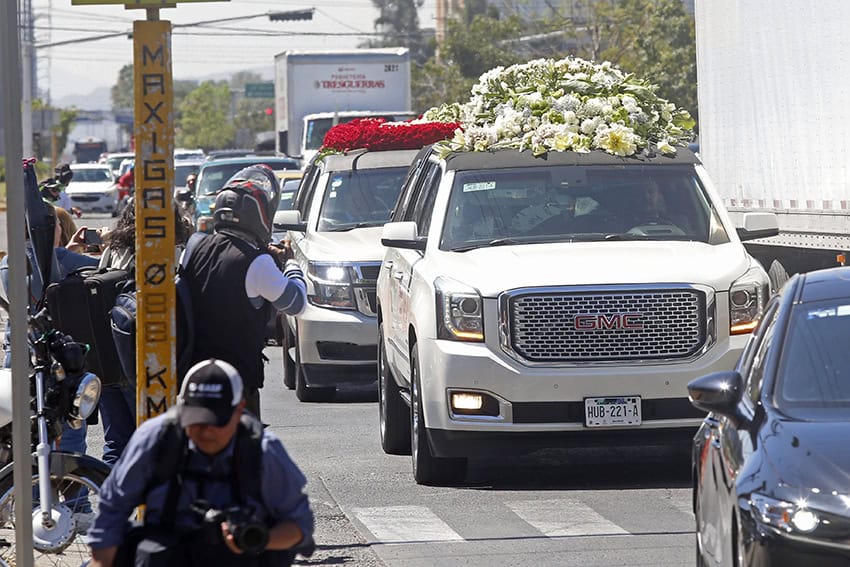
The week opened with the burial of Nemesio Rubén “El Mencho” Oseguera Cervantes, the founder and longtime leader of the Jalisco New Generation Cartel (CJNG), fatally shot by soldiers on Feb. 22. His body arrived in Guadalajara on Sunday for burial and was interred at a cemetery in the municipality of Zapopan on Monday afternoon, under a strong security presence from the Army, National Guard and state police.
At her Monday mañanera, Sheinbaum noted that after the most intense chaos on the day of the operation itself, things began returning to normal, and by Wednesday economic, school and social activities had largely resumed. Polling vindicated the government’s approach: 82% of respondents rated the actions against El Mencho as good or very good, and the president’s approval rating jumped eight percentage points among those surveyed after the operation.
By Friday, Sheinbaum traveled to Zapopan itself to hold her press conference, and her security minister delivered a blunt assessment. Security Minister Omar García Harfuch confirmed that the CJNG’s power had “definitely” declined, citing 890 arrests, the seizure of 626 firearms and more than 10 tonnes of drugs in Jalisco since October 2024. Homicide statistics offered further encouragement: Jalisco recorded an average of 2.55 murders per day in January 2026, a 47% reduction compared to the final month of the previous administration.
Jalisco bounces back, but tourism clouds linger
Despite the violence, business confidence in Jalisco proved resilient. Though 103,000 businesses reported suffering a negative economic impact from the Feb. 22 operation, the American Chamber of Commerce Guadalajara chapter confirmed unanimously that its member companies had no plans to halt or pause investment. Hotel occupancy, which had cratered to 15% amid the unrest, rebounded to 40% within days, and 95% of events scheduled in Jalisco for 2026 remained confirmed.
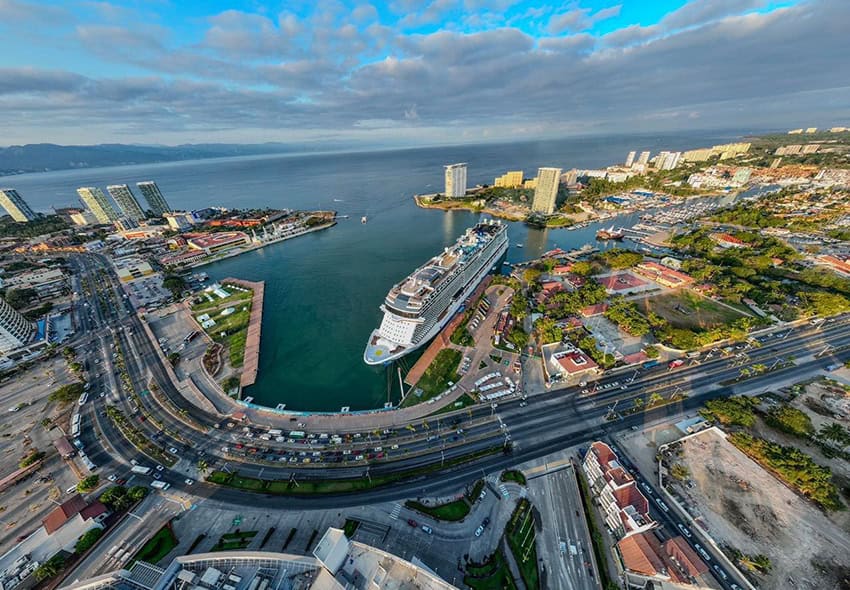
In Puerto Vallarta, the Norwegian Bliss cruise ship arrived carrying more than 4,300 passengers just ten days after the killing of El Mencho plunged the port city into crisis. As the first cruise ship since the violence, it was greeted by mariachi music with local officials framing the arrival as proof that Puerto Vallarta was open for business.

World Cup tourism, however, faced a more complicated picture in Mexico City. FIFA released 800 of the 2,000 hotel rooms it had booked for the tournament in the capital in the past 30 days, prompting concern. The Hotel Association’s director, however, said FIFA had simply over-reserved to guarantee availability and that hotel occupancy was still expected to reach 85% by the June 11 opener.
World Cup security plans takes shape
As the tournament approached — less than 100 days away — security preparations advanced quickly. Mexican officials met with FIFA representatives on Wednesday to coordinate security protocols, with the meeting attended by the security, interior, defense and foreign affairs ministers, as well as FIFA’s chief tournament officer in Mexico.
On Friday, García Harfuch unveiled Plan Kukulkán — named after the serpent deity of Maya mythology — as Mexico’s official World Cup security strategy, involving 20 federal departments and close to 100,000 security personnel, including members of the armed forces, National Guard and police.
In a lighter World Cup moment, Sheinbaum announced at her Thursday mañanera a nationwide soccer ball juggling competition for women aged 16 to 25, with the winner earning her personal World Cup opening ceremony ticket — number 00001 — while the president said she plans to watch the opener in the Zócalo with the public instead.
Mexico and the Middle East crisis
The U.S.-Israeli strikes on Iran cast a long shadow over the week. Mexico’s Foreign Relations Ministry confirmed that approximately 7,000 Mexicans in the Middle East remained safe, while Sheinbaum called for a return to multilateral diplomacy. By Wednesday — the fifth day of the conflict — 279 Mexicans had been evacuated, with those fleeing overland from Israel, Jordan and Qatar making their way to Egypt and Turkey, where airspace remained open.
The conflict weighed heavily on financial markets. The peso depreciated sharply on Tuesday, falling from 17.28 to around 17.80 per dollar at its worst, as fears of a prolonged war drained investor appetite for risk assets. By Friday, the pressure had only intensified. The peso slid a further 0.68%, reaching 17.82 to the dollar — a seven-week low — after Trump demanded an “unconditional surrender” from Iran and a weak U.S. jobs report added to global uncertainty, putting the peso on track for its worst weekly performance since June 2024.
Economic outlook brightens even as Sheinbaum faces political headwinds
Against the currency headwinds, Mexico’s underlying trade data offered a brighter picture. Export revenue rose 8.1% year-over-year in January to just over US $48 billion — the strongest January performance since 2023 — with manufactured goods accounting for more than 90% of total earnings.
On the political front, Sheinbaum’s proposed electoral reform hit turbulence. The bill, which would reduce the number of senators by eliminating those elected via proportional representation and require proportional-representation deputies to appear directly on ballots, faced opposition not only from conservative parties but also from Morena’s own coalition allies, the Labor Party and the Green Party, who fear the changes would undermine their own electoral survival. The president acknowledged she had a “plan B” but declined to elaborate.
Also this week, Mexico and the U.S. announced that formal USMCA review talks will begin on March 16 in Washington — without Canada, which is expected to join at a later date. The two countries recorded a record-high trade relationship in 2025, with the value of bilateral trade exceeding US $870 billion.
With International Women’s Day approaching on Sunday, Sheinbaum used her Wednesday press conference to acknowledge that while femicides had declined — to 721 cases in 2025 — women still need greater state protection and economic autonomy, and that the government would release detailed data on gender violence and the pay gap later in the month. She also confirmed that barriers would likely be erected around the National Palace on March 8, as in past years, to protect it during the annual protest march.
A separate diplomatic flashpoint emerged at Thursday’s mañanera, when Sheinbaum confirmed that Mexico had sent a diplomatic note to Washington after a Mexican national, 48-year-old Alberto Gutiérrez Reyes, died while in ICE custody at a detention center in Adelanto, California — the ninth such death in ICE custody this year.
On the environmental front, a troubling story unfolded on the Gulf coast. An oil spill first detected off the coast of Pajapan in southern Veracruz spread to affect at least 150 kilometers of coastline across several municipalities, shutting down tourist beaches, halting fishing and threatening turtle nesting areas — while both Pemex and the state governor denied that the company’s infrastructure was responsible.
The week’s most joyful moment, meanwhile, came from Mexico City’s Zócalo early in the week. Shakira drew 400,000 fans to the historic plaza on Sunday night, breaking the all-time attendance record for a free concert there, and wrapping the Mexican leg of her “Las Mujeres Ya No Lloran” world tour after 31 shows across the country. Sheinbaum confessed at her Monday presser to sneaking a peek through the National Palace window before praising the crowd as “amazing.”
Shakira sets Zócalo record with 400,000 fans in historic Mexico City farewell
Looking ahead, the intertwined threads of this week are unlikely to unravel quickly. The CJNG’s leadership succession remains uncertain and could devolve into factional conflict while the peso’s trajectory is hostage to a Middle Eastern conflict with no clear end date. Electoral reform is testing Morena’s coalition as never before and the World Cup clock is ticking. Mexico is juggling a great deal — and doing so under the watchful eye of the world.
Also in the news this week
- The National Meteorological Service will debut extreme rain cell phone alerts for hurricane season this year.
- Two U.S. firms announced a $500 million investment to build EV charging infrastructure and electric bus fleets across central Mexico and the Bajío region.
- Yucatán installed its first artificial reef off the coast of Río Lagartos, aiming to restore marine habitat and boost ecotourism.
- Rarámuri runner Juana Ramírez will compete in the Nagoya Women’s Marathon, the world’s largest women’s race.
- The federal government will reopen the Toniná archaeological zone in Chiapas after expropriating a parcel from a private landowner who had demanded monthly rent.
- The Cuera Tamaulipeca, Tamaulipas’s traditional leather jacket, received Protected Geographical Indication status.
- Sundance Film Festival will return to Mexico City for a third straight year in April.
Looking for last week’s roundup? Check it out here.
Mexico News Daily
This story contains summaries of original Mexico News Daily articles. The summaries were generated by Claude, then revised and fact-checked by a Mexico News Daily staff editor.