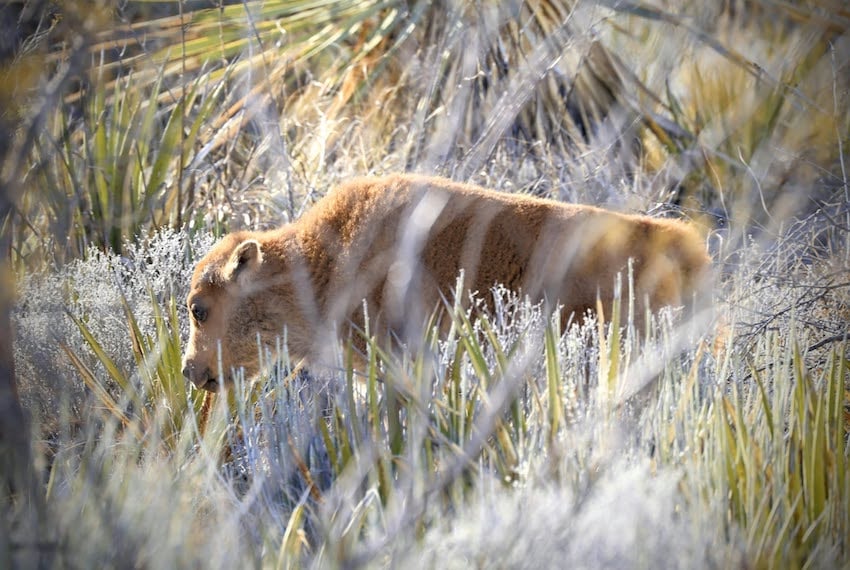
Three American bison calves have been born in recent weeks at the El Santuario Ecological Reserve in the state of Coahuila, marking a milestone in the species’ return to northern Mexico.
The Pro Cuatrociénegas Foundation said the births follow the November 2025 reintroduction of 44 bison — 38 females and six males — to the Sierra de Menchaca near Cuatro Ciénegas, part of a long-term effort to restore degraded grasslands and biodiversity.
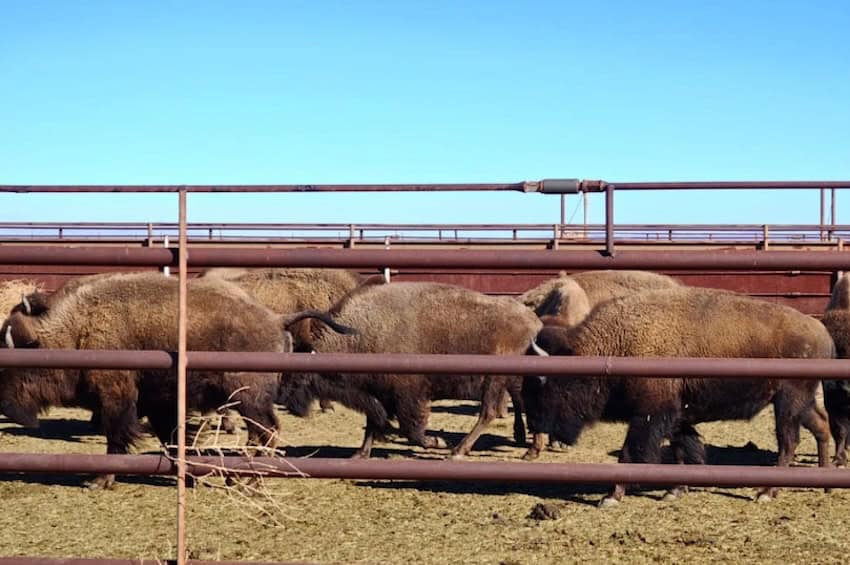
The calves, born in late April and early May, weighed between 15 and 20 kilograms (33 to 44 pounds) and are in good health, according to the foundation officials. They expect the herd to grow to at least 55 animals this year.
“Each bison that is born reinforces the return of this species to the country,” said regenerative agricultural specialist Gerardo Ruiz Smith, director of the Pro Cuatrociénegas Foundation.
He also referenced a recent birth at a ranch within the Cuenca Los Ojos protected area in Sonora. It occurred in late April just weeks after a herd of 29 American bison were moved there from Chihuahua as part of a binational effort to restore the species to its historic range after roughly 160 years of absence.
Once widespread across northern Mexico, American bison disappeared from the region due to overhunting, agricultural expansion and livestock grazing in the late 19th and early 20th centuries. The species is now considered endangered in Mexico.
The Cuatro Ciénegas herd of American bison is the country’s third, following earlier reintroductions at the Janos Biosphere Reserve in Chihuahua (since moved to Sonora) and the El Carmen nature reserve in Coahuila.

Conservationists describe bison as “ecosystem engineers,” essential to grassland health. Their grazing promotes plant diversity, reduces fire risk by consuming dry matter and helps disperse seeds and retain soil moisture.
“It’s not just about bringing in a charismatic animal,” Ruiz Smith said. “It’s about restoring critical ecosystem functions that no other species can perform.”
Ruiz Smith is the founder of Agroasis, an agriculture business focused on restoring arid landscapes through holistic land planning, grazing, Keyline Design and agroforestry systems. He also teaches at Mexican universities.
The bison’s return “is not only an ecological achievement,” said Juan Luis Longoria, director of culture for Pro Cuatrociénegas. “It reconnects the Ndé Nation (commonly known by the imposed term ‘Apache,’ which comes from a Zuni word meaning ‘enemy’) with a brother that is part of our identity, our spirituality and our collective memory.”
El Santuario is a previously overgrazed reserve in Coahuila’s central desert about 10 kilometers from the Pueblo Mágico of Cuatro Ciénegas. It’s roughly 3,700-4,000 hectares.
Because the project — which also aims to support wildlife such as pumas, black bears and prairie dogs — is focused squarely on ecology right now, public tourism is being tightly controlled.
With reports from La Jornada and Fábrica de Periodismo