Home Blog Page 1083

Many foreign cuisines are found in Mexico but mostly as a niche market

0
Mexico City's Barrio Chino
A Chinese food restaurant in Mexico City’s historic Chinatown. The cuisine has adapted here and features Mexican taste accents like jalapeños. Leigh Thelmadatter

Many of us English speakers come from countries where eating food from elsewhere is common enough to be pretty much normal.

We bring this habit with us to Mexico, but it can be difficult to indulge it.

It’s not that a variety of non-Mexican food cannot be had in Mexico; it certainly can, but it is nowhere near as ubiquitous as it is in countries such as Australia, the United States and England. And much of that is because of how Mexico sees itself internally and vis-a-vis the rest of the world.

Food and restaurants can play an important part in establishing the presence — and the acceptance of — arriving ethnicities. When there are a sufficient number of immigrants from a particular culture, their presence is generally first visible due to the appearance of their ethnic restaurants, then specialty stores and then even native food distribution channels.

People from London, New York, Sydney and more are no stranger to this phenomenon. But what about Mexico?
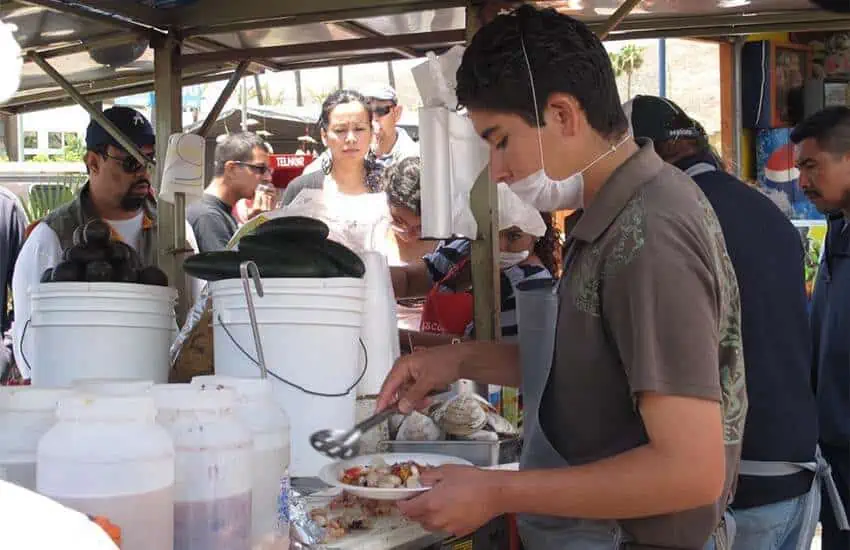
Ceviche in Ensenada, Baja California
Stand in Ensenada, Baja California, preparing Mexican style ceviche.

This country is not seen as a receiving but rather as a sending country when it comes to immigration. People have come to Mexico, in the modern sense, at least since the late 19th century, but the influx doesn’t approach that of the U.S. or Brazil. Even with the smaller numbers, the process of “foreign” food integration is very similar to that of other countries.

One of the largest immigrant groups over the past century or so in Mexico has been Chinese. Historical Chinatowns can be found in many areas here, from Tijuana as far south as Tapachula, Chiapas.

This long history means that most “Chinese” food found here has been adapted to Mexican tastes, with ingredients such as sliced jalapeños not uncommon.

The U.S. has also had a major impact on Mexican cuisine, the most obvious of which is the presence of fast-food chains. While they can be found in all of Mexico’s states, they are far more prevalent in the north, which is economically and culturally more connected with the United States.

Mexican supermarkets reflect the longstanding relationship with Chinese and U.S. cuisines. Many American cookies, breakfast cereals and condiments are readily found in them but with less variety the farther south you go. Supermarkets almost always have an Asian food section, and cheap, instant noodle soups have become a staple.

A few foods are so thoroughly integrated that they are no longer “foreign.” One is tacos al pastor (shepherds’ tacos), which are simply a Mexican adaptation of shawarma, introduced by Lebanese immigrants in the early 20th century.

Gone are the lamb and Middle Eastern spices, substituted with pork and achiote and other mild flavorings. Today, it is Mexico’s most popular taco.

None of this translates into a widespread acceptance of foreign foods by Mexico’s populace, not even with U.S. food. Ask a Mexican what meatloaf or a casserole is and you will probably draw a blank.

You might think that Mexico City would be the country’s epicenter of multiculturalism. It is and it isn’t.

Most immigrants to Mexico have come to the capital, and non-Spanish last names are not that uncommon. The current mayor’s last name is Sheinbaum. You can find restaurants and specialty stores in Mexico City related to many of the world’s cuisines.

But these restaurants and stores are limited to only certain areas of the city. This is because such exotic tastes appeal mostly to the city’s upper classes, and even they are often selective in what they eat.

Cuisines from rich countries are far more popular than those from even other parts of Latin America. Eating foreign food has more to do with imitating “prestigious” cultures rather than demonstrating knowledge of the world in general.

Festival De Dogo, Hermosillo, Sonora
Sonoran-style “dogos” (hot dogs with lots of crazy topping on a bolillo roll) at the first Dogo Festival in Hermosillo.

In upscale dining, Europe still holds a strong advantage, while U.S. food is mostly considered to be hamburgers, hot dogs and pizza. Travel preferences of the rich and media images have much to do with this.

Japanese food has surged in popularity, especially sushi, which is quickly becoming Mexicanized with ingredients such as avocado, mango, and fish and mayonnaise fillings, along with chile-infused soy sauce. This acculturalization is mostly due to the popularity of Japanese cartoons. There is little Japanese immigration to Mexico today, nor much travel by Mexicans to Japan.

But in most parts of Mexico City, ethnic restaurants are almost entirely absent. The closest you get is places that sell hot dogs, hamburgers and pizza, but these have been thoroughly assimilated, often with ingredients that could make an American or Italian cringe.

The presence of foreign food restaurants is most noticeable in areas with high tourism and large foreign populations. They include places like San Miguel de Allende, Guanajuato; Ajijic and Puerto Vallarta in Jalisco; and Mérida, Yucatán. It’s true even in smaller destinations.

There are some surprisingly good Italian places on the Oaxaca coast and in San Cristóbal de las Casas, Chiapas. Owners of Eastern European Casa de Pierogi in Puerto Escondido, Slawomir and Barbara Grunberg, specifically credit the international community and tourists for allowing their Polish food restaurant to get on its feet.

Tijuana’s location as the world’s most traveled border crossing brings not only constant influence from the north but also many non-Mexican migrants who find their way here either temporarily or permanently.

Jack's NY Slice Pizzeria, Cozumel
Jack’s NY Slice Pizzeria in Cozumel. Sharon Hahn Darlin

Mexico does not see itself as globalized or multicultural in the sense of a mixture of peoples from different parts of the world. It sees itself as “La Raza,” a combination of indigenous and Spanish forged in the colonial period and heavily promoted since the early 20th century.

I should end by emphatically saying that this is a very broad generalization. Of course, there are Mexicans who have similar desires to know more about the world’s cultures and show off the knowledge they have. When I was a teacher at universities in Toluca and Mexico City, I was impressed at how many students knew and preferred to eat their sushi and Chinese food with chopsticks.

Leigh Thelmadatter arrived in Mexico 18 years ago and fell in love with the land and the culture in particular its handcrafts and art. She is the author of Mexican Cartonería: Paper, Paste and Fiesta (Schiffer 2019). Her culture column appears regularly on Mexico News Daily.

Bold, briny tidbits of flavor, capers deserve a place at the table

0
capers
Capers add depth to rich foods and bursts of flavor.

I’d wager many of you — like me — have a skinny little jar of capers somewhere in the fridge or cupboard; they’re as ubiquitous as “zoodlers” and red curry paste and probably get used even less.

Mine is on the top shelf of the refrigerator door, where I see it (and feel pressured by it) every time it opens.

I decided to find out once and for all what exactly capers are and where they come from and then to figure out some creative ways to use them.

Capers are the unopened buds of the caper bush, typically sold pickled and salted in brine. Raw, they’re terribly bitter, but once cured, the tiny and smaller-than-pea-sized dark-green buds have a unique flavor that’s herbal, sour, salty and, well, just delicious.

You can also find caperberries, which are a bit bigger and sold pickled with the stem on. These are the mature fruits of the same caper bush, not used for cooking but eaten as appetizers, like olives.

pasta puttanesca
Pasta puttanesca just wouldn’t be the same without capers.

The caper bush, Capparis spinosa, grows in the harsh climates of the Mediterranean rim, flourishing even in extreme drought and torrid sun. The Iberian Peninsula, Iraq, Turkey, Santorini and Morocco all produce capers, but the best-of-the-best (and recognized as a European Protected Designation of Origin product) come from the tiny Italian island of Pantelleria and the Aeolian Islands, off the coast of Sicily.

Hence their use in Italian, Greek, Israeli, Moroccan and Spanish cuisine. Capers add depth to rich foods, bursts of flavor that surprise and delight, and classic dishes like chicken cacciatore, tapenade and pasta puttanesca are known and loved the world over. They also add a zing to any simple pasta dish, hot or cold salmon or other fish entrées and pair well with potatoes too.

Capers — like shrimp, tomatoes, apples and so many other things — are graded according to size, with the smallest being the most sought after (and expensive). The delicate little buds must be picked by hand, a labor-intensive ordeal. When cured in salt, the buds release mustard oil, which accounts for the indefinable but distinctive flavor. Some say dry-cured capers in salt have a better flavor; without vinegar, their subtle floral essence is more apparent. But either way, they’re the key to a great Niçoise salad, caponata, southern-style deviled eggs and so much more.

Pasta Puttanesca

  • 6 Tbsp. extra-virgin olive oil, divided
  • 4 medium garlic cloves, thinly sliced (not minced)
  • 4-6 anchovy fillets, finely chopped
  • Large pinch red pepper flakes
  • ¼ cup capers, drained and chopped
  • ¼ cup chopped pitted black olives
  • 1 cup whole peeled tomatoes, roughly broken up by hand
  • 8 oz. dried spaghetti
  • Small handful minced fresh parsley
  • 1 oz. grated Pecorino or Parmesan cheese, plus more for serving
  • Salt and pepper
  • Optional: 1 (5-oz.) can oil-packed tuna

In medium-sized skillet, combine 4 Tbsp. oil, garlic, anchovies and red pepper flakes. Cook over medium heat about 5 minutes, until garlic is lightly golden. Stir in capers and olives. Add tomatoes and bring to low simmer. Add canned tuna, if using, flaking gently with a fork. Remove from heat.

Cook spaghetti in lightly salted water until just shy of al dente. Using tongs, transfer pasta to sauce, reserving cooking water. Set over medium-high heat and add a few tablespoons of pasta water to sauce. Bring pasta and sauce to a vigorous simmer. Cook 1–2 minutes longer, stirring constantly, adding more pasta water as necessary to keep sauce loose until pasta is perfectly al dente. Remove from heat.

Stir in remaining olive oil, parsley and cheese. Season with salt and pepper. Serve immediately.

Tartar Sauce

One word: fabulous.

  • 1 cup mayonnaise
  • 1/3 cup minced dill pickles
  • 3 Tbsp. minced shallots OR 2 Tbsp. minced white onion
  • 2 Tbsp. drained capers, minced
  • 2 Tbsp. finely chopped Italian parsley
  • 1 Tbsp. freshly squeezed lemon juice
  • 1 ½ tsp. Dijon mustard
  • ¾ tsp. black pepper
  • ½ tsp. salt
  • ¼ tsp. hot sauce

Mix all ingredients in a bowl. Let sit 30 minutes to blend flavors. Store refrigerated in an airtight container for up to a week.

homemade tartar sauce
Miss tartar sauce from home? It’s easy to make yourself.

Deviled Eggs with Capers & Smoked Salmon

  • 12 hard-cooked eggs, peeled
  • ½ cup mayonnaise
  • 1½ tsp. white wine vinegar
  • 1½ tsp. Dijon mustard
  • ¼ tsp. salt
  • 1½ Tbsp. finely chopped drained capers
  • ¾ tsp. lemon zest
  • 3 tsp. fresh lemon/lime juice
  • Black pepper
  • Smoked salmon
  • Optional: dash of hot sauce

Slice eggs in half lengthwise; carefully remove yolks, keeping whites intact. Grate or mash egg yolks. Mix yolks, mayonnaise, vinegar, mustard, and salt. Add hot sauce, if desired. Stir capers, zest, lemon juice and pepper into yolk mixture. Spoon or pipe yolk mixture into egg white halves. Top with smoked salmon.

Crispy Fried Capers

Sprinkle into Caesar or other salads, omelets, grilled cheese sandwiches…

  • 1/3 cup capers, rinsed and drained
  • ½ cup vegetable or peanut oil

Dry capers thoroughly with paper towels. In a large skillet, heat oil until hot over medium-high heat. Carefully add capers and stand back—they will bubble and spit. Sauté, stirring, for a few minutes until bubbling slows and capers have turned a golden brown, being careful not to overcook.

Immediately remove and drain on paper towels.

Black Olive Tapenade with Capers and Anchovies

  • ½ cup pitted black olives, preferably oil-cured
  • 1 Tbsp. drained capers
  • 2 drained oil-packed anchovy fillets
  • 3 medium cloves garlic
  • 5 basil leaves
  • 1 Tbsp. loosely packed fresh oregano, marjoram or thyme leaves
  • 1 tsp. Dijon mustard
  • 1 tsp. fresh juice from 1 lemon
  • Extra-virgin olive oil, as needed
  • Salt and pepper, if needed

In food processor: Process olives, capers, anchovies, garlic, herbs and mustard until a finely chopped paste forms. Add lemon juice. With food processor running, drizzle in just enough olive oil to loosen to a spreadable paste, about 2 Tbsp. Season with salt and pepper only if needed.

With mortar and pestle: Roughly chop olives, capers, anchovies and garlic. Place in mortar with herbs. Crush until ingredients reduce to a thick paste (a little chunkiness is okay). Using pestle, work in mustard and lemon juice, then drizzle in just enough olive oil to form a spreadable paste, about 2 Tbsp. Season with salt and pepper if needed.

Janet Blaser is the author of the best-selling book,Why We Left: An Anthology of American Women Expatsfeatured on CNBC and MarketWatch. She has lived in Mexico since 2006. You can find her on Facebook.

Navigating the line between speaking up and choosing not to fight

0
unhappy customer
When Mexicans are not happy with the food they tend to let it go. deposit photos

When I was a teenager in Fort Worth, Texas, I spent a lot of time with a particular friend from school and his family.

The dad was fun and genuinely friendly, always ready with a fabulous dad joke. He also had some strange and quirky habits, such as standing in convenience stores while he munched on multiple hot dogs and getting up and marching straight into the kitchens of restaurants — a taboo he was simply unwilling to respect — to see what was going on if he felt the orders were taking too long.

I suppose he thought he was sparing the server of his complaints by bypassing the middleman. It was a real power move too, one that said, “Backstage is not off-limits to me.”

It’s hard to say what he might have concluded about how the people involved felt, and frankly, I’m embarrassed to ask him at this point. Those were the ʼ90s and more innocent times — at least in Texas.

I thought about that habit of his today as I was reading a piece in the New York Times about how customers in all types of industries in the United States have been increasingly — and in increasing numbers — devolving into tantrumming children when they don’t get what they want.

“It’s not just about them not finding the kind of cheese they wanted,” said one grocery store worker after witnessing a brie-induced meltdown.

People from the U.S. have a worldwide reputation of not taking “Sorry, you’re just not going to get what you want and there’s nothing you can do about it” for an answer. The positive side of that characteristic is the kind of relentless striving and achievement that we’re admired for.

This particular side of that relentless that we’re discussing, however, is the arrogance we’re derided for.

The article also made me think about my own recent experiences of frustration — some resolved, some not — here in Mexico, and how differently I handle them than my Mexican friends around me.

On more than one occasion, I’ve stood astonished and dumbstruck as I’ve observed people here simply let things go that would have had me in a literal fit, treating whatever had just happened as a true emergency.

Years ago, for example, one of my English students showed up to a party and didn’t say a word the entire time about the fact that the radio had just been stolen out of his car minutes before. He didn’t want to spoil the party. I’ve also watched people sit calmly and simply not eat their food because it was bad, refusing to say so to the waiter so as not to bother them.

I do send things back if they’re not good, though I have been told on more than one occasion that I’d still have to pay for what I ordered since I’d already eaten a few bites of it. My commitment to politeness keeps me from turning feral, but on the inside, I’m jumping up and down like Rumpelstiltskin.

Stolen vehicles, lost packages, overcharges, unsatisfactory service— they all result in a response of “Let’s just leave it; it’s not worth the conflict” after having thrown only about a tenth of the fit that I would have under the same circumstances.

From what is this Mexican Zen born? To be sure, I’ve known a few people in Mexico more Karenesque than their U.S. counterparts, but they’re mostly an anomaly and tend to be fairly well-off. That said, they’re vocal about dissatisfaction, so they obviously make a lot more noise than someone quietly walking away as they fume.

Surely it was this group that President López Obrador was talking about when he complained about their behavior at vaccination sites.

I flush with recognition but also defiance: where is the line between fighting for fairness — usually on behalf of oneself — and becoming hysterical in a way that hurts others rather than solves any kind of problem?

Is it better to just let things go, or is it better to fight for one’s rights?

I suspect that part of the reason for a baked-in cultural tendency to surrender in these instances is because there are plenty in which people here know that as mad as they may get, they simply won’t get the outcome they want. When there’s no reasonable expectation of justice, you can either accept it or die mad about it. And who wants to be mad all the time?

I’m personally working on my emotions about this myself, trying — unsuccessfully so far — to cultivate my own sense of Zen. I’ve received two packages over the past two months through FedEx: one, a returned cell phone from 2016 that I’d lent to a friend that made its way to the U.S. with her. It’s old and didn’t work very well anymore, but I asked for it back so that my kid could play with the camera on it.

I had to pay a Mexican customs fee of 830 pesos to get it. My argument to my friend that I shouldn’t have to pay to receive something that I lent out fell on deaf ears, so my choice was to either pay the ransom or lose the phone forever. I reluctantly paid, only to find that the “on” button no longer worked, rendering the phone useless. So, that was 830 pesos thrown into a black hole; I’m still mad about it.

I also had to pay (only 490 pesos this time!) to receive my dad’s small box of Christmas presents — he’s old-fashioned and likes to pick things out by hand in stores. I controlled myself as best as I could with the FedEx delivery guy — who I know is not at fault. But, of course, I couldn’t help telling him how unfair it was to have to pay to receive something.

“I hear that from a lot of people,” he replied, adding, “they have to get it out — and I’m the only person in front of them to be on the receiving end.”

I’m officially no longer accepting packages unless the customs fee is explicitly paid for.

I’ve had a few wins as well on the “customer justice” front: getting a lost domestic package replaced after hours on the phone when others had given up, convincing service people to help me out by using my own brand of relentless sweetness and very specific questioning until I wear them down.

For other things, I’ve learned to either let things go or stop participating: no one ever gets the rent deposit back, for example, so just let that slide and tell yourself you’re paying in advance for them to repaint and clean the place after you leave. But if a bank wants to charge me an annual fee so they can play with my money, they’re promptly abandoned. If a beer is flat, I’ll tell them, and maybe get a replacement.

In the end, the exact points at which one should both start fighting and then stop fighting are culturally specific, and I’m still trying to navigate where those lines are and should be. My guess is that, overall, we norteamericanos could learn a thing or two from our Mexican hosts about the art of letting things go.

Sarah DeVries is a writer and translator based in Xalapa, Veracruz. She can be reached through her website, sdevrieswritingandtranslating.com and her Patreon page.

Three wise kings and an offer to Assange: the week at the morning press conferences

0
President López Obrador
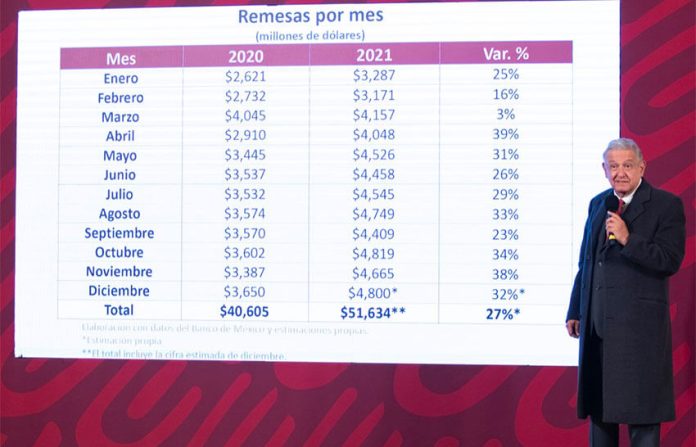
President López Obrador reviews remittance figures at Wednesday's conference.

It was time for 68-year-old President López Obrador to roll his sleeves up for another year of governance, having rested at his home in Palenque, Chiapas, over the festive break.

As his principal tool for public communication, the morning conferences in 2022 are sure to be dotted with moments of deep reflection, testy exchanges and memorable gaffes, rarely otherwise seen in the political arena.

Monday

A guest from the other side of the puddle joined the first conference of 2022. Jeremy Corbyn, a former U.K. prime ministerial candidate, attended with his Mexican wife, Laura Álvarez. The president described the member of the U.K. parliament as “a defender of just causes, a defender of workers.”

Later in the conference, Corbyn spoke in Spanish to thank the president, before switching to English to extol the value of the daily press conferences, to lament inequality — highlighting the needs of children in Chiapas — and to urge assistance for the world’s 70 million refugees.

The president offered a kind word to a politician of different stripes. “President Bolsonaro, of Brazil, was hospitalized. I hope he comes through it OK, and that he recovers.”

In response to a journalist, the Tabascan said school scholarships were the gift from the Three Kings to children via his administration. “That’s what Melchior, Gaspar and Baltazar are going to bring. But they [the children] should write their letters anyway.” The gift centered celebration was Kings Day on Thursday.

The president also gave an offer of asylum to Wikileaks founder Julian Assange, who is set to be extradited from the U.K. to the United States. “We are willing to offer Assange asylum in Mexico, that is our posture. We believe that the U.S. government must act with humanity. Assange is sick … before the end of President Donald Trump’s administration I sent him a letter asking him to exonerate [Assange].”

Tuesday

Health Minister Jorge Alcocer gave the COVID update on Tuesday as his deputy, Hugo López-Gatell, was off work with a cold.

Alcocer said the omicron variant was spreading fast, but was only causing light symptoms. Just 15% of hospital beds were occupied and 89% of over 18s had received two shots.

Health Minister Jorge Alcocer, Foreign Minister Marcelo Ebrard and Defense Minister Luis Cresencio Sandoval
Health Minister Jorge Alcocer, Foreign Minister Marcelo Ebrard and Defense Minister Luis Cresencio Sandoval await their turn on Tuesday.

The ex-leader of the Institutional Revolutionary Party in Mexico City, Cuauhtémoc Gutiérrez — also known as “the King of Trash” due to his inherited refuse collection company — had been arrested for human trafficking and sexual exploitation.

“If the law is being applied without any considerations, without privileges, then what should be done is being done. I can summarize this with a liberal principle: beside the law nothing, and above the law no one,” the president said.

The foreign minister, Marcelo Ebrard, confirmed that the government was in contact with Julian Assange’s lawyers, but that he couldn’t take up the asylum offer “for a procedural reason.”

The president applauded his own work on education: “Since we came in, there hasn’t been a single strike in protest,” he said, before conceding schools had been shut for most of his administration.

Wednesday

Fake news debunker Elizabeth García Vilchis kicked off the conference on Wednesday. She wished a Happy New Year before dismissing reports that gas prices would spike and that the National Guard was involved in the disappearance of two youths in Michoacán.

García added that the president finished 2021 on a high note, with about a 70% approval rating across three surveys.

Later in the conference, the president said the employment rate fell by 300,000 jobs in December, due to the practice of firing staff and recontracting them in January to avoid paying their labor benefits. He named and shamed the worst offender: “Doing the analysis of the companies that carry out this practice … I’m going to say something. The first place this December, in this dismissal mechanism, is Tecnológico de Monterrey [a private university]. And why am I saying this? Because I want it to be debated.”

The president confirmed that remittances for December would see 2021 comfortably reach the US $50 billion mark. “This is the contribution of our compatriots, the heroes … speaking in baseball terminology, that’s what got us out of the hole.”

He added another present to his wish list for children on King’s Day: the gift of good health, but dissuaded kids from asking the kings for a toy he despises. “The kings and the elephant and the camel and the horse no longer want anything to do with … video games.”

Thursday

The president announced a new monthly feature for an update on economic trends, and laid out some favorable figures. Unlike other world currencies, the Mexican peso only depreciated 0.8% in the first three years of his government; external debt rose to 52.1% of GDP in the pandemic but had receded to 50.4% since the recovery. However, he conceded inflation — at 7.37% — was a primary concern.

lopez obrador
The president said on Friday he was in good health and playing baseball again.

He thought back to when he faced legal charges in the 2006 presidential campaign, and drew on Martin Luther King for inspiration: “I remembered Luther King a lot, who was arrested because he supposedly went through a stop sign. He went to jail and was offered bail and never accepted … That’s called peaceful civil resistance.”

On the corruption of previous administrations, he gave the example of oil company Oceanografía. “It’s a company that was very favored during the governments of Vicente Fox and Felipe Calderón. Those governments gave [Oceanografía] billions of dollars in contracts, without bidding, by direct award. Then one of the owners gave watches away to journalists, politicians and officials … million-dollar watches.”

Friday

There were two new options for the still unsold presidential jet, AMLO said: to exchange it for helicopters to fight forest fires or to give it to the Ministry of Defense to charter out.

He added that two medicines were being approved as treatments for COVID-19.

Economy Minister Tatiana Clouthier, who the president recently met with, tested positive for COVID. A journalist checked in on the 68-year-old’s health.

The president confirmed he was fighting fit. “The truth is I’m very well, I’m fine and I have no symptoms … I’m already getting back to baseball because I had torn [a tendon] … but I’m already better … soon I’m going to join up again with our veterans’ team.”

In Zacatecas, a vehicle with 10 dead bodies was abandoned in front of the state government palace on Thursday. However, the president said he was confident of the security strategy in the state: “Very regrettable what happened, but  we are advancing. During the time we have had a special operation in Zacatecas we have seen a decrease in homicides of 25% in 40 days.”

Mexico News Daily

COVID roundup: active case numbers hit 100,000 for first time since August

0
covid-19

The number of estimated active coronavirus cases across Mexico has exceeded 100,000 for the first time since August as the fourth wave of infections continues to gain momentum.

Active infections rose to 103,806 on Thursday, according to Health Ministry estimates, a 29% increase compared to Wednesday.

There were fewer than 35,000 estimated active cases on December 30, meaning that current infections have practically tripled in the space of a week.

There is little doubt that the highly contagious omicron strain is behind the surge in case numbers, although confirmed cases of that variant only number in the hundreds.

The number of new COVID cases reported by the Health Ministry has increased every day this week, hitting 25,821 on Thursday – a figure just 3,000 below Mexico’s single-day record, recorded during last year’s delta-fueled third wave.

The accumulated case tally now stands at 4.05 million, while the official COVID-19 death toll – considered a significant undercount – is just shy of 300,000 and will likely pass that grim milestone when the Health Ministry publishes its daily COVID report on Friday evening.

The office of President López Obrador said in a Twitter post Friday that the arrival of the omicron variant has caused an increase in case numbers but not in hospitalizations and deaths.

“… Only 19% of general [hospital] beds and 12% with ventilators are occupied. … The vaccine saves lives,” it said.

More than 82.1 million Mexicans have received at least one shot, the Health Ministry said Friday, and 90% of that number are fully vaccinated.

About two-thirds of Mexico’s total population of approximately 126 million people is vaccinated and just under 60% is fully vaccinated.

In other COVID-19 news:

• About one-quarter of the 100,000+ active cases – approximately 27,000 –  are in Mexico City but Baja California Sur easily has the highest number on a per capita basis with close to 800 per 100,000 people.

• At a municipal level, the Baja California Sur capital, La Paz, has the highest number of active cases with just under 4,000.

The Mexico City boroughs of Gustavo A. Madero, Álvaro Obregón and Iztapalapa rank second to fourth with more than 3,000 active cases each.

Rounding out the top 10 are Benito Juárez (Cancún), Quintana Roo; San Luis Potosí city; Mérida, Yucatán; Cuauhtémoc, Mexico City; Chihuahua city; and Tlalpan, Mexico City.

• Aeroméxico canceled at least 43 flights out of Mexico City on Friday due to staff shortages. Flights to Guadalajara, Mérida, Ciudad Juárez, Monterrey, Tijuana and Cancún were among those canceled.

At least 83 Aeroméxico pilots have recently been infected with the virus. The airline canceled 22 flights on Thursday.

“The delay or cancellation of flights is not a decision we take lightly and it is always the last resort,” Aeroméxico said in a statement. “… We invite our customers to remain attentive to the status of their flight through our official channels.”

• Health regulator Cofepris has granted emergency use authorization to the COVID-19 antiviral pill made by United States pharmaceutical company Merck, President López Obrador announced Friday. He said that Cofepris was expected to approve Pfizer’s antiviral pill soon. AMLO said he would make both pills available in public hospitals.

With reports from Milenio and Reuters

New Canadian-Mexican film tells story of La Llorona

0
Zamia Fandiño
Mexican actress Zamia Fandiño as the legendary Llorona.

La Llorona – the ghostly “weeping woman” of Mexican folklore who drowned her own children — is the protagonist of a new feature film that premieres in cinemas in some foreign countries Friday and will screen in Mexico later this year.

The Legend of La Llorona is a Canadian and Mexican co-production directed by award-winning Canadian director Patricia Harris Seeley and starring Autumn Reeser, Antonio Cupo, Danny Trejo and Mexican actress Zamia Fandiño, who plays the dual, interconnected roles of María, a young mother who loses her children, and La Llorona.

“While vacationing in Mexico, a young couple and their son learn about the legend of La Llorona, the evil spirit of a distraught mother who lurks near the water’s edge, striking fear in the hearts of all who see her,” says a synopsis by the company Gracenote.

“La Llorona torments the family mercilessly, snatching the boy and trapping him in a netherworld between the living and the dead. With help from a taxi driver, the couple race against time to save their only child from an unspeakable evil that continues to gain strength and power.”

In an interview with the newspaper Milenio, Fandiño said the character of María undergoes a “brutal, even physical metamorphosis” to become La Llorona.

The Legend of La Llorona Trailer #1 (2022) | Movieclips Indie
The trailer for the new Mexican-Canadian film, The Legend of La Llorona.


“… The loss [of a loved one] is difficult and … even worse when it’s of one’s children,” she said. “It’s something unnatural, it must be the greatest pain,” said the actress who has appeared in Mexicans films such as Cantinflas and Suave patria.

Fandiño said the fact that foreigners are interested in Mexico’s traditions and legends is proof that they are “rich” and representative of an “expansive” culture.

The Legend of La Llorona, Harris’ debut feature, premieres Friday in countries including the United States, Canada and the United Kingdom and will reach cinema screens in Mexico in late February or early March.

With reports from Milenio

Rerouting Maya Train between Playa del Carmen, Tulum to cost 1 billion pesos

0
Maya Train
The rerouting of the train will require the purchase of new land, much of it owned by willing sellers, Fonatur Director Rogelio Jiménez Pons said. Fonatur

The federal government will spend about 1 billion pesos (US $49 million) to buy land to reroute the Maya Train railroad between Playa del Carmen and Tulum, according to an estimate by the director of the National Tourism Promotion Fund (Fonatur).

President López Obrador announced Wednesday that the route would be modified in the Riviera Maya region of Quintana Roo.

Construction of tracks between the northbound and southbound lanes of Federal Highway 307 began last month despite opposition from hoteliers and members of the broader business community, who argued that the railroad would have an adverse impact on the highway and the vehicles that use it, especially as it was being built.

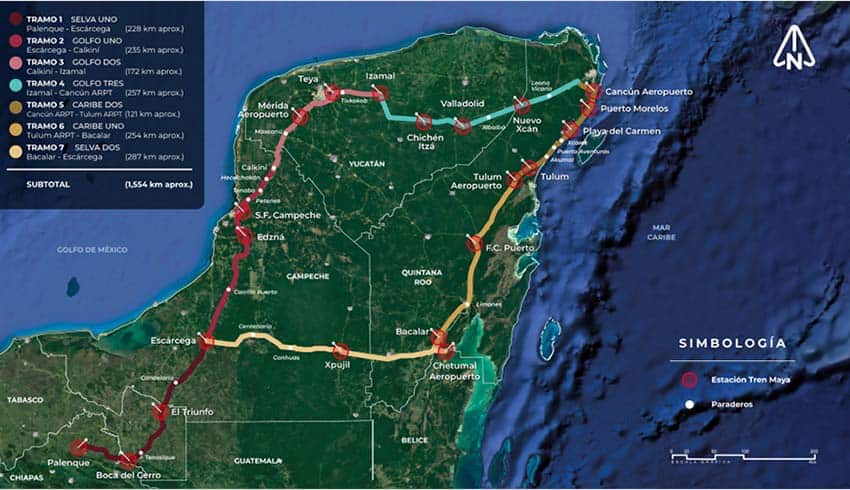
Fonatur chief Rogelio Jiménez Pons, whose agency is managing the project, said in interviews with the newspaper Reforma and Milenio Television that the Playa del Carmen-Tulum section of the railroad would now be built on the western, or inland, side of the highway, meaning that it will be farther away from beachfront hotels.

He said the government intends to purchase properties along a 43-kilometer stretch of land between the two coastal destinations. A lot of the properties required for the new right of way are owned by hoteliers who have expressed their support for the rerouting of the railroad and are willing to sell, Jiménez said.

Maya Train planned route
The planned route of the Maya Train. Fonatur

While purchasing the land will cost around 1 billion pesos, the rerouting will generate savings of up to 5 billion pesos because fewer complementary projects will be required, he said.

“We will no longer have to go around moving [utility] poles … or replacing roads,” Jiménez said, adding that such work would have affected the flow of traffic on Highway 307.

The tracks, which will run at ground level apart from one elevated section in Playa del Carmen, will be far from hotels that overlook the Caribbean Sea, he stressed. “And that’s what the hoteliers want,” the Fonatur director told Reforma.

“… We reached a good consensus with the hoteliers,” Jiménez said in a separate interview with Milenio Television. “This situation obviously suits them, and it suits us as well because we’ll save on complementary work.”

He said the US $8-billion, 1,500-kilometer railroad — which will have more than 30 stations in Tabasco, Campeche, Yucatán, Quintana Roo and Chiapas — is already 30% complete and on track to begin operations at the end of 2023.

With reports from Reforma and Milenio

Tired of inaction, two students brought recycling to their Jalisco community

0
Xochil Vandroogenbroeck, Xela Lloyd
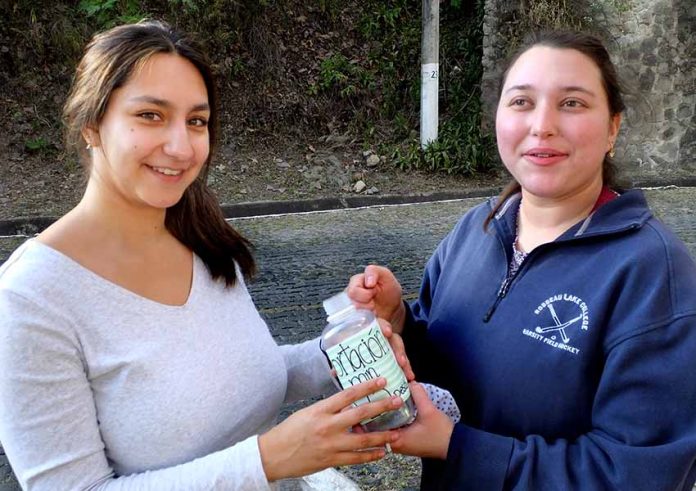
Students Xochil Vandroogenbroeck, left, and Xela Lloyd initiated a recyclables collection program in their community in Zapopan, Jalisco.

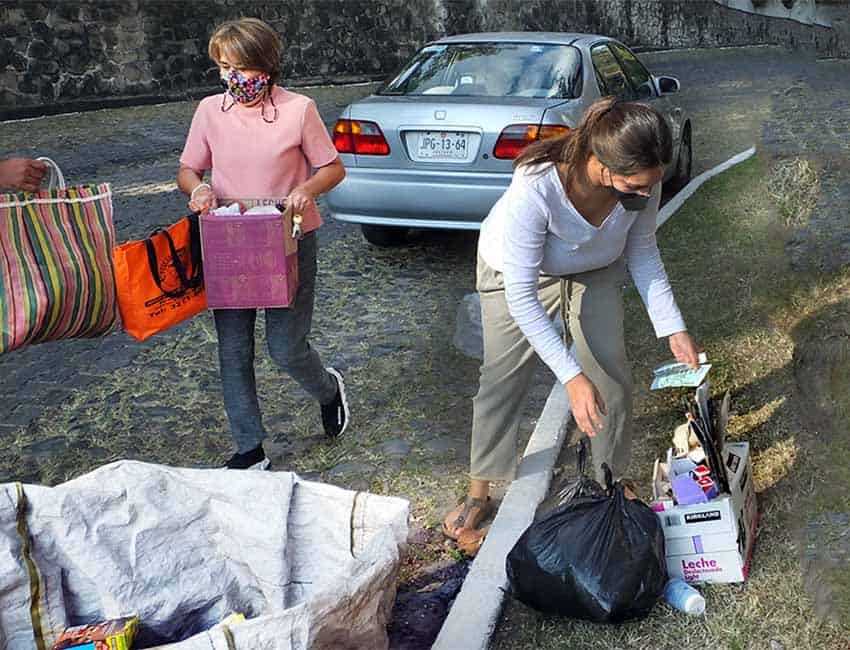
I live in Pinar de la Venta, a rural community in the municipality of Zapopan, Jalisco, that’s perched on a mountaintop not far from Guadalajara, Jalisco. Not long ago, in our local WhatsApp chat, I began to see notices every two weeks, inviting people to collect and contribute their recyclables.

The posts came from two young women living in my neighborhood named Xela Lloyd and Xochil Vandroogenbroeck, both of them students. I asked them why they had decided to start this project instead of spending all day with their noses in a smartphone, like so many other young moderns.

“It all began,” Lloyd said, “when we would drive through these streets and see what sort of things people were throwing out to be picked up by the trash collectors.”

They both realized that most of what was out there was recyclable.

“We kept seeing people in the [WhatsApp] chat complain that we should be recycling here, but all they did was talk about it,” Vandroogenbroeck said. “They never took the initiative. Finally, we got tired of all that complaining, so we decided to go ahead and do something ourselves. That’s how it all started!”

CreSer ConCiencia program
Making sure only recyclables are collected.

I asked them how they had arranged for somebody to come far from town to our mile-high community to pick things up twice a month.

Bueno,” Lloyd said, “in our homes, we used to separate and accumulate our recyclable items like glass, paper and plastics, and then we would take everything to one of several pickup points in Guadalajara. So we called the people who were running that project and asked them if they wouldn’t mind including our community as one of those pickup points, because it is such a long drive from here into the city.”

The young women got the Jalisco project, which is these days called CreSer ConCiencia (Raise Awareness with Science) to agree on a time and place, and they now come by every 15 days.

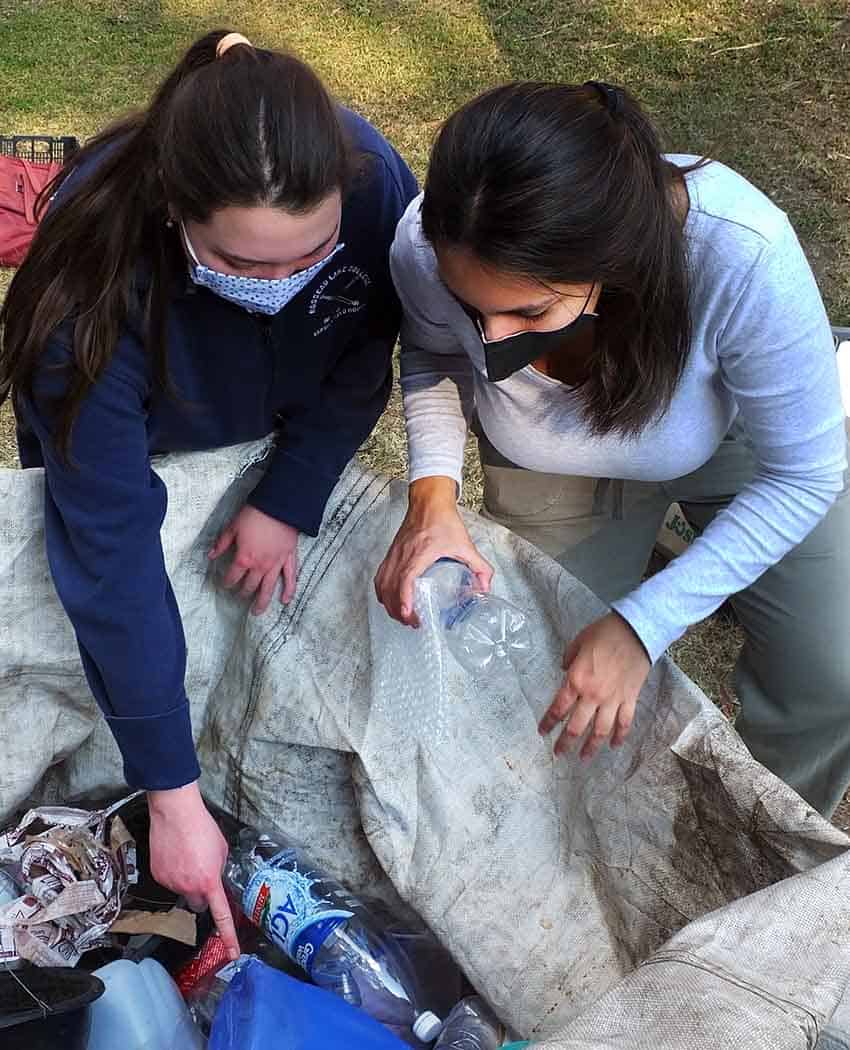
Every other Sunday, Lloyd and Vandroogenbroeck put a reminder on the chat and go to meet the people bringing things to be recycled.

“Somebody always appears,” they told me, “and usually they have lots of questions about what’s recyclable and what’s not. Some of them have rather funny ideas about recycling. For example, somebody showed up with a shoe … not a pair, just one shoe! And one day, a group of people showed up with a sofa … but they were walking, carrying it!”

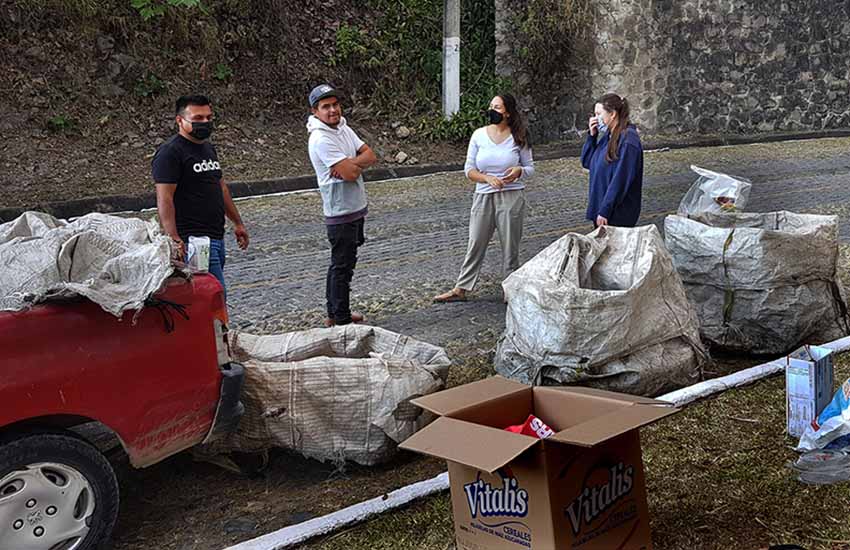
I went down to the meeting point to see for myself. At the appointed spot, there was a flatbed truck and two young men, Juan and Santiago Quezada. After I asked Juan how long he has been collecting materials for recycling he looked surprised at the question. “Since I was eight years old,” he replied.

CreSer ConCiencia program
Members of the Pinar de la Venta community arrive with their recyclables.

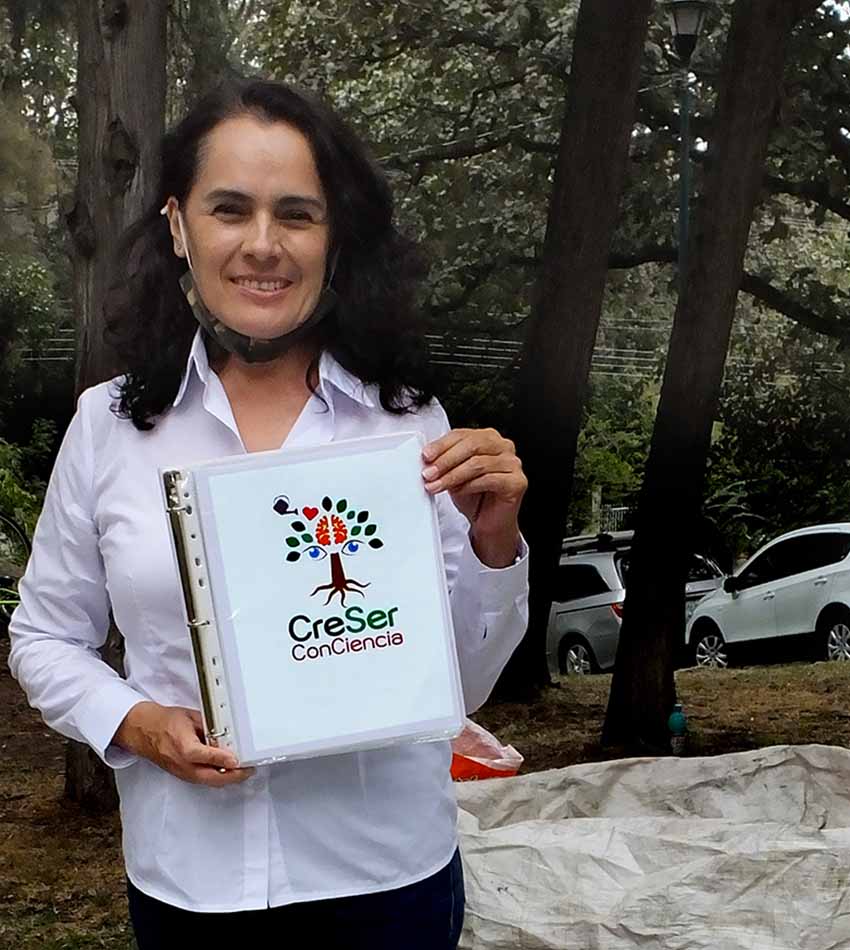
Because I had asked to meet her, the organizer of CreSer ConCiencia, Louisette Chacón, was also at the collection point. I asked her where her interest in recycling had been born.

“I have four children,” Chacón told me. “When they were in elementary school, I joined a reading group started by some of the mothers … and that’s how I first heard about ecology, recycling and … Greenpeace.”

At these meetings, Chacón would learn what Greenpeace was doing and then pass it on to the group and to the kids.

“After a while, I joined Greenpeace and ended up going on four trips with them on the Rainbow Warrior III and other boats. So, caring for our environment has always been important for me, and for some time I was thinking about a good project for me to work on, and I decided I need to focus on education, in particular educating kids.”

CreSer ConCiencia is aimed at everyone — children and adults.

“But at first, we are starting with schools. To get the ball rolling, we set up a system by which the general public could donate their recyclable trash, but my final goal is to hold workshops in schools,” Chacón said. “Due to COVID, we’re not collecting as much as we’d like, and we often have to take money out of our own pockets to keep things going, to pay salaries and gasoline and things like signs and publications.”

CreSer ConCiencia program Louisette Chacon
Louisette Chacón uses proceeds from the recycling project to fund CreSer ConCiencia’s educational programs.

I asked her what some of the objects they collect look like once they have been recycled.

“Take these Tetra Pak juice and milk cartons,” she said. “Tetra Paks are 100% recyclable: they consist of 75% cardboard, 20% polyethylene and 5% aluminum. So all of these can be recycled. From old Tetra Paks, we get flooring and roofing material. You can even make houses out of this material!”

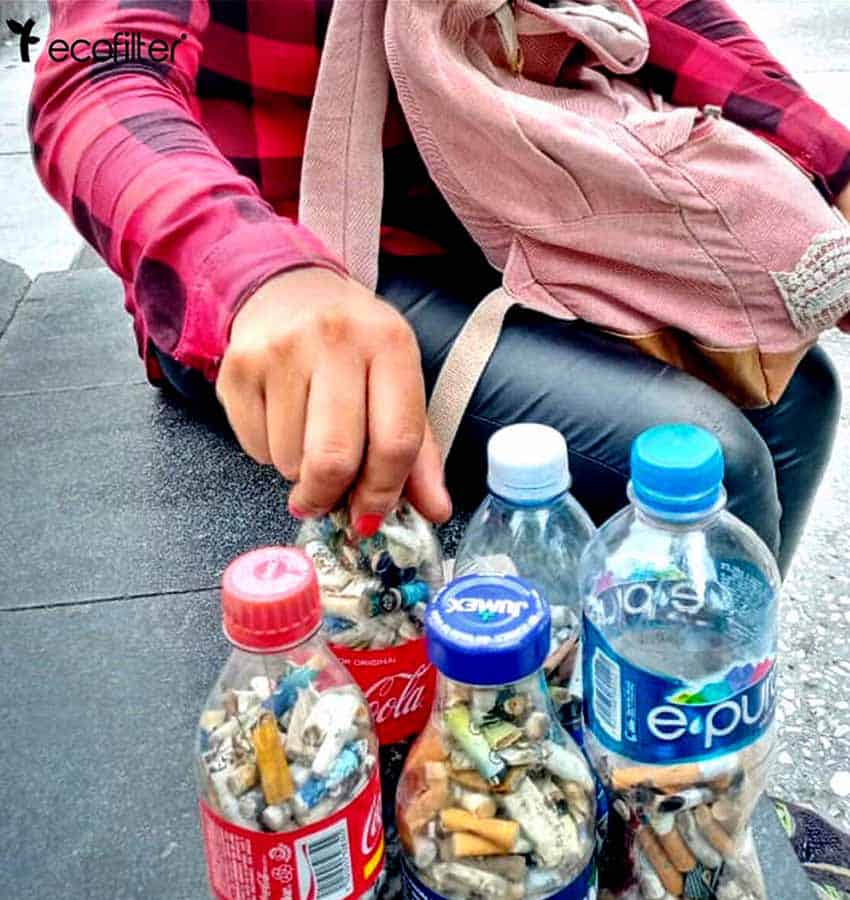
Chacón then showed me a plastic bottle full of cigarette butts.

“We are also ambassadors of Eco Filter México,” she said. “This is a company right here in Guadalajara that is using a fungus-based biotechnological process that they patented, that degrades 25% and detoxifies 100% of cigarette butts. Colillas, as we call them in Spanish, contain very toxic residues, so when they are tossed into water or thrown on the ground, they contaminate the environment.

“Just one butt can contain up to 200 toxic substances, some of them carcinogens … and would you believe it? They take 15 years to decompose. So we encourage people to put cigarette butts into a plastic bottle which they can give to us once it’s full. We will then pass them on to Eco Filter.”

Chacón explained that Eco Filter’s plant is located behind the Guadalajara airport. They break up the filters and mix them with this fungus they discovered in Michoacán.

CreSer ConCiencia program
In 2021, volunteers collected 2.6 tonnes of cigarette butts to be processed by Eco Filter Mexico.

After 20 days or so, the fungus decontaminates the filter. Then the material is dried and powdered, and out of it, they make things like paper and flowerpots. Last year, they processed more than six million colillas!”

Chacón also told me that recyclers are doing some amazing things with bottles made of PET, a polymer in the polyester family. Let me mention just one example.

Oceanness is a company in Oslo, Norway, that collects plastic bottles from ocean coastlines and turns them into T-shirts. In a video clip on Oceanness’ website, company CEO Gaute Hellerslia explains that it takes seven plastic bottles to create one shirt.

Those bottles, he says, are “clinically washed, Monica-from-Friends-style,” then shredded to flakes, which are melted into tiny pellets that in turn are extruded and spun into soft yarn and finally woven into cloth.

Then Gaute casually adds, “I have a pretty disturbing fact for you: 60% of all clothing today is actually plastic made from oil. The fashion business is the second most polluting industry in the world. Check the label on the clothes you are wearing. If it says they’re made of polyester, your clothes come from oil.”

The clip ends with a small notice: “Since you started watching this video, 734,000 plastic bottles have been dumped in our oceans.”

CreSer ConCiencia program
The pickup team and the organizers standing by to receive recyclable items in Pinar de la Venta.

I thank young people like Lloyd and Vandroogenbroeck, not only for calling my attention to problems I should be thinking more about but also for actually taking a hand in doing something about them.

The writer has lived near Guadalajara, Jalisco, since 1985. His most recent book is Outdoors in Western Mexico, Volume Three. More of his writing can be found on his blog.


Oceanness CEO Gaute Hellerslia
Oceanness CEO Gaute Hellerslia wearing a T-shirt made from seven recycled PET plastic bottles.


CreSer ConCiencia program
A pen made from recycled Tetra Pak containers.


CreSer ConCiencia program
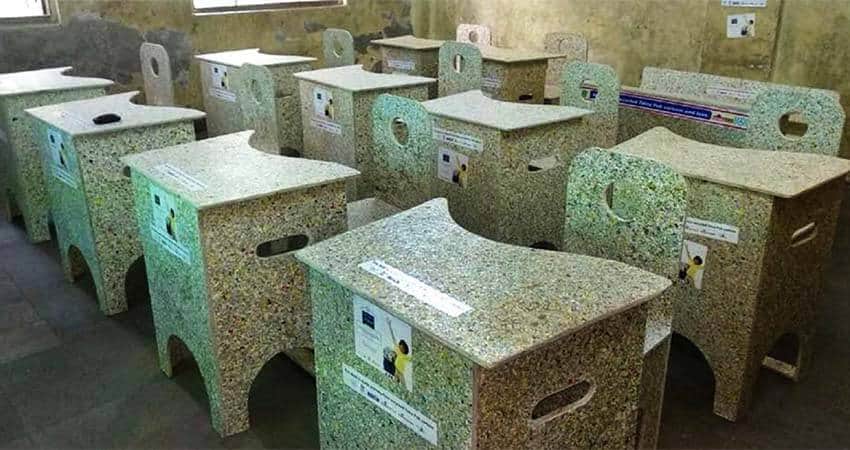
Chairs and desks made entirely of used food cartons collected by students at a school in Mumbai, India.

Fishermen charge ecocide, blame CFE for killing 150 tonnes of sardines

0
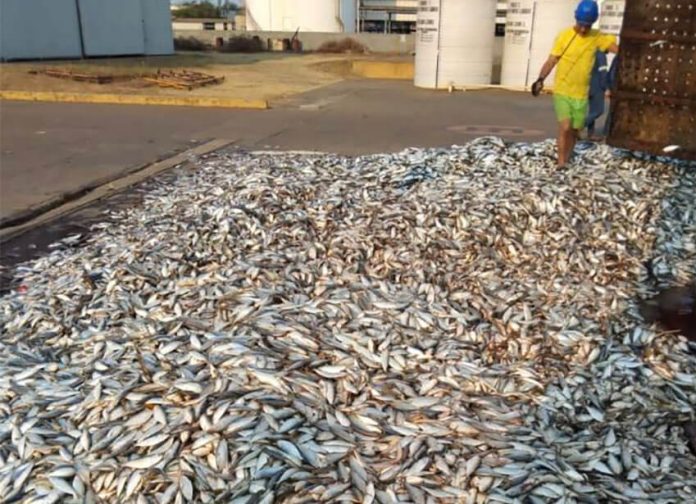
Dead sardines in Guerrero.

Fishermen in Guerrero have accused the Federal Electricity Commission (CFE) of killing approximately 150 tonnes of sardines.

The state-owned electricity utility operates a power plant in Petacalco, a town just south of Lázaro Cárdenas, Michoacán, in the municipality of La Unión de Isidoro Montes de Oca, part of Guerrero’s Costa Grande region.

Petacalco fisherman say the plant is responsible for the death of the sardines because it has dumped chemicals in a canal connected to the Pacific Ocean.

Jesús Campos, leader of a local fishing cooperative, told the newspaper Reforma that the CFE also uses the canal to cool down machinery. Its alleged misuse of the canal has previously caused the death of other marine species, including turtles.

Campos estimated that 150 tonnes of sardines have perished, leaving a stench of dead fish on the beach. He said the CFE hasn’t spoken to fishermen about the massive die-off. The latter have reported the “ecocide” to state and federal authorities and demanded immediate action.

The fishermen say the death of the sardines will affect their ability to work because they use the small fish as bait. Campos said that fishermen have been complaining about the CFE plant for years “but nothing happens.”

“What more does the government want in order to demand that the CFE stop killing us and stop killing nature?” he asked.

Campos said it could take years for the sardine population to recover. The fisherman called on the CFE to send workers to the beach to remove the dead fish, “which are going to start to rot and smell horrible.”

With reports from Reforma and El Sur

Famed storyteller dies condemning government for neglecting to pay him

0
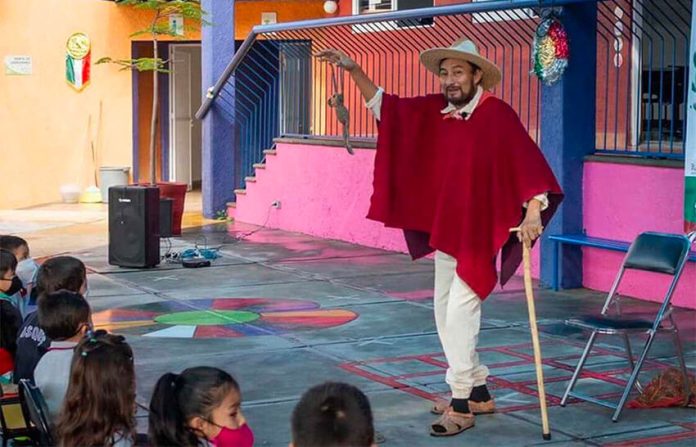
Spoken word artist Víctor Chi of Colima.

An acclaimed spoken word artist who condemned the federal government for failing to pay him for his participation in a Culture Ministry program died in Colima on Wednesday.

Víctor Chi, considered one of the greatest ever narrators of the history and culture of Colima, passed away in an IMSS hospital of an unspecified illness.

The artist, also known as Pitor Chi, said in a December 27 Facebook post that he was ending the year “almost blind, almost deaf and almost unable to walk.”

In the same post he criticized President López Obrador and Culture Minister Alejandra Frausto for the government’s failure to compensate him for his participation in the 2021 edition of a program called Alas y Raíces (Wings and Roots), which provides cultural education and entertainment for children and adolescents.

Chi was selected to participate in the program last March and presented his show “Legends and Mysteries of the People of Colima” around the country.

Víctor Chi in his hospital bed
Víctor Chi in his hospital bed before he died. He claimed that he and other participants in a Culture Ministry program had been waiting nine months to be paid.

The storyteller, who was originally from Yucatán but spent decades living in Colima, also criticized the government in a December 30 Facebook post.

Not without irony, Chi wrote: “Thanks to the blessed and great progressive transformation of this country a lot of artists, cultural promoters, managers and creators are ending the year and starting 2022 … mired in anxiety, uncertainty, debt and misery.”

“Thank you to the cultural authorities of this country, thank you to local authorities, thank you for failing to pay, for the lack of punctuality, for the discrimination and non-existent support, thank you Frausto, thank you Obrador, … thank you for destroying our mental and physical health. Hopefully you’re having a very nice time. … Meanwhile, we’ll resist until the last breath.”

Chi, who was also an activist, reading advocate and defender of native corn, included a photo of himself in his hospital bed in the post.

In another Facebook post earlier in December, he said that nobody had provided an explanation as to why he and other participants in the Culture Ministry program hadn’t been paid nine months after they were selected to contribute to it. No one in the government has the “balls to tell us we won’t be paid,” Chi added.

“It’s a sad thing, it’s the worst six-year period of government for the arts, artists and culture in Mexico,” he wrote. “… We’re not begging, we’re demanding what we’re owed due to our own efforts and dignified work.”

Members of Mexico’s creative and cultural community lamented Chi’s death and expressed their condemnation of the government’s failure to pay him. They also criticized the Alas y Raíces program for publishing a statement mourning his passing.

“… When will they understand … that … #WeDon’tLiveOnApplause,” Claudia Zarate, another spoken word artist, wrote on social media.

“Nine months without a salary! Nine months with the anxiety of not knowing what he will take to the [dining room] table to feed his family, and not because he hasn’t worked. On the contrary, he was a tireless and committed promoter of culture. … There are no words that can transmit the pain of a loss like this thanks to bureaucracy and negligence,” said Elena Ortiz, a writer.

The newspaper Reforma said that Chi’s case is “emblematic of a situation of generalized job insecurity faced by cultural [sector] workers” that has long plagued Mexico and has not improved since the current government took office in 2018.

Such workers have banded together in collectives to protest lack of payment by organizations such as the National Institute of Fine Arts and the National Institute of Anthropology and History.

Some 4,000 people who participated in the Alas y Raíces program in 2019 also faced difficulties getting the money the Culture Ministry had agreed to pay them. The government, however, hasn’t taken steps to eliminate such problems, Reforma reported.

“I never thought we [artists] could be worse off,” Chi said in one Facebook post published late last month. “But … we are.”

With reports from El Universal and Reforma