Home Blog Page 1082

Mexico highly regarded for administration’s fight against corruption: foreign minister

0
Foreign Minister Marcelo Ebrard with Mexican diplomats
Foreign Minister Marcelo Ebrard address Mexico's foreign diplomats on Monday.

Mexico is well-regarded around the world thanks to the leadership of President López Obrador and the federal government’s fight against corruption, Foreign Affairs Minister Marcelo Ebrard said Monday.

Speaking to Mexican diplomats at a meeting in Mexico City, Ebrard said that Mexico is respected “in all domains from the [United Nations] Security Council to all [other] multilateral spaces because it has moral authority and political prestige.”

“To a large degree that is due to who leads [the country] – President López Obrador — and the transformation he is championing. It must be said because it’s a fact,” he said.

“… We have a president who respects and values Mexico’s foreign policy,” Ebrard added.

“Mexico has weight [in the world] today, and we’re getting results … because the government has moral prestige. It has moral and political authority,” he said.
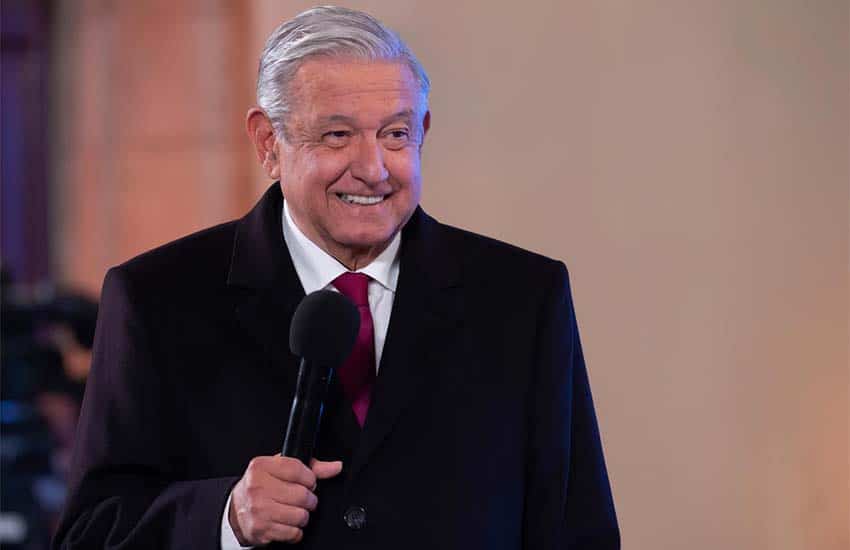
President Lopez Obrador
Ebrard told Mexican diplomats that President López Obrador was the reason that Mexico currently has moral authority in the world.

The foreign minister said that Chile’s president-elect Gabriel Boric and leaders of other Latin American countries had told him as much late last week. Ebrard met with Boric in Santiago last Thursday before attending a meeting of the Community of Latin American and Caribbean States in Buenos Aires on Friday.

“They [Latin American leaders] respect Mexico’s fight against corruption and for justice,” the foreign minister told ambassadors, consuls and other government officials who joined the annual diplomatic gathering.

He also said that Mexico – currently a non-permanent member of the United Nations Security Council – has engaged in international issues under López Obrador’s leadership, and proved critics wrong in the process.

“… It was said we were going to be inward-looking, it was said we were going to have conflict with the United States. It was predicted we weren’t going to have a significant international presence,” Ebrard said.

Among the international issues the Mexican government has spoken out about are migration flows in North America, the United States trade embargo on Cuba, global poverty, inequality in access to COVID-19 vaccines, arms trafficking, and violence in the Middle East.

A priority in 2022 and beyond, Ebrard said, will be to support multilateral diplomatic frameworks at at time when there are “significant geopolitical tensions” in the world.
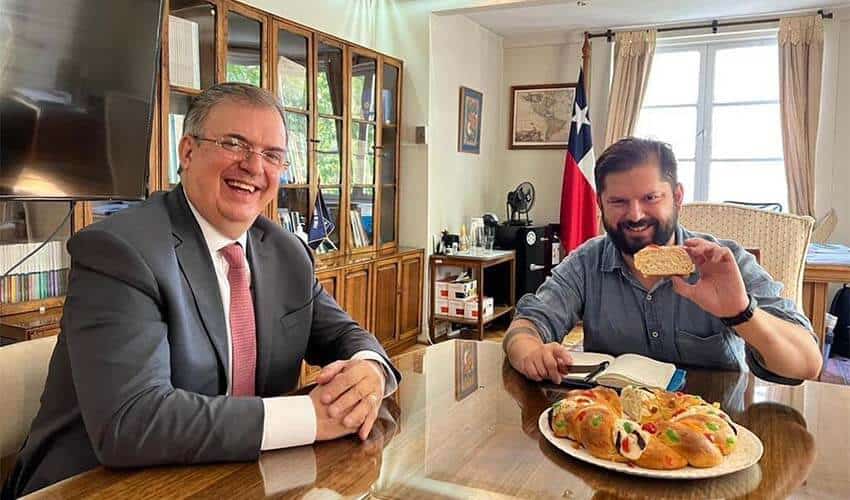
Marcelo Ebrard and Chile's Gabriel Boric
Among worldwide fans of Mexico’s moral authority, said Ebrard, left, is Chile’s president-elect Gabriel Boric, right, who met with Ebrard in Chile on Thursday.

“… This is the task of the Ministry of Foreign Affairs [SRE] during these [upcoming] months and years; we have to navigate a geopolitical reality that is increasingly difficult and intense,” he said.

The foreign minister, a former Mexico City mayor who has his own presidential ambitions, said that the defense of human rights and addressing migration issues will also be priorities for the SRE.

“[López Obrador] has asked us to defend human rights, but not just in discourse. … The investigation and dedication there has been in the Ayotzinapa [missing students] case and other [human rights] cases shows the Mexican government’s true concern for and prioritization of this issue,” Ebrard said.

“… Promoting options [to stem] migration phenomenons, especially in our dialogue with the United States … [is another priority],” he said.

However, the highest priority for the federal government as a whole, Ebrard stressed, is to reduce violence. To that end, SRE action is required to reduce the smuggling of weapons into Mexico, he said.

With reports from Milenio
Vaccination certificates to be required in Jalisco

0
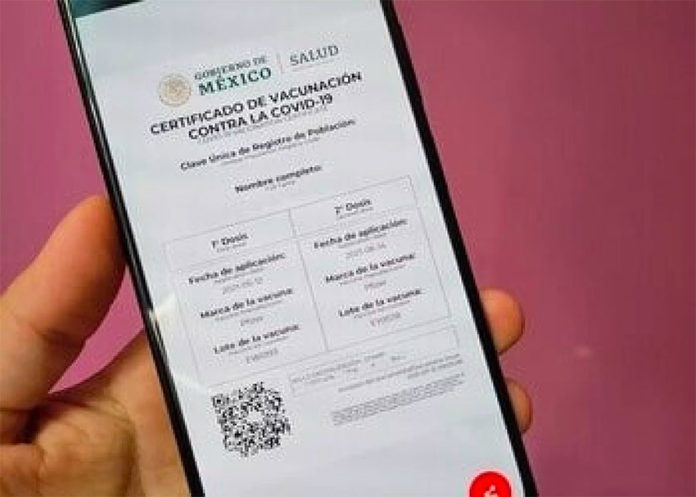
The vaccination certificate
The vaccination certificate issued by the federal government.

The presentation of a COVID-19 vaccination certificate or a negative result from a PCR test will soon be compulsory for adults who wish to enter establishments such as bars and nightclubs in Jalisco.

The new rule will take effect this Friday, Governor Enrique Alfaro announced Monday.

He said that a negative test result must come from a test taken in the 48 hours prior to seeking entry to bars, nightclubs, casinos, stadiums and convention centers.

Jalisco will become the second state after Baja California to make presenting a certificate a prerequisite for entering certain public places. The rule took effect in Baja California last Wednesday.

People vaccinated in Mexico should present their official Mexican vaccination certificate when seeking entry to establishments in Jalisco. People inoculated abroad should present certificates or other proof of vaccination from the country where they got their shots.

Jalisco includes Guadalajara – Mexico’s second largest city, the resort city of Puerto Vallarta, communities on Lake Chapala and the magical town of Tequila, among other destinations popular with tourists.

The state currently has more than 5,000 active coronavirus cases, according to the federal Health Ministry. Case numbers are surging in Mexico as the highly contagious omicron strain continues to spread rapidly.

CORRECTION: The original version of this story incorrectly stated that restaurants were among the venues that would require a vaccination certificate or negative test result. Mexico News Daily regrets the error.

With reports from Animal Político and Milenio

No longer poachers, this Chiapas town aids turtles in their fight to survive

0
environmental center Emiliano Zapata, Chiapas
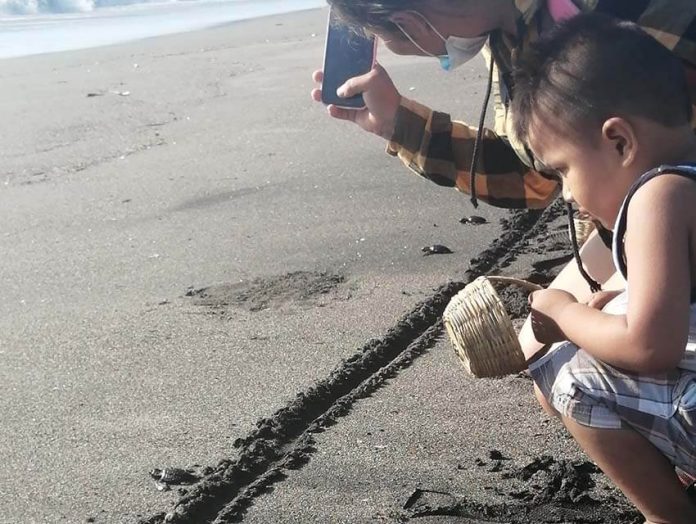
A visitor to the center witnesses a new turtle make its painstaking instinctual journey to the ocean after hatching.

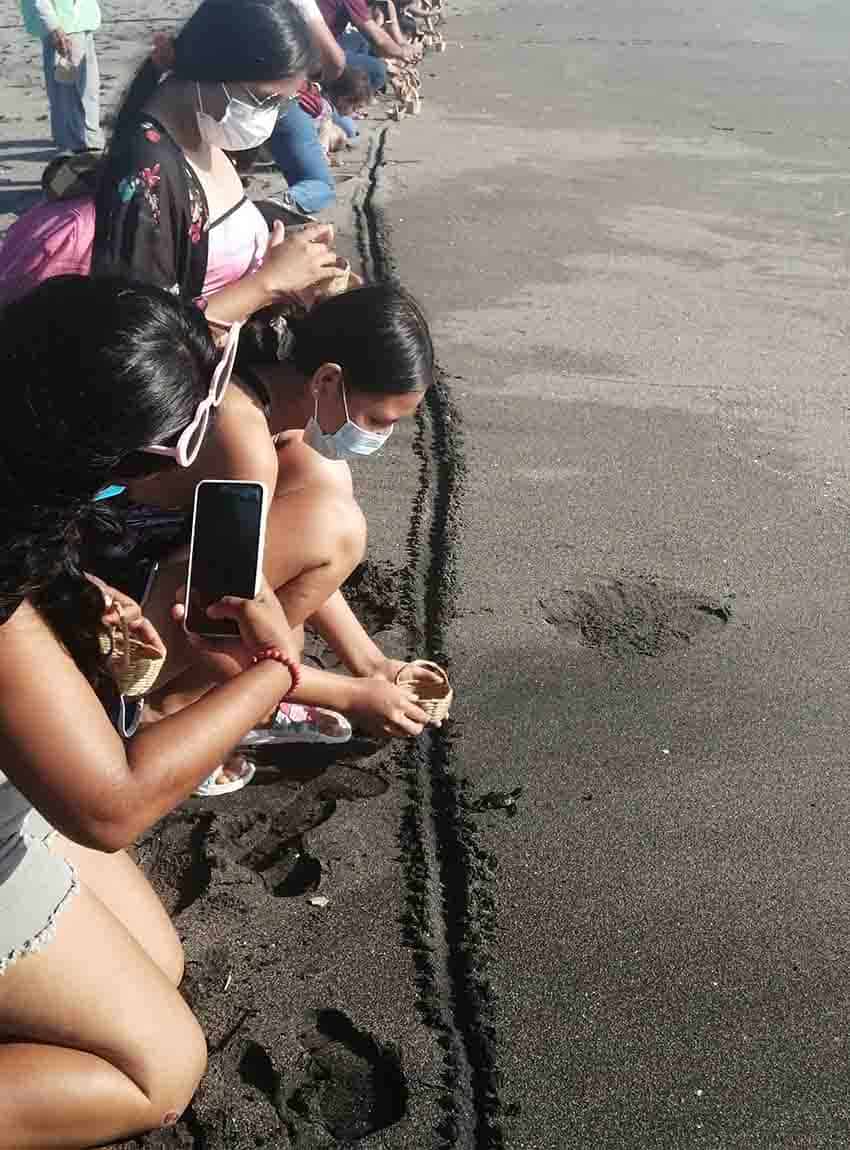
Dozens of tiny, black sea turtles waddle towards the ocean waves. Their oversized flippers struggle across the sand, and some of these tiny creatures seem to give up before they start, the immensity of the few meters’ walk too much for their newly hatched bodies. Tourists watch, cheering them on, hoping for good luck on this, the first day of their lives, but their fight to survive has just begun.

Of every thousand of these turtles, rescued from beachside nests and kept safely within the nesting grounds until they hatch, only about 100 will survive until adulthood, so great are turtles’ adversaries – predators, ocean trash that chokes and entangles them and finally the poachers that come along in the moonlight to snatch their eggs and often the turtles’ shells, leaving their shorn bodies behind to bake in the dawn’s rays.

The Chiapas municipality of Emiliano Zapata, a community of only about 300 people made up of three or four families, used to be part of the problem. They joined other poachers in taking the turtles’ eggs and shells to sell on the market or cook as local delicacies.

But three years ago, a small cooperative of concerned community members decided it was their responsibility to protect these majestic creatures or watch them disappear forever.

“Our parents would talk about how there used to be sacks and sacks of eggs,” says Gerónimo Arias de la Cruz, a member of the community and our guide on this hot December day. “Later, as we got older, we found it was rarer and rarer to find them.”

environmental center Emiliano Zapata, Chiapas
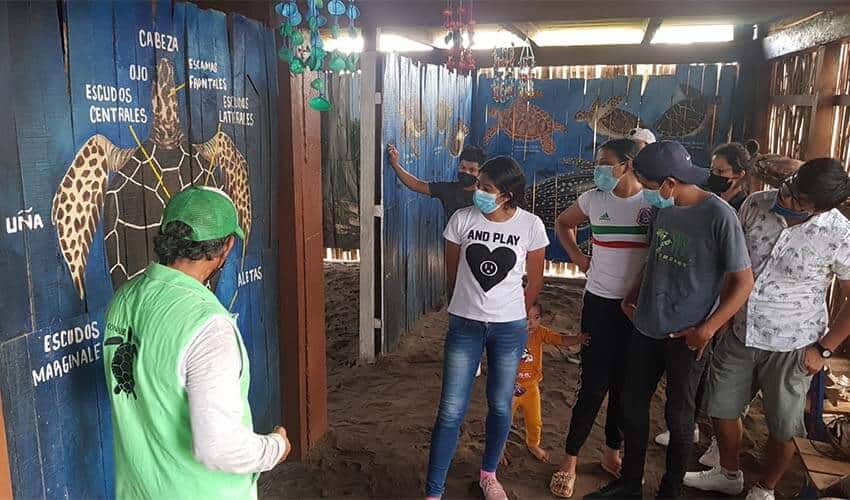
Young visitors learn about turtles in the Emiliano Zapata turtle education center’s colorfully painted rooms. Sectur Chiapas

They knew if they didn’t do something that their children would grow up and never get a chance to see these natural wonders. The cooperative applied for a permit from the National Commission for Natural Protected Areas (Conanp), asking if they might collect the eggs from the nests on the beach and protect them from poachers and animal predators in a fenced-in hatching ground a few hundred meters inland.

With the support of Conanp, they began to rescue the turtle eggs. This year, four years into their project, 46 nests — an average of 80 eggs in each — reached the hatching stage under their care.

Emiliano Zapata is part of the Encrucijada Bioreserve, a 35,000-acre expansive of territory that spreads across seven coastal communities in the south of Chiapas. Each has specific species that are endemic to this place, and nowhere else in the world.

Communities are now working with the local government to protect these species and the environments where they make their home, mainly the mangrove forests that line the coast.

The job doesn’t only include the five months of collecting turtle eggs and releasing them into the wild. They also work to prevent fires in the mangrove forest, to clean up the beach and to reforest areas that have been damaged or burnt.

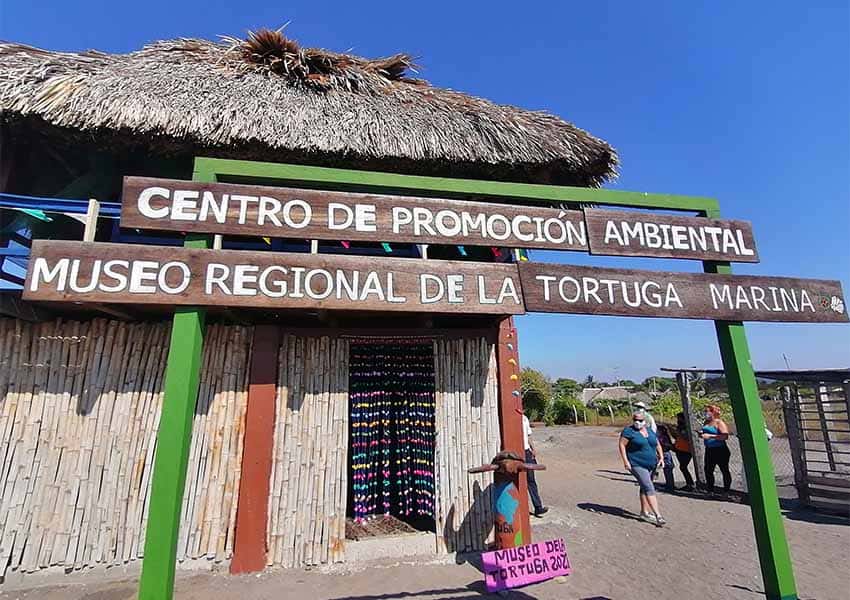
Skulls of poached crocodiles line the walls of the Marine Turtle Environmental Educational Center, along with the bones of animals burnt in fires and the dried-out bodies of turtles left to suffocate on the beach without their shells. It’s a chilling scene, but one that the community hopes will build conscientiousness in the visitors about the important conservation work going on here.

environmental center Emiliano Zapata, Chiapas
The community’s turtle education center was created with help from the federal land protection agency Conamp.

They also want to bring ecotourism to their area — a region of Mexico that is one of the country’s poorest. Each member of the community receives only about US $150 for the entire five months he or she works with the turtles – going on patrols, retrieving eggs and guarding their hatching grounds from poachers.

“When they see someone that is paying attention, they tend not to come around,” says José Alfredo González, a local biologist who works with the coop giving tours. A tone of frustration can be heard in his voice when he describes the speed at which poachers can collect eggs on the beach with motorcycles and horses.

The community members are not vigilantes; they are just there to inform the local authorities and often invite them out on patrol so they can see what’s happening for themselves. They are currently raising money for a four-wheeler of their own in order to compete with the slick and fast-moving poachers that still haunt the shores.

While the community has no hard and fast numbers about how much of the sea turtle population has disappeared over the years, Arias says the difference between when he was a child and now is shocking.

“It was part of my childhood. Before, you could just walk out onto the beach and see them [laying their eggs]. Now that I am an adult, it’s not so easy. To find a nest, we have to walk five or six kilometers down the beach.”

Children run here and there throughout the beautifully painted rooms of the Marine Turtle Education Center. Walls are adorned with images of the five types of mangrove, the seven kinds of sea turtles worldwide and the elegant migratory birds that come every year to raise their own offspring in the bioreserve.

environmental center Emiliano Zapata, Chiapas
This small, low-income town of 300 in one of Mexico’s poorest regions also sees an opportunity in making itself an ecotourism destination.

The town’s children are absorbing from their elders that this a problem that must be addressed, and as they carry tiny turtles out to the sea in hollowed-out gourds, they aren’t just helping their own little swimmers; they are assisting the survival of an entire species, one turtle at a time.

• To arrange a visit contact Travis Tours in Chiapas which works directly with community members to support their project via ecotourism.

Lydia Carey is a regular contributor to Mexico News Daily.

Only 65% of required bolts were used on elevated Metro line that collapsed

0
mexico city metro
Investigation into last year's accident also determined that maintenance of Line 12 was inadequate. deposit photos

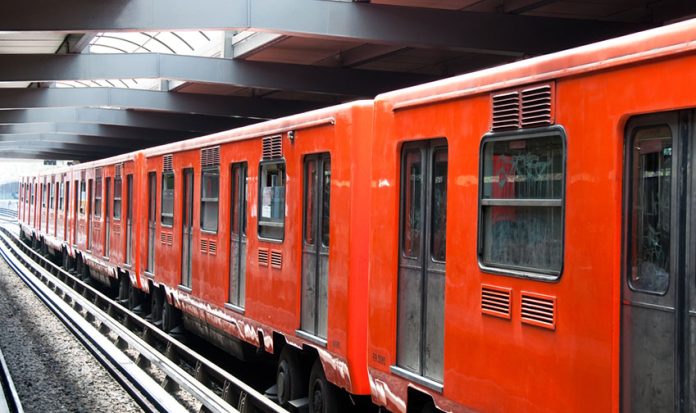
A company subcontracted to work on the elevated section of Line 12 of the Mexico City Metro – part of which collapsed last May – only installed 65% of the required bolts, an investigation into the causes of the disaster has found.

Twenty-six people were killed after two carriages of the train in which they were traveling plunged toward a busy road on May 3.

A report completed by experts commissioned by the Mexico City Attorney General’s Office (FGJ) said that J.J. Jiménez S.A. de C.V., a company subcontracted by Carso Infrastructure and Construction (CICSA), not only failed to use all the bolts it should have used but installed those it did use incorrectly and without respecting building codes.

As a result, the effectiveness of the bolts was just 20% of what it should have been, the report said.

According to the newspaper Milenio, which obtained a copy of the report, CICSA said in a submission to the FGJ that it purchased all the bolts required for the elevated section, but J.J. Jiménez did not use them all.

The former company, owned by billionaire businessman Carlos Slim, is paying for the repairs to Line 12, the newest line in the Metro system but one which has been plagued by problems.

Ingenieros Civiles Asociados and French rail company Alstom were also part of a consortium that built the line, which includes an underground stretch and an elevated section.

The experts commissioned by the FGJ also found that maintenance on Line 12 was inadequate, but determined that wasn’t a factor in the collapse.

The report also cited welding deficiencies in the structure that supported the elevated section of Line 12, which runs from Mixcoac in the capital’s southwest to Tláhuac in the southeast.

The collapse was caused by the failure to comply with a range of Mexico City construction laws, codes and regulations, the report concluded.

The FGJ said in October that there were flaws in the design of the line and that construction work was shoddy. Metal studs in the overpass that collapsed were poorly placed and welding was deficient, it determined.

The FGR’s findings aligned with those of a Norwegian company hired to conduct an independent investigation and with many of those outlined in New York Times analysis.

The Attorney General’s Office announced in October that it was opening criminal cases for homicide, injury (almost 100 people were injured in the accident) and damage to property in connection with the May 3 tragedy, the Mexico City Metro’s deadliest disaster.

With reports from Milenio
Spider-Man now second most popular film ever shown in Mexico

0
spider man
The new film has taken in US $66 million at the box office in Mexico.

The new Spider-Man film has broken records since its December 15 release and is now the second highest grossing film in Mexican box office history, the national cinema industry agency Canacine said.  

Spider-Man: No Way Home, the 27th film of the Marvel Cinematic Universe, is only 60 million pesos (US $2.9 million) from overtaking 2019 release Avengers: Endgame as the most popular movie ever projected onto Mexican screens, Canacine wrote on Twitter on Saturday.

The film has taken in at least 1.35 billion pesos ($66 million) and sold over 19 million tickets in Mexico. It took in $9 million on its first day to beat the Avengers, which took a whole opening weekend to earn $12.5 million.

The 148-minute smash hit is the second sequel of a Spider-Man series starring U.K. actor Tom Holland. It cost $200 million to produce and features Benedict Cumberbatch, Zendaya, Willem Dafoe and Jamie Foxx.

Mexico has generated the third highest amount money for the film in global terms, only surpassed by the United Kingdom with over $92.4 million and the United States with $668 million. 

At the global box office, No Way Home is already the eighth highest earner in history at over $1.53 billion, still far from first-place Avatar with $2.8 billion.

Audiences have given Spider-Man: No Way Home a 98% approval rating on Rotten Tomatoes, while 93% of critics recommend the film.

With reports from xataka and Deadline

Cost of construction materials soared 17% in December

0
cemex truck
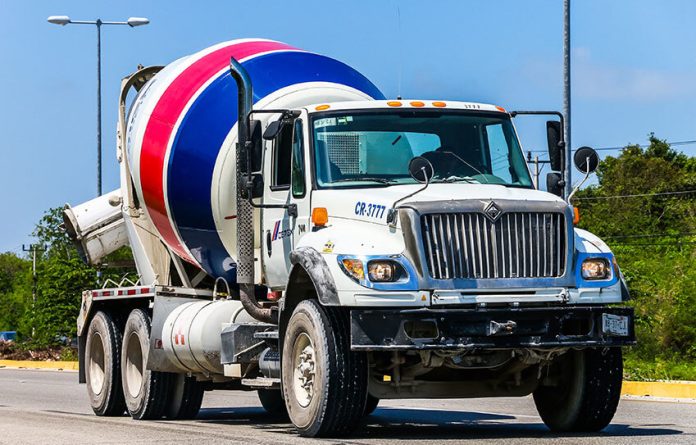
Cement companies have announced price hikes of up to 20%. Art Konovalov / Shutterstock.com

Prices for construction materials were 17.4% higher on average in December compared to the same month of 2020, official data shows.

It was the biggest year-over-year price hike in 14 years, according to data from the national statistics agency INEGI.

Among the materials whose prices increased substantially were sheet metal, up 58%; metallic structures, up 49%; rebar, up 43%; plywood, up 36%; wire and wire rod, up 35%; plastic pipe, up 34%; lumber, up 31%; and electrical cable, up 30%.

Paint, glass and cement prices also increased albeit by a more modest 20%, 17% and 7%, respectively.

Behind the price hikes were higher international prices for raw materials and shortages due to supply chain problems, according to experts cited by the newspaper Reforma. Higher prices for raw materials such as steel, aluminum, copper, plastic and wood were the result of higher energy costs, they said.

The increased costs for builders will have a knock-on effect on prices for new dwellings, the president of the Mexican Chamber of the Construction Industry told Reforma. Francisco Solares Alemán also said that budgets for public and private infrastructure projects won’t go as far as they otherwise would have gone.

He added that cement companies recently announced price hikes of 15% to 20% due to higher overheads including increased energy costs.

Solares noted that inflation in the construction sector is 10 points higher than general inflation, which is currently above 7% – its highest level in more than 20 years.

“The outlook is not good,” the building chamber chief said, explaining that global steel shortages are expected to continue during at least the first quarter of 2022. “That will cause the price of the material to go up again. All these high prices … will hit the price of new homes.”

With reports from Reforma 

Constellation Brands confirms plans to construct brewery in Veracruz

0
Constellation Brands
Company officials said that a specific site in the state for the new plant has yet to be decided.

A United States company that brews Corona and other Mexican beer brands for the U.S. market will build a new brewery in Veracruz, company officials have confirmed.

Veracruz is a plan B decision for Constellation Brands: its US $1.4 billion, nearly-completed brewery project in Mexicali, Baja California, was halted by the federal government after a dispute over water use and a subsequent referendum in March 2020.

The new plant, which the news website Sentido Común reported is likely to be located in the port city of Coatzacoalcos, is part of an up to $5.5 billion investment plan for 2023–2026 that includes improvements at a brewery in Ciudad Obregón, Sonora, and its state-of-the-art plant in Nava, Coahuila, located across the border from Eagle Pass, Texas. The spending aims to increase beer output by as much as 30 million hectoliters. 

A Constellation representative confirmed that it would be building the new plant in Veracruz, saying that one advantage of the new location in that state would be its shipping connectivity to the United States, offering easy access to Florida and the United States east coast, while the Sonora plant is likely to serve California.

The Coahuila plant will continue to serve Texas, Sentido Común reported.

Constellation Brands Mexicali brewery protests
The Mexicali brewery, which was eventually halted, sparked numerous resident protests over the amount of water it would consume.

Veracruz Governor Cuitláhuac García has proposed the southern port of Coatzacoalcos as an ideal relocation site for the brewery, and Sentido Común reported that it is being considered, although Constellation spokesperson Nina Mayagoitia told the news agency Reuters this week that it has yet to decide on a site in Veracruz or budget for the new plant. 

Constellation hasn’t been compensated for its losses on the 80%-completed Mexicali project that was stopped in mid-construction by the government, company officials confirmed.

“The company continues to work with government officials in Mexico to determine the next steps for our suspended Mexicali brewery construction project and seek various ways to recover the capital costs and additional expenses incurred to establish the brewery. However, there are no guarantees of compensation,” an unnamed company spokesperson told Sentido Común.  

López Obrador has previously said the southeast of the country was more appropriate for a brewery than the arid border city of Mexicali, based on the availability of water.

“It was explained to them that the people had not been consulted, that the population would be affected and that it would be irrational, where there is no water, to put a factory to produce beer and export beer, which is like exporting water. They understood, and now they are going to [build] a brewery, but in the southeast, where there is enough water,” López Obrador said in May 2020. 

The United States is the only country where Constellation can sell many of its beers. Beer giant Anheuser-Bush InBev has commercial rights for the rest of the world, including Mexico. Constellation’s product portfolio includes the beer brands Corona, Modelo Especial, Victoria and Pacífico, as well as Robert Mondavi wines, Svedka vodka and Casa Noble Tequila. It has operations in the United States, Mexico, Italy and New Zealand. 

The company bought Grupo Modelo’s U.S. beer business in 2013 and has invested $9 billion in it. Constellation has annual sales of over $8.5 billion, and its Mexican beer portfolio generates a significant portion of its revenue.

With reports from Sentido Común and Reuters

7 people dead in Guanajuato killings

0
crime scene

Seven people were killed in two attacks in the notoriously violent state of Guanajuato on Sunday. 

Two men and two women were killed at about 7 a.m. after armed men entered a property near Acámbaro, close to the Michoacán state border. 

Around 9 p.m., a 52-year-old man and a man and woman both aged 36 were killed inside a house in the center of Irapuato, 48 kilometers south of Guanajuato city. 

In another incident, near Celaya, six wedding guests were shot and wounded while they celebrated the event. Four men entered the events venue before opening fire. 

Five of the victims were shot in the feet and legs, while one man sustained injuries to the side of the head and the lower back. 

Guanajuato is destined to be named the state with the most homicides for the fourth consecutive year, pending data for December. From January through November it recorded 3,239 homicides, ahead of Baja California which saw 2,800.

Celebrations for the New Year have been short lived in the state: in the first seven days of the year it recorded 60 homicides.

With reports from El Universal and Periódico Correo

Aeroméxico cancels 300 flights as flight crews suffer COVID infections

0

Aeroméxico canceled approximately 300 flights during the past five days due to coronavirus infections among crew members.

In a report submitted to the consumer protection agency Profeco, the airline said about 9% of 3,100 flights scheduled between those dates were canceled.

At least 140 Aeroméxico pilots and cabin crew members have tested positive for COVID-19 in recent days, while 65 were suspended because their employment paperwork was not in order, according to aviation union ASSA. The airline said it conducts some 14,000 tests a week to detect infections.

“The phenomenon caused by omicron has had an impact on the aviation industry at a global level,” Aeroméxico told Profeco.

“… Despite the [high] infection rate [among crew members], Aeroméxico has implemented protocols that have allowed it to only cancel around 300 flights,” it said.

The airline said that all customers affected by the cancellations would be booked on alternate flights.

One Mexico City woman who spoke with Mexico News Daily was rebooked on a flight home from Mérida, Yucatán, on Monday morning after her flight on Saturday was canceled. However, Dr. Silvia Ortiz, a psychiatrist, was advised Sunday that her Monday flight was also canceled, forcing her to buy a ticket with Volaris to reach the capital for work commitments on Monday afternoon.

Flight cancellations have caused chaos at Mexico City airport in recent days. Thousands of people were left stranded after arriving at the airport to find out their flights had been canceled. Some of those affected took to social media to criticize Aeroméxico, whose call centers were overwhelmed.

“Terrible service from @Aeromexico, they don’t tell you anything, they cancel flights, they don’t refund anything,” one Twitter user wrote.

The airline said in a statement Friday that the delay or cancellation of flights was “not a decision we take lightly and it is always the last resort.”

It also advised customers to “remain attentive to the status of their flight through our official channels.”

With reports from El Universal and Infobae

COVID risk level up in several states as omicron spreads; active cases at record high

0
new stoplight map
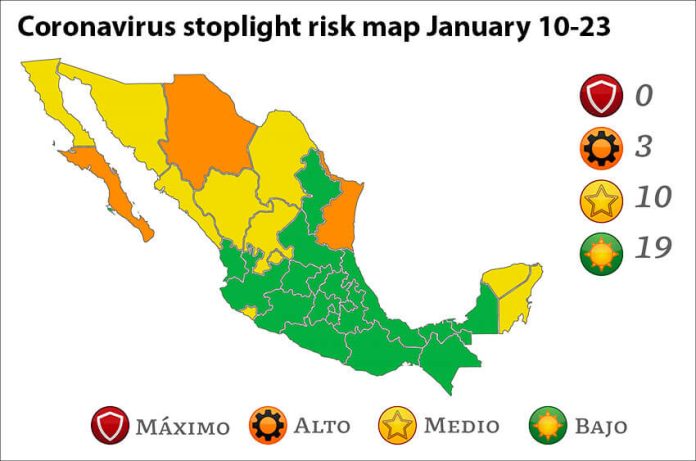
Green gives way to orange and yellow on the new stoplight map.

Thirteen of Mexico’s 32 states are high risk orange or medium risk yellow on the federal government’s latest coronavirus stoplight map, while active case numbers are at an all-time high as the highly infectious omicron strain spreads rapidly.

There are three orange states on the new map – which takes effect Monday and will remain in force through January 23, 10 are painted yellow and 19 are low risk green.

Tamaulipas and Baja California Sur jumped to orange from green while Chihuahua regressed to that color from yellow.

The yellow states are Aguascalientes, Baja California, Sonora, Coahuila, Colima, Quintana Roo, Yucatán, Sinaloa, Durango and Zacatecas. The first three were already yellow while the last seven switched to yellow from green.

The updated map is indicative of a coronavirus situation that has deteriorated quickly in recent days – at least in terms of new infections. There were no orange states on the previous map and just four yellow ones.

The Health Ministry reported more than 20,000 new cases on each of Wednesday, Thursday and Friday last week before the daily tally exceeded 30,000 for the first time ever on Saturday.

An additional 30,671 confirmed infections on Saturday and 11,599 on Sunday lifted Mexico’s accumulated case tally to 4.12 million. There are currently 158,332 estimated active cases across the country, more than at any other time of the pandemic.

Baja California Sur has the highest number of active cases on a per capita basis followed by Mexico City, Quintana Roo, San Luis Potosí and Zacatecas.

The official COVID-19 death toll passed 300,000 on Friday and now stands at 300,334, the fifth highest total in the world.

An average of 16,185 cases were reported per day during the first nine days of January – a whopping 446% increase compared to the daily average in December, but fatalities have declined almost 40% to an average of 101 per day.

The sharp increase in new cases – the majority are presumed to be omicron infections –  has not translated into a significant increase in hospitalizations, with just 19% of general care COVID beds and 12% of those with ventilators occupied as of Friday.

covid-19

However, occupancy rates are much higher in some states such as Quintana Roo and Baja California, where more than 60% of general care beds are taken. Aguascalientes has the highest occupancy rate for beds with ventilators, with 59% currently in use.

In other COVID-19 news:

• There has been a slight increase in hospitalizations in Mexico City, Mayor Claudia Sheinbaum said Sunday.

However, the pressure on the health system in the capital is much lower than that exerted during the second and third waves of infections, she said.

The mayor said the high vaccination rate in Mexico City and  the characteristics of the omicron variant – which causes less severe disease – have helped keep hospitalizations low compared to previous waves.

There were just under 700 patients in COVID wards in Mexico City hospitals on Saturday, of whom 134 were in intensive care. Federal data shows that 37% of general care beds and 10% of those with ventilators are occupied in the capital.

Coronavirus spokesman Eduardo Clark said that 70% of hospitalized patients are not vaccinated. He also said that it’s not “exceedingly necessary” for people with COVID-like symptoms to get tested.

“People with symptoms have to isolate themselves, getting tested is not necessary. If we have any respiratory symptom, we should assume that it’s COVID, go home and stay isolated for seven days,” Clark said.

Sheinbaum made similar remarks, asserting that “it’s not necessary to go and get tested at this time.”

Their advice comes as demand for COVID testing soars across the country.

• Mayor Sheinbaum announced that booster shots for adults aged 50 to 59 will be available in Mexico City from January 18.

The federal government started offering booster shots to people aged 60 and over last month, but seniors are still waiting for them in some parts of the country.

People aged 40 and over can register to receive a booster shot on the government’s vaccination website.

• Mexico has recorded its first confirmed case of “flurona” – a concurrent infection with COVID-19 and influenza. The case was detected in a 28-year-old woman in Tepic, Nayarit, state Health Minister José Munguía said.

• President López Obrador said he would get tested for COVID after waking up “hoarse” on Monday morning.

“I woke up hoarse, I’m going to get tested later but I think it’s the flu,” he told reporters at his regular news conference.

López Obrador acknowledged Friday that he had been in contact with Economy Minister Tatiana Clouthier, who announced earlier the same day that she had tested positive.

With reports from El Universal, Reforma and Milenio