Home Blog Page 1088

Atole: beverage of champions

0
Cinnamon-Vanilla atole
Cinnamon-vanilla atole makes for a warm and inviting start to the day.

The first time I encountered atole was in the days between Christmas and New Year’s, at a stand outside a busy department store in Mazatlán where I’d gone with a local friend to exchange a gift. She was in a hurry; I lingered by the door, watching the vendor ladle the steaming hot something into cups and hand them to appreciative customers. “What is that? I want some!” I wailed as she bundled me into the store and onto the elevator.

Good friend that she is, on the way out, we stopped and she explained about the delicious beverage we were about to try. I’ve never forgotten that first, wonderful taste of atole and what a satisfying drink it is for a chilly winter’s evening.

Since then, I’ve learned much about this ancient pre-Hispanic beverage. The simplest description is that it’s a thick, hot, corn-based drink, sweetened and flavored with everything from cinnamon or vanilla to guava, almonds or citrus zest. (Chocolate atole has its own name: champurrado.) “Corn” as in masa harina, nixtamalized ground dried field corn that’s the basis of tortillas, gorditas, etc.

Popular in many Central American countries, in Mexico you’ll find atole in different flavors specific to different regions, running the gamut from sweet to savory. For example, in Oaxaca, Veracruz and Michoacán, chileatole, a spicy-savory version made with chile and epazote, is common. In northern Mexico, the famed Tarahumara — known all over the world for amazing long-distance runners — have used masa-based, energy-filled pinole as a staple in their diet for thousands of years.

We’re lucky that nowadays we don’t have to grind dried corn; using masa harina para tortillas will yield a fine atole. Do avoid recipes with cornstarch; the result, while admittedly delicious, will not have the same thick consistency that’s part of atole’s charm. (That said, there’s nothing wrong with keeping a few packets of Maizena corn starch in your cupboard for a quick atole-like fix!)
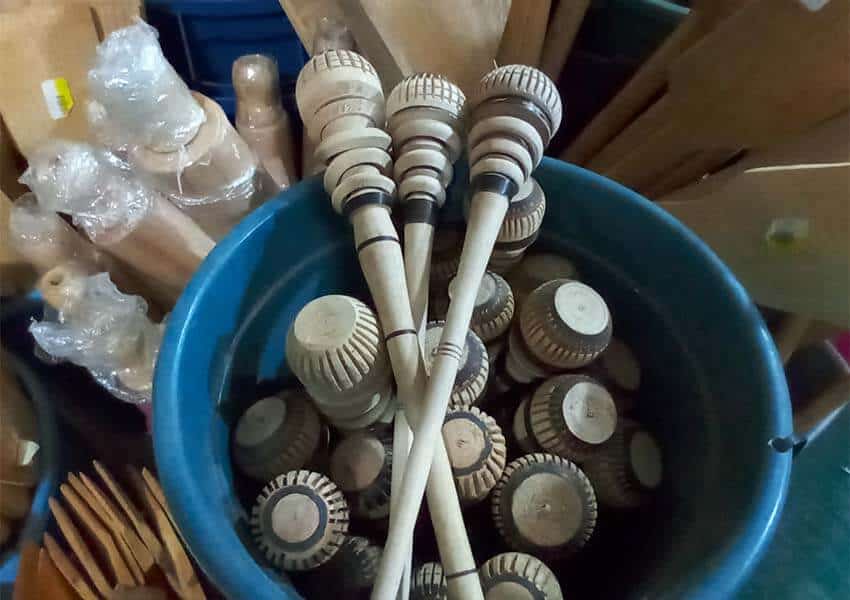
molinillo
A molinillo can be found in most local mercados.

Another fun part of atole is using a traditional wooden molinillo to froth the drink just before serving. My guess is you’ve seen these in your local mercado and didn’t quite know what they were for; or if you did, I bet you’ve never used one.

They come in all sorts of interesting sizes and designs, and while a wire whisk works just as well, a molinillo is a lot more fun!

Champurrado (Chocolate Atole)

Usually a breakfast drink, but equally inviting in late afternoon with a shot of mezcal.

  • ½ cup masa harina
  • 3 cups water, plus more as needed (see note)
  • 1 cup milk
  • 3½ oz. dark chocolate, broken into pieces, or chocolate chips
  • 3 Tbsp. dark brown sugar/grated piloncillo
  • 1 cinnamon stick or ¼ tsp. ground cinnamon
  • Salt

Place masa into large saucepan; set over medium heat. Immediately add water in a slow, thin stream, whisking constantly to avoid lumps. Bring to simmer. Whisk in milk, chocolate, sugar and a generous pinch of salt until chocolate is melted, about 1 minute. Add cinnamon.

Return to simmer; lower heat to low. Continue simmering, whisking constantly, about 5 minutes. Discard cinnamon stick. Thin with additional water, as needed, to create a thick yet drinkable beverage.

Add more sugar or salt if desired. Froth with whisk or molinillo.

Atole de Cacahuate (Peanut Atole)

  • ½ cup natural smooth peanut butter
  • 1 cup milk
  • ½ cup masa harina
  • 3¼ cups water, plus more as needed
  • 3 Tbsp. brown sugar/grated piloncillo
  • Salt

Using a blender, combine peanut butter and milk; blend until thoroughly combined. In large saucepan, add masa; set over medium heat. Immediately add water in a slow, thin stream while whisking constantly to avoid lumps. Bring to a simmer; whisk in peanut-milk, brown sugar and generous pinch of salt.

Return to simmer; lower heat to low, then simmer for 3 minutes, whisking constantly. Thin with additional water as needed to create a thick yet drinkable beverage. Add more sugar or salt if desired. Froth with a whisk or molinillo. Serve hot.

champurrado
Thick, creamy champurrado is also nice with a shot of mezcal.

Orange Atole

Feel free to use lemon or lime instead of orange.

  • ½ cup masa harina
  • 3 cups water, plus more as needed, divided (see note)
  • 1 cup milk
  • 3 (1-inch) strips orange zest from 1 large orange
  • 3 Tbsp. grated piloncillo/brown sugar
  • Salt
  • Finely grated orange zest, for garnish
  • Optional: 2 star anise pods

Pour masa in large saucepan; set over medium heat. Immediately add water in a slow, thin stream, whisking constantly to avoid lumps. Bring to a simmer.

Whisk in milk, zest strips, star anise (if using), sugar and generous pinch of salt. Return to a simmer; lower heat to low. Continue simmering about 5 minutes, whisking constantly, until drink is infused with orange aroma.

Discard zest and star anise. Thin with additional water as needed to create a thick yet drinkable beverage. Add more sugar or salt if desired. Froth with whisk or molinillo. Garnish with grated orange zest.

Cinnamon-Vanilla Atole

This is a simpler recipe; use the method above if it feels more comfortable.

  • ½ cup masa harina
  • 3 cups milk
  • ¼ cup water
  • 1/3 cup grated piloncillo/brown sugar
  • 1 tsp. cinnamon + more for garnish
  • 1 tsp. vanilla

Combine masa, water, milk, sugar and cinnamon, whisking constantly over low heat to prevent lumps. After 5–10 minutes, remove from heat; whisk in vanilla. Garnish each cup with cinnamon.

Janet Blaser is the author of the best-selling book, Why We Left: An Anthology of American Women Expatsfeatured on CNBC and MarketWatch. She has lived in Mexico since 2006. You can find her on Facebook.

New Year and breakfast with Slim: the week at the morning press conferences

0
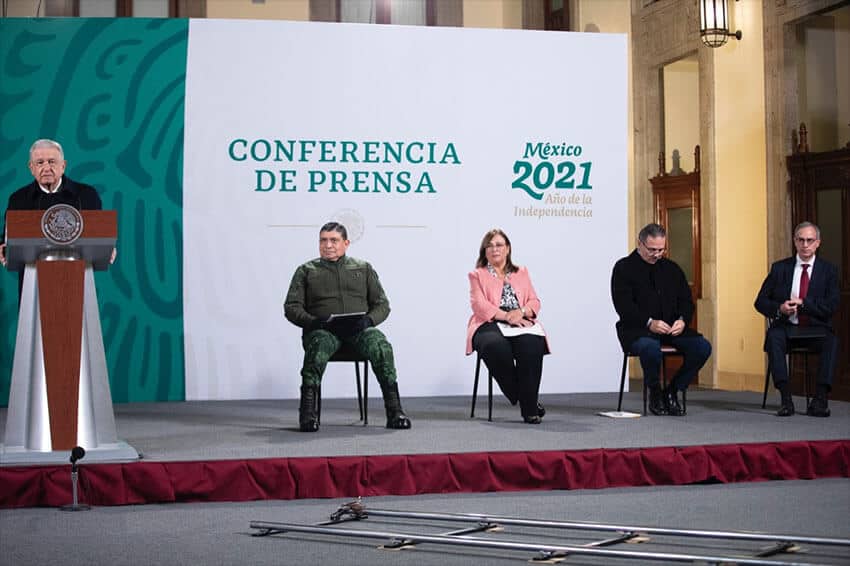
The president at his Monday morning conference.
The president at his Monday morning conference. Presidencia de la República

There was no extended break for President López Obrador at the end of the year, who has made the morning news conferences a demonstration of his personal resolve. The 68-year-old rarely sits during the long morning meetings and is famed for his expansive responses, which often include history lessons and personal anecdotes.

Monday

The president reported a tranquil Christmas over the weekend. “There was peace, there were no serious regrettable events … Christmas Eve and Christmas passed well,” he said.

Later in the conference, he reached for a fishy idiom when criticizing elites for their undemocratic attitudes: “I know you cod, even if you come in disguise,” he said, which means that he can see straight through them.

On the omicron coronavirus variant, the president offered clear assurances. “The information is that infections have not increased and, most importantly, there has been no increase in deaths … If we notice anything strange … we will inform. We have never hidden anything, ever,” he said.

“I’ve got to go,” the president declared, and with reason. He had esteemed company joining him for breakfast: Latin America’s richest man, Mexican telecoms magnate Carlos Slim.

Tuesday

Deputy Health Minister Hugo López-Gatell confirmed COVID-19 cases and hospitalizations were still going down.

The head of Pemex, Octavio Romero Oropeza, dropped in to detail the state company’s 10-point plan for energy self-sufficiency, and revealed that gas prices were finally falling. “It’s a real support for the poorest families in the country,” he said.

On elections for the Pemex union, the president stuck to moral guidance, rather than legal. “First, freedom is not requested, it is conquered. Second, fiefdoms only last as long as the people want. Third, what [Miguel] Hidalgo said and [Benito] Juárez repeated a lot: the people who want to be free will be,” he said.

The journalist Joaquín López-Dóriga had criticized the president’s choice of opulent tableware for his breakfast with Carlos Slim. AMLO assured viewers he didn’t choose the tableware and said the Carlos Slim had offered to pay tax on the recent sale of a company. “My respects for the attitude of Carlos Slim and other businessmen, many of whom have behaved very well,” he said.

Speakers wait their turn at Tuesday's press conference.
Speakers wait their turn at Tuesday’s press conference. Presidencia de la República

However, the Tabascan wasn’t getting soft on the rich. “How can I not celebrate the fact that it’s different now? The gentleman at [convenience store] Oxxo paid 10 billion pesos [in tax]. The gentlemen at [supermarket] Walmart 12 billion, and now 28 billion … all this is to strengthen public finances.”

Wednesday

Elizabeth García Vilchis was in festive mood for an end of year “Who’s who in the lies of the week” feature. “We have seen the discontent of the opposition to the fourth transformation, generating disinformation campaigns due to the loss of privileges. Every day they invent something new, but they are such absurd and hilarious things,” she said.

García Vilchis offered some of her highlights: the allegedly wonky control tower at the new Felipe Ángeles airport, the president’s supposedly simulated train journey and the purported price rises linked to the energy reform. She added the most repulsive piece of misreporting was on the death of a worker at a protest in the Dos Bocas refinery in Tabasco.

A journalist had tweeted he was under threat, and named a surprising culprit: “‘If they kill me, you all already know who is responsible. I request that [Jalisco Governor Enrique] Alfaro face proceedings. We’ll meet in international courts, not in those controlled by the mafia,” Ricardo Ravelo wrote.

“This doesn’t mean the governor is guilty … we can’t make summary judgements,” the president responded.

However, when it came to the energy form, he was quicker to pass judgement, and expected high levels of political literacy from young scholars. “The legislators who vote against the electricity reform will have to explain it to their children, because at school they will be singled out. [The other children will say:] ‘Your dad voted for the owner of Oxxo to pay less for electricity than a household.'”

Thursday

Three wishes for the new year commenced the conference. “One wish is that the pandemic ends. That there is no longer any suffering … and that people don’t keep getting sick … My second wish is that the cultural strength of Mexico keeps getting stronger. It’s what has always saved us from disasters. We can’t forget where we come from and that we are the heirs of great civilizations and that is what gives us strength and identity … And for the third, I hope that there will be fewer poor people,” the president said.

The incoming governor of the Bank of México, Victoria Rodríguez Ceja, was in attendance, in her last days as deputy minister at the Finance Ministry. “I’m honored that Mr. President has considered, nominated and appointed me to this very high office,” she said.

The president said Rodríguez’s first task would be to tackle high inflation. He made a speedy exit shortly after, destined for his residence in Palenque, Chiapas, for the New Year’s celebrations. “A hug for everyone,” he said, before leaving his fellow Tabascan friend, Interior Minister Adán Augusto López, in charge during his absence.

Friday

There was no conference on Friday as the president had broken off to usher in the New Year. Perhaps like much of the world, he’ll do so to the eternal lines of Scottish poet, Robert Burns.

Should auld acquaintance be forgot,
And never brought to mind?
Should auld acquaintance be forgot,
And auld lang syne!

Happy New Year!

Mexico News Daily

Beating the hornets’ nest hasn’t worked, but neither does letting them be

0
CJNG members
In July, Jalisco New Generation Cartel members made headlines when their uncovered faces in Aguililla, Michoacán, made plain their sense of impunity.

A couple of weeks ago, the front page of Mexico News Daily was filled with a splattering of stories about organized crime and their offenses against the public, ranging from the inconvenient to the horrifying.

For example, there was the article about the return of those whom President López-Obrador calls “heroes” — Mexicans living in the United States returning for visits home — and their subsequent extortion by customs, immigration, federal and state police forces, the National Guard and organized crime, that last category possibly describing all of the aforementioned.

Who’s who among those demanding money on the side of the road? Who knows?

The same week, there was a story on the front page for several days about entire communities displaced by organized crime, forced to leave behind their homes and flee because terrorists that the state has not been able to control or subdue demanded their land.

In a completely different part of Mexico, two lost bird-watching tourists were stopped and questioned by armed men when they apparently went down a road they didn’t know they shouldn’t have, a mistake that could have very well meant their demise.

There was also the boy in Acapulco who had his index fingers chopped off for refusing to sell drugs.

According to the story, he and his family fled north, where they’re no doubt still waiting in a Tijuana shelter to cross into the U.S., a place where they have more hope of avoiding further punishments at the hands of criminals that the government cannot control or punish.

Meanwhile, we’ve got a national backlog of 52,000 unidentified bodies in morgues all over the country.

Things are not looking promising around here when it comes to the rule of law.

I often think back to the time of Felipe Calderón’s presidency (2006–2012) and wonder where we’d be today if President López Obrador had won that 2006 election after all. If no one had decided to “shake things up” and tried to rid the country of organized crime, at least in the particular way Calderón did, what would this country look like today?

Calderón’s plan for tackling organized crime taught us that the “kingpin strategy,” i.e., going after the heads of criminal groups — a strategy seemingly being embarked upon anew under a different name, the Bicentennial Framework — did not have the intended effect of reducing the power of criminal groups. Cutting off the heads of the monsters didn’t kill the monsters; it ensured that five more heads would grow back on each bleeding neck.

It was equivalent to trying to get rid of hornets in one’s backyard by whacking the nest with a baseball bat, something that doesn’t kill the hornets but does make them really, really mad.

I was living in the city of Querétaro at the time, a place that felt like it was in the eye of the hurricane. Violence was spreading at an alarming rate all over the country during those years while Querétaro was eerily calm.

Quite a few people whispered to me that the reason was because “the big guns” (no pun intended) of organized crime kept their families there. I have no way of knowing if that was actually true, but it seems as plausible an explanation as any.

We’re still living with the effects of Calderón’s experiment: the hornets are still mad and stinging away, and they have figured out that they can pretty much make the whole house their nest since we just don’t know how to fight them.

Since Calderón left office, there have been plenty of ideas about how to get the problem of organized crime under control, none of which seem to have made any dents.

AMLO’s “hugs, not bullets” strategy has been (deservingly) ridiculed, and plenty of his actions during this presidency have raised some good questions about how serious he really is about trying to eradicate organized crime from the country. Any criticism regarding his willingness to simply ignore the problem becomes, in his eyes, a problem of opposition media persecution against him instead. You just can’t talk to the guy.

I do applaud AMLO’s expansion of social services (for the people who were poor pre-pandemic anyway; everyone else is apparently part of the egotistical and Karen-esque middle class). But it obviously hasn’t been enough to affect any of the actions of criminal groups, including recruitment from among the ranks of the poor.

After all, it’s not like the criminals are willing to take “no thanks, I just don’t feel like it” for an answer. You could tell the most honest, educated kid in the world, “Do this or I’ll torture you,” and the reason she’d give in wouldn’t be because of a lack of good moral values, as the president seems to imply.

For a while, I thought the “hugs, not bullets” strategy was laughably naïve, but now I suspect and fear that it’s horrifyingly practical: AMLO is very purposefully ceasing the beating of the hornet’s nest in the hopes that they’ll eventually calm down.

It’s like we’re stuck in that part of a horror movie where the main characters are hiding and trembling in the dark as the bad guys slash everyone they come across, trying not to do anything that would call their attention to us.

Unfortunately for all of us, the entire country is the new hornet’s nest, and the options seem to be to play by their rules, if we’re unlucky enough to occupy space or services that they also want to occupy, or else cease to exist.

The well has been poisoned; they’re baked in; the cancer has spread all over. (I know, I’m getting out of control with these metaphors; I’ll stop).

What this “just don’t move; let’s see if they settle down” strategy looks like on the surface is complete acceptance of the fact that organized crime is essentially in charge of vast swaths of the country — not only physical land but politicians, businesses and government agencies.

Do I have a better plan in mind? Well, no, I don’t. All I can do is hope and pray with the rest of the country that the miracle of dawn comes after this seemingly never-ending dark.

Sarah DeVries is a writer and translator based in Xalapa, Veracruz. She can be reached through her website, sdevrieswritingandtranslating.com and her Patreon page.

Mexico-made video game ‘I’m not Jelly’ wins international competition

0
I'm Not Jelly video game
The I’m Not Jelly video game made by the Guadalajara studio 1 Simple Game was one of 10 winners of the Global Top Round competition in Singapore in October.

Mexico is once again making news in the international video game business.

In 2015, Guadalajara’s 1 Simple Game (1SG) studio surprised fans when its funny little game, Mucho Taco, was chosen by Apple’s App Store out of many worldwide competitors. Then in 2020, the team’s Lullaby of Life game entered the Apple Arcade.

Now in 2021, the Mexican video game company has done it again with another innovative game called I’m Not Jelly.

To get the full story, I spoke to Ovidio Escobedo, cofounder of 1SG.

“The story of I’m Not Jelly began in August of 2020 when we decided to begin to work on games for computers,” Escobedo said. “Previously, we were only producing games for smartphones. So I’m Not Jelly was our first attempt at doing this. People will be able to play this new game on a desktop computer using an ordinary keyboard and mouse.”

Guadalajara's 1 Simple Game studio
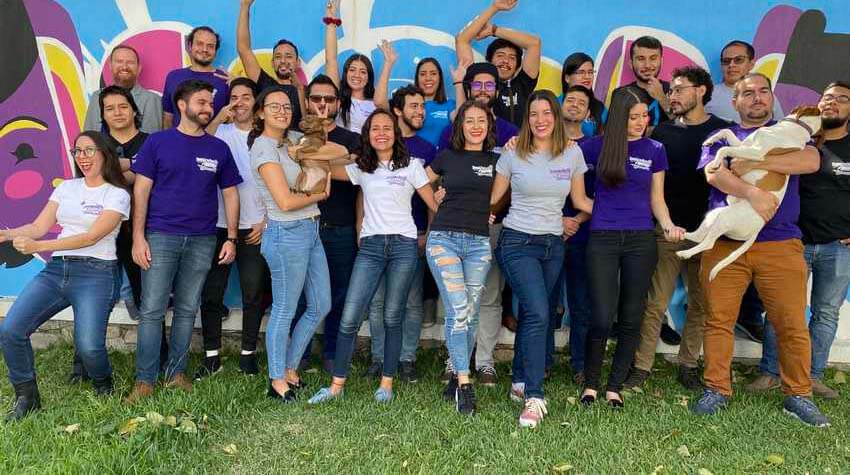
The 1 Simple Game staff, taken pre-COVID: “We make video games. Instead of exporting natural products, we enrich Mexico by exporting creativity,” said Escobedo.

In January of 2021, Ovidio Escobedo and his partner Francisco Lara created a team dedicated to this new project. They soon came up with a prototype that they decided to make public.

“People could download I’m Not Jelly free of charge so we could get feedback and opinions: did they like it? What could be changed?” Escobedo said. “We then contacted various YouTubers, streamers and influencers who specialize in playing video games and introducing them to members of their community.”

From there, said Escobedo, things snowballed.

“Suddenly lots of people were playing I’m Not Jelly even though it was just in its infancy. But we had planned to keep developing the game throughout 2022 and then launch the final version in the first trimester of 2023,” he said.

“At this juncture, along came an invitation to participate in something called Global Top Round,” he said. “It’s a program organized by video game investors, inviting studios all over the world to present their very best projects. So we submitted I’m Not Jelly as a prototype.”

This year, 375 studios participated in the Global Top Round — including first-time applications from studios in China and Russia — and in the end, 22 were chosen as finalists. From there, the 10 best would be picked, each of them a winner, with no ranking among them.

Guadalajara's 1 Simple Game studio
Left to right: 1SG directors Francisco Lara and Ovidio Escobedo with producer Karina Lomelí.

“The judging,” Escobedo continued, “took place in Singapore, October 15–17. Because of COVID-19, we weren’t able to attend in person, but we were there virtually. This meant that the awards would be presented at 4 a.m. Guadalajara time.

“This, of course, was pretty heavy, but we stayed up for it, and at 5 a.m., they announced the winners. Well, we were really sleepy by that time, and suddenly all of us found ourselves saying, ‘Did I hear right? Am I dreaming?’ You see, all the finalists were real pros, the best in the business, and just to get into that group of 22 was more than what we had been hoping for.

“The truth is, we had been quite happy just to be participating in this thing, and it hadn’t really occurred to us that we might actually win! So we were really floored when they started announcing the 10 winning games, which were from Brazil, Ireland, the U.S., Canada, Sweden, the U.K. and Spain, with a double win for Russia … and then we heard them say ‘Mexico!’ I’m Not Jelly was a winner!”

The game centers around gelatin-like people living on a far-off world. These little creatures come in different colors and fruit flavors, and their conflict is with other inhabitants of that universe who would like to eat them.

“No! No!” is their reaction. “Don’t eat me — I’m not jelly!”

“So begins the narrative,” Escobedo said, “always a bit tongue-in-cheek, something to make you smile. And there is a lot of action in this game, lots of energy. And the colors are strong and striking.”

Guadalajara's 1 Simple Game studio
A teenager tests out the Mucho Taco video game, concluding, “It’s cute and it’s addictive.”

“The art style and the gameplay are quick and snappy,” added 1SG technical artist Ricky Ibarra. “It’s vibrant, it’s chaotic and it’s pretty … and the streamers who have played it so far have all liked it a lot.”

I asked Escobedo how the team’s earlier video games are doing.

Muy bién!” he said. “Lullaby of Life has been out there for a full year, and we are delighted with the results. Lots of people have downloaded it, and earlier this year the game won the Developers’ Choice Award at the IndieCade Festival. Getting picked by your peers is really an honor!”

“By the way,” he continued, “I should mention that it was exactly Lullaby that inspired us to work on new kinds of games, games that offer bigger, more robust experiences that other sorts of players would appreciate. So you could say that I’m Not Jelly is the child of Lullaby of Life. As for Mucho Taco, it’s just as popular as ever. Its downloads are way over 4,000 per week — always — and after all these years! On top of that, we’re not doing any marketing whatsoever! Who knows how people hear about it.”

The 1 Simple Game studio came into being when Escobedo met Francisco Lara of One Simple Idea, a design studio offering visual strategies for consumer brands and known for its creativity.

“The studio was interested in producing video games,” Escobedo said, “but they didn’t know how to do it. Since I had some years of experience working with other studios, Francisco Lara and I decided to put together a small team and start making video games poco a poco, learning by doing.”

Mucho Taco game
The studio’s Mucho Taco is a “clicker” game: the more you click, the more rewards you get. It won Apple’s Best of App Store award in 2015.

Apparently, the award-winning studio has learned a lot.

The writer has lived near Guadalajara, Jalisco, since 1985. His most recent book is Outdoors in Western Mexico, Volume Three. More of his writing can be found on his blog.

Guadalajara's 1 Simple Game studio
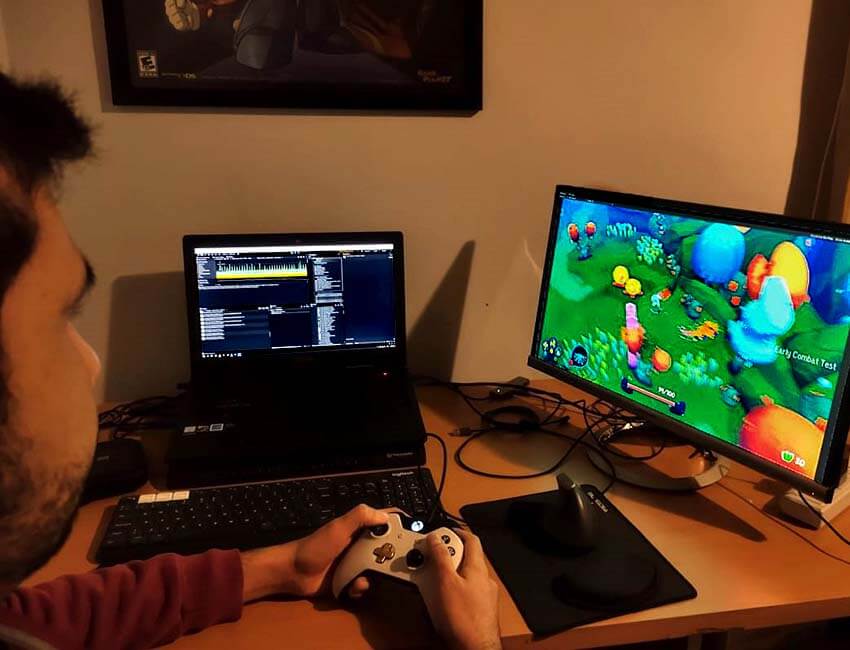
Technical artist Ricardo Ibarra plays I’m Not Jelly while checking memory management and CPU performance.
I'm Not Jelly video game
A scene from I’m Not Jelly in which the Nojellians discover that eating fruit gives them stronger bodies.
Guadalajara's 1 Simple Game studio
The Nojellian characters of I’m Not Jelly first sprang into virtual life in 2018 as Heal Billies, fighters against infection in a never-used game storyline.
I'm Not Jelly video game
While 1 Simple Game’s previous videogames have been all smartphone games, this is their first made for computers.


I'm Not Jelly video game
I’m Not Jelly is still a prototype of the final game, but 1SG released it in beta, and it’s been played by people worldwide.

COVID cases are on the rise — again

0
A scanning electron microscope image shows SARS-CoV-2 (round magenta objects) emerging from the surface of cells cultured in the lab. SARS-CoV-2, also known as 2019-nCoV, is the virus that causes COVID-19.
A scanning electron microscope image shows SARS-CoV-2 (round magenta objects) emerging from the surface of cells. SARS-CoV-2, also known as 2019-nCoV, is the virus that causes COVID-19. NIAID

Mexico recorded its highest daily total of new coronavirus cases since mid-October on Wednesday, suggesting that the country is entering an omicron-fueled fourth wave.

The Health Ministry reported 5,290 infections, lifting the accumulated case tally to just over 3.96 million. It was the highest daily total since October 14, when 5,825 cases were reported, and the second consecutive day that new confirmed infections exceeded 4,000.

Several experts warned this week that Mexico is on the verge of a fourth wave fueled by the highly transmissible omicron variant.

The official COVID-19 death toll rose to 299,132 on Wednesday with 188 additional fatalities reported. The number of active cases jumped 22% in the space of a single day to 27,820.

UPDATE (6:10 p.m. CT): The Ministry of Health reported 8,024 new cases on Thursday afternoon, increasing the number of active cases to 34,761.

In other COVID-19 news:

• The number of confirmed omicron cases in Mexico remains low but has risen sharply in recent days. According to global science initiative GISAID, 254 omicron cases have been detected here as of Thursday, a 504% increase compared to last Saturday.

Just over 60% of those cases – 159 – were detected in Mexico City, while 35 more were identified in neighboring México state.

Omicron has been detected in at least 12 other states, including Quintana Roo, Puebla and Baja California.

Baja California Sur continues to have the highest number of active cases on a per capita basis with almost 300 per 100,000 people. Health Ministry data published Wednesday shows that Mexico City ranks second for active cases followed by Quintana Roo and Baja California. Each of those three states has more than 50 active cases per 100,000 residents.

• Health regulator Cofepris has granted emergency use authorization to the Cuban-made COVID-19 vaccine Abdala. The three-dose vaccine, which hasn’t been approved by the World Health Organization, received a “favorable technical opinion” from experts, Cofepris said Wednesday.

However, the government hasn’t announced any plans to acquire the vaccine, which Cuba says has an efficacy rate of over 90%. Cofepris has now given emergency use approval to 10 vaccines, including the Pfizer, AstraZeneca, Sputnik V, CanSino and Johnson & Johnson shots.

• More than 81.9 million Mexicans have been vaccinated with at least one shot, the Health Ministry said Wednesday. About 90% of that number are fully vaccinated.

According to The New York Times vaccinations tracker, 64% of Mexicans have received at least one shot and 57% are fully vaccinated. The government has begun offering booster shots to seniors and intends to roll out additional shots to the rest of the adult population in 2022.

With the exception of youths aged 12 to 15 with underlying health conditions that make them vulnerable to serious COVID-19 disease, children younger than 15 have not been offered shots. Deputy Health Minister Hugo López-Gatell said Tuesday that the government has no plans to vaccinate children below that age.

With reports from La Razón, Tec Review and Reuters 

Central bank plans to release digital currency by 2024

0
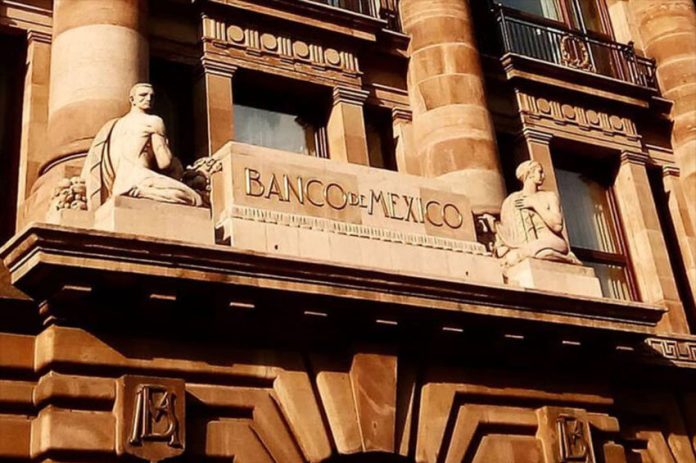
Bank of Mexico officials have not yet published anything on the subject of the new digital currency, which was announced by the president's office.
Bank of México officials have not yet published anything on the subject of the new digital currency, which was announced by the president's office.

Mexicans will be able to use a central bank-issued digital currency later this decade, the federal government said Wednesday.

President López Obrador’s office said in a Twitter post that the Bank of México (Banxico) had reported that it will put its own digital currency into circulation by 2024.

However, Banxico sources cited by the newspaper Milenio said the bank had not published any document on the subject.

The president’s office said the central bank considers “new technologies and state-of-the-art payment infrastructure” to be of “utmost importance” due to their capacity to “advance financial inclusion.”

According to the financial website Investopedia, a central bank digital currency, or CBDC, is a virtual form of a fiat currency – a government-issued currency that is not backed by a physical commodity such as gold or silver.

“A CBDC is an electronic record or digital token of a country’s official currency. As such, it is issued and regulated by the nation’s monetary authority or central bank,” Investopedia said.

“… CBDCs can simplify the implementation of monetary and fiscal policy and promote financial inclusion in an economy by bringing the unbanked into the financial system.”

The Bahamas and Nigeria are the only countries to have already launched CBDCs but more nations are expected to follow suit in the coming years.

The announcement of Banxico’s CBDC plans comes just two months after the launch of a blockchain-based currency – the hoozie – that can be used in the Guadalajara metropolitan area.

The world’s best known blockchain-based currency, Bitcoin, and other crypto-currencies are not legal tender in Mexico, but one recent survey shows that just over 12% of Mexican adults have invested in them.

Earlier this month, Elektra became the first chain of retail stores in Mexico to accept bitcoin. Its billionaire owner, Ricardo Salinas, is a Bitcoin enthusiast. He indicated his support for the CBDC plan by responding to the government’s Twitter post with a smiley face emoji.

With reports from Milenio

Make your Spanish more Mexican with these 10 everyday phrases

0
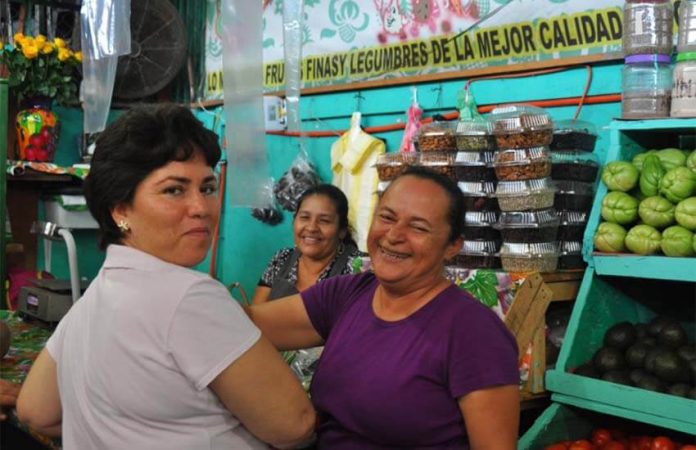
women in Mexican mercado
Talking to Mexicans for the first time often reveals to foreigners that their high school Spanish class left out some stuff.

Imagine what it is like for a foreigner to learn English. He starts with basic vocabulary, learns how to string together words in a sentence in the right order, practices verb conjugations and might even venture into sayings and figures of speech.

But he needs to do something else. To polish his English, he has to adapt it to the country he is living in. In the United States, he might live in an apartment, but in England, it’s called a flat. If he drinks too much in Great Britain, his friends will say he is “pissed.” In the U.S., he’s merely drunk, not angry.

Clearly, then, a key step — often overlooked — in mastering spoken Spanish is country-level adaptation. Consider that Spanish is spoken as a first language in some 21 nations and territories. But each country has words, expressions and sayings that only locals understand. And Mexican Spanish is no exception.

My wife and I lived for 17 years in Nicaragua and learned the local Spanish well. When our volunteer organization suddenly merged, we were invited to move to Mexico in 2012. Just as we had to change the chip in our cell phone — “mobile” for you British readers — we had to change the linguistic chip in our brain.

New words and phrases were jumping out at us like thieves in a dark alley. Undeterred, we stopped locals in their tracks whenever an unknown word or phrase popped out of their mouths. “What does that mean? In what context do you use it?” We began writing down the answers in a little notebook for future reference.

Spanish classes
The Spanish one learns in a class can certainly be functional but a bit generic and missing local color. deposit photos

This was how we lassoed those new words and phrases and brought them to their knees. Now they were ours. And they can be yours too. To get you started, here’s a sample of 10 words and phrases popular in Mexico:

1. ahorita

Literal meaning: the little now

Caribbean Spanish speakers have a beef with this term. For them, it means right now. On the other hand, the Mexican ahorita defies the stopwatch. It runs the gamut from just a few minutes to hours, days or even eternity, depending on the context.

Le atendemos ahorita.
We will be with you shortly.

Ahorita saco la basura.
I’ll take out the trash later on.

Mexico soccer superfan
This Mexico superfan is definitely de hueso colorado.

2. ¡Aguas!

Literal meaning: “Waters!”

Never take the humble toilet for granted. Back in the old days, you would have to do your business in a primitive container and then dump the unsavory contents out the window. As a courtesy, just before dropping the bomb, a Spanish speaker would yell out: ¡Aguas! The feared waters were coming!

Today it just means: “Watch out!” When driving a vehicle, you might exhort your copilot:

Échame aguas.

Tell me if anything’s coming.

3. color de hormiga

Literal meaning: ant color

Ever been to a red zone? In Spanish a zona roja refers to a dangerous area of town. In the NFL, when a team advances to the red zone, within the opponent’s 20-yard line, it means they are in danger of scoring.

Since some ants are a reddish color, when a situation becomes ant-colored, watch out!

Notice this headline from the newspaper El Diario de Coahuila:

Podría ponerse color de hormiga la economía.
The economy could be in jeopardy.

Goats
Chivearse literally means to make like a goat, but it’s slang for being embarrassed. Shutterstock

4. chivearse

Literal meaning: to make like a goat

Goats are happiest aloof, left to themselves. When we are ashamed, we feel the same way. Choose this verb when embarrassment overtakes someone.

Cuando me di cuenta que había dado todo el discurso con un frijolazo en los dientes, me chiveé.
When I realized that I had given the entire speech with a piece of bean stuck between my teeth, I was so embarrassed.

5. el mal de puerco

Literal meaning: the badness of pig

It’s two o’clock in the afternoon and you’ve just feasted on tacos al pastor. How alert and energetic will you be? It’s more likely that you’ll feel like taking a snooze. That’s the sense of mal de puerco.

Después de esa comida pesada, ya me está dando el mal de puerco.
After that heavy lunch, I am feeling super sleepy.

6. de hueso colorado

Literal meaning: red-boned

Are you a die-hard? If so, this phrase may apply to you. Your fervor is so great, it is as if your bones are burning red-hot.

Mi tía es católica de hueso colorado.
My aunt is a staunch Catholic.

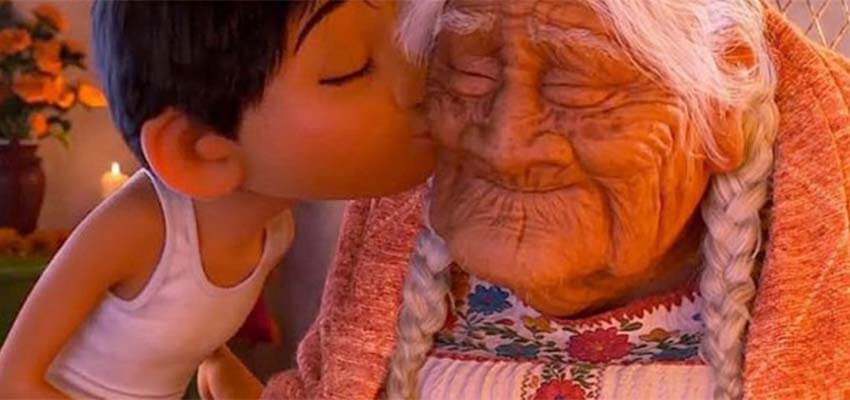
still from movie Coco
You can apapachar someone by treating them to something special or simply showing them affection.

7. quedarse con el ojo cuadrado

Literal meaning: to end up with a square eye.

What effect do surprises have on you? Do you blush, cry or faint? In this geometric hyperbole, one’s eyes become square.

Cuando me duplicaron el sueldo, me quedé con el ojo cuadrado.
When they doubled my salary, I was beside myself.

8. Hay que ponerse el huarache antes de espinarse

Literal meaning: You have to put on your sandals before you get pricked.

In a country filled with cactuses, the last thing you want is to puncture your foot with a fallen needle. Solution? Just make sure you are wearing your huaraches, typical leather sandals.

Need to offer a word of caution? Try this saying, which is a worthy equivalent to “better safe than sorry.”

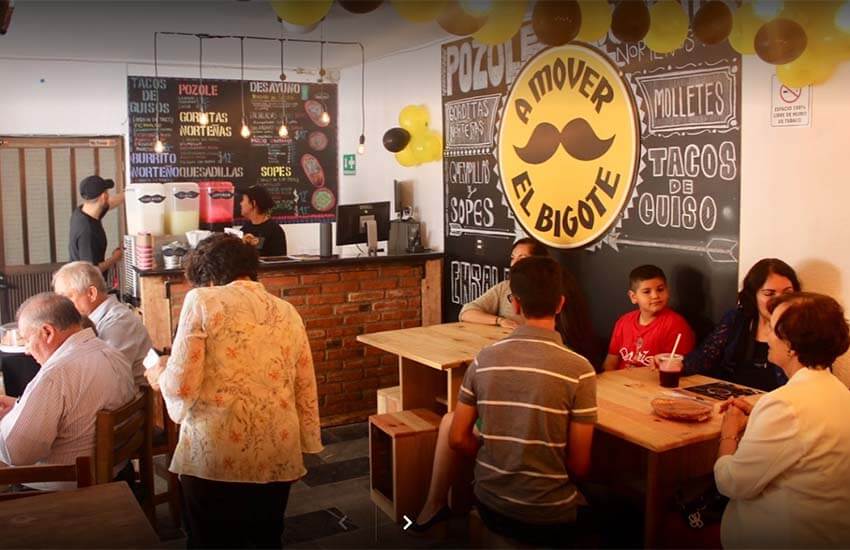
9. mover el bigote

Literal meaning: to move the mustache

The bold macho mustache is not as common as it used to be. Nevertheless, that standard of male grooming persists in this hairy phrase, which is a colloquial way of saying “to eat.”

Vamos, muchachos. Es hora de mover el bigote.
Let’s go, guys. It’s time to eat.

Mover El Bigote restaurant Queretaro
A Querétaro restaurant named itself A Mover El Bigote, a slang term for “Let’s eat!”

10. apapachar

Literal meaning: to squeeze

Need a hug? Who doesn’t? The Aztecs embraced the idea in Náhuatl with the verb patzoa, to squeeze. Today apapachar is not limited to hugging; rather, it encompasses showing affection in any number of ways.

Voy comprarle a mi mamá su comida favorita para apapacharla.
I am going to buy Mom her favorite food to treat her.

Esposa a esposo: hoy necesito que me apapaches.
Wife to husband: today I need some TLC.

Learning and using Mexican Spanish in everyday conversation will bring you countless benefits: it will endear you to the locals, who will be visibly shocked when they hear you speaking their lingo. So be bold! Go beyond the stale phrasebooks and start speaking like the natives.

Lee Jamison has lived and worked in Latin America for more than 25 years and is a resident of Mexico. He operates the site insiderspanish.com and is the author of the book My Burning Tongue: Mexican Spanish available in paperback and Kindle formats at amazon.com. He has also written guides on the Spanish spoken in Costa Rica, Guatemala, Nicaragua, and Panama.

Commando attack kills 8 in Guanajuato, 4 of them innocent bystanders

0
silao shooting

An armed attack in Guanajuato on Tuesday evening left eight people dead, including a one-year-old infant.

Around 8 p.m., residents of La Aldea, a community in the municipality of Silao, heard gunfire and some went outside to see what was happening. The shots did not come from holiday revelers, as some may have hoped. Rather, the neighbors saw several vehicles driving away from what turned out to be a crime scene.

Local press reported that the targets of the attack were four unidentified men who were inside an abandoned house. But stray bullets hit several people in a nearby home, where a family gathering was taking place.

The death toll includes a one-year-old infant and a 16-year-old girl. Two women aged 19 and 46 and a man, age unknown, were hospitalized in serious condition.

The state Attorney General’s Office reported that there were 21 murders committed on Tuesday using firearms in Guanajuato. In addition to the attack in La Aldea, a municipal police officer in Celaya was also shot and killed.

Guanajuato is one of the most violent states in Mexico, and led the country in homicides in 2019 and 2020.

With reports from El Universal and Infobae

Tequila fish, once declared extinct in wild, is thriving through breeding program

0
The tequila fish
The tequila fish. Loury Cédric, CC BY-SA 4.0

A fish species that shares its name with Mexico’s most famous alcoholic beverage has been successfully reintroduced to a river in Jalisco after disappearing from the wild almost 20 years ago.

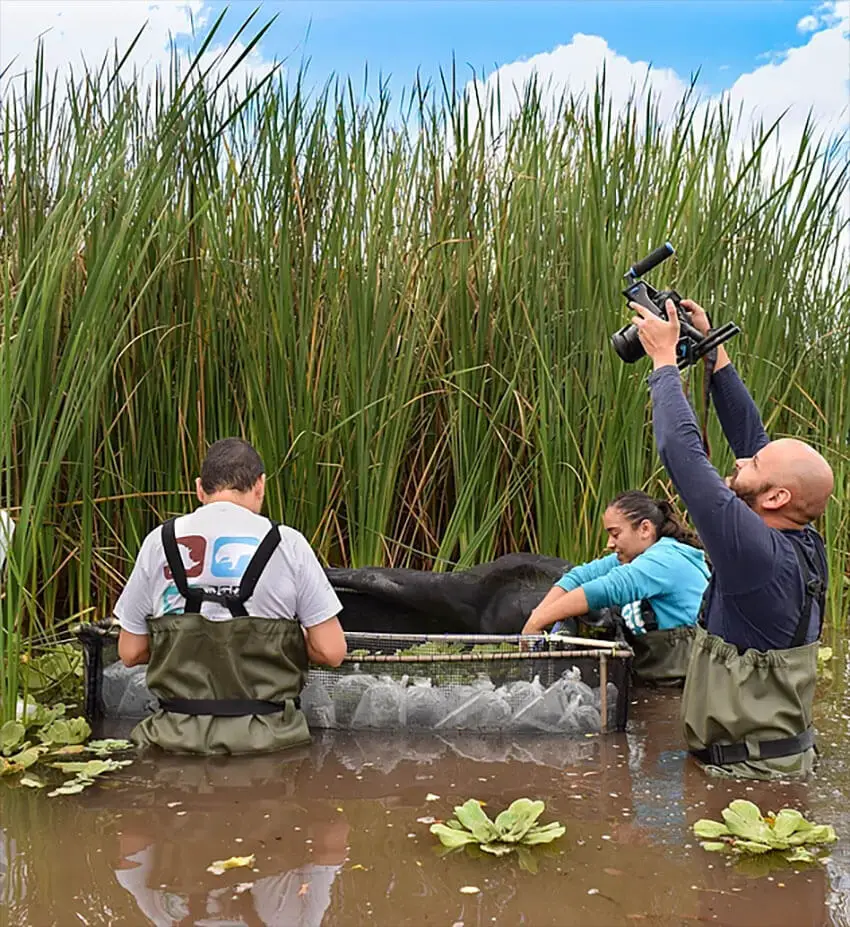
The reintroduction occurred after the aquatic biology unit of the Michoacana University bred thousands of tequila fish (Zoogoneticus tequila) during a period of 15 years after receiving five pairs of the species from the United Kingdom’s Chester Zoo in 1998.

Conservationists from the university and the zoo joined forces to return more than 1,500 of the fish to the Teuchitlán River in recent years. The fish, a species named after the Tequila Volcano that grows to a maximum length of about seven centimeters, disappeared from the river in 2003 after numbers began to dwindle in the early 1990s.

Contamination of the river due to the growth of the agricultural and industrial sectors in Jalisco was largely responsible for the species’ demise.

Now, however, the pez tequila, a live-bearing fish, is thriving and breeding in the Teuchitlán River, recent studies have confirmed.

Conservationists working on the re-introduction project
Conservationists working on the re-introduction project J. Javier Alvarado Díaz Aquatic Biology Laboratory, UMSNH

Experts cited by the newspaper The Guardian say the reintroduction of the species provides a blueprint for future reintroductions of other species. A mission to return the golden skiffia – another member of the Goodeidae family of fish – to the Teuchitlán is already underway.

Before being released to the river, the tequila fish spent time in large artificial ponds at the Michoacana University, located in Morelia, Michoacán.

“This exposed them to a semi-natural environment where they would encounter fluctuating resources, potential competitors, parasites, and predators such as birds, turtles and snakes,” The Guardian reported.

“After four years, this population was estimated to have increased to 10,000 individuals and became the source for the reintroduction to the wild,” the newspaper said.

Omar Domínguez, a professor at the university, said it was the first time that an extinct species of fish has been successfully reintroduced in Mexico.

“… It’s a real landmark for conservation. It’s a project which has now set an important precedent for the future conservation of the many fish species in the country that are threatened or even extinct in the wild but which rarely take our attention,” he said.

Domínguez told the newspaper El País that the tequila fish population in the Teuchitlán River is now stable. He also said that groups of local people are monitoring the fish and cleaning up its habitat. He described them as “the guardians of the river.”

Dr. Gerardo García, curator of lower vertebrates and invertebrates at Chester Zoo, also said that the reintroduction of the tequila fish was an important milestone in the fight to save vulnerable wildlife.

“It is a real privilege to have helped save this charismatic little fish and it just goes to show that with the skill and expertise of conservationists, and with local communities fully invested in a reintroduction project, species can make a comeback from environments where they were once lost,” he said.

“With nature declining globally at rates unprecedented in human history – and the rate of extinction accelerating – this is a rare success story. We now have a blueprint for what works in terms of recovering these delicate fish species in Mexico and already we’re on to the next one – a new rescue mission for the golden skiffia is already well underway.”

With reports from The Guardian and El País 

Story of cancer victim forced to sell his truck has a surprise ending

0
Juan Manuel Vidales with the Chevrolet pickup he raffled to raise money for his cancer treatment.

A Tabasco man who raffled off his beloved pickup truck to fund his cancer treatment was brought to tears after the winner returned the vehicle to him.

Juan Manuel Vidales, a 47-year-old resident of Huimanguillo, has stomach cancer and was struggling to pay for his treatment when he decided to raffle off his 2000 model Chevrolet pickup, which he bought last year and painstakingly restored over a period of eight months.

His daughter and sister helped him organize the raffle and, with the help of social media and word of mouth, they ended up selling a good number of tickets for 199 pesos (about US $10) each.

The ticket buyers were not just from Huimanguillo, a Tabasco municipality that borders Veracruz and Chiapas, but also Mexico’s north and even the United States, the newspaper El País reported. In addition to the pickup, two cash prizes of 20,000 and 10,000 pesos were also up for grabs.

The family of Marco Rodríguez, a Huimanguillo man, snapped up some 35 tickets and on Christmas Eve his youngest son found out he was the winner of the Chevrolet.

🔥Hombre rifa su camioneta para pagar su operación y el ganador se la devuelve😱🔥👏🏼

Sixteen-year-old Marco Polo and his father had already decided that if they won they would not keep the prize but rather return it to Vidales, a cell phone repairman who had to give up his job due to his cancer diagnosis.

A video filmed in Vidales’ garage shows him announcing Marco Polo as the winner and handing over the vehicle’s papers to him.

“I’m very happy to be alive to [be able to] hand over this prize,” said the stage 4 cancer sufferer, who was given just two months to live in June.

Just one minute after he received the vehicle’s papers, Marco Polo handed them back to Vidales and told him that he was returning the prize. Vidales immediately started crying before thanking the youth and his father for their generosity.

The video, whose target audience was people who bought tickets in the raffle, has gone viral on social media.

Vidales told El País in a telephone interview that he was overcome with joy when he saw that Marco Polo was “so happy, so satisfied” with his decision to give him the pickup as a “Christmas present.”  Many other young people would have kept the prize, he said.

Vidales said he had no plans to sell his pickup and that he now considered it his lucky charm. Selling the vehicle would be a last resort, he added.

Vidales has several chemotherapy sessions ahead of him in a Villahermosa hospital and there is a possibility that doctors will remove a tumor from his stomach, if such surgery is deemed viable.

“It depends on how [the tumor] behaves, cancer is very strange,” he said. “I want to keep living. That’s why I’m fighting.”

With reports from El País