Home Blog Page 1108

Ranchers’ war on vampire bats exacts unintended environmental toll

0
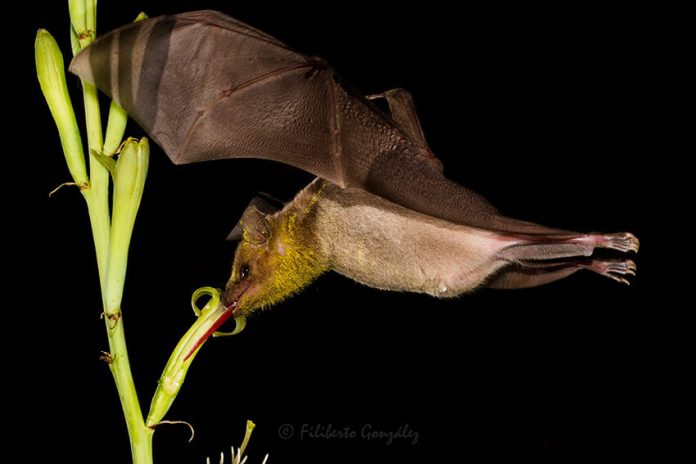
Tequila bat pollinating agave
Mistaking them for vampire bats, ranchers protecting their cattle frequently kill beneficial bats like this harmless agave pollinator. Filiberto González

In a previous story, Bats Up Close and Personal, I made the case that most bats are every bit as clever, loving and loyal as dogs but that we humans don’t give them credit for these characteristics because most of us know them only as fleeting silhouettes in the night sky. But in Mexico, this is especially a problem.

Here, this prejudice against bats is far stronger because among the more than 1,400 species of bats in the world — which eat everything from insects to fruits and lizards to fish — there are three species that feed off the blood of other animals. One of them, Desmodus rotundus, or the vampire bat, has developed into a serious issue among cattle ranchers in Mexico, one that can be traced back to practices initiated by the Spaniards in the colonial era.

Before the conquest, vampiros were few and far between, typically nipping Mexican wild turkeys in the foot and lapping up (not sucking) some of their blood. Then the Spaniards introduced corrales, which resulted in great numbers of cows and horses being practically immobilized outdoors.

For Desmodus rotundus, every corral was a free restaurant, and the number of vampire bats in Mexico has been growing steadily for centuries, creating a kind of Koyaanisqatsi, or Life-Out-of-Balance, situation in rural Mexico.

Besides leaving unsuspecting cows and horses with open wounds, vampire bats often leave them with paralytic rabies. When a rancher sees one of his animals after another die a slow, horrible death like this, he can’t be blamed for wanting to seek out the culprit’s home and blow it to bits.
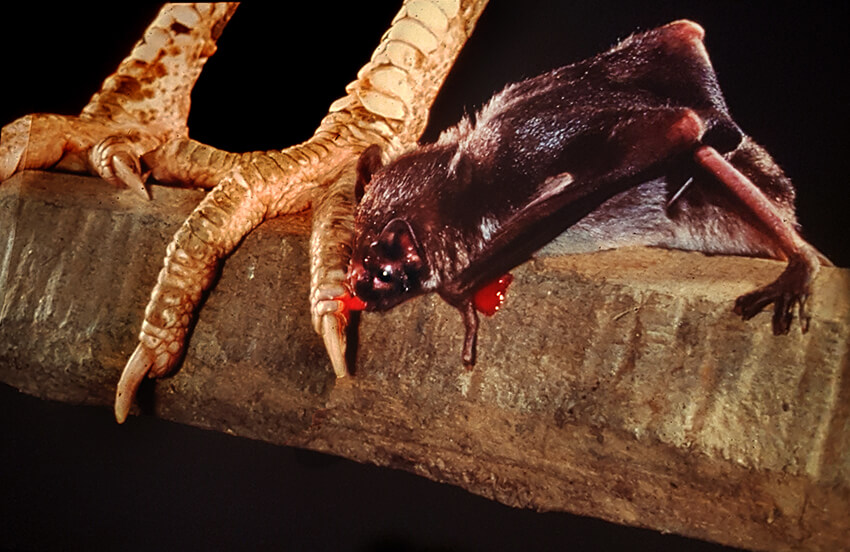
vampire bat feeding on wild turkey
A vampire bat drinking the blood of a wild turkey. Merlyn Tuttle

If a rancher or farmer has never had a close-up look at those mysterious flyers of the night, he may easily assume that all bats are vampiros. And that’s a problem.

This was precisely the situation we found in the hills above El Ojo de Agua (the spring), a Jalisco town we were visiting because we had heard rumors that there was a cave in the area.

The first person we met was a one-armed man named Paulo. Though he didn’t know us from Adán and Eva, Paulo gave us a warm welcome, invited us to a tatemada (barbeque) and a dip in a spring-fed pool. He even offered to put us up in the guest house of the local hacienda.

Paulo was delighted to discover that we were cave explorers as he was one of those many country people who are thoroughly convinced that every cueva contains a hidden treasure, which you will surely find if you dig long and hard enough.

The following day, we followed Paulo up a steep mountain trail for about four hours, heading for a cave he knew about. This is easier said than done when the temperature is in the neighborhood of 30 C and the humidity is 100%.

However, Paulo’s frequent reminders that “this cave goes all the way through the mountain” kept us moving, even though we had heard such claims before (only the caves usually ended a mere five meters beyond their entrances).

Vampire bat
The wings of vampire bats have adapted, allowing them to “walk” up to their prey. Merlyn Tuttle

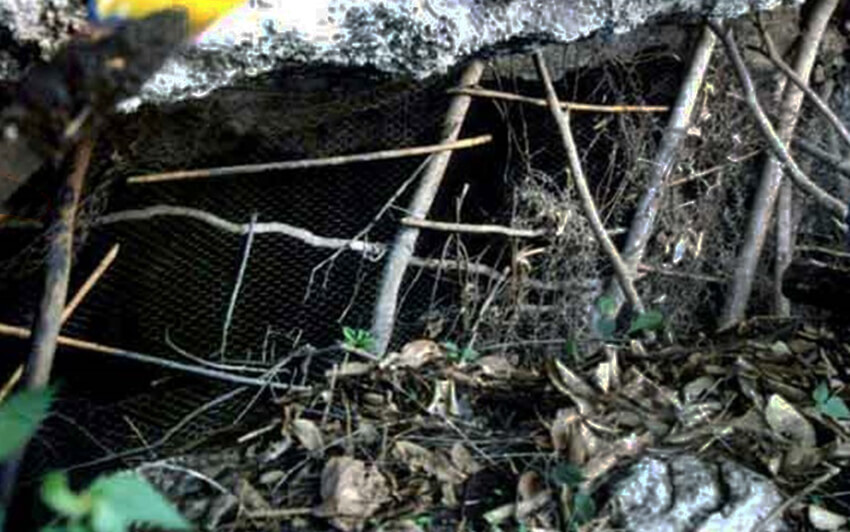
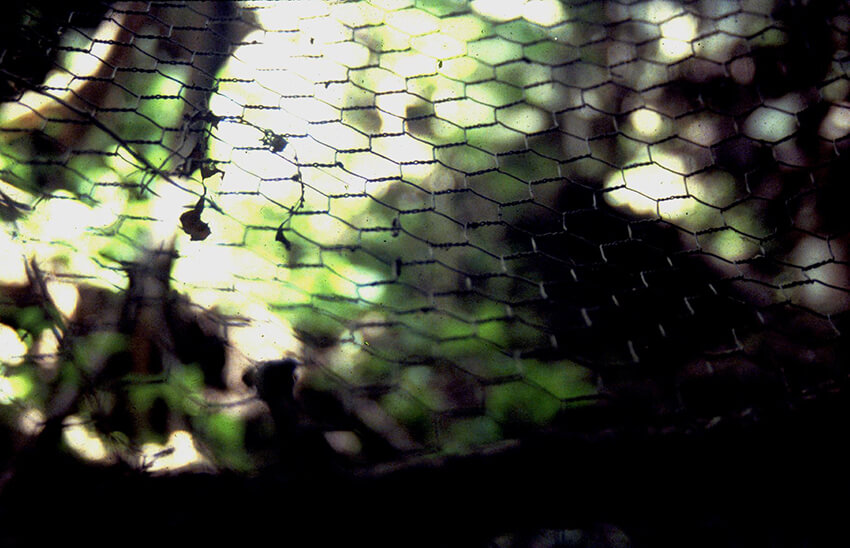
Finally, we came to the cave entrance at the bottom of a bushy fold in the hills. To our surprise, the opening was completely covered by a patchwork of chicken wire mesh held tightly in place by barbed wire and a framework of stout branches. “What’s this all about?” we asked.

Paulo explained that the cave had been filled with dreaded vampiros, but luckily, the local ranchers had “taken care of the problem.”

With Paulo’s permission, and with the help of pliers, we undid one end of the formidable barricade and climbed inside.

We found ourselves in a passage about two meters high and strewn with large chunks of fallen rocks from the ceiling. Following this slowly for about half an hour, we checked for side passages and photographed several large stalactites. Then we saw a light.

“Maybe we’ve finally found a cave that does go straight through the mountain,” we quipped. To our surprise, it turned out to be true.

Then, as we entered a wide room with a high ceiling, we saw that this second entrance was sealed with another bat barricade.
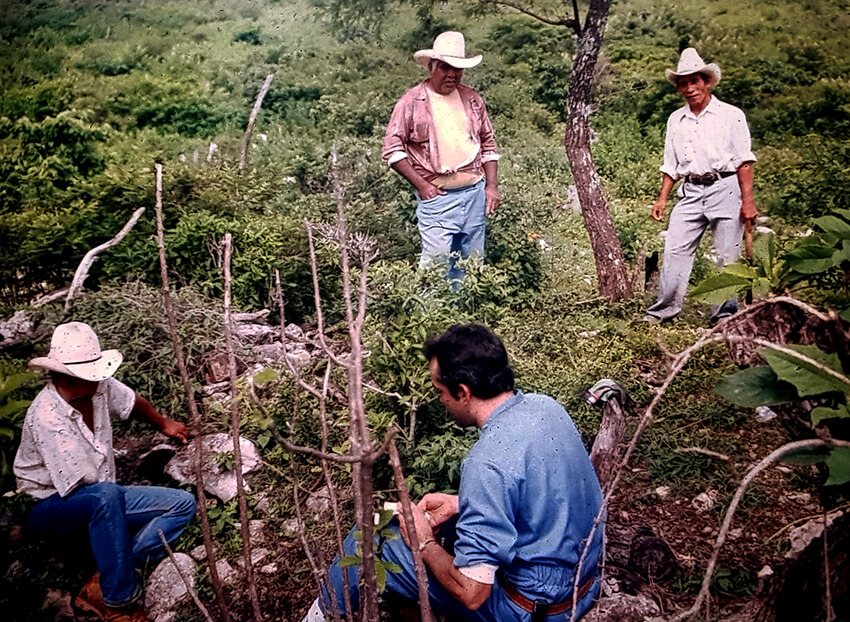
Jalisco farmers near Ojo de Agua
Local farmers, upper right, take a break from spraying their crops with insecticide.

We backtracked, and as we approached our starting point, my wife Susy spotted a very low crawlway on the side. She disappeared into it and a few minutes later we heard a tiny voice shouting: “It goes! I’m in a huge room!”

A few minutes later, we were in a spacious new section of the cave. The floor was covered with a thick, spongy layer of guano. Examining it closely, we could see the wings and legs of countless digested insects.

The farther we walked, the more we were convinced that many thousands of insect-eating bats had once lived here. Now there was not one to be seen.

The texture and the reddish color of the walls brought a special beauty to this passage. Soon we were threading our way among giant boulders.

We did plenty of climbing both up and down but never needed a rope. This challenging and enjoyable passage finally came to an end … and, yes, there in front of us was light — and once again the ominous silhouette of chicken wire and branches.

At this moment, we could almost feel the panic that all those bats must have experienced. Had they been caught on the inside like us — trapped, flying desperately from one entrance to another in a futile attempt to find a way out?
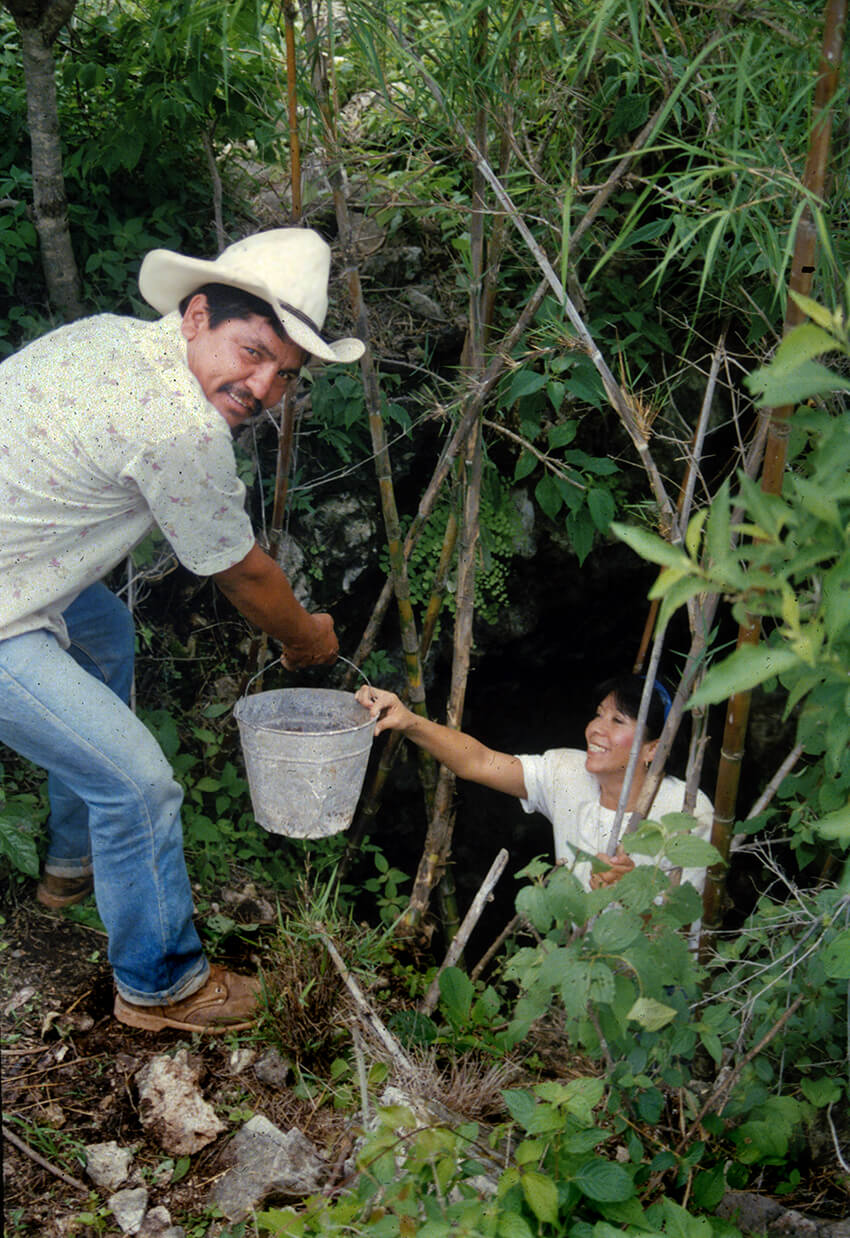
Cave entrance in Jalisco
“Here is your treasure, Paulo,” quips Susy Pint, handing him a bucket of guano.

When we left the cave, we removed as much of the first barrier as we could (with Paulo’s permission) but suspected that it would soon be put back in place. Since the cave had no name, we baptized it “La Cueva de Rogelio y Teresa” after the humble couple living in a little cabin nearby who treated us totally unexpected guests to an incredibly delicious hot dinner.

During the long walk back to Ojo de Agua, we came upon a group of men, each with a metal tank strapped to his back. They were fumigating their crops. They saw our helmets, and we told them that we had been exploring the big cave up the hill.

“We checked every inch of that cave and never found the slightest sign of vampire guano,” I told them. “Those were insect-eating bats in there, and now you people have to spray your crops with poison to keep down the bugs.

“If there’s treasure in that cave (I said with a glance at Paulo), it’s the tons of good fertilizer lying on the floor. But, of course, somebody has killed off the bats that make the fertilizer. Why would anyone put up a barrier against helpful murciélagos that eat bugs and pollinate plants?”

That night, in Ojo de Agua, we put on a slide show made by Bat Conservation International. To our surprise, just about everyone in the rancho and the neighboring pueblito of Coatlancillo showed up and the keenest questions came from a little old lady who could barely walk.

Several months later, we were back in Ojo de Agua with survey equipment to map the cave. Once again, we were heading up the steep, narrow trail but this time riding horses and mules that “might come in handy for carrying back the treasure,” according to Paulo, the eternal optimist.
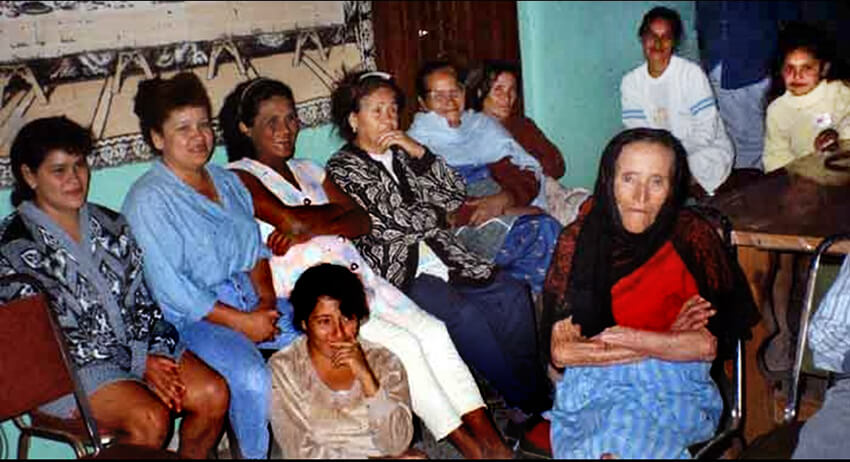
Mexicans
Residents of Ojo de Agua and Coatlancillo attend a slide show about bats.

Equestrian caving is definitely for me. Instead of arriving pooped out, we reached the entrance in high form, raring to go.

Later, in the course of mapping the cave, we received two wonderful surprises: first, the local people had apparently believed us city slickers and had actually ripped aside three of the four chicken wire barriers.

Second, when we walked into the guano passage, we were greeted by hundreds and hundreds of flying creatures! There were so many swirling around us and bumping into us that we had to crouch on the ground and wait several minutes for them to get used to our presence. The bats were back!

Our visit to Ojo de Agua took place several years ago. Today, thanks to the work of people like Mexico’s Bat Man, Rodrigo Medellín, the kind of people in Mexico who watch documentaries can now make a distinction between insect-eating and pollinating bats and blood-feeding vampire bats.

Whether the news has reached the ears of people who live in those remote spots where caves abound, I’m not so sure. Years ago, I suggested that radio spots about bats be placed on those ranchero music stations that can be heard even in the middle of nowhere.

All a rancher needs to know is how to distinguish between the guano of vampire, insect-eaters and fruit bats. After that, he can figure the rest of the story out by himself.
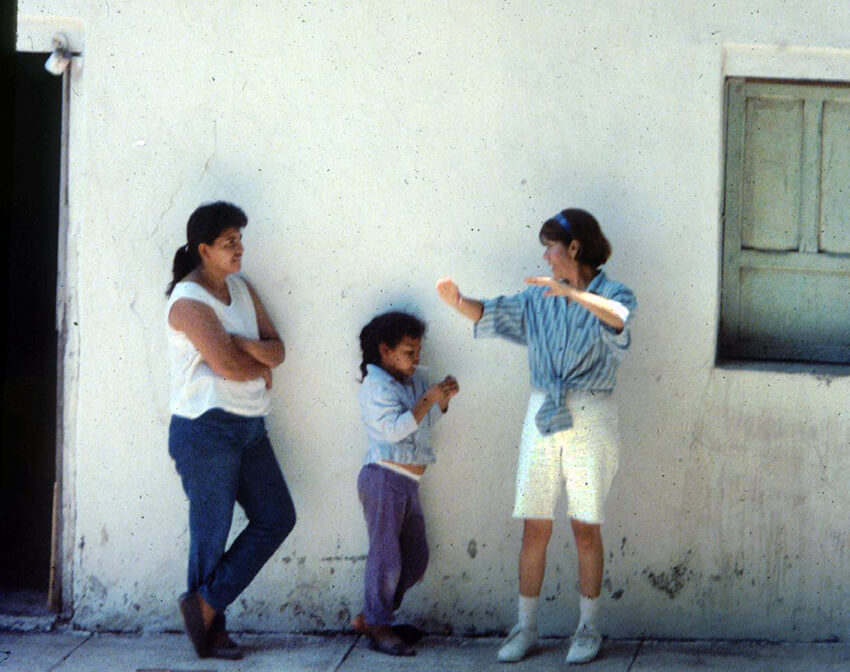
Susy Pint
Susy Pint, right, chats with locals about bats’ role in nature.

Once again, I repeat the call for radio spots, because today we need bats more than ever.

The writer has lived near Guadalajara, Jalisco, since 1985. His most recent book is Outdoors in Western Mexico, Volume Three. More of his writing can be found on his blog.
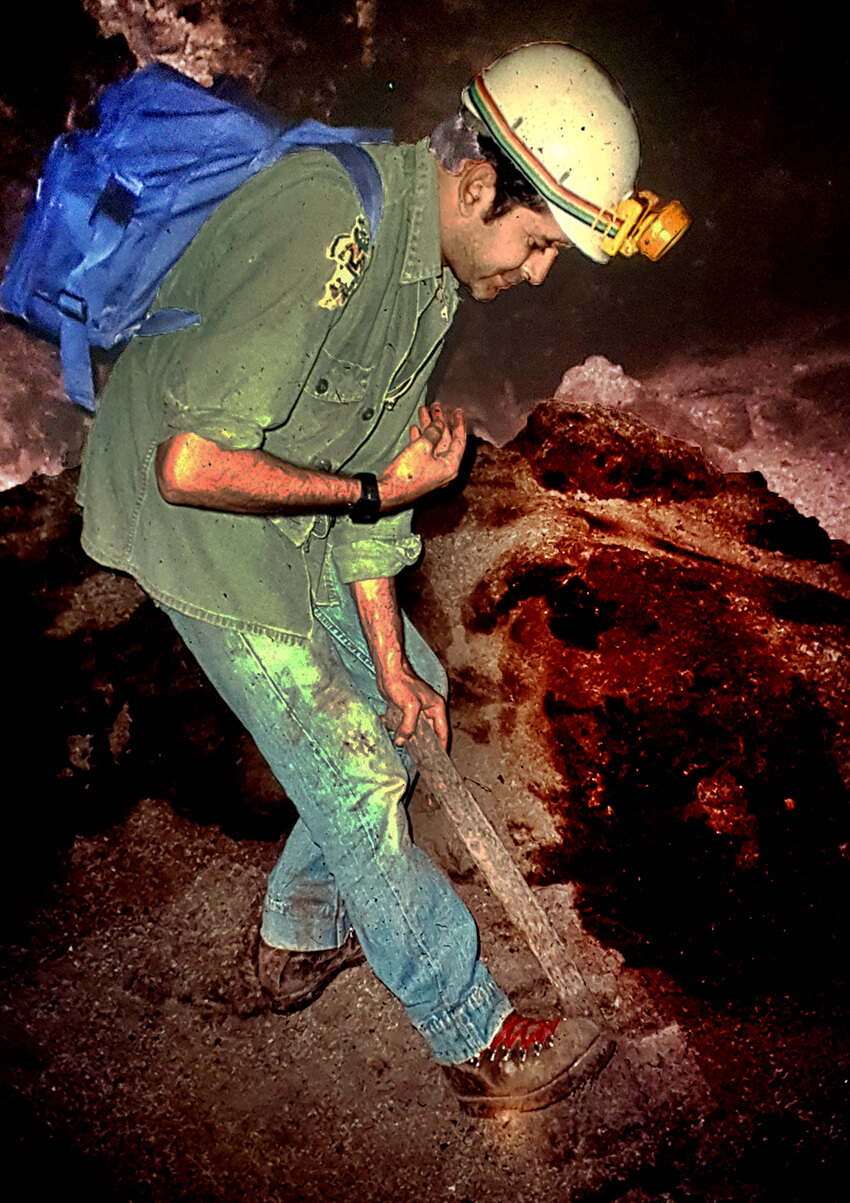
Cave in Jalisco
Caver Luis Rojas uses an old shovel to check the depth of guano inside the cave.


Cave entrance in Jalisco
Chicken wire barrier partly removed to allow access to La Cueva de Rogelio y Teresa.


Chicken wire
Chicken wire, dynamite and bonfires are tools used to fight a war on bats in rural Mexico.

Post-conquest Mexica altar discovered near Plaza Garibaldi in Mexico City

0
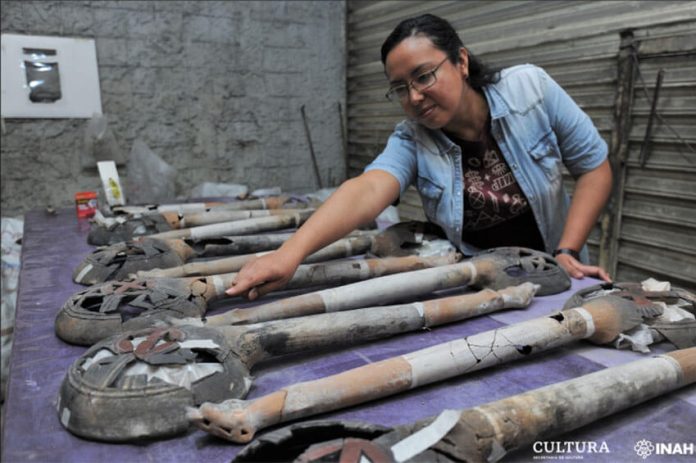
Archaeologist Mara Abigaíl Becerra with artefacts from the altar.
Lead archaeologist Mara Abigaíl Becerra with artifacts from the altar. INAH

Archaeologists have uncovered a post-conquest Mexica altar at a property near Plaza Garibaldi, Mexico City’s home of mariachi music.

A team from the National Institute of Anthropology and History (INAH) discovered the 16th century altar while excavating a property on which the remains of a home once occupied by a Mexica family is located.

Archaeologists believe that the occupants carried out a ritual sometime after the 1521 conquest to mark the end of a cycle of their life and the downfall of the Aztec Empire, whose most important city, Tenochtitlán, was conquered by the Spanish.

“Between chants and the smell of copal, the inhabitants made use of an altar with multiple elements in the patio,” the Culture Ministry said in a statement.

Among the contents of the altar were a pot filled with human ashes, bowls, a pulque cup, a plate and 13 incense burners, each of which was almost one meter high.

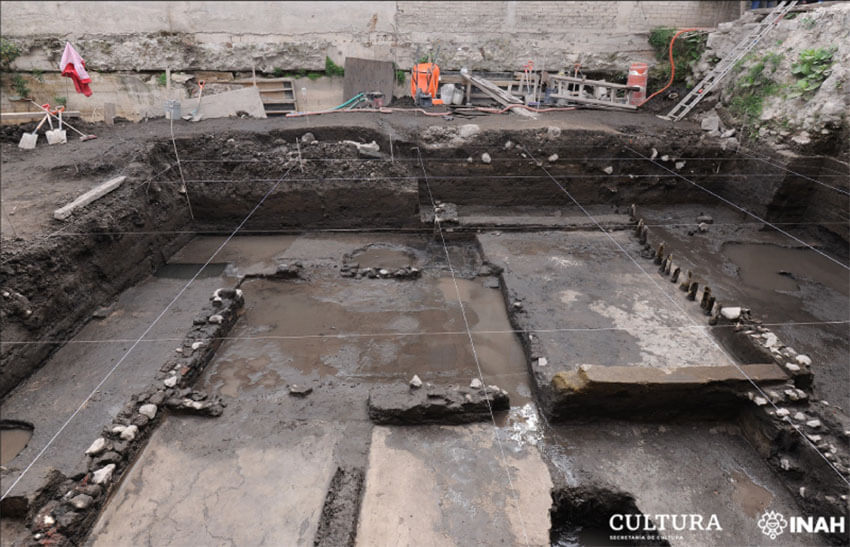
The dig site was the remains of a Mexica family's home, near present-day Plaza Garibaldi.
The dig site was the remains of a Mexica family’s home, near present-day Plaza Garibaldi. INAH

The altar was discovered four meters below the surface of the ground and was covered with several layers of adobe to protect it from prying eyes, said Mara Abigaíl Becerra Amezcua, the archaeologist who led the project.

The excavation of the property, located on the main thoroughfare that runs through Mexico City’s historical center, began in September and took three months, she said.

Becerra said the INAH team also found remnants of musical instruments made out of bones, suggesting that numerous rituals took place there.

The 13 incense burners might have been placed in the altar to represent the 20 periods of 13 days in the Mexica 260-day calendar known as the tōnalpōhualli, she said.

“The characteristics of the incense burners also reinforce the Nahua understanding of the universe,” Becerra said.

All of the relics indicate that the altar was used in the first decades after Tenochtitlán was invaded, she said.

It was used as part of a “closure ritual,” which was an “essential act for the worldview” of the Mexica inhabitants of the city, Becerra said.

Mexico News Daily 

US will begin sending migrants back on Monday as ‘Remain in Mexico’ resumes

0
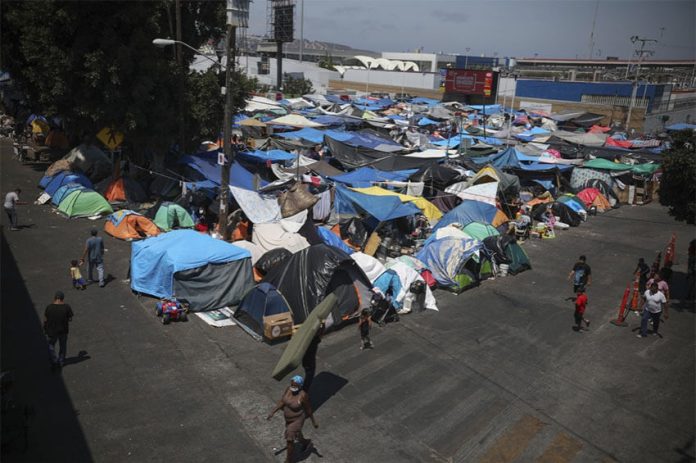
A migrant camp on the Mexico-U.S. border in Tijuana.

A controversial Donald Trump-era United States policy that forced some migrants to return to Mexico and remain here to await the outcome of their asylum claims will restart on Monday after Mexico agreed to its resumption.

The Biden administration terminated the Migrant Protection Protocols (MPP) program, as the “Remain in Mexico” scheme is formally known, but a U.S. federal court ordered that it be reinstated.

The U.S. Department of Homeland Security (DHS) said in a statement Thursday that re-implementation of the program will begin on or around December 6.

“Once fully operational, MPP enrollments will take place across the southwest border, and returns to Mexico will take place at seven ports of entry in San Diego, Calexico, Nogales, El Paso, Eagle Pass, Laredo, and Brownsville,” it said.

“… Once the court injunction is lifted, MPP will be terminated,” the DHS said. The United States government is “vigorously contesting” the federal court ruling, it said.

The College of the Northern Border estimates that between 15,000 and 20,000 migrants will be returned to Mexico once the program resumes.

Announcing Mexico’s acceptance of the resumption of the scheme, the Ministry of Foreign Affairs (SRE) said the United States government had accepted the Mexican government’s humanitarian concerns about the program.

Mexico requested greater resources for migrant shelters and international organizations that attend to migrants, protection for vulnerable groups of people, consideration of local security conditions and the capacity of shelters and the National Immigration Institute (INM) to receive migrants and the implementation of anti-COVID measures, including medical checks of migrants and the provision of vaccines before their expulsion.

The SRE also said the federal government has decided for humanitarian reasons and on a temporary basis not to deport migrants who have been given a date to appear in a U.S. court to present their asylum case.

The DHS said that United States would commit to ensuring that asylum cases are resolved within six months of a migrant’s return to Mexico. Some migrants returned to Mexico during the Trump administration have been waiting for much longer for their cases to be heard.

U.S. President Joe Biden previously called the 'Remain in Mexico' policy inhumane. Now his administration has reached an agreement with Mexico to reimplement it.
U.S. President Joe Biden previously called the ‘Remain in Mexico’ policy inhumane. Now his administration has reached an agreement with Mexico to reimplement it.

“The U.S. government will work closely with the government of Mexico to ensure that there are safe and secure shelters available for those enrolled in MPP; that individuals returned under MPP have secure transportation to and from U.S. ports of entry; and that MPP enrollees are able to seek work permits, healthcare, and other services in Mexico.”

The program can be used to expel asylum seekers that traveled through Mexico to reach the United States. It has been widely criticized because migrants are forced to wait in dangerous border cities such as Tijuana, Ciudad Juárez and Matamoros.

“We’ve repeatedly and publicly criticized the ‘Remain in Mexico’ policy because we believe it is inhumane and contrary to international law because it puts people in danger … and will continue to do so,” said Alberto Cabezas, a spokesman for the International Organization for Migration.

Alejandra Macías of the organization Asylum Access México was highly critical of the reactivation of the MPP.

“[Just] when we believed that nothing worse could come, something much worse arrives; we didn’t think this program was going to be reimplemented,” she told the newspaper El Universal.

“Mexico says it is accepting [the program] for humanitarian reasons, but the only thing it’s doing is becoming an accomplice [of the United States] and that will give rise to a massive violation of human rights,” Macías said.

She said there is no guarantee that migrants returned to Mexico will be safe here. INM agents and members of the National Guard – who have been deployed to stop the flow of migrants through Mexico – have shown they are not concerned about migrants’ human rights, Macías said.

“With this situation Mexico shows that it doesn’t have a well-defined migration policy, it changes its migration policy at its convenience and places migrants in situations of vulnerability,” she said.

Duncan Wood, a Mexico expert and vice president for strategy and new initiatives at the Woodrow Wilson International Center for Scholars, told El Universal that being forced to reimplement the “Remain in Mexico” policy is a big blow for the Biden administration given that it wanted to terminate it.

Nevertheless, it gives the U.S. government “a breather” on the southern border, he said. Large numbers of migrants have traveled through Mexico en route to the U.S. since Biden took office in January.

The U.S. government has been able to use a Trump-era public health rule, Title 42, to expel migrants in the absence of the MPP but for a variety of reasons, it has not been applied across the board, The New York Times reported.

“The resumption of the Remain in Mexico program … will add a new option for migrants who cannot be expelled under Title 42,” it said.

Wood said the U.S. government – as it indicated it would do – will have to increase cooperation with its Mexican counterpart “to guarantee that the migrants who remain in Mexico are safe and protected from health and organized crime threats.”

The United States’ commitment to vaccinate migrants before returning them to Mexico and to resolve their asylum cases within six months is “a welcome advance” for both the asylum seekers and the south-of-the-border communities who will receive them, he added.

Andrew Selee, president of the Migration Policy Institute, a Washington D.C.-based think tank, told El Universal that the Mexican government managed to make the MPP a more humane program to the extent that is possible. “But we’ll have to see how it works in practice,” he added.

With reports from Milenio and El Universal 

US support for electric vehicles risks million jobs in Mexico: Coparmex

0
A U.S. congressional bill proposes giving tax credits to buyers of US-made electric vehicles.

A United States bill that seeks to spur domestic demand for electric vehicles (EVs) poses a threat to the Mexican automotive industry, the Mexican Employers Federation (Coparmex) has warned, while the federal government has indicated it will retaliate commercially if the proposed legislation passes the U.S. Congress in its current form.

The Build Back Better (BBB) Act, already approved by the United States House of Representatives and awaiting consideration by the Senate, would increase credits available to U.S. consumers buying U.S.-made EVs to up to US $12,500 from $7,500. It would also eliminate caps on the number of credits individual automakers can offer.

Bloomberg reported that if the bill gets through the Senate, BBB will be “one of the most aggressive EV incentives in the world and definitely the greatest largesse for plug-in buyers in any major auto-producing nation.”

Coparmex and the federal government say the proposed legislation violates the provisions of the United States-Mexico-Canada Agreement (USMCA), the free trade pact that took effect last year.

“At the Mexican Employers Federation, we agree with what the Economy Ministry [SE] of the Mexican government has said with regard to the Build Back Better Act initiative that proposes granting additional tax credits for electric vehicles – it violates the agreements reached in the USMCA and at the World Trade Organization [WTO],” Coparmex said in a statement Thursday.

“In the specific case of the USMCA, this proposal violates regional content provisions, whose objective is to achieve greater and improved integration in supply chains in North America,” it said, adding that the BBB would discriminate against the automotive industries in both Mexico and Canada.

“… If the Build Back Better Act is approved, only electric vehicles built in the United States will be eligible to access the tax credit amounts, both the existing ones and those created by this initiative. This situation places at risk the Mexican automotive industry, which contributes close to 4% of gross domestic product, represents more than 25% of exports and generates more than one million jobs,” Coparmex said.

“As the SE has said, it is necessary that this proposal be adjusted so that it doesn’t violate the USMCA and WTO agreements, and especially so it doesn’t result in a discriminatory act for Mexican exports of electric vehicles, which would be at a serious disadvantage compared to vehicles produced in the United States,” it said.

Coparmex also said it would support any legal action the federal government takes against the BBB.

“The trade agreements … that have given rise to a healthy and productive bilateral relationship through the years must be respected,” it said.

“From Coparmex we call on the relevant authorities to favor dialogue and exhaust all the resources available to reach a deal that respects the criteria of cooperation, good faith, understanding and mutual respect on which the relationship between Mexico and the United States, strategic allies, is based.”

Economy Minister Tatiana Clouthier

Economy Minister Tatiana Clouthier warned Thursday that the government would “retaliate commercially” to defend the automotive industry if the BBB passes the U.S. Senate in its current form.

The USMCA signatories can’t opt in or out of the agreement at will, she said. She didn’t say what actions Mexico might take against the United States, although one option would be to impose tariffs on certain U.S. imports.

Clouthier stressed that provisions in BBB are “contrary to regional value content rules agreed to in the USMCA.”

Such rules stipulate that a vehicle made in Mexico with at least 50% regional content must also be considered a locally produced vehicle in the United States and Canada.

In a letter, the economy minister urged U.S. lawmakers to modify the BBB so that the proposed credits are available to all EV’s made in North America, not just those manufactured in the United States.

If the bill is approved in its current form, Mexico could challenge it via mechanisms set out by the USMCA or take the case to the WTO.

With reports from El País 

Mexico to start giving COVID boosters to people aged 60 and over

0
AstraZeneca vaccines arriving in Toluca Airport
A shipment of AstraZeneca vaccines arrive in Toluca International Airport on Thursday. Health Ministry

People aged 60 and over will be offered COVID-19 booster shots this month, President López Obrador said Thursday.

“… We’re going to begin with third doses, or boosters, because we can’t talk about third shots when [some people] got one-dose vaccines,” he told reporters at his regular news conference.

“We’re going to start with seniors this month. The important thing is to point out that we have enough vaccines,” López Obrador said.

He said the government needed to act quickly because winter is coming.

López Obrador also said that Mexico is among the world’s top 10 countries in terms of the number of vaccines it has and thanked the United States for donating some 10 million shots, including 2.1 million that arrived Thursday.

“That’s why we’re going to continue helping, delivering vaccines to poor countries as we’ve been doing,” he said.

The president lamented that only six in 100 people in Africa are fully vaccinated and blamed the continent’s low vaccination rate for the emergence of the omicron variant.

“This is going to keep happening; that’s what the specialists say: there will be more mutations in the virus,” he said.

In other COVID-19 news:

• Reported COVID-19 cases declined 44% in November compared to October, while COVID-19 deaths fell 46%. A total of 80,662 cases were reported last month for a daily average of 2,689. COVID fatalities totaled 5,881 in November for an average of 196 per day.

• The Health Ministry reported 3,345 new cases and 182 deaths on Wednesday. Mexico’s accumulated tallies rose to 3.89 million confirmed infections and 294,428 deaths. Estimated active cases number 21,229.

• Health authorities have not detected any omicron cases in Mexico, while the first case of the variant was reported in the United States on Wednesday. The person who tested positive is fully vaccinated and recently returned to California from South Africa.

• More than 133.2 million vaccine doses have been administered in Mexico after just over 415,000 shots were given Wednesday. About 86% of adults are vaccinated, but the population-wide rate is only 60%, according to The New York Times vaccinations tracker.

Authorities in Mexico City began vaccinating youths aged 15 to 17 on Thursday. The government announced November 16 that it would offer shots to adolescents in that age bracket but hasn’t indicated it will vaccinate younger minors.

With reports from Milenio

Mexico’s top YouTuber makes as much as US $785,000 in a month

0
Social media influencers
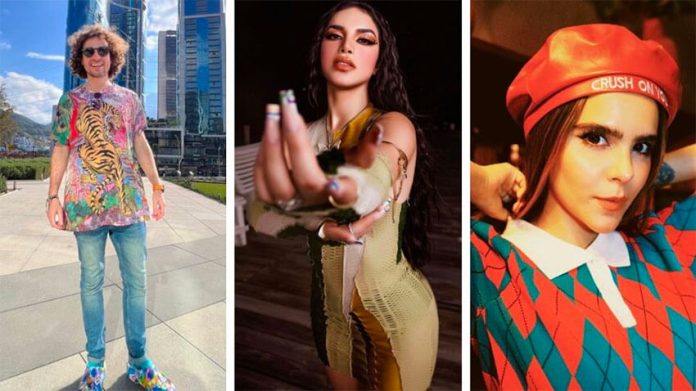
Social media influencers, from left, Luis Villar, Kimberly Loaiza and Yuya.

With the rise of social media networks, influencers who make their living from their online presence have become a ubiquitious fact of life. Love them or hate them, if you spend significant amounts of time online you are sure to have heard of influencers Kim Kardashian, Kylie Jenner or Lele Pons, to name a few.

Influencers can be found around the world and in many walks of life. Sponsored athletes, models, singers, artists and many other online personalities have managed to turn large social media followings into lucrative publicity deals with brands or marketing agencies.

Mexico is no exception to the rule: a number of national and regional influencers have found success catering to both a national and international audience.

The highest paid influencer in the country is Luis Arturo Villar Sudek of Puebla, the man behind the YouTube channel “Luisito Comunica” (Luisito Communicates). Villar’s earnings range from US $49,700 up to $785,500 per month, thanks to a number of ventures all stemming from his online presence.

Villar first found success with travel videos on YouTube, but has since used his earnings and platform to go into real estate, podcasting, acting and more. He currently has 37.6 million subscribers on YouTube and 30.1 million Instagram followers.

Another well-known Mexican influencer is Kimberly Loaiza, a singer and YouTuber with a following similar in size to Villar’s. Loaiza has 34.5 million subscribers on YouTube and 32.3 million followers on Instagram. She has used her platform and status as a content creator to earn up to $164,000 a month.

Other highly-paid Mexican influencers include YouTube comedian Escorpión Dorado; beauty influencer Mariand Castrejón Castañeda (better known online as Yuya); and Los Polinesios, siblings who turned a YouTube cooking channel into a content creation empire.

With reports from El Heraldo de México

Mexico City ranks No. 8 on list of world’s best cities in the eyes of expats

0
The Angel of Independence in downtown Mexico City
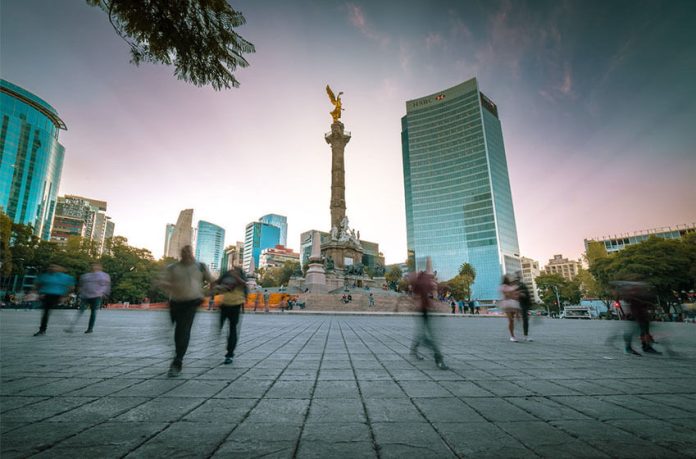
The Angel of Independence in downtown Mexico City.

Mexico City is the eighth best city in the world for expats and No. 1 in North America, according to the results of an international survey.

InterNations – which bills itself as the world’s largest expat community – published its Expat City Ranking 2021 on Wednesday. The list, which ranks 57 cities, is based on the results of a survey of more than 12,000 expats.

The Mexican capital made it into the top five cities in three different categories. It ranked second for “getting started,” which gauges local friendliness, feeling welcome, friends and socializing and the ease of learning the local language, fourth for “finance and housing” and fifth for “local cost of living.”

Mexico City’s overall ranking was burdened by its 49th place in “quality of urban living,” which includes leisure and climate, transportation, safety and politics, and health and environment, and its 42nd place in “urban work life,” which encompasses job and career, job security and work-life balance.

Expats in Mexico City find it very easy to get used to the local culture (93% vs. 65% globally) and feel at home in the capital (80% vs. 65% globally), InterNations said.

Mexico City lost points in the ranking for environmental pollution and safety concerns.

They are also happy with their social life (67% vs. 57% globally) and find it easy to make new friends (73% vs. 48% globally).

Almost nine in 10 expats in Mexico City – 88% – said that locals are generally friendly toward foreign residents. The global average was considerably lower at 67%.

InterNations also found that 73% of expats in Mexico City are satisfied with their financial situation (vs. 64% globally), and 92% said their disposable household income is enough or more than enough to cover their expenses (vs. 77%).

Housing is both affordable (60% vs. 42% globally) in the Mexican capital and easy to find (74% vs. 60%), the survey found.

Overall job satisfaction in Mexico City is high (sixth out of the 57 cities) but working hours (52nd) were rated negatively by 25% of respondents (vs. 16% globally).

Affecting Mexico City’s poor result on the “quality of urban living” index was that 37% of respondents reported not feeling safe. That figure is more than four times higher than the global average of 8%.

In addition, expats are dissatisfied with the public transportation system (30% vs. 20% globally) and rate the urban environment negatively (25% vs. 16%).

“There is a lot of noise and environmental pollution in the city,” said a Venezuelan expat.

On a positive note, almost nine in 10 expats in Mexico City said they like the climate, while 81% indicated they were happy with the local leisure options. A similar percentage, 83%, said they were generally happy with their life in the capital, eight points higher than the global average.

Kuala Lumpur, Malaysia, ranked as the best city for expats, followed by Málaga, Spain; Dubai, United Arab Emirates; Sydney, Australia; and Singapore. Ho Chi Minh City, Vietnam, and Prague, Czech Republic, took the two spots above Mexico City, while Basel, Switzerland, and Madrid, Spain, were ranked as the ninth and 10th best cities for expats, respectively.

Three other North American cities appear in the rankings. The Canadian cities of Vancouver and Toronto ranked 25th and 27th, respectively, while New York took 48th place.

Rome, Italy, ranked as the worst city for expats, while Milan, Italy, and Johannesburg, South Africa, were the second and third worst, respectively.

InterNations announced earlier this year that respondents to its Expat Insider survey had rated Mexico as the second-best country for people living and working abroad. Only Taiwan was ranked as a more attractive destination among 59 countries.

Mexico News Daily 

At this fashion show, the watchwords are sustainability and inclusion

0
Moda Intramuros, Campeche
Not professional models but Campeche's youth walk the runway at Moda Intramuros' annual fashion show, wearing Mexican and international designs. Photos by Julio Romero Pacheco

While at first glance it may seem that there is little place in haute couture for sustainability and social inclusion, the fifth annual Moda Intramuros (Fashion Within City Walls) show in Campeche aimed to prove that there can be plenty of room for such ideals — with some commitment from those in the fashion industry.

The fashion show, which features the longest catwalk in Mexico, returned to the city on Friday after a pandemic hiatus in 2020, taking place for safety’s sake this year in the Concha Acustica auditorium in the city’s historic San Roman neighborhood.

Featuring eight designers — national and international — as well as 108 models and more than 60 support staff, the event showcased a breathtaking selection of pieces, ranging from the grungy denim of the House of Aguilar collection to the contrasting neon yellow and ethereal blue body of work by clothing designer Yeshua Herrera.

It also featured a surprising cohort of models displaying these collections on the catwalk: the youth of Campeche.

The show, organized annually by the Campeche nonprofit organization Patronato de la Ciudad Campeche, also cements the city as one of the surprising new hotspots in Mexico for contemporary fashion. Moda Intramuros organizer Anielka García Villajuana proudly noted that the event attracts top designers from across the country as well as internationally.

Moda Intramuros show, Campeche
The show prioritizes designers who use sustainable materials and methods, says organizer Anielka García.

“Moda Intramuros has become part of the fashion circuits of the country, which was our intention at the inception of the project a few years ago, to establish a unique catwalk event that could show off the very best of Campeche and what it has to offer,” she said.

Patronato de la Ciudad Campeche, founded in 1993 to promote the city of Campeche as a UNESCO World Heritage Site, initially created the fashion show event six years ago as part of that mission to promote the city’s profile; but it soon became obvious to organizers that the event could never simply be about fashion.

“In the early days, we knew we were missing something,” García said. “Fashion is perceived as superficial and elitist, so we wanted to try to make it as sustainable as possible — both in terms of the materials and methods being used to create the clothing and in terms of our ability to build this event at the nexus of social inclusion, healthy community and, obviously, memorable design.”

With that goal in mind, García and her team this year did not hire models but instead trained local young people from Campeche’s barrios to walk their runway. In previous years, they had put out open calls for models, but this year, for months prior to the event, the team worked in Campeche’s poorer neighborhoods, recruiting youth to participate, giving workshops on poise and confidence and generating other possibilities for Campeche youth to be involved.

Running the workshops was a formative part of the growth of the event — both for the models and for the event organizers. As the youth of Campeche gathered and told their stories in preparation for the show — and sometimes shared their battles with mental health and other issues — it became clear that these young people had no spaces in which to express themselves.

“It’s so much more than simply a fashion event,” García said. “The vast array of people involved are the beating heart of this annual showcase. It’s a manifestation of the talent and creativity that the youth of Campeche has when it is given a chance to flourish.”

Moda Intramuros show, Campeche
Organizers worked with the youth models not only on modeling techniques but also on strategies for developing long-term poise and self-confidence.

Around the fulcrum of a fashion project, the workshops have offered participants a space for sustainable, cultural and artistic work as well as the foundations of a growing supportive community of friendships and connections.

And, to the credit of all involved, the organizers and participants’ efforts have paid off: as the models took their turns parading down the catwalk, there was a notable yes-we-can confidence in the raised chests, the swaying shoulders and the professional, unidirectional model’s gaze into the middle distance.

You could have been fooled into thinking that these were the same remote creatures familiar from fashion runways lauded in the international media — had the occasional slip of the fashionista mask into a toothy grin not let the audience know that these were real flesh and blood citizens of Campeche and that they were having a good time.

Linear runways notwithstanding, the vision for the show has always been multidirectional, and at no point was this more striking than in the entire cohort’s final runway parade. Seen altogether, it was obvious that, in spite of — or perhaps because of — their diversity, there was a cohesion in this group; more than the synchronized stepping to the beat of the music, there was a sense of the knowledge that Moda Intramuros was offering an opportunity for inclusion.

“This project is about doing,” said García. “It’s about acting, about engaging, about a certain kind of activism that says we can generate the kind of Campeche we want to create for the good of all.”

As García well knows, a city’s heritage is not simply parceled up in the brick and mortar of its beautiful historic walls; it lives and grows within its people. Moda Intramuros is a rare and shining gem that brings Campeche’s heritage into the present, clothes it in cutting-edge designs and makes it ready for the future.

Shannon Collins is an environment correspondent at Ninth Wave Global, an environmental organization and think tank. She writes from Campeche.

Good music for a good cause: event will raise funds for street animals

0
Musicians who will perform at the Mexico City rock and blues event.

This holiday season, Mexico City residents and visitors have a chance to make a difference while enjoying rock and blues music with friends at the Spirit of Christmas Rock ‘n Blues Explosion Fest.

The one-day festival is set for December 11 at Hobos Restaurant and Bar, courtesy of the same organizers who stage the Tequila Rock ‘n Blues events. It will be led by guest of honor Isidoro Negrete Reynoso with headliners Evelyn Rubio, Steffie Beltt and Viri Roots.

Organizers describe the event as “some of the most important rock and blues-rock music of our lives in a fun party atmosphere … the perfect day and night for friends, groups, and celebrations, while supporting a great cause.”

The event will raise money for the Animales Ángeles fund, created by event organizer Bob Rempel. Half the funds raised will go to the expansion of a small Mexico City shelter operated by Susanna Hernandez, wife of the guest of honor. The rest of the money will be split between animal rescue organizations in Mexico City and around the country.

“There are millions of abandoned and homeless street animals of Mexico City and Mexico, some born on the streets. It is a serious problem,” Rempel said in a press release. “The problem is enormous … it’s daunting to even try” to solve it.

A promo video for the festival.


But like the proverb, “How do you eat an elephant? One bite at a time,” small contributions can make a difference, Rempel said. By helping street animals one by one, “we can make a difference.”

The organizers request a minimum donation of 100 pesos per ticket, 250 pesos for front section seating and 500 pesos for front row seating. Those who donate 250 pesos or more will be entered into a draw for t-shirts.

Spirit of Christmas Explosion Fest is one of a series of festivals designed to raise money for street animals, the cause of choice for the organizers in 2021 and 2022. Other events are scheduled to take place in 2022 in Ixtapa-Zihuatanejo, Puerto Vallarta, the Mayan Riviera, San Miguel de Allende and Mazatlán. More information about the Spirit of Christmas Festival can be found on the event Facebook page. Information about other events is available on the Tequila Rock ‘n Blues website.

Mexico News Daily

Voters say yes to controversial fertilizer plant in Sinaloa

0
An aerial view of the port in Topolobampo
An aerial view of the port in Topolobampo.

Three-quarters of the participants in a referendum on a controversial fertilizer plant in Sinaloa voted in favor of the US $5-billion project on Sunday.

Almost 40,000 people across three municipalities cast a vote in the referendum to gauge support for an ammonia and urea plant in Topolobampo, a port town 20 kilometers southwest of Los Mochis.

Adult residents of Ahome, the municipality where Topolobampo is located, and neighboring Guasave and El Fuerte were permitted to participate in the federally-organized vote. Just under 76% of voters supported construction of the plant; turnout was 13%.

Two-thirds of voters in urban areas voted in favor of the project, while 80% of rural dwellers backed it. Almost 2,300 people in Topolobampo voted, with 54.5% supporting the project.

Construction of the plant by the company Gas y Petroquímica de Occidente (GPO) began in August 2018 but a federal judge halted the project in March 2019 due to environmental concerns. In June that year President López Obrador called for a referendum on the project to be held, a proposal he renewed in August 2020.

Many fishermen have said the operation of the plant would cause irreparable damage to the Santa María, Topolobampo and Ohuira lagoons and restrict the area in which they can work.

Environmental activists said that marine life such as turtles and bottlenose dolphins would be adversely affected, while the head of the federal government’s Natural Protected Areas Commission said in 2019 that having an ammonia plant so close to lagoons that are protected by the Ramsar Convention on Wetlands of International Importance “is not possible.”

GPO, a subsidiary of Swiss-German engineering, procurement and construction group Proman AG, has rejected claims that the plant’s operation would damage the environment.

The company and supporters of the project have said the fertilizer plant is needed because ammonia production has not kept up with growing demand. As a result, imports have increased and farmers have had to pay more for fertilizer.

Business groups welcomed the referendum result.

“… This is going to be a boost for the economy, we need jobs to be created,” said Francisco Álvarez Aguilar, president of the Culiacán branch of the National Chamber for Industrial Transformation.

Diego Castro Blanco, president of the Culiacán branch of the National Chamber of Commerce, also said the plant will benefit the economy. He acknowledged the concerns of the project’s opponents but stressed that industrial development is necessary for economic growth.

“I believe that people voted for development, they voted for the opportunities these investments generate,” Blanco said.

For his part, the head of Sinaloa business group CEES rejected the use of referendums to decide whether infrastructure projects should go ahead or not.

Guillermo Gastélum Bon Bustamante said projects must be allowed to proceed if they comply with the requirements established by the law. He said that Proman AG has shown in other countries that it has the capacity to operate fertilizer plants safely.

The federal government has held several referendums on large-scale projects, some of which have led to their cancellation. Such was the case with the previous government’s Mexico City airport project and a brewery in Mexicali, Baja California.

With reports from El Universal and El Informe Diario