Home Blog Page 1111

Investigation reveals links between Sembrando Vida and AMLO’s sons’ cacao plantation

0
Andrés Manuel López Beltrán, the president's son, owns Rocío Chocolate, a brand that appears to have business dealings with Húgo Chávez, though Chávez denies any connection.

President López Obrador’s adult sons and a childhood friend of one of them are at the center of a new investigation that raises yet more questions about Sembrando Vida (Sowing Life), the federal government’s tree-planting employment program.

Published by six media organizations including the news magazine Proceso and the digital newspaper Aristegui Noticias, the investigation focuses on cacao entrepreneur Hugo Chávez Ayala, his involvement in Sembrando Vida and his connection to a cacao plantation in Tabasco owned by Andrés Manuel López Beltrán and the president’s two other sons from his first marriage.

Chávez, a prominent exporter of high quality cacao, agronomist and primary school classmate of López Beltrán, was named as the technical director of Sembrando Vida when López Obrador first announced the program in late July 2018.

The 35-year-old entrepreneur, a neighbor of López Obrador and his family when they lived in Villahermosa in the 1990s, never officially took up that position, but he was also appointed to the program’s advisory board, made up of 20 experts in fields such as agro-ecology and community development. Through that role – and as “unofficial” technical director –he was central to the design of Sembrando Vida and its implementation, especially in Tabasco, according to the investigation.

When he announced the creation of Sembrando Vida at an event in the Lacondona jungle of Chiapas, López Obrador made it clear that the program would support the planting of cacao trees.
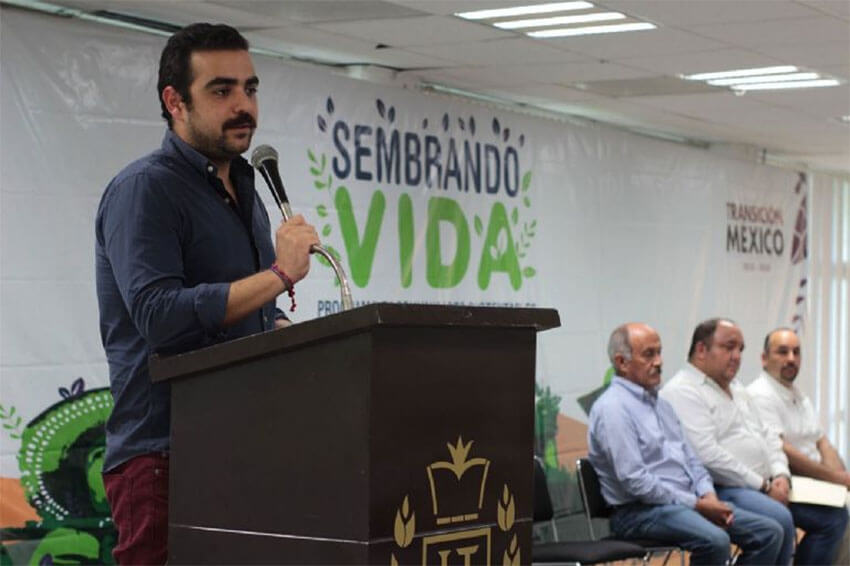
Hugo Chávez Ayala, a Sembrando Vida program advisor and 'unofficial' technical director is a friend and possible business associate of the president's sons.
Hugo Chávez Ayala, a Sembrando Vida program advisor and ‘unofficial’ technical director is a friend and possible business associate of the president’s son, Andrés Manuel López Beltrán.

“The cacao tree takes three years to produce. What I want is to have 1 million hectares [of fruit and timber-yielding trees] in production before my government ends. Let cacao trees produce,” he said.

Less than four months later, López Beltrán applied to register a new chocolate brand – Rocío Chocolate, a move that marked the beginning of his career as a premium chocolate entrepreneur.

In addition to being a childhood friend of López Beltrán, Chávez told the reporters who conducted the Proceso/Aristegui Noticias investigation that since 2014 he has advised the presidents’ sons on the production of cacao at their 49-hectare property, located in the Tabasco municipality of Teapa.

AMLO’s sons inherited a 16-hectare property from their mother, Rocío Beltrán Medina, when she died in 2003, and subsequently received 32.5 hectares of adjoining land from two uncles. The cacao for Rocío Chocolate is grown on the property.

According to the investigation, Chávez, as a key Sembrando Vida official, promoted the planting of cacao trees in Tabasco, even though local farmers, via a consultation process, ranked the cultivation of 25 other kinds of trees as higher priorities.

“In Sembrando Vida the producers of each state must decide by consensus which trees will be prioritized by the program,” the investigation said.

But Chávez allegedly ignored that rule and at least encouraged, if not demanded, the cultivation of cacao trees in Tabasco. It is unclear whether he predicated inclusion in Sembrando Vida on agreement to plant cacao trees, but would-be beneficiaries were certainly pressured to do so, the investigation indicates.

Chávez subsequently made personal financial gains from the planting of such trees, and stands to make more in the future: he sold 2 million cacao tree seeds to the Sembrando Vida program and entered into commercial arrangements with growers to purchase cocoa beans for his company Agrofloresta Mesoamericana.

There appears to be a clear conflict of interest given that a Sembrando Vida official gained personally – and will continue to profit – from the program.

Sembrando Vida beneficiaries in Tabasco told the investigation they felt an obligation to sell their future cocoa bean harvests to Chávez given that his company was offering a higher price than others, provided agro-ecology training to them and paid for their organic certificates, which cost between US $3,900 and $4,900 and must be renewed annually.

“… We can only sell to Hugo,” one producer said bluntly. “We’re raw material partners but not partners of the company,” said another, who charged that Chávez is the big winner from the arrangement.

“It’s the only option for now,” said the cacao producer, who like other Sembrando Vida participants is paid a monthly stipend of 5,000 pesos (US $230).
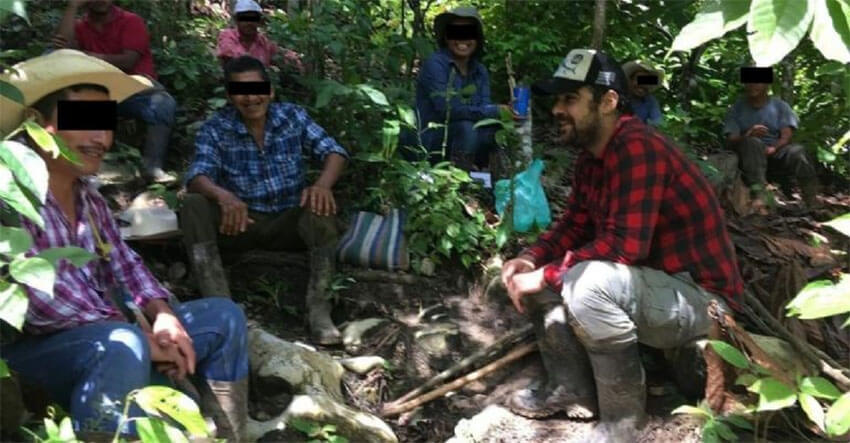
Chávez visits cacao producers in Tabasco.

Chávez didn’t deny that he expected to benefit from the production of cacao in Tabasco through the Sembrando Vida scheme.

However, he said most of the cocoa grown in the Gulf coast state will go to the “conventional market” because his company only exports high-quality cacao known as cacao fino de aroma. Chávez also asserted that his suppliers have the right to participate in the Sembrando Vida program.

“The increase in the production of cacao is very beneficial for the entire [chocolate making] chain from producers, fermenters and industrialists,” Chávez said, although many cacao trees have died due to inadequate conditions for their cultivation and/or Tabasco growers’ lack of knowledge about them.

He also said that he has promoted the cultivation of other crops in Sembrando Vida, such as coffee, cinnamon and rubber.

The investigation said some people in Tabasco were forced to cut down trees so they could participate in Sembrando Vida. Several other reports have also highlighted deforestation caused by the scheme, which President López Obrador describes as the world’s largest reforestation program.

The president was aware of Chávez’s business interests when he asked him to be the Sembrando Vida technical director and appointed him to the program’s board, according to the report.

Although Chávez has advised the president’s sons on the production of cacao, he denies having any commercial relationship with them.

“However, the links between his company and Finca [farm] El Rocío are eye-catching,” the investigation said.

It noted that in a video conference in September, Chávez introduced his company’s team and the first person he presented was the most senior member.

That person, an agronomist who has worked for Agrofloresta Mesoamericana for seven years, promptly said that he was in charge of Finca El Rocío, a declaration at odds with Chávez’s claim that he has no commercial relationship with AMLO’s sons.

The agronomist, identified by the investigation only as Isabelo, said that he and Chávez “began together on Finca El Rocío seven years ago.”

In addition, the investigation said, cacao that won an award at the International Chocolate Awards 2018 and which the Agrofloresta Mesoamericana website presents as its own was grown at the López Beltrán property.

Vista aérea de la Finca El Rocío, de 48.85 hectáreas, propiedad de los López Beltrán

An aerial view of Finca El Rocío

“This recognition also made it visible that Agrofloresta Mesoamericana employees are part of the production [team] for those cocoa plantations. In addition, both Agrofloresta Mesoamericana and Rocío Chocolate share the same photographs and videos on their websites and social media,” the investigation said.

Chávez simply said, “They’re very pretty images and we have permission to use them.”

“The webpage of the Fine Chocolate Makers Association also says that Agrofloresta Mesoamericana uses cacao from Finca El Rocío and some restaurateurs assert that they’ve bought Finca Rocío cacao from Agrofloresta Mesoamericana. Hugo Chávez insists that it’s the people, [not him], who are confused,” the investigation said.

The implication that Chávez has a business relationship with Andrés Manuel López Beltrán and the president’s other sons from his first marriage is that all of them have benefited, and stand to benefit, financially from Sembrando Vida’s support – and Chávez’s backing in particular – of cacao cultivation in Tabasco. The president – the nation’s self-appointed corruption fighter in chief – has made it clear that he won’t tolerate any of his family members benefiting directly or indirectly from his government.

The Proceso/Aristegui Noticias investigation also said that López Beltrán and Chávez used the same contact person on applications for an organic certificate for Finca Rocío. That contact was Fabiola López Fócil, an Agrofloresta Mesoamericana employee.

The investigation also raised questions about the legal status of López Beltrán’s company, saying that a Mexico City Rocío Chocolate store failed to issue invoices after five purchases were made between May and November.

“Experts consulted assert that it’s unusual to not issue an invoice immediately and that it could be evidence of irregular tax registration,” it said.

The investigation also said that the packaging of Rocío chocolate doesn’t contain all the legally required information. The company is apparently registered in New York rather than Mexico, and has its main office in Delaware, a corporate tax haven, the report said.

Reporters’ attempts to seek comment from López Beltrán about their investigation were unsuccessful.

Another “eye-catching” detail, the investigation said, is that Finca El Rocío is guarded by state police. Reporters sought to use transparency laws to obtain information about why Tabasco police are providing protection for the property, but the police put a five-year embargo on such details.

López Obrador responded to the Proceso/Aristegui Noticias investigation at his regular news conference on Monday, labeling it “deceptive” and “without foundation.”

“… [My sons] have never accepted support from the government and have nothing to do with the Sembrando Vida program,” he said.

The president rejected claims that Chávez, whom he acknowledged as an “agronomist friend of my sons,” was responsible for the creation or design of Sembrando Vida.

“This program came out of here, this head,” AMLO said, referring to his own brain. “Like the seniors [pension] program came from here,” he added, pointing to his heart.

The president charged that the intention of the investigation – on which Notas Sin Pautas, Meganoticias, Emeequis and Connectas also collaborated – was to “stain” him and his family.

“… What they suggest in their report is not true and I also want to clarify that Proceso and Carmen Aristegui [the journalist who founded Aristegui Noticias] have never been in favor of our movement. They say it’s because they’re independent, while I hold that they are independent but independent of the people,” López Obrador said.

“… They’ve never done journalism in favor of the [common] people, I want to make that clear. … It’s thought these pseudo-objective, pseudo-progressive, pseudo-independent media organizations have links to us but they don’t, … there’s no affection [for the government],” he said.

Aristegui responded to the president, asserting that her media company is neither in favor nor against his “movement” – the ruling Morena party that swept him to power in 2018.

“This space [Aristegui Noticias] is simply a space for journalists,” she said.

“And I would send one last message to President López Obrador: you know that I respect you, I respect your long battle to reach the presidency of the republic but sereno moreno!” Aristegui said, using a proverb to urge him to calm down.

“Read the report and we’ll talk later. And you tell me if the business activity of your sons is something to worry about or not.”

With reports from Proceso and El Universal 
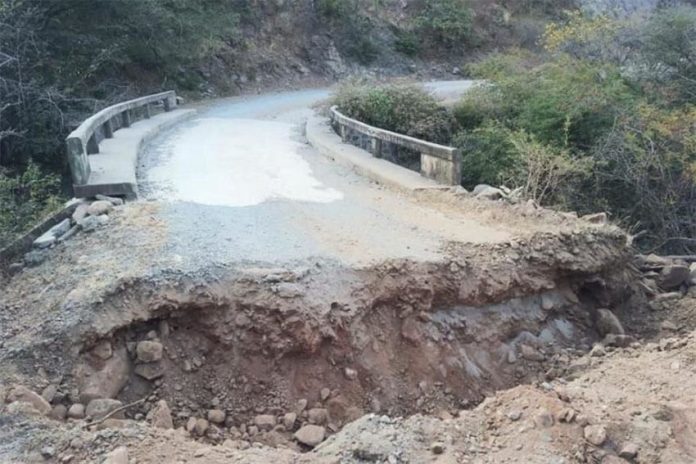
New road out of commission due to Oaxaca territorial conflict

0
Magdalena Tequisistlán residents damaged the road to Asunción Tlacolulita after a land dispute, cutting off the main supply route to the town.
Magdalena Tequisistlán residents damaged the road to Asunción Tlacolulita over a land dispute, cutting off the main supply route to the town.

Part of a road to an isolated village in the Isthmus of Tehuantepec, Oaxaca, recently paved through a federal public works program, was destroyed by rival villagers on Sunday due to a conflict over land, cutting off another eight rural communities.

A group of people from Magdalena Tequisistlán left an impassable trench in the road to Asunción Tlacolulita, preventing its 700 inhabitants from accessing the highway 20 kilometers away. Tequisistlán is closer to the highway, which is the only route to Tehuantepec at 50 kilometers away. 

The two villages have a long running agrarian dispute over 250 hectares of land. Rural disputes of this kind are common in Oaxaca.

The conflict resurfaced in September when inhabitants of Tlacolulita began to carry out road widening works, without requesting prior consent. In response, Tequisistlán residents blockaded the highway. 

That argument was resolved after federal authorities helped mediate the situation, but the conflict flared up again last week.

One Tlacolulita resident said the obstruction caused urgent difficulties: “These actions represent an attack on transport channels that undermine the free movement of food and medicine for our families, formed mostly of elderly people.”

“We categorically hold this group of community members responsible for any type of aggression that our families in Asunción Tlacolulita may suffer,” added another resident.

Village authorities have requested the support of the state government, the the National Institute of Indigenous Peoples (INPI) and the Agrarian Attorney General’s Office to help restore access to the highway.

The road was laid as part of the Ministry of Transport’s Paving Rural Roads to Municipal Capitals program.

With reports from Reforma and El Universal

9 hurt in hot-air balloon accident in Teotihuacán

0
The hot air balloon crash landed near the La Legua-Teotihuacán highway on Monday.
The balloon crash landed near the La Legua-Teotihuacán highway on Monday.

A hot-air balloon crash landed near the Teotihuacán archaeological ruins in México state on Monday, injuring nine people, four of whom were over 60.

The accident occurred around midday in the community of Atlatongo, close to the Pyramid of the Sun and the Pyramid of the Moon. 

The operating company Volare was forced to land the balloon, which was carrying 15 sightseers including two foreign tourists, due to a technical fault amid unfavorable flying conditions, but lost control as it approached the ground.  

Five women and four men were injured and taken to a hospital in Axapusco. Two of them were later transferred to a hospital in Mexico City. 

The injuries included concussion, broken bones, sprains and loss of lower body movement. 


The hot-air balloon was partially destroyed after it came down on the side of the La Legua-Teotihuacán highway. Security officials said that when they arrived the balloon was deflated and the basket was detached. 

“Given the difficulties, he [the pilot] had to descend precipitously and fell brushing the branches of a tree on the side of the road, between the La Garita area and the road to the community of San Isidro,” a police report said.

Volare hasn’t yet confirmed the cause of the accident, the newspaper Milenio reported.

With reports from Milenio, TV Azteca and El Financiero

3 Mexican airlines rated among world’s worst

0
Mexican airlines Volaris and VivaAerobus faired poorly in a recent ranking.
Mexican airlines Volaris and VivaAerobus fared poorly in a new ranking.

Three Mexican airlines were rated as among the worst international carriers operating in the United States in an analysis by travel website usebounce.com. 

The analysis of 71 airlines placed VivaAerobus second from the bottom with a score of 3.6 out of 10. Its in-flight entertainment, meals and seat comfort were all rated one out of five, and its staff service was awarded two out of five. 

Volaris was third from the bottom in 69th place with a score of four. It gained one point for in-flight entertainment and two points for meals, seat comfort and staff service. Despite its superior ranking, Volaris received 379 complaints to VivaAerobus’ 27 from January through June. 

Both airlines were seen as unusually stingy on their maximum free baggage allowance: VivaAerobus offers 15 kilograms of free luggage, while Volaris only gives 10 kilograms. 

Interjet, which has been shut down by financial problems, was fifth from the bottom with 490 complaints and one out of five for in-flight entertainment.

They all fared better than Colombian budget airline Viva Colombia, which was declared the worst international airline operating in the U.S.  

The top of the list was dominated by Asian carriers who occupied the first nine positions. Japan’s Ana All Nippon Airways, Singapore Airlines and Korean Airlines were rated as the top three. 

The scores were calculated based on punctuality, maximum free baggage allowance, the number of complaints received by airlines from January through June, staff service, meals, in-flight entertainment and seat comfort. 

The bottom of the barrel rankings for Mexican airlines will come as no surprise to thrifty travelers: the consumer protection agency Profeco took action against VivaAerobus and Volaris earlier in November, accusing them of committing an “abusive practice” by charging for carry-on baggage.

Bounce, the company that conducted the study, helps travelers find and reserve luggage storage in airports.

Mexico News Daily

Querétaro tries setting manhole covers in concrete to discourage theft

0
manhole cover
They're popular among thieves.

Fed up with the unstoppable force that is manhole cover thieves, authorities in Querétaro have sought to make the circular metal plates immovable objects.

The Querétaro State Water Commission (CEA) has begun setting Querétaro city’s manhole covers in concrete to prevent thieves from removing them and selling them as scrap metal. The covers are commonly made of copper and iron.

In addition, missing manhole covers are currently being replaced with concrete ones, the CEA announced on Twitter. “The new ones are concrete to avoid them being stolen again,” it said.

Querétaro city Mayor Luis Nava said that his government is also planning a crackdown on businesses that buy stolen manhole covers.

“We’re going to coordinate with the Attorney General’s Office so that businesses that buy these types of material are penalized very severely,” he said, adding that sanctions could included enforced closures.

Removal of the covers endangers pedestrians, cyclists and motorists, warned a spokesman for the Querétaro Citizens Transport Observatory. One cyclist died after riding into a cover-less manhole in the borough of Santa Rosa Jáuregui.

The theft of metal manhole covers has also been a problem in other parts of Mexico, including Puebla, Mexico City and Veracruz.

In the capital, 50-kilogram manhole covers sell for about 250 pesos (US $11.50) each, according to a report by Forbes México, but their theft over the past three years has forced the government to spend millions of pesos to replace them. Drain grates and other metal components of water and sewerage infrastructure are also frequently stolen.

Missing covers have also caused accidents in Veracruz city, including one recent one that claimed the life of a 13-year-old boy. The youth fell into an uncovered Federal Electricity Commission manhole and was electrocuted.

With reports from Códice Informativo, El Universal, Forbes México, La Silla Rota and Imagen de Veracruz

AMLO’s decree to shield megaprojects ‘an act of desperation’?

0
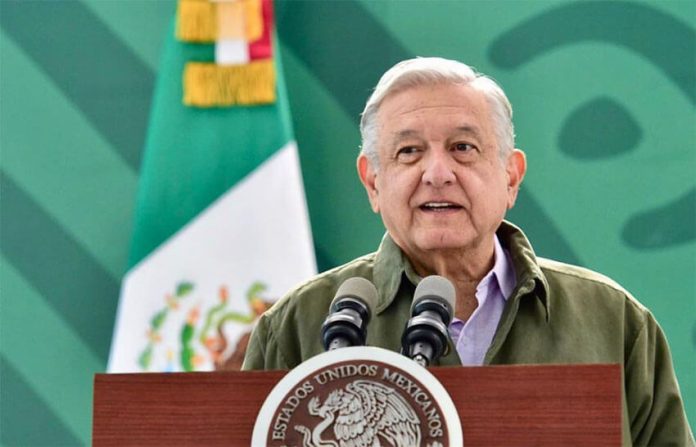
President López Obrador speaks at a recent press conference.
President López Obrador speaks at a recent press conference. Presidencia de la República

President López Obrador’s new decree that fast-tracks government infrastructure projects and protects them from scrutiny and legal challenges is part of “a cynical power grab” and possibly an “act of desperation,” according to an opinion piece published Monday by The Wall Street Journal.

The decree, published in the government’s official gazette last week, shields from scrutiny the construction of infrastructure projects in a wide range of sectors by declaring them pertinent to national security.

Columnist and WSJ editorial board member Mary Anastasia O’Grady claimed that AMLO, as the president is best known, “pronounced himself above the constitution” by issuing the decree.

“It felt for some like the beginning of the end of the Mexican democracy,” she added in a piece published under the headline “López Obrador courts the Mexican military.”

“… The decree designates the development of large parts of the Mexican economy as pertaining to ‘national security.’ Think Donald Trump’s steel tariffs – justified on the same grounds – on steroids,” O’Grady wrote.

“… Under current Mexican law, once a project is deemed necessary for national security, no-bid contracts are permitted and the terms of those contracts may be shrouded in secrecy,” she said.

O’Grady, a frequent critic of the president, said the decree is likely to be struck down by the Supreme Court (SCJN), and asserted: “This suggests that it is an act of desperation rather than a sign of strength.”

She claimed that a court decision against the decree “will be useful in further inflaming” AMLO’s base after the president’s “most ardent disciples” bemoaned obstacles to his proposed electricity reform, which seeks to guarantee more than half of the power market to the state-owned Federal Electricity Commission.

O’Grady noted that AMLO “has been drawing the military closer by giving it contracts to build pet projects,” such as the new Mexico City airport and sections of the Maya Train, as well as “money making opportunities” via future management of those projects and others, such as the Isthmus of Tehuantepec trade corridor.

“Under the guise of national security, the new decree widens the scope for similar military contracts,” she wrote.

“To make his projects run smoothly, Mr. López Obrador’s diktat shoves aside independent agency reviews that would normally ensure project feasibility, environmental protections and transparency,” O’Grady added.

“… Authorizations not given within five days will be ‘considered resolved in a positive sense.’ Translation: Whatever AMLO wants, AMLO gets.”

Continuing with her denunciation of the decree, O’Grady noted that Mexico has long been considered one of the world’s most corrupt countries and asserted that “classic liberals have tried to overcome this problem by building institutions.”

“Their efforts have been only partly successful, as evidenced by serious allegations of graft during the presidency of President Enrique Peña Nieto from 2012 to 2018. Yet using the imperfection of institutional checks as an excuse to demolish them is a cynical power grab,” she wrote.

(AMLO is also seeking to eliminate two energy sector regulators with his electricity reform and has outlined plans to incorporate other autonomous organizations such as the National Institute for Transparency and Access to Information into federal ministries and departments.)

“Mr. López Obrador’s real problem is that, although he remains popular, the country is also flush with interests that don’t always share his views – from Mayan communities that oppose his train through their lands to energy investors with signed contracts,” O’Grady opined.

“In other words, AMLO is running head-first into pluralism, where the limits on executive power, lawfully imposed by Congress and the courts, threaten to slow his agenda in the second half of his term. If his supporters respond with physical confrontation, or what they call ‘participatory democracy,’ Mexicans had better fasten their seat belts.”

With reports from The Wall Street Journal

‘No tattoos or piercings and don’t voice your opinions about AMLO’

0
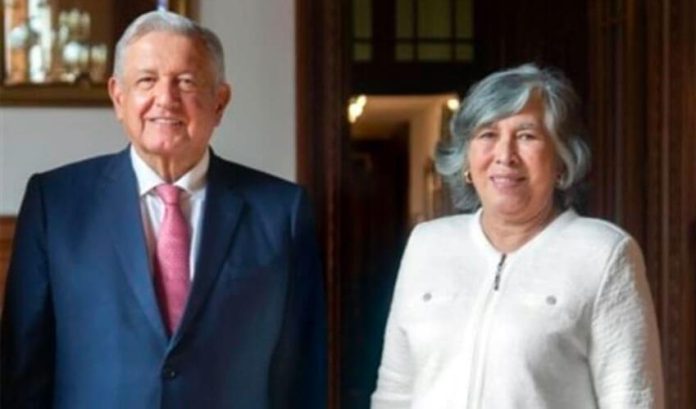
The president and legal counsel Estela Ríos
The president and legal counsel Estela Ríos after her appointment in September.

Members of President López Obrador’s legal counsel need to be careful what they put on display: no tattoos or piercings can be shown, and no opinions about the president can be posted on social media, according to a set of rules obtained by the newspaper Reforma. 

The six-page document, titled Dress Code and Coexistence in the Office, was allegedly sent by the president’s top legal counsel, Estela Ríos. 

However, her office denied having sent the document and said the Code of Ethics that governs the behavior of its members is available online. The president’s office said it had launched an internal investigation to determine its origin.

In the document published by Reforma, the section “Clothing outside the code” lists shoes without socks, t-shirts and earrings as poor etiquette for men. For women, crop tops — shirts that don’t cover the midriff, strapless tops, miniskirts and leggings are all banned. Faded or ripped jeans, piercings, and visible tattoos are against the rules for both sexes.

The document states that a suit and tie are expected for men and a tailored suit should be worn by women. It features models wearing designer suits, scarves and bags to offer an example of “business casual” dress, which is only appropriate for Fridays. 

Rules on dress could be relaxed for pregnancy, travel, illness, disability, extreme weather and special days or events.

As for behavior, volume on headphones should be kept low and odorous foods like seafood, onion and garlic should not be consumed. On social media, employees were told to avoid making political comments, not to take photos of famous visitors to the National Palace, and not to publish photographs of areas of the palace where public doesn’t have access. 

Ríos took over as top legal counsel on September 2 after Julio Scherer Ibarra left the post.  

With reports from Reforma

Prestigious wine competition returns to Guanajuato

0
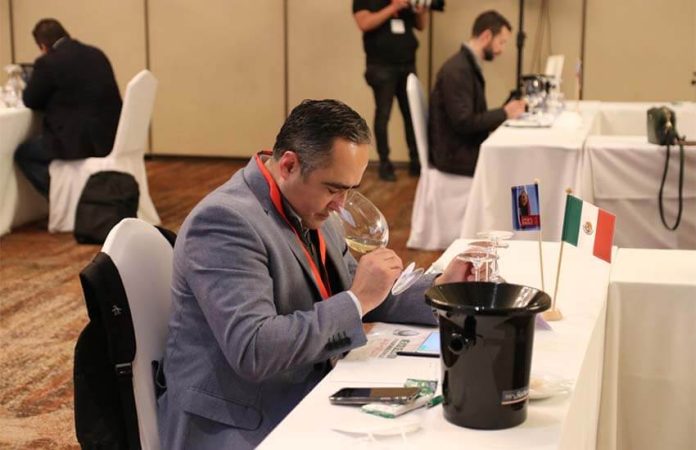
Concours Mondial de Bruxelles in Chihuahua 2020
Sampling the wines at the Concours Mondial de Bruxelles Mexico Edition in Chihuahua in 2020. Concours Mondial de Bruxelles

Five years ago, Mexico hosted its first national edition of one of the wine world’s most important events: the Concours Mondial de Bruxelles. The competition’s first Mexico edition, held in the state of Guanajuato, was one of the most important wine competitions in Mexico to date.

On December 1–3, the competition circles back to Guanajuato, this time to the beautiful town of Mineral de Pozos.

The return of the Mexico edition of the prestigious competition here is clearly a recognition of Guanajuato’s growing importance in Mexico’s winemaking industry.

As the third largest wine-producing region in the country, the state is vying to be an important player in the national wine market. Today Guanajuato has 46 wineries in production.

The state is interested in promoting such world-class competitions in an attempt to revitalize the economy after the effects of COVID-19. Wine tourism has become an important element of that economic revitalization.

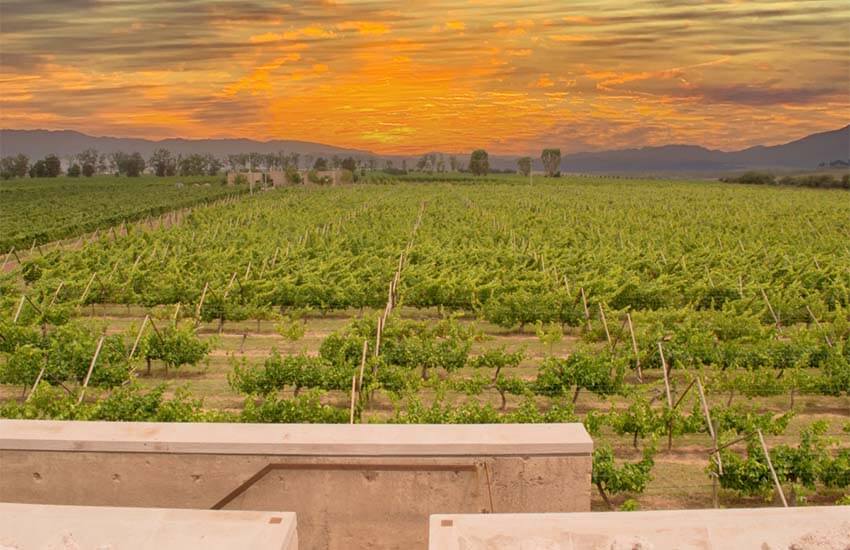
Guanajuato vineyard
Guanajuato’s vineyards in the Bajío region are the third-largest producer of wine in the country. Concours Mondial de Bruxelles

It’s not a bad bet. Guanajuato is not only gaining rapid recognition for its wine region, it’s also growing rapidly: according to Sandra Vázquez, Guanajuato’s tourism marketing head, the number of wineries and land dedicated to cultivating grapes in Guanajuato is expected to increase a hundredfold in the next five years. Also in agreement with Vázquez is Carlos Borboa, director of the Concours Mondial de Bruxelles México edition.

Mexico in general is experiencing a high point in its winemaking. Next year, Mexico will also host the 43rd World Congress of Wine, one of the most important global events for the industry, put on by the Mexican Winemakers’ Council.

The increasing importance of Mexico in winemaking can also be deduced from the sommeliers who have been chosen as judges in the Concours’ Mexico edition. They are a laundry list of international wine celebrities, including Doug Frost, director of Echolans Winery in Oregon and president of the Best USA Sommelier Association.

Other judges include a who’s who of wine experts, ranging from sommeliers, denomination of origin directors for wine regions around the world, respected industry journalists, winemakers, and haute cuisine restaurateurs.

Among those representing Mexico include Laura Santander, Mexico’s best sommelier of 2019; Andrés Amor, Mexico director for the Rías Baixas wine-producing region of Galicia, Spain; and Raúl Vega, owner of gastronomy tour company Terravid and the Mexico City’s Mesa 19 wine restaurant/club.

Mineral de Pozos, Guanajuato
This year’s Mexico edition of the Concours Mondial de Bruxelles will be held in the picturesque Guanajuato town of Mineral de Pozos. Government of Mexico

The competition will launch on November 30 in Mexico City at the Concours’ own affiliated Wine Bar, located next to the Marriot Mexico City Reforma Hotel in the Juárez neighborhood, before moving to the La Antigua Escuela Modelo in Mineral de Pozos, where three days of judging begins.

The Wine Bar is open year-round, incidentally, and offers much more than wine: customers can also partake in mezcals, sotols and many other high-end Mexican liquors. It even offers excellent coffees from Puebla and Veracruz and teas and infusions for non-drinkers in your party.

It also offers a menu of tapas, small plates and finger food, as well as some of the country’s best chocolate from Alma Chocolate, whose exquisite cacao truffles are an excellent pairing with the bar’s drink list.

Sommelier Diana Serratos writes from Mexico City.

Over 2,500 hectares cleared in Quintana Roo in order to plant trees

0
Land has been cleared in various states so as to qualify for the Sembrando Vida social program.

Trees have been cut down on more than 1,000 parcels of land in Quintana Roo in order for the land to be used for the Sembrando Vida (Sowing Life) reforestation program, according to an investigation by the newspaper El Universal.

The newspaper obtained information about the location of 5,142 of some 10,000 parcels of land authorized for inclusion in the federal government’s tree-planting employment scheme in the Caribbean coast state.

By consulting land use maps, it determined that 2,426 of the parcels are located in areas classified as jungle, and 2,651 are on agricultural land.

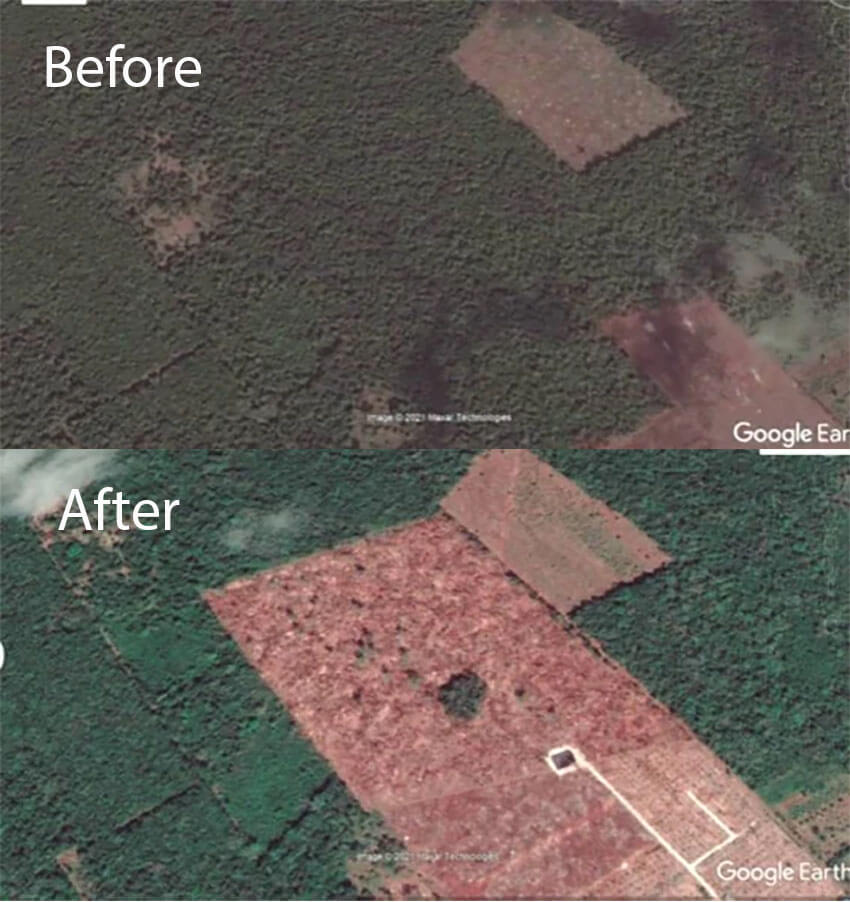
Via an analysis of satellite photos, El Universal discovered that deforestation had occurred on at least 1,032 parcels. Their combined area is more than 2,500 hectares, or four times the size of Mexico City’s Chapultepec Forest. El Universal said it was unable to determine whether trees had been cleared on an additional 907 plots of land.

A reporter for the newspaper subsequently visited many of the parcels to corroborate the findings of the analysis.

Google Earth images show the same plot of land before and after entering the Sembrando Vida program.

“We had to cut down … trees to enter [Sembrando Vida],” said one beneficiary in the north of Quintana Roo who has planted trees on land classified as jungle.

El Universal sought comment about its findings from the federal Welfare Ministry, which manages Sembrando Vida, but received no response.

It’s far from the first time a deforestation accusation has been leveled at the program, which pays some 440,000 people 5,000 pesos (US $230) per month to plant timber-yielding and fruit trees in poor, rural areas.

El Universal said in a report published in June 2020 that cases had been identified in which people deforested parcels of land in order to participate in Sembrando Vida and collect a monthly salary from the government. The practice – known in the context of the scheme as sembrando muerte, or sowing death – occurred in several municipalities where the program operates, the newspaper said.

A Bloomberg report published in March said that forested land had been cleared in Yucatán and Campeche so that saplings could be planted where mature trees formerly stood, while the World Resources Institute, a United States-based environmental non-profit organization, determined via an analysis of satellite images that people had also cut down trees in Veracruz, Tabasco, Quintana Roo and Chiapas so they could participate.

A recent report by the magazine Gatopardo also highlighted that the program’s requirement for trees to be planted on unforested land was driving farmers to clear their land to join it.

Sembrando Vida, one of President López Obrador’s signature initiatives, has also faced accusations of corruption.

Nevertheless, the United States has agreed to invest in the program both in the south of Mexico and Central America.

In addition to reforesting land – López Obrador describes Sembrando Vida as the world’s largest reforestation scheme – a central aim of the program is to provide opportunities that dissuade people from migrating in search of work, especially to the United States.

With reports from El Universal 

Mexicans conquer Mexico City marathon, taking 1st and 2nd place

0
Mexicans Darío Castro and Eloy Sánchez took first and second place, ahead of Kenyan Rodgers Ondati in third.

Two Mexicans dominated the 38th Mexico City marathon on Sunday, taking first and second place. 

Darío Castro and Eloy Sánchez, both of whom are soldiers in the Mexican army, crossed the finish line together to return Mexico to the podium after a 12-year absence ahead of third-place finisher Rodgers Ondati of Kenya. Castro won the race with a time of 2:14.51 and Sánchez finished just a second after. Ondati recorded a time of 2:17.31.

The last Mexican to win the marathon was Edilberto Méndez Hernández from Tlaxcala in 2009.

More than 15,000 runners lined up early on Sunday morning outside the Olympic University Stadium in Coyoacán, in the south of Mexico City, for the 42-kilometer race to the historic center, ending at the city’s central square, the zócalo. They awaited Mayor Claudia Sheinbaum, who fired the starting pistol.   

Castro said that despite his victory, the Mexico City marathon was no walk in the park. “I think that here … the conditions in Mexico City, the altitude, pollution and other influencing factors make the marathon difficult, but it motivates us to keep working and to look for another marathon that gives us the conditions to run faster,” he said. 

Sánchez was ahead for most of the race and described the moment that Castro caught up. “I slowed down and he caught up with me. We got back to competition rhythm side-by-side. We were talking, supporting each other. I told him ‘This race belongs to us Mexicans,’” he said. 

In the women’s event East Africans dominated a historic race: Kenyan Lucy Cheruiyot broke the record by more than six minutes, and was followed by Ethiopian Amare Shewarge Alene, who finished almost 10 minutes later. Kenyan Leah Jebiwot Kigen came in third.

In the wheelchair categories, Mexican Ivonne Reyes won the female competition and Colombian Francisco San Clemente won the men’s contest in record time. 

With reports from Milenio